Soil & Fertilizer

Best Worm Composting Bins of 2026

A worm composting bin shouldn't smell like a worm bin. That's the worry that stops a lot of people from trying indoor composting—the idea of rotting scraps, fruit flies, and escaped worms is enough to leave the bin at the store. But the right bin turns coffee grounds and vegetable peels into rich castings without any of that. It seals properly, drains excess moisture, and gives worms a healthy habitat so they actually multiply. A good one makes the whole cycle feel tidy; a bad one makes you question why you bothered.

We spent eight months testing 12 bins in real kitchens—on counters, under sinks, and on a few balconies—paying attention to the things you'd notice daily: whether the lid sealed tight, how sturdy the walls felt when full, and whether the instructions got us set up in minutes or hours. Worm health was the real measure: did they thrive or just hang on? Along the way, we also noted how much counter space each bin claimed, how easily zippers moved on fabric models, and whether the design held up after months of weekly feedings.

1

VermiHut Classic 5-Tray

Top Pick
VermiHut Classic 5-Tray

Most kitchens

Our Score 9.2/10
Check Price

Worth Noting

  • 27.5-inch stack needs clearance above it
Trays
5
Capacity
50 liters
Material
HDPE
Dimensions
16"L x 16"W x 27.5"H
Read the full review

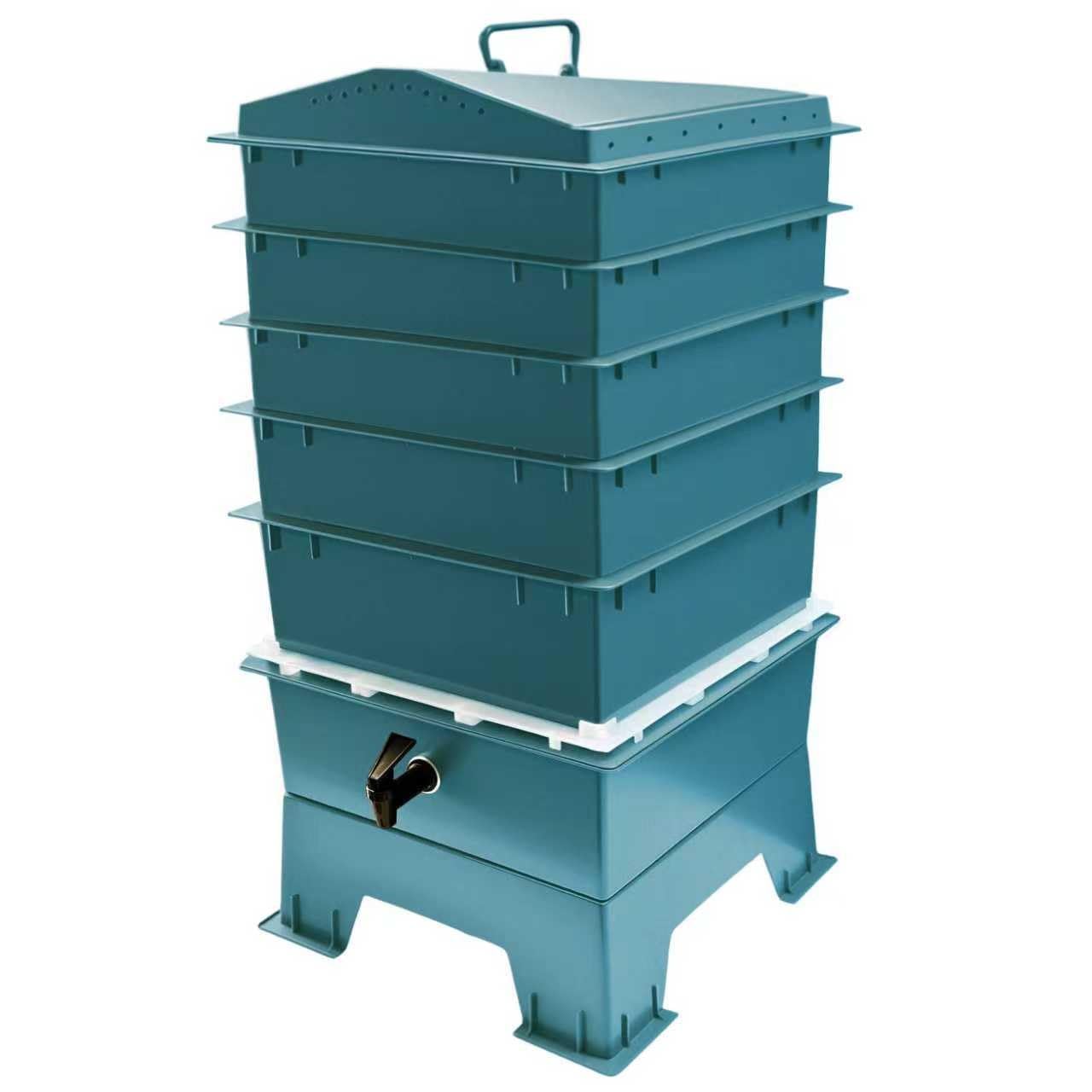
Fifty liters across five stacking trays is the number that earns this bin its place at the top. Feed the top tray, let the worms work downward and migrate up into fresh bedding, and finished castings come out of the bottom without the colony ever being tipped onto a sheet. For a household that wants one bin doing steady work in a corner, that is the entire job.

Setup is quick: the trays stack, the lid sits over the top tray, and the base catches what drains through. The directions are the weak spot, vague about how wet the bedding should be, and moisture is the variable that decides whether a new bin thrives or turns sour. We check ours by squeezing a handful — damp as a wrung-out sponge, no drips. Get that right and the first month is uneventful.

Of the tray bins in this group, this is the one where a colony most consistently settles in and breeds rather than climbing into the lid. It runs odorless, which is the fair test of an indoor bin, and 50 liters means you aren't hunting for somewhere to put the day's scraps every other evening. We keep the lid seated and the base drained, and it has been the least demanding thing in the corner.

The stack stands 27.5 inches tall on a 16-inch square footprint, so it wants a corner with headroom rather than a shelf under a counter, and a loaded tray is heavier than it looks when you slide it out. Neither is a dealbreaker. If your kitchen generates more peelings than two or three people produce, look at the Urban Worm Bag before you commit.

Bottom line: The bin we recommend first: fifty liters over five trays, a colony that settles in, and no smell indoors. Buy it for a two- or three-person kitchen with a corner to spare.
2

FCMP Essential Living Composter

FCMP Essential Living Composter

Small kitchens

Our Score 9.0/10
Check Price

Worth Noting

  • Worms can end up in the base reservoir
Trays
2
Capacity
8 gallons
Material
Recycled polypropylene
Dimensions
15"L x 15"W x 22"H
Read the full review

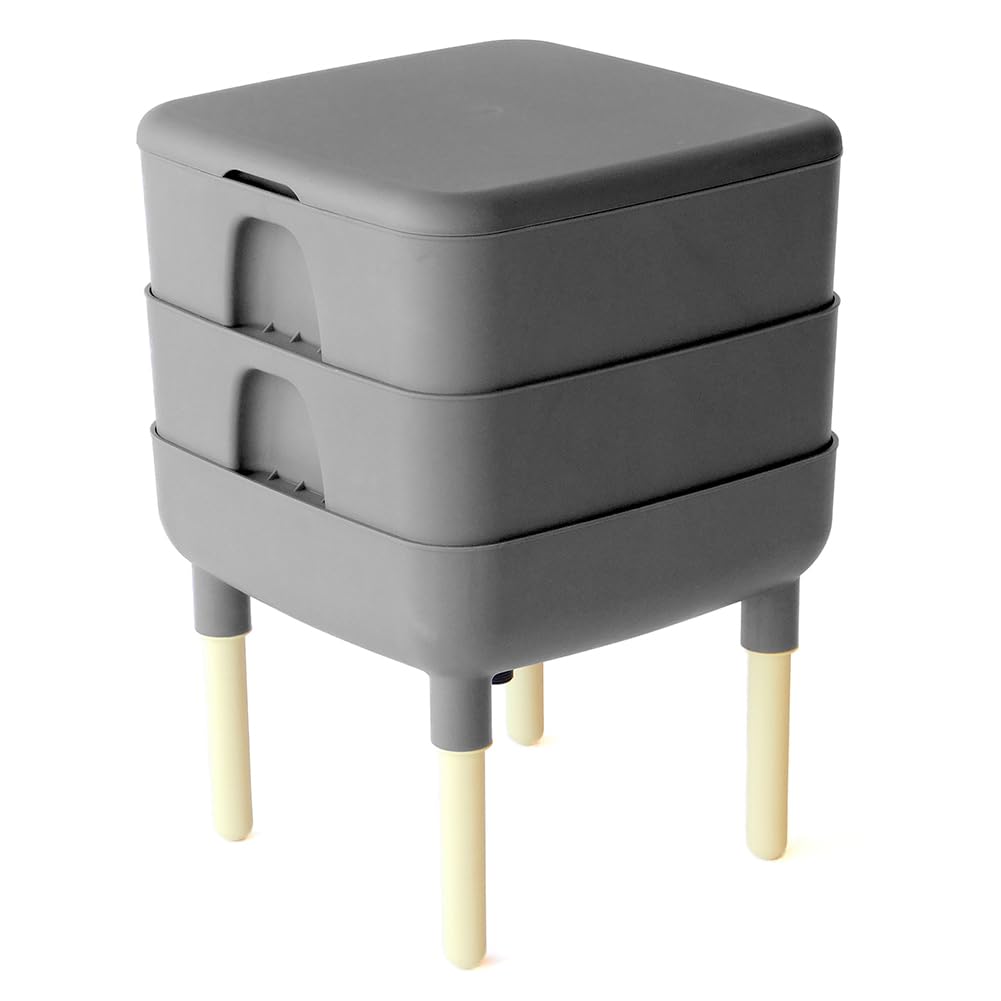
Half the trays of our top pick, three inches narrower and five and a half inches shorter — this is the one that fits where a five-tray stack won't. At 15 inches square and 22 inches tall it tucks into a kitchen corner or a laundry shelf, and the plain grey square body doesn't advertise what's inside. If the bin has to live indoors in a small place, this is where we start.

We recommend it for exactly that job. Eight gallons over two trays is less capacity than the five-tray bins, but it's the right amount for one or two people, and the design is smarter than the tray count suggests: a water-retention channel runs around the rim of each tray, so liquid sits where the bedding can pull it back instead of pooling in the base. It goes together in minutes, and of everything here it's the closest to looking like furniture rather than equipment.

Containment is the catch. Worms work their way into the base reservoir in this design and some stay down there, so the liquid tray is worth checking every time you drain it. Fruit flies are the other thing to stay ahead of: bury scraps under bedding and keep the lid seated. Neither has stopped us recommending it — it's just a bin that rewards a weekly look rather than a monthly one.

Bottom line: The small-kitchen pick: 15 inches square, two trays, and tidy enough to leave out. It suits one or two people, with a weekly glance at the base.

3

TOP XIAN In-Ground Bin

TOP XIAN In-Ground Bin

Multiple garden beds

Our Score 9.0/10
Check Price

Worth Noting

  • Compost stays in the bed, nothing to harvest
Capacity
8 liters each
Material
Polypropylene
Dimensions
9.5"L x 9.5"W x 10.8"H
Ventilation
360-degree holes
Read the full review

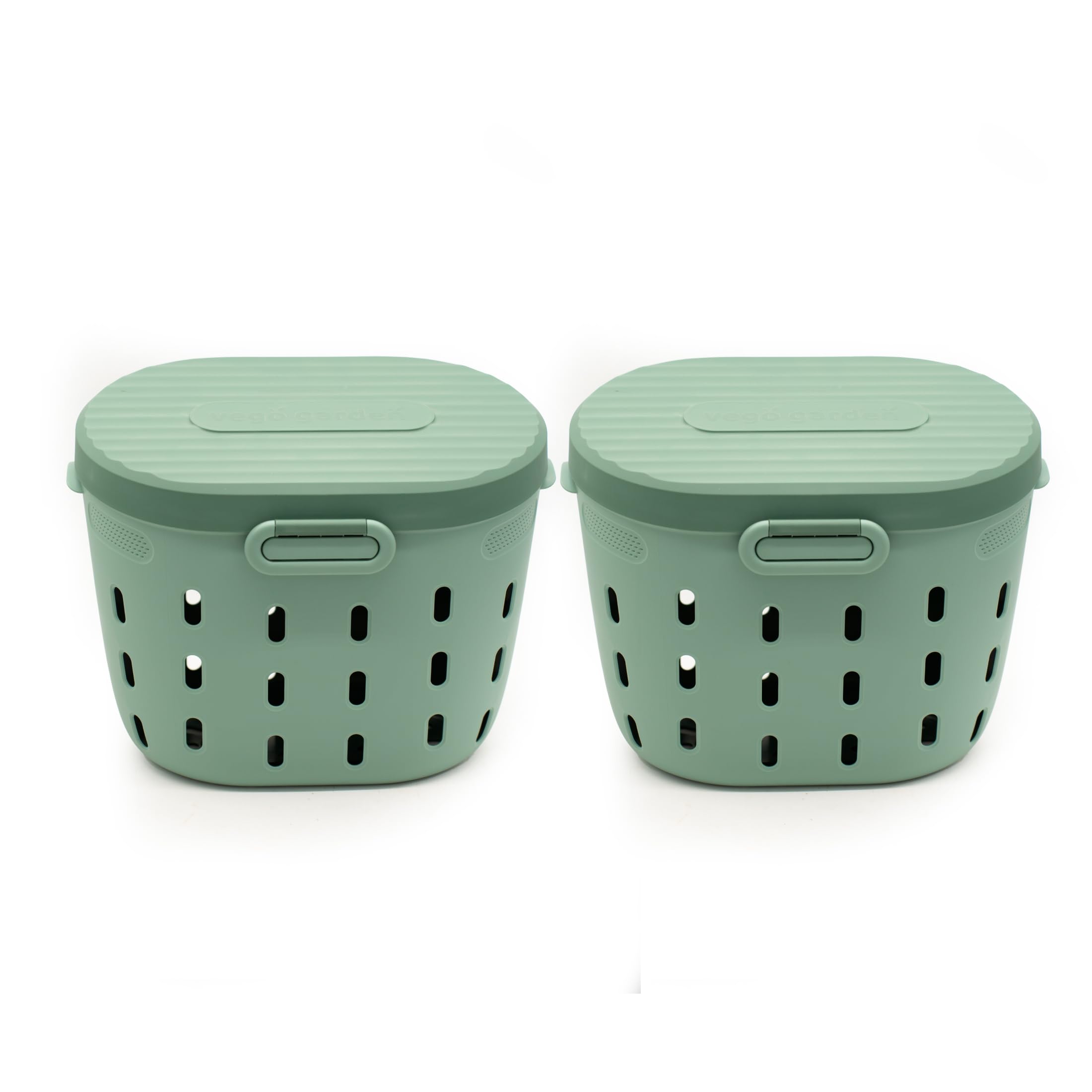
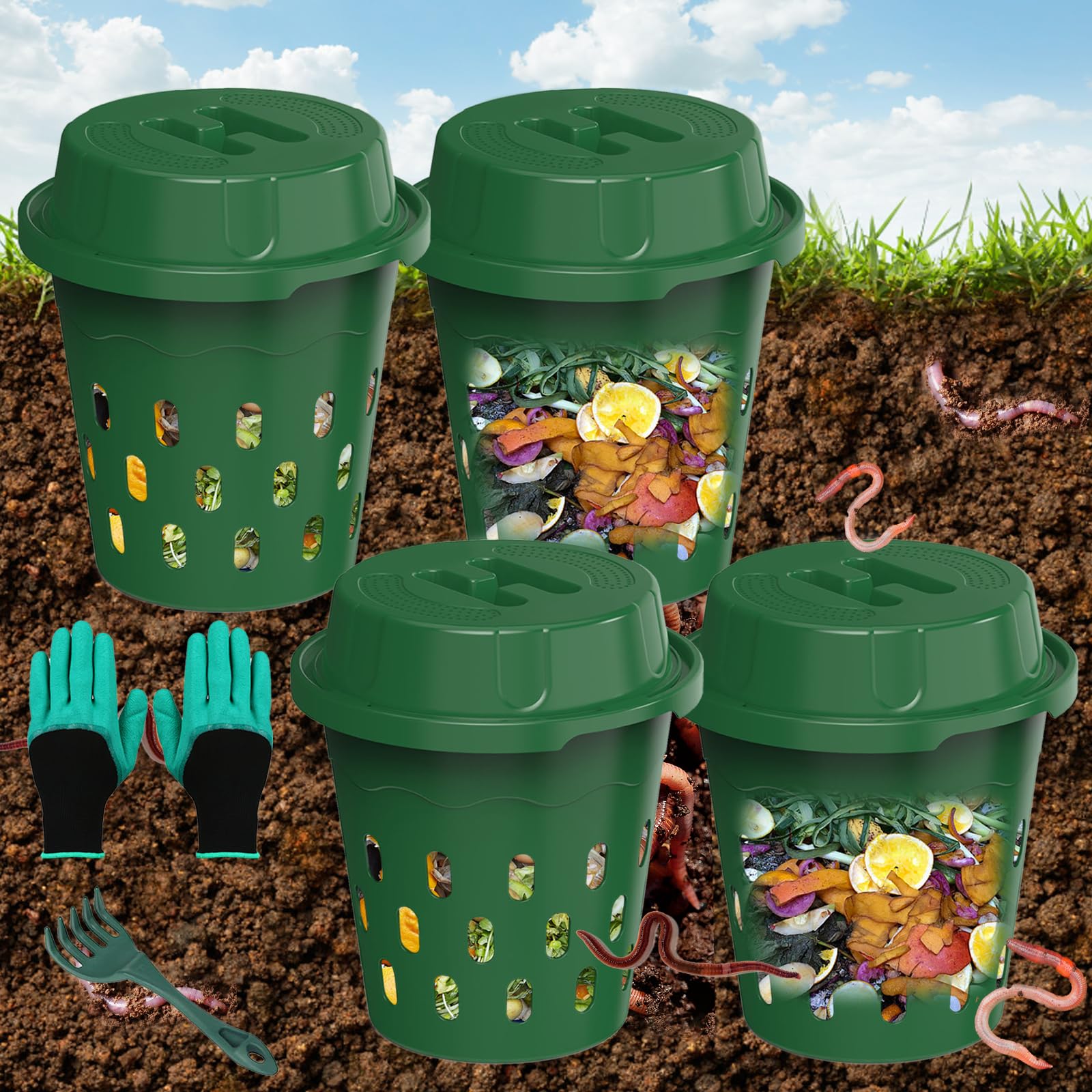
One of these per bed is the idea. At 9.5 inches square and 10.8 tall, a single unit holds 8 liters — enough for a household's daily peelings without swamping one planting — and buying them as a set lets you seed several beds at once instead of carrying scraps across the garden to one central bin.

Installation is a hole and a lid: no assembly, no bedding, no spigot, no maintenance schedule. The 360-degree ventilation holes keep the contents from going anaerobic, and the lid lifts off with one hand while you're weeding, which is the difference between using it and forgetting it. Worms move freely between the bin and the surrounding soil, so the colony feeds the bed rather than living in a container you own.

We recommend the set for a vegetable garden with several beds and no appetite for managing a bin. What it won't do is hand you compost to bag up — the material stays where it's made, and a bed that's already rich won't show much change. As an entry point the commitment is about as low as it gets, and the lid staying put through a season of weather is most of the reason. As a system for an apartment, it's the wrong tool: there's no soil to bury it in.

Bottom line: A unit per bed, buried and forgotten: 8 liters each, no assembly, no draining. Best for a garden with several beds and no interest in running a bin.

4

Urban Worm Bag v2

Urban Worm Bag v2

Big households

Our Score 8.8/10
Check Price

Worth Noting

  • Frame flexes and can fail within months
  • Top opening is awkward to work in
Capacity
150.75 liters
Material
900D oxford fabric
Dimensions
26.75"L x 26.75"W x 31.75"H
Bottom Access
Removable, zipper-free
Read the full review

Harvesting is why we keep coming back to this one. The bottom of the bag comes away entirely — version two dropped the zipper that used to fail — so finished castings drop out from underneath with no trays to lift, no stack to rearrange, and no picking worms out of the tray you're about to empty onto a bed. Feed at the top, harvest at the bottom, and the colony stays where it is through the whole thing.

At 150.75 liters it holds roughly three times what the tray bins here do, which makes it the realistic choice for a big household, a school, or a gardener who wants castings by the bucket. It's a floor-standing bin, 26.75 inches square and nearly 32 inches tall, so it wants a garage, porch or utility corner rather than a kitchen. The 900D oxford fabric breathes, and the detachable panel lets you open it up in humid weather or close it down when the bin is running wet.

The frame is the part we don't fully trust. A full bag sits in it fine, but the whole thing flexes when you shift it, and it's the component that has given out on some units within a couple of months. The top opening is awkward to work in while you're adding scraps, too. Set it somewhere you won't need to move it and both become minor annoyances; treat it as portable and they don't.

So the trade is volume and an easy harvest against a frame worth watching and the highest price in this group. Compared with the VermiHut, you give up tidy looks and a small footprint and get roughly triple the capacity and a much calmer harvest. A household that cooks a lot of vegetables gets more out of that than out of a stack of trays.

Bottom line: For big households and serious gardeners: 150 liters, a bottom that drops away at harvest, and no tray shuffling. Give it floor space and watch the frame.

5

Blütezeit 5-Tray

Blütezeit 5-Tray

First-time composters

Our Score 8.8/10
Check Price

Worth Noting

  • Shorter stack than the other five-tray bin
Trays
5
Capacity
50 liters
Dimensions
16.2"L x 12.6"W x 17"H
Starter Kit
Eight pieces including coir and tools
Read the full review

This is the least expensive five-tray bin in this group, and it's the one we hand to a first-timer, because the awkward extras arrive in the box: a coco-coir brick for bedding, a turning fork, a shovel, a soil meter, a fabric cover, a spigot and a cup for the leachate. Nothing else here gets you from delivery to a working bin with so little extra shopping. The worms themselves are still a separate order.

We like it for the first season. Fifty liters over five trays is the same working volume as our top pick, the trays stack and slide without fuss, and the anti-slip feet stop the stack walking across a balcony. New keepers tend to overfeed and overwater; the included soil meter is a crude instrument, but it gives you something to check against instead of guessing, and in month one that's worth more than it sounds.

What you trade away is refinement. It's 12.6 inches deep against 16.2 wide, so it sits differently in a corner than the square VermiHut, and at 17 inches tall it's the shortest five-tray stack here, which means less headroom for a colony to spread into. In person it reads smaller than the 50-liter figure suggests. For a starter bin those are fair compromises; for a household already composting hard, the taller stack is the better buy.

Bottom line: A complete first bin: five trays, fifty liters, and the coir, tools and spigot already in the box. It's the one to buy if you want to start this weekend.

6

Maze Worm Farm

Maze Worm Farm

Visible indoor spots

Our Score 8.8/10
Check Price

Worth Noting

  • Only two working trays
  • Costs more than larger bins here
Included
Lid, base, worm-saver tray, liquid tray, coir
Material
Recycled material
Dimensions
15"L x 15"W x 11"H
Working Trays
2
Read the full review

Fifteen inches square, eleven inches tall, and nothing about it says compost — this reads as a planter or a storage box, which is why it's the one here you could put in a room you actually use. Two working trays, a lid, a base, a worm-saver tray, a liquid collection tray and a block of coconut peat come in the box, so the shopping list is short: worms, and you're going.

Two working trays is also the limitation. This is a bin for one or two people's vegetable scraps, and it costs more than bins here with several times the volume, which is the part that nags at us. What the money buys is the finish and the footprint. If the bin has to sit somewhere visible, that's a fair trade; if it's going in a garage, put the budget toward capacity instead and take the VermiHut.

Bottom line: The best-looking bin here and the smallest: two trays, a tidy 15-inch footprint, coir included. Choose it when the bin has to live in sight.

7

Vego In-Ground Twin Pack

Vego In-Ground Twin Pack

Raised beds

Our Score 8.8/10
Check Price

Worth Noting

  • Lid takes effort to seat properly
  • No castings or leachate to harvest
Pack
Twin pack
Capacity
7 gallons
Material
BPA-free polypropylene
Dimensions
19.4"L x 12.8"W x 15.5"H
Read the full review

This isn't a bin you manage; it's a feeder you bury. Dig a hole in a raised bed or a garden row, drop the 19.4-inch body in so the rim sits at soil level, and fill it with kitchen scraps. Worms work the waste in place and the finished material feeds the soil around the bin, so there's nothing to carry and nothing to turn.

The practical side is simple: no bedding to mix, no leachate to drain, no tray schedule. The lid is the part to check. It's built to keep rain out and animals off the scraps, but it takes a firm hand to snap down, and a lid that doesn't sit flush is how a bed unit gets raided. Test the fit before you bury it, and set the rim level so water runs away from the opening rather than into it.

What you don't get is a harvest. There's no tray of castings to bag up and no colony to move when you rotate crops — the compost stays in the bed, which is the whole idea and also the limit. For a raised-bed vegetable garden this is a lower-effort way to compost than any tray bin here, and it's the one we point to when someone has beds and no interest in a bin at all. For a kitchen that wants worm tea and something to check on, it's the wrong shape entirely.

Bottom line: For raised beds, not kitchens: bury it, fill it, and let the worms feed the soil in place. The twin pack suits two beds, and nothing needs draining or turning.

How We Tested Worm Composting Bins

To build our shortlist, we researched bins by capacity, material, and price, then narrowed to 12 models that represented the main designs—stacked trays, fabric bins, and a few compact countertop options. Each one was assembled solo and timed, with the instructions open on the counter. We noted whether diagrams made sense, if parts fit without force, and how long it took to get from box to ready-for-worms. Once set up, we filled each bin with bedding and worms, then lifted and shifted it to see how sturdy the walls and base felt—any flex or wobble went in the notes. We measured footprints to see what would fit on a counter, under a sink, or on a balcony, and checked whether lids opened smoothly, sealed tight, and stayed put.

For eight months, these bins lived in real kitchens. We fed them weekly with coffee grounds, vegetable scraps, and shredded paper, then watched for odors, fruit flies, and escaped worms. Every few days we opened and closed each lid, noting if it stuck or sealed poorly. For fabric bins, we zipped and unzipped them daily, checking for snags, jams, or weak teeth. We monitored worm health by counting worms and observing activity—were they clustering, trying to escape, or thriving and reproducing? Every couple of months we inspected seams, hinges, and zippers for wear. We also compared capacity to price to see which bins gave the most usable volume for the money, and referred back to the instructions during use to see if they held up beyond assembly.

How to Choose Worm Composting Bins

Start with where it will live

Three formats cover almost everything here, and the room decides between them. A stacking tray bin goes in a kitchen, laundry or covered porch and hands you castings to carry out to the beds. A fabric flow-through bag needs floor space and holds far more. An in-ground unit gets buried in a bed and never comes indoors.

Watch the word compact in a listing: it usually describes the footprint, not the height. A 15-inch square bin can still stand 22 or 27.5 inches tall, which rules out the shelf under a counter and makes the top tray a stretch for anyone shorter. Measure the height of the space, not just the floor it sits on.

Match volume to what your kitchen throws away

Capacity figures are the easiest thing to compare and the least useful on their own. One or two people generate little enough that a two-tray, 8-gallon bin keeps pace. A family of four will outrun that faster than the worms can work it, and the extra food sits there going sour.

Trays matter as much as liters. More trays mean you can leave a finishing batch alone while you feed a fresh one, which is why a five-tray bin suits a busy kitchen better than a single large chamber of the same volume. Count both.

Decide how you want to harvest

Harvest is the job that decides whether a bin gets used for years or abandoned in the first autumn. Tray systems let the colony migrate upward while you empty the bottom tray. A flow-through bag drops finished castings out of the base with the worms undisturbed. In-ground units never give you a harvest at all, because the compost stays in the bed.

If you want castings for potting mix or to give away, cross the in-ground format off now. It's a soil feeder, not a compost factory, and no amount of patience changes that.

Plan for moisture, leachate and airflow

Every bin here lives or dies on moisture. Too wet and the bedding sours and worms climb into the lid; too dry and nothing breaks down. Aim for bedding that feels like a wrung-out sponge, and buy a bin with somewhere for the excess to go: a base reservoir with a spigot, a channel around the tray rim, or a lift-out liquid tray.

Airflow matters just as much. Perforated trays and breathable fabric are what keep a bin from announcing itself across the room; a sealed, lidded box is the design to avoid, however tidy it looks.

Budget for worms and bedding, not just the bin

The bin is the cheap part. Worms are sold separately from every one of these, and a first setup also wants bedding — coir, shredded paper, a handful of garden soil — plus somewhere to put the leachate you drain off.

Kits that include coir, a spigot and a couple of tools save a second order and a week of waiting, which matters more than it sounds when the kitchen scraps are already piling up. Read what's in the box before you compare what you're paying.

Frequently Asked Questions

Final Verdict

If you want one recommendation, take the VermiHut Classic. Fifty liters over five trays, a colony that settles and breeds instead of climbing the lid, and no odor indoors make it the easiest bin here to live with, and it stands taller than the other five-tray option, which gives a growing colony more room to spread into.

If your scraps outrun a counter-sized stack, the Urban Worm Bag's 150 liters and drop-out bottom justify the floor space it costs you. If the bin has to sit in sight, the Maze is the one nobody will ask about.