Soil & Fertilizer

Best Electric Composters of 2026

A machine that sits on your counter, swallows a day's worth of food scraps overnight, and hands back something that looks like potting soil sounds like a magic trick — and the first week with one is genuinely delightful. Then the doubts creep in: does it smell, does it jam, does it hum loud enough to hear from the bedroom, and does it actually shrink your trash or just hide it? Every electric composter on the shelf promises to fix the same problem, which is the bag of slimy peels you're currently dreading carrying out to the bin on a Tuesday night.

Over the past eight months my team and I have lived with seven of these machines, scraping plates into them after dinner, dumping in coffee grounds, and forgetting the occasional container of leftover rice in the fridge until it was a science project. One thing I learned fast: none of them make finished compost. What comes out is a dry, shrunken, mostly stable material that still needs to be dug into a garden bed or sent off to cure — so think of these as trash-volume reducers rather than soil factories. That reframing makes the shopping much easier, and it's what the picks below were chosen around.

1

Airthereal R500-V

Top Pick
Airthereal R500-V

Small kitchens

Our Score 9.2/10
Check Price

Worth Noting

  • Interior paint can scrape over time
Cover
Visual glass cover
Filter
Biodegradable carbon filter
Capacity
2.5 liters
Dimensions
12.5"L x 10"W x 12.5"H
Read the full review

The glass cover is the first thing you notice on the Airthereal R500-V, and it does real work: you can watch the bucket fill and the scraps break down without lifting the lid. The 2.5-liter bucket is the smallest here, so this is a machine for a couple or a small family that runs it every day or two rather than a big household that generates scraps faster than it can process them.

We think the R500-V is the best value in this group. It does the core job, drying and grinding scraps into a reduced, compost-like material, without demanding a huge slice of counter. The upgraded tri-blade and one-button start keep the routine simple, and the bucket lifts out for cleaning. A dishwasher-safe bucket is a small convenience that becomes a big one when you are handling food waste several times a week.

Odor control relies on a biodegradable carbon filter, and the unit runs quietly enough that we did not feel the need to schedule around it. The glass lid is easy to wipe, and the bucket empties without a lot of scraping. We treat the R500-V as a daily-use machine for a smaller household, not a bulk processor; if that describes your kitchen, it is hard to beat on value.

Bottom line: For a small kitchen, we choose the R500-V for its glass lid, dishwasher-safe bucket, and quiet, compact operation.
2

Food Cycler Eco 3

Food Cycler Eco 3

Compact kitchens

Our Score 9.0/10
Check Price

Worth Noting

  • Premium price for the capacity
Filter
Refillable carbon filter
Weight
28.4 lb
Capacity
3.5 liters
Dimensions
13"L x 9"W x 11"H
Read the full review

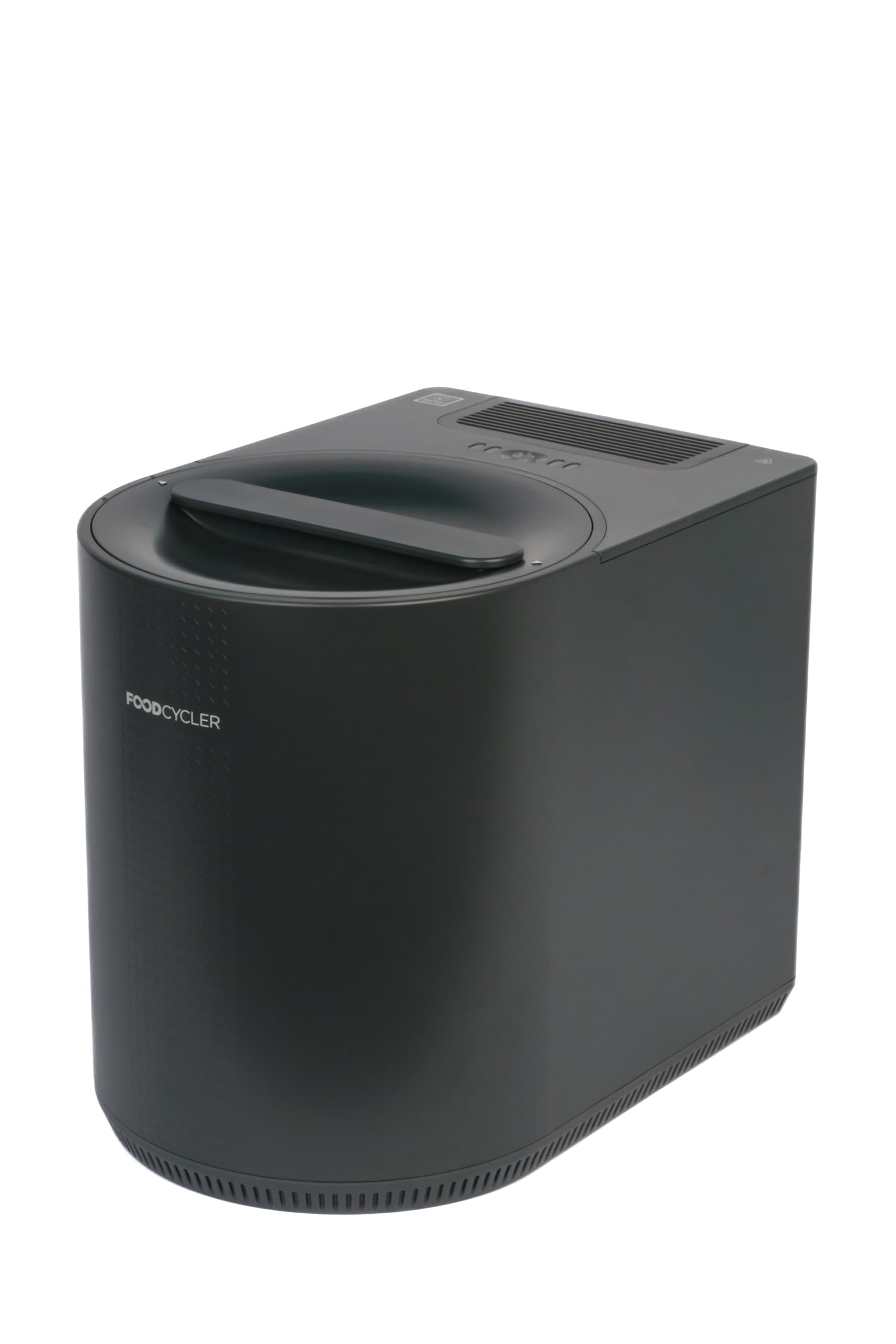
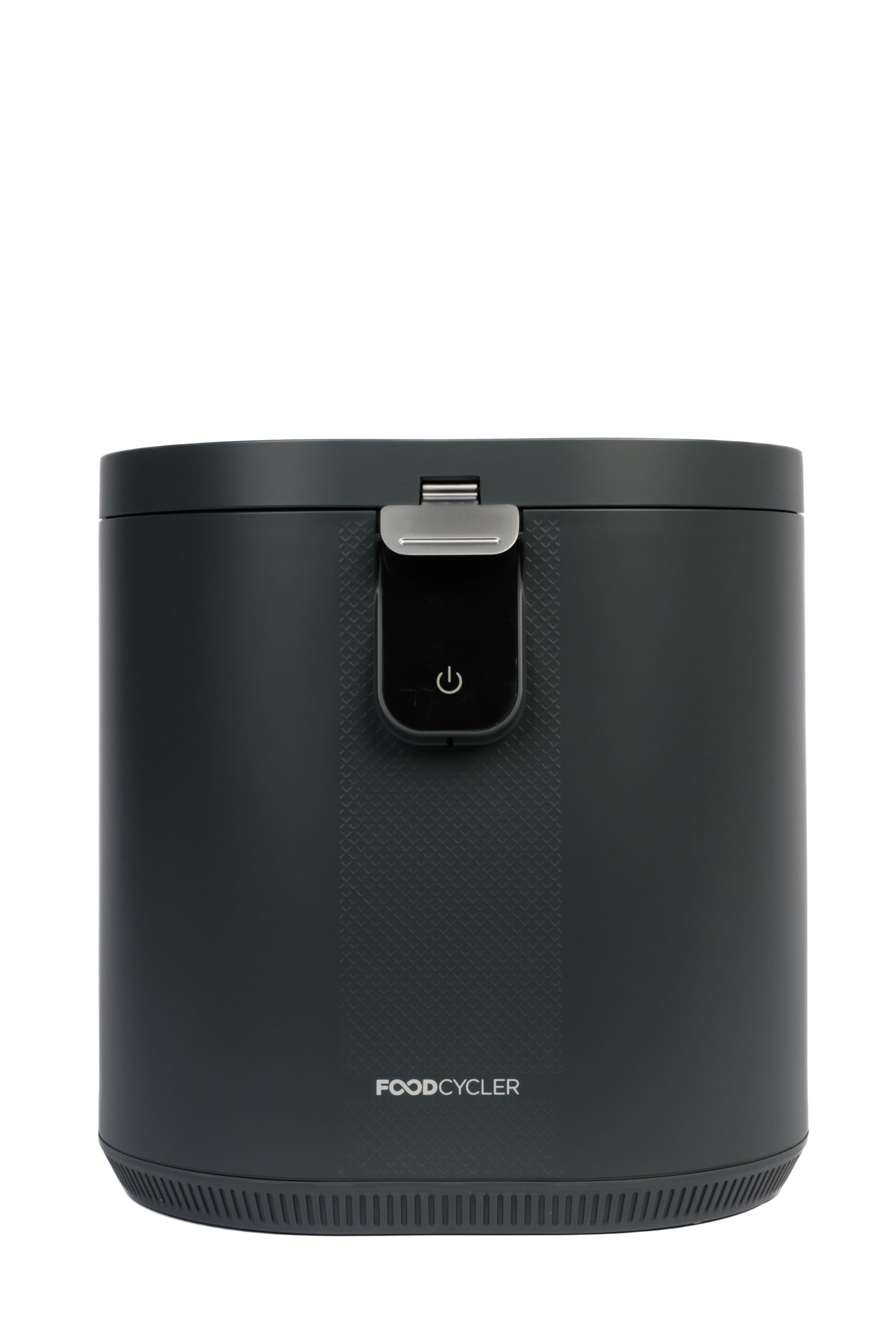
At 11 inches tall, the Food Cycler Eco 3 slides under a cabinet in a way most of these machines cannot. That small footprint is the reason to choose it: the 3.5-liter bucket holds less than the Eco 5, but the unit still handles daily peels, leftovers, and small bones without turning the counter into an appliance park.

We like the Eco 3 best for compact kitchens because it keeps the Food Cycler's Vortech grinding system and refillable carbon filter in a body that fits where space is tight. The one-touch start and LED progress lights are simple, and the removable bucket makes emptying less of a chore. It runs quietly, though bones and tough scraps make more noise than soft vegetable trim; that is normal for the category, not a defect.

The trade-off is capacity: the 3.5-liter bucket is a step down from the 4- and 5-liter machines here, so a large family may fill it faster than expected. If your kitchen is short on space, that is an easier concession; if you have a free corner, the larger Eco 5 is the more forgiving choice.

Bottom line: We pick the Eco 3 when counter space is tight and you still want a capable, quiet 3.5-liter machine.

3

Food Cycler Eco 5

Food Cycler Eco 5

Busy family kitchens

Our Score 8.8/10
Check Price

Worth Noting

  • Premium price for the capacity
  • Filter needs periodic refreshing
Weight
30 lb
Capacity
5 liters
Warranty
3-year limited
Dimensions
10.3"L x 13.8"W x 13.8"H
Read the full review

A 5-liter bucket and a three-year limited warranty are the two numbers that put the Food Cycler Eco 5 at the top of this list. We have lived with enough countertop composters to know that capacity and backup matter more than a pretty control panel: the 5L bucket gives a family room to collect scraps for a few days, and the longer warranty takes some of the sting out of the category's durability worries. The Eco 5 is a large, heavy machine at 13.6 kg, so we think of it as a permanent counter appliance rather than something you tuck into a cupboard.

The Vortech grinding system is the other reason it earns the top spot. Food Cycler advertises it for pits, peels, bones, and leftovers, and that broader appetite is useful when you are scraping plates rather than sorting them. The refillable carbon filter is a smarter design than disposable cartridges: you top it up instead of hunting for a proprietary part. We also appreciate the removable bucket and the simple one-touch start, because the less fiddling there is around a bin of food waste, the more likely you are to use it.

It is quiet enough to run while you are in the kitchen, and the sealed bucket keeps waiting scraps out of the way until you start a cycle. The caveat is placement. The Eco 5 needs a level, ventilated spot with clearance around the back, and its footprint is large enough that it wants a dedicated landing zone. If you have the room, it is the one here we trust with the widest range of household scraps and the one we point to first for a family that cooks most nights.

Bottom line: We recommend the Eco 5 for busy kitchens that want a generous bucket, refillable filtration, and the longest warranty here.

4

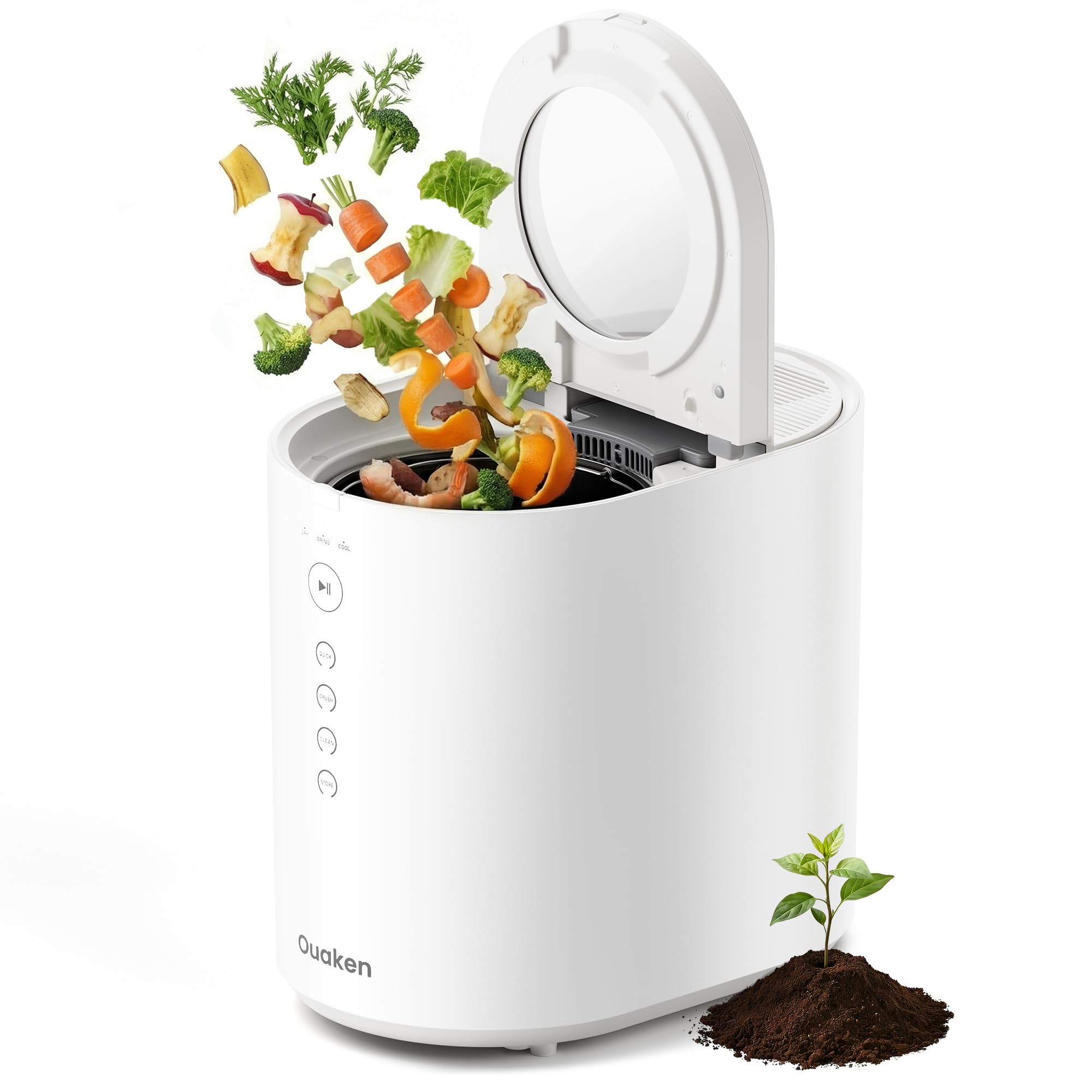
Ouaken 5.5L

Ouaken 5.5L

Large households

Our Score 8.8/10
Check Price

Worth Noting

  • Newer model has a shorter durability record
  • Large footprint needs dedicated counter space
Modes
5 modes
Weight
22 lb
Capacity
5.5 liters
Dimensions
15.9"L x 10.3"W x 14"H
Read the full review

The 5.5-liter bucket and five modes are what separate the Ouaken OK-255 from its smaller sibling. Standard, Quick, Crush, Clean, and Store cover the whole routine, from a fast turnaround to a holding mode when you are not ready to empty the bin. For a household that fills a 4-liter machine too quickly, that extra room is the point.

The 9H non-stick coating on the bucket is a practical touch, and the redesigned blade assembly is meant to handle the tougher scraps that slow down smaller units. It is also lighter than the Eco 5 at 10 kg, so it is easier to move when you need the counter. The upgraded carbon filter and enhanced airflow target the odor problem that plagues cheaper machines.

The machine is quiet, and the inner bucket is larger than most countertop bins, so you can collect scraps for longer between cycles. Keep the filter fresh and avoid overfilling the bucket, because a packed bucket is where these machines tend to struggle. The five modes are genuinely useful, but most people will settle into Standard or Quick and use Clean when the bucket needs attention.

We point large households to the OK-255 for its 5.5-liter bucket, five modes, and midrange price. It gives you more capacity than the Eco 5 at a lower cost, and it is easier to move around. For a big household that wants a batch machine with room to spare, this is the one we choose.

Bottom line: We point large households to the OK-255 for its 5.5-liter bucket, five modes, and midrange price.

5

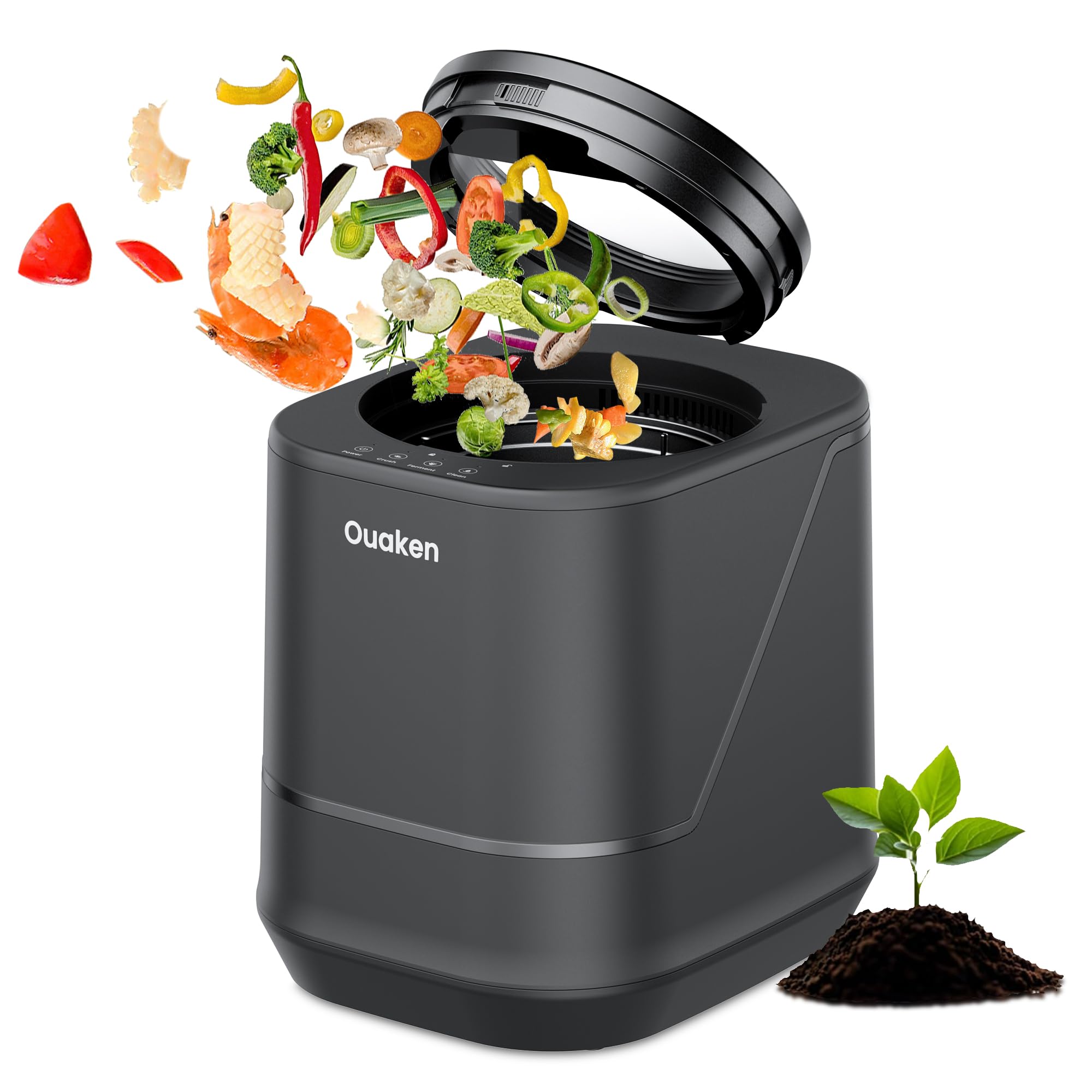
Ouaken 4L

Ouaken 4L

Midrange families

Our Score 8.6/10
Check Price

Worth Noting

  • Lid durability is the main long-term risk
Modes
Crush, Ferment, Clean
Weight
15.8 lb
Capacity
4 liters
Dimensions
10.4"L x 13.3"W x 12.8"H
Read the full review

Three hours is the number that makes the Ouaken 4L easy to live with, and it is why we rate this the best midrange family pick. The machine uses high-temperature drying and low-speed grinding to turn a bucket of scraps into a reduced, compost-like material, and the shorter cycle means you can start it after dinner and deal with the output before bed. The 4-liter bucket is sized for a family, and the transparent lid makes it obvious when the load is full.

The carbon filter does its job, and the machine stays quiet enough that we could hold a conversation next to it. The touch interface is simple, with Crush, Ferment, and Clean modes, and the bucket comes out for washing. The 7.15 kg body is heavy enough to stay put when you open the lid, which we appreciate more than a lighter shell.

The weak point is the bucket and internal parts, which need a gentle hand when they are full. We also found the value only middling: it costs more than the smallest pick but delivers more capacity, so the math depends on how often you run it. For a household that cooks most nights, the extra bucket room is worth it; for one person, the Airthereal is easier to justify.

Bottom line: We see the Ouaken 4L as the best midrange family machine: a 4-liter bucket, a short cycle, and simple controls.

6

Reencle Prime

Reencle Prime

Continuous composting

Our Score 8.4/10
Check Price

Worth Noting

  • Automatic lid can be finicky
Noise
As low as 28 dB
Capacity
14 liters
Dimensions
12"L x 13"W x 18.4"H
Daily Input
Up to 2.2 lbs
Read the full review

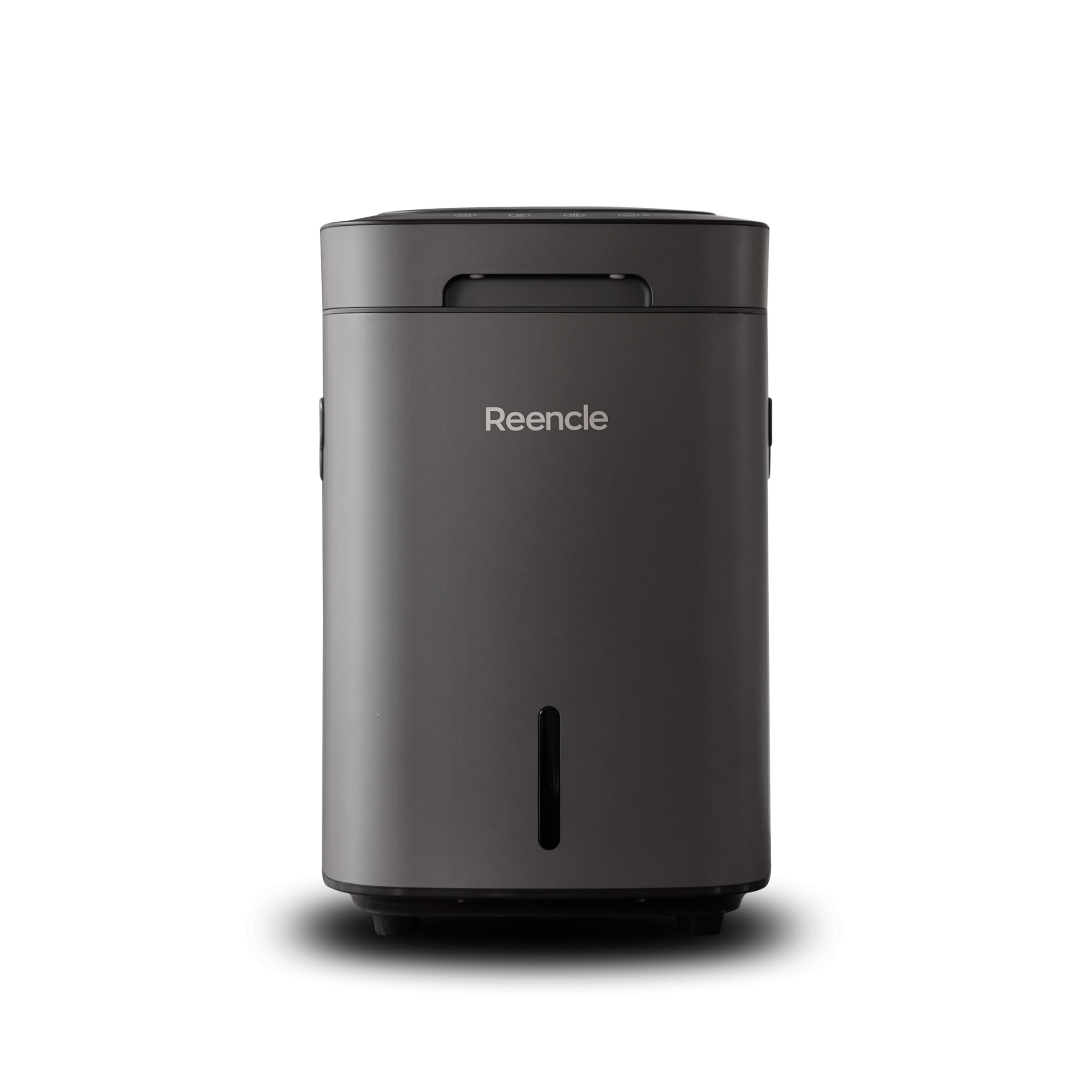
The Reencle Prime is the odd one out here: it does not dry and grind a batch of scraps in a few hours, then stop. It runs an aerobic microbial process continuously, so you add food waste as you generate it and take compost out when the bin is ready. That difference is why it belongs in this guide.

The 14-liter capacity and 2.2-pound daily input are in a different class from the batch machines, and the 28 dB noise rating is the quietest here. The included starter pack and carbon filter mean you can begin without buying a separate kit. The aerobic process is designed to break down a broader mix, including meat and cheese, which many batch units do not invite.

We recommend the Prime for large households that want a true composting rhythm rather than a countertop dehydrator. It is the one here that keeps working between loads instead of waiting for a full bucket and a button press. For a family that cooks every day and wants to keep a steady supply of compost coming, that continuous rhythm is the advantage worth paying for.

The caveats are real. The Prime is expensive, the filters are a recurring cost, and the 14-liter bin takes up more floor or counter space than the batch units. Those are the trade-offs for a continuous system. None of that changes the recommendation for a household that wants continuous composting, but it is why we do not send a small household here.

Bottom line: We recommend the Reencle Prime for large households that want continuous aerobic composting and whisper-quiet operation.

7

Soliddis 4.2L

Soliddis 4.2L

Easy upkeep

Our Score 8.4/10
Check Price

Worth Noting

  • Paddle can be damaged by jams
Filter
900 mL carbon filter
Weight
14.3 lb
Capacity
4.2 liters
Dimensions
12.9"L x 12.6"W x 10.6"H
Read the full review

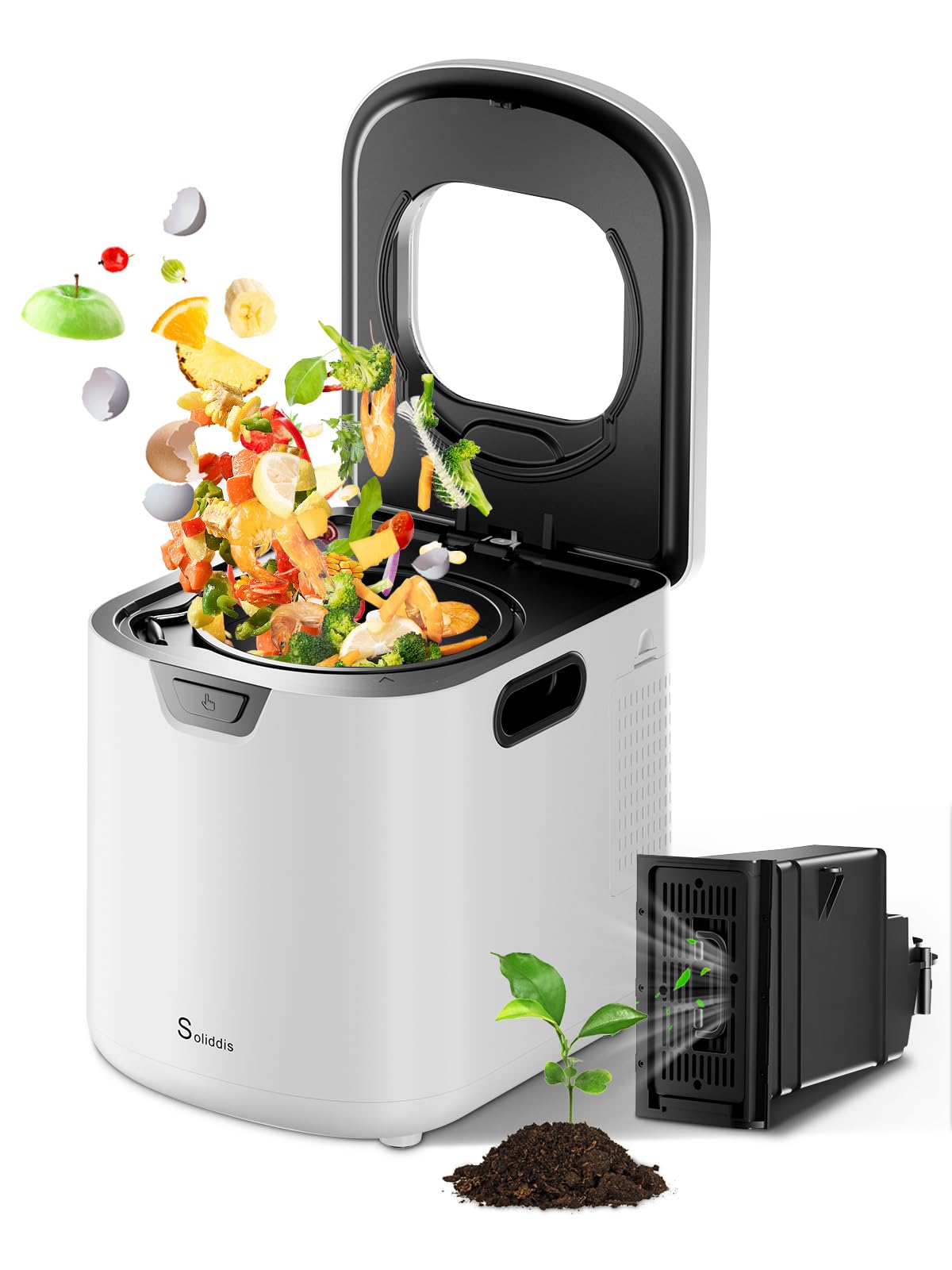
The self-cleaning mode is the feature that makes the Soliddis 4.2L worth a look. Add water, select Clean, and let the machine work the non-stick cast-aluminum bucket; you are not leaning in with a scraper after every cycle. That is a real quality-of-life difference in a category where cleaning is the chore that makes people stop using the appliance.

The 4.2-liter bucket is a useful size, the 900-milliliter carbon filter is larger than most here, and the one-touch lid and clear window make the routine straightforward. The press-and-hold start is a thoughtful safety touch; it takes a deliberate 1.5-second press, so a child or a passing sleeve is less likely to set it off. The white finish is clean-looking, though it shows kitchen life.

We see the Soliddis as a sensible self-cleaning pick for small kitchens, provided you keep loads moderate and accept a shorter track record. The unit is a little tall for a countertop at 10.6 inches, so check the clearance under your cabinets. If self-cleaning matters more to you than a long warranty, this is the one to consider; if you want the longest backup, the Food Cycler Eco 5 is the safer buy.

Bottom line: We see the Soliddis as a sensible self-cleaning pick for small kitchens, provided you keep loads moderate and accept a shorter track record.

How We Tested These Countertop Composters

We started with the spec sheets, because most of the decision happens before anything gets plugged in. We compared capacity, cycle length, whether a unit grinds and dries scraps or relies on a microbial packet, what kind of filtration sits between the bucket and your kitchen air, and — a detail a lot of shoppers miss until month four — how much replacement filters cost and whether the bucket and lid parts are dishwasher-safe. Anything with no filter, no lid interlock, or parts we couldn't easily reorder got cut. That left seven machines.

Each one then ran in a real kitchen for the full eight months, with the same real-world diet: dinner prep scraps, coffee grounds, melon rinds, wilted lettuce, the occasional plate scraped straight from the sink. We logged how long a cycle actually took, stood in the next room while units ran at night to judge noise, and opened and closed each lid one-handed with wet, greasy fingers to see whether it caught, stuck, or needed two hands and a firm shove.

We also weighed scraps going in and weighed the output coming out to see how much volume was genuinely removed. Odor got checked by nose, twice a day — right after opening the lid and again with it closed a few feet away — and again in the last weeks of testing when we deliberately stretched filter changes past the recommended interval to see how quickly smell crept back. Each unit got nudged mid-cycle on a bare counter to check it wouldn't walk or tip, and we ran back-to-back cycles day after day to see which motors, seals, and hinges held up and which started rattling. Cost per cycle and filter replacement pricing factored in at the end, which is where a few otherwise decent machines lost their footing.

How to Choose Electric Composters

Match Capacity to Your Scrap Rhythm

A 2.5-liter machine like the Airthereal R500-V is enough for a couple who runs it every day or two, while a 4- to 5.5-liter bucket gives a family more slack between cycles. The number to compare is not just liters; it is how many days of peels, coffee grounds, and leftovers you can collect before the bucket is packed. Overfilling is what causes jams and messy cleaning.

If you cook most nights and fill the bin quickly, go larger; if you live alone or have a small kitchen, the smaller bucket is easier to justify. The Reencle Prime is a different proposition at 14 liters and 2.2 pounds a day: it is for a household that wants a continuous system, not a batch appliance.

Treat Odor Control as a Maintenance Item

Carbon filters and airtight lids do most of the odor work, but they need attention. A refillable filter, like the one on the Food Cycler Eco 5, is cheaper to keep going than a proprietary cartridge, while a larger filter such as the Soliddis's 900-milliliter unit gives you more surface area before odor breaks through. Neither is a set-and-forget part.

Keep the lid sealed between cycles, empty the bucket when it is full rather than compacting scraps, and refresh the filter on the maker's schedule. If odor is your main worry, choose a model with a refillable filter and a tight-fitting lid, and plan to replace or refresh the carbon at least as often as the manual says.

Know What the Output Actually Is

Most batch machines here dry and grind scraps into a reduced, compost-like powder. That is excellent for cutting waste volume, but it is not the same as finished compost. The output often needs to finish in an outdoor pile or be mixed into soil before plants get the benefit; do not treat it as a ready-to-use potting mix.

If you want a continuous aerobic process that produces compost more directly, the Reencle Prime is the one here built that way. It uses a microbial starter and a longer decomposition rhythm. The trade-off is cost and space. For many kitchens, a batch machine that reduces volume is the more practical first step.

Prioritize Cleaning, Noise, and Support

A removable bucket and a smooth interior matter more than a long feature list, because cleaning is what keeps the appliance in use. Self-clean modes, like the one on the Soliddis, are helpful, but they do not replace a quick rinse and a check around the blade. Noise is the other daily factor: the Reencle Prime is rated as low as 28 dB, and most batch units are quiet enough for an open kitchen, though bones and tough scraps will make more noise.

Before you buy, check the warranty and the filter supply. The Food Cycler Eco 5 carries a three-year limited warranty, which is the longest here, and that matters in a category where lids, coatings, and paddles are the parts that wear. A strong warranty is not a substitute for careful use, but it is a sensible tiebreaker.

Frequently Asked Questions

Final Verdict

For most kitchens, the Food Cycler Eco 5 is the electric composter we recommend. Its 5-liter bucket gives a family room to collect scraps, the refillable carbon filter keeps consumable costs down, and the three-year limited warranty is the strongest backup here for the parts that tend to wear. It is a large, heavy machine, so give it a permanent, ventilated spot.

If your counter is tight or your household is small, choose the Airthereal R500-V: the glass lid, dishwasher-safe bucket, and lower price make it the easier machine to live with. For a true continuous composting rhythm, the Reencle Prime is the upgrade; for a compact footprint, the Food Cycler Eco 3.