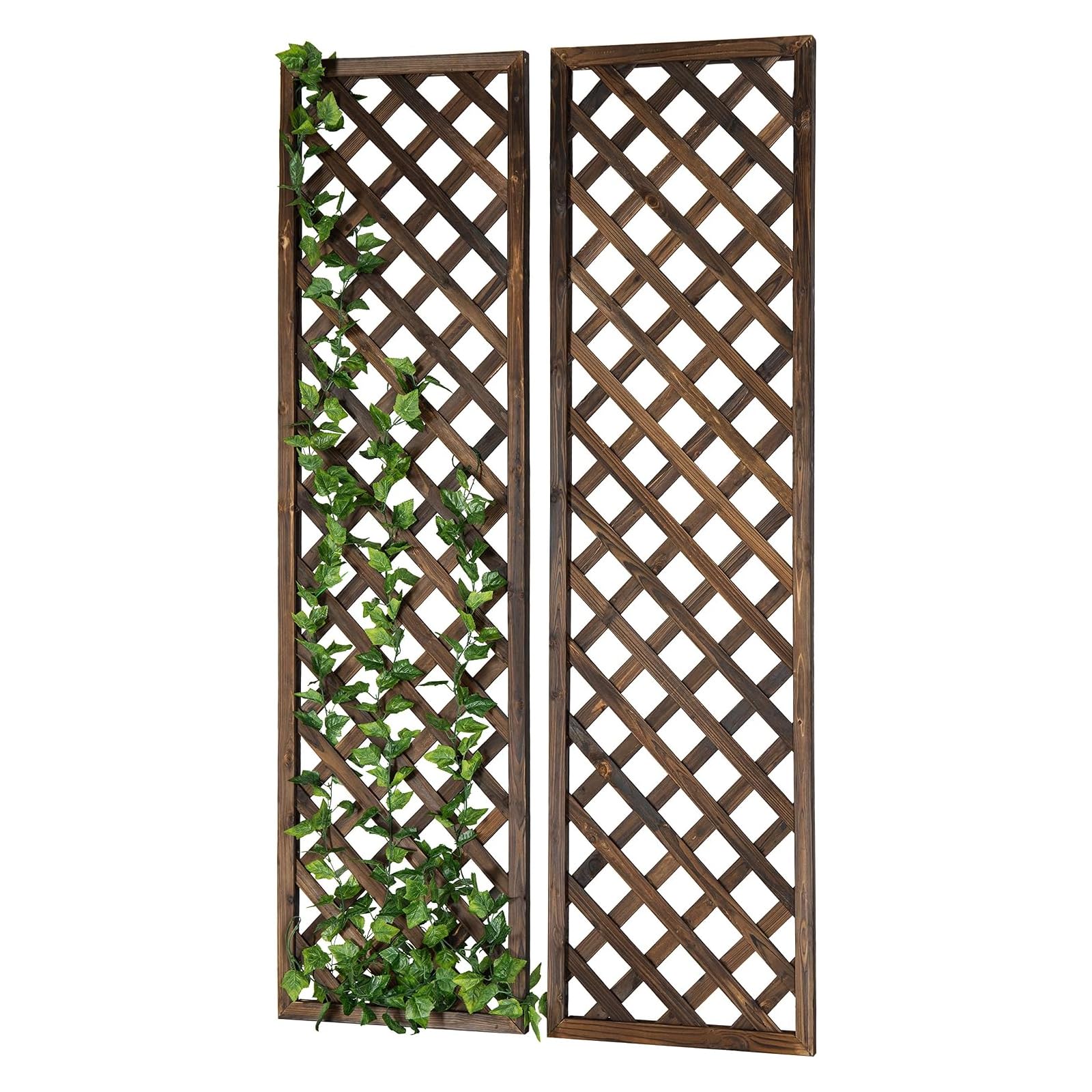
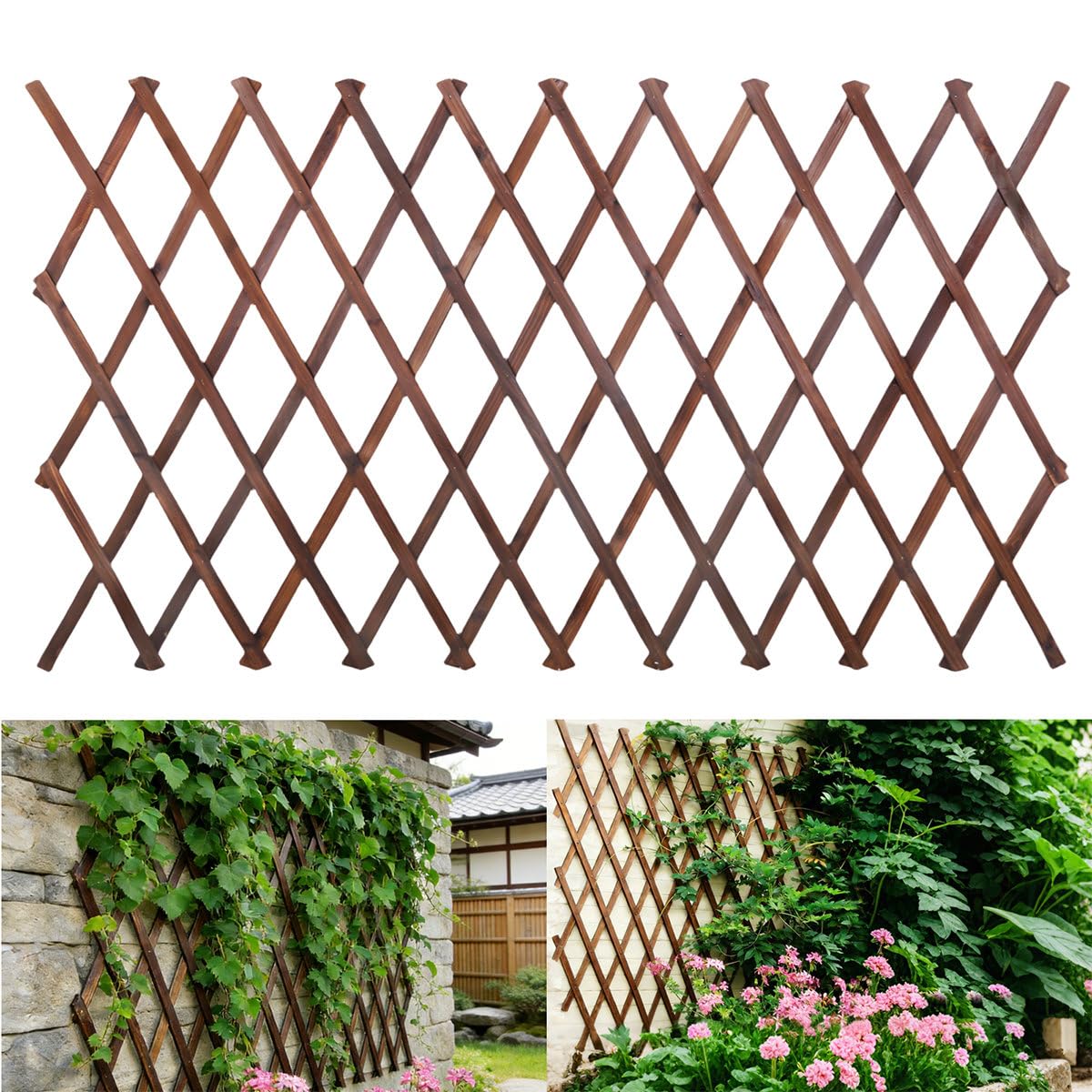
Planters & Plant Supports

Best Wall Mounted Garden Trellis of 2026

Anyone who has watched a clematis scramble up a flimsy bamboo stake knows the appeal of putting the wall to work instead. A wall-mounted trellis turns dead vertical square footage into growing space — cucumbers on a balcony, a climbing rose against a garage, jasmine softening a blank side of the house. The catch is that a trellis is only ever as good as its anchors. Wet vines get heavy, and the wrong hardware lets go in the first big gust, taking the plant down with it.

I've drilled more holes in my own walls than I care to admit, and over the past eight months my team and I have lived with 12 wall-mounted trellises on siding, brick, and stucco. The lesson that keeps repeating: match the grid to the climber. Tendrils need narrow openings to grab; heavy vines need a frame that won't bow and a spot where you can tie stems without fighting the lattice. The picks below are the ones that stayed straight, held their finish, and left the wall looking better than it did before.

1

Acemaker Wire Trellis Kit

Top Pick
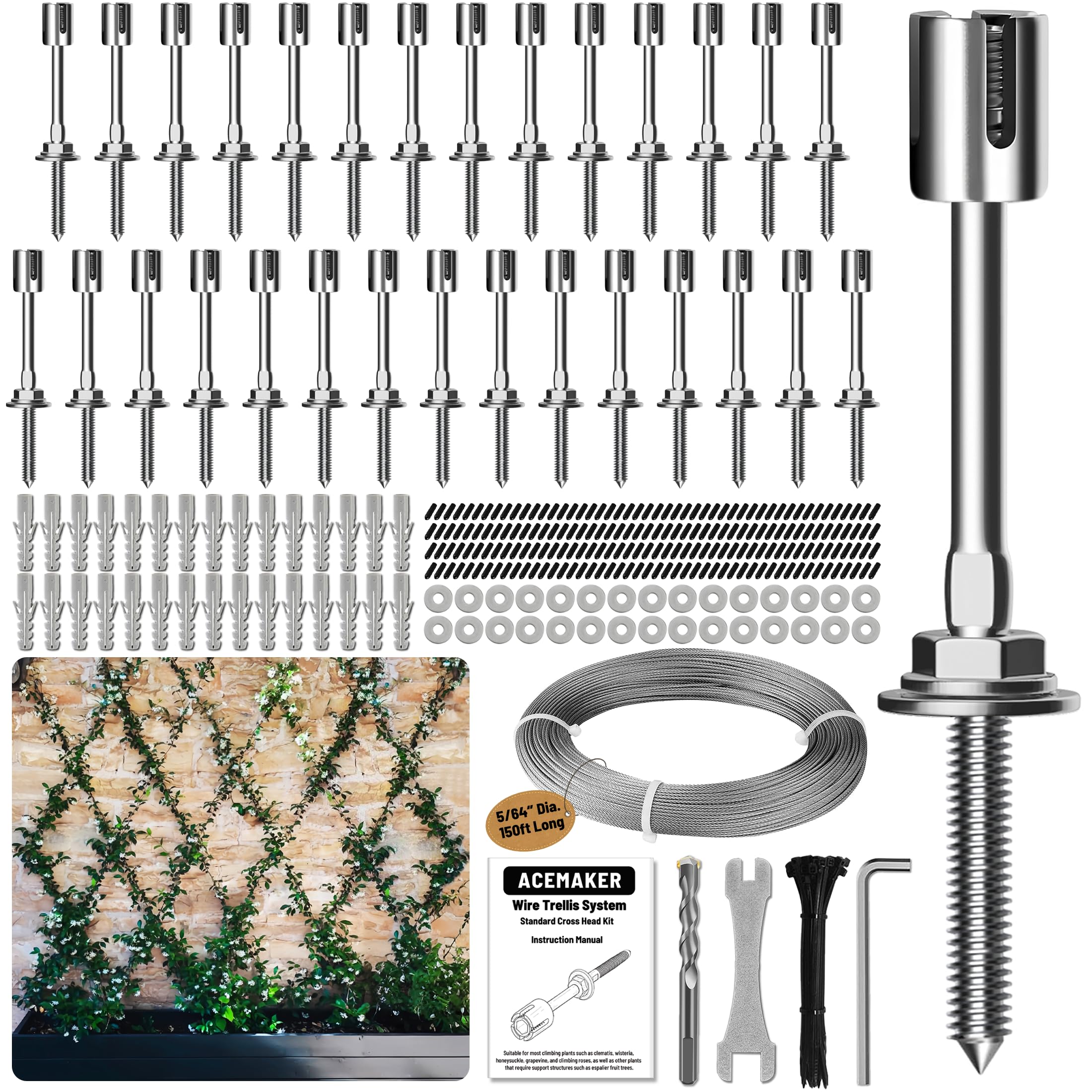
Acemaker Wire Trellis Kit

Modern cable espalier

Our Score 9.6/10
Check Price

Worth Noting

  • Needs a full afternoon of drilling and layout
  • Planning the pattern falls on you
Material
T316 stainless steel
Kit Contents
30 hubs, 150 ft cable, anchors, end caps
Wall Standoff
2 in
Cable Diameter
5/64 in (2 mm)
Read the full review

Thirty crosshead hubs, 150 feet of 5/64-inch cable, and a calculator that draws the diamond or grid for you: the Acemaker kit treats a wall of vines as a design problem rather than a panel you screw up. Every metal part is T316 stainless, including the rope, and that grade is the detail that sold us. It's the marine grade, the one that resists rust instead of staining your siding with it.

We've hung enough trellises to expect rust streaks by the second season, so the hardware is where we looked first, and this is the only kit here that uses T316 throughout. The hubs also hold the cable about two inches off the wall, and that gap does real work: air moves behind the vines, the siding dries after rain, and you can get your fingers behind a stem when it needs tying in.

Two things we changed after the first run: a small socket set instead of the stamped wrench that comes in the box, and an extra coil of cable. Running short mid-pattern is the one mistake the layout doesn't forgive, and the tightening goes twice as fast with a proper tool.

What earns it first place is the range of walls it suits — a long run of brick, a narrow strip between windows, a fence line that needs structure rather than a fence. Set the hubs in a diamond, let a clematis fill it in, and the wall reads as architecture instead of garden hardware.

Bottom line: We think it's the best wall trellis here for anyone willing to plan: stainless throughout, held off the wall for airflow, and it covers a big facade.

2

Dura-Trel Winchester Trellis

Dura-Trel Winchester Trellis

Big wall coverage

Our Score 9.0/10
Check Price

Worth Noting

  • Reads as plastic next to wood or iron
  • Too open to screen a deck on its own
Material
PVC vinyl
Mounting
Wall screws and spacers included
Warranty
20 years
Dimensions
57"W x 95"H
Read the full review

Fifty-seven inches wide and ninety-five tall is a serious piece of wall. The Winchester is the panel for the blank side of a garage or a two-story gable, where a small lattice would look like a postage stamp. It's heavy enough to need two people on a ladder, and light enough that the two of you can manage it.

The appeal is that you stop thinking about it. PVC with a 20-year warranty against fading, cracking, peeling, and discoloration, cleaned with a hose and a cloth at the end of the season, on a set where the wooden panels want a look-over every spring. That's a trade we make happily.

It is plastic, and beside cedar or powder-coated iron you can tell. From across a garden, with a vine half-covering it, you can't. The grid is also more open than a privacy screen needs to be — until the vine fills in, you'll see straight through it, so don't buy it expecting to block a neighbor in the first summer.

The fixing is the part to get right. Wall screws and spacers are included, but the fastener arrangement is fiddly and a panel this size acts like a sail. Run lag screws into studs or proper masonry anchors, use the spacers to hold the grid off the surface, and a 95-inch sheet of PVC stays put through a winter of wind.

Bottom line: We recommend it for the blank side of a garage: 95 inches of no-maintenance vinyl, provided you fix it into something solid.

3

CJGQ 2-Pack Wood Lattice

CJGQ 2-Pack Wood Lattice

Narrow wall strips

Our Score 9.0/10
Check Price

Worth Noting

  • Light build suits annuals, not heavy roses
Panels
2
Material
Carbonized wood
Closed Size
17.3"W x 10.2"H
Expanded Size
12.8"W x 67.2"H
Read the full review

Two panels for budget money, and at 12.8 inches wide by 67.2 tall when expanded, this pair is built for the strip of wall nothing else fits — either side of a window, the gap between a downpipe and a door frame, a narrow fence return. One panel alone looks deliberate rather than mean, which is not true of every small trellis.

They arrive folded to about the size of a cereal box and open like a fan: no assembly, no bag of screws to lose. The carbonized wood is dark and even, and each panel is light enough to hold one-handed while you drive the first fixing. Set the width you want and pin it there, because an expanded lattice will creep if you leave it loose.

Weight is the honest limit. About a kilogram for the pair is fine for morning glories, sweet peas, and a young clematis; a mature rose that shakes the frame in every gust wants one of the metal or PVC panels here instead. For the first two seasons of a new wall, though, this is the pair we reach for.

Bottom line: For narrow walls and tight budgets, these two panels are the easy yes — no assembly, dark carbonized wood, and real height.

4

MyGift Wood Wall Trellis Set

MyGift Wood Wall Trellis Set

Decorative privacy pair

Our Score 9.0/10
Check Price

Worth Noting

  • No mounting hardware included
  • Backs show the construction staples
Panels
2
Material
Stained wood
Dimensions
19.7"W x 71"H
Mounting Hardware
Not included
Read the full review

Compare these with the other wooden pair here and the difference shows the moment the box opens: 19.7 inches wide by 71 tall per panel, a deep brown stain, and latticework with some ambition to it. This is the pair you hang where people will actually look.

Side by side they make a 40-inch screen, which is the job we give them on a porch or between two windows. There's no mounting hardware in the box, so budget for brackets or screws that suit your siding, and the panels are one-sided — the back shows the staples holding the lattice together. A coat of spar urethane before they go up is worth the hour if the wall takes weather.

That makes this a placement decision more than a performance one. On a wall you look at from the house every morning, the finish earns its premium; on a working fence line where the vine does the talking, the cheaper carbonized pair makes more sense. We rate it the best-looking option in the set.

Bottom line: The best-looking pair here, and worth the money where the wall is on show — just add mounting hardware and hide the stapled backs.

5

Achla Designs Wall Trellis

Achla Designs Wall Trellis

Instant metal lattice

Our Score 8.8/10
Check Price

Worth Noting

  • Fixed height
Assembly
Arrives fully assembled
Material
Powder-coated wrought iron
Mounting
Two brackets included
Dimensions
38"W x 56"H
Read the full review

It arrives assembled and hangs on two brackets, and after a season of flat-pack lattice that is the luxury we noticed first. Expand the accordion to the width you need, mark two holes, and a clematis is climbing by lunchtime. At 38 by 56 inches it's the panel that suits the space beside a door or on a narrow chimney breast.

The powder coat is deliberately not glassy, so tendrils find something to grip instead of sliding down the way they do on smooth vinyl or a painted wall. That sounds like a small thing until you've watched a clematis petiole slip off a glossy frame all week. Nine pounds of iron also means one person can carry it up a ladder and hold it steady while the first bolt goes in.

What it isn't is flexible in height: 56 inches carries clematis, jasmine, and sweet peas and stops being enough for a rambling rose. The accordion widens rather than extends, so measure the gap before you commit. The graphite finish also ages quietly — powder coat doesn't weather to gray the way bare wood does, so the panel looks the same in year three as it did in week one.

Bottom line: Our pick for the impatient gardener: assembled, bracketed, and ready for a clematis the same afternoon.

6

Bounmer Expandable Trellis

Bounmer Expandable Trellis

Long low walls

Our Score 8.8/10
Check Price

Worth Noting

  • Only 38 inches tall
  • Needs fixing once it is expanded
Material
Cedar wood
Thickness
0.35 in
Closed Size
45.3"L x 11.2"W
Expanded Size
89"W x 38"H
Read the full review

Eighty-nine inches across and thirty-eight high: this is the widest panel here and the shortest, which makes it the one for a long low run — along the top of a retaining wall, under a picture window, or across the end of a patio where a six-foot fence would be too much.

It's cedar, carbonized and cut to 0.35 inch thick, so it feels more substantial than the thin pine lattices at the budget end. The panel arrives folded into a 45-inch bundle and pulls out like a concertina. Set the width you need, then fix it: an expanded lattice has some give in it, and a couple of screws or ties at the chosen width stop it creeping wider through the season.

Where it earns its place is as a screen. Thirty-eight inches carries sweet peas, nasturtiums, and a low-growing clematis; a wisteria or a big climbing rose goes over the top and onto the wall above within a season. We liked it most over a low wall, where the vine fills the panel and the panel hides what's behind it.

Two people make the job easier — one to hold the panel at the width you want, one to drive the fixings. Don't simply pull it fully open out of habit. Set it to the span you actually need and the lattice sits flatter and tidier.

Bottom line: Our pick for a long, low wall: 89 inches of cedar in one panel, best used as a screen or a run of annual climbers.

7

Miuwauer Wood Lattice Panel

Miuwauer Wood Lattice Panel

Budget tall panel

Our Score 8.6/10
Check Price

Worth Noting

  • Light build
Panels
1
Material
Natural wood
Closed Size
11.4"W x 17.3"H
Expanded Size
13.4"W x 78.8"H
Read the full review

Nearly 79 inches of height from the least expensive panel here. If you have a narrow strip — between a window and a corner, either side of a shed door — a tall thin panel does more than a short wide one, and this arrives folded to 11.4 by 17.3 inches, small enough to carry home on a bicycle.

The wood is natural and unfinished, grain left visible, with high-strength stitching at the joints where the lattice crosses. Set it up and you get a diamond pattern that disappears behind foliage within a season. Seal or stain it before it goes up if you want the wood tone to hold through a wet winter.

Weight tells you what it is: under two pounds of wood stretched across 79 inches. That's plenty for morning glories and sweet peas, and light for a mature clematis on an exposed wall, where the whole panel will move in a gust and the vine will win.

For the money, we think it's the right first trellis — cheap enough to try a wall you're unsure about, tall enough to be genuinely useful. Hang one on the strip you're considering, then add two more in a row once the plants tell you the spot works.

Bottom line: A tall, inexpensive panel that lets you try a wall before committing; we rate it for light climbers, not heavy perennials.

How We Tested Wall-Mounted Trellises

We started with more than 30 trellises from garden centers, hardware retailers, and small trellis workshops, then narrowed the field by material, grid spacing, stated load capacity, and whether mounting hardware actually came in the box. Anything that shipped with no anchors, or a lattice wide enough that tendrils would slip straight through, came off the list. Twelve made the cut.

Each one went up on three surfaces: painted wood siding, brick, and a stucco wall. We emptied the box first and wrote down exactly which screws, anchors, and spacers were included and what sent us to the hardware store mid-install. Then we assembled and mounted every trellis solo with a drill and a level, timing how long it took and whether the instructions matched the parts in front of us. Once it was up, we leaned our weight on the top rail to see how much it flexed, shook the frame to check the anchors, and stepped back to judge how the grid sat against the wall.

The plants did the hardest testing. We ran climbing beans, morning glories, and a container-grown rose up the panels through a full growing season, noting whether tendrils gripped on their own or whether we had to tie stems in by hand. After every storm we went back out with a screwdriver to see which fasteners had worked loose, and at the end of the season we checked for rust at the welds, paint chipping where the frame met the wall, and any bowing under the weight. Value came down to what survived: a trellis that needed new anchors and a touch-up by August wasn't a bargain, whatever it cost in spring.

How to Choose the Right Wall Mounted Garden Trellis

Start With the Wall, Not the Panel

Siding over studs, brick, render, and a fence rail each want a different fastener, and a bracket that holds on cedar will pull straight out of render. Mark the studs with a pencil before you drill anything: a vine-laden panel is a sail, and all that wind load lands on four small holes.

A panel held an inch or two off the surface also dries faster and lets air move behind the vines, which matters most on a wall that never sees sun. Measure the blank width and height too — a 95-inch panel on an eight-foot wall leaves no room for trim or a window frame.

Match the Height to the Climber

A sweet pea or a morning glory is happy at four feet; clematis, jasmine, and climbing roses want six to eight; wisteria will outgrow everything on this page. Buy for the plant you'll have in three years rather than the plug going in now.

Width is where expandable lattices earn their keep — a concertina panel can be set to the exact gap between a downpipe and a door frame, which no fixed panel manages. Two narrow panels often dress a wall better than one wide one, especially either side of a window.

Wood, Vinyl, or Metal

Carbonized wood and cedar are the warmest look and need little beyond an annual glance; thin budget pine is a season or two of color before it goes ragged. PVC never needs painting and carries the longest warranties here — the Dura-Trel panel is covered for 20 years against fading and cracking — but it reads as plastic at close range.

Powder-coated steel and stainless cable cost more and shrug off weather without any upkeep. On a wall you'll never repaint, they're the ones we choose.

Decide How Much Installation You Want

An assembled panel with brackets in the box goes up in an afternoon with a drill, a level, and someone to hold it steady. A cable kit is a design job: you set the pattern, mark every anchor, and drill each one, and the pattern is what makes or breaks the finished look.

If the wall isn't yours to drill, choose the smallest footprint that does the job. The two-panel wood set here needs a handful of fixings; a 30-hub cable kit needs thirty holes.

Frequently Asked Questions

Final Verdict

The Acemaker kit is what we recommend for most walls: stainless throughout, held two inches off the siding, and a layout that turns a blank facade into something deliberate. It asks for an afternoon and a drill, and it repays that with a trellis that won't rot, rust, or need repainting.

If you want the vine up this weekend, the Achla arrives assembled with its brackets in the box. For a narrow strip and a tight budget, the CJGQ pair covers two gaps for less than a single big panel.