Planters & Plant Supports

Best Raised Garden Beds of 2026

A raised bed solves a very specific problem: the ground where you actually want to grow things is too wet, too rocky, too compacted, or simply too far down for anyone with a sore back to enjoy. But the box itself is where all the real decisions live. Wood rots at the soil line, metal rusts at the bolts, and a panel that feels rigid in the store can bow outward the moment it's holding a cubic yard of wet compost. What you're buying, whether you realize it or not, is a frame that stays square through a few winters.

I've built a handful of these in my own yard over the years, and the ones that failed never failed dramatically — they just got wobblier every spring until the corners stopped meeting. So my team assembled 12 different beds and left them outdoors for a full growing season, close to eight months of rain, sun, and root pressure. The lesson every first-time buyer learns a season too late: judge a raised bed full, never empty. The picks below are the ones that stayed put.

1

Vego Garden 17-Inch Bed

Top Pick
Vego Garden 17-Inch Bed

Best overall

Our Score 9.6/10
Check Price

Worth Noting

  • ⚠️ Sharp side edges during assembly
Material
Coated steel
Dimensions
96 x 24 x 17 in
Configuration
9-in-1 modular
Soil Capacity
23 cubic feet
Read the full review

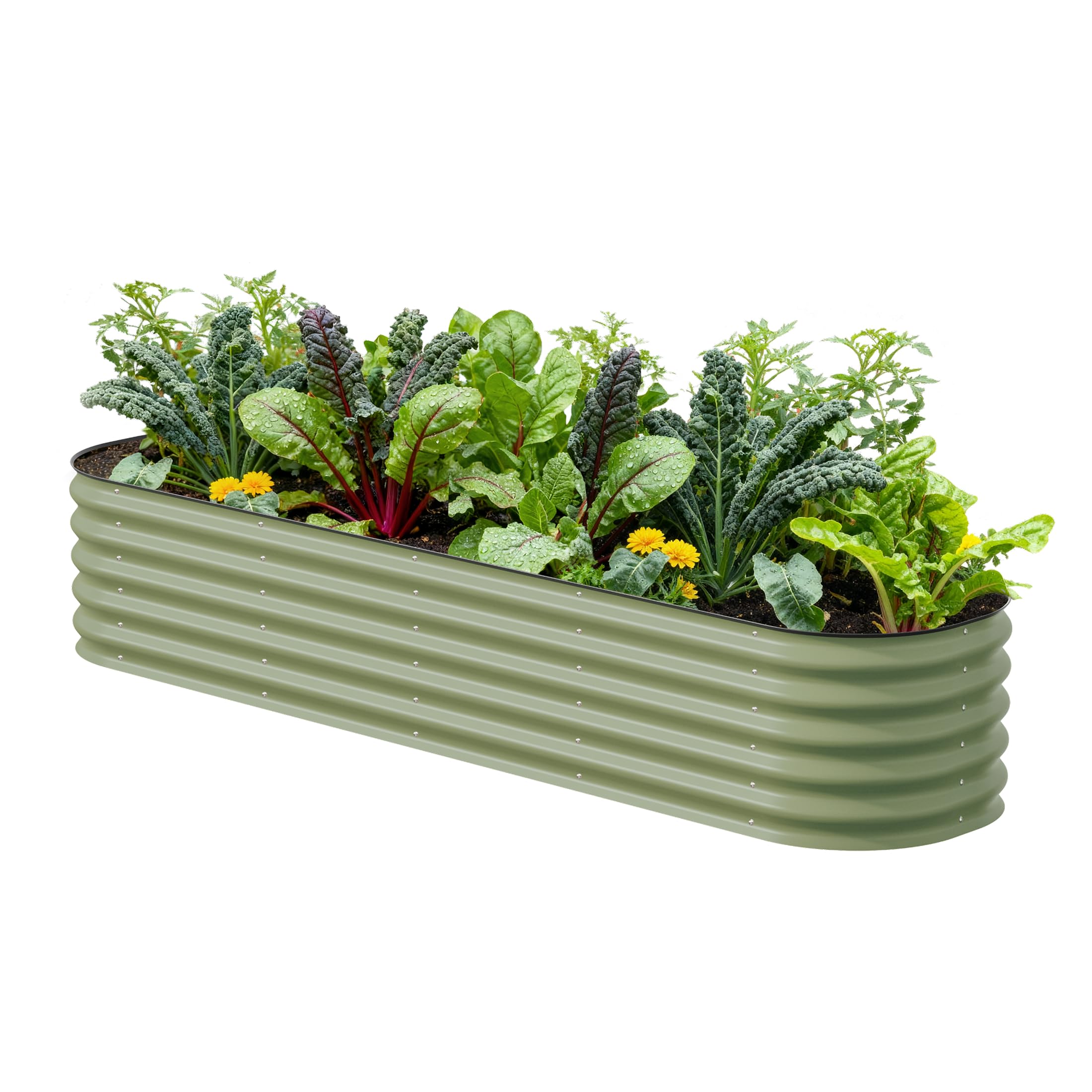
The Vego bed arrives as a stack of coated steel panels, and the 9-in-1 label is real: the same kit can go together as a long 8-by-2 bed or be split into smaller sections and rearranged later. At 17 inches tall and 23 cubic feet, it holds enough soil for a proper vegetable patch, not just a row of herbs. The 20-piece kit is heavier than the budget ovals, too, so set the frame where you want it before you start filling.

The 17-inch rim is the detail we kept coming back to. It lifts the working edge high enough to take strain off your back without turning the bed into a table-height planter, and the extra depth gives tomatoes, carrots, and other deep-rooted crops more room than a 10- or 12-inch oval. We also appreciate that the modular panels let you change the footprint instead of replacing the whole bed when your garden plan changes.

The VZ 2.0 steel uses a zinc, magnesium, and aluminum coating under AkzoNobel paint, which is the layer doing the rust work. That matters for a bed that may stay outside through wet winters. Assembly is a project rather than a ten-minute fold-out: there are many fasteners, and the panels are easier to handle with two people. The reward is a frame that feels rigid once everything is tightened.

A bed this large and expensive is more than a first-time herb grower needs, and the hardware count is real. For a front-yard bed that has to look intentional, hold a serious amount of soil, and adapt as you learn, this is the one we choose.

Bottom line: We recommend the Vego to anyone who wants a tall, modular metal bed that can change with the garden; its 17-inch depth and reconfigurable panels make the premium easier to justify.

2

SnugNiture 4x2 Oval Bed

SnugNiture 4x2 Oval Bed

Budget starter bed

Our Score 9.2/10
Check Price

Worth Noting

  • Shallow 11.8-inch depth limits root crops
Material
Galvanized steel
Dimensions
47.24 x 23.62 x 11.81 in
Edge Finish
Rubber edge strips
Soil Capacity
7.68 cubic feet
Read the full review

The rubber strips are the first thing we noticed, and they are the reason this budget bed stands out. They run along the top rim and the curved panel edges, exactly where a budget metal bed tends to bite. The 4-by-2 footprint and 7.68 cubic feet are enough for a compact kitchen garden, and the oval shape looks less industrial than a square box.

The open bottom is the other sensible choice. It lets excess water drain into the ground and gives roots somewhere to go, so set the bed where water does not pool. Assembly is straightforward: the wing nuts are included, and the kit even comes with gloves. The result is light enough to reposition before filling, which is the right time to move it.

What we appreciate most is that the budget went into the parts that touch you: the edge protection, the open base, and a size that fits a small yard. It is not the bed for a market garden, but for lettuce, herbs, strawberries, and flowers it does the job without fuss. If you want a low-cost first bed that does not feel like a cut hazard, start here.

Bottom line: We point budget shoppers to the SnugNiture oval because it covers the basics, adds rubber edge strips, and leaves room for soil without making a project of the purchase.

3

Rakukiri 5-Foot Bed

Rakukiri 5-Foot Bed

Large budget bed

Our Score 9.2/10
Check Price

Worth Noting

  • Thin panels can flex when moved empty
Material
0.8mm galvanized steel
Warranty
One year
Dimensions
60 x 29 x 11 in
Soil Capacity
68 gallons
Read the full review

Sixty-eight gallons is a lot of soil for a bed this simple. The Rakukiri's 60-by-29-by-11-inch oval gives you a long planting run without the price or parts count of a premium modular kit, and the open bottom lets roots reach the ground. For a first vegetable bed, that is a useful combination: more soil, fewer decisions.

What we like is the ratio of soil to fuss. The 0.8mm galvanized sheet has a double-layer anti-corrosion coating, and the oval shape has fewer corners to square up than a rectangular kit. It weighs only 5 pounds empty, so one person can position it before filling. Once the soil is in, the bed stays put; just set it on level ground and avoid dragging it.

Assembly is designed to be quick, and the hardware is included. The open base is the right call for drainage and for roots that want to escape into the soil below. This is a starter bed, not a forever centerpiece: the finish is plain and the frame is light. But for the volume, it is one of the strongest value plays here.

Bottom line: We recommend the Rakukiri for gardeners who want the most soil volume for the least money; the 5-foot oval is roomy, simple, and a smart starter bed.

4

GADI 67-Inch Bed

GADI 67-Inch Bed

Long narrow spaces

Our Score 9.2/10
Check Price

Worth Noting

  • Hardware pack can fall short
Material
Galvanized steel
Supports
Two bracing supports
Dimensions
67 x 20 x 10 in
Soil Capacity
7 cubic feet
Read the full review

The GADI is the bed for the strip between a fence and a lawn. At 67 inches long and 20 inches wide, it gives you a row-planting shape rather than a square patch, and the 7-cubic-foot capacity is enough for a line of peppers, garlic, or strawberries. The low profile suits a patio edge or a narrow side yard.

The 20-inch width is easy to reach across; it also means you will not be growing sprawling squash. Side ventilation panels add airflow, which helps in humid spots, and the open bottom handles drainage. The steel has a galvanized layer and two coats of anti-corrosion paint, so it is dressed for wet ground.

Where it earns our recommendation is the bracing. Two supports run across the bed, and that is the difference between a long metal span that stays put and one that bows once the soil goes in. It is still a 10-inch bed, so think greens, garlic, strawberries, and herbs; for deep-rooted tomatoes, go taller. For a fence line, the long narrow shape does more work than another square box.

Bottom line: We recommend the GADI to anyone lining a fence or patio edge; the 67-inch run gives row-planting space, and the bracing makes it sturdier than its light frame suggests.

5

LEETOLLA Mobile Bed

LEETOLLA Mobile Bed

Patio herb cart

Our Score 9.2/10
Check Price

Worth Noting

  • Rust can start where paint chips
Material
Painted iron
Mobility
Two wheels and handle
Dimensions
37.4 x 14.6 x 31.6 in
Soil Capacity
2.5 cubic feet
Read the full review

The wheels are not a gimmick on a bed this small. At 37.4 inches long and 14.6 inches wide, the LEETOLLA holds 2.5 cubic feet of soil, which is enough for herbs, lettuce, or a couple of pepper plants. Two wheels and two stabilizing feet mean you tilt and roll it like a wheelbarrow, not push it like a shopping cart; the handle gives you something to pull against.

At 31.6 inches, the planting box sits at a height that saves your back, and the bottom shelf takes gloves, snips, and a small watering can. Five drainage holes and two cross-channels move excess water through the center drain, which is the right setup for container growing. We think it is the best size here for a patio herb garden that has to move with the sun.

The drainage holes work, but water can escape around the bottom edges; set it where runoff is harmless. For herbs and greens on a deck, that is a manageable compromise. The planting box is shallow enough for a herb garden, not a tomato farm, so match it to the crops you actually tend every day.

Bottom line: We recommend the LEETOLLA for patio herb growers who need to chase the sun; the wheels, shelf, and 31.6-inch height make a small bed feel like a useful piece of furniture.

6

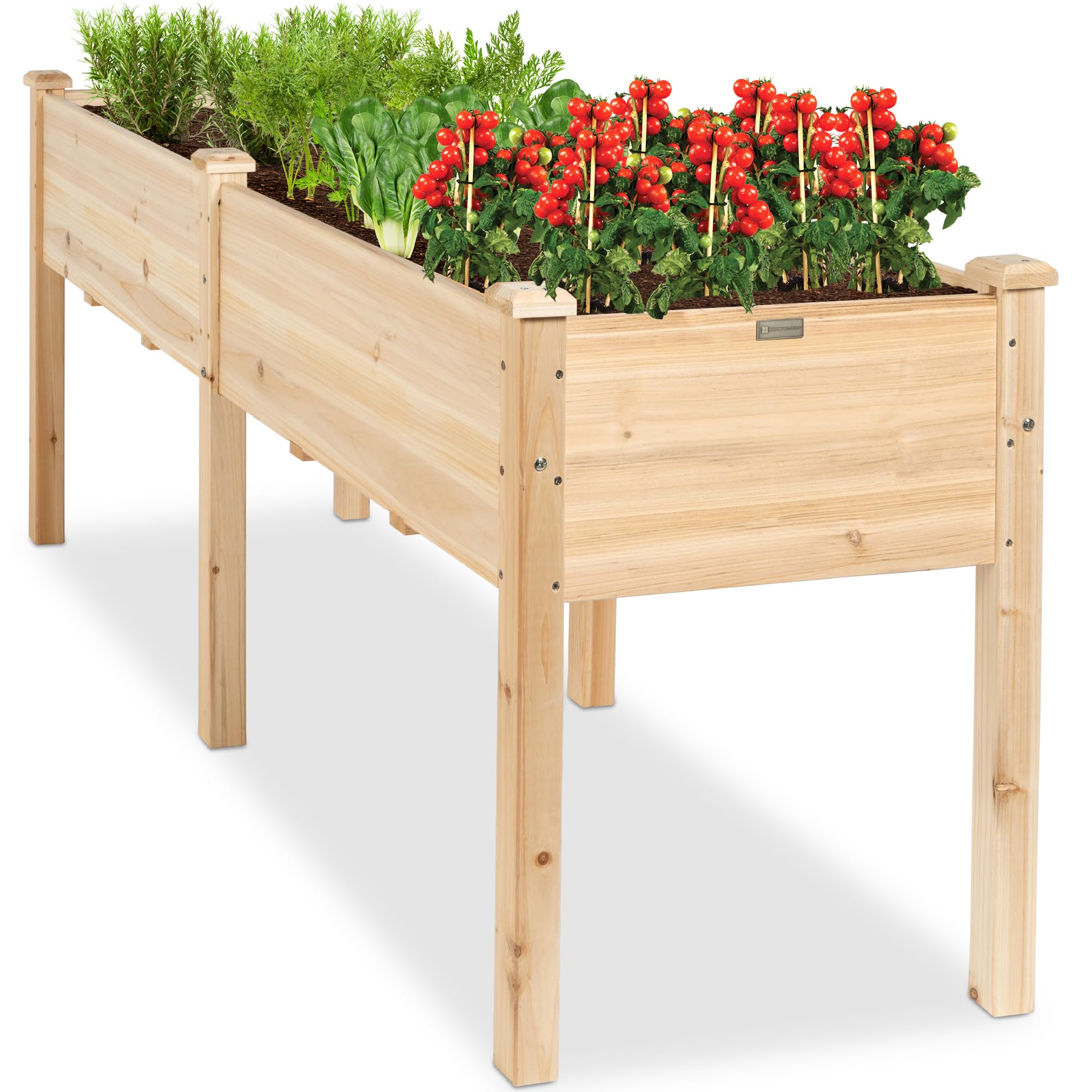
Best Choice Elevated Wood Bed

Best Choice Elevated Wood Bed

Back-friendly gardening

Our Score 9.0/10
Check Price

Worth Noting

  • Can loosen at joints over time
Material
Chinese fir wood
Dimensions
72 x 24 x 30 in
Soil Capacity
8.4 cubic feet
Weight Capacity
300 lb
Read the full review

The 30-inch working height is the whole point of this bed. At 72 inches long, 24 inches wide, and 30 inches tall, it gives you a raised table of soil with 8.4 cubic feet of growing space, six legs, and a 300-pound capacity. You stand to plant, reach across the 24-inch width, and skip the bend-and-kneel cycle.

The frame is Chinese fir, and it arrives unfinished. Plan to seal it before filling if you want it to shrug off weather; the six drainage holes and the divider panel are already there. The divider lets you split herbs from vegetables, or pull it out for one long run. The elevated box also keeps pets and rabbits out of the root zone, which is a real benefit on a patio.

We like that the height is not just a comfort feature. It changes how often you tend the bed: a quick check for ripe cherry tomatoes or bolting lettuce is a stand-up job, not a production. The 300-pound capacity is generous, but wet soil is heavy, so fill it after the frame is settled and on level ground.

For a gardener who has stopped kneeling, the height is not a luxury; it is the difference between keeping up with the bed and letting it go. The 8.4 cubic feet is enough for a real patio harvest, and the divider keeps the layout flexible.

Bottom line: We recommend the Best Choice elevated bed for gardeners with back or knee trouble; the 30-inch working height changes the job, provided you seal the wood and inspect the joints.

7

Yaheetech 8-Foot Wood Bed

Yaheetech 8-Foot Wood Bed

Traditional wood bed

Our Score 9.0/10
Check Price

Worth Noting

  • Boards can split at joints
Divider
Removable center divider
Material
Fir wood
Dimensions
95 x 25 x 11 in
Soil Capacity
9.95 cubic feet
Read the full review

The divider is the feature that makes an eight-foot box more than a long box. You can split greens from herbs, or pull the panel out for a single 95-inch run of vegetables. At 25 inches wide and 11 inches deep, it is a reachable bed with 9.95 cubic feet of soil, and the corner posts have slots on four faces so you can change the board layout.

The fir is unfinished, and the frame goes together with screws and tight connections rather than a pile of brackets. It is light when empty, so build it where it will live. The wood has a clean, natural look that suits a vegetable garden better than another galvanized oval, and the open bottom keeps drainage simple.

We recommend it for the look and the flexible layout, not for low maintenance. The boards are thin enough that they need sealing and a level site. Do that prep before filling, and the 8-foot run gives you a traditional kitchen garden without the cost of custom lumber. For a quick, no-fuss metal bed, look elsewhere.

Bottom line: We recommend the Yaheetech to gardeners who want a traditional wood look and a long run; the removable divider is genuinely useful, but plan to seal the fir and watch the joints.

8

Keter Urban Bloomer

Keter Urban Bloomer

Balcony herbs

Our Score 9.0/10
Check Price

Worth Noting

  • Premium price for a small planter
Drainage
Open or closed plug
Material
Resin
Watering
Self-watering gauge
Dimensions
32.3 x 14.7 x 30.7 in
Read the full review

The water gauge is the reason to consider this over a plain pot. The Keter's reservoir and fill indicator show when the planter is running low, and the drainage plug can be opened or closed for control. On a balcony, that takes the guesswork out of a hot week.

At 32.3 inches long and 14.7 inches wide, it fits a narrow balcony; 30.7 inches high means you tend it standing up. This is a herb and lettuce planter, so match it to small crops and repeated harvests. The resin body is fade resistant and wood-look, with no rust and no sealing.

We like the self-watering system for the way it changes a daily chore into a weekly check. The two-year limited warranty is a reasonable backstop, and the open-or-closed plug gives you a way to deal with heavy rain. The trade-off is the growing area: it will not replace a full vegetable bed.

For a sunny balcony and a cook who wants parsley, basil, and mint within arm's reach, the self-watering system earns its place. That is a narrower job than the other beds here, and it is the one this planter is built for.

Bottom line: We recommend the Keter for balcony cooks who want herbs within reach and a water gauge that takes the guesswork out; it is a planter, not a full vegetable bed.

How We Tested Raised Garden Beds

We started by gathering every raised bed we could find in the common 4-by-4, 4-by-8, and 2-by-8-foot footprints, then cut the list to 12 based on material, panel thickness, listed dimensions, and price. Cost mattered, but only measured against what you got for it — a bargain bed that splits in year two isn't a value.

Each one was assembled solo, on a driveway, with a cordless drill and whatever tools the box claimed we needed. We timed the build, counted the hardware against the parts list, and noted whether the pre-drilled holes lined up or needed convincing. Every edge, corner, and cut end got run over with a bare hand to catch burrs and sharp spots.

Then the beds went into the yard and stayed there for a full growing season. We filled each with the same soil mix, watched the side panels for bowing once they were under load, and hosed them down weekly, checking bolt heads and hardware for rust and watching whether water drained through or pooled against the panels. Wood was inspected for knots, splitting, and rot at the soil line; coated metal for chips and scratches. We also stepped back and looked at them from the kitchen window, because a bed you see every day should be one you don't mind looking at.

How to Choose Raised Garden Beds

Size, depth, and reach

A raised bed is a reach problem before it is a growing problem. Keep the width to about 2 to 3 feet so you can reach the middle from one side, or 4 feet if you can walk around both sides. A 4-by-2 bed is a good starter; an 8-by-2 bed gives more rows but needs a long, level site. Depth matters too: 10 to 12 inches handles lettuce, herbs, and shallow-rooted flowers, while 17 inches gives tomatoes and carrots more room.

Metal, wood, or resin

Metal beds are the low-maintenance choice, but the coating is the real specification: galvanized steel with a powder coat resists rust, and scratches need touching up. Wood looks warmer and is easy to modify, but fir and other softwoods need sealing and can rot at the joints. Resin planters avoid rust and sealing, though they usually give you less soil volume for the footprint. Pick the material that matches your tolerance for upkeep, not the one that looks best in a photo.

Height and your back

A table-height bed around 30 inches saves the most bending, but it also means a smaller soil box and a higher cost per cubic foot. A 17-inch metal bed is a middle ground: you still bend, but far less than at ground level. If back or knee trouble is the deciding issue, choose the elevated bed and accept the smaller root zone; if you want volume, stay lower.

Stability under wet soil

Wet soil is heavy, and a long panel with no mid-span support will bow. Look for bracing rods, folded rims, or a panel thickness that feels substantial before filling; a 67-inch bed needs more support than a 4-foot oval. Set the frame on level ground, assemble it in place, and fill after it is positioned. Do not drag a loaded bed, even one with wheels, across a soft lawn.

Assembly, edges, and drainage

Count the fasteners before you start and keep gloves nearby. Cut edges deserve respect on metal beds, and a file or deburring pass can soften a rough join. Open-bottom beds drain into the ground and suit soil contact; closed or elevated beds need drainage holes and a place for runoff. A bed with a liner or solid bottom is not automatically better if water has nowhere to go.

Frequently Asked Questions

Final Verdict

For most gardeners, the Vego Garden 17-Inch Bed is the one we recommend: the 17-inch depth, 23-cubic-foot capacity, and 9-in-1 panels make it a long-term bed that can change shape as your garden does. If you need to spend less, the SnugNiture oval gives you a sensible metal bed with rubber edge protection; if bending is the deciding problem, the Best Choice elevated bed is the better fit.