Planters & Plant Supports

Best Vertical Wall Planters of 2026

A vertical wall planter has one job it can't fail at: staying on the wall. I've watched a felt pocket peel away from the drywall by midsummer, and I've mopped up the runoff from a plastic unit that drained straight onto the floor instead of into its own tray. The good ones do something quietly impressive — they turn a blank strip of wall into growing space without a single water stain beneath it. That's the whole pitch, really: more plants, no floor space, no mess.

Over the past eight months, my team and I have hung 12 vertical planters — fabric, felt, plastic, and wood — in a sunny kitchen, a steamy bathroom, and on a covered porch, and the differences showed up fast. Here's something first-time buyers don't expect: pocket depth matters more than pocket count. Four shallow pockets will strand a tomato seedling; two deep ones will actually carry it. The picks below are the ones that held their shape, their color, and their hardware.

1

PlantPod Luxe Wall Planters

Top Pick
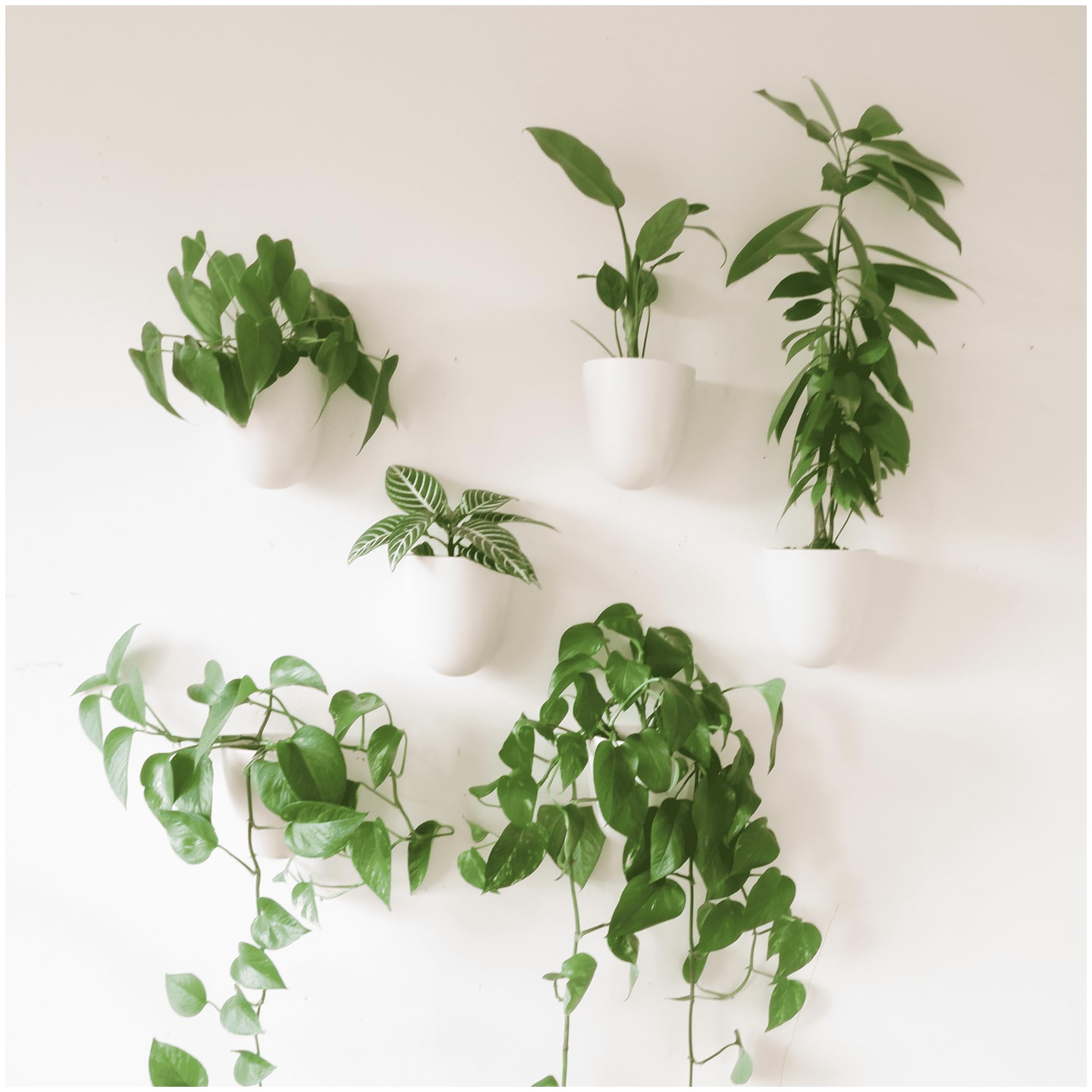
PlantPod Luxe Wall Planters

Indoor green walls

Our Score 9.2/10
Check Price

Worth Noting

  • Built around 4-inch nursery pots, not loose soil
Pots
6
Mounting
One small nail per pot
Pot Size
4.5 x 5 x 5 in
Watering
Self-watering wick reservoir
Read the full review

Watering is the part of wall gardening nobody plans for. A row of pots at shoulder height means a stepladder and a watering can held out at arm's length, with half of it running down the wall. The PlantPod Luxe sidesteps most of that: each of the six 5-inch pots sits on a small reservoir with a wick running up into the planting cup, so you fill the base and the plant draws what it needs.

That is why these are our top pick. Six went up in a few minutes, each on the single small nail it needs, with no brackets to align and nothing to patch afterward. The matte white finish reads as ceramic until you touch it, and they are light, which matters when a nail is doing the holding.

The ceiling on them is size. A pot is built to take a 4-inch nursery pot dropped in whole rather than filled with loose soil, so plan on pothos, ferns, small succulents and trailing things; a tomato would be root-bound before it fruited. The reservoir is modest too, and a thirsty plant will empty it faster than a succulent will. None of that is a design flaw, it is just what a 5-inch wall pot is, and for a wall of small greenery it is the easiest version of the job.

Bottom line: For small indoor plants, these six pots hang on a single nail each and their wick reservoirs keep roots watered between refills.

2

Mkono Wall Propagation Planters

Mkono Wall Propagation Planters

Rooting cuttings

Our Score 9.2/10
Check Price

Worth Noting

  • Needs frequent topping up in warm rooms
Vases
4
Diameter
5.12 in
Included
Nail hooks and cleaning brush
Material
Borosilicate glass
Read the full review

Not every wall garden is soil. These four glass bowls are for cuttings, a pothos vine, a monstera node, a few stems of basil, sitting in water on a wall with the light behind them. Roots in glass are half the point: you see the first white thread appear and know the cutting has taken.

The bowls are oblate, 5.12 inches across and 2.6 inches deep, in borosilicate glass with a hole at the back for hanging. On a kitchen wall or beside a bathroom mirror they read as decoration first and gardening second, which is why they end up in guest rooms and offices.

Two practical notes. Topping up means lifting a bowl off its nail or pouring carefully from a jug, because the opening is small and a full bowl is not something to carry one-handed. And the hooks in the box are minimal, so use your own nails or small adhesive hooks rated for the filled weight, which is not much.

Where they win is charm per bowl and how little there is to go wrong. We hung four in about ten minutes, there is no soil and no runoff on the wall, and a jar of water is a forgiving place to start if you have killed plants before. Change the water weekly, give them decent light, and they are the least fussy thing in this guide. Just do not expect to raise a plant to size in one.

Bottom line: A wall propagation station: four glass bowls where you watch roots form, provided you do not mind topping them up.

3

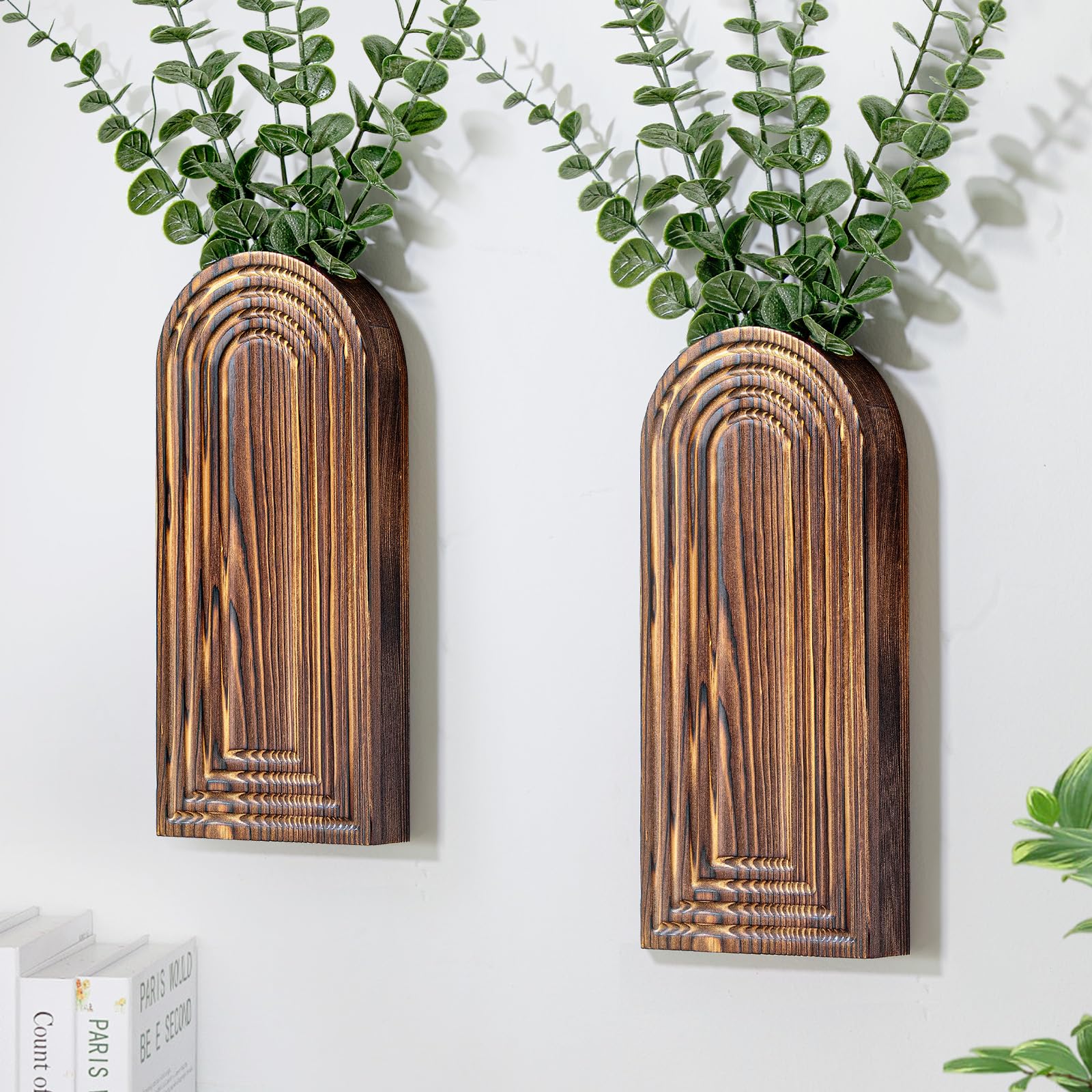
umitiu Wooden Wall Vases, Set of 2

umitiu Wooden Wall Vases, Set of 2

Dried stems

Our Score 9.2/10
Check Price

Worth Noting

  • Holds cut or dried stems, not growing plants
Size
11 x 1.5 x 5 in
Vases
2
Material
Wood with waterproof coating
Read the full review

Be clear about what this is. At 1.5 inches deep, the two wooden vases hold stems, not soil: dried eucalyptus, a few preserved grasses, one good artificial branch. There is no root space in something that shallow, so a living plant is not going in one, and the listing's talk of succulents is optimistic. Because of the backplate they also stand on a shelf or a desk, which is handy if you change your mind about the wall.

As decor, they earn their place. The pair is real wood with an arc that sits flat against the wall on a hidden backplate, and we were struck by the finish, coated well enough to handle a humid bathroom. They arrive in a rustic gift box, which explains a lot of the appeal: this is the thing you buy for a hallway that needs one more object, or for someone else's new apartment. They are smaller on the wall than the photos suggest, though: 11 inches long, and the pair together covers less than two feet.

Bottom line: A pair of wood wall vases for dried stems and artificial greenery: decor rather than a planter, and good at that.

4

Layhit 6-Piece Hanging Planters

Layhit 6-Piece Hanging Planters

Fences and porches

Our Score 9.0/10
Check Price

Worth Noting

  • Smaller in person than the photos suggest
Size
10 in
Capacity
3 liters each
Drainage
Drain hole
Planters
6
Read the full review

The trick is the finish. These are molded polyethylene, painted and shaped to look like half a wine barrel, and on a fence at normal viewing distance they pass: staves, grain and all. It is unashamed theater, and for a porch or a garden fence it is exactly the right note.

The shape does real work too. The flat back sits against a fence board or a railing, and the round belly holds a proper volume, three liters of soil, enough for a geranium, a trailing ivy or a strawberry plant rather than a starter plug. We found that volume the difference between a planter that looks planted and one that looks decorated.

Six of them fill a good run of fence, they are light enough to move around when the seasons change, and the drain hole means rain passes through instead of waterlogging the roots. Set them with a screw through the back into a board, or a zip tie around a railing if drilling is not an option. The one thing to expect is scale: a 10-inch barrel is genuinely 10 inches, and the listing shots flatter it.

Bottom line: Six half-barrels that pass for wood at fence distance, each holding three liters of soil and draining properly.

5

Algreen Gardenview 3-Tier Wall Planter

Algreen Gardenview 3-Tier Wall Planter

Outdoor herbs

Our Score 8.8/10
Check Price

Worth Noting

  • Narrow trays fit one big plant per shelf
Weight
11.6 lb
Shelves
3, height-adjustable
Drainage
Removable plug in each box
Frame Size
32.5 x 11.5 x 8 in
Read the full review

Most wall planters hedge between indoors and out. This one does not. The frame is sealed wood, each of the three boxes carries a removable drain plug, and the whole thing measures 32.5 by 11.5 by 8 inches at about 11.6 pounds, light enough for one adult to hang on an exterior wall.

The shelves sit in slots rather than being fixed, so each of the three can be set at its own height. A tall pepper seedling on the bottom does not crowd the tray above it, and strawberries can spill from the top. That sounds minor until the second season, when the plants are twice the size and the planter still fits them.

Our take: this is the pick for growing food rather than decorating with it. Herbs, lettuce and strawberry runners all have enough depth, the plugs let it live outdoors without waterlogging, and the sealed finish means it can come inside in October without marking the paint. Two catches: it is the priciest planter in this group, and the trays are narrower than the wide-angle photographs suggest, so a full basil plant takes a shelf to itself. Grow cut-and-come-again greens and neither matters much.

Bottom line: The pick for growing herbs and greens outdoors: three sealed-wood shelves with drain plugs, built to stay on a fence through the rain.

6

ShopLaLa Wooden Wall Planter, 2 Pack

ShopLaLa Wooden Wall Planter, 2 Pack

Long empty walls

Our Score 8.6/10
Check Price

Worth Noting

  • 1.5-inch depth takes pots, not soil
  • Unsealed wood greys in direct sun
Depth
1.5 in
Panels
2
Material
Carbonized wood
Panel Size
11.4 x 47.2 in
Read the full review

The number to fix on is 1.5 inches. That is the depth of each of these two panels, and it tells you what they are: rails for standing potted plants against a wall, not boxes you fill with soil. We like them far better for that job than for planting. Orchids, small ferns and trailing plants in their own pots, lined along a 47-inch strip at eye level, look deliberate in a way a row of loose pots never does.

The wood is carbonized and stained a dark brown that reads closer to furniture than garden kit, and the panels take moderately heavy pots without bowing. Outdoors is a different story. There is no sealant on them, so a season of direct sun will grey the finish. On a covered porch or an interior wall that never comes up. On a south-facing fence, treat them before the first winter.

One practical note before you hang them. The screws and anchors in the box run short for drywall, so use the bracket holes to mark your studs and drive longer screws that actually reach timber. Do that and these are an elegant way to cover the long blank wall down a hallway or above a sideboard, the sort of thing guests ask about rather than simply notice.

Bottom line: Two 47-inch wood rails that turn a blank wall into an orchid shelf: a pot display rather than a soil planter.

7

LaLaGreen Wood Planter Boxes, 8 Pack

LaLaGreen Wood Planter Boxes, 8 Pack

Small pot rows

Our Score 8.6/10
Check Price

Worth Noting

  • Smaller in person than the photos imply
Boxes
8
Box Size
13 x 4.5 x 3.5 in
Material
Wood
Mounting
Hooks and hanging bar
Read the full review

Eight boxes in one order is the appeal. A staircase wall, the strip above a desk, the dead space beside a window: these are small enough to hang in a row and affordable enough to buy by the set, and the wood tone is warmer than the plastic alternatives at the same end of the market.

Check the size before you order. Each box is roughly 13 by 4.5 by 3.5 inches, which is room for a 4-inch nursery pot or a couple of small succulents and not much more. The upside is weight. A light box takes a light fixing, and these hang from hooks and a bar without a bracket in sight.

We rate them for the job they are good at: a tidy indoor row where each box frames a potted plant rather than holding soil. Lift the pot out to water it at the sink and the wood stays dry and the wall stays clean. Treat them as sleeves rather than planters and the set does exactly what the photos promise.

Bottom line: Eight small wood boxes for a tidy indoor row, best used as sleeves for nursery pots rather than as soil planters.

8

Ogrmar 36-Pocket Felt Wall Planter

Ogrmar 36-Pocket Felt Wall Planter

Big budget displays

Our Score 8.4/10
Check Price

Worth Noting

  • Pockets suit quart-sized plants only
  • Water passes through the felt sides
Pockets
36
Material
Felt
Mounting
Reinforced grommets
Overall Size
39.4 x 39.4 in
Read the full review

Thirty-six pockets inside a 39.4-inch square, weighing under two pounds, hanging from four grommets. If the goal is to cover a blank balcony wall with green rather than to grow dinner, nothing else here comes close on square footage.

The felt is what makes that possible. It is light, it holds moisture around the root ball, and it lets excess drain away instead of pooling. It also means water goes through the fabric and out the sides, so this is a panel for a fence, a balcony wall or a spot where runoff does not matter. Indoors, hang it over something that can take a drip.

The pockets are the compromise, and they are what to measure before you buy. Think quart-pot size: herbs, lettuce, strawberries, succulents and trailing flowers do well, while a tomato or a pepper will root-bind before it fruits. Fill every pocket with something small and the panel looks generous. Plant big and you get a wall of drooping stems and bare felt.

Where it earns its place is the renter's balcony and the fence nobody wants to drill. Four hooks and a few zip ties and it is up, the creases from shipping hang out once it is full of soil, and the whole thing comes down at the end of a season without leaving a mark. Just plan on watering more often than a pot on the ground, because felt in wind and sun dries fast.

Bottom line: Thirty-six felt pockets across a 39-inch square: the most wall of green here for the least money, as long as the plants stay small.

How We Tested the Best Vertical Wall Planters

We started with a shortlist of roughly 30 planters pulled from retailer listings, garden-center shelves, and brands whose hardware we already trusted, then filtered by the specs that decide whether a wall planter works: overall dimensions, pocket depth and count, what mounting hardware came in the box, material, and how many colorways each one offered. That left 12 that we ordered and lived with for eight months.

Every planter went up the same way — one person, a stepper ladder, and only the hardware included in the box. We timed each install, noted whether we had to supply our own drywall anchors or hunt for a stud, and checked whether the hooks and brackets matched what the listing promised. In the kitchen, planters went above a counter beside a south-facing window; in the bathroom, on tile near the shower; outside, on a covered porch wall that got rain but no direct afternoon sun.

We planted herbs, pothos, and succulents — the three things people actually put in these — and watered on a normal schedule, which meant a weekly soak and a daily mist in the bathroom. Pockets got judged on how they held a nursery pot versus bare-root starts, and on whether the fabric or plastic kept its shape once it was wet and heavy. Durability was mostly patience: we looked for seams pulling, rust blooming at the hooks, fading on the sun-facing side, and water marks on the wall behind. We also took every planter down and rehung it once, because the second install is where cheap hardware gives itself away.

How to Choose Vertical Wall Planters

Start with the pocket, not the pocket count

Thirty-six pockets sounds like three times as much garden as twelve, until you see how small each one is. The number in the title tells you nothing about what will grow; the pocket depth and diameter do. A 4-inch pocket takes herbs, lettuce and succulents. Strawberries and trailing plants want more depth and a lip to spill over. Anything that fruits needs a pot of its own.

That is why the ShopLaLa rails, at 1.5 inches deep, are shelves for potted orchids rather than soil boxes, and why the deep Algreen shelves hold a real basil plant while a felt pocket holds a seedling. Read the pocket dimensions before the price and you avoid the most common disappointment in this category.

Decide where the water goes

Every wall planter leaks somewhere. Felt panels pass water through the fabric and out the sides, which is fine on a fence and a problem above a painted sill. Wood boxes without a drain hole hold water against the timber. Self-watering pots keep water in a reservoir below the roots, so nothing runs down the wall at all.

Match the system to the spot. Reservoir or drain plug indoors, open felt outdoors, and a tray or a sheet of plastic behind anything hung over a floor you care about. If the planter will hang above a sofa or a bed, pick the reservoir type and skip felt entirely.

The fixing is doing more work than you think

A filled planter is heavy in a way an empty one never suggests, and it gets heavier after watering. The included screws and anchors are the most frequent weak point in this category: short screws, oversized anchors, brackets that never line up with a stud.

Plan on buying your own fixings, aim for studs or masonry, and use the longest screw the bracket will take. Hang it empty, too. Lifting a planter full of wet soil onto a bracket that has already shifted is how these end up on the floor.

Indoors and outdoors are different products

Sealed wood, UV-stabilized plastic and powder-coated metal survive weather; unfinished wood and thin felt do not. The Algreen frame is sealed and drain-plugged, so it can live on either side of the window. The ShopLaLa panels are carbonized but unsealed, and a season of direct sun will grey them unless you treat them first.

Indoors the concerns flip: it is runoff and weight on plasterboard rather than rot. Buy for the wall you actually have. A covered porch is the easy case, because it gets the weather without the worst of it.

Frequently Asked Questions

Final Verdict

For most walls, buy the PlantPod Luxe. Six pots, one nail each, and a reservoir that forgives a missed watering make it the easiest version of a wall garden to live with. It is an indoor answer and a deliberately small one: a wall of 4-inch plants rather than a vegetable patch.

If you intend to eat what you grow, spend more on the Algreen Gardenview, whose sealed frame and drain plugs are the only thing here genuinely built to stay outside through the rain. And if the budget is the whole budget, the Ogrmar panel covers more wall than anything else in this group, provided your plants stay small.