Planters & Plant Supports

Best Outdoor Planters of 2026

The right outdoor planter should make a plant look good without making you think about it again. The wrong one is a seasonal purchase: paint fades, resin cracks, a lightweight pot tips in the first gust, and that bargain starts to feel expensive. What you want is a planter that fits the root ball you actually have, suits the spot you actually have, and stays put through weather you would rather not stand in.

I've learned that the best outdoor planters aren't necessarily the heaviest or the most decorative; they're the ones whose material, drainage, and footprint make sense together. For eight months, we've had a dozen planters filled, watered, moved, and left out in sun, rain, and wind, judging quality, appearance, sturdiness, weight, and whether each one earns its price. A tip from a first-time buyer: check the interior dimensions, not just the listed size — a pot that looks generous outside can leave a nursery pot wedged halfway down. The picks below are the ones I'd put on a porch, patio, or balcony without worrying about them by next season.

1

Veradek Taper 30-Inch Planter

Top Pick
Veradek Taper 30-Inch Planter

Front entries

Our Score 9.6/10
Check Price

Worth Noting

  • Priciest per planter in this group
Height
30 in
Set Size
2 planters
Top Width
15.25 in
Soil Capacity
73.6 liters
Read the full review

Thirty inches is the number doing the work here. At 15.25 inches square, the Taper lifts whatever you plant to eye level from the walkway instead of leaving it down at ankle height, and that is most of the difference between an entrance that looks finished and one that looks like you left a bucket out. Veradek molds it from a polypropylene composite with a smooth, scratch-resistant finish and rates it for frost and UV, so a hard winter or a hot summer isn't what ends it.

The removable insert shelf is the detail that sold us. Set it in place and you can stand a nursery pot on top of it, or pull it out and fill the whole column with soil; either way you are not buying bag after bag of potting mix to fill a decorative pillar, which is the hidden bill on tall planters. Drainage holes are drilled at the base, so a soaking afternoon has somewhere to go instead of sitting around the roots.

In an exposed, windy spot these are light enough that a bag of sand or a few bricks in the bottom before the soil goes in is worth the five minutes; behind a porch wall you'll never think about it. Open the carton and check both panels before you fill anything, too, because a caved-in side from shipping is the one fault that turns up, and it is far easier to sort out before there is soil in them.

Bottom line: We recommend the Taper for anyone dressing a front door or garage: 30 inches of frost-rated planter that reads from the street, with a shelf that keeps the soil bill sane.

2

Veradek Demi 12-Inch Planter

Veradek Demi 12-Inch Planter

Narrow porches

Our Score 9.6/10
Check Price

Worth Noting

  • Too small for shrubs or small trees
Height
11.5 in
Material
Plastic-stone composite
Top Diameter
10.5 in
Soil Capacity
14 liters
Read the full review

Same maker, different job. The Demi is a 10.5-inch round pot standing 11.5 inches tall, and it is the one we reach for when a 30-inch planter would swallow a narrow step or crowd a storm door. The fluted sides come out of Veradek's plastic-stone composite with enough texture that visitors read them as ceramic from the walkway, which is how a pot this small punches above its size.

Drainage holes come pre-drilled, which is what you want outdoors, but there is no saucer in the box. On gravel or grass that is fine; on a painted deck or a stone stoop the water runs straight through and leaves a ring, so add a tray to the order. Set the pair either side of a door that a taller planter would overpower and you get the matched look without the visual weight.

Fourteen liters of soil per pot is a manageable fill — one bag of mix and a few minutes, no wheelbarrow — and the composite is rated against cracks, scratches, UV and fading. We like that the pair works as a unit: two pots, one shape, one less decision to make at the door.

Bottom line: Our pick when a full-size planter would crowd the step: the Demi pair fits narrow porches and genuinely doesn't look like plastic.

3

Keter Wood-Look 22-Inch Planter

Keter Wood-Look 22-Inch Planter

Wood-look porches

Our Score 9.4/10
Check Price

Worth Noting

  • Deep fill: 12.4 gallons of mix per pot
Width
14.5 in
Height
22.4 in
Material
Polypropylene resin
Soil Capacity
12.4 gallons
Read the full review

12.4 gallons is the biggest soil capacity in this group, and it decides whether the Keter pair is for you. The 22.4-inch column is molded in polypropylene resin with a graphite wood grain, sized to take a small tree's root ball or a full summer of annuals, and it arrives in one piece with nothing to bolt on.

The drainage is optional, and that is a decision rather than a defect: Keter ships them sealed and leaves the holes to you. We think drilling them is the right call for anything living outdoors, and it takes a minute with a standard bit across the base. Left sealed, the planter is a cache pot — good under cover with a nursery pot inside, wrong on an open porch after a week of rain.

We were glad the grain is molded rather than printed. Resin won't peel, dent or rust the way a painted or metal finish does, and there is no film to lift at the corners after a season. Twenty-two inches of height at a door, a taper that reads as a planter box rather than a bucket, and a finish that passes as timber from the sidewalk.

Bottom line: Choose the Keter pair when you want wood-grain looks and the biggest soil capacity here without paying stone-planter money for it.

4

SnugNiture 22-Inch Planter Set

SnugNiture 22-Inch Planter Set

Budget tall pairs

Our Score 9.4/10
Check Price

Worth Noting

  • Sealed base holds water
Height
22 in
Included
Removable insert shelf
Set Size
2 planters
Top Diameter
12.8 in
Read the full review

The insert shelf is the whole design, so it is worth understanding before you buy. SnugNiture molds a slotted plate that sits partway down the 22-inch body: soil and roots stay above it, air reaches them through the slots, and any water that passes through ends up in the base of the pot rather than across your steps.

Around that shelf the rest is plain in a useful way. The pair comes with a center retainer and drain pipe so you can run them as self-watering containers, which matters on a porch you don't water every day; lift the shelf out and you are back to a straight 22-inch pot with full depth for roots.

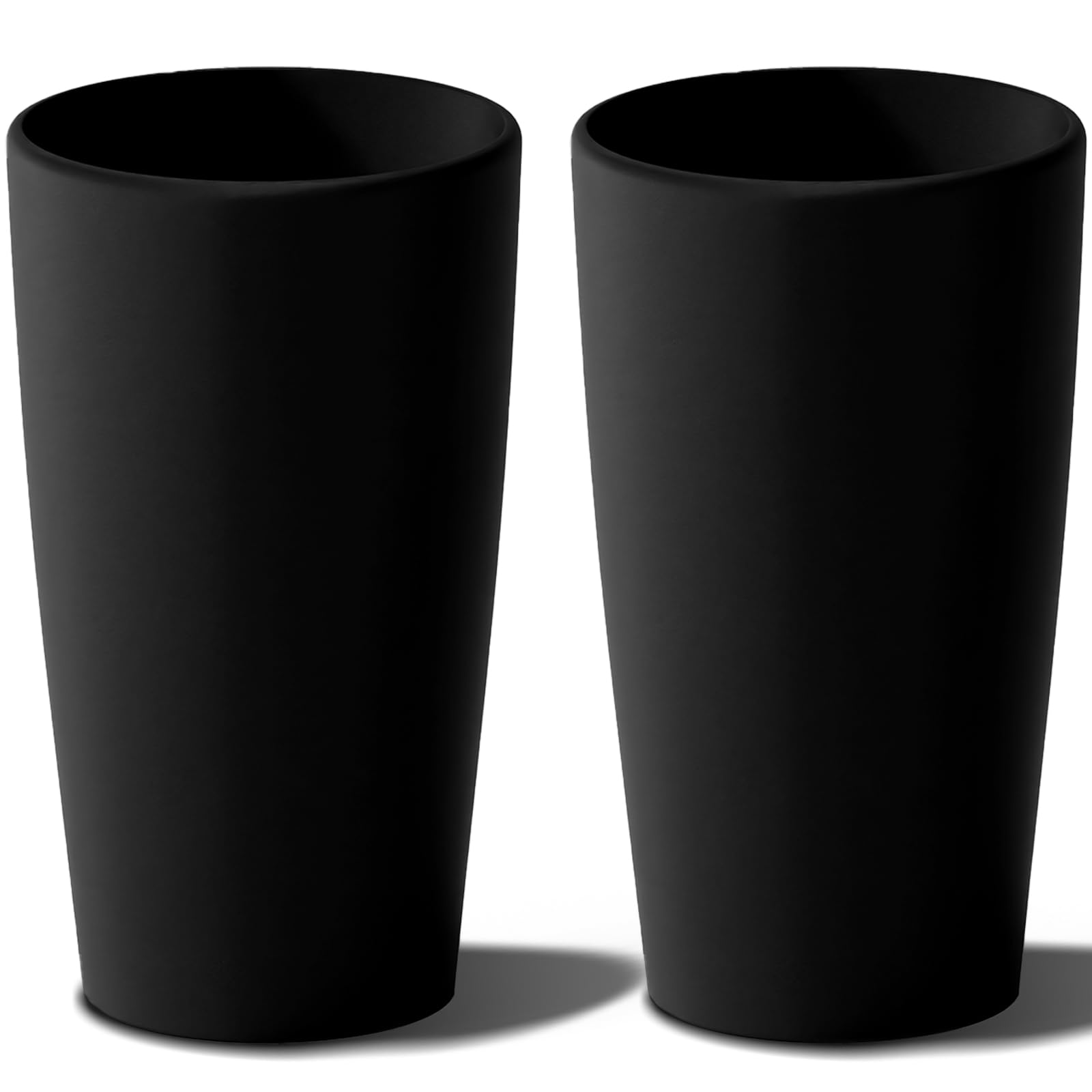
The finish is a matte frosted black that looks like stone rather than gloss plastic, on a 12.8-inch top that takes a decent root ball. As a cheaper route to the tall, plain column look of our top pick, it is the closest thing here.

We think it is the right buy for a covered porch or a spot under the eaves, where you want the presence of a tall column without a saucer showing underneath. In an open, wet position, the Quarut four-pack's free-draining pots make for an easier life.

Bottom line: A sensible budget stand-in for our top pick: tall, weather-ready plastic with a shelf, as long as it lives somewhere covered.

5

Quarut 15-Inch Planter 4-Pack

Quarut 15-Inch Planter 4-Pack

Value multi-packs

Our Score 9.2/10
Check Price

Worth Noting

  • Only sold as a set of four
Height
14.3 in
Included
4 pots, 4 saucers
Top Diameter
14.7 in
Soil Capacity
6.5 gallons
Read the full review

Four pots, four saucers, one delivery. Quarut's 15-inch set arrives as a matched four-pack — 14.7 inches across the top, 14.3 inches tall, 6.5 gallons of soil in each — which is more planting room than most people need for a single project and exactly right for someone starting with an empty patio.

The finish is the surprise. The gray bodies carry a raised rope-pattern texture molded to imitate ceramic, and at porch distance they read as clay rather than plastic; up close you can see the sheen and feel the mold seam, which is the trade at this end of the market. Sturdy enough that a tall plant doesn't tip them, light enough to carry two at once while they are empty.

What we noticed once they were planted is how little they ask. The saucers catch the overflow from a heavy watering can, the plastic holds its color through sun, and the texture hides the water spots that a smooth pot shows. Filling a long run of steps or a whole patio edge, this is the set that gets you there without a second order.

Bottom line: The best value in this group if you have several spots to fill: four 15-inch pots, tough enough for a windy patio, at the lowest cost per pot here.

6

Worth 21-Inch Stone Planter

Worth 21-Inch Stone Planter

Stone-look doorways

Our Score 9.2/10
Check Price

Worth Noting

  • Premium price for a plastic pot
  • Light empty; wants ballast in an exposed spot
Height
21 in
Drainage
Hole with rubber plug
Top Diameter
14 in
Soil Capacity
9 gallons
Read the full review

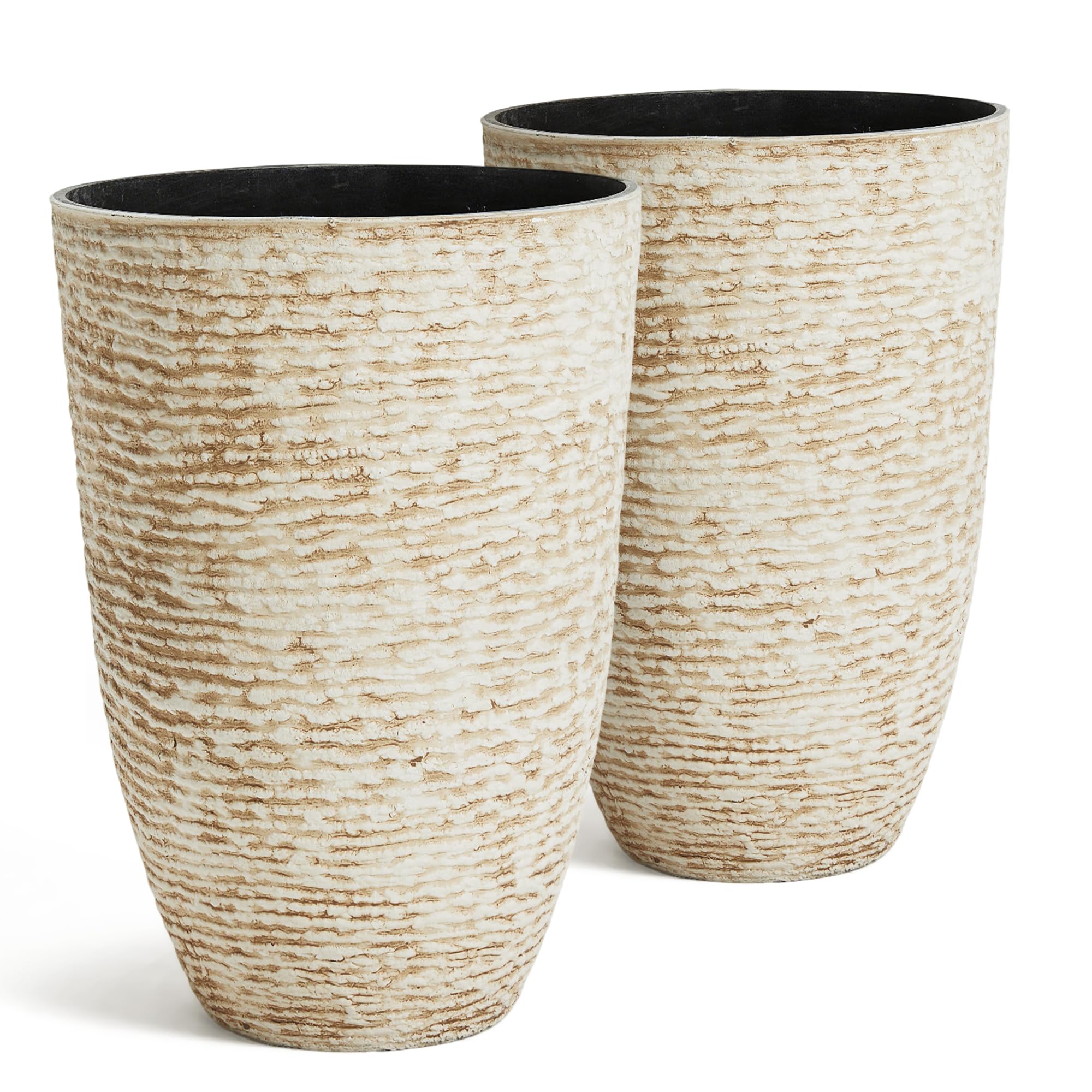
Faking stone is easy to overdo; the Worth pair gets closer than most. The body is 85% recycled polypropylene and 15% stone powder, finished in a matte beige with brown speckling over a raised panel, and it lands at a fraction of the weight of a ceramic pot this size. We like that the texture runs under your hand rather than sitting on the surface as a print.

Drainage is a pre-drilled hole with a removable rubber plug, which covers more ground than a plain hole — plugged for a covered porch or an indoor corner, open when the pot lives in the rain. The plug is a piece you pull and keep in a drawer, not a one-way decision you destroy the first time.

Twenty-one inches tall and 14 inches across is the size that works either side of a garage or at the corner of a patio, and 9 gallons of soil holds a small evergreen or a good run of annuals. The matte finish has not picked up the chalky bloom that smooth plastic develops outdoors, which is most of what makes a planter look old before its time.

Bottom line: For a stone look with none of stone's weight, the Worth pair earns its price — especially at a door where you will want to move them.

7

VEVOR 22-Inch Planter Set

VEVOR 22-Inch Planter Set

Swapping potted plants

Our Score 9.2/10
Check Price

Worth Noting

  • Light body needs ballast in wind
Shape
Tapered square
Width
12 in
Height
22 in
Included
2 inner pots, 4 clips
Read the full review

Check the base before you plant. VEVOR builds these with drainage holes, but some units turn up with a sealed bottom, and that is the kind of thing you discover after the soil is in. Hold each empty planter up, look at the underside, and drill a few holes if you need to — the polypropylene takes a standard bit without drama.

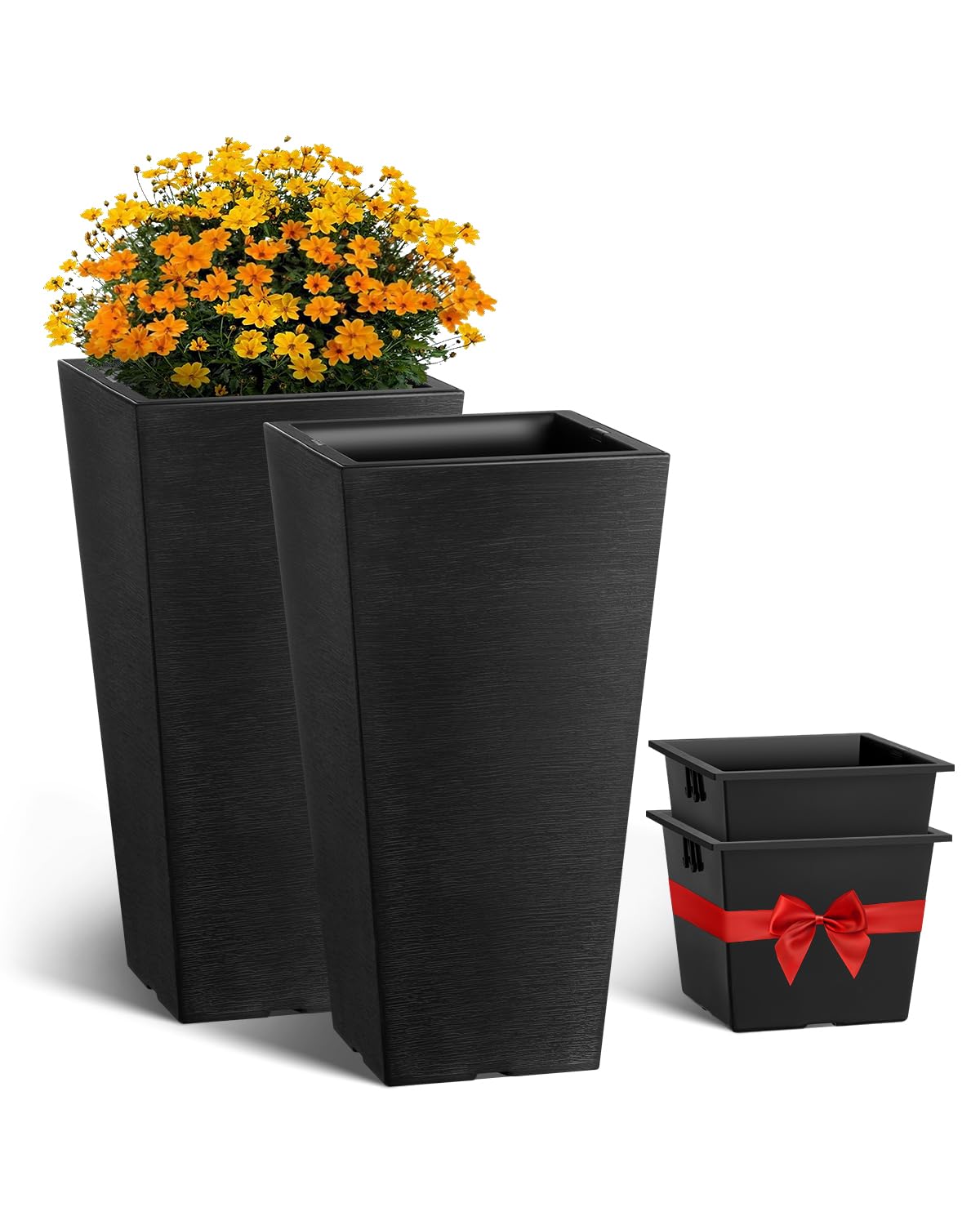
The reason to pick this pair over the other tall planters here is the inner pots. Each 22-inch column takes a liner with a pull ring on the side, and a 10-inch nursery pot drops straight in, so you lift the whole planting out to swap a fern for a winter arrangement or move a tender plant under cover without touching the outer shell.

Nothing needs assembling out of the box: two tapered square columns, 12 inches on a side and 22 inches tall, black with a faint horizontal stripe that catches the light and reads more expensive than it is. The four clips hold the inner pots steady, and the slim footprint sits against a wall without eating the walkway.

We found the system most useful in the seasons when the display changes. A porch that gets mums in October and evergreens in December never needs repotting, just lifting, and two of these at a door give you a matched pair that changes with the calendar.

Bottom line: Buy the VEVOR set if you swap displays with the seasons: the inner pots lift out, so nothing gets repotted twice.

8

Arcadia Classic Urn Planter

Arcadia Classic Urn Planter

Classic porch urns

Our Score 8.8/10
Check Price

Worth Noting

  • Thin plastic can crack if it blows over
  • Reads smaller in person than the photos suggest
Height
15 in
Drainage
None until drilled
Top Diameter
13 in
Planting Depth
9 in
Read the full review

A pair of these flanking the steps with mums spilling out is the picture most people have in mind when they search for an urn, and the Arcadia gets you there for the least money in this group. Thirteen inches across and 15 inches tall, with a fluted body and a rolled rim that reads traditional rather than garden-center.

Two things to know before planting. It arrives in two pieces that slip together, and it arrives without drainage holes — the shell drills easily with a standard bit, and that is the first job if it is going outside. At just over two pounds it is also very light, so a layer of brick or gravel in the bottom before the soil goes in is what keeps it on the step through a gust.

What we keep coming back to is the silhouette: it is hard to fake, and this is the most convincing cheap version here. The plastic is thin, though, and a pot that light can crack if it goes over in a storm, so an exposed corner in a windy yard is not where it belongs.

Bottom line: Buy it when the urn shape is the whole point: nothing else in this group looks like it, and the saving leaves room for a tray and a bag of gravel.

How We Tested Outdoor Planters

We started by gathering outdoor planters in the materials shoppers actually compare — glazed ceramic, resin, metal, wood, and fiberstone — then narrowed the list by size range, drainage, frost compatibility, and price tier. We ended up with 12 planters and used each one for eight months in the places planters really live: a front stoop, a windy balcony, a patio edge, and a garden bed. Each was filled with potting mix, planted with herbs or a small shrub, watered on a normal schedule, and moved when the weather turned.

To judge sturdiness, we nudged each pot from the rim, watched for rocking on uneven pavers, and noted whether it shifted in gusts. We lifted every planter empty and again after filling it, since weight matters both when you are carrying it home and when you are dragging it to a new spot. For paint and finish durability, we checked seams, rims, and feet before testing, then looked for chips, fading, and rust after rain and sun. We also slid a 10-inch nursery pot into each one and checked drainage holes and saucers for fit, because a planter that traps water or wedges a root ball is a problem no matter how good it looks.

Appearance and value came last, after the practical checks, and that order was deliberate. We looked at each planter from the curb and from a chair, compared build quality and what came included — drainage, saucer, liner, assembly — and asked whether the material and finish justified its price. The ones that held up without chips, cracks, or constant fussing are the ones that made the list.

How to Choose Outdoor Planters

Match the height to where it stands

At a front door, height is what makes a planter read: a 20- to 30-inch column puts the flowers at eye level from the walkway, while a 12-inch pot disappears against siding. On a step, a low wall or beside a bench, the smaller pot is the right call, because the plant is meant to be seen from above.

Measure the clear space either side of the door before you commit to a pair. Two tall planters crowding a storm door look squeezed rather than symmetrical, and one pot placed deliberately beats two jammed in. If the walkway is narrow, sit the pair forward of the door swing rather than against the frame.

Drainage is the part you cannot change later

Outdoors, water has to leave. A pre-drilled hole is the simplest answer, and a hole with a removable plug gives you the option of using the pot under cover or indoors. Read the wording carefully: optional drainage usually means the shell arrives sealed and you drill it yourself — a two-minute job with a standard bit, and a disaster if you fill first and read second.

A reservoir base is a different design, where the shelf drains into a sealed bottom instead of out of the pot. That is genuinely convenient on a covered porch and a nuisance in an open, rainy spot. Neither trap is visible in a product photo, so decide which one you are buying before the soil goes in.

What weather resistance actually buys

Polypropylene, resin and stone-powder composites all handle sun and rain; what separates them is how they age. A molded texture keeps its looks longer than a printed or painted one, which can peel or chalk at the corners after a season of hard sun.

Frost matters most where water is trapped. A planter with a plugged hole and a wet base is the one that splits in a hard freeze, so pull the plug or tip the pot out before winter if it stands somewhere that collects water. Weight is a feature up to a point: a big plastic planter you can lift with one hand is easy to move and easy to knock over.

Count the soil before you commit

A 15-inch pot holds around 6 gallons, and a 22-inch column can take 12 or more, which is a stack of potting mix you have to buy, carry and wet down. Insert shelves, inner pots and simply standing a nursery pot inside a decorative shell all cut that fill — the Veradek Taper's shelf means far less mix than an open column of the same size.

Sets deserve the same arithmetic. A four-pack is good value if you have four spots and a storage problem if you have two. Two-packs suit a matched doorway, and a single urn is often all a narrow step wants.

Frequently Asked Questions

Final Verdict

Most people should buy the Veradek Taper. Thirty inches of frost-rated planter with a shelf inside solves the two things that make front-door planters disappointing: it stands tall enough to be seen from the street, and it doesn't demand a fortune in potting mix to fill. If your step is too narrow for a 15-inch footprint, the Demi pair does the same job at a much smaller scale. Filling a whole patio instead, the Quarut four-pack is the value answer, saucers included.