Soil & Fertilizer

Best Vegetable Fertilizers of 2026

Overfeeding is the most common mistake I see in vegetable gardens: a tomato dosed too hard turns into a six-foot wall of leaves with barely a ripe fruit on it, while an underfed one goes pale and stalls out in July. The right fertilizer threads that needle, and you notice it within a couple of weeks — darker leaves, sturdier stems, a harvest that keeps coming into September instead of fizzling. That's the whole job: steady nutrition without the boom-and-bust.

We spent this entire growing season with 14 fertilizers — liquids, granules, organic blends, and a couple of synthetic workhorses — spread across raised beds, patio containers, and a community plot I share with two neighbors. A few earned a permanent spot in my shed. One smelled so bad for three days that I moved the watering can to the far end of the yard, and two of the richer blends drew fungus gnats to my containers within a week. The picks below are the ones that fed the plants well without making the garden unpleasant to be in — and that held up once I worked out the cost per feeding.

1

FoxFarm Grow Big

Top Pick
FoxFarm Grow Big

Leafy growth

Our Score 9.6/10
Check Price

Worth Noting

  • Requires measuring and mixing
Volume
16 fl. oz.
Mix Rate
2 tsp per gallon
NPK Ratio
6-4-4
Application
Watering or foliar
Read the full review

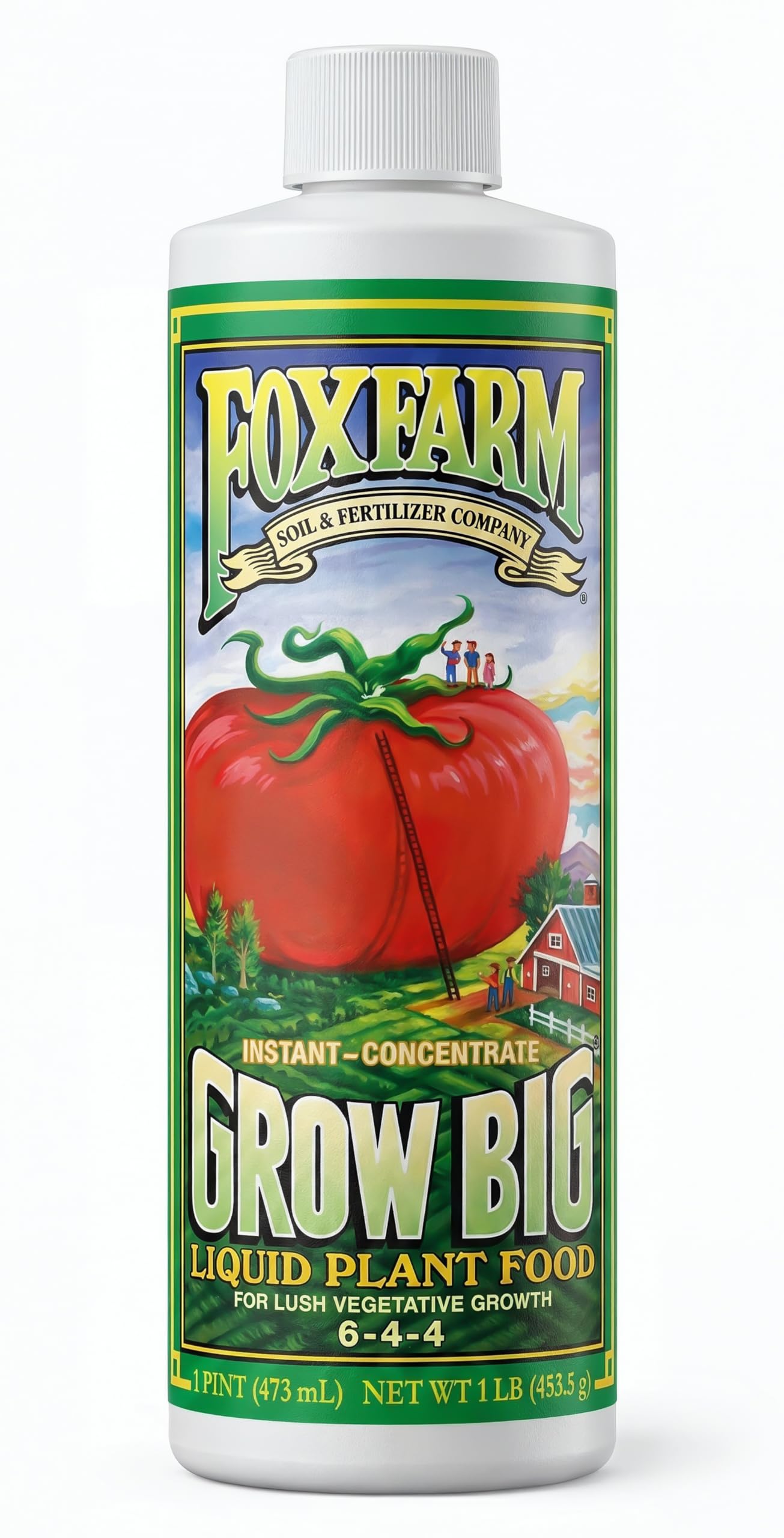
A 6-4-4 ratio is a leafy-growth signal, and that is exactly how we use Grow Big: on young tomatoes, peppers, and greens that need to build size before they flower. The liquid concentrate mixes at two teaspoons per gallon and can be watered in or sprayed on the leaves. We think it is the best pick here for pushing vegetative growth without buying a full three-bottle program. It is a tool for a stage, not a magic bottle for the whole season.

The concentrate is efficient. At the label rate, a pint stretches across many watering cans, and the low pH is designed to keep micronutrients stable in storage. That last point is easy to overlook, but it matters if you mix a batch and leave it on the shelf between feedings. We also like the flexibility: you can drench the soil or use foliar feeding when plants need a quick lift. For container tomatoes and peppers, that versatility is useful.

The limitation is the stage. Grow Big is a vegetative formula, so it fits the weeks before flowering; once fruit set begins, a bloom-oriented feed is the better tool. Gardeners who want one product for the whole season should choose a vegetable-specific granular or a complete program instead. The low-pH storage stability is the detail that makes it feel more considered than a plain nitrogen boost.

Bottom line: A concentrated 6-4-4 liquid for young, leafy vegetables that need to build size before flowering.

2

Miracle-Gro Shake 'N Feed Tomato

Miracle-Gro Shake 'N Feed Tomato

Vegetable beds

Our Score 9.4/10
Check Price

Worth Noting

  • Not an organic formula
Form
Granules
Coverage
128 sq. ft.
Key Nutrient
Calcium added
Feeding Duration
Up to 3 months
Read the full review

A three-month feeding window and added calcium are the two details that make this the vegetable fertilizer we recommend first. Shake 'N Feed Tomato, Fruit & Vegetable is a granular feed you work into the top inch or three of soil at planting; then water takes over. We like that it turns feeding into a planting-day task instead of a weekly mixing session. The calcium is aimed at stronger cell walls and better-quality fruit, which is exactly the kind of support tomatoes and peppers need through a long season.

Application is about as simple as it gets. Shake the granules evenly over the soil, scratch them into the top layer, and water regularly. For established containers, lightly work the granules into the surface instead of dumping them against the stem. There is no measuring cup of liquid concentrate to rinse, no half-full watering can to store. That matters more than it sounds: the feed you actually apply on a busy week is better than the one that stays on the shelf because it is fussy.

The practical boundary is coverage. One container treats up to 128 square feet, which is a few raised beds rather than a whole market garden, so a larger plot needs more than one. It is also not an organic formula, so gardeners who want to feed soil biology should look at the organic picks instead. The shaker top is the small detail we keep coming back to: it drops an even band without a scoop, which is one less tool to carry and rinse.

Bottom line: For most vegetable gardeners, this is the granular feed we recommend: one application feeds for up to three months and adds calcium for better fruit.

3

Miracle-Gro Water Soluble Tomato

Miracle-Gro Water Soluble Tomato

Large vegetable gardens

Our Score 9.4/10
Check Price

Worth Noting

  • Requires repeated mixing and feeding
  • Not an organic formula
Form
Water-soluble
Coverage
1,200 sq. ft.
NPK Ratio
18-18-21
Feed Speed
Instant
Read the full review

A single 3 lb box of Miracle-Gro Water Soluble Tomato Plant Food covers roughly 1,200 square feet, and that coverage is the first thing that gets our attention. The 18-18-21 formula is built for tomatoes and vegetables, and it mixes with water in a watering can or garden feeder. For a big bed of tomatoes, peppers, and squash, it is a much more practical way to cover ground than carrying a dozen watering cans.

We think this is the best water-soluble choice in this set for gardeners who want a fast response. It starts working instantly, which makes it useful when plants look pale or need a push during flowering. The routine is straightforward: measure, mix, and water. It suits someone who is already in the garden every few days and wants a feed that responds quickly rather than sitting in the soil waiting to break down.

A garden feeder is the sensible way to cover 1,200 square feet without endless refills, and it is worth keeping a dedicated can or feeder for fertilizer so you are not guessing at residue. For a large vegetable plot and a gardener who likes to feed on a schedule, the coverage and instant availability make the routine worthwhile.

Bottom line: The best water-soluble pick here for a large vegetable garden, with broad coverage and an instant feed.

4

FoxFarm Soil Liquid Trio

FoxFarm Soil Liquid Trio

Stage-by-stage feeding

Our Score 9.4/10
Check Price

Worth Noting

  • Premium cost next to single-bottle feeds
Use
Stage-by-stage feeding
Form
Liquid
Bottle Count
3
Total Volume
48 fl. oz.
Read the full review

The FoxFarm Soil Liquid Trio is not one fertilizer but a sequence: Big Bloom, Grow Big, and Tiger Bloom in three pint bottles. Grow Big is the vegetative feed, Big Bloom is the low-NPK bottle for flowering and fruiting support, and Tiger Bloom is the bloom-stage formula. The appeal is that you can switch what you feed as the plant moves from leafy growth to flowers and fruit, instead of asking one ratio to do everything.

We think this is the best complete program in this set for a gardener who likes to feed by stage. It takes more attention than a single granular product, but it also gives you more control. The trio is a good fit for tomatoes, peppers, and container vegetables, and it is a natural step up for someone who has been using one all-purpose liquid and wants to fine-tune. We liked having the three bottles lined up: it makes the stage switch visible instead of abstract.

The cost is complexity. Three bottles each have their own mix rate, and you need to keep the schedule straight. That is more involved than the top pick. For a small garden, the trio may be more program than you need. For a gardener who enjoys the process, though, it is a satisfying way to feed. The Tiger Bloom 2-8-4 is the bottle that earns its keep at bloom time; the set makes most sense when you actually plan to use all three.

Bottom line: The best pick here for a stage-by-stage feeding program, with three liquids that cover growth, bloom, and fruiting.

5

Osmocote Flower & Vegetable

Osmocote Flower & Vegetable

Set-and-forget beds

Our Score 9.4/10
Check Price

Worth Noting

  • Release slows in cold soil
Size
8 lb
Release
Slow-release
NPK Ratio
14-14-14
Application
1 scoop per 4 sq. ft.
Read the full review

The promise that caught our eye is the no-burn pledge: even at three times the recommended rate, Osmocote says this flower and vegetable food will not burn plants. That is the kind of margin that matters when you are sprinkling granules around young seedlings and do not want to measure every pinch. The 14-14-14 formula is Osmocote's highest total nutrient blend, and it is aimed at seasonal vegetables and perennials.

Application is simple. Use the included scoop to apply one scoopful per four square feet, then mix it into the top one to three inches of soil. The resin coating controls release, and soil temperature is the trigger, so the feed speeds up as the ground warms. That makes it a natural fit for a spring planting bed: work it in once, water, and let the season do the rest. There is no tank to mix and no weekly schedule to remember.

We think this is the best slow-release granular in this set for a gardener who wants to feed a bed and then ignore it. The no-burn claim gives you room to be less precise, which is a real advantage for beginners. The included scoop is the practical detail that makes the label rate easy to repeat, and one scoop per four square feet is simple enough to remember without a chart.

Bottom line: The best slow-release granular here for a vegetable bed you plant and then leave alone, with a no-burn margin that forgives a heavy hand.

6

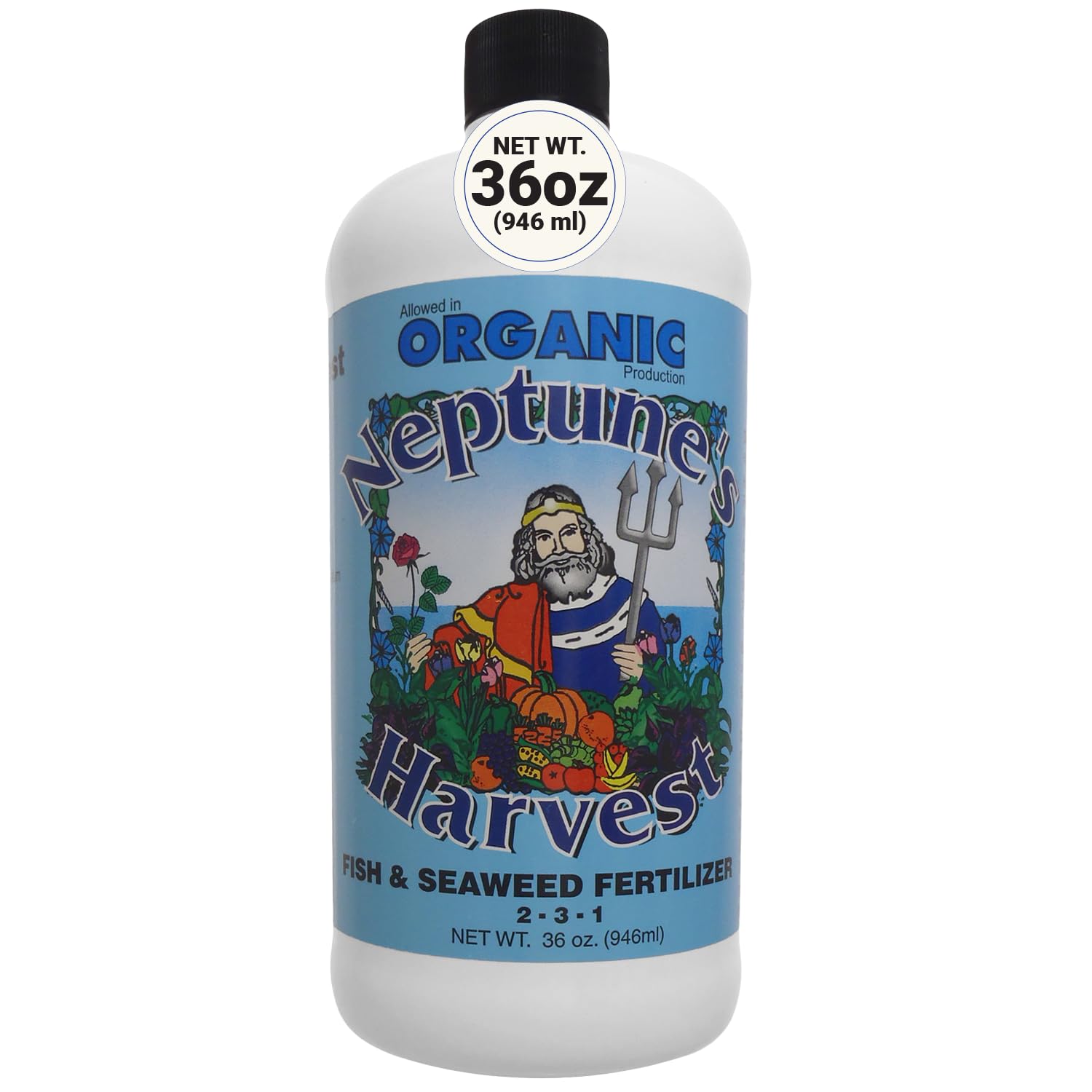
Neptune's Harvest Fish & Seaweed

Neptune's Harvest Fish & Seaweed

Organic vegetable gardens

Our Score 9.4/10
Check Price

Worth Noting

  • Bottle size feels small for the price
Form
Liquid
Volume
36 fl. oz.
Mix Rate
1 oz. per gallon
NPK Ratio
2-3-1
Read the full review

Open the bottle and you will know what is in it: fish and seaweed, with the fishy smell to match. That smell is the first thing to decide about, not the last. Neptune's Harvest is a 2-3-1 organic liquid made from hydrolyzed fish and seaweed, and it is designed to feed both the plant and the soil. If you are committed to organic vegetable gardening, the aroma is part of the bargain; if you are not, it is a real obstacle.

The mix is one ounce per gallon of water, applied as a soil drench or foliar feed. That low dose is gentle when you follow it, and the fish and seaweed supply nutrients in a plant-ready form while building organic matter and feeding beneficial microbes. We like that it is doing more than dumping nitrogen on a plant: it is improving the soil structure over time, which is exactly what an organic vegetable bed needs. It is also a good fit for seedlings and transplants when mixed correctly.

We think this is the best organic liquid in this set for a gardener who cares about soil health. Measure it at one ounce per gallon and water it in; overdoing fish emulsion is how delicate plants get burned. The soil-building benefit is the reason to choose it over a synthetic liquid. Keep the bottle capped and store it where the smell will not drift through the garage.

Bottom line: The best organic liquid here for vegetable gardeners who want to feed soil biology along with the crop.

7

Dr. Earth Organic 5

Dr. Earth Organic 5

Organic granular feeding

Our Score 9.2/10
Check Price

Worth Noting

  • Strong organic odor after watering
  • Can attract fungus gnats and ants
Form
Granules
Size
4 lb
Feeding Duration
Several months
Ingredient Standard
Organic and natural
Read the full review

Dr. Earth Organic 5 is the granular organic option we wanted to like: a 4 lb bag of tomato, vegetable, and herb food made with organic and natural ingredients, and no chicken manure or sewage sludge. It is a dry amendment you can work into a bed, topdress around established plants, or steep into a tea. That flexibility is the reason it stays on our also-consider list rather than disappearing.

The feeding window is several months, which puts it closer to the slow-release granulars than to a liquid feed. For a vegetable bed, that means fewer sessions and a gentler release. We like the ingredient stance: no GMOs, no chicken manure, no sewage sludge. It is a good fit for a gardener who wants an organic granular for tomatoes and herbs and does not mind handling a bag instead of a bottle.

The organic matter is the part to handle with care. Work it into the top layer, keep it off stems and leaves, and water thoroughly; the tea route is a neat option if you want to avoid surface residue. Those are manageable conditions, not reasons to avoid organic gardening, but they make this a poor fit for a patio container you brush past every day.

We think it earns a place as the organic granular for a gardener who wants to topdress or brew tea, but it is not the cleanest or most convenient pick here. The 4 lb bag is easy to carry around beds, and the granular format lets you stretch it across a small garden. Use it where you can work it in and water thoroughly; if you want organic without the surface residue, Neptune's Harvest is the liquid alternative.

Bottom line: A flexible organic granular for topdressing and tea brewing in vegetable beds, with a place for gardeners who prefer dry organic feeds.

How We Tested Vegetable Fertilizers Through a Full Season

We started by pulling together every vegetable fertilizer we could find that was actually formulated for edibles — not lawn food with a tomato on the label — and narrowed by NPK ratio, organic certification, whether it was granular or liquid, bag size, and price per pound of actual nutrients. That left 14 products, which we ran through one full growing season, roughly April through September, in three settings: raised beds of tomatoes and peppers, containers of herbs and dwarf cherry tomatoes on a sunny patio, and a few rows at a community garden plot I share with two neighbors.

Every application was mixed and measured to the label, and I noted how easy each one was to dose — a scoop that dissolved cleanly versus a liquid that gummed up the watering can. Odor got checked twice: right when the bag or bottle was opened and again a day after feeding, because a smell that fades by morning is a different thing from one that lingers. For infestation, I hung sticky traps beside the containers and counted what showed up each week, watching especially for fungus gnats after the richer organic feeds went down.

Plant response was tracked the old-fashioned way: leaf color against a color card, stem thickness at the base, days to the first ripe fruit, and total harvest weight per plant. On three Saturday mornings in July and August I sat with a coffee and counted bees and other pollinators working the blooms for ten minutes per bed, which told us more about bloom volume than any label claim. Finally, I worked out cost per feeding — how many applications a bag actually delivered at the label rate — because a cheap box that feeds a bed twice is worse value than a pricier bag that lasts the season.

How to Choose Vegetable Fertilizers

Start With Granular or Liquid

Granular feeds are the low-maintenance choice: you work them into the top inch or two of soil and let them release over weeks or months. Liquid feeds are the fast-response choice: mix and water them in when plants need a push, but expect to repeat the job more often. For most home vegetable gardens, a granular feed at planting plus a liquid feed for rescue moments is a practical combination. If you want one product only, decide whether you value fewer sessions or faster feedback.

Match the Formula to the Stage

Vegetables use nitrogen for leaves and stems, phosphorus for roots and flowers, and potassium for fruit development and overall strength. A balanced or vegetable-specific feed is a sensible default; a higher-nitrogen liquid such as Grow Big suits young, leafy growth, while a bloom-stage formula is better once tomatoes and peppers set flowers. The trap is assuming more nitrogen always means more vegetables. Late-season nitrogen can push leaves at the expense of fruit, so switch to a gentler or bloom-oriented feed as plants mature.

Decide How Organic You Want to Go

Organic feeds such as fish, seaweed, and plant-based granules build soil organic matter and feed microbes, which is a real advantage in a vegetable bed you are improving over years. They also tend to release more slowly and can carry a strong smell or attract pests to the surface. Synthetic feeds are more predictable and faster-acting, which makes them easier for containers and quick corrections. Choose organic for soil-building, and synthetic when convenience and precision matter more.

Check Coverage and Application Before You Buy

Coverage numbers are easy to misread. A granular container may treat a few raised beds, while a water-soluble box may cover a much larger garden area. Measure the bed or container first, then compare the label's square-foot or pot rate. Also check how the product goes down: some granules need to be worked into the top one to three inches of soil, while liquids need measuring and mixing. The application method you will actually keep up with matters more than the label's biggest number.

Frequently Asked Questions

Final Verdict

Miracle-Gro Shake 'N Feed Tomato, Fruit & Vegetable Plant Food is the vegetable fertilizer we recommend first for most gardeners. It is vegetable-specific, adds calcium, feeds for up to three months, and needs no mixing, so it fits the way most people actually tend beds: feed at planting, water, and get on with the season.

If you want a fast liquid feed for a large garden, choose the Water Soluble Tomato Plant Food. If organic matter matters more than convenience, Neptune's Harvest is the organic liquid to try.