Soil & Fertilizer

Best Organic Plant Fertilizers of 2026

The first thing I noticed after switching my porch containers from blue crystals to organic fertilizer wasn't the growth — it was the smell. The second was the fungus gnats. Organic doesn't automatically mean gentle or odorless, and nobody warns you about that part. What a good one does fix is the long game: it feeds the soil along with the plant, breaking down slowly instead of dumping a week's worth of nitrogen into the saucer after one heavy rain.

Over the past eight months my team has run 12 organic fertilizers through raised beds, balcony pots, and a windowsill of houseplants, and the differences were bigger than I expected. Here's the thing first-time buyers don't know: the NPK numbers on an organic label look feeble next to a synthetic bottle, and that's not a flaw — those nutrients aren't water-soluble yet, so microbes have to unlock them. Judging these by the label alone will steer you wrong. The right pick depends on whether you're feeding soil in a bed or rescuing a potted fern on a schedule, and there's something for both further down.

1

Brut Worm Castings

Top Pick
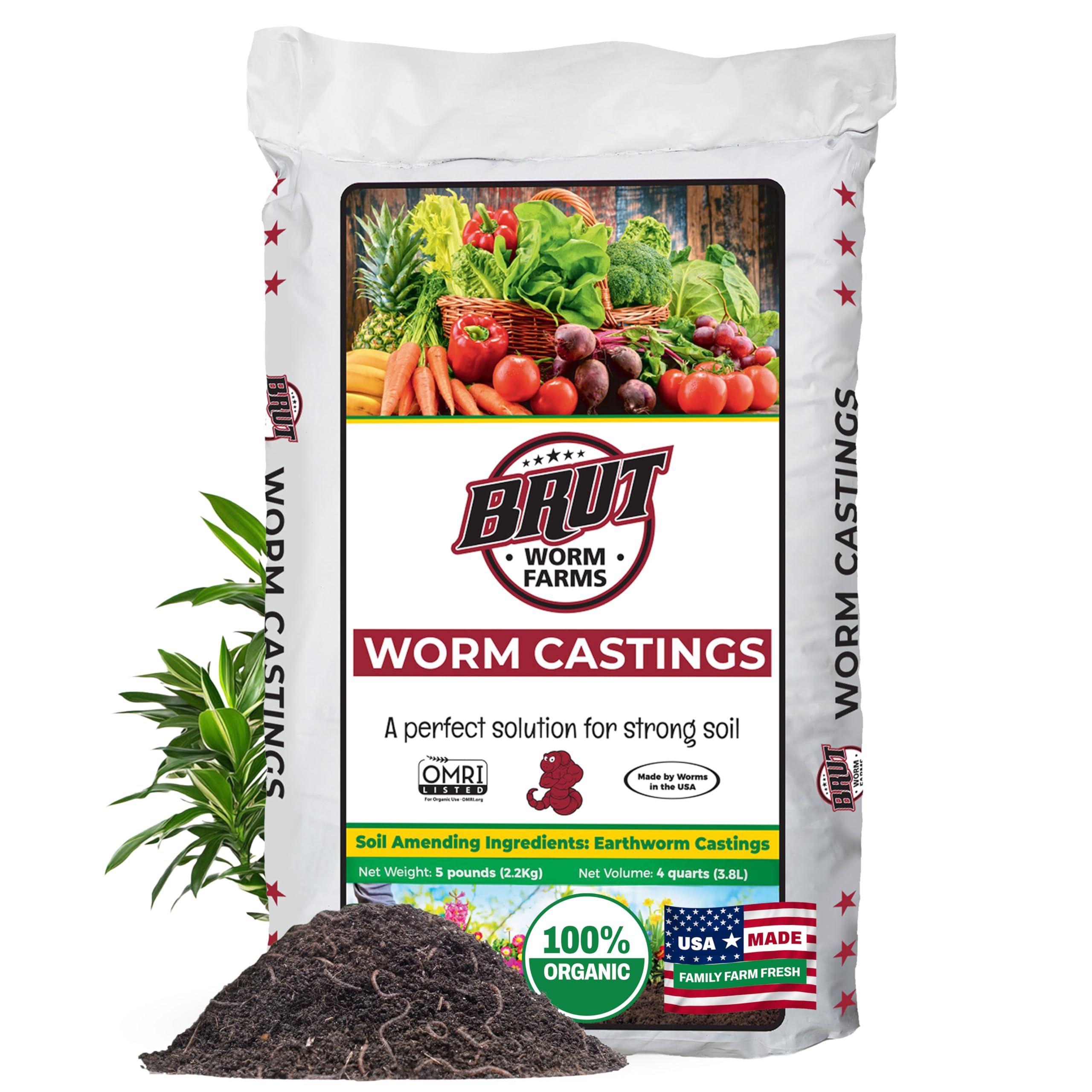
Brut Worm Castings

Potted plants

Our Score 9.6/10
Check Price

Worth Noting

  • Too mild to carry heavy feeders
  • Bag isn't resealable
Form
Granules
Mixing Ratio
1:5
Package Size
5 lb
Certification
OMRI and CDFA listed
Read the full review

The bag opens on dark, fine, slightly damp castings that smell like the floor of a forest, and the first thing that struck us is how much this looks like soil rather than fertilizer. That is the point of it: a 5-pound bag is a soil builder you mix at roughly one part to five of potting mix, not a concentrate you measure by the teaspoon.

That gentleness is why we reach for castings with seedlings, divisions and anything newly potted, where a strong liquid feed can do real damage in a week. You also use remarkably little per pot, so a bag stretches through a whole repotting season, and the benefit shows in how the mix holds moisture as much as in the leaves. The OMRI and CDFA listings mean the organic claim has been checked by someone other than the printer.

Strength is the limit. Castings are mild, so a hungry tomato in a small pot wants a real NPK feed alongside them. The bag also is not resealable, which we minded every time we opened it, so decant into a tub if it is living in a garage.

Bottom line: Buy it when you want a feed you can't easily overdose: castings suit seedlings, containers and anyone nervous about burning roots.

2

Espoma Bio-Tone Starter Plus

Espoma Bio-Tone Starter Plus

New plantings

Our Score 9.6/10
Check Price

Worth Noting

  • Only makes sense at planting time
  • Pricier than plain granulars
Form
Granules
Added
Endo and ecto mycorrhizae
Bag Size
8 lb
NPK Ratio
4-3-3
Read the full review

There is one moment this product is built for, and it is the planting hole. You mix Bio-Tone into the soil you backfill with, so roots meet nutrients and mycorrhizae on their first day rather than a month into establishment.

At 4-3-3 with both endo and ecto mycorrhizae, it is doing two jobs at once, feeding and colonizing. We treat it as insurance on plantings that have to establish before winter, whether that is a new shrub, a divided perennial or a bareroot rose, and what we look for afterwards is steady growth rather than a flush that fades. The 8-pound bag goes further than it looks because you use it at planting rather than every couple of weeks.

What it is not is a season-long program. Once plants are established, a balanced granular or a liquid keeps them going, and the price per pound makes more sense around the roots of a prized shrub than broadcast over a row of beans.

Bottom line: Keep a bag for planting days: this is the handful that gets new trees, shrubs and divisions rooted instead of sulking.

3

Wiggle Worm Castings

Wiggle Worm Castings

Large garden beds

Our Score 9.6/10
Check Price

Worth Noting

  • Heavy and bulky to store
  • Overkill for a few containers
Form
Granules
Bag Size
30 lb
Application
Three times a year
Certification
OMRI listed
Read the full review

Thirty pounds of castings is a commitment, and it is the right one if you are feeding beds rather than pots. The bag recommends applying three times a year, which fits top-dressing raised beds, mixing soil for a new border or keeping a vegetable patch supplied without measuring anything.

The castings are pure, not vermicompost cut with bedding, and they are fine, dark and easy to broadcast by the handful. Against Brut, we rate the quality about level and the value clearly better, because the bulk size drops the cost per pound sharply. The OMRI listing keeps the organic claim honest.

The downsides are logistics. Thirty pounds is heavy to lug and needs a dry home, and a soggy bag of castings is a genuine mess. If all you grow is a balcony of containers, you will be storing most of it for years.

Bottom line: Buy the big bag if you feed beds rather than pots: 30 pounds of pure castings at the best cost per pound here.

4

Down to Earth 4-4-4

Down to Earth 4-4-4

Vegetables and herbs

Our Score 9.4/10
Check Price

Worth Noting

  • Won't fix a plant this week
  • Granules are clumsy in small pots
Form
Granules
Release
Slow-release
NPK Ratio
4-4-4
Package Size
5 lb
Read the full review

Balanced numbers are the least dramatic thing a fertilizer can advertise, and 4-4-4 is exactly why this box is our top pick. Equal parts nitrogen, phosphorus and potassium means it feeds leaves, roots and fruit at once, so it suits a bed where tomatoes, kale and herbs are all growing side by side. The granules are slow-release, which is the right temperament for a garden you visit on weekends rather than a greenhouse you hover over.

Getting it out of the box is about as simple as fertilizing gets: scratch it into the surface or mix it through the soil when you plant, and the 5-pound box covers a decent stretch of bed. We noticed the smell sits closer to hay than to the fish and bone products further down this list, which matters when the beds run along a patio door. It is also small enough to keep on a shelf instead of surrendering garage floor space to it.

The trade-off is speed. Slow-release granules will not rescue a plant that is yellowing this week, and that is a job for a liquid feed like Neptune's Harvest. If your growing is mostly a windowsill of pots, scratching granules into a six-inch container is fussier than a capful of concentrate. Otherwise it is the bag we reach for first in spring and the one we restock without thinking.

Bottom line: Our default pick: a balanced, slow-release granular that feeds a mixed vegetable garden for months with very little risk of overdoing it.

5

Fox Farm Big Bloom

Fox Farm Big Bloom

Blooms and fruit

Our Score 9.4/10
Check Price

Worth Noting

  • Quart empties fast in a real garden
Form
Liquid
Dilution
4 tbsp per gallon
NPK Ratio
0-0.5-0.7
Bottle Size
1 quart
Read the full review

The NPK on the bottle reads 0-0.5-0.7, which looks like a misprint next to the 4-4-4 products here. It is not one. Big Bloom is built for the flowering and fruiting end of the season, where you want phosphorus and potassium available and nitrogen dialed back so a plant stops making leaves and starts setting fruit.

Mix 4 tablespoons per gallon and use it every other watering, or run it through a hose-end sprayer for a bigger area. Earthworm castings and bat guano are the base, so it is organic but behaves like a fast feed, with plants taking it up quickly instead of waiting for soil biology to catch up. We saw no burn on tomatoes and peppers in full sun when we stuck to that dilution.

Where it stumbles is the bottle. A quart disappears in a garden with more than a few containers, and four tablespoons a gallon means reordering before the season ends. For all that, it is the bloom feed we keep coming back to, because a plant that has stopped setting flowers responds within days rather than weeks.

Bottom line: Our pick for anyone chasing flowers and fruit rather than leaves; mixed at the label rate it hasn't burned anything we fed.

6

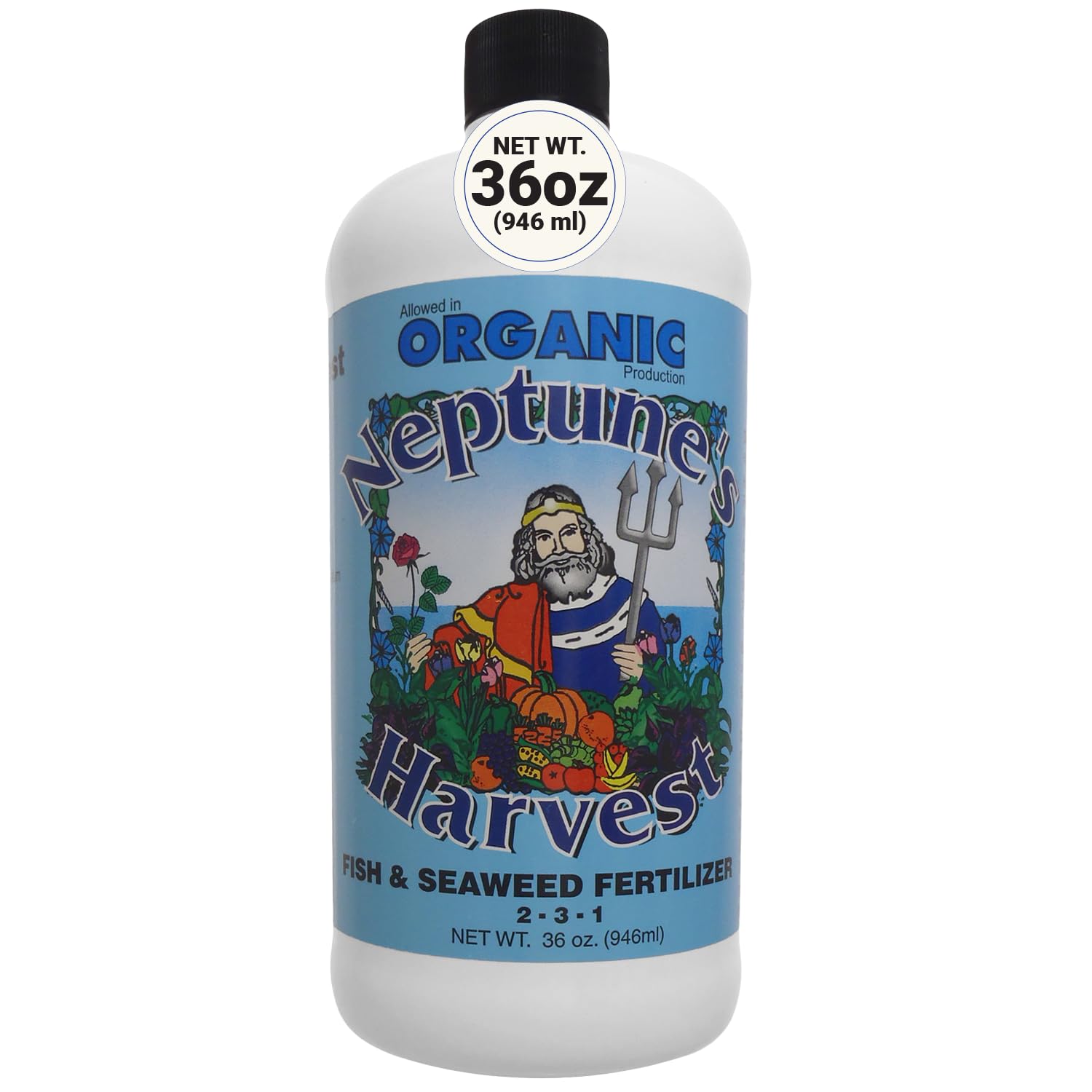
Neptune's Harvest Fish & Seaweed

Neptune's Harvest Fish & Seaweed

All-purpose liquid feed

Our Score 9.4/10
Check Price

Worth Noting

  • A bottle goes fast on a big garden
Base
Fish and seaweed
Form
Liquid
NPK Ratio
2-3-1
Bottle Size
36 fl oz
Read the full review

There is no mistaking what is in the bottle, and we will say it plainly: fish and seaweed at 2-3-1 smells like fish and seaweed. We still keep it on the shelf, because nothing else in this roundup turns a tired bed around as quickly.

It is a genuine all-purpose feed. An ounce per gallon works as a soil drench or a foliar spray, and it suits vegetables, flowers, fruit trees and lawns without needing a separate product for each. The seaweed half does more than feed: it builds organic matter and feeds soil microbes, so beds get looser and darker over a season. Mid-season is where it earns its place, when the granular feed is already down but the plants want more.

Two cautions. Measure it, because a heavy hand with fish emulsion can burn tender growth, and an ounce per gallon is the dose rather than a starting point. Keep it outdoors or in a well-ventilated space too, since a watering can smells of it for days.

Bottom line: The fastest-acting organic feed on this list, and worth the smell if you want a tired bed to green up quickly.

7

Purived Liquid Plant Food

Purived Liquid Plant Food

Houseplants

Our Score 9.4/10
Check Price

Worth Noting

  • Beds and borders burn through bottles
Form
Liquid
Shelf Life
2 years
Bottle Size
16 fl oz
Diluted Yield
50 gallons
Read the full review

The arithmetic is the whole pitch. One capful to a gallon of water, one 16-ounce bottle to 50 gallons, and a two-year shelf life, which for a dozen pots on a windowsill means a fertilizer you buy once and then forget about.

Indoors is where we rate it highest, because there is nothing to smell. No fish, no manure, no cloud hanging over the living room, and that is usually the reason people stop feeding houseplants at all. It also runs through a semi-hydroponic setup or as a foliar feed at the same dilution, so one bottle covers whatever mix of pots you keep.

Two things to watch. Some plants yellow after feeding, so try a single pot and give it a couple of weeks before treating the whole collection. A bottle that sits for months can also grow mold, so keep it off a hot windowsill and look before you mix.

Bottom line: The houseplant answer: odorless, a capful per gallon, and one bottle mixes 50 gallons of feed that lasts two years.

8

Burpee Bone Meal

Burpee Bone Meal

Roots and bulbs

Our Score 9.4/10
Check Price

Worth Noting

  • Not a complete feed on its own
Form
Powder
Coverage
240 square feet
Package Size
3 lb
Certification
OMRI listed
Read the full review

Bone meal does one job well, and it is worth being clear about which one: it puts phosphorus and calcium where roots are forming. That makes it the right thing for fall bulbs, new transplants, and tomatoes and peppers that need a strong start rather than a nitrogen push.

The granules are fine and easy to spread, and the 3-pound bag covers a surprising amount of ground, with the listing putting it around 240 square feet, which is a whole bed of bulbs. It is OMRI listed, so it slots into an organic program without argument. We use it alongside a balanced feed rather than instead of one, since there is nitrogen in bone meal but not enough to carry a hungry crop through a season.

Two practical notes. Scratch it into the soil rather than leaving it on the surface, because dogs dig for bone meal and a dog that finds it will keep coming back. Water it in yourself as well, since a bag of bone meal after a night of rain is a smell you remember, and that is the main reason it sits below the all-purpose picks.

Bottom line: Not an all-purpose feed: this is the phosphorus and calcium you add at bulb planting and transplant time.

9

Dr. Earth Organic 5

Dr. Earth Organic 5

Budget vegetable patches

Our Score 9.2/10
Check Price

Worth Noting

  • Pungent smell after watering
Form
Granules
Bag Size
4 lb
Feed Duration
Several months
Read the full review

By price this is the least expensive bag in the roundup, and it is aimed squarely at tomatoes, peppers and herbs. It feeds for several months per application, so one bag covers a season for most backyard plots, and the ingredient list skips chicken manure and sewage sludge, a detail that matters to anyone growing food.

The catch is condition. This is a damp organic blend, and bags can arrive wet enough to grow mold and hatch fungus gnats. Open it over a tarp, store it somewhere dry, and watch pots for a week after the first watering rather than assuming the worst when a gnat appears.

For a first vegetable garden it is still a sensible buy: cheap, organic and slow enough to be forgiving. Store it well and it does the job; leave it in a humid shed and you will be fighting flies all summer.

Bottom line: The cheapest bag here and a solid tomato feed, as long as you can handle the smell and store it somewhere dry.

How We Tested 12 Organic Fertilizers

We started by pulling every organic option we could find from brands we already trusted and a few we didn't know, then read the guaranteed analysis, the ingredient sources, and whether the nutrients came from meals, manures, and compost rather than something synthetic wearing a natural-sounding name. We also worked out cost per feeding, not per bag, since a cheap box that doses twice is no bargain. That filtered the field to 12: granular, liquid, and one compost-based product that arrived looking like a sack of dirt.

Every fertilizer went onto the same set of plants — tomatoes and peppers in raised beds, herbs in containers on a windy balcony, and a rotation of houseplants indoors — applied on the label's schedule with the date and dose written on a stake. Each week we counted new leaves and measured fresh stems, compared leaf color against a photo reference, and watched the edges for the crisping that means we overdid it. Blooming plants got a separate tally: how many flowers opened and how many bees actually showed up.

Odor got its own protocol. We sniffed each product straight out of the bag, again right after mixing, and once more a day later, then noted whether the smell lingered after watering. To catch infestations, we set yellow sticky traps beside every treated pot and counted what stuck, and we checked the soil surface for fuzz or mold. The blood-meal products got an unofficial dog test too — one of our editors has a terrier with strong opinions about anything that smells like dinner.

Value came down to arithmetic: how many feedings a container gave, what that cost per pot, and whether the granules clumped or the bag resealed without a fight. A few products we stopped reaching for by month three. The ones that survived the full eight months are the ones you'll find below.

How to Choose Organic Plant Fertilizers

Pick the form around your routine

Granular feeds are scratched into soil and release over weeks or months, liquids are mixed with water and available almost immediately, and castings are a mild amendment you blend into potting mix. If you want to feed a bed twice a season and forget about it, buy granular. If you water containers weekly and like having something to do with your hands, a liquid concentrate suits better.

The common mistake is carrying a slow granular into a windowsill of small pots, where it is clumsy to apply and slow to show. Match the format to the pot or bed first, then worry about the analysis.

Read the NPK as a job description

The three numbers describe the ratio of nitrogen, phosphorus and potassium, not the quality of the product. A balanced 4-4-4 feeds evenly through a mixed garden, a bloom feed such as 0-0.5-0.7 deliberately holds nitrogen back so a plant puts energy into flowers and fruit, and bone meal loads phosphorus and calcium at root level. Choose the ratio for what you want the plant to do next.

What the percentage does not tell you is how heavily to apply. A stronger analysis is dosed lighter, never more generously, and treating a concentrate like a balanced granular is how gardeners burn leaves.

Work out how far a package actually goes

Dilution is where value hides. One bottle here makes 50 gallons at a capful per gallon, while another mixes at 4 tablespoons per gallon and drains a quart quickly in a container garden. For beds, bulk wins: a 30-pound bag of castings costs more at the till and far less per pound than a 5-pound one.

Do the rough math on watering cans or square feet before comparing shelf prices. Two products at the same price are rarely the same cost per feeding.

Decide how much smell you'll accept

Organic nitrogen comes from fish, bone, manure or castings, and it announces itself. The fastest-acting liquids tend to be the loudest, and rain or irrigation brings the smell back days later. Indoors, that rules out fish emulsion for most people and points to an odorless concentrate instead.

Outdoors, apply before a stretch of dry weather so the material soaks in rather than sitting wet on the surface, and keep the bag or bottle sealed between uses.

Look for certification, not the word natural

Natural and organic are marketing words until somebody independent verifies them. An OMRI listing, a CDFA registration or an approved Organic Input Material status is what shows a product meets a defined standard, and it is what a certification agent asks for if you sell what you grow.

If organic is the entire point of the purchase, check the seal on the package rather than the banner on the listing.

Frequently Asked Questions

Final Verdict

For most gardens the answer is the Down to Earth 4-4-4 box. Balanced, slow-release and mild-smelling, it feeds a mixed bed without demanding that anyone measure precisely, and that combination is what keeps an organic program going through a whole season. Keep a bottle of Neptune's Harvest for the week something needs a shove, and a bag of castings if your growing happens in pots and you want a feed that forgives a heavy hand.

Everything else here is a refinement for a particular plant, a particular soil problem or a particular budget.