Soil & Fertilizer

Best Straw Mulch of 2026

Straw mulch is supposed to end your weeding problem, not start a new one. If you've opened a bale and found it half full of wheat heads, or watched a dust cloud settle over the tomato bed, you know the catch: cheap straw is often hay in disguise, and short, seedy, dusty straw costs more in cleanup and hand-pulling than it saves. A good bale holds moisture, keeps soil temperature steady, smothers weeds, and breaks down into the bed by fall.

A bale I bought on price taught me this the hard way; I spent July pulling volunteer wheat out of a bed I'd already weeded. Since then my team and I have spread 14 bales over a single seven-month growing season, in vegetable beds, a strawberry patch, a sloped path, and a perennial border, and the gap between best and worst was obvious within a month. Straw length, how clean the bale is, and whether anything in it sprouts once it gets wet matter more than the price tag. Ahead are the bales that stayed put, stayed clean, and didn't grow anything I didn't plant.

1

Garden Elements Straw Bale

Top Pick
Garden Elements Straw Bale

Large beds

Our Score 9.0/10
Check Price

Worth Noting

  • Bale density varies from box to box
Format
Tied bale, cut strings to spread
Material
Non-GMO wheat straw
Bale Weight
20 lb
Bale Dimensions
22 x 16 x 18 inches
Read the full review

A tied straw bale is a different animal from a bag of chopped straw: cut the twine, peel off a flake, and you have a sheet of long stems to lay between rows. Garden Elements ships a real one — about 22 by 16 by 18 inches, around 20 pounds, tied at both ends — and of the baled options here it's the one we pick for strawberries, tomatoes, and anything else that wants a clean layer of long straw.

Breaking it apart is most of the job, and this bale flakes rather than crumbles, so one flake covers a few feet of row without shedding chaff across the path. One bale is a season's mulch for several raised beds, and what's left keeps in its box in a dry shed. It also does duty as coop bedding and as the fall porch decoration, which is not nothing.

The compromise is seed. This is plain, untreated wheat straw, so wheat and the occasional weed come up through it; in a strawberry patch that's a nuisance you pull as you pick, but it has no business over a seed bed. Keep it under cover and it stays usable — a bale left out in the rain mats into a block you have to pry apart.

Bottom line: For a real bale you flake apart by hand, this is the one we choose — it covers several raised beds and lays flat between rows.

2

Gardener Select Seeding Straw

Gardener Select Seeding Straw

New lawns

Our Score 9.0/10
Check Price

Worth Noting

  • Seed load varies; wheat sprouts in beds
Binder
Tackifier applied
Coverage
Up to 500 sq. ft.
Material
Biodegradable processed straw
Bale Volume
2.5 cu ft
Read the full review

Tackifier is the whole pitch here: the straw is treated with a bonding agent so it clumps where it lands instead of migrating to the fence line in the first gust. On a bare slope or a fresh patch of lawn that isn't a gimmick — it's the difference between a straw cover and a straw pile.

The bale is 2.5 cubic feet and rated to cover up to 500 square feet, the most coverage of the seeding straws here. It's finely shredded, so it goes down fast and evenly over bare ground, and it holds through a watering can and a hose. There's no twine to wrestle with and nothing to flake apart, which matters when you're working a bank.

Where it beats the smaller EZ Straw bale is area per bale: you cover twice the ground for a price that doesn't double, and you spend less time re-covering bare spots after rain. If your seeding job is a patch by the driveway, the smaller bale is the sensible buy; for a whole lawn, this is the one.

Bottom line: Our seeding pick: the tackifier keeps straw where you put it on slopes and in wind, and 2.5 cubic feet goes a long way over bare seed.

3

Out-Grow Wheat Straw

Out-Grow Wheat Straw

Small beds

Our Score 9.0/10
Check Price

Worth Noting

  • Costs more per pound than a full bale
Volume
1 cubic foot
Weight
4 lb
Material
100% natural wheat straw
Read the full review

Four pounds of straw is a modest amount, and that's exactly why this box stayed in the roundup. It's a cubic foot of clean wheat straw, tightly packed, sized for a couple of raised beds, a chicken coop, or an outdoor cat shelter rather than a whole plot.

What we appreciated most is how little dust it makes. Chopped straw can arrive as much chaff as stem; this one stays mostly whole, so it's usable indoors around animals and doesn't coat the porch in fines when you open the box. It's soft and dry straight out of the packing too, which is what you want under a hen or in a cat house. For small jobs the smaller amount is the point — nothing to flake apart, nothing to store.

Bottom line: We keep this box for the small jobs: clean straw by the handful rather than the bale, for a few beds, a coop, or a cat shelter.

4

EZ Straw Seeding Mulch

EZ Straw Seeding Mulch

Slope seeding

Our Score 9.0/10
Check Price

Worth Noting

  • Costs more per square foot than other seeding straw
Binder
Tackifier
Volume
1 cu ft
Coverage
250 sq. ft.
Packaging
UV-protected bag with handle
Read the full review

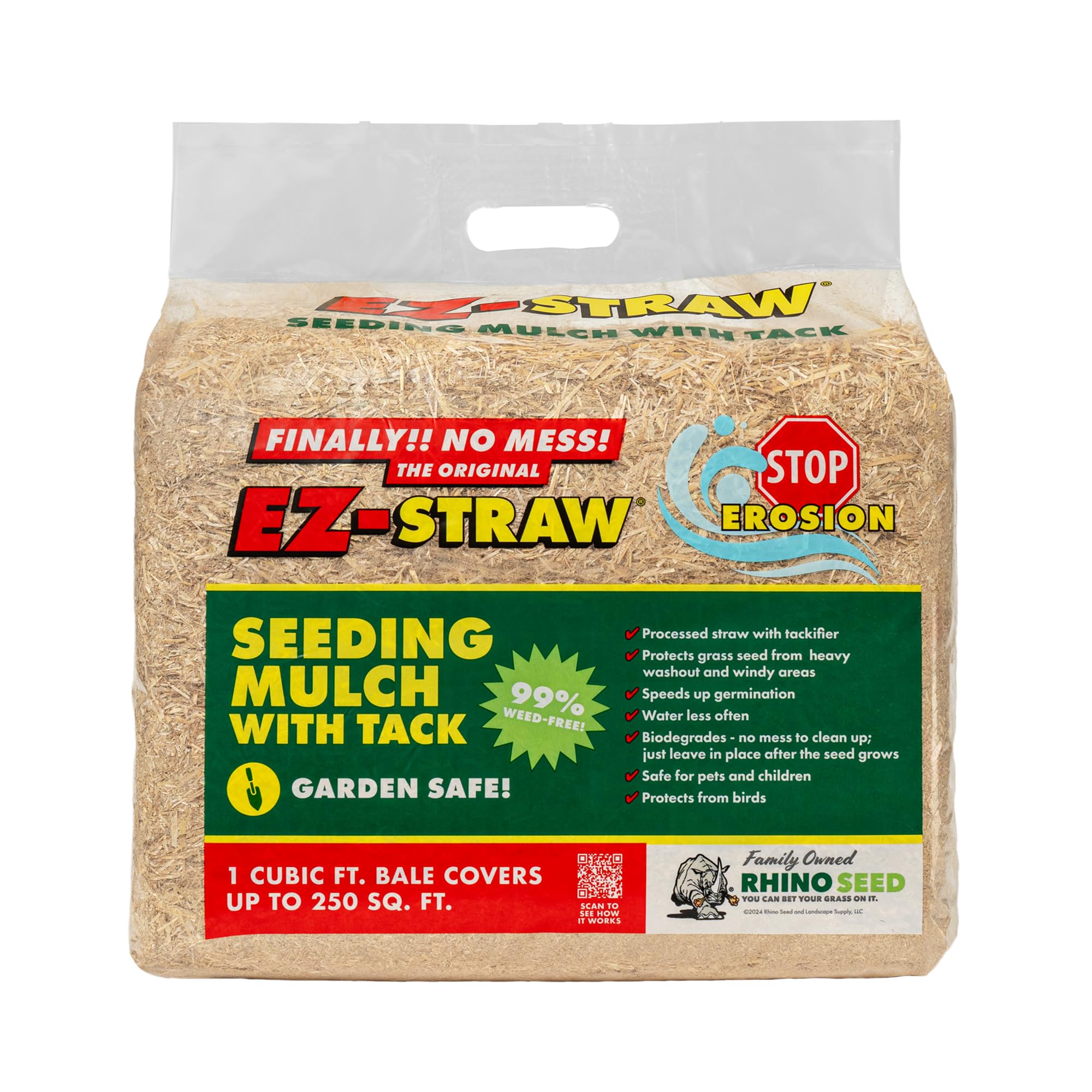
The tackifier is what makes this bale worth keeping by the shed: the straw clumps where it lands and stays through wind and a hard rain, which is more than loose straw over bare seed manages.

Coverage is where it gives ground. At 250 square feet it's half the area of our bigger seeding pick, so it makes sense for patches, banks, and small repairs rather than a whole lawn. The bag is UV protected with a handle and can live outside, and the bale is light enough to carry in one hand.

Bottom line: We reach for this one on bare patches and driveway banks; it's a tidy little seeding bale, provided you're not covering a whole yard.

5

HealthiStraw GardenStraw

HealthiStraw GardenStraw

Vegetable beds

Our Score 8.8/10
Check Price

Worth Noting

  • Priciest bale in this roundup
Coverage
3 cu ft
Straw Type
Cleaned, cut wheat straw
Bale Weight
20 lb
Seed Treatment
Filtered to reduce dust and seed
Read the full review

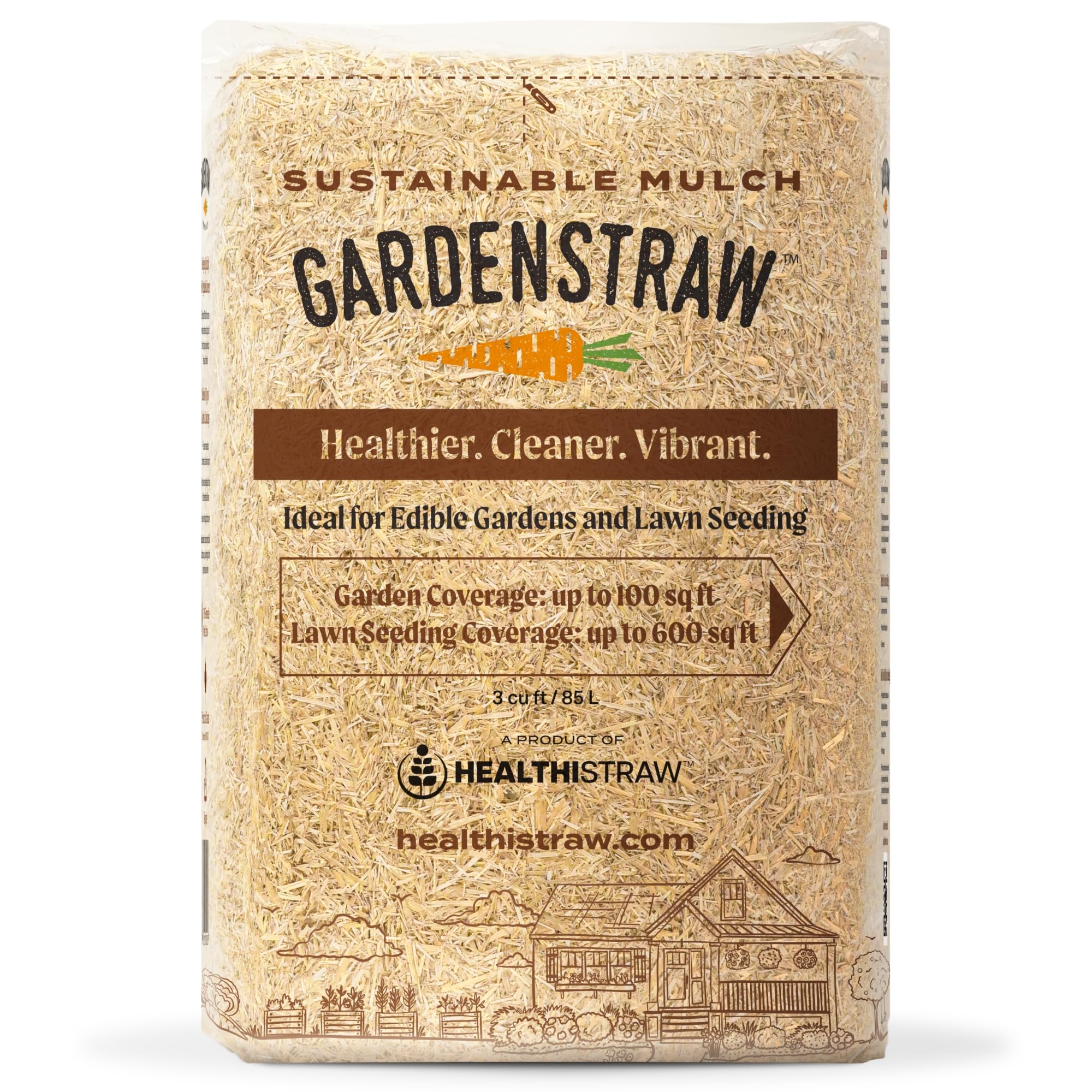
Straw mulch is judged by what comes up through it, so seed load was the first thing we checked across this set. HealthiStraw's GardenStraw is cleaned, cut wheat straw — filtered to remove dust, dirt, and as much seed as the process can reach — and it's the bale we reach for when we're mulching beds we plan to plant into.

What earns it the top spot is how little work it takes to apply. The straw is cut short, so it shakes out of the compressed bale and lands where you want it instead of blowing past the bed, and once you water it the fibers knit together and stay put. In the beds we mulched it did the two jobs mulch is supposed to do: the surface stayed damp longer than bare soil, and the soil underneath stayed cooler through the afternoon.

Seed is the honest caveat. This is cleaner than field straw, not sterile, and wheat sprouts did come up through it. The saving grace is that they come up shallow in a loose layer and lift out with two fingers if you catch them small; leave them a month and you're doing real weeding. Around slow-starting seedlings, hold off until the plants are up.

At 3 cubic feet it's also one of the bigger bales here, compressed enough to store in the corner of a garage between uses, and it goes further than the size suggests once it's broken apart. The cut and the cleaning are why it behaves better than a farm bale around seedlings.

Bottom line: We point anyone mulching a vegetable or flower bed here first: clean, cut wheat straw that spreads fast, holds moisture, and knits together when watered.

6

WNJ Natural Wheat Straw

WNJ Natural Wheat Straw

Pots and coops

Our Score 8.4/10
Check Price

Worth Noting

  • Priciest straw here by weight
  • Chopped short rather than long stems
Weight
1 lb
Material
100% natural wheat straw
Packaging
Vacuum packed
Read the full review

One pound of straw arrives as a vacuum-sealed brick — clean, dry, and dense enough that it doesn't shed a crumb in the box. It's the least straw you can buy here, and it's aimed at someone with a pot, a nesting box, or a small animal shelter rather than a bed.

For those jobs it works. The pieces are soft, so they pack around a plant or line a coop without poking through, and the vacuum pack keeps the whole brick dry until you open it. It's the cleanest small-format option here.

Then the quantity catches up. A pound is a container-sized amount: a few pots, a hanging basket, or one shelter. Spread at two or three inches it covers a container, not a border, so don't buy it planning to mulch a bed.

We keep it in mind for a specific small job — strawberries in a planter, a nesting box, a feral cat house — where a sealed one-pound brick is genuinely more convenient than a bale. Once a bed is involved, buy by the bale.

Bottom line: We keep it in mind for one potted plant, a nesting box, or a small shelter — for a garden bed, the bag is far too small.

7

Blue Mountain Hay Straw Mulch

Blue Mountain Hay Straw Mulch

Rough ground

Our Score 8.4/10
Check Price

Worth Noting

  • Coarse stems are awkward around small plants
Format
Compressed, expands when opened
Weight
5 lb
Material
Organic straw
Package Dimensions
17 x 12 x 5 inches
Read the full review

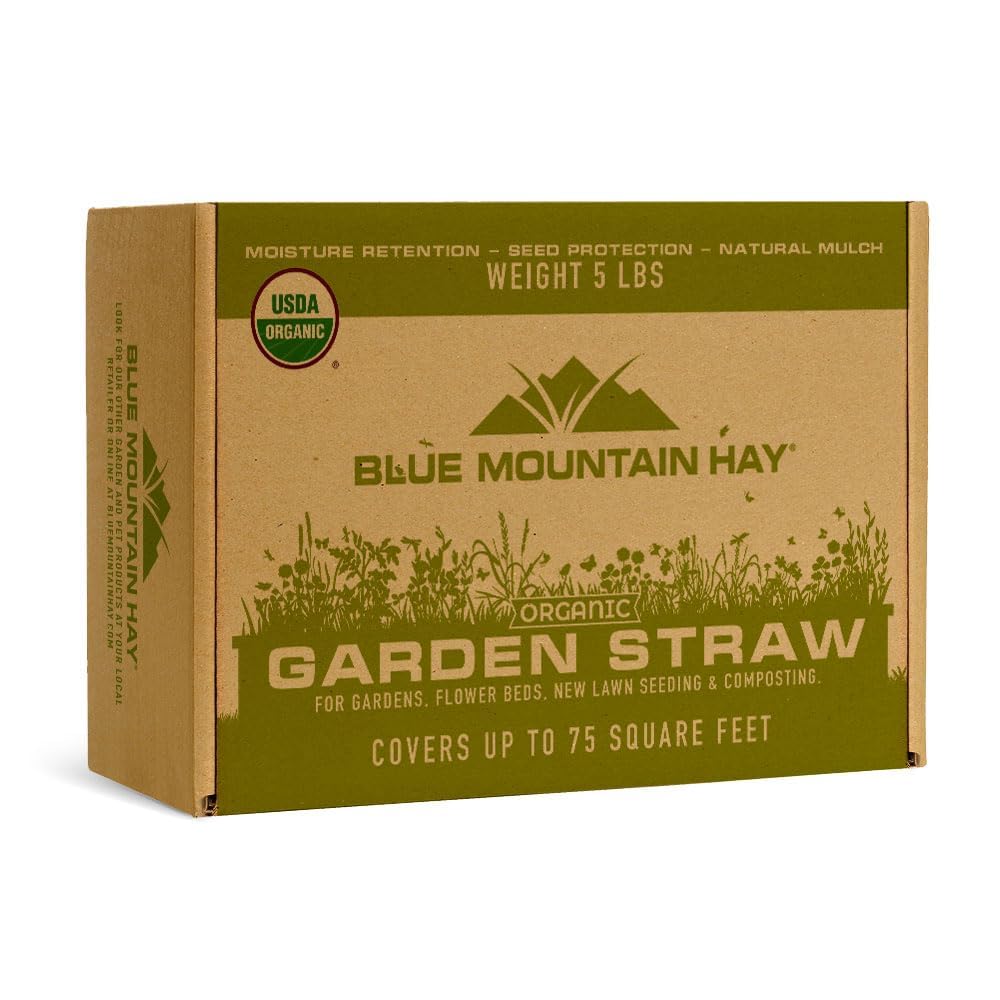
Of everything here, this is the box that carries the most grain and seed with it. Blue Mountain's straw is loose, long-stemmed, and sold as organic, and the first thing you notice on opening the box is how much wheat came along with the stems.

Where it earns its place is rough ground. The long stems form a loose, airy layer that sheds rain and stands up to wind better than chopped straw, which makes it a sensible cover for winter garlic, established perennials, and a bed you're leaving alone until spring. It's clean and dry in the box, and the compressed block opens into more material than the package suggests.

The trade only makes sense on ground you aren't weeding by hand. Buy it for rough cover or winter protection and it does the job; buy it for a tidy vegetable bed and you're creating work for yourself.

Bottom line: We reach for it on rough ground and winter cover where a few sprouts don't matter — not on a tidy bed you weed by hand.

How We Tested Straw Mulch

We started by narrowing the field to bales sold at garden centers and farm supply stores, then filtered by what the bale actually tells you: which plant it came from, the bale weight, and the coverage claim in square feet. Anything that couldn't say what it was, or that read as hay rather than straw, came off the list. That left 14 bales, spread across seven months from first planting through the last fall harvest.

Each bale went onto a real bed at a 2- to 3-inch depth: a vegetable plot, a strawberry patch, a sloped path, a perennial border, and a bare strip along a fence. We spread on a windy afternoon on purpose to see what blew, and we timed how long a bale took to shake out by hand and how far it actually went. Several fell well short of the square footage printed on the label.

Before spreading, we pulled a handful from the middle of each bale, counted seed heads, and watched those spots for three weeks to see what germinated. We measured a sample of straw pieces to record average length: long pieces knit together and stayed put, while short ones either blew into the lawn or matted into a crust that shed water. We shook each bale over a tarp to check for chaff, dust, twine, and debris, and left an unmulched strip beside every plot for comparison.

In July and August we pulled the mulch back and dug a hand into the soil underneath, comparing it with the bare strip: moisture and worm activity against cracked, dry ground. We noted which bales held through a heavy rain and which floated or crusted over, and how much of each had broken down by season's end. Cost per 100 square feet of actual coverage, not per bale, settled the value question.

How to Choose the Right Straw Mulch

Start With the Seed Load

Every bale carries some grain and some weed seed, and that is the difference between a bed you mulch once and a summer spent pulling wheat grass. Cleaned, filtered straw costs more and still isn't sterile — our top pick threw sprouts — but it's what you want for beds you plant into, for containers, and for anything you kneel down to weed. Save the cheaper, seedier bales for rough cover, paths, and winter mulch, where a sprout is only a sprout.

Match the Form to the Job

Three forms cover nearly every use. A tied bale gives you long stems you flake off by hand — the most durable layer, and the easiest to lay between strawberry and tomato rows. Chopped or cut straw spreads fast from a bag and knits down, which suits established plants and containers. Tackified seeding straw is a third thing entirely: it's made to lie over grass seed and hold there, and it's wasted on a bed you plan to plant through.

Work Out How Much You Need

Coverage numbers are usually written for a light seeding layer rather than a full bed mulch, so read them for what they describe. A one-cubic-foot bale rated at 250 square feet of new lawn will not mulch a bed that size — the layer is far thinner. As a rough guide, a 20-pound bale covers a few raised beds and a one-pound bag covers a few pots. Buy by the bale for a plot, and by the bag for a coop or a couple of containers.

Weigh Dust, Storage, and Animal Use

Cleanliness sounds like a luxury until you're spreading straw in a garage or lining a coop. Chopped straw varies a lot in how much chaff and dust comes with it, and the cleanest options here are the ones to use indoors. Storage matters too: a bagged bale with UV protection can stay outside, and a compressed block takes a corner of a shed, while a loose bale sheds straw every time you move it. If you keep hens or shelter outdoor cats, choose soft, short straw over long stemmy material.

Frequently Asked Questions

Final Verdict

For most gardeners we point to HealthiStraw's GardenStraw first: clean, cut wheat straw that spreads by hand, holds moisture, and knits down when watered, with a seed load you can manage by pulling sprouts early.

If you want a real bale to flake between rows, Garden Elements is the better buy. Seeding a slope or a bare lawn? Gardener Select's tackifier does the work for you.