Soil & Fertilizer

Best Organic Mulch for Vegetable Gardens of 2026

Mulch is the cheapest upgrade a vegetable garden gets and the easiest one to get wrong. A bag that mats into a crust sheds water instead of holding it, straw full of seed heads plants a weed crop of its own, and a sharp scent or a bag of mostly dust makes a tomato bed unpleasant to kneel in. What good organic mulch actually buys you is steadier moisture, fewer weeds, cleaner fruit, and soil that improves a little every season.

We laid 12 different mulches across my raised beds and a few in-ground rows through one full growing season, with a dog who insisted on supervising and a compost pile that took the leftovers. The ones that held up shared a texture that let water through and a bag size that actually covered what it claimed. Whatever you choose, plan on two to three inches and keep it back from the stems — most disappointing mulch stories start with someone spreading half as much as they needed. The picks below cover the different ways people garden.

1

Plantonix Coco Chips Mulch Brick

Top Pick
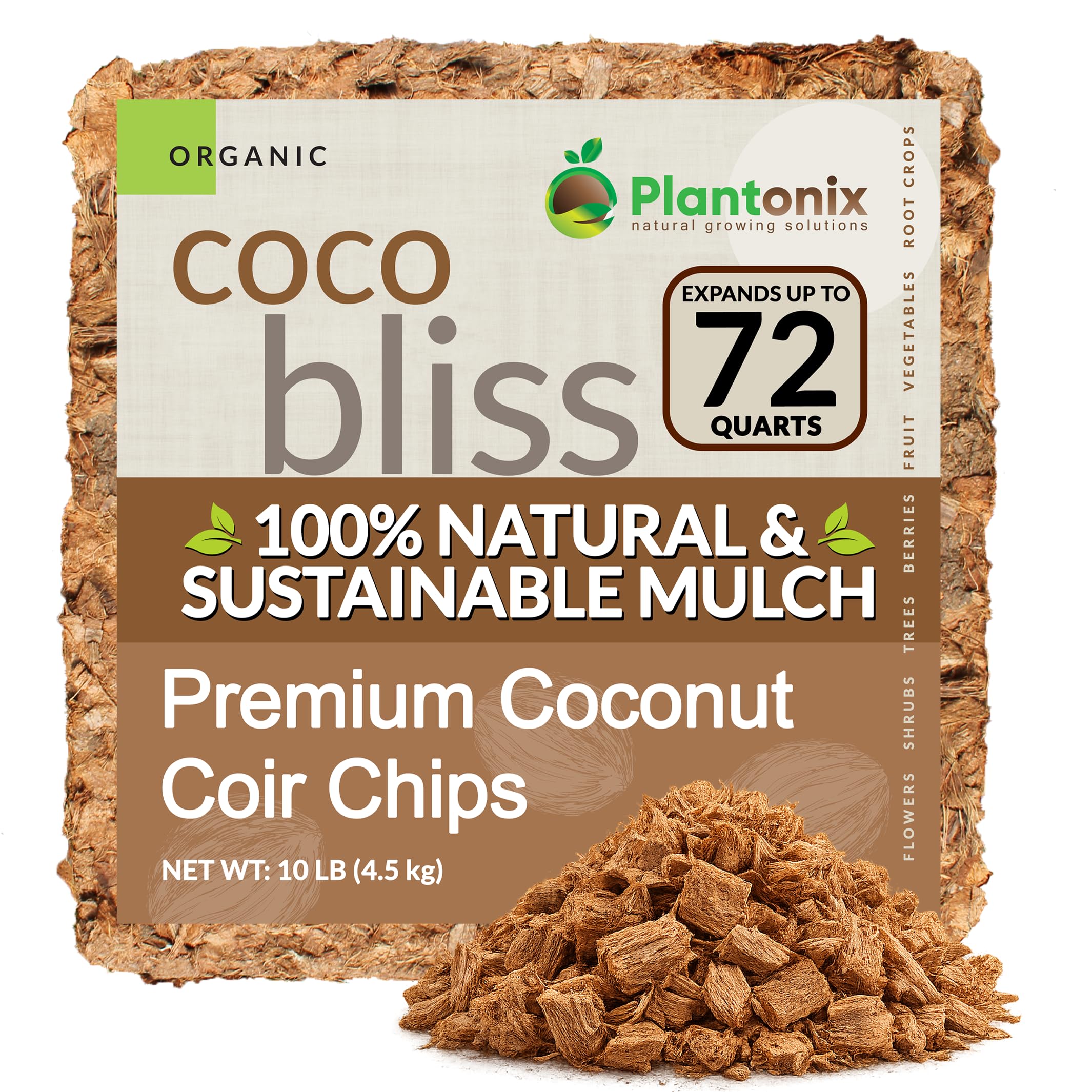
Plantonix Coco Chips Mulch Brick

Raised vegetable beds

Our Score 9.4/10
Check Price

Worth Noting

  • A large bed needs several blocks
Form
Compressed block
Material
Coconut husk chips
Block Weight
10 lb
Expanded Volume
15 gallons
Read the full review

A ten-pound block that looks like a paving slab turns into 15 gallons of chunky coconut husk once you add water, and that ratio is the whole reason it's the first one we reach for. Fifteen gallons is about two cubic feet, which is roughly twelve square feet at two inches deep — less if you go thicker — so a 4-by-8 raised bed takes several blocks, not one. Plan for that and everything else about this mulch is easy.

The pieces come out consistent and chunky with very little dust, and they sit light on the soil instead of matting into a crust the way finer material does. Rain soaks through, the surface stays open, and the chips don't pack down around stems. Hydrate it in a wheelbarrow or a big tub rather than a bucket, because it swells far more than the block suggests, and break up the lumps by hand as you go.

What we appreciate most is what happens at the end of the season: these chips break down into the bed instead of sitting there looking tired, so you can turn the top inch in and start again. It isn't the cheapest way to cover a large plot, and the chunks are big enough to be clumsy around very fine seedlings — start transplants with a thinner layer and add more once they're up. For a couple of raised beds, none of that matters.

Bottom line: For most vegetable gardens this is the one to buy: a compact block that expands into 15 gallons of chunky, clean coconut husk which suppresses weeds, holds moisture, and improves the bed as it breaks down.
2

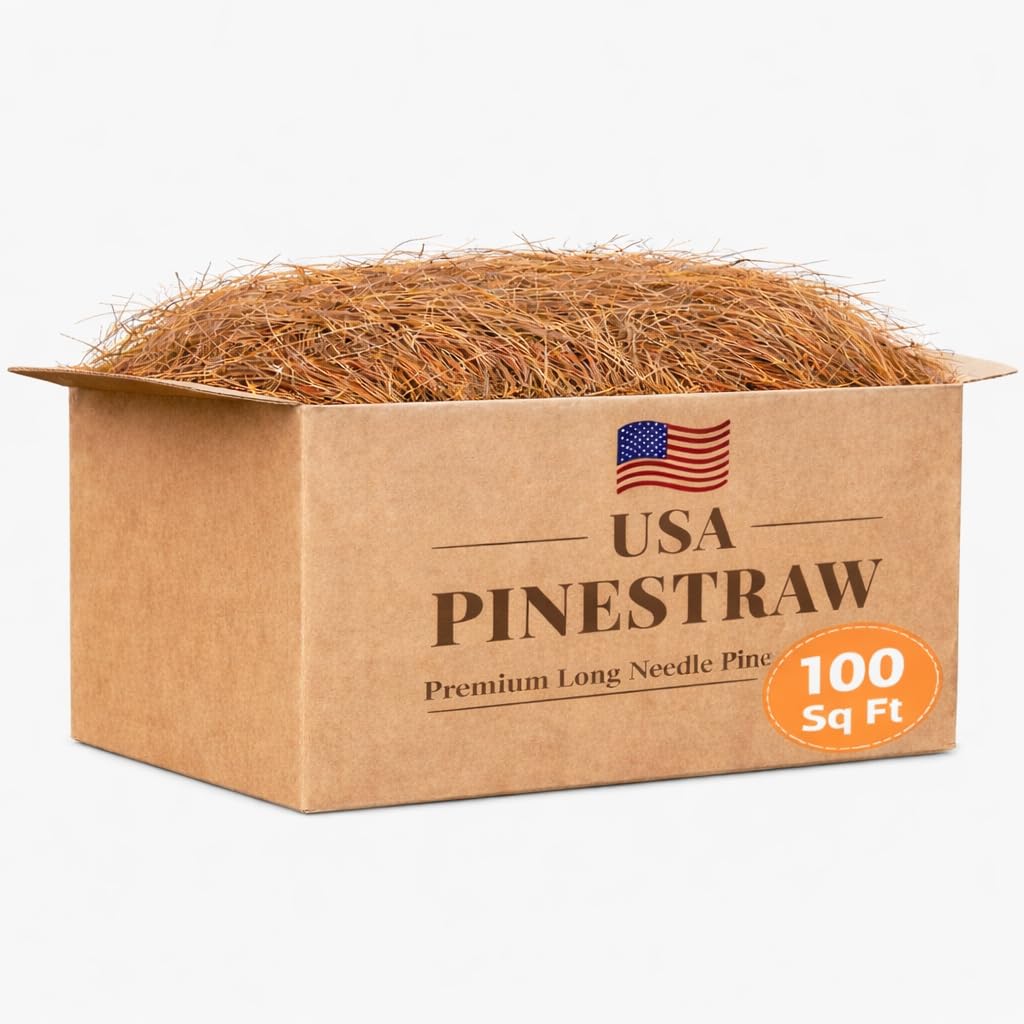
USA Pinestraw Long Needle Mulch

USA Pinestraw Long Needle Mulch

Large beds

Our Score 9.2/10
Check Price

Worth Noting

  • Bulky, heavy bale to move and store
  • The most expensive single package here
Coverage
100 square feet
Material
Long needle pine straw
Bale Weight
30 lb
Bale Dimensions
29 x 25 x 13 inches
Read the full review

One bale is listed at 100 square feet of coverage, which puts it in a different class from anything bagged on this page. For a vegetable garden laid out in rows, that's the figure that decides the purchase: you carry one thing to the bed and you're finished. It arrives as a compressed 30-pound block around 29 by 25 by 13 inches, so plan on a wheelbarrow and somewhere dry to keep it.

Long needles knit together as you spread them, and that's the advantage worth paying for. A layer of pine straw stays where you put it, including on a slope or along a bed edge where loose chips work their way downhill. It also holds its color and structure far longer than straw does, so a bed looks finished for the season rather than dusted for a week.

The catch is cost. This is the most expensive single package here, and the per-square-foot number only works because the layer lasts. Needles also want fluffing and forking to spread evenly — you can't pour them out of the bag and be done — and the bale is heavy enough that you'll want to break it open where you intend to spread it. Where it earns its keep is a big plot you replant every spring; for four pots on a patio, it's absurd.

Bottom line: Buy this when you have a lot of ground to cover: one bale claims 100 square feet, the long needles knit together, and the layer stays put on slopes and paths where chips slide.

3

Riare Organic Coco Coir Chips

Riare Organic Coco Coir Chips

Small plots, containers

Our Score 9.2/10
Check Price

Worth Noting

  • Costs more per expanded gallon than the larger block
Brick Size
8 x 4 x 1.8 inches
Pack Count
6 bricks
Total Weight
6.6 lb
Expanded Volume
7 gallons
Read the full review

Six bricks, each about 1.1 pounds and roughly the size of a paperback, wrapped separately and bone dry. Together they expand to 7 gallons — enough to top-dress a couple of raised beds or a long run of containers, and a fraction of the shelf space a bag of mulch takes up. The brick measures 8 by 4 by 1.8 inches before water, so stacking the unused ones in a shed is genuinely easy.

The honest description is chunk-and-fiber rather than uniform chips: some bricks open into clean pieces, others into a stringier mix. That's fine for what these do best, which is opening up heavy soil and topping containers, and it's why we treat the six-pack as a soil amendment that moonlights as mulch. Spread thin over a bed it still shades the soil and holds moisture; it just doesn't give you the even, tidy surface a block of chips does.

Buy it if you garden in small units — a bed here, three pots there — and want to hydrate only what you'll use in an afternoon. One brick is about right for a single large planter once it has soaked, and the leftover bricks stay dry indefinitely. It's the pick that fits a shed shelf and a small garden, rather than the other way around.

Bottom line: If your garden is two raised beds and a row of pots, start here: six small bricks you hydrate one at a time, so you mix only what you need and the rest keeps.

4

EZ-Straw Clean Processed Straw

EZ-Straw Clean Processed Straw

Small jobs, coops

Our Score 8.8/10
Check Price

Worth Noting

  • Dusty to spread, especially in wind
  • Chopped short, so it packs down
Weight
10 lb
Material
Clean processed straw
Bale Size
1 cubic foot
Dimensions
17 x 10 x 13 inches
Read the full review

This is chopped straw, not the long stems you get from a farm bale — short pieces with a fair amount of fine material, packed into a 10-pound bag about the size of a small suitcase. That changes what it's good for. Tucked around transplants it works nicely: it settles into the gap, shades the soil, and doesn't smother a young plant the way a clump of long straw can.

Expect dust when you spread it, especially on a windy day, and expect a few volunteer sprouts if the straw carried seed — neither is a defect so much as the nature of chopped straw. In a raised bed it does the two jobs you want from mulch: it slows surface drying and it knocks back weed seedlings wherever the layer is thick enough to block light.

Where we come down on it is scale. A cubic foot is a small amount of mulch, and the pine straw bale covers a whole bed rather than a corner of one. Buy this for small jobs — a few tomato plants, a strawberry pot, a coop floor — or if you want a bag you can keep outside by the door and dip into all season. For a full vegetable garden it's the wrong shape of purchase.

Bottom line: Fine for a few tomato plants and a coop floor, frustrating for a whole bed: the pieces are chopped short, they shed dust, and a cubic foot doesn't go far.

5

Wood Smith Cedar Chips

Wood Smith Cedar Chips

Pots and planters

Our Score 8.6/10
Check Price

Worth Noting

  • More sawdust than chip in the bag
Scent
Natural cedar
Volume
4 quarts
Material
Natural cedar
Read the full review

Four quarts of fine cedar. That's a top-dressing rather than a bed mulch — enough for a couple of large planters, a herb trough, or the soil around a few container tomatoes, and not much beyond that. As the mulch for a whole vegetable garden it doesn't make sense at this quantity, which is worth knowing before the bag arrives and looks smaller than the picture.

What we like is the texture and the smell. The pieces are small and splintery, with a dry, clean cedar scent that reads as wood rather than air freshener, and they sit tidily on top of potting mix. Because cedar breaks down slowly you aren't re-topping the pot every few weeks, though that same slowness means it gives almost nothing back to the soil — this is a cover, not an amendment.

If you're buying it hoping to keep gnats and flies off your plants, treat that as a bonus rather than the reason; the chips are the mulch and the scent is a pleasant extra. Where it genuinely beats the chunky options is between the stems of a densely planted pot, where a big coco chip simply won't fit. Buy two bags if you're dressing a row of containers.

Bottom line: Worth buying for pots rather than beds: a fine, fragrant cedar top-dressing that sits neatly on container soil and gives off a clean, dry scent every time you water it.

How We Tested 12 Organic Mulches Through a Full Growing Season

We started with every organic mulch we could reasonably bring home or have shipped, then filtered that list by what a vegetable gardener actually needs: no dyes, no added fertilizer, a clear ingredient list, and a price per square foot and bag size that made sense for a home plot. That left 12 products in straw, bark, leaf, and compost blends. Anything sold as organic on the strength of the word alone got cut.

In early spring we spread each one on its own patch — two raised beds and four in-ground rows growing tomatoes, peppers, garlic, kale, and beans — measuring depth rather than eyeballing it, and noting how much of the garden one bag actually covered. After every rain we lifted the mulch around plants to see whether water soaked through or ran off the surface, and we did the evening walk with the dog to watch whether he nosed into the beds or left them alone.

By midsummer we were counting weeds in a marked square of each patch and checking for matting, crusting, and the slivers or sharp bark pieces that make bare hands and bare feet miserable. We recorded how strong each mulch smelled the day the bag opened and again after the first soaking, since a sharp ammonia or manure note near the kitchen door is a real dealbreaker. At season's end we compared how far each had broken down, whether the straw had held its structure or collapsed, and what the mulch cost per cubic foot rather than per bag.

How to Choose the Right Organic Mulch for Vegetable Gardens

Do the Coverage Math First

Mulch is sold three different ways — by volume, by expanded volume, and by claimed square footage — and none of them compare easily on a shelf. One number does the work: at the two to three inches that actually suppress weeds, a cubic foot covers about six square feet. So a 100-square-foot bed needs something like 17 cubic feet of loose material.

That reframes the packages in front of you. A 15-gallon block works out to roughly two cubic feet, which is a small bed or a dozen containers rather than a whole plot. Measure your beds, multiply length by width, divide by six, and you'll know whether you're buying one bag or five — which is usually the moment people switch from bags to a bale.

Particle Size Decides Where It Stays

Chips, needles, and chopped fiber behave completely differently once the weather arrives. Long pine needles knit into a mat that holds on a slope and won't end up in the neighbor's yard; chunky coco chips sit light on the surface and rake back easily when you reset plants. Dense, fine material packs into a crust that sheds water sideways instead of letting it through, and it gives slugs somewhere to hide.

Match the texture to the ground you have. Slopes, windy plots, and long rows want long needles or chunky chips. Fine material belongs in pots and small planters, where nothing blows away and the neat surface is the point.

Check What's In It, Then Keep It Off the Stems

Organic matters most when you're growing food. Look for a single-ingredient bag — coconut husk, pine needles, straw, cedar — with no dye, no colorant, and no vague blend on the label. You're covering soil that will grow something you eat.

Whatever you choose, spread two to three inches and pull it back a couple of inches from stems and crowns. Mulch piled against a tomato stem keeps the collar wet, which is the last thing you want in a humid summer, and a deep layer against the stem gives rodents a covered route to the fruit.

Pick for How Long You Want It There

Slow-to-break-down material such as cedar or pine needles suits paths, perennial beds, and any spot you want looking finished for more than a season. Coco chips and straw break down within a season or two, which is a feature if you turn the bed over each year: the mulch goes back into the soil as organic matter instead of into a wheelbarrow.

One caution on working it in. Don't dig raw, high-carbon material deep into a bed mid-season; it ties up nitrogen while it decomposes. Leave it on the surface, let the worms pull it down, and turn in only what's already broken down at the end of the year.

Frequently Asked Questions

Final Verdict

For most vegetable gardens, the Plantonix block is the one to buy. It's clean, chunky, easy to store until you need it, and it goes back into the bed as organic matter at the end of the season rather than into a bin. The only caution is arithmetic: one block dresses a small bed, so buy in multiples.

If your plot is bigger than a couple of raised beds, or if it slopes, the pine straw bale is the better purchase — 100 square feet from one bale plus needles that lock together beats anything you can carry in a bucket. The rest are specialists: the six-pack for a small plot, cedar for pots, chopped straw for tucking around a few transplants.