Planters & Plant Supports

Best Shade Cloth of 2026

By mid-July my raised beds are bone dry by noon and the deck is too hot to cross barefoot. A shade cloth solves that in an afternoon, but only the right one. A good panel knocks a solid ten degrees off the air underneath and keeps lettuce from bolting in the heat; a bad one traps the breeze like a tent, whips loose in the first thunderstorm, and has you out there restringing it every weekend.

I've had 12 of them strung up around my yard over the past seven months, and the thing that surprised me most is that the fabric itself is rarely what fails. The number on the label — 30%, 50%, 70% — is a rough guide at best, and what really decides whether a panel survives a season is how the edges are finished and how the grommets are set. Cheap ones tear out at the corners the first time wind gets under them. The ones worth buying are the ones you hang once and forget about.

1

Coolaroo 90% Shade Fabric Roll

Top Pick
Coolaroo 90% Shade Fabric Roll

Custom large projects

Our Score 9.4/10
Check Price

Worth Noting

  • Premium compared with pre-cut panels
Material
HDPE
Warranty
15 years
Roll Size
6 x 100 ft
Shade Block
90%
Read the full review

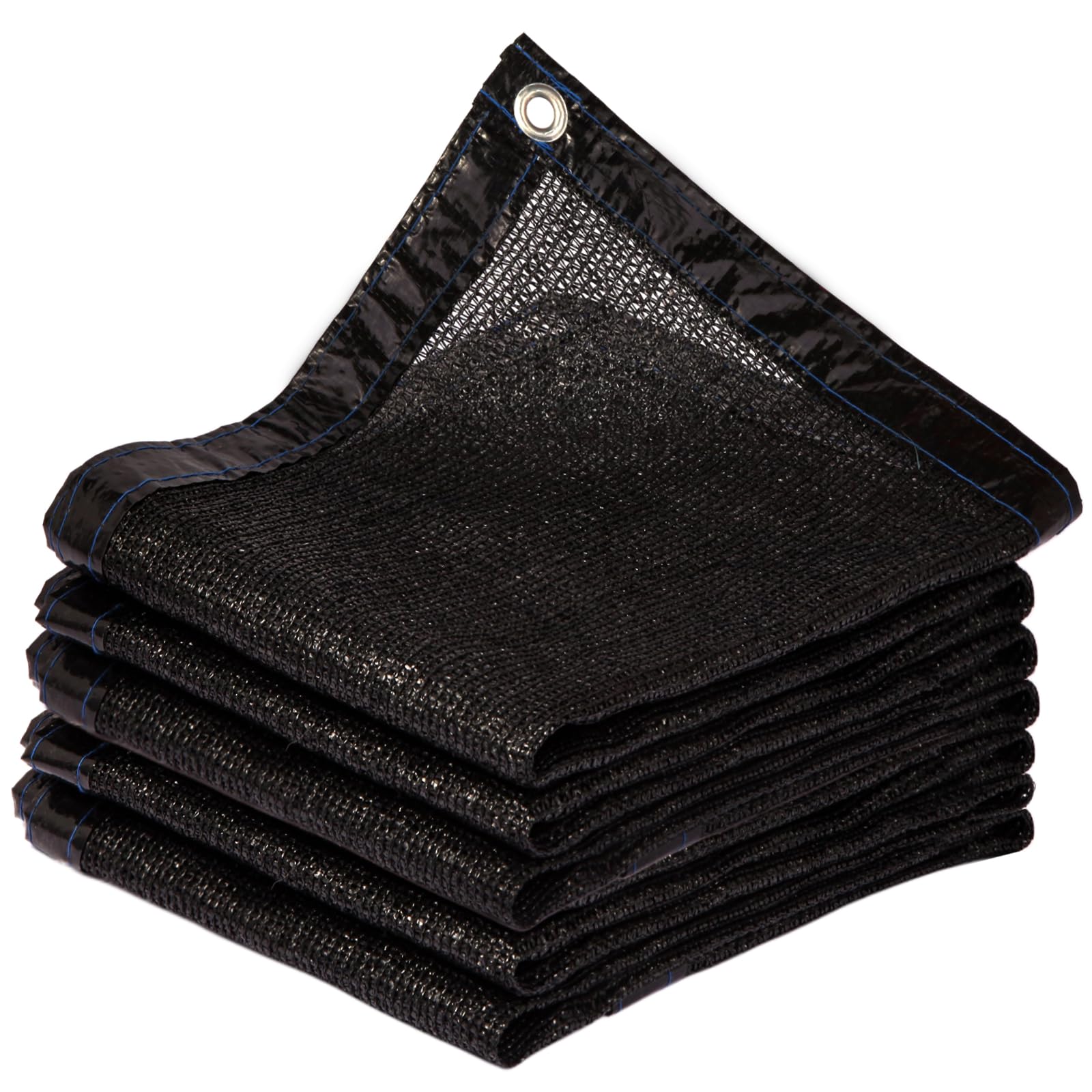
A 100-foot roll is the wrong purchase for a single patio, and that is exactly why it earns a place here. Coolaroo's 90% fabric is meant to be cut to size, so one roll can shade a long pergola, a run of skylights, or several separate projects without leaving you with offcuts in odd dimensions. It is a material purchase, not a ready-made panel.

The fabric is HDPE, breathable, and engineered to resist tearing, fading, and fraying; the 15-year warranty against UV degradation is the strongest coverage in this group. We found the mesh easy to handle and cut, and the wheat color reads softer than black against a house or fence. It is sold as fabric, so plan on adding your own grommets, ties, or sewn hems if you want a finished edge.

For a small patio, a pre-cut panel is simpler and quicker to hang. For a large, custom installation, the roll's length and warranty change the math: you buy once, cut precisely, and keep spare material for repairs. That is a different kind of purchase from a ready-made shade cloth, and it is the one we reach for when the structure is not a standard size.

Bottom line: Choose this cut-to-size 90% roll when a standard panel will not fit; it rewards custom work with a long warranty and plenty of material.
2

Shade&Beyond 90% Shade Cloth

Shade&Beyond 90% Shade Cloth

Pergolas and patios

Our Score 9.2/10
Check Price

Worth Noting

  • Corner grommets can tear in strong wind
Size
8 x 12 ft
Shade Block
90%
Fabric Weight
200 GSM HDPE
Grommet Spacing
Every 2 ft
Read the full review

The double grommets along each edge are the detail that makes this panel feel more considered than a plain mesh tarp. The 200 GSM HDPE has enough body to hang without curling, and the reinforced binding keeps the edges straight when we pull it tight. That matters on a pergola, where a lightweight cloth can sag into a hammock between attachment points.

At 8 by 12 feet, it covers a standard pergola bay or a generous patio table. The 90% block takes the sting out of afternoon sun while still letting air move, and the mesh kept the space from feeling tented when we hung it over a seating area. The mocha color reads as a warm neutral against wood or stucco, which is a small thing until you are looking at it all summer.

The installation hardware is basic but useful: grommets every 2 feet give plenty of tie-down points, and the included fixings get you started. We appreciate that the grommets sit on a reinforced band rather than punched straight into the mesh, because that layout spreads the load across the edge instead of concentrating it at one hole.

The five-year limited warranty is longer than most panels here and gives the purchase some backup. This is not a waterproof cover, so treat it as summer shade rather than a rain canopy. For a patio or pergola that needs deep shade without a solid roof, that is exactly the right trade.

For most buyers, this is the panel we point to first. It balances coverage, shade, and a ready-to-hang format better than anything else here, and the 8-by-12 size is big enough to matter without becoming a two-person job. If your frame is unusually large or you need a custom cut, the Coolaroo roll is the better tool; for a standard patio or pergola, this is the one we keep coming back to.

Bottom line: For a ready-to-hang 90% panel, this is our first choice: generous coverage, sturdy 200 GSM fabric, and reinforced grommets for a standard pergola or patio.

3

Amagenix 90% Shade Cloth

Amagenix 90% Shade Cloth

Pergola kits

Our Score 9.2/10
Check Price

Worth Noting

  • Size may run short of listing
Size
8 x 10 ft
Shade Block
90%
Fabric Weight
200 GSM HDPE
Included Hardware
Zip ties, bungees, rope
Read the full review

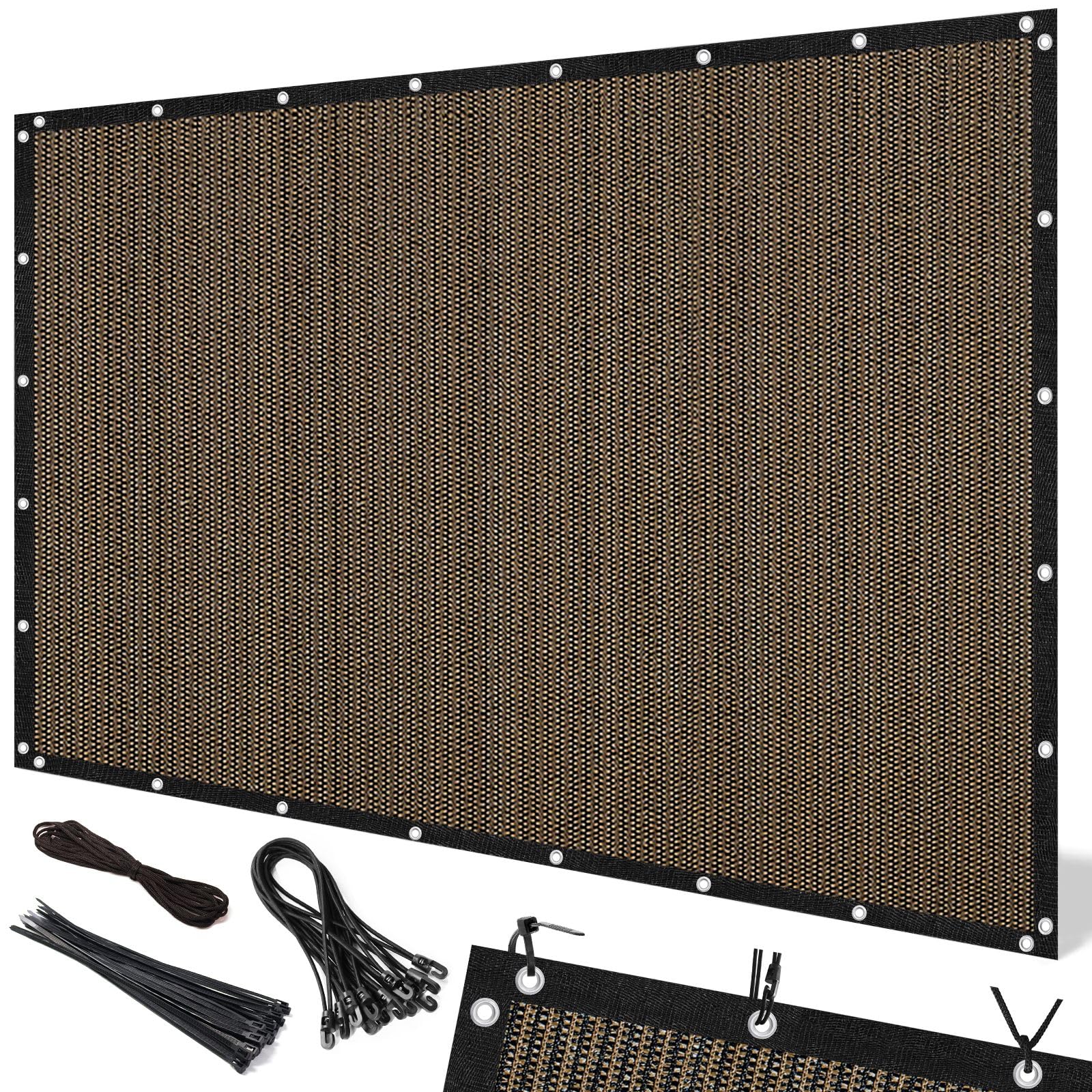
The bag of zip ties, bungee balls, and nylon rope is what makes this Amagenix panel feel like a complete kit rather than just a piece of mesh.

The fabric is the same 200 GSM HDPE story as our top pick, with grommets every 2 feet and double grommets at the corners. The 90% block is enough for a pergola or deck, and the breathable weave keeps the space under it from turning into an oven. We found the included hardware genuinely useful: you can hang the panel straight out of the box without hunting for ties, which is not true of every shade cloth here.

The 8-by-10 size suits a compact pergola or a deck where you want shade over a table but not the whole yard. We appreciated that the included ties let us tension it evenly; the panel hangs flatter when you use several attachment points rather than stretching it corner to corner. It is a kit we are happy to recommend for a standard frame.

Bottom line: This is the shade cloth we hand to someone who wants a complete pergola kit: 90% block, sturdy fabric, and the ties and bungees already in the box.

4

ABOSUN 90% Shade Cloth

ABOSUN 90% Shade Cloth

Small patios

Our Score 9.2/10
Check Price

Worth Noting

  • Listed dimensions can run off
Size
6 x 6 ft
Material
HDPE
Shade Block
90%
Grommet Spacing
Every 1.8 ft
Read the full review

At 6 by 6 feet, this is the smallest panel in our roundup, and that is its whole appeal: it shades a tight patio without draping half the yard. The 90% block is the same deep shade as our larger picks, so a small city deck does not have to settle for weaker protection.

The copper grommets sit every 1.8 feet, which is closer than most, and the HDPE fabric has a reinforced edge that holds a taut line without sagging in the middle. We used it over a small seating area and liked that it did not overwhelm the space or require a second person to hang. If your table seats four or your pergola is wider than six feet, step up to the 8-by-12 top pick or the 10-by-12 Artpuch; for a reading corner or a bistro set, the compact size is a feature.

Bottom line: For a small patio or a single seating nook, this compact 90% panel delivers serious shade without swallowing the space.

5

WindscreenSupplyCo 45% Shade Cloth

WindscreenSupplyCo 45% Shade Cloth

Light shade

Our Score 9.2/10
Check Price

Worth Noting

  • Too light for deep shade on a hot patio
Size
5 x 10 ft
Material
HDPE
Shade Block
45%
Reinforced Hems
1.5-inch webbing
Read the full review

A 45% shade cloth is not a compromise so much as a different tool: it takes the glare off a porch or patio while keeping the space bright and breezy.

The 5-by-10 size is manageable for one person, and the HDPE mesh is reinforced with 1.5-inch polyester webbing along the hems and double-stitched sides. That construction is what caught our attention: lower-shade cloth is often flimsy, and this one has enough edge structure to tie down without the corners curling. We used it where we wanted shade without a dark ceiling, and it kept the air moving underneath.

The grommets are solid, but they are not always evenly spaced, which can make a neat, symmetrical install harder on a rigid frame. Check the layout before you drill or tie off, and be ready to add a grommet or use a different anchor point. For a rental balcony or a shaded seating area, that is a small inconvenience.

This is the panel we choose when the goal is comfort rather than darkness. It is a smart way to take the edge off a bright wall, a patio door, or a plant that scorches by afternoon, and the lighter weave is easier to move when the seasons change.

Bottom line: For a bright patio or a plant that needs airflow more than darkness, this 45% panel is the lighter, breezier choice.

6

e.share 40%-50% Shade Cloth

e.share 40%-50% Shade Cloth

Vegetable gardens

Our Score 9.0/10
Check Price

Worth Noting

  • Durability can fall short after a season
Size
10 x 20 ft
Material
UV-stabilized HDPE
Shade Block
40%-50%
Grommet Spacing
Every 2 ft
Read the full review

A vegetable bed does not want the same shade as a patio. It wants afternoon relief without turning into a cave, and the e.share panel's 40% to 50% mesh is aimed squarely at that job.

The 10-by-20-foot size covers a serious garden run, and the woven HDPE lets air and water through, so you can water underneath without removing it. The shade level is low enough for tomatoes, peppers, and other sun lovers to keep growing while taking the edge off a brutal afternoon. The grommets every 2 feet, with three at each corner, give you plenty of places to tie it to a hoop house or fence.

This is not the panel for a west-facing patio that needs deep shade; 40% to 50% is deliberately light. For garden beds, though, that is the point, and the lower block keeps the mesh from trapping heat. The black color is utilitarian, and the included tie points are not a complete installation kit, so budget for zip ties or clips. If you want to shade plants rather than people, this is the one we reach for first.

Bottom line: For vegetables and other sun-loving plants, this breathable 40% to 50% panel is the right balance of light, airflow, and heat relief.

7

Shatex 90% Shade Fabric

Shatex 90% Shade Fabric

Windy sites

Our Score 9.0/10
Check Price

Worth Noting

  • Grommet spacing can be uneven
Size
6 x 8 ft
Shade Block
90%
Wind Rating
Up to 40 mph
Grommet Spacing
Every 1.5 ft
Read the full review

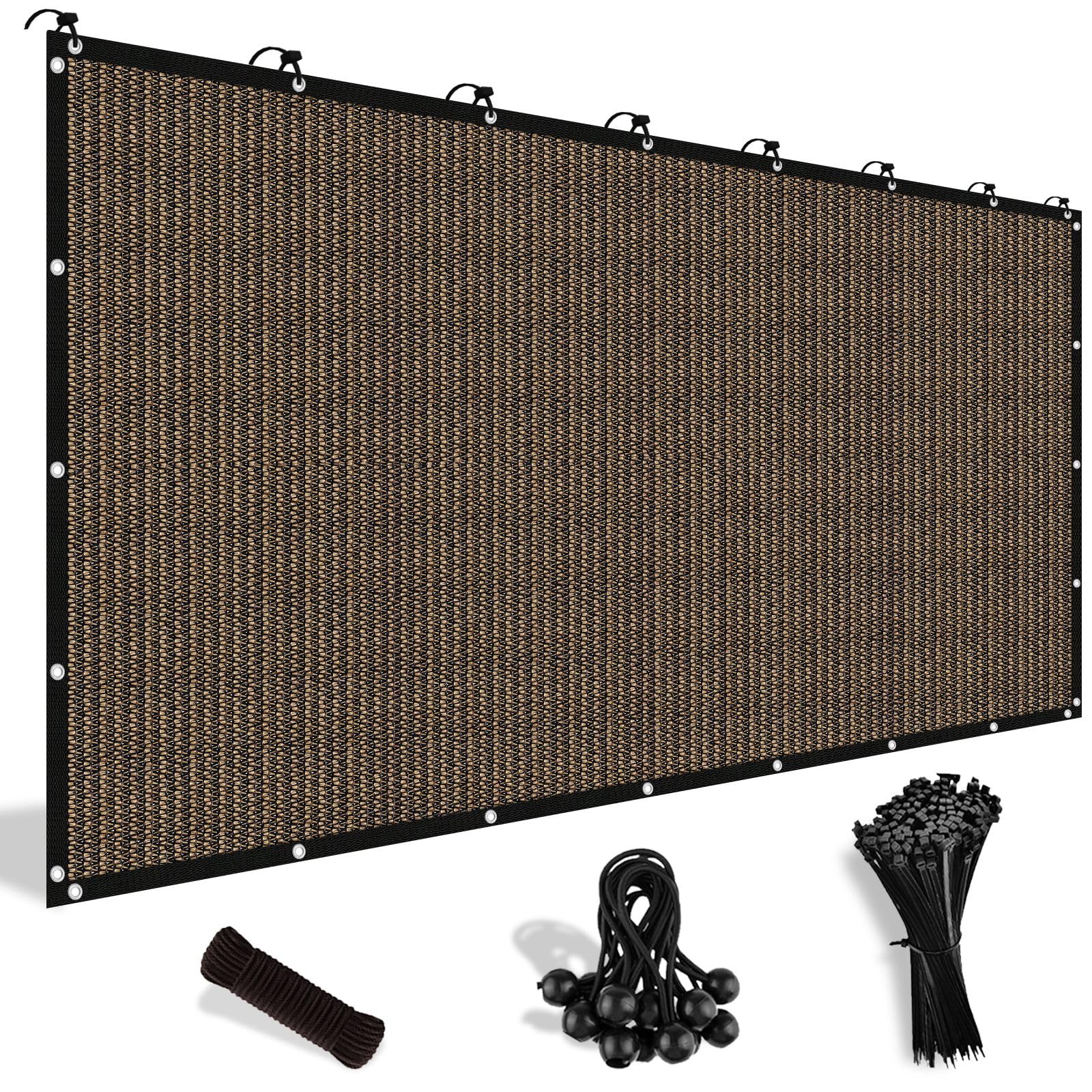
Grommets every 18 inches are the reason this Shatex panel holds a cleaner line than most of the 2-foot-spaced panels here. That closer spacing gives you more places to pull tension, which is exactly what a windy site needs.

The 90% HDPE fabric is breathable, hose-cleanable, and listed as holding up to 40 mph winds when tied through those close-set grommets. We like the 6-by-8 size for a pergola end or a garage-side run where you want shade but not a full canopy. The aluminum grommets and ball bungees make it easy to put up without extra hardware.

The included bungees are the weak point: there are 12, and a 6-by-8 panel has enough grommets to want more if you are tying it to a frame on all four sides. Plan on buying extra bungees or using zip ties at the corners. For a windy site, the closer grommet spacing is worth the extra hardware; for a calm patio, a simpler panel will do.

Bottom line: For a gusty site, this 90% panel's close grommet spacing and bungee-friendly edges make it easier to keep taut than most.

8

Cool Area 55% Shade Cloth

Cool Area 55% Shade Cloth

Garden beds

Our Score 9.0/10
Check Price

Worth Noting

  • Stated service life is two to three years
Size
10 x 20 ft
Grommets
Along edges
Material
HDPE
Shade Block
55%
Read the full review

A 55% shade rating is the middle ground: enough to take the glare off a bed, not so much that your plants stop growing.

The 10-by-20-foot panel is a lot of coverage for the money, and the woven HDPE lets water and air through, so you can leave it up through a hot spell and still water underneath. We see the biggest value in a vegetable garden or a nursery area where you want heat relief without a deep, dark canopy. The grommets along the edges give you plenty of tie points, and the black mesh disappears against a fence or soil.

The material is thinner than the 200 GSM panels here, and the cut edges are not finished like a premium shade cloth. That matters if you are stretching it across a windy frame, where a light mesh needs more support. For a seasonal garden cover that goes up in June and comes down in September, the lighter fabric is easier to handle.

This is the budget garden pick we reach for when coverage matters more than heirloom durability. It will not replace a 200 GSM panel on a permanent pergola, but for a few raised beds or a chicken run, it does the job without a big outlay. The 55% weave is the right call for plants that want filtered light rather than a cave.

Bottom line: For a large garden bed on a budget, this 55% panel gives you broad, breathable coverage without the cost of a heavyweight patio cloth.

9

Artpuch 90% Shade Cloth

Artpuch 90% Shade Cloth

Large pergolas

Our Score 9.0/10
Check Price

Worth Noting

  • Grommets can pull out under tension
  • Sizing can run short
Size
10 x 12 ft
Shade Block
90%
Fabric Weight
200 GSM HDPE
Grommet Spacing
Every 2 ft
Read the full review

The jump from an 8-by-12 to a 10-by-12 panel does not sound dramatic until you are trying to cover a long pergola without piecing two cloths together.

Artpuch's 90% HDPE fabric is 200 GSM, with grommets every 2 feet and a reinforced binding around the edge. The 10-by-12 size is the draw: it covers a bigger frame or lets you overhang a seating area for more afternoon shade. We like the included zip ties, ropes, and bungee hooks because they give you options for different anchor points, and the mocha color is less industrial than black.

The panel is heavier and more awkward to hang alone than the 8-by-12 top pick, and more fabric means more sail area when the wind hits. Use every grommet you can reach, and do not stretch it drum-tight; a little slack helps it shed gusts. For a large pergola, that extra coverage is worth the wrestling match.

Bottom line: When your pergola is too big for a standard 8-by-12 panel, this 90% cloth gives you the extra coverage without piecing two covers together.

How We Tested the Best Shade Cloths

We started by gathering shade cloths in the common shade factors, from 30% up to 90%, in sizes that would actually cover a raised bed or a stretch of deck. We measured each panel against its listed dimensions, since several ran short, and checked how far apart the grommets were spaced and whether the edges were hemmed and double-stitched or simply heat-sealed. We noted whether the weave was knitted, which gives a little stretch, or woven, which holds its shape but frays where it's cut. Price per square foot went into the pile too, because a cheap cloth that lasts one summer is no bargain. That narrowed the field to 12 panels, which we hung and left up for seven months.

Each one went over something real: half a dozen across the raised beds, a few over the deck, one on the dog's run, and one on the chicken coop. We installed them solo using the bungees that came in the box, noting whether the grommets lined up with the frame, whether the panel pulled taut or sagged between tie points, and how long the job took one person. On the hottest afternoons we set a thermometer in the shade underneath and compared it with the open air a few feet away, and we watched where the shadow actually landed as the sun moved across the yard.

Durability was the long game. The panels stayed up through wind, rain, and months of hard UV, and after every storm we walked the yard looking for torn grommets, frayed hems, stretched corners, and fading. Midway through we hosed a few down to see whether dust and bird mess rinsed off or worked into the weave. By the end, value had sorted itself out from price: the cloths that still hung square and tight were the ones worth recommending.

How to Choose the Right Shade Cloth

Match the shade percentage to the job

Start with what sits underneath. A 90% panel is the right ballpark for a patio, pergola, or deck where you want deep afternoon shade; a 40% to 55% mesh is better for vegetables, nursery beds, and other plants that need light and airflow to keep growing. Higher shade block also means less light through the mesh, so do not default to the darkest cloth for a greenhouse or a tomato bed. For seating, we prioritize heat relief; for plants, we prioritize a lighter weave that lets rain and air through.

Choose a panel or a roll before you choose a size

Pre-cut panels are the easy choice for a standard pergola bay or a small deck: they arrive with grommets and often a few ties, and you hang them. Rolls such as the Coolaroo 6-by-100-foot fabric are for long runs, odd shapes, or several projects, but you will need to cut, hem, and add fasteners. Measure the frame at the attachment points rather than trusting the old cloth, and allow a little slack; a panel pulled drum-tight is harder on grommets and corners.

Look past the shade percentage to the fabric and edges

Two cloths can both say 90% and feel completely different. A 200 GSM HDPE panel has more body, hangs with fewer wrinkles, and generally takes wind better than a thin mesh; the lighter material is easier to handle and fine for a seasonal garden cover. Look at the edge, too: reinforced binding, double stitching, and grommets set into a hem rather than punched straight into the mesh are the details that decide where a panel fails first. For a permanent patio installation, we pay for the heavier fabric.

Tension and fasteners decide how long it lasts

Grommet spacing and tie-downs do as much for real-world performance as the shade percentage. Closer spacing, around 18 inches to 2 feet, gives you more places to spread the load; bungees and zip ties should reach every grommet you plan to use, and a few spare ties are worth keeping. Leave a little give so the panel can move in gusts, and check the anchors after the first strong wind. A shade cloth is not a safety barrier or a load-bearing cover.

Frequently Asked Questions

Final Verdict

Our default is the Shade&Beyond 8-by-12 panel. It covers a standard pergola bay, blocks 90% of the sun, and arrives with double grommets and a five-year warranty. For a custom run or a large installation, choose the Coolaroo roll and plan to cut and fasten it yourself. For vegetables, the e.share 10-by-20 panel's lighter 40% to 50% mesh is the better match.