Planters & Plant Supports

Best Fiberglass Garden Stakes of 2026

The year my bamboo stakes splintered under a row of climbing beans, I switched to fiberglass and never looked back. Fiberglass stakes won't rot like wood, rust like metal, or send splinters into your palms when you push them into the soil, and a good one holds a heavy vine without bowing into a question mark. What you're really buying is a stake that stays put through rain and wind, plus a clip system that lets you move support up the plant as it grows.

Not every set earns its space. Some come with so few clips that you're scrounging for twine by July; others flex at the top or shed fibers after a few weeks in the sun. Over eight months, we put 14 sets through raised beds, containers, and a pea trellis, judging stiffness, clip quantity, and how easily each stake moved without yanking the plant. Compare price per usable stake and clip count, not just height—the picks below are the ones I'd hand to a neighbor, sturdy enough for tomatoes and tidy enough for row cover.

1

Cludoo Fiberglass Stake Kit

Top Pick
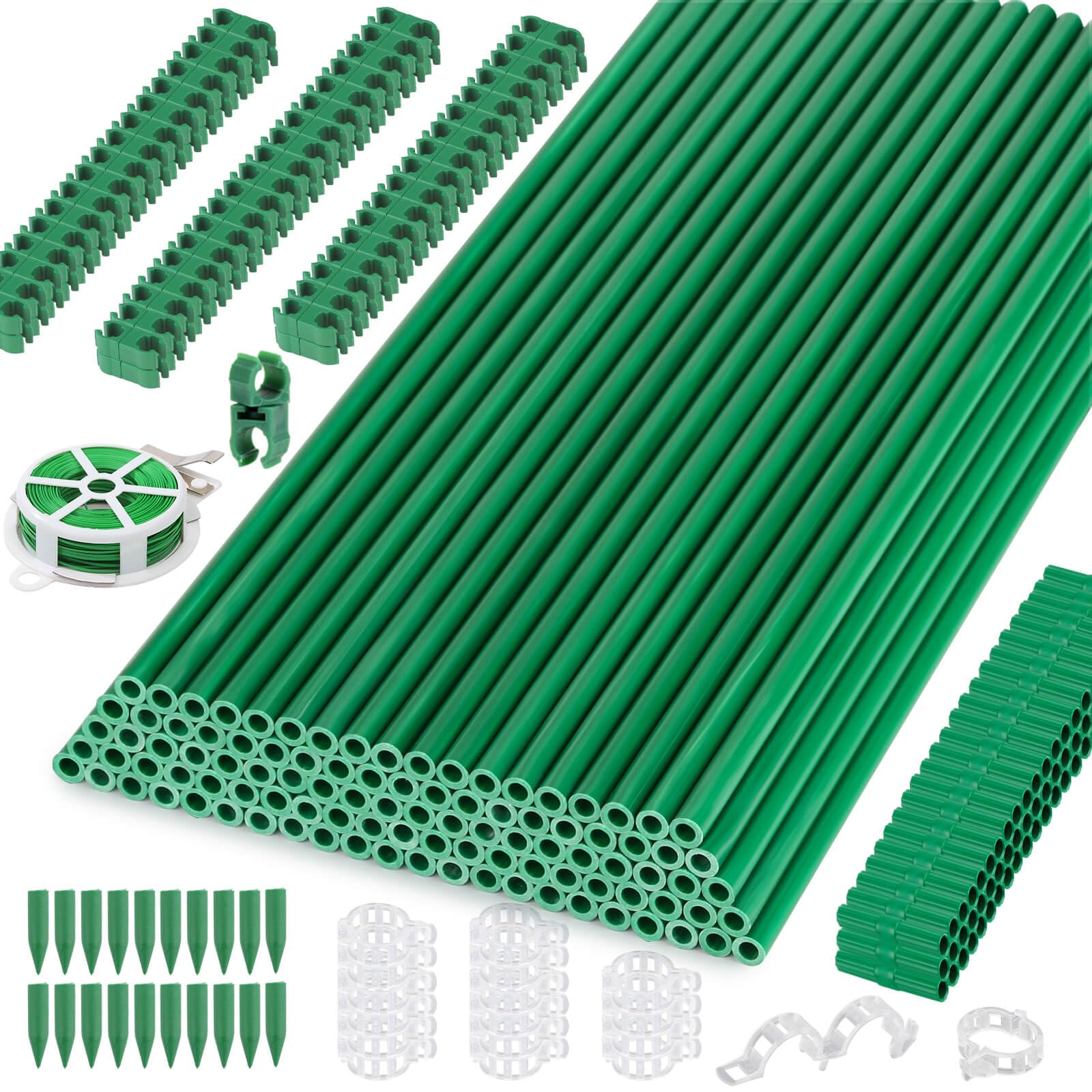
Cludoo Fiberglass Stake Kit

Tomatoes and vines

Our Score 8.8/10
Check Price

Worth Noting

  • Rotatable clips and connectors can snap
Material
Fiberglass
Stake Count
100
Buildable Height
4 to 7 feet
Connector And Clip Count
190
Read the full review

A hundred short stakes sounds like more than one garden needs until you start joining them. We built a four-foot support from three 16-inch segments and two connectors, then added a fourth segment when a tomato plant kept climbing; the kit is at its best when you treat it as a box of parts rather than a fixed set of stakes. The fiberglass rods feel lighter than steel and will not rust, which matters in wet soil and against a tomato cage that has seen better days. With 100 stakes and 190 connectors and clips, there is enough here to build multiple supports or one very tall one.

What we appreciate most is the adjustability. The connectors let you add height as a plant grows, and the clips give you something to tie to without looping twine around the rod itself. That is a real convenience in a bed where tomatoes keep outgrowing their support. The 190 connectors and clips are generous for the number of stakes, so you can build several supports and still have a few pieces left over for next season.

Fiberglass has one handling quirk worth respecting: cut ends and rough spots can shed splinters. We kept gloves nearby when assembling and when pushing the rods into hard ground, and we used a twist to seat them rather than hammering. The kit comes with gloves, which is a thoughtful touch, though we still reach for our own pair. These are modular supports, not single long stakes, so if you want one clean rod to lean a plant against, this is the wrong shape. For a garden that changes height through the season, though, the segments are the point.

Bottom line: We recommend the Cludoo kit as the best default for most gardeners: 100 fiberglass stakes and plenty of connectors let you build adjustable supports from seedling to harvest.

2

MAXPACE Fiberglass Stake Kit

MAXPACE Fiberglass Stake Kit

Smaller gardens

Our Score 8.4/10
Check Price

Worth Noting

  • Connectors and clips can snap under pressure
Material
Fiberglass
Stake Count
40
Buildable Height
4 to 7 feet
Connector And Clip Count
84
Read the full review

The MAXPACE box is the smaller one: 40 stakes, 28 connectors, 28 rotatable clips, 28 plant clips, and a roll of twist tie. That works out to roughly a dozen four-foot supports once you use three 17-inch segments and two connectors per support. That is a sensible amount for a couple of tomato plants, a cucumber pot, or a short row of peppers. The rods are slightly thicker than the Cludoo kit's, at 0.335 inch, which gives them a little more backbone when you are pushing them into soil.

Where this kit earns its place is simplicity. The smaller parts count is easier to manage, and the 4-to-7-foot build range covers most backyard crops without turning into a construction project. We also appreciate that the clip count is balanced against the stakes; you are not paying for a huge box of connectors you will never use. The trade-off is that you have fewer spares when a clip disappears into the bed, so this is the kit for a defined patch rather than a whole garden.

Fiberglass is the right material for wet soil, and these rods will not rust like the steel stakes that spend winter in a raised bed. We still wear gloves when handling the ends, and we set them with a twist into loosened soil rather than hammering. For a first kit or a small plot, that is an easy routine to live with. If you are supporting a full row of indeterminate tomatoes, the larger Cludoo kit gives you more room to build and more spare clips; for a few plants, this one is the tidier buy.

Bottom line: We recommend MAXPACE for a small garden or a few containers: 40 fiberglass stakes and 84 connectors and clips make about a dozen four-foot supports without loading you with spare parts.

How We Tested Fiberglass Garden Stakes

We started by pulling together fiberglass stakes sold in garden centers and online, then filtered the list by usable length, diameter, clip count, and price per stake. We ruled out sets that were mostly clips with a token number of stakes, and we skipped anything described as flexible without a stated diameter. The final 14 sets went into my garden for eight months. I used them in raised beds for tomatoes, in containers for peppers, along a pea trellis, and under row cover on a windy corner where bamboo had failed.

Sturdiness got tested by pushing each stake into wet clay and loose potting mix, then leaning on the top while tying in a heavy tomato vine; I noted which ones bowed, spun, or needed a mallet. I counted clips straight out of the package, then used them to hold netting, row cover, and stems, watching for slipping and cracking. To check adjustability, I raised supports as plants grew and saw whether clips slid cleanly or chewed the stake. Ease of use came down to whether the ends were smooth enough to push by hand and whether I could set a row alone in a few minutes.

Durability meant leaving them out through rain, wind, and full sun, then checking for splinters, fading, and fuzzy fibers at the cut ends. Versatility showed up in the garden: the same stake held peonies, propped a raspberry cane, and kept bird netting off seedlings. At the end, we compared price per usable stake and clip count against how each set held up; the best values were not the biggest packs but the sets with enough clips to matter and stakes that still felt rigid after months outside.

How to Choose Fiberglass Garden Stakes

Start with assembled height, not segment length

Most fiberglass stakes sold in kits are short rods joined by connectors, not single long poles. We treat assembled height as the first number to check: a four-foot support takes about three 16- to 17-inch segments and two connectors, and you will bury several inches of the bottom segment. Plan on losing at least 6 inches to the soil, so a four-foot build leaves roughly three and a half feet above ground. For tomatoes, build to five or six feet before the plant needs it; for peppers and small flowers, three to four feet is enough.

If you want one clean rod to lean a plant against, a modular kit is the wrong shape; the joints are the trade-off for being able to raise the support as a vine grows. The Cludoo and MAXPACE kits both list a 4-to-7-foot range, and that range is more useful than the segment length on its own.

Count supports, not pieces

A 100-stake kit does not build 100 supports. At three stakes and two connectors per four-foot support, the Cludoo kit's 100 stakes work out to about 33 supports, while the MAXPACE kit's 40 stakes make about 13. The connector and clip counts can cap that number before the stakes run out, especially if you clip every stem. We look at the smallest of the three counts—stakes, connectors, clips—rather than the headline piece count.

Buy for the number of plants you will support this season, then add a little margin for the connectors you drop in the bed. A kit with a big pile of stakes and only a handful of clips is not the bargain it looks like.

Treat connectors and clips as wear parts

The rods are rarely the first thing to fail. The joints and clips take the bending, and a snapped connector can leave a tall support with a weak spot. We prefer a kit with spare connectors and clips over one that just adds more stakes, because the small parts are what let you change height next season. Set the stake in the ground before you attach a loaded clip, and do not lever a planted stake sideways to adjust it.

If you are supporting heavy fruit, add a second stake or a length of twine rather than asking one clip to carry the weight. A kit with more connectors and clips gives you room for that; a smaller kit is tidier but leaves less margin.

Match the stake to soil, wind, and handling

Fiberglass will not rust, but it can splinter at cut ends and break if you force a thin rod into hard ground. We loosen the soil or make a pilot hole first, then push and twist the stake in; hammering is the quickest way to crack a segment. In a windy spot, keep the support short enough to stay stiff and bury it deeper. Wear gloves when you handle the ends, and check for cracks before you reuse a rod.

Six inches is a sensible minimum bury depth for a four-foot support. In loose potting mix, go deeper. If the stake wobbles after planting, the problem is usually the hole, not the fiberglass; firm the soil around the rod and add a second support for a heavy vine.

Frequently Asked Questions

Final Verdict

Cludoo is the kit we recommend first: 100 fiberglass stakes and 190 connectors and clips give you room to build tall, adjustable supports for a real tomato patch, not just one pot. It is the better choice when you want to raise supports as plants grow and still have spare parts when a clip goes missing.

If your garden is a few containers or one short raised bed, MAXPACE's 40-stake kit is the tidier, lower-cost choice; you trade some reach and spare parts for a smaller box that matches the job.