Soil & Fertilizer

Best Seed Starting Mix of 2026

The first week of February is optimism in its purest form: seed packets on the counter, empty trays by the window, a plan that assumes everything sprouts. Then day ten arrives with three kale seedlings up, the tomatoes sulking, and mold creeping across the surface. Most of that disappointment comes down to what's in the tray, not the packet: a mix light enough for a thread-thin root to push through, fine enough to keep seed and soil in contact, clean enough that seedlings don't rot before their first true leaves.

For years I treated seed starting mix like potting soil, and it cost me flats. Seedlings want almost no fertilizer; what they want is airy texture that drains. My team and I have spent the past five months starting seeds in 16 bags — fluffy peat blends, coir bricks you rehydrate yourself, mixes that turned out to be potting soil in disguise — counting sprouts instead of trusting the label. The ones that held up did two things well: they stayed damp without going soggy, they let roots out without a fight, and they're the ones below.

1

Old Potters Germination Mix

Top Pick
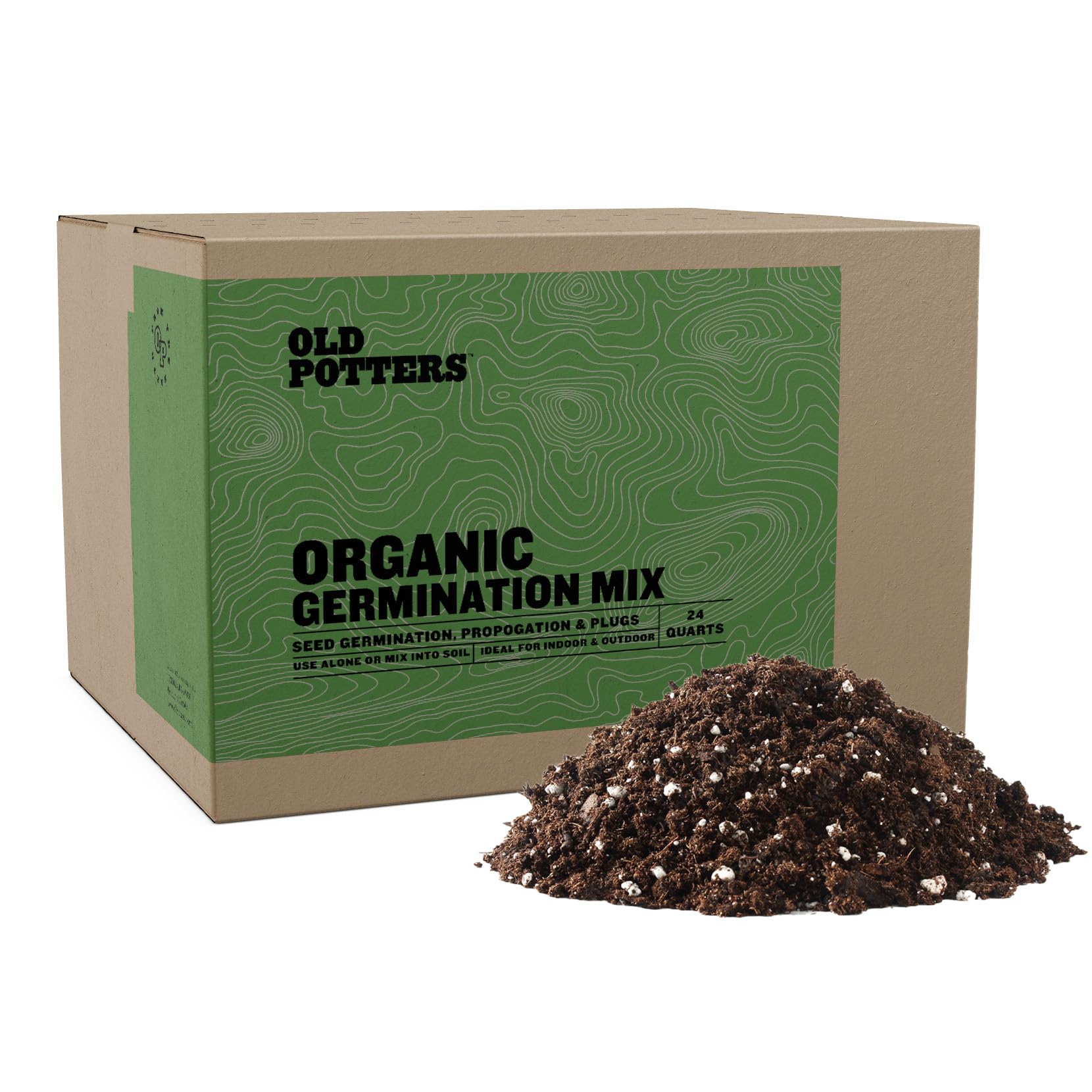
Old Potters Germination Mix

Large sowings

Our Score 9.4/10
Check Price

Worth Noting

  • Heavy bag, awkward to store
  • Low drainage punishes overwatering
Texture
Fine peat, perlite, vermiculite
Bag Size
24 quarts
pH Range
5.4–6.3
Peat Content
80–90% fine Canadian sphagnum
Read the full review

Most bags of seed mix tell you what's in them. This one prints a pH range of 5.4 to 6.3 and an electrical conductivity figure, which is the sort of thing a commercial propagator checks before ordering a pallet. You don't have to care about either number to benefit — it's evidence the batch was blended to a specification rather than shoveled.

The blend is peat-heavy, 80 to 90% fine Canadian sphagnum, with perlite and vermiculite both. That pairing is unusual in a bag this size and it's why the mix suits small seed: perlite keeps air in it, vermiculite holds water, and the particles are fine enough for a 128-cell tray. It's also loose and easy to work with, so filling cell after cell stays quick.

Twenty-four quarts is more mix than one windowsill will use in a season, and the bag is heavy enough that you'll want to decant it into something smaller for daily work. We think it earns the shelf space anyway: this is the finest, most consistent mix in the group, and it's the one we reach for when the seed order outgrows the windowsill.

Bottom line: For a serious sowing day — six flats, a community plot, a 128-cell tray — this is the fine, consistent mix we reach for, and one bag covers a whole season.
2

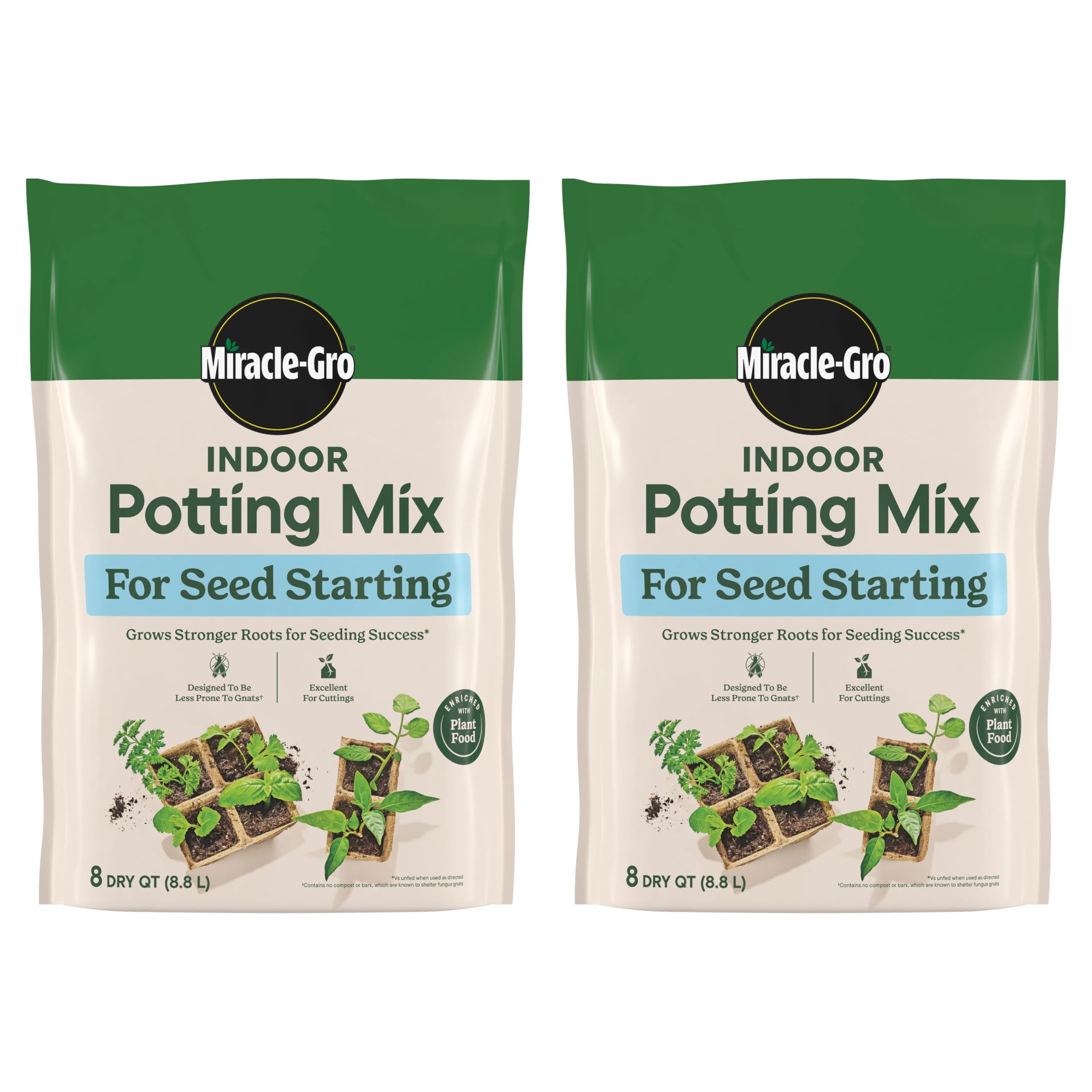
Miracle-Gro Indoor Seed Starting Mix

Miracle-Gro Indoor Seed Starting Mix

Indoor seed starting

Our Score 9.2/10
Check Price

Worth Noting

  • Some bags run chunky with sticks and bark
  • Can be slow to take water when dry
Format
Ready to use
Bag Size
2 bags, 8 quarts each
Trays Per Bag
Three 72-cell trays
Added Nutrients
Plant food included
Read the full review

Fungus gnats are why we reach for this bag first. There's no compost and no bark in it, and those are the two ingredients most likely to carry a gnat population into a warm, humid room full of trays. Sow a flat on the kitchen counter and it stays a flat of seedlings rather than a nursery for flies. That's a design decision we appreciate more with every season.

The rest is straightforward in the way that matters when you're filling six trays on a Sunday. It's ready to use — no brick to soak, no perlite to cut in, no bucket — and it comes with plant food blended through, so seedlings don't stall the moment they've used up the seed's own reserves. The mix is light enough that roots move through it easily, and the arithmetic is generous: each 8-quart bag fills about three 72-cell trays, and the two-pack covers six.

Texture is where it slips. Some bags are fine and fluffy; others carry sticks and bark chips that want sifting before you sow lettuce or snapdragons, and a bag that has sat around can be slow to take water the first time. Neither is a dealbreaker from the least expensive mix in this group, and both are fixable with a sieve and a ten-minute soak.

Bottom line: For most indoor seed starters this is the bag we hand over: nothing to mix, plant food already in it, and a formula that keeps fungus gnats out of the spare room.

3

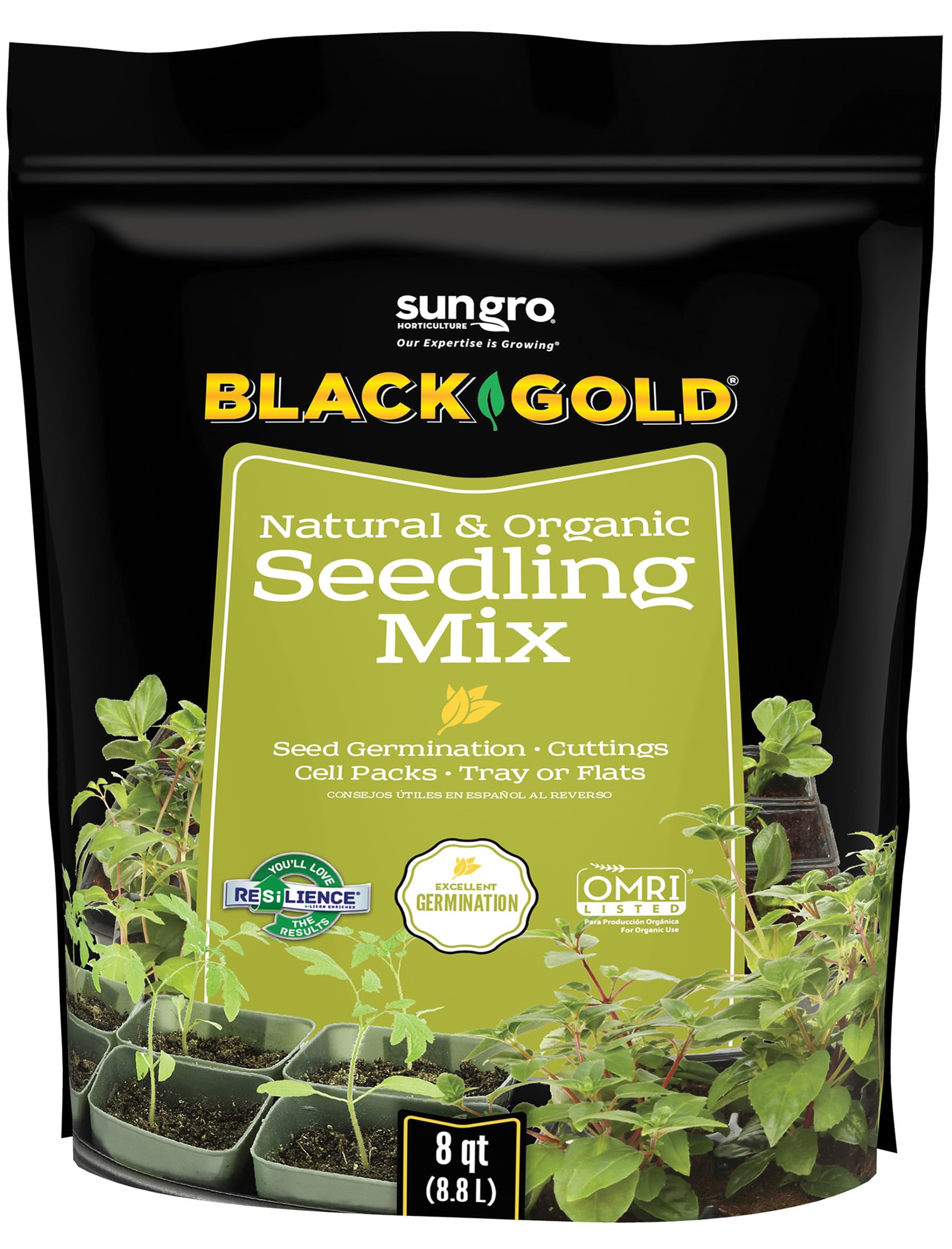
SunGro Seedling Mix

SunGro Seedling Mix

Small seeds

Our Score 9.2/10
Check Price

Worth Noting

  • Occasional wood particles need sifting
  • 8-quart bag goes quickly
Texture
Fine textured
Bag Size
8 quarts
Ingredients
Sphagnum peat, perlite, lime
Certification
OMRI listed
Read the full review

Fineness is the entire argument for this bag. Small seed — snapdragons, lisianthus, lettuce, anything you press onto the surface rather than poke into a hole — needs a medium with no big pieces to fall through, and this one is consistently fine and even, with perlite worked through for drainage instead of left in fist-sized lumps. The wetting agent earns its keep too: water soaks in immediately rather than beading on the surface while you stand there waiting.

The ingredient list is deliberately plain — sphagnum peat, perlite, lime, plus a silicon additive meant to help seedlings stand up to wilting. There's no fertilizer charge, so it suits cuttings and seeds that sulk in a rich mix, but you'll be feeding with a dilute solution once true leaves show. The bag also arrives a little moist rather than bone dry, which means you can sow the day it lands. A bag here and there carries wood particles worth picking out, and 8 quarts goes quickly if you're filling more than a couple of flats.

Bottom line: If you're sowing small seed on the surface, this is the mix we point you to: fine, even, and quick to take water straight from the bag.

4

Burpee Coconut Coir Seed Starting Mix

Burpee Coconut Coir Seed Starting Mix

Peat-free setups

Our Score 9.2/10
Check Price

Worth Noting

  • No nutrients
  • Fiddly to rehydrate evenly
Format
Two compressed bricks
Expands To
16 quarts
Ingredient
Recycled coconut coir
Certification
OMRI listed
Read the full review

Two dense bricks, a bucket, and a jug of water: that's the whole ritual. Burpee's coir blocks ship flat and live on a shelf until you need them, and each one breaks down into about 8 quarts of mix once it has had its soak — 16 quarts from a package that never takes up floor space.

Getting there takes a little technique. Break the brick up as you add water rather than dropping it whole into a bucket, and you end up with evenly moist, crumbly mix instead of a dry core wrapped in wet coir. Once it's ready, we rate it highly: it holds water without going swampy, roots move through it easily, and the moisture is the most forgiving of anything in this group. For anyone moving off peat, that's the pitch.

The catch is nutrition. Coir is a blank medium — there's nothing in it to feed a seedling once the seed's own reserves are gone — so plan on a dilute feed from the moment true leaves appear. Seedlings that don't get it can stall at a couple of inches. Judge this as a germination and rooting medium rather than a complete mix, and it's among the cheapest ways here to fill a tray.

Bottom line: For peat-free sowing, this is the coir we recommend: two bricks, 16 quarts, and the most forgiving moisture here — just feed once true leaves show.

5

Jiffy Seed Starting Mix

Jiffy Seed Starting Mix

Bottom watering

Our Score 9.2/10
Check Price

Worth Noting

  • Small bag, goes fast
  • Costs more per quart than big blends
Format
Ready to use
Bag Size
10 quarts
Ingredients
Peat moss, vermiculite, lime
Read the full review

Three ingredients: peat moss, vermiculite, and lime. No perlite, no compost, no fertilizer charge, no wetting agent — and for a particular kind of sowing that's exactly right. Vermiculite holds water where perlite drains it away, so cells stay evenly moist between waterings, and there's nothing rich in the bag to overwhelm a slow, delicate germinator. It's the leanest mix here, and the one we keep for seed we're precious about.

It's also the easiest of these to water from below. Light, fluffy, few lumps, and it pulls water up through the drainage holes cleanly rather than collapsing into a paste. Because it holds so much, the mistake to avoid is keeping it saturated — damp, not wet, is the line, and there isn't much buffer if you cross it. Ten quarts doesn't go far once you're past a couple of flats, and you'll pay more per quart than the bigger peat blends ask.

Bottom line: A clean three-ingredient mix for bottom-watered trays and finicky seed — we like it when we want to control exactly what the seedling gets.

6

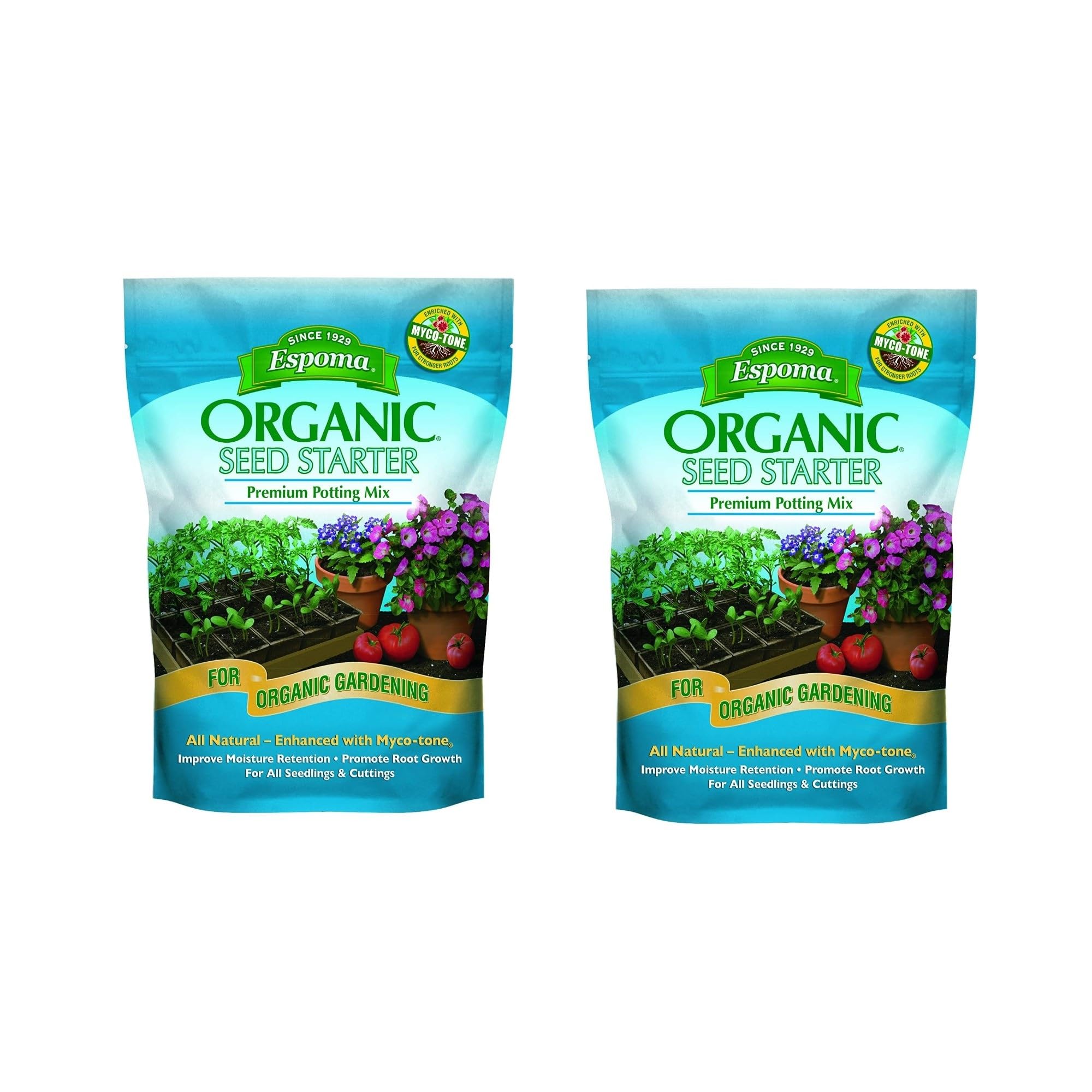
Espoma Organic Seed Starter

Espoma Organic Seed Starter

Organic growers

Our Score 9.0/10
Check Price

Worth Noting

  • Arrives very dry and slow to re-wet
  • Occasional wood chunks need breaking up
Bag Size
2 bags, 8 quarts each
Ingredients
Peat moss, perlite, yucca extract, lime
Added Biology
Endo and ecto mycorrhizae
Certification
Organic
Read the full review

Open the bag and the first thing you notice is how dry it is. Espoma's starter arrives dusty rather than damp, and the peat takes real work to wet through. We fill a bucket, add water, and let it stand and stir until the whole batch is evenly moist before a single seed goes in. Skip that and water runs down the inside of the cell and leaves the root zone dry.

Do the prep and it's very good. The blend is peat and perlite with yucca extract, a natural wetting agent, plus lime to hold pH in range, and it's inoculated with both endo and ecto mycorrhizae — unusual in a seed starter and a genuine plus for anything that partners with soil fungi. Germination is fast and even, and once you break up the occasional chunk of wood the texture is fine enough for small seed.

Two 8-quart bags make 16 quarts, a sensible amount for a home garden, and it's certified for organic growing, which is the reason to choose it over cheaper peat blends. The cost of that is real, though, and so is the re-wetting hassle: this is not the bag to grab if you like sowing straight out of it on a whim.

Bottom line: Certified organic, inoculated with mycorrhizae, and quick to germinate — we recommend it to organic growers who don't mind pre-wetting a batch first.

7

Coast of Maine Sprout Island Seed Starter

Coast of Maine Sprout Island Seed Starter

Filling many flats

Our Score 9.0/10
Check Price

Worth Noting

  • Chunky bark and sticks need sifting
  • Organic matter invites fungus gnats
Weight
43 lb
Bag Size
2 cubic feet
Ingredients
Peat, compost, aged bark, perlite, kelp meal, lobster and crab meal, worm castings, mycorrhizae
Certification
OMRI listed
Read the full review

This is a 43-pound bag of seed starter, which tells you most of what you need to know about who it's for. Two cubic feet of dense, heavy mix is a bulk purchase for someone filling flat after flat — a greenhouse, a market garden, a classroom — not something you tuck into a cupboard.

What's inside is the most richly amended blend in this group: peat and compost with aged bark, perlite, kelp meal, lobster and crab shell meal, worm castings and mycorrhizae. We like it for growers who want a starter that carries seedlings further before the first feeding, and the natural slow-release nutrients mean you can hold off on fertilizer longer than with a lean mix. Cuttings root happily in it too.

All that organic matter is also what fungus gnats want. Keep the bag sealed in a bin, water from below, and put a yellow sticky trap in the tray for the first couple of weeks — that keeps the problem small, but this is not a clean, sterile mix and it shouldn't be sold as one. It's chunky as well, with bark and stick pieces that need sifting for small seed.

Bottom line: For filling flat after flat, this bulk bag of richly amended starter feeds seedlings longer than a lean mix — just keep it sealed and watch for gnats.

8

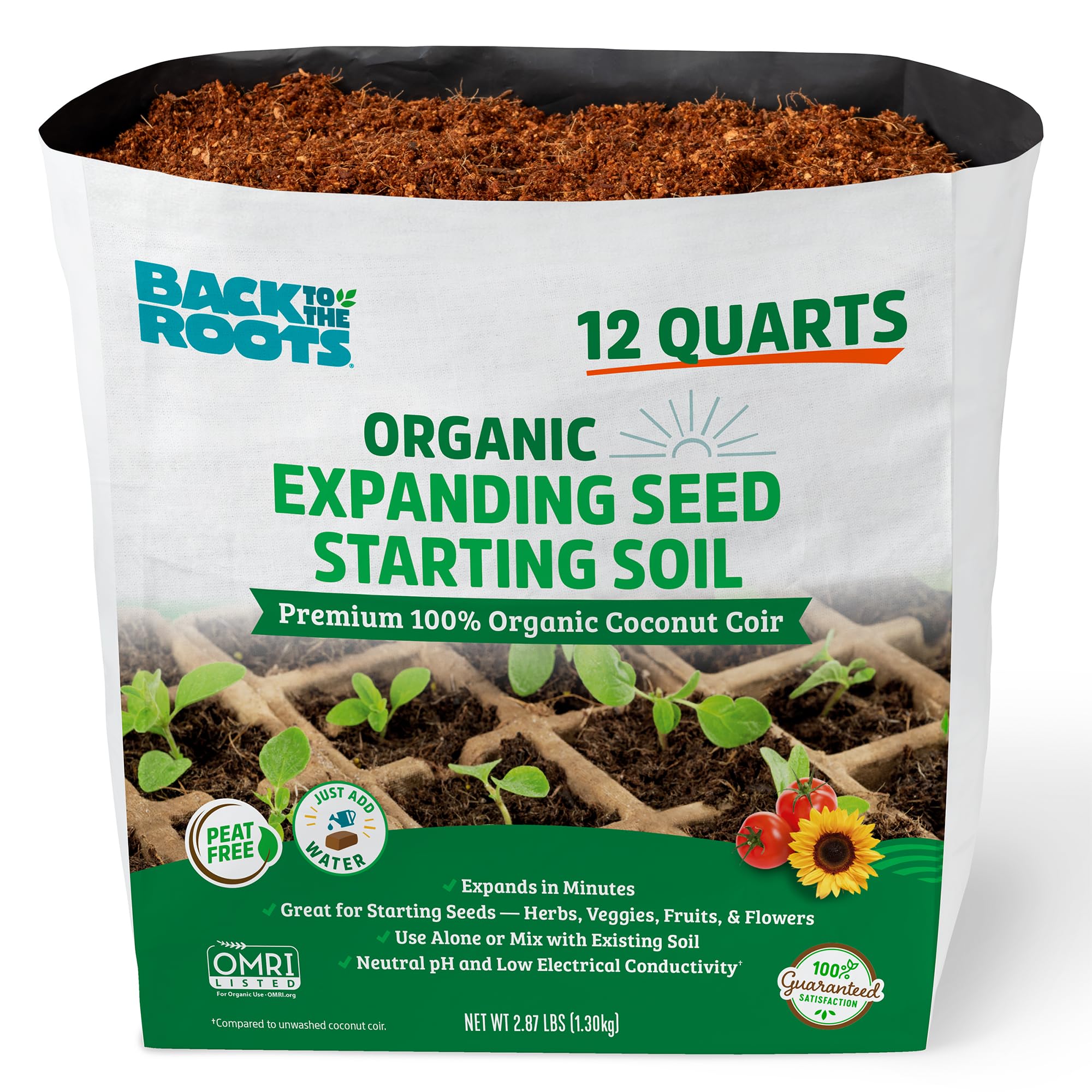
Back to the Roots Seed Starting Mix

Back to the Roots Seed Starting Mix

Tight storage

Our Score 8.8/10
Check Price

Worth Noting

  • Chunky, with bark and woody pieces
  • Uneven germination with small seed
Format
Compressed block
Expands To
12 quarts
Ingredient
Peat-free
Certification
OMRI listed
Read the full review

Storage is the quiet advantage of a compressed block. This one is a small, light package that sits on a shelf until you're ready, then expands to 12 quarts with water — a useful amount for a couple of flats, and far easier to keep out of the way than a part-used bag of loose mix.

It's peat-free and OMRI listed, with a balanced pH that makes it usable straight from the block or as an amendment, and it breaks down quickly once wet. Texture is where we part ways with it: bark and woody pieces run through the mix, and for anything tiny — lettuce, snapdragons — it wants sifting first. Big seeds don't mind at all.

Germination is decent rather than impressive: fine for beans, squash and anything that pushes up regardless, less certain for the fussy stuff. We keep it in the lineup for the storage story and the peat-free formulation, not as the first bag we open for a tray of tiny seed.

Bottom line: A peat-free block that stores on a shelf and expands when you need it — good for big seeds, though small seed wants sifting first.

9

Purple Cow Seed Starter Mix

Purple Cow Seed Starter Mix

Soil blocking

Our Score 8.8/10
Check Price

Worth Noting

  • Surface mould in a humid propagator
  • Germination patchier than lean mixes
Base
Activated compost
Formats
Trays and soil blocks
Bag Size
12 quarts
Fertility
Up to 45 days
Read the full review

If you're making soil blocks rather than filling cells, start here. Compost-based mixes hold a block together in a way lean peat mixes don't, and this one comes out of a blocker as a firm, square block that survives being lifted onto a tray — which is the whole reason we keep a bag of it on hand.

The compost base also means it arrives with real fertility: enough for roughly the first 45 days, so tomatoes and peppers don't need feeding before transplant, and the blocks hold their shape when you bottom-water. Germination is the least consistent thing about it — fine for vigorous seed, patchier for the finicky stuff.

A compost base is alive, and a warm, humid propagator will grow things you didn't plant: surface mould, the odd mushroom. We run a small fan across the tray and water in the morning rather than at night, which is the general defense worth having with any compost-based starter. Buy it for the blocking job, where it's the best in this group.

Bottom line: For soil blockers, this is the mix that holds a block together and feeds it for the first six weeks — better for tomatoes than for tiny, fussy seed.

How We Tested the Best Seed Starting Mixes

We narrowed the field on paper first: reading ingredient lists, checking whether a bag was a true seed-starting blend or a heavier potting mix wearing a seedling-friendly label, and comparing the actual volume you get per bag against what it costs. Anything we couldn't find credible sprouting reports for came out, as did mixes priced like a specialty product without the texture to back it up. That left 16 bags, which we bought ourselves and used from late January through early June.

Every bag went through the same routine. I filled 128-cell flats and 4-inch pots, sowed the same vegetables and herbs in each — fast sprouters like lettuce alongside slower ones like peppers — and kept them under identical lights on identical heat mats. I bottom-watered so the comparison stayed fair, then noted how fast the surface dried and how heavy the tray felt, which told me more about moisture retention than any label claim. Germination was counted, not eyeballed: seedlings per cell at seven and fourteen days, plus a note on any tray where damping off claimed seedlings after they emerged.

Texture separated the bags fastest. Some crumbled through my fingers and wet evenly on the first watering; others shed water off the top or matted into a sticky layer I had to break apart. I tracked ease of use too — whether a compressed brick needed soaking and wrestling apart, whether the bag resealed, how much mess it made on the kitchen counter — and worked out roughly how many standard flats one bag filled. I also bought second bags of several mixes to see whether they behaved like the first, since consistency matters more than any single good batch. At transplant time I lifted seedlings to check the roots: white, branching roots that held the mix together meant a mix worth buying again; loose or brown roots told the other story.

How to Choose the Right Seed Starting Mix

Texture Is the First Thing to Check

A seed starting mix has one job a potting soil doesn't: give a seed a fine, even, moist surface to push through. Bark chips, sticks and oversized perlite are the usual culprits when a tray comes up patchy, and the words seed starting on a bag don't guarantee a fine mix — plenty of them still carry coarse material. If you're sowing lettuce, snapdragons or anything pressed onto the surface, look for fine textured, and keep a kitchen sieve handy for the bags that aren't. SunGro's seedling mix is the finest in this group.

How the Mix Takes Water

Bone-dry peat is hydrophobic. Water beads on it and runs down the inside of a cell, leaving the root zone dusty while the surface looks soaked. Some mixes include a wetting agent and some don't, and the difference shows the first time you water. Whichever bag you buy, moisten the whole batch in a bucket before filling cells, and water from below once seed is in. Espoma's starter is the one here that most needs that pre-soak; Jiffy's is the easiest of the set to keep evenly damp.

Peat, Coir or Compost

Peat gives light structure and good airflow, and it's normally limed to correct its acidity. Coir wets and rewets more readily and holds moisture beautifully, but it contains nothing to feed a seedling — Burpee's bricks need a dilute feed the moment true leaves appear. Compost-based mixes like Purple Cow's arrive with real fertility and hold a soil block together, at the cost of being biologically active, which means gnats and surface mould are part of the deal. Pick the base that matches how you plan to feed.

How Much Mix You Actually Need

An 8-quart bag fills roughly three 72-cell trays, so a two-pack covers six; scale from there. If you sow a few dozen cells a year, a compact brick that stores flat is easier to live with than a half-used bag drying out in the garage. If you fill flats by the dozen, buy in bulk: Coast of Maine's 2-cubic-foot sack is heavy to move but covers a lot of trays cheaply, and Old Potters' 24 quarts does the same job in a fine-grade mix.

When Certification Is Worth Paying For

OMRI listing matters if you sell, certify, or simply want to know what's in the bag — SunGro, Burpee, Coast of Maine and Back to the Roots all carry it. Added mycorrhizae are a separate question: Espoma inoculates its starter with both endo and ecto types, a genuine extra for plants that partner with soil fungi, though seed germinates perfectly well without it. Pay for certification if you need it on the label, and treat added biology as a bonus rather than the reason to choose a bag.

Frequently Asked Questions

Final Verdict

Miracle-Gro's indoor two-pack is the bag we point most people to, and the reasoning is mostly practical: nothing to soak or mix, plant food already blended through, no compost or bark to bring gnats into the house, and enough mix across the two bags to fill six 72-cell trays. It's the least expensive way here to get a whole windowsill of seedlings going.

Two changes move the recommendation. If you're sowing tiny seed on the surface, SunGro's finer texture is easier to work with. If you want off peat altogether, Burpee's coir bricks are the peat-free pick — provided you start a dilute feed as soon as true leaves appear.