Planters & Plant Supports

Best Raised Garden Beds on Wheels of 2026

A raised bed on wheels sounds like a gimmick until you've spent an afternoon dragging a hose to the far corner of the yard. The appeal is real: the box chases the sun for you, rolls onto the patio at harvest, and lets you plant standing up. But anything on casters can behave like a shopping cart, wobbling when you lean on the rim and bowing under wet soil. A good one buys back your back without handing you a new problem.

I've drowned more seedlings in soggy mix than in a cold snap, which is why I check drainage before anything else — it's the spec almost nobody prints on the box. My team spent eight months assembling, filling, planting, and rolling 12 of these beds around patios, decks, lawns, and gravel, and the ones that held up share a few unglamorous traits. A couple of handsome, cheap ones didn't survive the season; they're not below. What's left is what I'd fill again.

1

Vego Garden Rolling Elevated Raised Bed

Top Pick
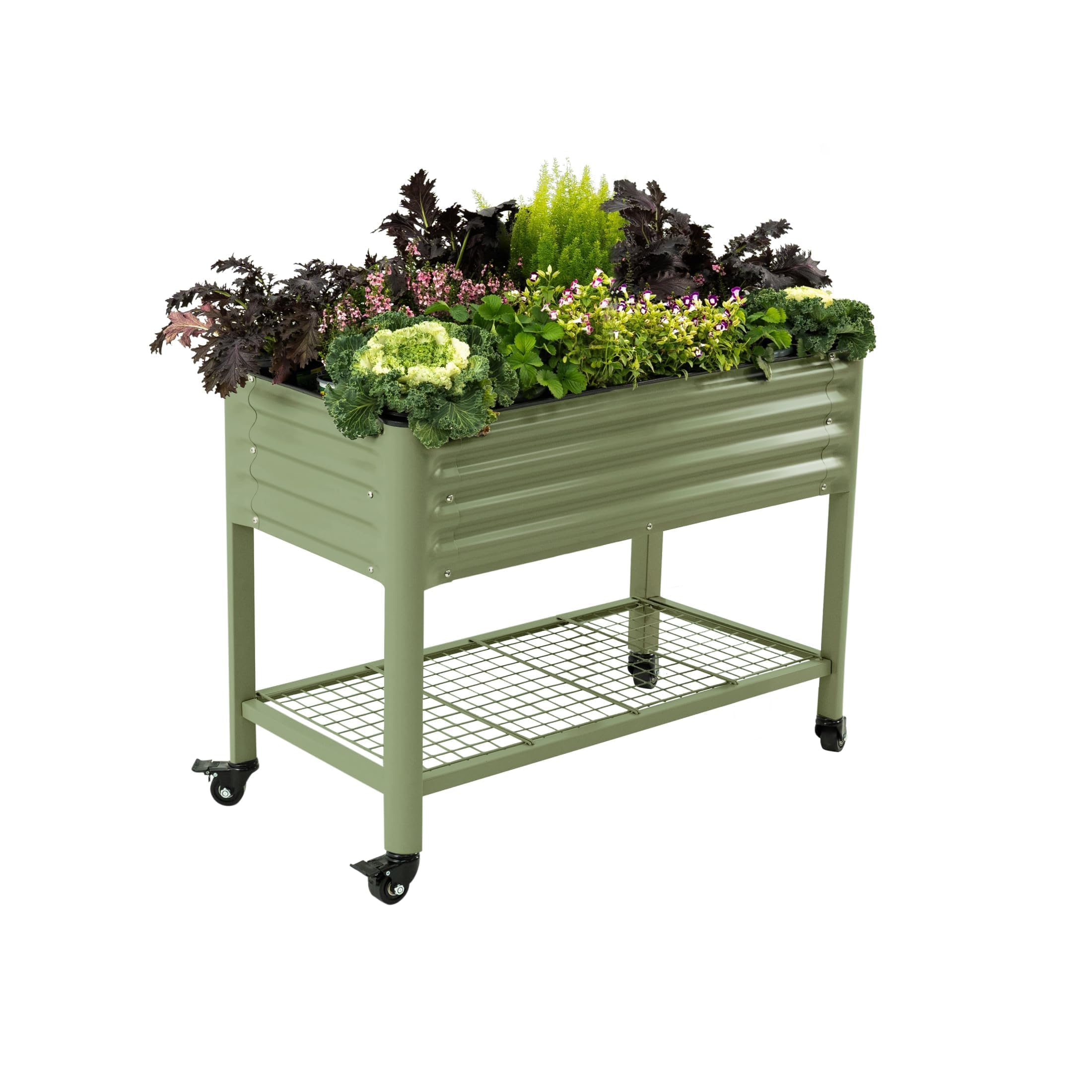
Vego Garden Rolling Elevated Raised Bed

Full-sun patios

Our Score 9.2/10
Check Price

Worth Noting

  • Premium price compared with the other picks
Height
32 inches
Bed Size
2' x 4'
Material
Zinc, magnesium, and aluminum coated steel
Load Capacity
700 lb
Read the full review

The Vego Garden bed is built like a small trailer: a one-piece welded corner and leg frame, a lower support bracket, and a 700-pound load rating under a 2-foot by 4-foot bed. That is more structure than most carts here carry, and it is why the bed stays level when you push it across a patio rather than flexing at the corners. The 32-inch height puts the soil at a comfortable working level, so you can plant, weed, and harvest without kneeling.

What earns it the top spot is the combination of that frame and the 2-by-4 footprint. It is compact enough for a patio but large enough for a couple of tomato plants, a pepper, and a row of herbs, and the coated steel is made to resist rust. The lower storage rack keeps tools and pots off the ground. The olive-green finish looks more like garden furniture than a utility cart.

For a patio where the bed will stay outside through the season, the extra steel and the 700-pound rating are worth paying for. The Vego is the one we point to when the goal is to fill a bed once and not think about flexing legs or a wobbling frame every time you move it. The 2-by-4 size is the sweet spot: enough soil for real crops, not so much that the cart becomes a permanent fixture.

Bottom line: For a full-sun patio where the bed will stay put and get heavy, this is the one we recommend first, thanks to its welded steel frame and 700-pound rating.

2

LEETOLLA Elevated Raised Bed with Wheels

LEETOLLA Elevated Raised Bed with Wheels

Budget balconies

Our Score 9.2/10
Check Price

Worth Noting

  • Rust can develop on painted steel outdoors
Wheels
Two wheels and two stabilizing feet
Capacity
2.5 cubic feet
Material
Painted iron
Dimensions
14.6 x 37.4 x 31.6 inches
Read the full review

The LEETOLLA is the budget pick that still gives you a counter-height bed: at 31.6 inches tall, it puts the soil where you can work without kneeling. That is the first thing we check for anyone who wants to avoid back strain. The bed is compact at 2.5 cubic feet, so it is a herb-and-greens planter rather than a tomato farm, but that size is also what lets it fit on a small patio or balcony.

Two wheels and a handle let you tilt and roll it, while two stabilizing feet hold it still when parked. The 37.4-inch width gives you a decent row of plants, and the lower shelf keeps a trowel, gloves, and a bag of fertilizer within reach. Five drainage holes and two cross-channels are there to move excess water out of the root zone.

The painted iron frame makes this one of the lighter carts here, and the 31.6-inch height is the same working height as beds that cost much more. The storage shelf is the detail that makes it feel more expensive than it is: you can keep a trowel and twine within reach instead of walking back to the shed.

Bottom line: A smart first raised bed for a patio or balcony, with a comfortable working height and a shelf that keeps tools close.

3

Yaheetech Raised Garden Bed with Wheels

Yaheetech Raised Garden Bed with Wheels

Wood-look patios

Our Score 9.2/10
Check Price

Worth Noting

Wheels
4 casters, 2 with brakes
Capacity
3.5 cubic feet
Material
Fir wood
Dimensions
41.5 x 22.5 x 33 inches
Read the full review

The Yaheetech is made of real fir, and it looks like it belongs on a porch. It comes with a non-woven liner and a natural finish that you can stain or leave alone. The 41.5-by-22.5-inch bed holds 3.5 cubic feet of soil, enough for a mix of herbs and a couple of compact vegetables.

At 33 inches tall, it puts the soil at the same comfortable height as the metal carts. The lower shelf is a real second tier, not a token lip, and it gives you a place for pots, gloves, and a watering can.

Four casters, two with brakes, make it easy to move around a deck and lock in place. The liner separates the soil from the wood, which is the detail that helps a wooden bed last longer.

The unfinished fir is the one part that asks something of you: seal it before a wet winter, and touch up the finish if you leave it in full sun. We like it for a patio where the bed is part of the view; the wood grain and the locking casters make it feel more considered than a plain metal box.

Bottom line: A handsome fir bed for a patio where looks matter, with locking casters and a comfortable working height.

4

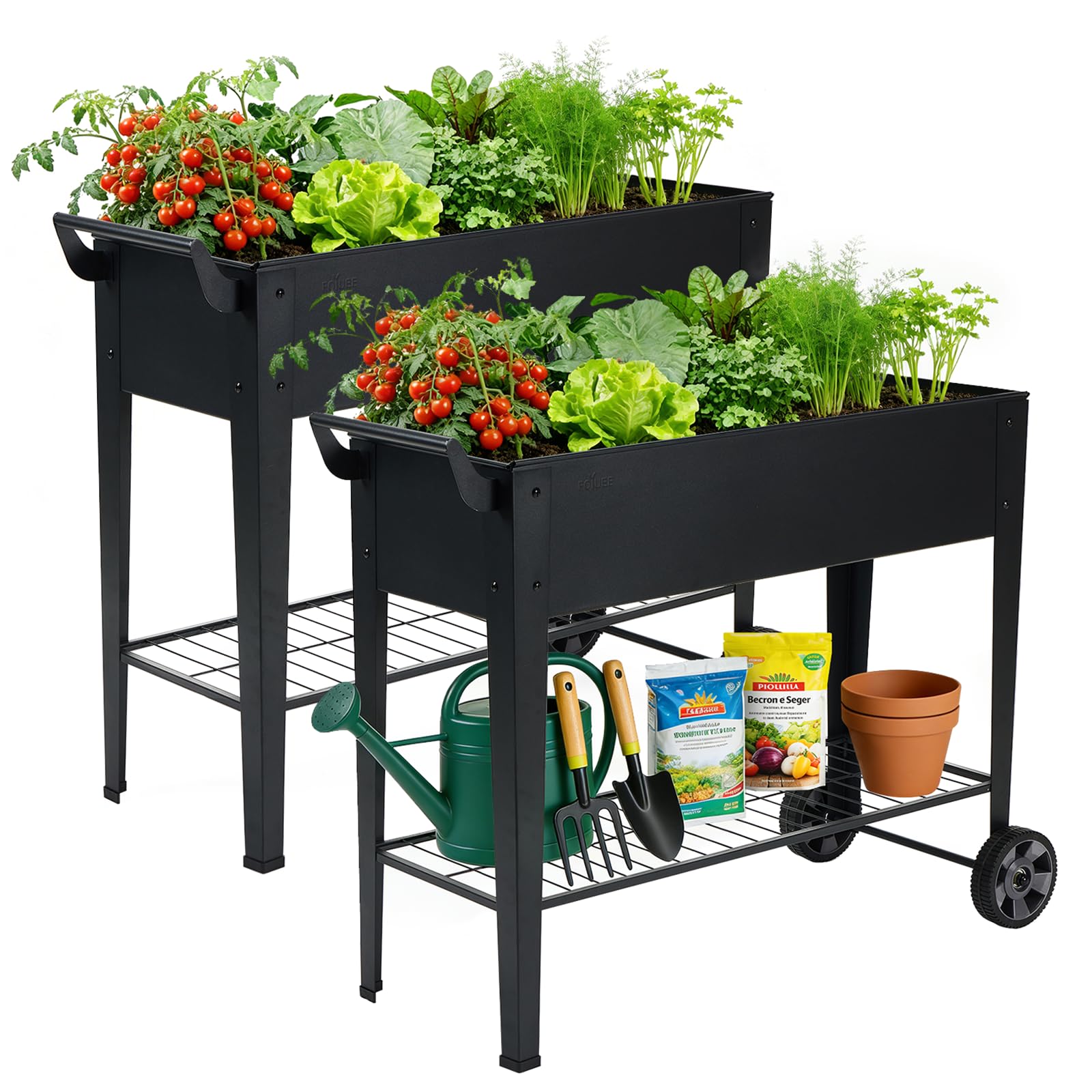
FOYUEE 2-Pack Elevated Raised Bed

FOYUEE 2-Pack Elevated Raised Bed

Two-bed patios

Our Score 9.0/10
Check Price

Worth Noting

  • Legs can bend under a fully loaded bed
  • Rust can show along seams over time
Set
2 planters
Capacity
19.3 gallons each
Load Capacity
400 lb
Planting Depth
12 inches
Read the full review

The FOYUEE set is the answer for a patio that wants two separate beds without buying two separate carts. Each planter holds 19.3 gallons and has a 12-inch planting depth, which is deeper than most of the compact metal beds here and gives roots more room for peppers, determinate tomatoes, and herbs. At 32 inches tall, the beds also put the work at a comfortable height.

Each bed has two 6-inch wheels and a 33-inch handle, so you can push or pull it to follow the sun. The 37-inch lower shelf is rated for 60 pounds and gives you a place for pots and tools. The galvanized steel frame carries a 400-pound rating, and the drainage system uses four grooves and three outlet holes.

We see the two-bed format as the real advantage: you can keep mint and herbs in one bed and hungrier vegetables in the other, which is more useful than one larger box for many patio growers. The two-bed format also means you can move one without disturbing the other.

Bottom line: For a patio that wants two matching beds with real planting depth, this pair is the clear choice in this set.

5

LINEX Raised Bed with Trellis

LINEX Raised Bed with Trellis

Climbing plants

Our Score 8.8/10
Check Price

Worth Noting

  • Too small for full-size tomatoes
Wheels
4 locking swivel casters
Watering
Self-watering reservoir
Dimensions
12.4 x 12.4 x 56.7 inches
Trellis Height
43.6 inches
Read the full review

The LINEX is less a raised bed than a trellis on casters. The planting box is 12.4 inches square, the trellis rises 43.6 inches, and the whole thing rolls on four locking swivel casters. A self-watering reservoir sits underneath, and the unit goes together without tools.

We reach for this one when the goal is a single climbing plant on a balcony or porch: a cherry tomato, a cucumber, or a small passionflower. The four casters are the best mobility setup on any small planter here, because you can move it in any direction and lock it in place. The 6.1-gallon box is sized for one vine, and the trellis gives it somewhere to climb.

Bottom line: A compact, self-watering planter for one or two climbing plants on a balcony, with the best caster setup here.

6

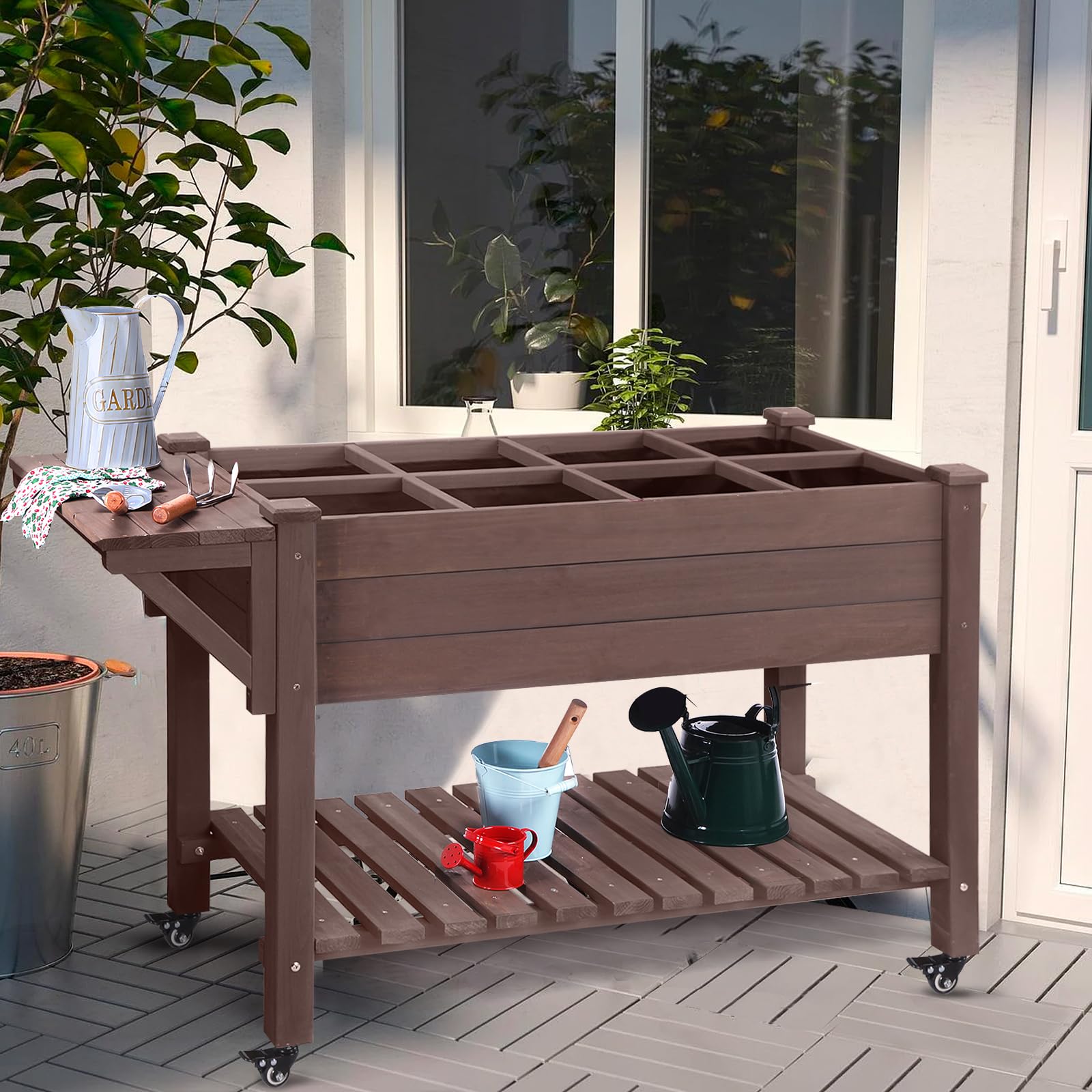
Aivituvin Raised Garden Bed on Wheels

Aivituvin Raised Garden Bed on Wheels

Mixed crops

Our Score 8.8/10
Check Price

Worth Noting

  • Support legs can crack under a full bed
Capacity
5 cubic feet
Material
Wood
Dimensions
52.7 x 22 x 30 inches
Growing Grids
8
Read the full review

The Aivituvin's top is divided into eight grids, which is the first thing you notice on a 52.7-inch-long bed. The planting box holds 5 cubic feet of soil, and you can keep different crops separate or remove the dividers and use the whole bed.

At 30 inches tall, it is a little lower than the 32- and 33-inch carts, but it still saves you from kneeling. The lower shelf runs the full length and gives you storage for soil, tools, or pots.

The wooden frame comes with an inner liner and drainage holes, and the bed sits on wheels so you can move it around a patio. The liner is the part that matters for a wood bed: it keeps soil away from the panels and helps the frame last longer.

The eight-grid layout is what makes it more than a box for us. You can keep mint from taking over the basil, which is a real advantage on a small patio, and the long, low profile fits under a window or along a wall.

Bottom line: A large wooden bed for a patio gardener who wants separate growing grids and a shelf, with enough length for a real mix of crops.

7

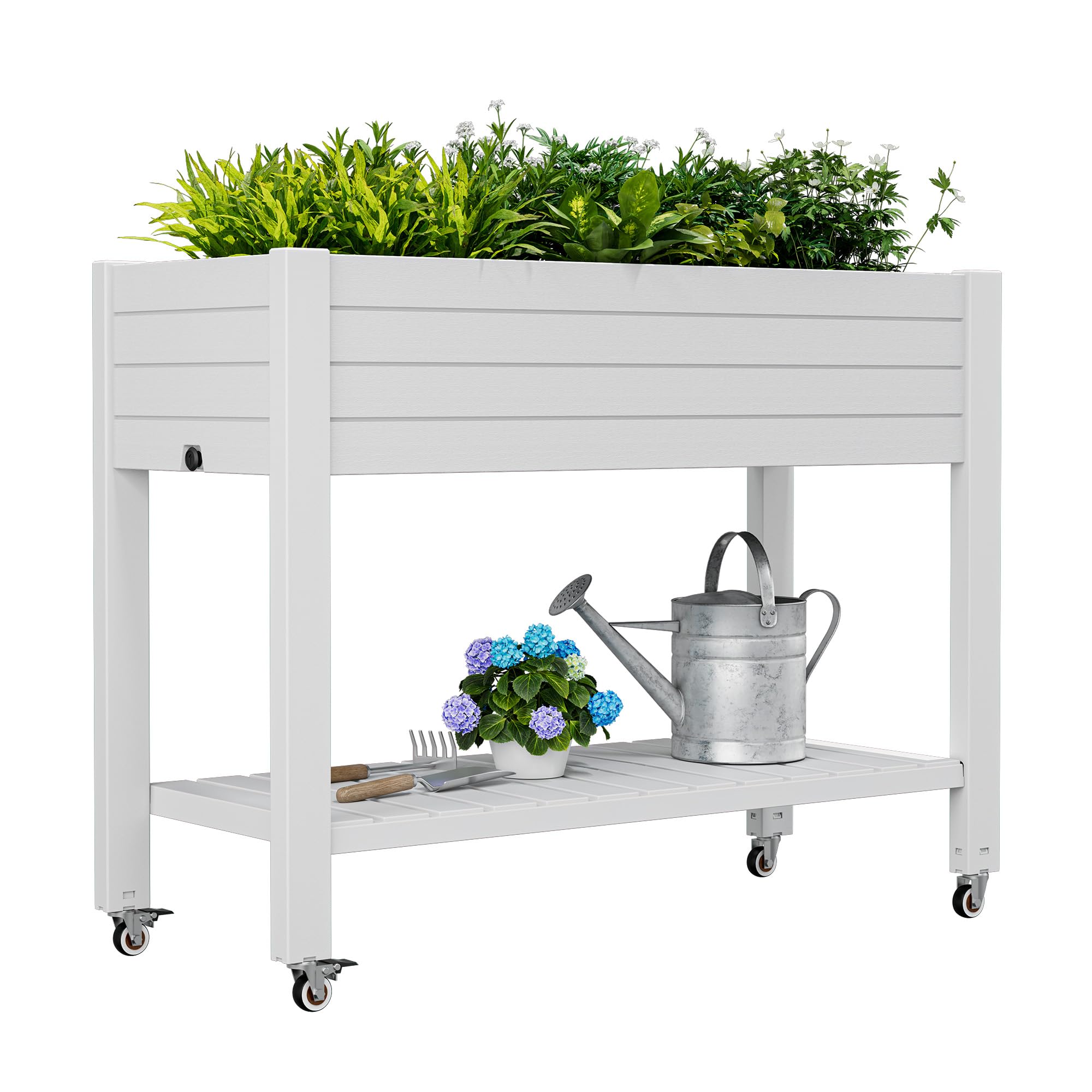
WTFGO Elevated Resin Raised Bed

WTFGO Elevated Resin Raised Bed

Rust-free decks

Our Score 8.6/10
Check Price

Worth Noting

  • 110-pound load rating is modest for its size
Wheels
4 locking swivel casters
Capacity
17.7 gallons
Dimensions
42.4 x 16.8 x 33.7 inches
Load Capacity
110 lb
Read the full review

The WTFGO is the pick for anyone who has watched a metal bed rust. The body is made of weather-resistant resin, so it will not rot, crack, or warp like wood or rust like steel. It measures 42.4 by 16.8 inches and stands 33.7 inches tall, with a 17.7-gallon planting box.

Four locking casters rotate a full 360 degrees, which makes it easier to steer into a corner than the two-wheel tilt carts. The drainage system includes a water gauge, and there is a lower shelf for tools. The ashen finish is neutral enough to sit on a deck without shouting for attention.

The combination of no-rust material and all-direction mobility is what earns it a place. We appreciated the four casters most on a narrow deck, where being able to turn the bed in place saves a lot of shuffling. The water gauge is the detail that separates it from the steel carts: you can see the water level without lifting the bed.

Bottom line: A rust-free resin bed with the best caster setup here, for a patio where easy rolling and low maintenance matter.

8

aboxoo Large Elevated Metal Raised Bed

aboxoo Large Elevated Metal Raised Bed

Narrow balconies

Our Score 8.6/10
Check Price

Worth Noting

  • Too narrow for large vegetables
Wheels
Two wheels and handle
Material
Galvanized steel
Dimensions
40 x 11 x 31.5 inches
Load Capacity
185 lb
Read the full review

Eleven inches wide is the number we start with. The aboxoo bed is 40 inches long and 31.5 inches tall, so it fits along a balcony rail or a narrow walkway where a 24-inch-wide cart would block the door. For that kind of space, the slim footprint is the whole point.

The galvanized steel frame sits on two wheels with a handle. It gives you the same no-bending working position as the bigger carts, just in a thinner package. The 40-inch length is enough for a row of herbs or lettuce, and the metal frame is lighter to move than a wood cart of the same height.

Bottom line: A slim, budget-friendly metal bed for a balcony or narrow walkway, where a full-width cart simply will not fit.

How We Tested Rolling Raised Beds Through a Full Season

We started by rounding up every rolling raised bed we could find that held at least two cubic feet of soil and still fit through a standard gate, then dropped anything with casters rated under 100 pounds or instructions that arrived as one exploded diagram. That left 12 beds, which we built and gardened in for eight months, from early spring through the first frost.

Assembly happened on a Saturday morning in the driveway, alone, using only the tools that came in the box. We timed each build and wrote down exactly where the instructions went vague — usually the order of the cross-braces, or which bolts thread through the legs before the side panels go on. Then we filled every bed to the rim with wet potting mix and lived with it, rolling each one across patio pavers, deck boards, gravel, and lawn, often one-handed while carrying a watering can.

We leaned hard on the rims to see whether a frame racked, pushed each bed over a door threshold, and noted whether the casters tracked straight or shimmied. Watering was a timed two-gallon pour so we could watch where water actually exited and whether it pooled in a corner. Once a month we ran a thumb along the leg seams and hardware hunting for rust bloom, and at the end of the season we set each bed beside its day-one photo to judge fading and staining. We also measured true soil volume against the claimed figure — the cost per cubic foot of soil is where the price gaps start to make sense.

How to Choose Raised Garden Beds on Wheels

Match the Wheel Design to Your Surface

Two-wheel carts with a handle tilt back like a wheelbarrow; four-caster carts roll flat and turn in place. On a smooth patio or deck, either works, but four casters are easier to steer into a corner and are less likely to strain your back when the bed is full. Two-wheel designs usually have stabilizing feet, so they stay put once parked. Check for locks if the bed will sit on a slope or a windy deck. On gravel or turf, small casters can sink or jam, so a paved path is the friendliest surface.

Check Load Support, Not Just the Bed Size

Wet soil is heavy, and a cart that holds 5 cubic feet can weigh more than the frame expects. Look at the rated load and how the legs are built: welded steel corners and a lower support bracket do more for stability than a thin leg with a decorative brace. A 700-pound rating gives you margin for saturated soil and a few pots; a 110-pound rating leaves little room for error. If you plan to fill the bed to the top, choose the stronger frame even if it costs more.

Choose Capacity and Depth for What You Grow

Herbs, lettuce, and radishes are happy in a 2- to 3-cubic-foot bed with 9 to 12 inches of depth. Tomatoes, peppers, and cucumbers need more root room, so look for at least 12 inches of planting depth and a bed that holds 15 gallons or more per plant. A 5-cubic-foot bed can support a mixed planting; a 6-gallon trellis planter is a one-vine specialist. Match the bed to the crop, not to the biggest number on the page.

Plan for Weather, Drainage, and Upkeep

Steel beds need a finish that resists rust, and painted models benefit from touching up chips before they spread. Wood beds need a barrier between soil and timber, and unfinished fir should be sealed before a wet winter. Resin avoids rot and rust but can feel lighter underfoot. Drainage matters on any surface: holes and grooves should let water out, but on a deck you also want to know where that water lands. A bed that stays wet at the bottom is a root-rot risk.

Measure the Footprint and Working Height

Most raised beds on wheels land between 30 and 34 inches tall, which is the range that lets you work standing up. Measure the length and width against your balcony, patio door, and the path the bed will roll along. The aboxoo is the narrowest here at 11 inches, while the Vego takes a full 2 by 4 feet. Leave room for the handle and for the wheels to pivot, and check that the bed can turn around without hanging over a step.

Frequently Asked Questions

Final Verdict

Our default is the Vego Garden Rolling Elevated Raised Bed. The 700-pound rating, welded steel frame, and 2-by-4 footprint give you a bed that stays square when it is full and still rolls when you need to chase the sun. It costs more than the budget carts here, and that is the trade: you are paying for structure you do not have to think about.

If the Vego is more than you want to spend, the LEETOLLA is the compact budget choice for herbs and greens, and the FOYUEE two-pack is the better fit if you want two deeper beds. For a balcony with one climbing plant, the LINEX is the specialist to choose. The deciding question is simple: buy for the load and surface you actually have, not the largest bed on the page.