Planters & Plant Supports

Best Potato Grow Bags of 2026

Potato grow bags sell themselves on a simple promise: no digging, no raised bed, no yard. But a bag stuffed with wet soil and tubers is heavy, and the first things to fail are the handles and the seams. I've had a cheap one split mid-carry, which is a mess you only clean up once. What a good bag actually buys you is a season of potatoes on a patio or balcony, plus the small pleasure of tipping the whole thing over at harvest instead of groping around in the dirt with a fork.

This spring and summer, we grew potatoes in 14 bags, from 5-gallon jobs to 20-gallon towers, on a sunny patio, a windy balcony, and a community garden plot. The differences showed up within weeks: how the fabric held moisture, whether water actually drained, how full the plants looked by August. Here's the lesson a first-timer never hears — grow bags dry out far faster than garden soil, so a bag that sheds water too eagerly means watering twice a day in July. The picks below held up, grew a real crop, and stayed worth the money.

1

PAMAZY 15-Gallon 4-Pack

Top Pick
PAMAZY 15-Gallon 4-Pack

Easy harvesting

Our Score 9.4/10
Check Price

Worth Noting

  • Takes far more potting mix than a 10-gallon bag
Windows
Two (hinged harvest, viewing)
Capacity
15 gallons
Pack Size
4 bags
Bag Dimensions
15.74 x 15.74 x 17.71 inches
Read the full review

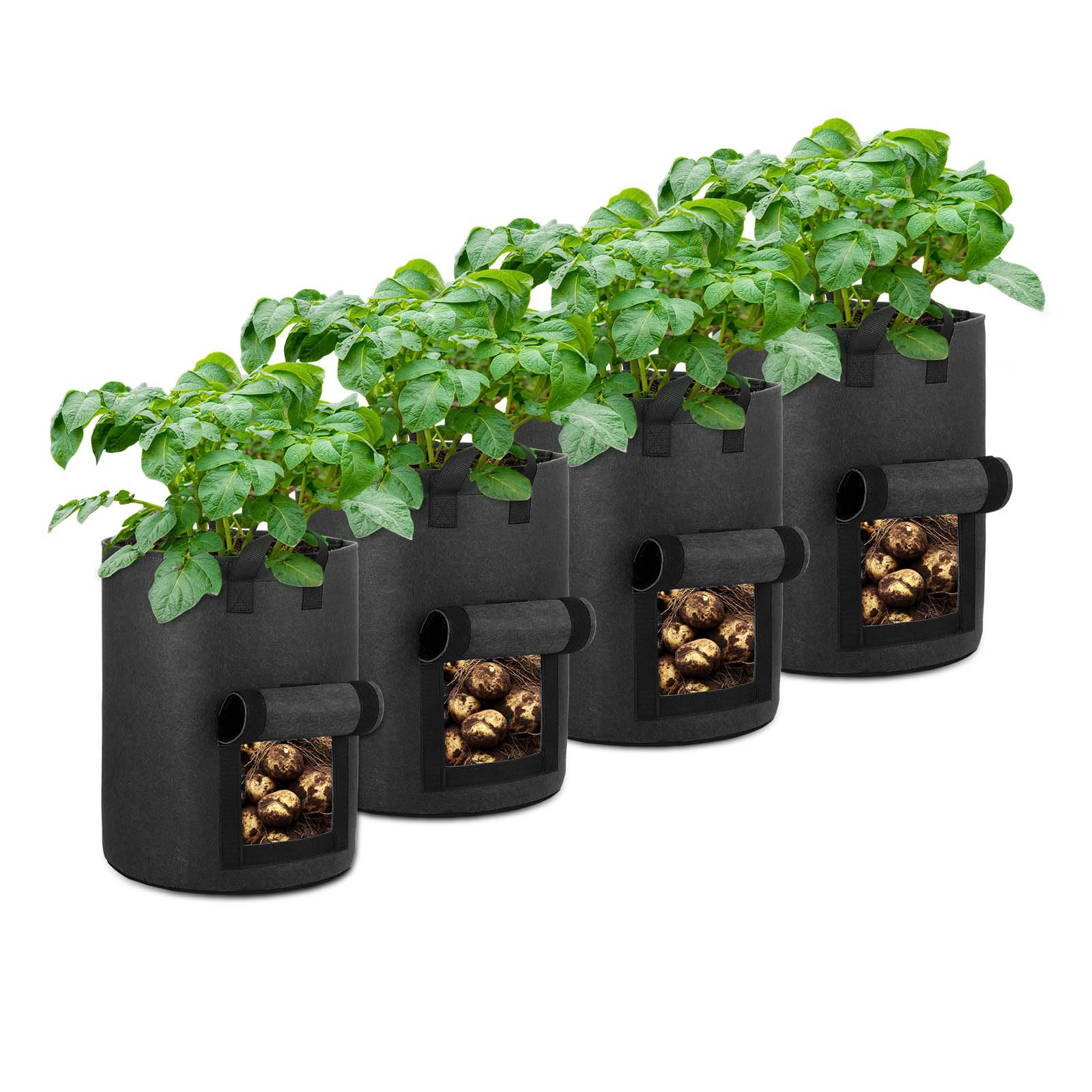
A window is only half the job. On most bags with a viewing panel you can see the potatoes and then still have to tip the whole thing onto a tarp to get at them. PAMAZY puts two openings in the same wall of its 15-gallon bag: a clear panel for checking size, and a harvest flap built on a hinge, so the soil stays where it is while you reach in for a handful of new potatoes.

That hinge is why this is our top pick. It turns harvest into a two-minute job before dinner instead of a repotting session, and it stops the flap drooping open and emptying half your mix down the side. Then there's the scale: at 15 gallons this bag holds half again what the 10-gallon sets here do, which is the difference between a few meals and a store that lasts into winter.

We were also glad the handles run long down the sides rather than sitting in two short loops at the rim. A bag this size, full of wet mix, is a two-handed lift, and long webbing gives the second hand somewhere to go. Set it where it's going to live before you fill it — good advice for every bag here, and close to essential for this one.

The trade-off is fill. Fifteen gallons swallows a serious amount of potting mix, and once it's wet it isn't going anywhere. On a narrow balcony, one of the 10-gallon sets below makes far more sense; with a sunny corner and room for two or three bags, this is the one that earns the space.

Bottom line: This is the set we recommend for most patio growers: the hinged harvest window lets you pick new potatoes without disturbing the plant, and 15 gallons grows a real crop.

2

Cavisoo 10-Gallon 5-Pack

Cavisoo 10-Gallon 5-Pack

Planting several varieties

Our Score 9.2/10
Check Price

Worth Noting

  • No harvest flap; you tip the bag to empty it
Fabric
300g non-woven
Capacity
10 gallons
Pack Size
5 bags
Bag Dimensions
14 x 14 x 18 inches
Read the full review

Five bags in one order is the reason to pick Cavisoo. That's enough to line a fence, split one favorite variety across two bags so you can harvest at different times, and still keep a spare for tomatoes.

The fabric is listed at 300g, heavy for this group, and it shows in a way we appreciated: the empty bag stands up on its own instead of collapsing into a puddle of cloth, which makes filling it a one-person job. The handles are polypropylene webbing stitched in an X across the join, the reinforcement that matters most, because a full bag is exactly where a handle gives way.

Drainage is quick, which is what you want in a wet spring. The same breathability carries water out fast, though, and a little fine soil goes with it. Build the mix for that: compost with a scoop of perlite or vermiculite holds moisture without turning the bag into a bog, and watering slowly rather than blasting the surface keeps your mix where you put it.

The clear panel sits low so you can check tuber size without digging. There's no flap on this one, so harvest means working down from the top or tipping the bag into a barrow — for most people that's one job at the end of the season rather than a weekly one. What it really buys you is coverage: five bags rather than four, for about what a mid-priced four-pack costs.

Bottom line: We like Cavisoo for a long fence line: five bags let you stagger varieties, and the 300g fabric stands up on its own where lighter bags slump.

3

OPPOLIFE 10-Gallon 4-Pack

OPPOLIFE 10-Gallon 4-Pack

Tight budgets

Our Score 9.2/10
Check Price

Worth Noting

  • Fabric feels lighter than the 300g bags here
Handles
Wide webbing with inner lining
Capacity
10 gallons
Pack Size
4 bags
Bag Dimensions
14 x 14 x 18 inches
Read the full review

For a first go at container potatoes, this is the set we point people to: four 10-gallon bags with harvest windows and wide webbing handles, for about as little as anything here costs.

The handles are the better part of the design. Polypropylene webbing, widened and backed with an inner lining, running down the side of the bag instead of stopping at the rim — that spread puts the load into the fabric rather than two small points of stitching, which is exactly what you want when the bag is wet.

The harvest window is a plain clear panel, the fabric is the same breathable non-woven as the rest of the group, and it's listed as UV-resistant for what that's worth. Before you fill one, run a finger around the base and confirm the drainage holes are punched through; a bag that holds water at the bottom will spoil a crop faster than any other mistake here.

Reuse is where the case pays off. The bags are washable, and once they're emptied and dried they fold down with the rest of the pots. Four is also a sensible number to start with: enough to compare two varieties, few enough that you'll keep up with the watering in August.

Bottom line: Our pick for a low-commitment start: four 10-gallon bags, generous webbing handles and a working harvest window for very little outlay.

4

Lyincat 10-Gallon 4-Pack

Lyincat 10-Gallon 4-Pack

Small yards

Our Score 9.2/10
Check Price

Worth Noting

  • Thin fabric can tear with a hand trowel
Capacity
10 gallons
Material
Polypropylene
Pack Size
4 bags
Harvest Access
Front flap
Read the full review

Four 10-gallon bags with a flap across the front, at the same money as the other budget four-pack in this group — on paper, the same offer. The difference shows up when you unpack them.

These don't stand up on their own when empty; the sides slump until they're full, which is a small annoyance when you're filling one alone. Set it where it will sit, shovel the mix in and pack it to the rim as you go, and the bag takes its shape and keeps it.

Where it earns its place is room. The 10-gallon size holds a genuinely useful amount of soil, the flap means you're not tipping the bag out to find out what you grew, and the handles do the job of shifting it a few feet when the sun moves. For a small yard, a first crop, or a season when you're not sure how much time you'll have, that's plenty.

It's the one we reach for when we want to try a variety we're not sure about, because nothing about it is precious enough to worry over. Keep it out of reach of a metal trowel and it will see out the season.

Bottom line: Lyincat is the one to try a new variety in: four roomy 10-gallon bags with front flaps, and nothing precious about them if the season goes wrong.

5

Homyhoo 10-Gallon 4-Pack

Homyhoo 10-Gallon 4-Pack

First-time growers

Our Score 9.0/10
Check Price

Worth Noting

  • Some bags run under the stated 10-gallon capacity
Capacity
10 gallons
Pack Size
4 bags
Bag Dimensions
13.8 x 13.8 x 17.8 inches
Harvest Access
Large front flap
Read the full review

The flap is the whole point, and Homyhoo's runs wide across the front of a 10-gallon bag — wide enough to get a hand and a small trowel in without scraping your knuckles. Roll the top down as the stems come up, add soil as they reach, and by midsummer you have a bag you open rather than dig.

This is the shape most people picture when they think of a potato grow bag, and after a season with it we understand why the design stuck. The double layer of felted fabric feels substantial in the hand, the bag holds its form when it's full, and the flap makes the harvest obvious to anyone who has never grown a potato before.

Handles are where a bag like this earns or loses trust. Ours carried a full load without complaint, but the attachment is the part to inspect before you fill: run a thumb along the stitching, and when the mix is soaked, lift from underneath rather than swinging the bag by the straps.

It folds flat at the end of the season, which matters more than it sounds when you have four of them and a small shed. Set against the other four-packs here, it has the widest opening and the softest fabric; the price of that softness is a bag that flops a little more than the 300g ones when it's empty.

Bottom line: Homyhoo is the flap bag we hand to first-time container growers: the opening is wide, the felt is soft and thick, and the harvest is obvious.

6

MEKOLIFE 10-Gallon 6-Pack

MEKOLIFE 10-Gallon 6-Pack

Starting from scratch

Our Score 9.0/10
Check Price

Worth Noting

  • Bags can measure smaller than the 10-gallon label
Capacity
10 gallons
Included
Plant labels
Pack Size
6 bags
Bag Dimensions
13.7 x 13.7 x 17.7 inches
Read the full review

Six bags, a bundle of plant labels, and a stack that folds flat onto a garage shelf: MEKOLIFE's set is aimed at the person starting a container garden from nothing, and the extras save a trip to the shop.

The window is the useful part — a transparent panel under a soil-retention flap, so you can look without shovelling and then open it and reach in. Around the sides, the handles wrap the bag rather than sitting in two short loops, and we found a full bag lifts evenly from either side instead of bunching at the rim.

Six bags for less per bag than anything else in this group is the arithmetic that sells the set, and the 300GSM fabric means you aren't trading durability for the count. For a first potato season, having a spare bag to move a plant into, or to hand to a kid, is worth more than a slightly heavier weave.

The thing to plan for is ground. Six of these lined up fill a long stretch of balcony or path, and they all want sun and a watering can you can carry. If that's more room than you have, take a four-bag set and put the difference into better mix.

Bottom line: We think this is the smartest first-season buy: six bags, plant labels included, and surround handles that carry a full load evenly.

How We Tested Potato Grow Bags

We started by gathering every grow bag we could get our hands on — nonwoven felt, plastic, and a few woven polypropylene styles — and read the specs against the price. Bags with no drainage holes, handles sewn through only one layer of fabric, or vague capacity claims got cut before we planted anything. That left 14, spanning 5 to 20 gallons. We filled each with the same potting mix, planted the same seed potato variety, and measured footprint and soil volume so size and capacity comparisons were apples to apples.

The bags lived where grow bags actually live: a back patio in full sun, a breezy third-floor balcony, and a community garden plot. We watered on one schedule and checked moisture a couple of inches down before every session, noting which bags dried out first and which plants needed hilling sooner. Every two weeks we lifted each bag by its handles while it was heavy with wet soil and dragged it a few feet across pavers, which is where cheap stitching announces itself. We poured a gallon of water into each and timed how fast it left the bottom, since a bag that pools water will rot tubers. Bags with side harvest flaps got their own test: could we pull a few new potatoes without dumping the whole crop?

At harvest we tipped each bag out, weighed the crop, and counted how many tubers came out clean versus green or split. Then we hosed the bags down, dried them, and stored them to see which would survive a second season. Cost per pound of potatoes was the final calculation, and it's the one that stings: a bag that yields six pounds and falls apart in year one isn't a bargain next to one that costs a few dollars more and keeps going.

How to Choose Potato Grow Bags

Choose the Harvest Opening First

The two openings do different jobs. A clear viewing window lets you check tuber size without digging, and it costs almost nothing to include. A harvest flap lets you reach in and take the biggest potatoes while the plant keeps growing. If you plan to steal a few new potatoes through the season, the flap is worth paying for, and a hinged one is better than a loose one: the hinge holds the soil back instead of spilling it down the side, which is the design our top pick is built around.

If you'll tip the whole crop out in one go at the end of the season, a window alone is plenty, and Cavisoo's five-bag set covers that job well.

Read the Dimensions, Not Just the Gallons

A "10-gallon" claim is a rough label rather than a measurement. What decides whether a bag fits your balcony is the diameter at the rim and the height — most of the 10-gallon bags here sit around 14 inches across, while the 15-gallon bag runs closer to 16. Measure the space, then leave a gap between bags for airflow and for your knees when you're weeding.

Fill them where they'll live. A saturated bag of mix is not something to carry up a step, and every one of these holds far more compost than the folded bag suggests on the shelf.

Check the Fabric Weight and the Handle Stitching

Fabric weight is the most useful durability number on the listing. Three hundred grams per square metre gives you a bag that stands up empty and keeps its shape under a load. When a listing gives no weight at all, the weave is usually lighter — you can feel it as soon as you unfold the bag.

Then look at the handles. Webbing that runs down the side and is stitched across the join spreads the load far better than a short loop at the rim. Where the attachment looks thin, lift from underneath once the mix is wet rather than swinging the bag by the straps.

Plan for Watering and a Little Soil Loss

Breathable fabric is what gives you air pruning and drainage from the same material, and both mean the bag dries faster than a bed or a plastic pot. In a heatwave, plan on watering daily. Build the mix for it with compost and a handful of perlite or vermiculite instead of straight garden soil.

Expect a little fine soil to wash out of the seams in the first few waterings; it settles. A layer of straw or compost across the surface slows evaporation and stops the top of the mix caking.

Decide How Many Bags Before You Buy

One bag is a novelty; four is a patch. A 10-gallon bag grows a decent crop of one variety, and having two of the same variety lets you harvest at different times. Four-, five- and six-bag sets all appear here, and the difference per bag adds up: six bags is the cheapest way in this group to fill a stretch of wall, while a five-pack covers a fence line.

Buy the count you can water, not the count that fits the space.

Frequently Asked Questions

Final Verdict

For most people growing potatoes on a patio, we recommend the PAMAZY 15-gallon set. The hinged harvest window is the feature that keeps paying: you check size through the clear panel, open the flap, and take dinner without disturbing the plant, and 15 gallons grows a crop worth the floor space.

If you want a longer run of varieties, Cavisoo's five 10-gallon bags cover more ground for less per bag and are the better buy. If you're only trying the idea out, the OPPOLIFE four-pack gets potatoes growing for very little outlay.