Planters & Plant Supports

Best Hanging Basket Liners of 2026

A hanging basket should look like it belongs on a magazine cover, not like a pile of dry moss shedding onto the porch. The liner is the part that decides whether that happens. A good one holds soil and water without sagging, fits the wire frame without bunching, and still looks intentional after a month of sun and daily watering. A bad one cracks, sheds, or droops so far over the rim that you spend more time adjusting it than planting.

I’ve tried liners that looked fine in the package and turned brittle by July, so I care less about first impressions and more about how they hold up. Over the past five months, my team and I tested 14 liners in porch baskets, balcony planters, and a few windy spots. We checked fit in standard wire baskets, folded and reshaped each one, and watched how they handled daily watering and summer sun. The best ones earned their place; the cheap ones reminded us that a low price only feels like value if the liner survives the season.

1

LCHUANG 16-Inch Coco Liners

Top Pick
LCHUANG 16-Inch Coco Liners

Large wire baskets

Our Score 9.4/10
Check Price

Worth Noting

  • Needs trimming to fit 14-inch baskets
Depth
6.7 in
Diameter
16 in
Pack Count
4
Read the full review

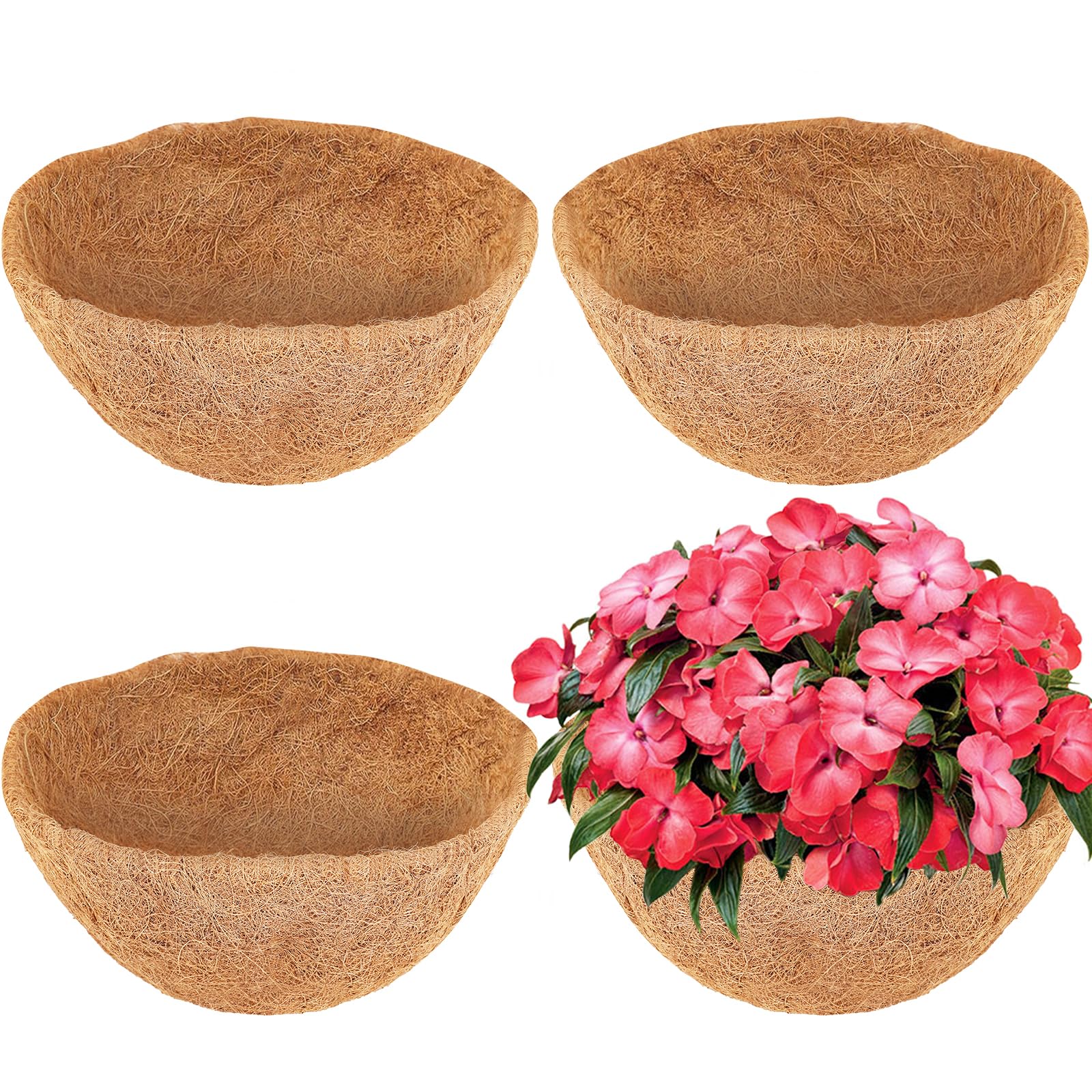
Sixteen inches across and 6.7 inches deep is the largest liner we covered, and the width does two jobs: it lines a 16-inch wire basket with the rim properly covered, and in a 14- or 15-inch basket the spare edge comes off with household scissors. Coir cuts cleanly and doesn't unravel, which is why going up a size is the safe direction — you can take material away, and there's no way to add it. The depth is what we ended up valuing more: a full load of potting mix sits below the rim instead of mounding over it.

Of the liners here, this is the one whose thickness holds up best in the hand. The coir is pressed into an even mat across the base and up the curve, with none of the see-through softness that turns up in the cheaper packs, and the bowl is molded rather than stitched, so it keeps a round shape once it's full of wet soil. Set into a wire basket it takes the basket's shape instead of sagging away from it, which is the difference between a basket that looks planted and one that looks lined.

Four to a pack is a workable number — enough for a porch rail and a couple of brackets, few enough that you're not storing a stack until next spring. What you're paying for is the size and the consistency of the coir, and for baskets that get watered every day of July, that's the right trade.

Bottom line: Buy this if your baskets are big or you haven't measured them: 16 inches covers the largest wire baskets here and trims down cleanly, and the coir is the most evenly felted in this group.
2

ZeeDix 10-Inch Coco Liners

ZeeDix 10-Inch Coco Liners

10-inch wire baskets

Our Score 9.2/10
Check Price

Worth Noting

  • Thin coir with stubborn fold creases
Depth
4 in
Diameter
10 in
Pack Count
4
Read the full review

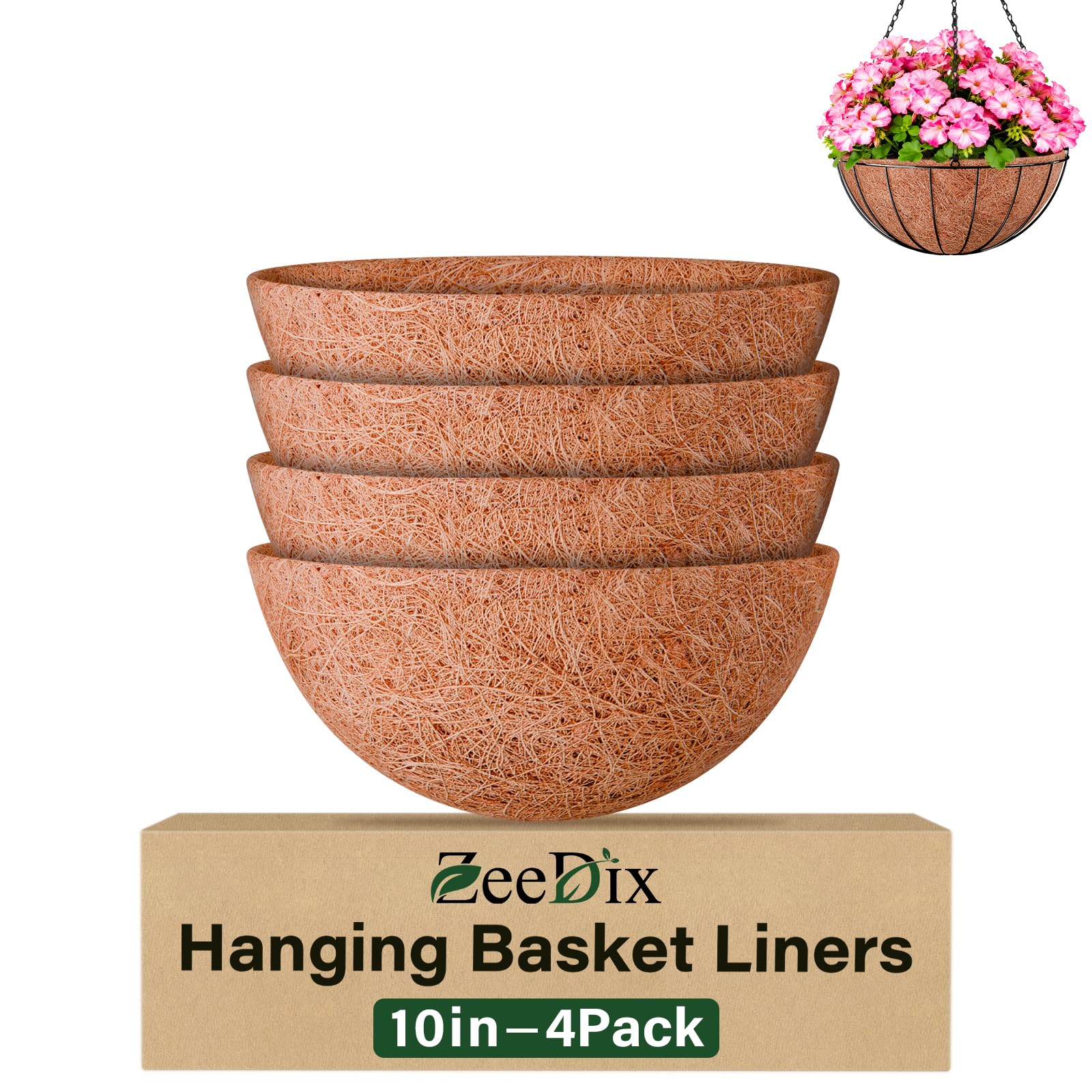
Ten inches is the size garden centers tend to skip, and it's the size a lot of small wire baskets actually are. These measure a true 10 inches across with a 4-inch bowl, and the fit is the reason to buy them: they drop into a 10-inch basket with the rim covered and no bunching, which is more than a trimmed-down 12-inch liner manages.

Four inches of depth is the honest limit. In a shallow basket it fills to the rim; in anything deeper it leaves a band of bare wire at the top. That's a sizing question rather than a fault, and the answer is to go up a size rather than to buy two packs and stack them, which never sits flat.

What we appreciated more than anything was the shape. The bowl is molded, so it holds a round form once it's watered in instead of clinging to the wire, and the whole thing looks tidier in a small basket than a bigger liner cut down to fit. For four small baskets it's the straightforward buy.

Bottom line: The liner to buy when your wire baskets are the small kind: a true 10-inch bowl that holds its shape, and enough in the pack to reline four of them.

3

Halatool 14-Inch Coco Liners

Halatool 14-Inch Coco Liners

Four-basket refills

Our Score 9.2/10
Check Price

Worth Noting

  • Uneven coir thickness
Depth
6.3 in
Diameter
14 in
Pack Count
4
Read the full review

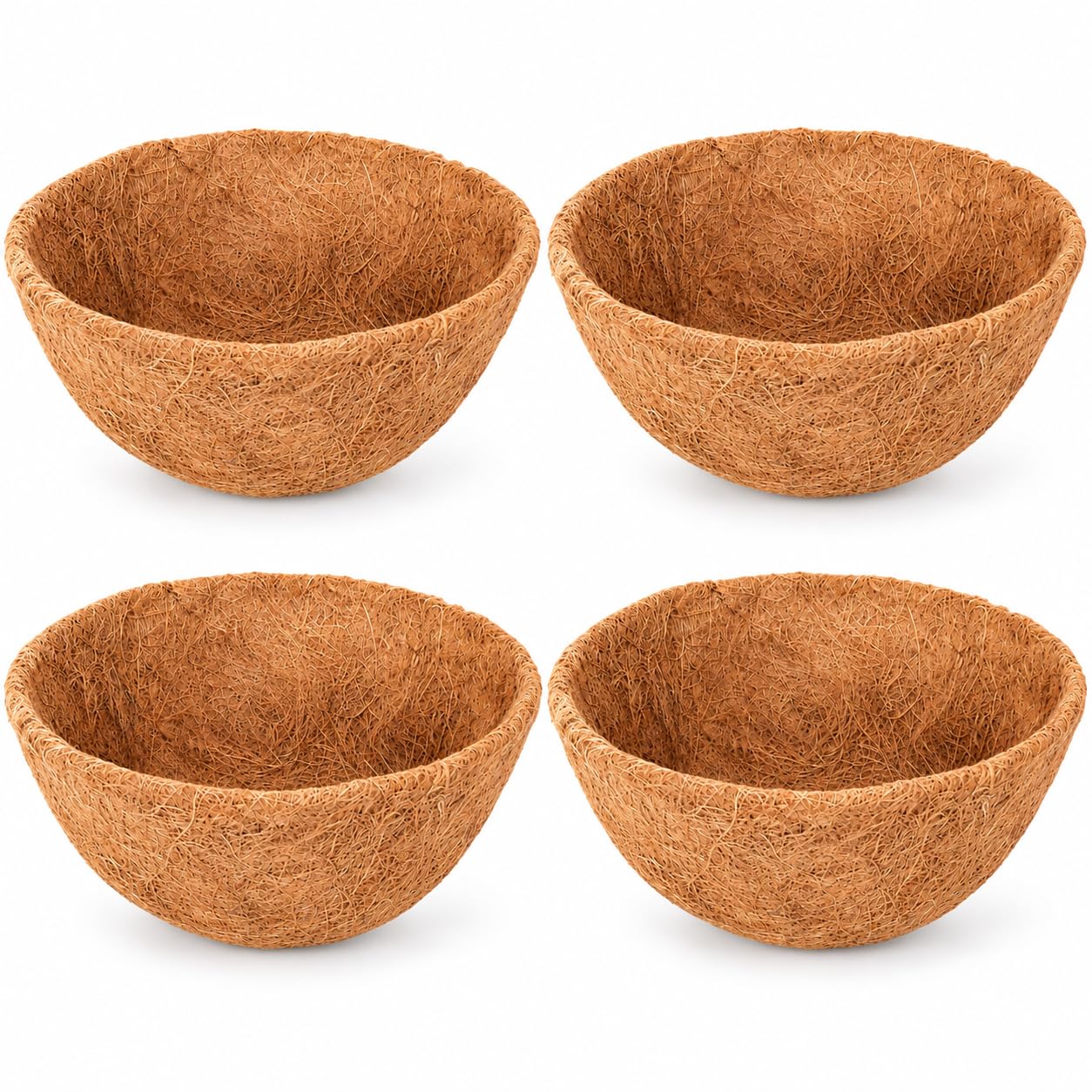
This is the four-pack version of the 14-inch liner the Legigo sells six at a time, and the count is the honest reason to pick it: four baskets, four liners, nothing left over in the shed until next spring.

The size and fit are right. Fourteen inches across and 6.3 inches deep settles into a standard wire basket with the rim under the wire and no bunching, it takes water quickly on the first soak, and the bowl holds its shape once it's full of wet soil.

Where it gives ground is consistency. The coir is pressed thinner in places than the two liners above it, and thin coir is what lets a basket dry out on a hot afternoon and what gives way first under a heavy root ball. For one summer in a shaded porch it's a perfectly decent buy; on a sun-baked, windy bracket it isn't the one to take.

Bottom line: A sound four-pack of standard 14-inch liners for a four-basket porch, provided you're not asking them to last more than a summer.

4

Legigo 14-Inch Coco Liners

Legigo 14-Inch Coco Liners

Standard 14-inch baskets

Our Score 9.0/10
Check Price

Worth Noting

  • Thin patches at the base
Depth
6.3 in
Diameter
14 in
Pack Count
6
Read the full review

The first liner out of the pack is the hard one. They arrive compressed and stacked, the layers stick to each other, and the creases from the fold hold even after a quick dip — the thirty seconds the label suggests doesn't open them out. A proper soak in a bucket and a few minutes working the folds apart with your fingers sorts it, and after that they behave like any other liner.

What you get for that bit of prep is the size most wire hanging baskets are actually sold in: 14 inches across, 6.3 inches deep, six at a time. Saturated and opened out, they sit down into the basket with the rim tucked under the wire rather than standing proud of it, and the coir is dense enough that a full watering soaks in instead of running down the sides and out the bottom. That last part is the whole game with a hanging basket — a liner that sheds water leaves you watering twice a day.

Six is the number that makes this pack worth buying rather than a pair: one order, one session with the bucket, and matching liners across every basket on the porch. The depth earns its keep too, with enough soil under a trailing plant that a hot week doesn't finish it off.

Bottom line: Our choice if your baskets are the standard 14-inch wire kind: six dense liners that hold a watering, once they've had the soak they insist on.

5

Riare 12-Inch Coco Liners

Riare 12-Inch Coco Liners

Budget 12-inch refills

Our Score 9.0/10
Check Price

Worth Noting

  • Some liners run under 12 inches
Depth
5 in
Diameter
12 in
Pack Count
6
Read the full review

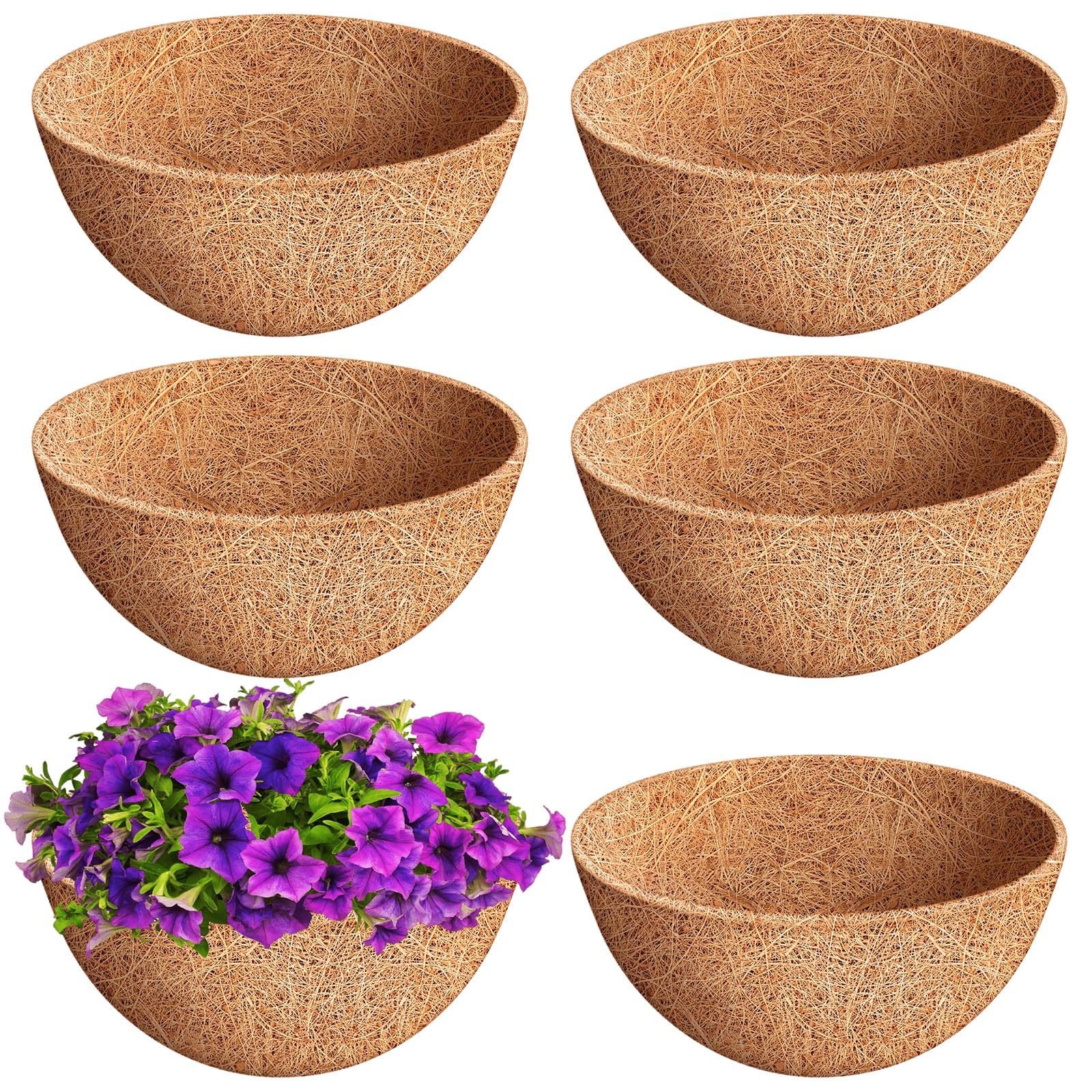
The least expensive way to line a porch of baskets is a six-pack of these: 12 inches across, 5 inches deep, and the lowest cost per basket in this group. For small wire baskets hung at eye level — the ones you plant with a single trailing ivy or a few petunias — that's most of what you need.

Where the savings show is in the coir itself. The mat is thinner than the 16-inch LCHUANG's and it varies: hold one up and you'll find stretches where the fiber is sparse enough to see daylight through. That's not a defect so much as a grade, and what it costs you is water — a thin base drains fast, so a 12-inch basket in full sun wants a drink most days in July. In shade, or with a basket that gets a daily pass with the watering can, it barely matters.

The shape is what we were happiest with. The bowl is molded, so it holds a round form when you fill it rather than flattening against the wire, and 5 inches of depth leaves room for a real root ball in a small basket. It also cuts easily, which makes a 12-inch liner a workable answer for a slightly smaller basket when you can't find the size you want.

Bottom line: Buy it when you're lining a lot of small baskets on a budget: this is the lowest cost per basket here, and the molded bowl still holds a proper round shape.

6

FDGARDEN 8-Inch Coco Liners

FDGARDEN 8-Inch Coco Liners

Tiny bracket baskets

Our Score 9.0/10
Check Price

Worth Noting

  • Fits only small, shallow baskets
Depth
4 in
Diameter
8 in
Pack Count
2
Read the full review

Eight inches across is small enough that this stops being a hanging basket liner and starts being the thing you line a bracket basket with — the little wire cone by the front door that holds one trailing plant. Four inches of depth is proportionate: enough for a compact root ball, not enough to bother with a tomato.

For that job it's the right buy, and it's the only true 8-inch liner here. The coir is pressed into a bowl that holds its shape once it's in the basket, and two to a pack matches how many of these little baskets most households actually hang.

The fold creases are the one bit of work. These arrive pressed flat, and the bowl needs a proper soak in a bucket before the sides stand up and stay up. After that it's an unremarkable liner in the best sense — it holds soil, it drains, and it disappears behind the plants by midsummer.

Bottom line: For the little bracket basket by the door and nothing bigger: a true 8-inch bowl that holds its shape and comes two at a time.

7

HALEDAZE 14-Inch Coco Liners

HALEDAZE 14-Inch Coco Liners

Two-basket porches

Our Score 9.0/10
Check Price

Worth Noting

  • Sits proud of shallow baskets
Depth
7 in
Diameter
14 in
Pack Count
2
Read the full review

Two liners, 14 inches across and 7 inches deep — deeper than any other 14-inch liner here, and enough for the two baskets most porches actually have.

That extra depth is the reason to look at this one. A 7-inch bowl holds a fuller root ball than the 6.3-inch packs, which matters for anything vigorous — a fuchsia, a cherry tomato, trailing million bells — that runs out of soil by August. It also stands taller than a shallow basket, so check the depth of yours before you order.

The coir is pressed into a bowl that holds its shape, and the layers come apart with a soak and a little patience rather than a fight. Nothing about it is fancy, which is the point: by July the coir is invisible behind the plants anyway.

The case for this pair is proportion — two liners for two baskets, more soil in the basket, and a bowl that opens out without drama. Check your basket's depth first: a 7-inch bowl in a 5-inch basket stands proud of the wire, while in a deep 14-inch basket it's the best fit of the packs this size.

Bottom line: The deepest 14-inch liner here, sold two at a time, for a pair of baskets that need more soil than the standard packs give.

How We Chose and Tested Hanging Basket Liners

We started by gathering liners in the materials shoppers actually buy, including coconut coir, felt, moss, and molded pulp, then narrowed the field to 14 that represented the range of thickness, depth, cost, and construction quality. We ruled out any liner that arrived crushed beyond reshaping or had dimensions that clearly would not fit a common wire basket.

Testing ran for five months, from spring planting through the hottest stretch of summer, with baskets hanging on porches, balconies, and a couple of exposed spots that catch wind and full sun. For each liner, we measured the diameter and depth before planting and again after the first week of watering, since a liner that stretches or shrinks changes how much soil it holds. Size and fit got checked the practical way: we dropped each liner into a standard wire basket, pressed it into the rim, and noted whether it sat flat or bunched at the edges.

Functionality came down to how firmly the liner held soil and whether water soaked in or ran straight through; thickness influenced both, while foldability and reshapeability determined whether we could pack the liner into the basket without wrestling it and then open it back into a clean bowl. Ease of use was mostly about the first five minutes: whether the liner went in without tearing, needed trimming, or left a gap at the rim. Through the season we watered daily, lifted the baskets by the rim, and watched for cracks, shedding, sagging, and staining; at the end, appearance and durability were judged by how much color and structure each liner had left, and value was the cost per season of a liner that still looked good.

How to Choose Hanging Basket Liners

Measure the basket, not the old liner

Run a tape across the inside of the basket at the rim, then measure the depth from the rim to the lowest point of the bowl. A liner's diameter is its flat measurement, so a 14-inch liner in a 14-inch basket sits slightly below the rim, which is about right; a 12-inch liner in the same basket leaves bare wire showing all round.

When you're between sizes, go up and trim. Coir cuts with household scissors and doesn't unravel, while an undersized liner can't be stretched. Depth deserves the same attention: 4 inches of coir in a deep basket leaves the sides bare, and no amount of soil hides the gap.

Thickness is what you're really paying for

Coir is pressed into a mat, and the pressing varies between brands and across a single liner. Hold one up to a window: opaque at the base is what you want, because the base is where water sits and where a heavy root ball pushes. Thin patches do two things — they let the first waterings flush soil out through the wire, and they dry out fast, so a small basket in full sun wants watering daily.

What arrives in the box

Most liners ship compressed and folded, and some are glued along the seams. A few open with a tug; others need a bucket, and the thirty-second soak on the label is optimistic, because the creases relax in water rather than in a hurry. Soak properly, work the folds open with your fingers, and set the liner in the basket while it's still damp so it takes the shape of the wire.

A liner that stays creased stands proud of the rim and leaves gaps for soil to escape, which is why a molded bowl beats a flat sheet if you want the basket to look finished on day one.

Packs, spares and the second season

Buy the pack that matches your basket count rather than the biggest box: two for a pair of brackets, four for a porch rail, six for a full set of hanging baskets. Spares store flat and cost little, but a stack of unused liners is money sitting in the shed.

Treat coir as a one- to two-season material. Emptying the baskets at the end of the season instead of leaving wet soil in them through the winter is what makes a second summer realistic, and it's also the moment you notice a base has gone thin.

Frequently Asked Questions

Final Verdict

The LCHUANG four-pack is the liner we point most people to. At 16 inches it covers a large wire basket outright and trims down for a 14-inch one, the coir is the most evenly pressed in this group, and the 6.7-inch bowl holds a full load of soil without slumping, which is the whole job.

If your baskets are 14 inches and you'd rather not cut anything, the Legigo six-pack is the direct fit and the cheaper way to line a whole porch. For 12-inch baskets, the Riare six-pack is the value pick, provided you accept thinner coir and a daily watering in July.