Planters & Plant Supports

Best Peony Support Cages of 2026

Peonies spend most of the year looking polite and then, in one wet June week, they faceplant. The blooms get heavy, a storm rolls through, and suddenly the stems you were counting on are horizontal in the mud. A support cage is the quiet fix: it holds the plant upright without staking every stem by hand, and it lets the foliage hide the hardware by the time the flowers open. What matters is getting one that is tall enough for your variety, wide enough to fit the clump at maturity, and sturdy enough that a downpour doesn't turn it into a tangled pretzel.

I've grown peonies in my own border for years, and I'm fussy about cages that pinch new shoots or show through the leaves. We put 14 models through one full blooming season, from early shoots to the messy post-rain check, and the differences came down to honest stuff: how quickly one person could set it up, whether the coating held, and whether the cage actually kept flowers off the ground. Price matters, but a cheap cage that bends in the first storm is no bargain.

1

MTB Supply Peony Cage

Top Pick
MTB Supply Peony Cage

Mature peonies

Our Score 9.2/10
Check Price

Worth Noting

  • Five cages per pack; large borders need more
Height
24 in
Pack Count
5
Grid Diameter
16 in
Support Style
Grow-through grid
Read the full review

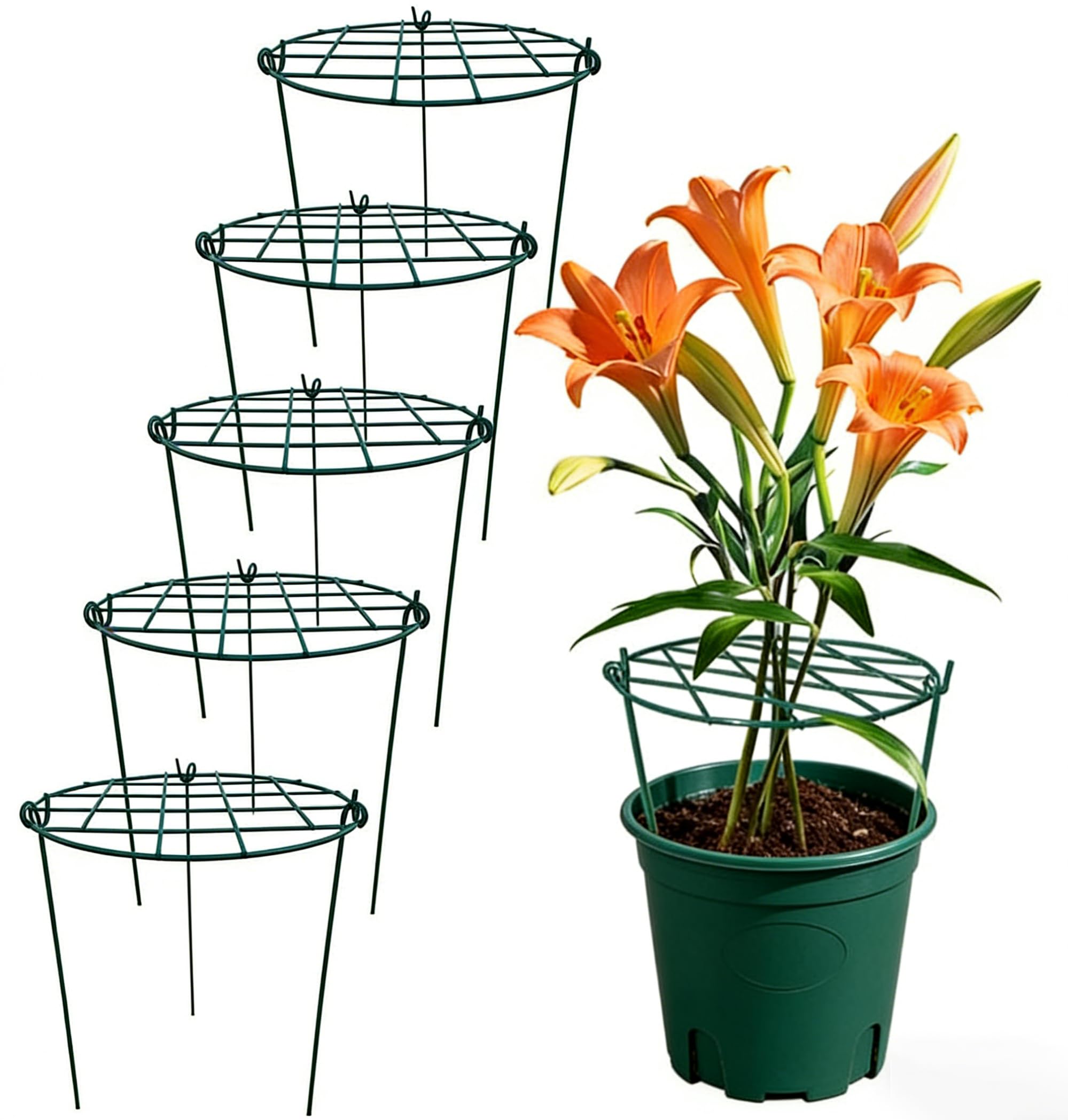
A 16-inch grow-through grid is the reason the MTB Supply cage sits at the top of this list: it surrounds a whole peony clump instead of pressing a half-ring against the stems. The three 24-inch legs put the grid at a useful height for mature plants, and the powder-coated metal has enough heft to stay put once it is set. For a specimen peony, that combination is the closest thing here to a set-and-forget support.

We set ours early, while the shoots were still low enough to guide through the openings, and the grid mostly vanished once the foliage filled in. The 16-inch diameter gives a full clump room to spread without letting the stems lean out over the ring. It is also easy to reposition after a division, which is more than we can say for supports that rely on a tight ring around the stems.

The catch is scale: five cages in a pack will not cover a long border, and the grow-through design is much harder to add once peonies are tall and tangled. We treat it as the cage for the plants that matter most, not the one we scatter through every bed. For a single established clump, one cage replaces a bundle of stakes and ties.

Bottom line: For a mature peony clump, we recommend this 24-inch grow-through cage: the 16-inch grid surrounds the plant instead of pinching it, and the five-pack covers a serious border.
2

LKSSZS 30-Inch Plant Supports

LKSSZS 30-Inch Plant Supports

Tall peonies

Our Score 9.2/10
Check Price

Worth Noting

  • Threaded joints can cross-thread if rushed
Width
12.5 in
Height
30 in
Pack Count
6
Support Style
Half-round with extenders
Read the full review

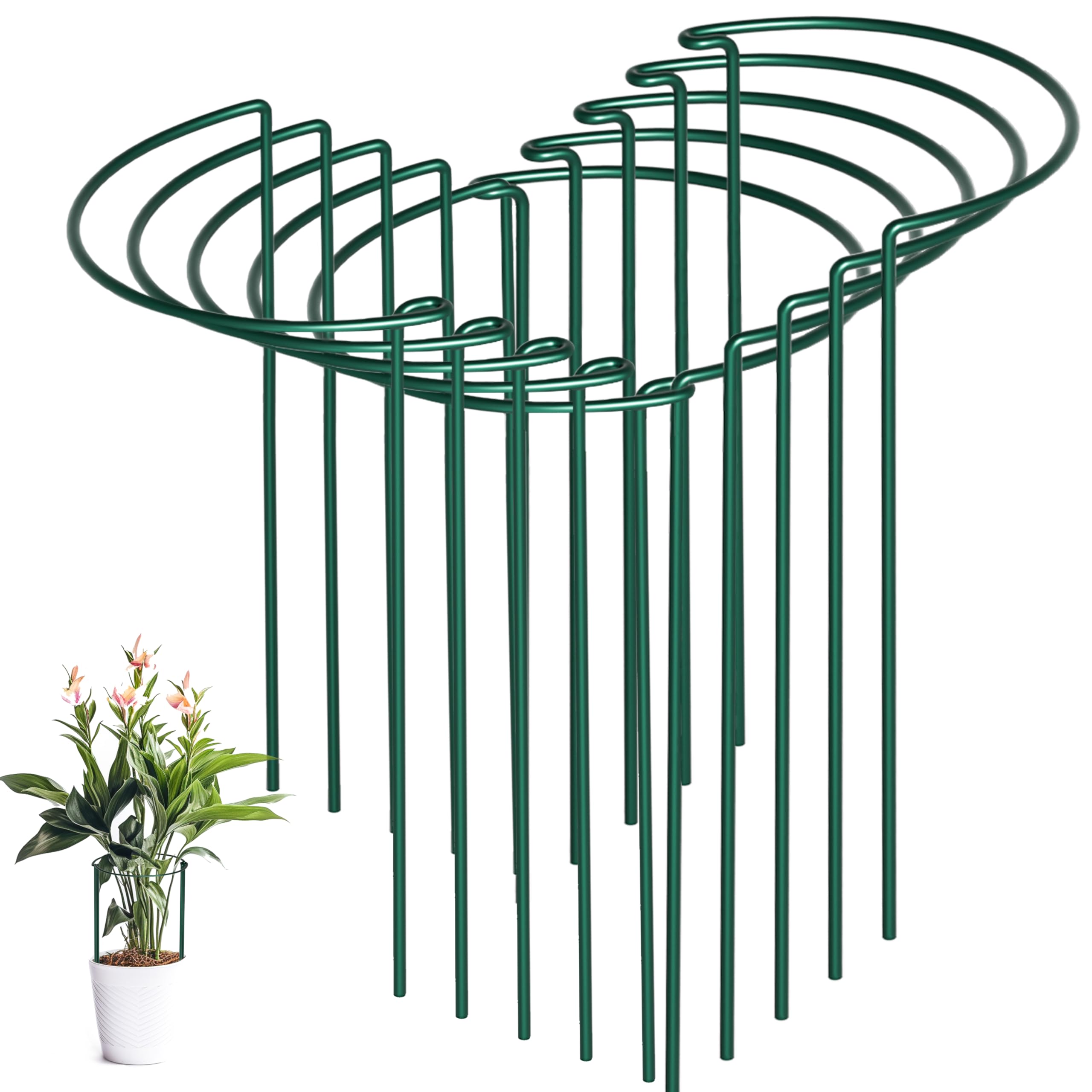
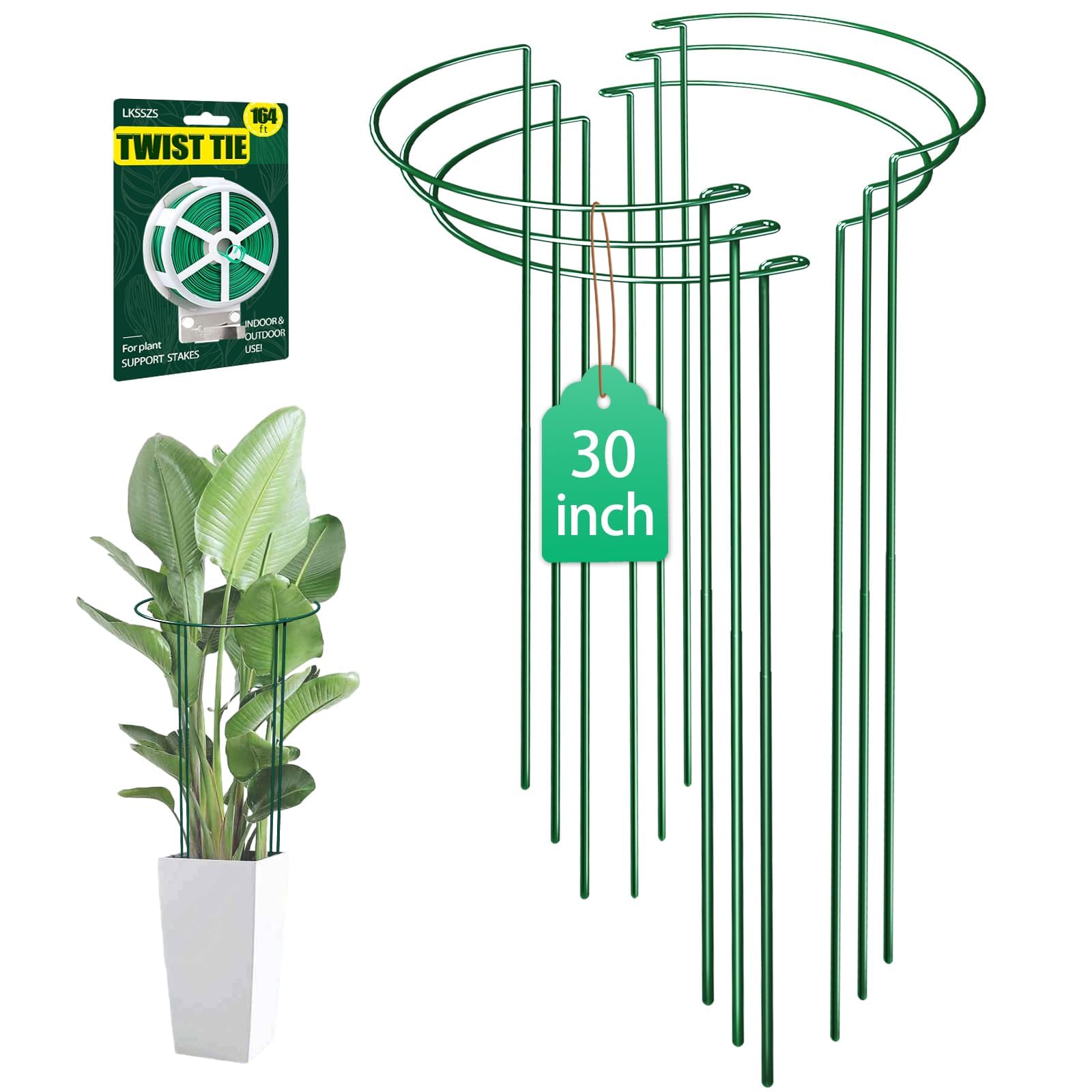
Mature peonies are the reason this support exists: a standard 24-inch cage can disappear under a heavy clump, while the LKSSZS set adds screw-on stainless extensions to reach 30 inches. The base half-rounds are 15 inches tall and 12.5 inches wide, so they already give a broad curve before you add height. We like that the same set can start low in spring and grow with the plant.

The extensions are the useful part. They screw onto the legs rather than pushing on, which feels more secure once seated, and the 12.5-inch width pairs into a wider ring than the common 10-inch half-rounds. The trade-off is more pieces to handle at setup. We kept the tubes paired with their own support so we were not hunting for a matching thread in the shed.

For a peony that routinely outgrows ordinary cages, the extra height is worth the fuss. It is less tidy than a one-piece grow-through grid, and there are more parts to store. But when a heavy double is already flopping in June, the ability to add 15 inches without buying a second cage is the difference between support and a pile of bent stems.

Bottom line: If your peonies already stand taller than a standard cage, we recommend the LKSSZS supports: the screw-on extensions take them to 30 inches without a separate purchase.

3

K-Brands Adjustable Peony Supports

K-Brands Adjustable Peony Supports

Variable heights

Our Score 9.2/10
Check Price

Worth Noting

  • Threaded extensions add assembly time
Width
10 in
Extras
10 ft plant tie
Height
16 or 24 in
Pack Count
12
Read the full review

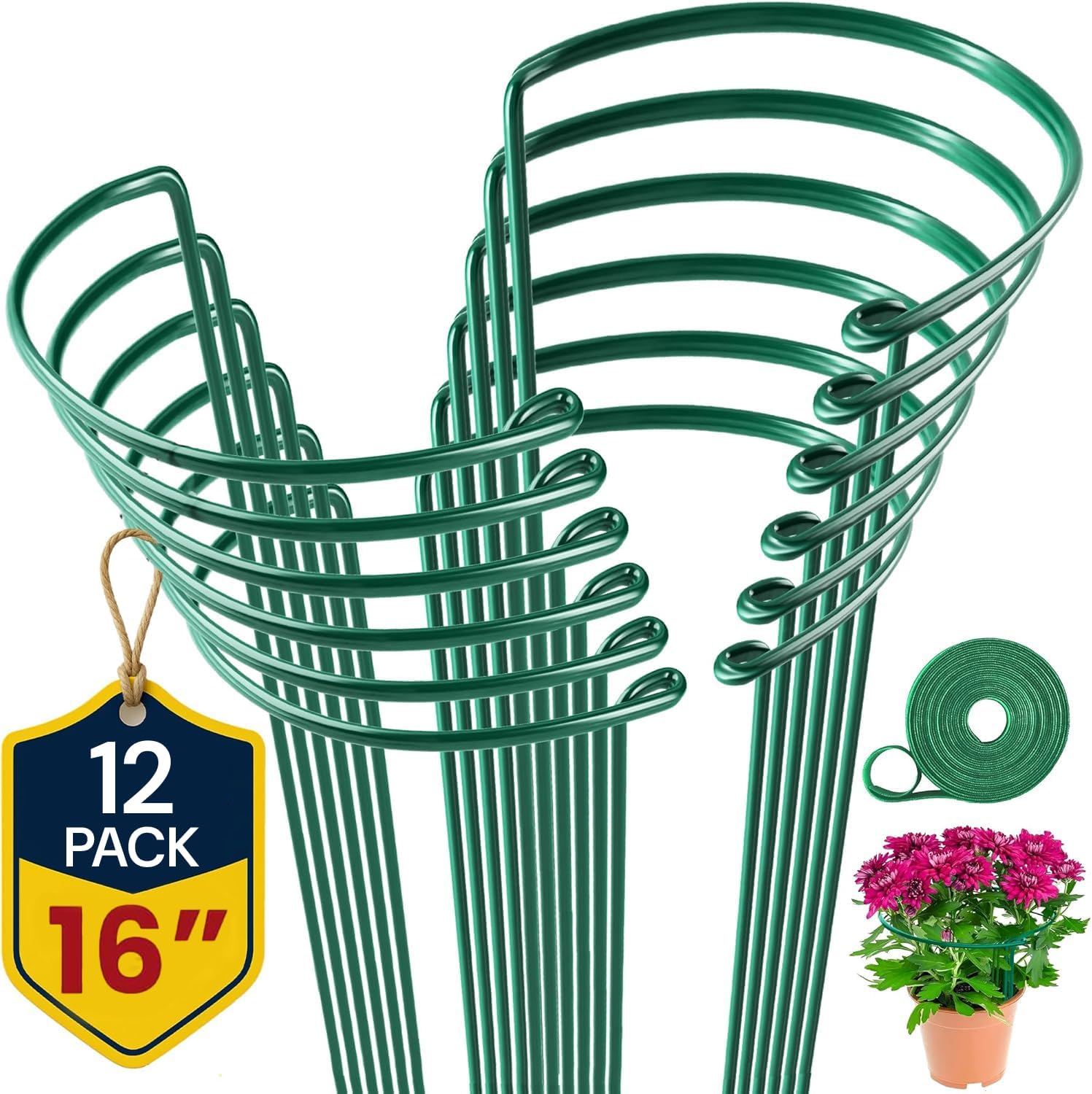
The case for this K-Brands set is simple: one box covers both the 16-inch rings you want for young peonies and the 24-inch height you need when the same plants mature. Each support is a 10-inch half-round, and the screw-in sections add height without a second purchase. If your beds are a mix of young divisions and older clumps, that flexibility matters more than a fixed height.

We appreciated the included 10-foot plant tie, which is long enough to be useful rather than a token length. The dark green coating blends into foliage, and the half-rounds can be used alone, paired into a ring, or run in a row. The 10-inch width is best for a moderate clump; a very wide peony will need two halves spaced apart or a different cage.

What earns this set a place is the range, not the individual cage. Twelve supports go a long way when you are supporting a collection, and the two heights mean you are not storing two separate products. We keep the extra height sections with the set for spring, when we decide which peonies need the taller ring.

Bottom line: This is the set we reach for when one bed needs 16-inch rings and another needs 24: the K-Brands supports switch height with screw-in sections.

4

Gardener's Supply Jardin Bird Cage

Gardener's Supply Jardin Bird Cage

Decorative borders

Our Score 9.2/10
Check Price

Worth Noting

  • One cage per order; costly for a row
Height
26 in
Diameter
20.25 in
Pack Count
1
Steel Gauge
7 mm
Read the full review

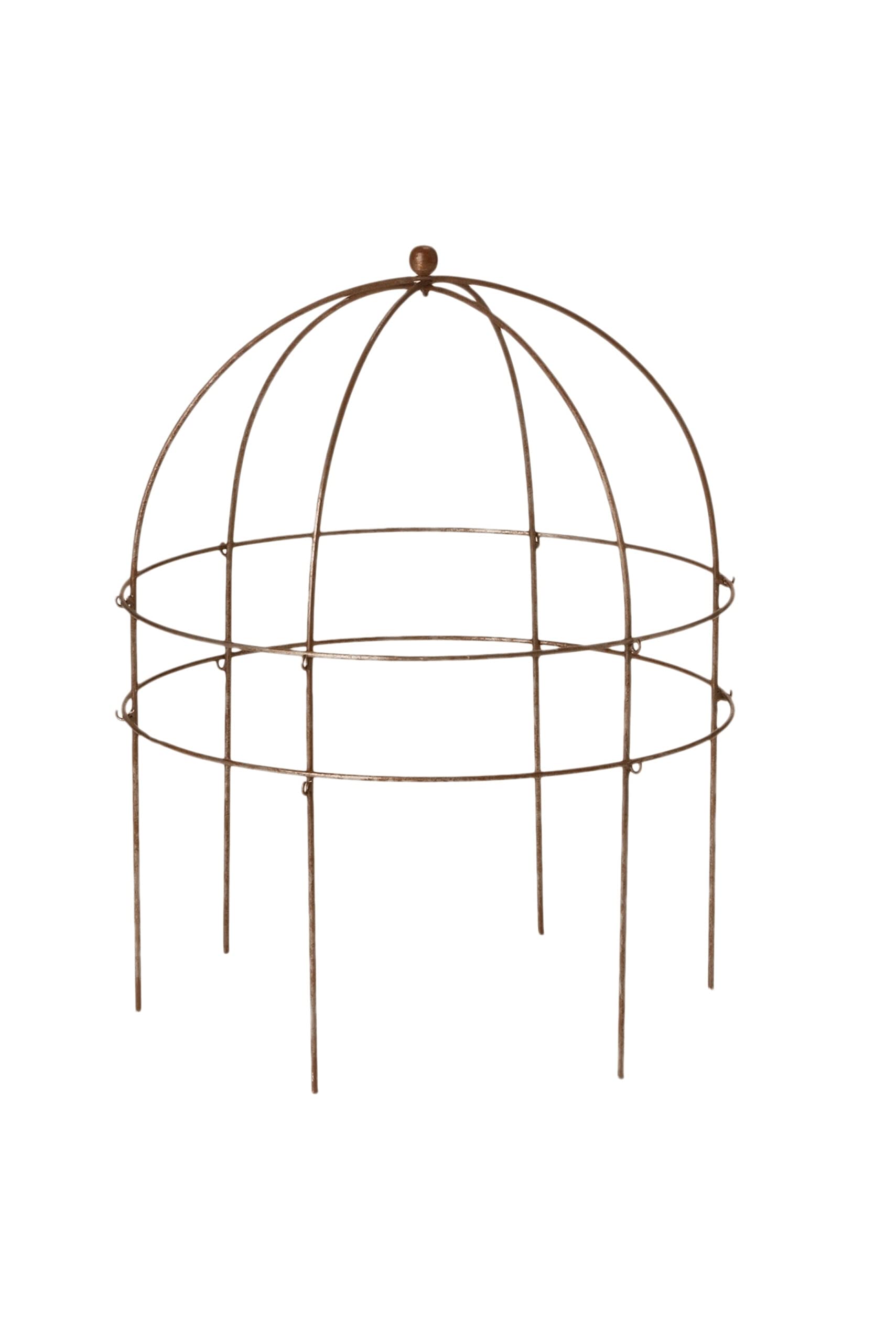
The bird-cage silhouette is why this cage is on the list. It is 26 inches tall with a 20.25-inch diameter, made from 7 mm powder-coated steel, and heavy enough that it reads as garden structure rather than a temporary prop. In a front border, that matters: the support is visible before the peonies fill in, so it may as well look intentional.

We found the size generous for a large peony. The wide cage gives a full clump room to rise through the frame, and the weight helps it sit steady when a heavy bloom catches wind. The bronze finish is the kind of detail that looks good with dark foliage and stone; it is not trying to vanish the way a green half-round does.

The open bird-cage shape offers less stem-by-stem control than a close grid or a paired half-round. It is a surround, not a stem brace. For the one peony you want to show off, though, the structure earns its space. It is the pick here that looks deliberate even before the flowers open.

Bottom line: For a front-border peony you want to show off, this sculptural 26-inch cage is the one we choose; it is sturdy and unmistakably decorative.

5

K-Brands 16-Inch Plant Supports

K-Brands 16-Inch Plant Supports

Compact plants

Our Score 9.2/10
Check Price

Worth Noting

  • Too short for tall, mature peonies
Width
10 in
Extras
10 ft plant tie
Height
16 in
Pack Count
12
Read the full review

A 16-inch cage is the right call when the plant is compact, not when the peony is already flopping. This K-Brands set is built for that smaller role: 12 half-rounds, each 10 inches wide and 16 inches tall, with a 10-foot plant tie in the box. The dark green coating is the same blend-in treatment as the taller K-Brands set, just in a shorter frame.

We used the halves individually around low perennials and paired them for small peonies; the shorter height makes them easy to set without wrestling a tall frame through the foliage. The included tie is genuinely useful for a stray stem, and the 12-count box covers a lot of ground for the size. If your peonies are young divisions or a compact variety, this is enough cage.

The 10-inch width is best for a modest clump; a very wide plant needs two halves spaced apart rather than one tight circle. Set the halves before the plant fills out, and the short frame disappears into the foliage. For the front of a bed, that is the point, not a compromise.

Bottom line: For a compact peony bed, these 16-inch half-rounds are easy to place, blend into the foliage, and come with a useful plant tie.

6

HiGift 24-Inch Plant Stakes

HiGift 24-Inch Plant Stakes

Multiple beds

Our Score 9.0/10
Check Price

Worth Noting

  • Usable height is less than the 24-inch total
Width
10 in
Height
24 in
Pack Count
12
Wire Gauge
4 mm
Read the full review

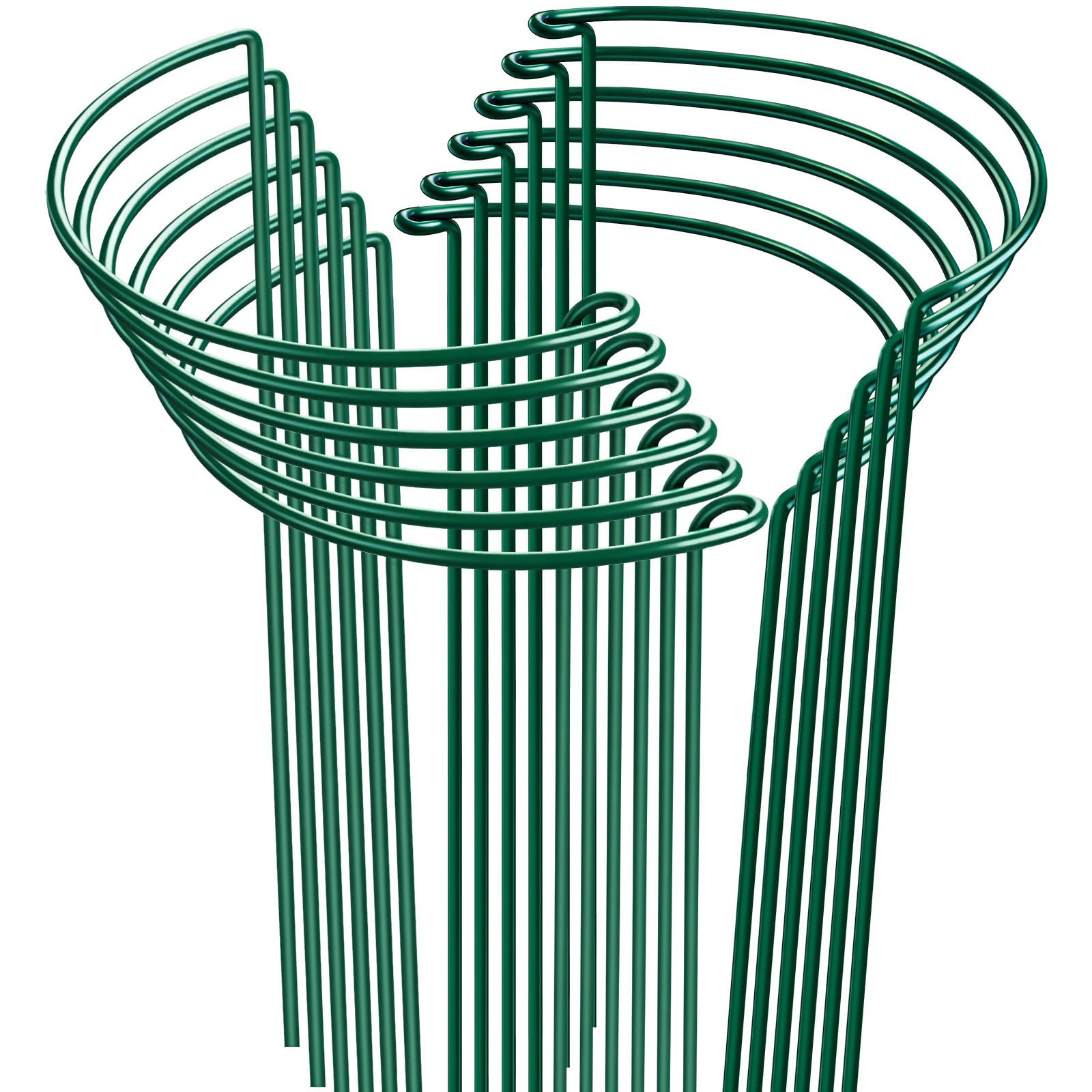
Twelve half-round sections arrive in one box, each 10 inches wide and 24 inches tall. That count is the real feature: it lets you ring several peonies or build a low border without buying multiple packs. The 4 mm iron wire has a powder coating, and the dark green color is about as discreet as a metal support gets in a full border.

We like the half-round shape for plants that are already up. You can slide one side into place, then add the second half around the stems instead of forcing a closed ring over the top. The halves also let you adjust the spacing slightly, which helps when one peony is wider than its neighbor. For a garden with several modest clumps, that is more useful than one perfect cage.

What we keep coming back to is the box: twelve supports that blend in and let us ring a whole bed without mixing brands or sizes. Set them before the peonies fill out, and the halves nearly disappear. The 10-inch width is best for a moderate clump; a very wide peony will need two halves spaced apart rather than one tight circle.

Bottom line: A practical multi-bed buy: 12 sturdy 24-inch half-rounds let us ring several peonies without spending a lot per plant.

7

SORANGEUN Peony Cages

SORANGEUN Peony Cages

Small clumps

Our Score 9.0/10
Check Price

Worth Noting

  • 16-inch height is too short for mature peonies
Width
10 in
Height
16 in
Material
Anti-rust coated steel
Pack Count
10
Read the full review

The anti-rust coating is the detail that separates this set from other budget half-rounds. The 10 supports are 10 inches wide and 16 inches tall, made from coated steel, and they link into pairs or longer runs. For a small bed or a collection of pots, that is a sensible amount of support without a box of pieces you will never use.

We appreciated the clips, which come in sizes that hold a stem without pinching it hard against the wire. The half-rounds are easy to push in when the soil is loose, and the green finish is subdued enough to leave in place. The 10-pack also gives you a spare or two for a plant that flops later in the season.

The 10-inch width is best for a compact clump; a very wide peony will need two halves spaced apart or a bigger cage. The half-round shape also makes it easy to add one side at a time around existing growth. For pots and small beds, that is more practical than forcing a closed ring over the top.

For a small garden, the combination of a rust-resistant coating and a useful clip set is what earns this one a place. It is not the only cage we want in a peony border, but it is a practical way to cover the smaller plants without overspending.

Bottom line: We like this tidy 10-pack for small peonies and potted plants: the coated half-rounds link easily and the clips hold stems gently.

8

TCBWFY Half-Round Plant Supports

TCBWFY Half-Round Plant Supports

Budget support

Our Score 8.8/10
Check Price

Worth Noting

  • Thin legs can bend in firm soil
Width
10 in
Extras
Clips and twist ties
Height
16 in
Pack Count
10
Read the full review

The first thing we noticed in the TCBWFY box was the extras: clips and twist ties included with the 10 half-rounds. Those small pieces make the set more useful than a bare pack of stakes, especially when a stem needs a little guidance to the ring. The 10-inch by 16-inch supports are coated green and link together in pairs or rows.

We liked the clips for holding a stem without a tight knot, and the twist ties are handy for a quick repair. The half-rounds are easy to push in when the soil is loose, and the green coating keeps them from shouting for attention. The 10-pack gives you enough pieces to try cages in several spots without committing to a whole border system.

The 16-inch height is the real boundary: it suits compact peonies, young plants, and low perennials, but a mature clump will outgrow it. Set the cage early and the ring sits where the plant needs it; wait until the peony is tall and the support will look undersized. For a row of smaller plants, the count is the advantage.

This is a budget set, and it makes sense as one. The included clips are best treated as a bonus, not the reason to buy; the cage itself is what has to match the plant. If you are trying to hold up a heavy double peony, put the money toward a taller cage. For smaller clumps and quick fixes, it earns its place.

Bottom line: We recommend this budget 10-pack for smaller peonies and quick garden fixes; the clips and ties make it more useful than a bare set of stakes.

How We Chose and Tested Peony Support Cages

We started by narrowing a long list of cages by size range, material, assembly style, and price, then ordered 14 that represented the shapes gardeners actually buy: grid cages, ring-and-leg styles, and taller grow-through supports. The goal was not to crown the most expensive one; it was to find cages that suited different peony habits and garden layouts. We tested them for one full blooming season, from the first red shoots in early spring through the last ragged bloom in early summer.

Installation happened in real beds, not on a bench. I set each cage around emerging crowns in my own garden, and my team did the same in theirs, timing the solo setup from unboxing to final leg pressed into soil. We noted whether legs went in without a mallet, whether hoops snagged tender shoots, and how much of the cage disappeared once the leaves filled in. We measured height, footprint, and leg length before setting them out, then checked whether those numbers matched the plant at maturity rather than just the label.

Through the season, we watched stems after rain and wind, counting how many blooms leaned into neighboring plants or touched the ground. We also checked joints for bending, coating for scratches and rust, and the grid for sagging under the weight of wet flowers. At the end, we pulled each cage up, cleaned it, and stored it the way a gardener would, which made the value question plain: a cage that still felt solid after a season was worth keeping, while one that twisted on removal wasn't.

How to Choose Peony Support Cages

Look at Usable Height

A 24-inch cage is not 24 inches of support once the legs are in the soil. The number usually includes the buried portion, so a cage set several inches deep leaves less above ground, often the difference between a ring that cups the blooms and one that sits below them. For tall, heavy doubles, start at 24 inches and move to 30 if your plants routinely outgrow the ring. A 16-inch cage is fine for compact varieties and low perennials, but it is the wrong default for a mature clump.

Decide Between a Grid and a Ring

A grow-through grid surrounds the clump and lets stems rise through the openings. It gives the most all-around support but has to go in early. Half-round rings are easier to place around existing growth and can be paired into circles, rows, or cloverleaf shapes. We prefer a grow-through cage for a specimen peony and half-rounds for a bed of several plants. With half-rounds, check that two halves meet cleanly; a gap gives stems a place to push through.

Match the Cage to the Clump

A 10-inch half-round is a modest support for a young or compact peony. A 16-inch grid or a paired wide ring suits a mature clump with a 2- to 3-foot spread. A 20-inch decorative cage is for a focal point, not a whole border. Measure the clump at its widest point in early spring, before foliage hides the ground, and choose a cage slightly larger. Too small and the ring pinches the stems; too large and the plant flops inside it.

Check the Footing and the Joints

Thin legs bend in hard or stony soil, and once a leg bends the cage sits crooked. Look for wire around 4 mm or thicker, a powder-coated finish, and legs long enough to anchor without wobbling. Threaded joints need a careful start; plastic clips are convenient but are the first part to fail. We prefer fewer, sturdier cages to a box of thin ones that need replacing.

Count the Plants, Then the Extras

A 12-pack is only a bargain if you have 12 places to use it. For a single peony, a five-pack of grow-through cages is more useful than a dozen short half-rounds. Ties are handy for loose stems, but they do not fix a cage that is too short. Buy for the number of clumps you have now, then add a spare or two for divisions.

Frequently Asked Questions

Final Verdict

For most peony growers, the MTB Supply cage is our pick. Its 16-inch grow-through grid surrounds a mature clump, and the 24-inch legs put the ring at the right height for heavy blooms. Set it early, before the shoots need it, and it disappears into the foliage.

If your peonies already outrun a standard cage, choose the LKSSZS supports and their 30-inch extension. If the cage is part of the display, the Gardener's Supply Jardin Bird Cage earns its place in a focal spot.