Planters & Plant Supports

Best Tomato Cages of 2026

The first ripe tomato is a small triumph — and it usually arrives right around the moment the plant that made it outgrows the wire cone you pushed into the soil back in May. A cage's only real job is holding a heavy, sprawling vine upright through wind and rain, so fruit stays off the dirt and leaves stay dry. Most quit somewhere in July. The right one takes the weight instead of wearing it, and lets you reach in for a harvest without wrestling a branch aside.

I've grown tomatoes in a raised bed and in pots on a windy balcony, and both flattened the same cheap cages. This season my team put 14 cages through a full seven-month growing season — one-piece, snap-together, coated and galvanized, in a range of heights and diameters. The lesson first-time growers learn the hard way: the height on the box matters less than the spacing of the rings, since a gap wider than a heavy truss is exactly where a branch sags through. The ones that held up are below.

1

Happy Trees 58-Inch Folding

Top Pick
Happy Trees 58-Inch Folding

Large indeterminate plants

Our Score 9.6/10
Check Price

Worth Noting

  • Premium price for a three-cage set
Height
58 inches
Material
Galvanized steel
Footprint
18 x 18 inches
Pack Count
3
Read the full review

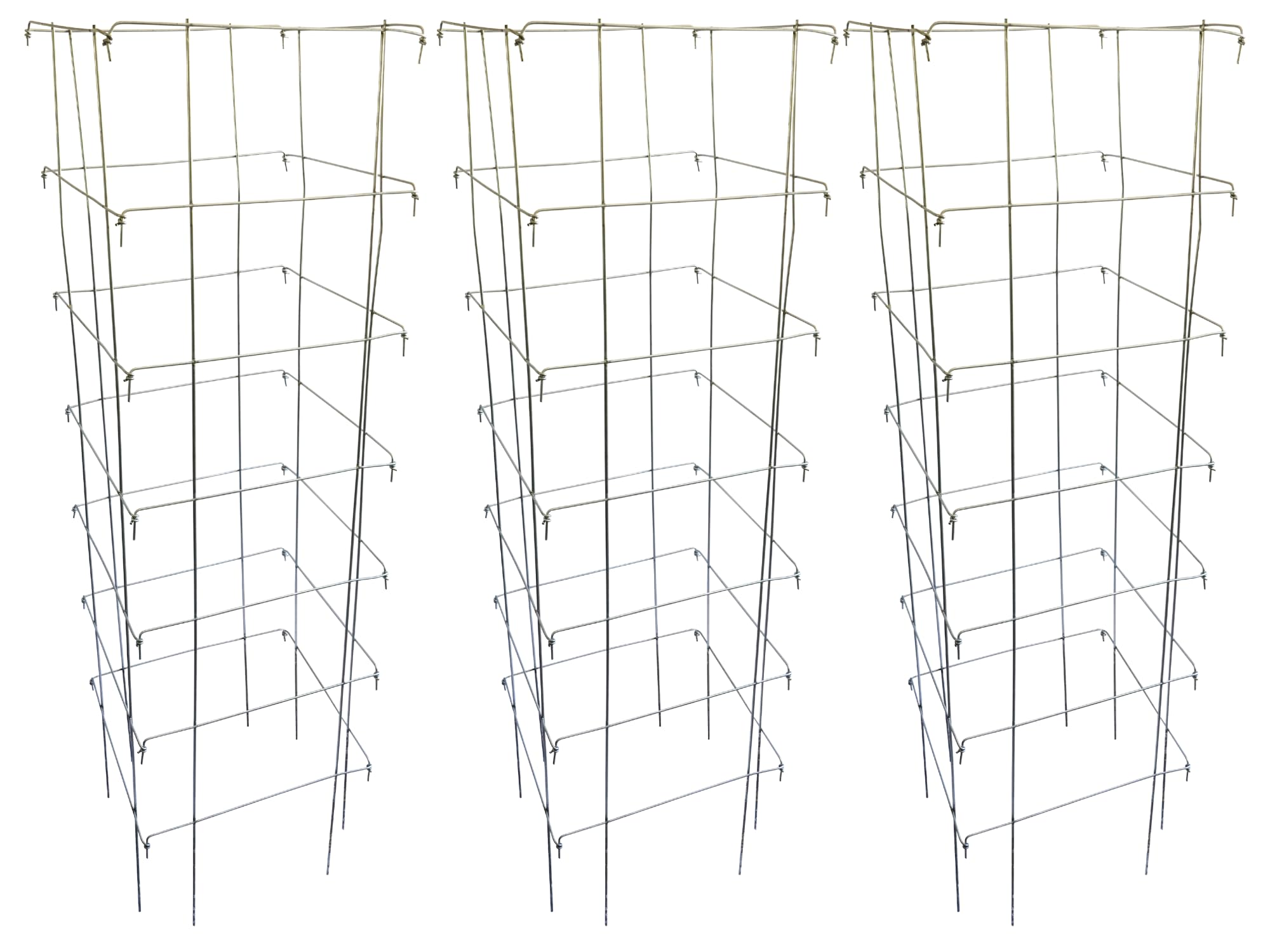
The 58-inch frame on the Happy Trees cage is the first clue that this is not a disposable tomato accessory. Thick galvanized steel, an 18-inch square footprint, and a hinge that folds the whole thing flat make it the most substantial frame in this group. We reach for it when a bed is expected to carry heavy fruit through wind.

The dimensions are the point. An 18-inch square leaves enough room for a sprawling indeterminate to branch without being crushed into a column, and 58 inches keeps the growing tip supported well past the height of the shorter modular cages. The open structure also gives you space to reach in and prune, which matters more once the plant is a tangled wall.

What we appreciate most is the fold. The cage opens into a rigid square and collapses flat for storage, so it does not spend the off-season as a tangled sculpture in the garage. The weight is part of the deal: three cages together weigh about 19 pounds, so you will move them one at a time rather than carry the stack. The galvanized finish looks utilitarian, which is the right look for a frame this size.

Bottom line: For big indeterminate tomatoes and windy gardens, this tall folding steel cage is the most secure frame here, and it stores flat between seasons.
2

Cedar Ridge 56-Inch Folding

Cedar Ridge 56-Inch Folding

Narrow beds

Our Score 9.6/10
Check Price

Worth Noting

  • Premium price for only three cages
Width
13 inches
Height
56 inches
Material
Galvanized steel
Pack Count
3
Read the full review

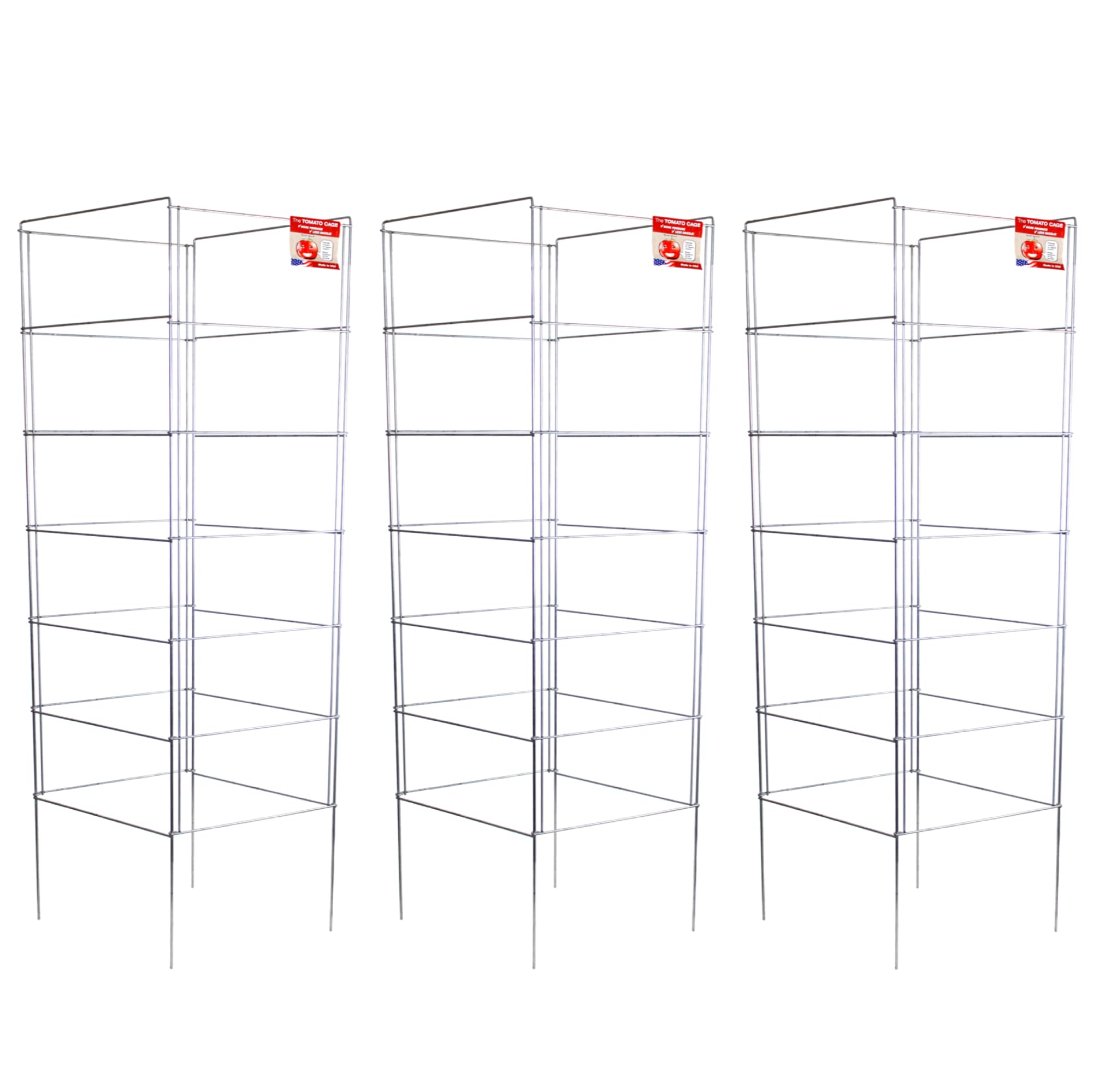
Where the Happy Trees cage is broad and roomy, the Cedar Ridge is deliberately narrow: 13 inches across and 56 inches tall. That sounds like a compromise until you picture the raised bed or patio corner where a wide cage blocks the path.

The frame is serious hardware. Galvanized steel, 6-gauge legs, and 9-gauge cross members give it a rigid, squared-off structure, and the whole cage folds flat without being disassembled. The 56-inch height is enough for a tall vine, while the 13-inch width keeps the footprint polite.

What we appreciate most is the combination of height and restraint. Many tall cages make you give up a chunk of the bed; this one supports a vertical plant without demanding an 18-inch square. It rewards a gardener who prunes and trains, rather than one who lets a tomato sprawl. The galvanized finish is plain and functional, and the fold makes off-season storage easy.

Bottom line: For a narrow bed or a patio corner, this 56-inch folding steel cage gives you premium construction in a footprint that fits where the broad cages do not.

3

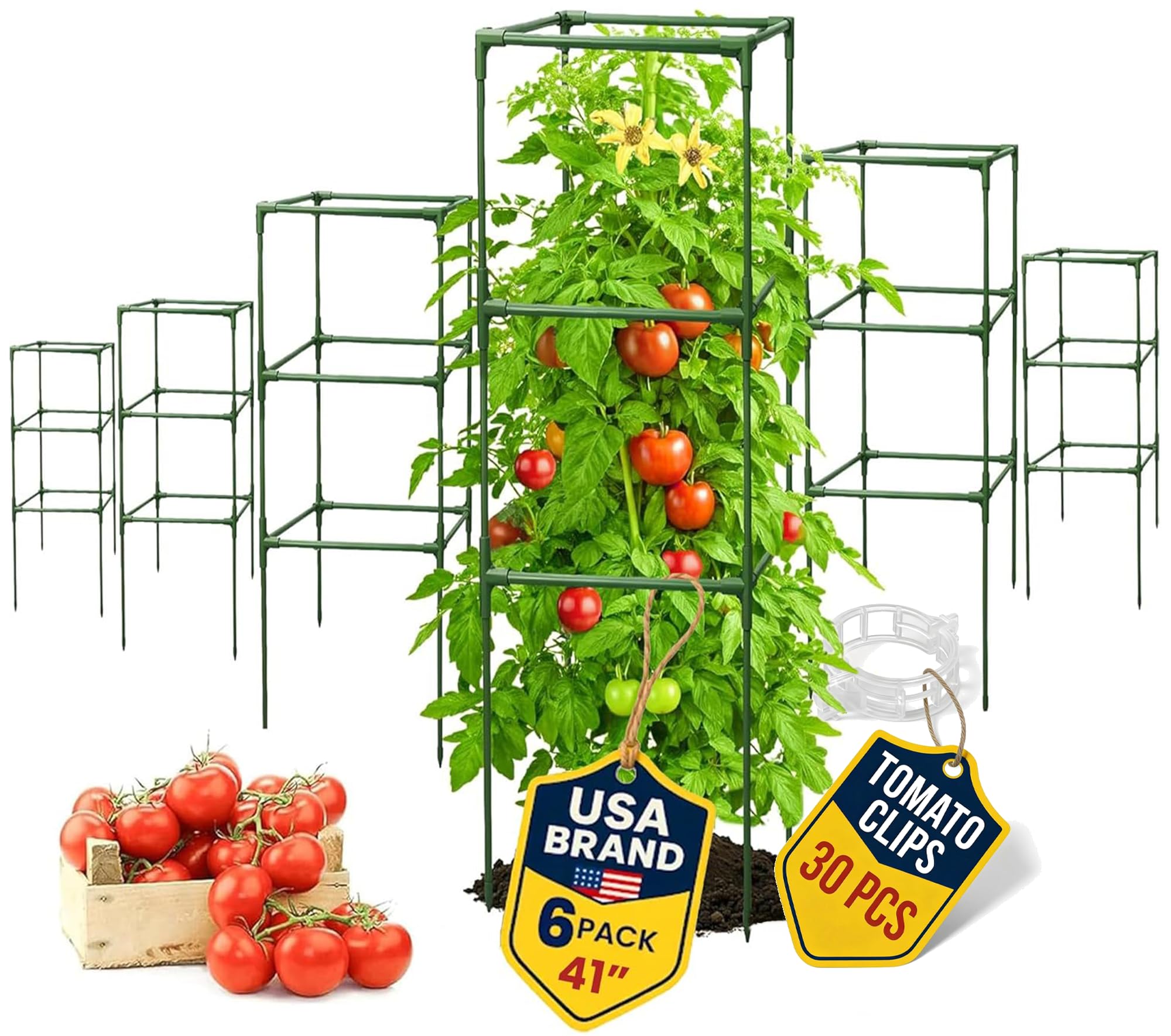
K-Brands 41-Inch Square 6-Pack

K-Brands 41-Inch Square 6-Pack

Most home gardens

Our Score 9.0/10
Check Price

Worth Noting

  • Plastic clips can turn brittle after seasons in strong sun
Frame
Plastic-coated steel
Shape
Square
Height
41 inches
Pack Count
6
Read the full review

Six cages in one box is the first thing that makes this set easy to recommend, but the square shape is what sold us. Each 41-inch cage has four legs rather than the usual three, so it stands with less wobble in soft soil and gives you more places to tuck a branch inside the frame. The steel core is wrapped in green plastic, which keeps the surface from turning into a rust-streaked eyesore.

We found the snap-together connectors a genuine relief. The pieces push together by hand, so you can build the cage around a plant that is already leaning instead of forcing the plant through a wire cone. Once assembled, the open square sides leave room to reach in for pruning and picking, and the four legs let you push the frame down evenly.

At 41 inches, this is a cage for determinate tomatoes and compact indeterminates, not a six-foot vine that keeps climbing into August. That height puts most fruit within reach and keeps the frame from towering over a small bed. If your plants routinely run past five feet, the 58-inch Happy Trees or 56-inch Cedar Ridge is the better match.

Six cages also let you plant a proper row without buying two sets, and the green finish disappears against foliage instead of calling attention to itself. This is the set we point most gardeners toward first because it covers the common case without making them pay for a specialty frame.

Bottom line: For a gardener planting several tomatoes at once, this six-pack gets the essentials right: a square steel-core frame, tool-free assembly, and enough height for most compact vines.

4

joyhalo 47-Inch Adjustable 3-Pack

joyhalo 47-Inch Adjustable 3-Pack

Small gardens

Our Score 8.8/10
Check Price

Worth Noting

  • 47-inch height leaves tall vines unsupported
Tiers
3, adjustable
Height
47 inches
Pack Count
3
Rated Fruit Load
Up to 22 lb
Read the full review

If your garden is three tomato plants and no more, a six-pack is more cage than you need. The joyhalo set lands in the useful middle: three square cages, each built from four stakes and three tiers, with a 47-inch top height that fits a raised bed without towering over it.

We trust the four-stake footprint more than a tripod for a compact plant. The frame has a place to tie a branch on all four sides, and the bracing makes the 22-pound fruit-load rating believable, though fruit weight is never evenly distributed. The tiers also let you raise or lower the crossbars as the plant fills out.

Assembly is straightforward: the pointed stake ends push into soil, the connectors snap on without tools, and you can add height a tier at a time. That makes it easier to place around a plant that is already growing than a one-piece cage would be. The result is a tidy, adjustable frame that disappears into a small bed; the green finish blends in, and the square outline keeps the plant from spilling into the path.

Bottom line: A tidy three-cage set for a compact bed, with a 47-inch frame that adjusts in tiers and enough bracing for a few patio pots.

5

LOMNYIY 55-Inch Round

LOMNYIY 55-Inch Round

Patio containers

Our Score 8.8/10
Check Price

Worth Noting

  • Plastic collars can crack during forced assembly
Shape
Round
Width
11.8 inches
Height
55.1 inches
Pack Count
1
Read the full review

A single round cage is a different purchase from a six-pack, and the LOMNYIY makes sense when one tomato gets the good spot on the deck. At 55.1 inches tall, it gives a container plant more height than most three- and four-foot cages, with four posts and circular rings that look tidier than a folded wire cone. We keep it in mind for the deck pot that gets more attention than the vegetable bed.

We like the sectional build for a pot. The pieces push together, so you can start with a shorter cage and add height as the plant grows, and the four posts give you several places to tie a stem. The round rings also keep the frame from looking like a tomato-cage cliché on a patio.

The narrow footprint is the reason it works on a deck: it takes up little more space than the pot itself. That also means it is a cage for one stem or a compact patio plant, not a sprawling indeterminate that wants to flop in every direction.

At 55 inches, it supports a staked indeterminate in a large pot without turning the deck into a tomato tunnel. This is the one to choose when you want one good cage and a frame that looks intentional, not a garage full of spares.

Bottom line: For one patio pot or a single choice vine, this 55-inch round cage gives you height and four anchor points without a six-pack you cannot use.

6

AUTOHAOL 48-Inch 6-Pack

AUTOHAOL 48-Inch 6-Pack

Quick setup

Our Score 8.8/10
Check Price

Worth Noting

  • Narrow 12-inch width limits sprawling plants
  • Snap-on rings can pop apart when moved
Frame
Powder-coated steel
Width
12 inches
Height
48 inches
Pack Count
6
Read the full review

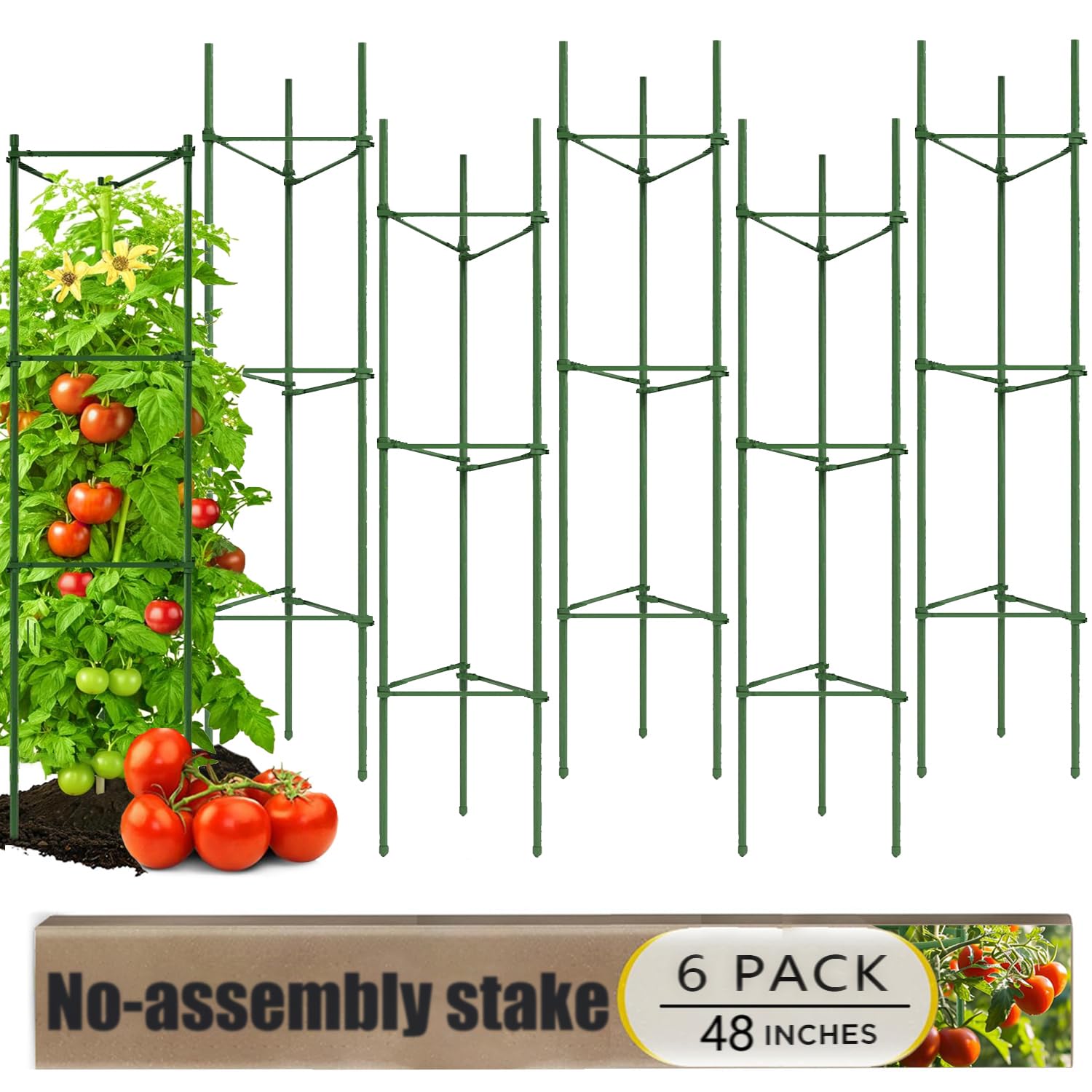
The assembly detail is the reason to notice this set: the 48-inch stakes come as one-piece lengths, so you are not stacking short sections to reach height. Eighteen stakes and 54 snap-on arms make six rectangular cages, with the arms clipping on where you need them.

Fewer splices mean fewer joints to wiggle loose when the plant puts on weight, and the powder-coated steel has a more solid feel than a thin modular rod. The snap-on arms also let you create a square or a triangle depending on the space.

The 48-inch height is a sensible middle ground for a home garden, tall enough for most staked tomatoes but not so tall that the cage needs a fence to lean on. Six cages give you room to spread plants across a bed instead of crowding them.

We see it as the practical six-pack for a gardener who wants quick setup and a frame that holds its shape. The six cages cover a normal row without fuss, and the one-piece stakes make the whole set feel less like a construction kit.

Bottom line: If you want a six-cage set without a box of loose connectors, these one-piece 48-inch stakes snap together quickly and hold their shape in a modest garden.

7

Halatool 48-Inch Modular 6-Pack

Halatool 48-Inch Modular 6-Pack

Custom shapes

Our Score 8.8/10
Check Price

Worth Noting

  • Frame flexes under a heavy fruit load
Height
48 inches
Shapes
Triangle, square, hexagon
Pack Count
6
Included Ties
160
Read the full review

The contents of the box tell the story: 54 stakes, 54 snap-on arms, 36 connecting pipes, and 160 plant ties. That is more hardware than most six-packs include, and it is why the Halatool set can be built as triangles, squares, or hexagons instead of one fixed cage.

We like the flexibility. You can start with a short cage around a young transplant and add sections as it grows, or build a wider shape around a plant that needs more room. The included ties are genuinely useful, too: they save you from hunting for twine when a branch needs a quick anchor.

Assembly is tool-free, but it is not instant. There are a lot of parts to sort, and the more joints you build into a cage, the more places you need to check when you reposition it. The 48-inch height is a sensible middle ground for a home garden.

Our take is that this set earns its place for a gardener who enjoys configuring supports and growing several different climbing plants. It is less compelling if you want one rigid cage to set out and forget.

Bottom line: This is the set for a gardener who wants to build around the plant rather than force it into one shape, with enough connectors and ties to make six cages and then some.

8

Moirsunt 48-Inch Modular 6-Pack

Moirsunt 48-Inch Modular 6-Pack

Budget gardens

Our Score 8.6/10
Check Price

Worth Noting

  • Joints can loosen under heavy fruit
Frame
Plastic-coated iron
Shape
Triangular
Height
Up to 48 inches
Pack Count
6
Read the full review

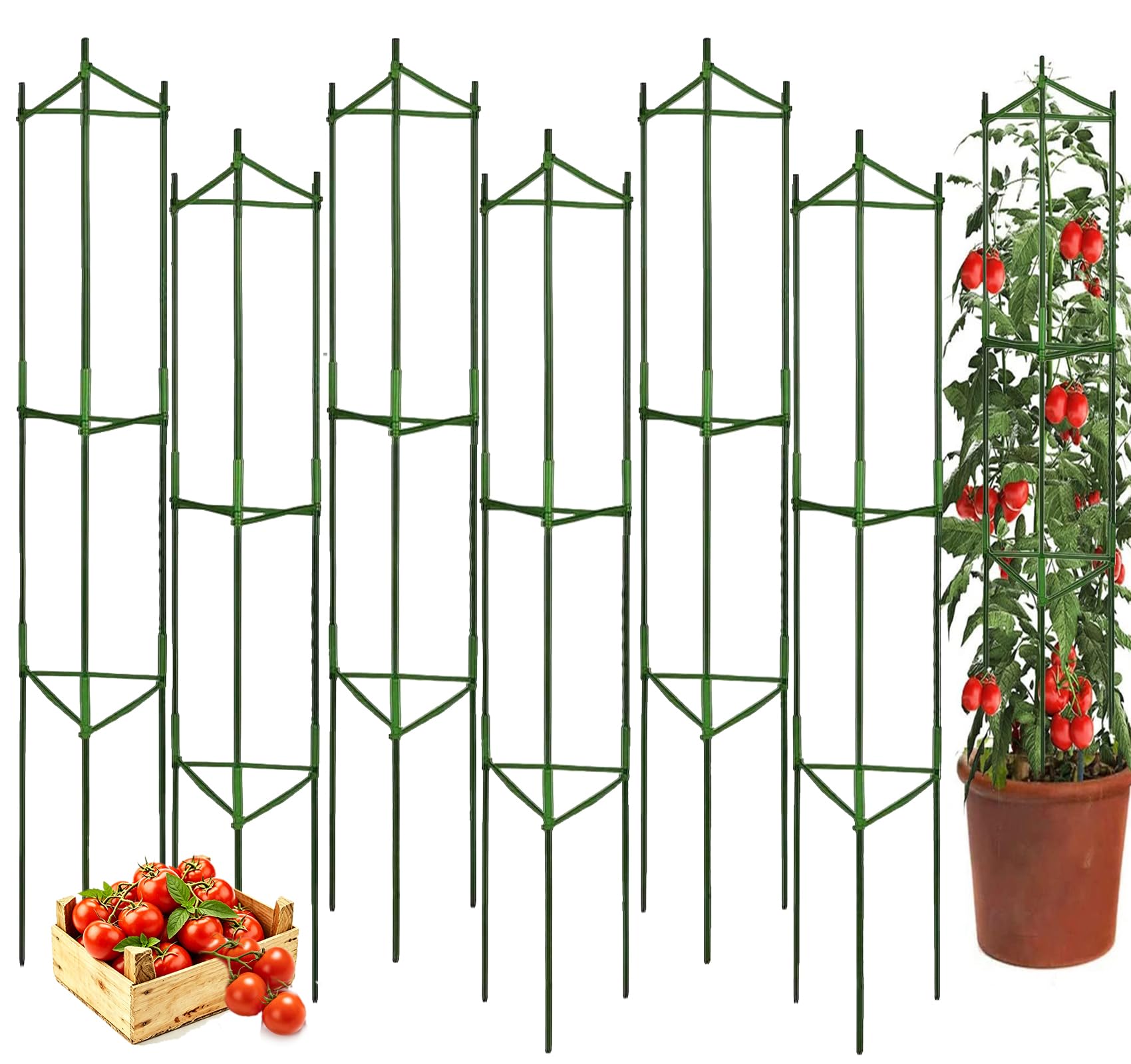
The box is mostly a pile of coated stakes and snap-on arms, which tells you what the Moirsunt set is: a modular system rather than a welded cage. You can build six triangular cages up to 48 inches, or trade height for a wider shape when a plant needs room.

The value case is straightforward: six cages, no tools, and a bundle that breaks down flat at the end of the season. The pointed ends push into soil easily, and the snap-on arms let you put support exactly where a branch needs it rather than only at fixed ring heights.

We treat it as a support frame for a first garden or a bed of compact plants. The light construction is easy to move from bed to bed, and the modular pieces pack into a small space over winter. For the gardener who needs coverage more than brawn, that is enough.

Bottom line: This is the budget six-pack we hand to a first-time gardener: plenty of coverage, simple snap assembly, and a frame light enough to move, as long as the plants stay modest.

How We Chose and Tested Tomato Cages

We started with spec sheets rather than product photos: wire gauge and coating, ring diameter and spacing, overall height, folded footprint, and whether hardware and connectors were actually in the box. From that pool we bought 14 cages, from simple three-ring cones to taller folding panels and modular kits, plus a few wider options built for big indeterminate vines. Everything sat in the everyday garden-price range, but we weighed what each one gave you for the money — a cage that costs a few dollars more and survives four seasons beats one you replace every spring.

Planting week doubled as assembly week. Each cage went together solo, without help and with the instructions set aside, while we timed it, counted the parts against the diagram, and noted anything missing on arrival. We pushed the legs into a raised bed of heavy clay soil and into a five-gallon container to see whether the frame sat level or rocked, and how much of the leg actually went underground.

Through the season we walked the beds after every storm front, looking for bent uprights, joints that had separated, and frames that had started to lean under a loaded plant. Adjustability got tested by raising and lowering sections as vines grew, and by moving one cage from a compact determinate bush to a taller slicing variety midseason. Reaching in to harvest told us about day-to-day ease of use — narrow gaps and low rings mean bruised knuckles and snapped trusses. At the end of seven months we inspected every weld and scratch point for rust, then folded each cage down and checked how much shed shelf it ate.

How to Choose Tomato Cages

Match the cage to the mature plant

A 41- to 48-inch cage covers determinate tomatoes, compact indeterminates, and most patio varieties. If your plants routinely run past five feet, look at the 56- to 58-inch cages instead; a short frame forces you to tie the vine to something else by midsummer.

Width matters as much as height. A 12- to 14-inch cage keeps a plant columnar, while an 18-inch square like the Happy Trees gives branches room to spread. A narrow 13-inch frame such as the Cedar Ridge suits a tight bed, but only if you are willing to prune and train.

Check the joints before the paint

A tomato cage fails at its connections. Fewer, sturdier joints are better than a tall stack of thin rods and plastic collars, especially where wind funnels between buildings or across an open bed.

We put more trust in a square four-leg frame or a one-piece steel stake than in a modular cage built from many short sections. Modular designs are wonderfully adaptable, but every extra joint is another place that can wiggle loose under fruit weight.

Plan for wind and fruit weight

A 22-pound fruit rating is a ceiling, not a harvest plan. Push each leg into firm soil rather than loose mulch, and firm the soil back around it. In a pot, set the legs close to the wall where the roots are not concentrated.

If your site is exposed, choose the heavier steel cage and prune to keep the plant from becoming a sail. A light modular frame can work in a sheltered bed, but it needs more attention after a storm.

Decide how much assembly you want

Folding steel cages open in one movement and store flat, which makes them easy to set out in spring and put away in fall. Modular cages take more sorting, but their snap-on arms let you add support around a plant that is already growing.

If you garden in a hurry, count the pieces before planting day. A missing connector can leave one cage short, and a cage assembled around an existing vine is harder to rebuild later.

Buy for the row you have

A six-pack is not automatically the better buy. It makes sense for a row of tomatoes or a mix of peppers and cucumbers, but three cages suit a small raised bed and one cage suits a patio pot.

Think in terms of supported plants rather than box count. A cheap six-pack that flexes under fruit is worse value than three cages that stay upright; the right number is the one you can space properly.

Frequently Asked Questions

Final Verdict

Start with the K-Brands six-pack if you are planting a normal home row: the square frames, tool-free assembly, and 41-inch height cover most compact tomatoes without a premium outlay. If your tomatoes are big, sprawling indeterminates, the Happy Trees folding cage is the stronger long-term buy; its 58-inch frame and heavy steel are worth the step up. For three plants, the joyhalo set is the tidier fit.