Homesteading & Harvest

Best Outdoor Pizza Ovens of 2026

A backyard pizza night sounds perfect until you're wrestling with an oven that won't hold heat, flares up, or takes 45 minutes to preheat. The promise is a leopard-spotted crust; the reality for many outdoor ovens is uneven cooking and constant hovering. A good outdoor pizza oven fixes that. It gets hot fast, stays there, and gives you enough control to turn out pie after pie without feeling like you're defusing a bomb.

I've been cooking outdoors for years, and my team and I have spent the last nine months firing up seven different ovens—pellet, gas, and electric—in my backyard. We made everything from quick weeknight margheritas to weekend parties with a dozen pies back-to-back. What separates the keepers from the frustrating ones isn't just top-end heat; it's how steady that heat stays, how quickly the oven recovers between pizzas, and whether you can dial in a temperature without babysitting the fire. The picks below are the ones that earned their keep and made outdoor pizza feel less like a project and more like dinner.

1

Ninja Artisan MO201

Top Pick
Ninja Artisan MO201

Everyday backyard pies

Our Score 9.4/10
Check Price

Worth Noting

  • Requires a nearby outdoor outlet
  • 700°F ceiling limits high-heat char
Fuel
Electric
Pizza Size
12 inches
Pizza Settings
5
Max Temperature
700 °F
Read the full review

No flame, no turning, no guesswork: that is the appeal of the Ninja Artisan. Its electric element takes the guesswork out of the bake: set one of the five pizza modes, slide a 12-inch pie onto the stone, and the oven handles the heat from below and above. The claim of a three-minute pizza sounds like marketing until you consider the 18-minute preheat; once that stone is hot, the actual bake is quick and, more importantly, repeatable. We did not have to rotate the pie, which is the difference between a relaxed dinner and standing over an open flame with a peel.

The five-in-one part is not a gimmick we ignored. Beyond Neapolitan, thin crust, pan, New York, and custom pizza settings, it bakes, broils, warms, and proofs. The enclosed space is sized for a 12-by-12-inch pan, so you can warm a side while the main pizza cooks. We appreciate that the same box can handle a mac and cheese or a tray of vegetables; it makes the oven feel useful on a Tuesday, not just a party.

The build is compact for a countertop appliance, and the dropdown glass door is the detail we came back to. You can watch the crust set without opening the oven and dumping heat; that matters more on an electric oven than on a blazing wood-fired one, because recovery takes longer. The 25-pound body is steady on a counter but not something we carry to a tailgate.

What sold us is the repeatability. A gas or wood oven rewards attention; the Ninja rewards a timer. For a household that wants pizza on a weeknight without a production, this is the one we recommend first. The proof setting is the sleeper: the same box warms dough before the oven preheats, so the whole process feels like one appliance instead of a project.

Bottom line: For most backyard cooks, the Ninja Artisan is the outdoor pizza oven we recommend: consistent 12-inch pies without a flame, a peel, or a steep learning curve.
2

WOOCIT 12-Inch

WOOCIT 12-Inch

Budget portable setup

Our Score 9.4/10
Check Price

Worth Noting

  • Door can lift off if bumped
Fuel
Wood pellets; propane burner sold separately
Dimensions
18 x 14 x 11 inches
Pizza Size
12 inches
Max Temperature
720 °F
Read the full review

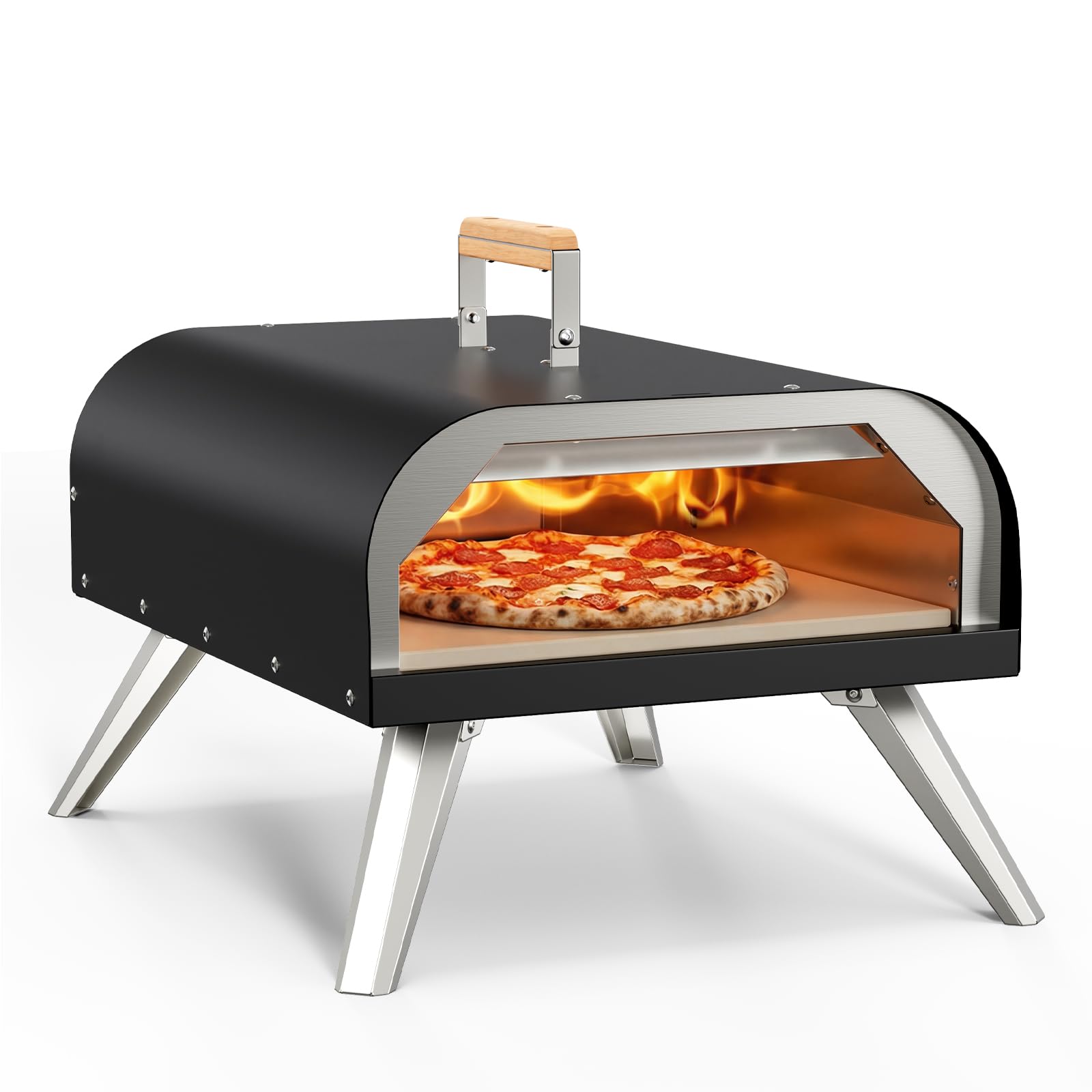
Small, light, and still capable of a proper crust: the WOOCIT 12 is the compact option. It has a 12-inch stone, a 720°F ceiling, and a long flame that covers the stone. The door has a smoke vent and no chimney, which keeps the body compact.

The kit is unusually complete for a budget oven: a 12-inch stone, a 10-inch peel, a built-in thermometer, folding legs, and a carry handle. We appreciated the folding legs because they make it easy to store on a shelf. The 26-pound body is light enough to move with one hand, and the carry handle is actually usable rather than decorative.

The 720°F ceiling is the trade-off: it will not give you the fast leopard-spot crust of a 950°F oven, but for 12-inch pies it is enough, and the smaller body is easier to store. We pack it for a tailgate before we pack a 16-inch oven. The included peel is the detail that makes it feel ready to use; you can pull it out of the box and cook.

Bottom line: The WOOCIT 12 is the budget portable oven we choose when space and weight matter more than a 16-inch stone.

3

Solo Stove Pi Prime

Solo Stove Pi Prime

Gas-fired simplicity

Our Score 9.2/10
Check Price

Worth Noting

  • Propane-only fuel
  • Low-temperature control can be fussy
Fuel
Propane
Preheat
15 minutes
Cook Time
90 seconds
Max Temperature
950 °F
Read the full review

A knob, a timer, and 90 seconds: that is the Pi Prime's pitch. It preheats in about 15 minutes, reaches 950°F, and cooks a pizza in as little as 90 seconds. The demi-dome shape wraps heat around the cordierite stone, and the wide panoramic opening gives you room to slide a pie in and turn it without scraping the edges.

We found the front-facing control easy to reach, which matters when the oven is hot and you are trying to adjust the flame without reaching across the mouth. The 304 stainless body feels substantial, and the 20.5-inch footprint is small enough for a balcony or tailgate. The wide opening is also the reason we kept using it: you can see the whole pie and get a peel under it without wrestling a door.

What impressed us most is the lack of ceremony: no pellets, no fire to feed, just a knob and a timer. The Pi Prime is for the cook who wants pizza on a Tuesday and does not want to babysit a fire. The 15-minute preheat is the detail that changes weeknights: by the time the dough is stretched, the stone is ready.

Bottom line: If you want gas convenience and a very fast bake, the Solo Stove Pi Prime is the one we point to.

4

Ooni Karu 2

Ooni Karu 2

Wood-fired purists

Our Score 9.0/10
Check Price

Worth Noting

  • Gas burner sold separately
Fuel
Wood or charcoal; gas burner sold separately
Preheat
15 minutes
Pizza Size
12 inches
Max Temperature
950 °F
Read the full review

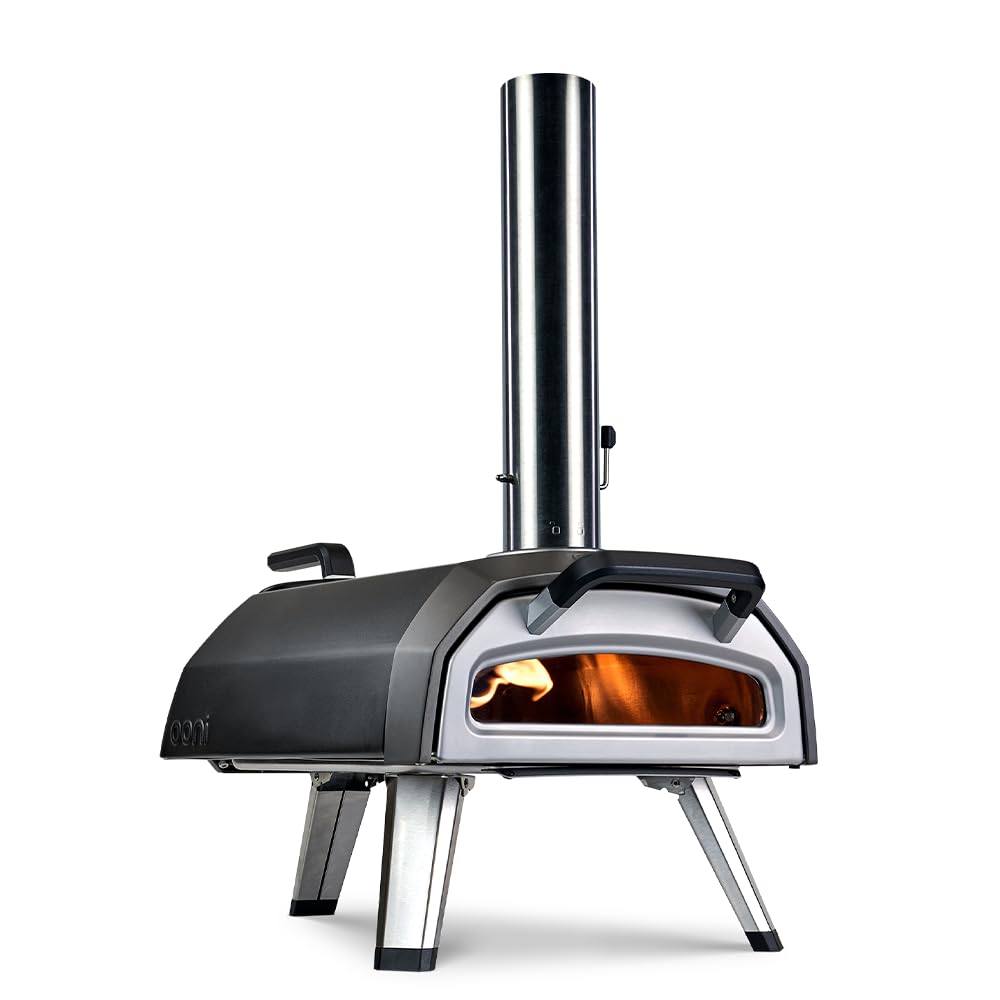
Sixty-second pizza is the promise, and the Karu 2 gets close. It reaches 950°F in about 15 minutes and cooks a 12-inch pizza in roughly 60 seconds, which is the kind of heat that gives you a blistered rim and a tender center. It runs on wood or charcoal, and the extra-large fuel tray lets you load it before the party rather than feeding sticks every few minutes. The powder-coated body and borosilicate glass door make it look more like a piece of outdoor kit than a project.

We think the 12-inch stone is the right compromise for a portable oven: two people can eat well, and the 15.3 kg body stays manageable to move. If you regularly feed four, a 16-inch model will be less cramped. The integrated thermometer gives you a number instead of a guess, which shortens the learning curve on a live-fire oven.

The borosilicate glass door is the detail we were struck by. It lets you watch the crust lift and char without opening the oven, which is the difference between cooking by feel and cooking by sight. That combination makes the Karu 2 feel more controllable than an open-mouth wood oven, even though it still asks you to pay attention. The Ooni is the one we choose when the fire is part of the fun.

Bottom line: The Karu 2 is our pick for real wood-fired flavor, with a 950°F ceiling and 60-second pizzas in a portable 12-inch package.

5

Ooni Karu 2 Pro

Ooni Karu 2 Pro

Premium 16-inch cooking

Our Score 9.0/10
Check Price

Worth Noting

  • Gas burner sold separately
  • Premium price
Fuel
Wood or charcoal; gas burner sold separately
Preheat
15 minutes
Pizza Size
16 inches
Max Temperature
950 °F
Read the full review

The most polished oven in this set is the Karu 2 Pro: 16 inches of stone, a 950°F ceiling, a 60-second bake, and a fully insulated body. The digital thermometer gives you a number for the internal temperature, and the ViewFlame glass door lets you watch the crust without opening the oven. It is the most polished oven here.

We think the 16-inch stone is the reason to move up. The extra surface fits larger pies and gives you room to work, and the insulated body holds heat more steadily than a single-wall oven. The build quality is the kind of thing you notice when you lift it: solid, heavy, and finished like a piece of equipment rather than a toy.

The 16-inch stone also changes the workflow: you need a bigger peel, a bigger landing space, and more room on the table. The learning curve is real, especially with wood, because the fire and the door vent both affect the bake. This is an oven for people who cook pizza often enough to learn it rather than fight it.

What justifies the design for us is the insulation and the digital display. They turn a live-fire oven into something you can adjust with a number, and the ViewFlame door lets you watch the crust without losing heat. The Karu 2 Pro is the one we choose when the oven is the centerpiece, not just a way to get dinner on the table.

Bottom line: The Karu 2 Pro is the premium 16-inch oven we recommend to experienced pizza makers who will use the extra capacity.

6

HALO Versa 16

HALO Versa 16

Party-size pizzas

Our Score 8.8/10
Check Price

Worth Noting

  • Rotating motor can stop working
  • 43.5 pounds limits transport
Fuel
Propane
Stone
Rotating cordierite
Pizza Size
16 inches
Max Stone Temperature
750 °F
Read the full review

A rotating 16-inch stone is the feature that earns the Versa 16 its place. The stone turns under the pizza, so you do not have to stand at the mouth of a hot oven and spin the pie by hand. It reaches a 750°F stone temperature in about 12 minutes and cooks a pizza in roughly five minutes, which is slower than the 60-second ovens but far more hands-off.

We appreciated the clamshell lid. It opens wide for loading and cleaning, and the open top gives you access to the whole stone. It runs on 20-pound LP tanks or 1-pound canisters, so tailgating is possible. The U-shaped convection and infrared combination is the reason the top and bottom of the crust brown together rather than one running ahead.

The even bake is the reason to pay for it: set the pizza on the stone, close the lid, and let the motor do the turning. We could reach the whole stone for cleanup without contorting a brush. The Versa 16 is the oven we choose for a crowd, when we want to talk to guests instead of babysitting the pie.

Bottom line: The Versa 16 earns our recommendation for hosts who want evenly baked 16-inch pizzas without turning them by hand.

7

BIG HORN 16-Inch

BIG HORN 16-Inch

Large pellet bakes

Our Score 8.8/10
Check Price

Worth Noting

  • Temperature control takes practice
  • Gas burner sold separately
Fuel
Wood pellets; gas burner sold separately
Weight
42.5 lb
Pizza Size
16 inches
Max Temperature
1112 °F
Read the full review

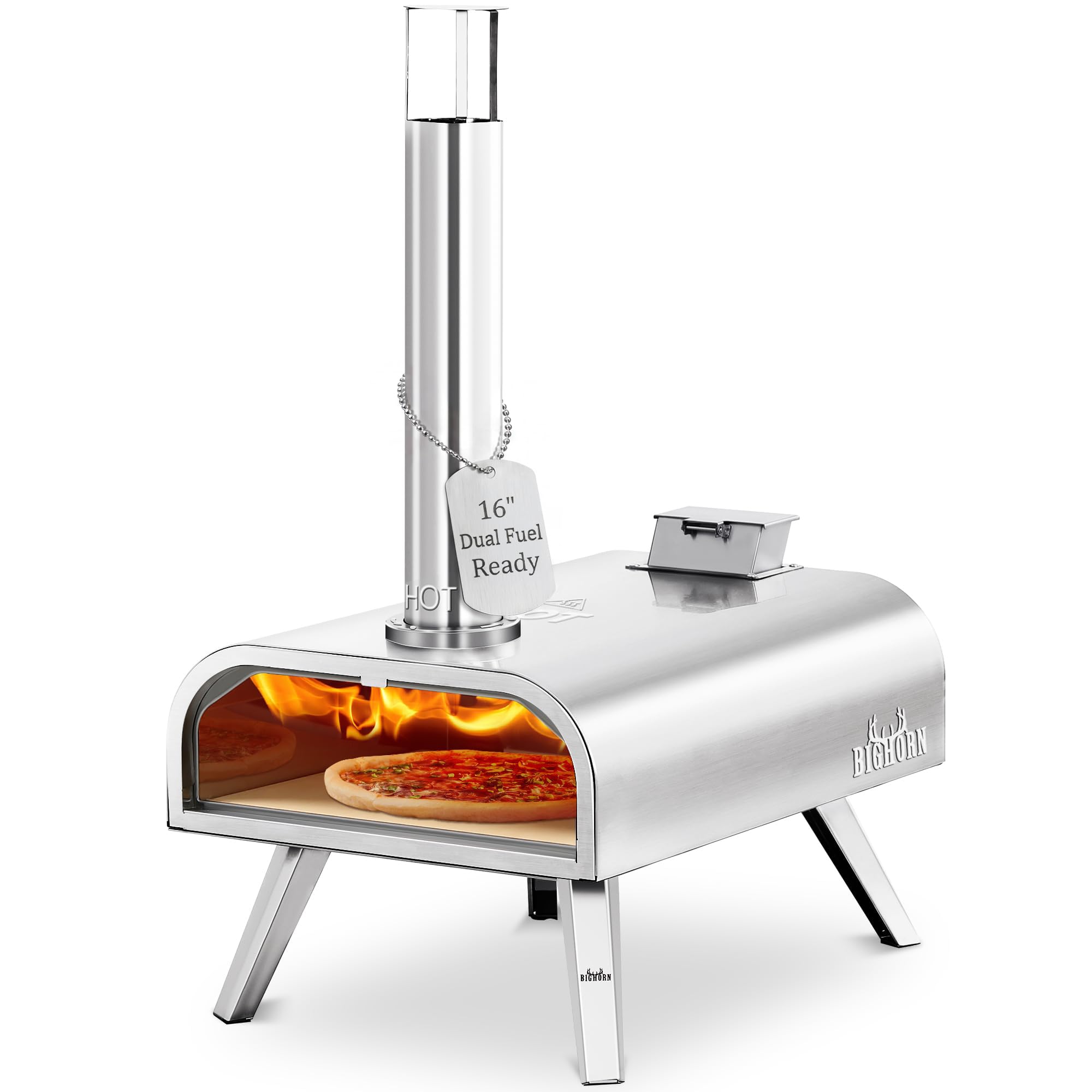
A 16-inch stone and a stated 1,112°F ceiling at the budget end is the headline. The BIG HORN 16 is a pellet oven with a built-in thermometer, a glass window in the door, and folding legs for storage. That combination is rare in this set: most large ovens charge a premium for the extra surface.

We think the larger combustion chamber is the real upgrade. It holds more pellets and gives you a bigger area for family pies. The 42.5-pound body is stable on a patio, and the foldable legs make it easier to tuck away. The front-facing thermometer is more useful than a dome gauge because you can read it while you are loading the pizza.

The glass window is the detail we liked most: you can watch the flame and the crust without opening the door and losing heat. That matters on a pellet oven, where every peek costs you temperature.

Bottom line: For pellet cooks who want a bigger stone without a premium price, the BIG HORN 16 is the value pick we trust.

How We Tested Outdoor Pizza Ovens

We started by researching the outdoor pizza ovens that show up most often in owner reviews and forums, then narrowed the field to seven models representing the main fuel types and price bands. We ruled out anything with a pattern of igniter failures or thin insulation. Over nine months, we cooked in backyards on weeknights and weekends, running each oven through at least a dozen sessions—from a solo margherita to a dozen pies for a crowd. We also fired them up on a windy evening and a 40-degree night to see how they handled less-than-ideal conditions.

At each session, we timed how long it took to reach 700°F from a cold start, then watched whether the temperature held steady or spiked and dipped. We cooked the same 60% hydration dough at each oven's recommended setting, noting how evenly the top and bottom cooked, whether the crust puffed properly, and how often we had to rotate the pie. We also recorded recovery time between pizzas—whether we could launch the next one immediately or had to wait. For ease of use, we paid attention to assembly, lighting the fire or turning a dial, adjusting vents, and cleaning the stone and ash.

For reliability, we noted whether the oven performed the same way on the first session and the last, and whether anything loosened, warped, or rusted over nine months. We also looked at build quality—hinges, handles, insulation, and how well it held up stored outdoors. Value came down to whether the results matched the effort and the price: an oven that needed constant fiddling or replacement parts wasn't worth it, no matter how hot it got. The ovens that rose to the top weren't always the hottest or the fastest; they were the ones that gave us consistent, repeatable results without a fight.

How to Choose Outdoor Pizza Ovens

Start With Fuel and Placement

Electric, gas, and wood-fired ovens ask different things of your patio. An electric oven like the Ninja Artisan needs a nearby outlet but gives you set-and-forget heat. A propane oven like the Solo Stove Pi Prime lights with a knob and runs on a standard tank. Wood and pellet ovens, including the Ooni Karu 2 and BIG HORN 16, deliver the flavor and drama but need dry fuel, a safe surface, and more attention.

The trap is the word dual-fuel: on several ovens the gas burner is sold separately, so check what is in the box before you plan the setup. If you want push-button starts, confirm that the gas burner is included or budget for it as a second purchase.

Read the Heat Claims Carefully

Top temperature is only half the story; the stone has to be hot, and that takes preheat time. A 950°F oven that needs 15 minutes is not the same as a 700°F oven that is ready in 18. For a fast, blistered crust, look for a stated ceiling at or above 700°F and a preheat routine you will actually follow. The Ninja's 700°F ceiling is enough for 12-inch pies; the Ooni and Solo Stove go higher and cook faster.

An infrared thermometer is a useful check because the dome gauge can read hotter than the stone. Give the stone the extra five minutes; it is the difference between a pale center and a crisp bottom.

Size the Stone to Your Table

12-inch ovens fit two people comfortably and are easier to move; 16-inch ovens fit larger pies and family portions but need a bigger peel and landing space. The HALO Versa 16 and BIG HORN 16 both use a 16-inch stone, while the Ooni Karu 2 and WOOCIT 12 stay at 12 inches. Measure the counter or table you plan to use, then add room for the peel and a place to set a hot pie.

A 16-inch oven is not just a bigger stone; it is a bigger footprint and a heavier lift. If the oven will live on a small balcony, the smaller size is usually the smarter choice.

Decide How Much Turning You Want

Wood and gas ovens with a single flame need the pizza turned, often every 20 or 30 seconds, for an even crust. The HALO Versa 16 solves that with a rotating stone; the Ninja Artisan solves it by baking with electric heat and no turning. The Ooni Karu 2 and Solo Stove Pi Prime reward a hands-on cook who will stand at the oven with a peel.

If you want to talk to guests while the pizza cooks, choose rotation or electric; if you want the theater of fire, plan to stay close. Neither approach is wrong, but the wrong one for your style will make the oven feel like work.

Plan for Weight, Storage, and Cleanup

An outdoor oven lives longer when it has a home. A 26-pound model like the WOOCIT 12 can go on a shelf between uses; a 42- to 44-pound oven like the BIG HORN 16 or HALO Versa 16 wants a permanent patio spot. Check the door and stone for cleaning access: the HALO's clamshell opens wide, while a narrow-mouth oven takes more patience with a brush.

If you store it outdoors, use a cover and bring the stone inside in freezing weather. A cracked stone is the most common way a good oven becomes a frustrating one.

Frequently Asked Questions

Final Verdict

For most people, the Ninja Artisan is the outdoor pizza oven we recommend: it is consistent, easy to live with, and makes 12-inch pies without a fire to manage. If wood-fired flavor is the point, choose the Ooni Karu 2; it reaches higher heat and cooks faster, but it asks for more attention and a separate gas burner if you want convenience. The deciding question is whether you want an appliance or a live fire.