Homesteading & Harvest

Best Harvest Baskets of 2026

The first August my garden gave me more than three tomatoes at once, I carried them inside in the front of my T-shirt and lost two on the driveway. A harvest basket seems like a simple buy until you're holding eight pounds of summer squash by a handle that cuts into your fingers. What you want is something that carries a real haul without bruising it, hoses off after a muddy morning, and looks good enough to sit on the counter with the onions. Get it right and the harvest makes it inside intact.

I've spent the past seven months — one full growing season — putting 12 harvest baskets through my raised beds, a friend's community plot, and a muddy pick-your-own orchard. The lesson that surprised me: capacity and comfort pull against each other. The biggest baskets become a chore once they're full, and the handsomest ones are often the first to fail at the handle. The picks below are the ones I'd carry again.

1

Fiskars Harvest Basket

Top Pick
Fiskars Harvest Basket

Mixed garden harvests

Our Score 9.8/10
Check Price

Worth Noting

  • Wide footprint on a crowded shelf
Carry
Two side handles
Drainage
Colander side with drain holes
Material
Plastic
Basket Size
15.25 x 14 x 5.38 in
Read the full review

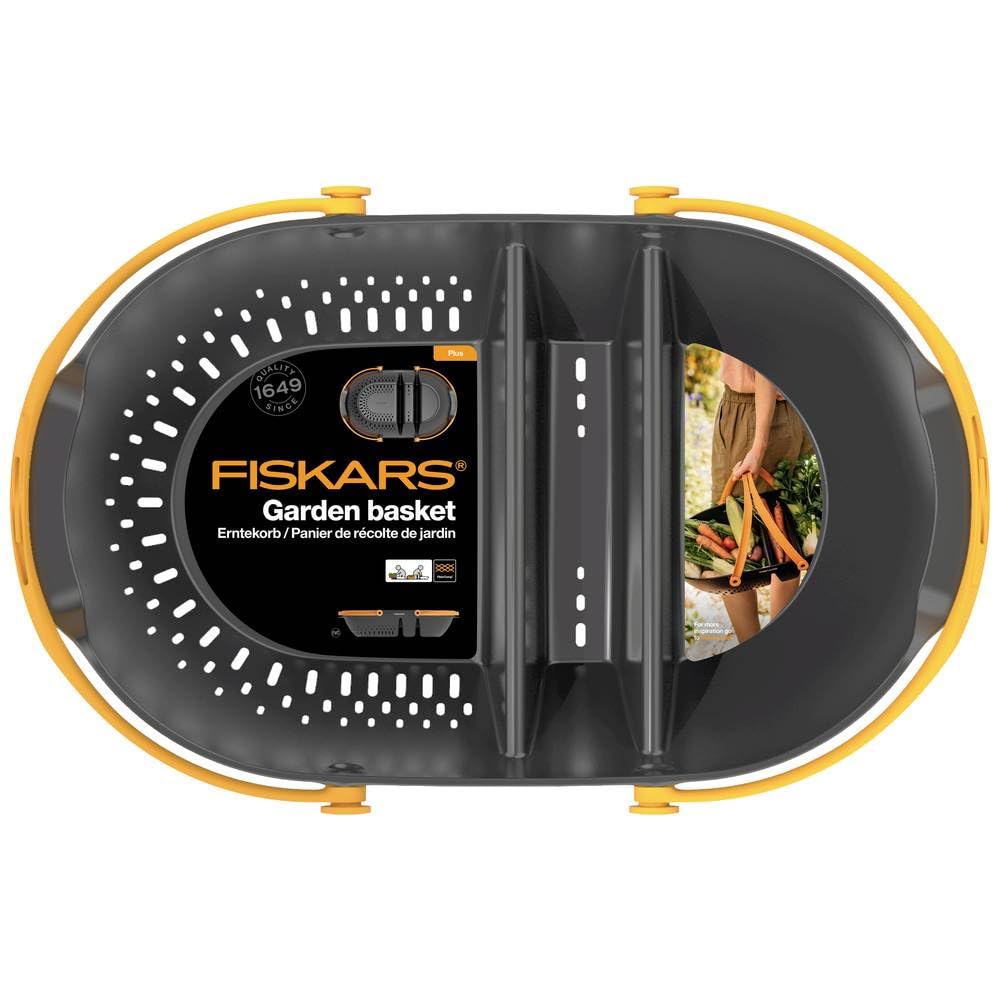
The two-sided Fiskars Harvest Basket is the one we reach for when a harvest needs both carrying and rinsing: one half drains like a colander, the other stays closed for clean produce or tools. That split turns a single trip into pick, rinse, and sort, and it is why this is our top pick for most home gardens. At 14 by 15.25 inches and just over five inches deep, it holds a generous mound of tomatoes or greens without turning into a bucket.

The plastic body feels rigid when you lift it by the side handles, and the open top lets you see what is ripe before you reach in. We appreciate that the closed side can soak a bunch of kale or hold a trowel while the colander side drains muddy roots. Nothing about the basket feels precious, which is the point: it can sit on a potting bench, get hosed off, and come back for more.

The rectangular shape gives you a wider bed for laying produce in a single layer, and the smooth plastic wipes down without trapping soil in seams. We found the divided sides genuinely useful when one crop needs a rinse and another should stay dry. For a gardener who picks more than a handful at a time, the advantage shows up the first time you rinse a load without hunting for a colander.

Bottom line: For most home gardeners, the Fiskars Harvest Basket is the one we recommend: divided colander and closed bin make picking, rinsing, and sorting a single trip.
2

Fiskars Harvest Basket Plus

Fiskars Harvest Basket Plus

Large harvest days

Our Score 9.6/10
Check Price

Worth Noting

  • Needs generous shelf or shed space
Carry
Two side handles, fold together
Drainage
One draining side
Material
Plastic
Basket Size
23.98 x 15.35 x 5.24 in
Read the full review

The Fiskars Harvest Basket Plus is built for the harvest that arrives all at once: 24 inches wide, about 15 inches deep, and shallow enough to spread greens or tomatoes in a single layer. The two broad side handles invite a two-handed lift, and the basket feels more like a shallow tray than a bucket. It is the opposite of a dainty picking basket.

This is our pick for big harvest days. One side drains and the other stays closed, so we can pick into both, rinse the dirty half under the hose, and carry the clean produce back without decanting anything. The handles are separate but fold together for a one-handed carry when the basket is light, which is a small convenience that matters on a row of beans.

The robust plastic is easy to hose off, and the open shape lets air move around wet produce while you finish the row. It is not the basket for a few herbs or a handful of cherry tomatoes; it is for the gardener who plans to fill it. If your garden is small but productive, this is the upgrade that saves trips; it rewards a full row rather than a quick nibble.

Bottom line: We reach for the Fiskars Harvest Basket Plus when the harvest comes by the armful; its wide bed and two-hand carry make a big pick manageable.

3

SANHSEHOME Mesh Harvest Basket

SANHSEHOME Mesh Harvest Basket

Small plots

Our Score 9.6/10
Check Price

Worth Noting

  • Wood handle needs drying after wet use
Handle
Wood, 4.92 in tall
Drainage
Open mesh
Material
Silver-plated alloy steel
Basket Size
9.4 x 9.4 x 7 in
Read the full review

A small garden does not need a giant trug, and the SANHSEHOME basket is sized for the modest daily pick: about 9.4 inches square and 7 inches deep, with a wood handle that stands up above the rim. It is light enough to carry by one hand while you hold a pair of snips in the other. That sounds ordinary until you have juggled a bucket and a colander on the way back from the rows.

The silver-plated alloy steel is the practical part. The mesh lets air reach damp beans, and the open weave drains water if you rinse the basket at the tap. We noticed the square base sits more steadily on a shelf than a round basket, and the wood handle gives it enough warmth that it does not look like a hardware-store bin.

We like it as the budget pick because it does the simple job without fuss: fill it, carry it, rinse it, leave it by the door. The mesh is not fine enough for every crop; tiny cherry tomatoes or loose berries can slip through, so plan on a solid-sided basket or a liner for those. For tomatoes, peppers, beans, and eggs, the open weave is an advantage rather than a compromise.

Bottom line: The SANHSEHOME basket is our budget pick for small plots: light, rust-resistant, and easy to rinse, with a footprint that does not dominate a shelf.

4

KOUBOO Rattan Harvest Basket

KOUBOO Rattan Harvest Basket

Flowers and herbs

Our Score 9.6/10
Check Price

Worth Noting

  • Premium price for a specialized basket
  • Leather wrap needs dry storage
Handle
11.5 in leather-wrapped arch
Material
Natural rattan
Basket Size
20 x 14 x 3 in
Read the full review

The KOUBOO basket is a shallow rattan tray, 20 inches long and 14 inches wide but only 3 inches deep, with an 11.5-inch arch handle wrapped in leather. It is less a vegetable trug than a harvest tray for flowers, herbs, and delicate produce. The wide bed lets long stems lie flat instead of tangling into a bouquet before you get inside.

We found the arch handle comfortable at the crook of an arm, and the leather wrap gives it a grip that a bare rattan handle does not. The open weave lets air reach fresh herbs, and the natural color looks at home on a kitchen table. This is the basket you carry to the cutting garden rather than the one you fill with winter squash.

Our pick for flowers and herbs is this one because it treats stems gently and looks good doing it. It is not the basket for a big vegetable harvest: the shallow depth limits bulky crops, and you will want a deeper, sturdier basket for tomatoes, cucumbers, or greens. If your garden is mostly cutting flowers, herbs, and a few delicate vegetables, the Kouboo is a pleasure to use.

Bottom line: Our flower-and-herb pick is the KOUBOO tray: the shallow rattan bed and leather-wrapped arch handle treat long stems gently.

5

MACOIOR Mesh Harvest Basket

MACOIOR Mesh Harvest Basket

Shelf storage

Our Score 9.6/10
Check Price

Worth Noting

  • Small produce can fall through mesh
  • Bamboo handles need dry storage
Finish
Anti-rust coating
Handles
Foldable
Material
Metal mesh, bamboo
Basket Size
15.7 x 9.8 x 6.7 in
Read the full review

The MACOIOR basket answers a small-space question: where do you put a harvest basket when the shed is full? Its bamboo handles fold down, and the 15.7 by 9.8-inch mesh body can hang from a shelf or sit on a counter without taking over the room. The 6.7-inch depth is enough for a countertop load of tomatoes, onions, or peppers.

The metal mesh has an anti-rust coating, and the square base sits steadily on a worktop. We liked that the basket is wide enough to spread produce in a single layer, and the open weave makes it easy to rinse under the tap. The bamboo handles add a warmer look than plain wire.

This is a basket that moves easily between the garden and the kitchen. We used it for carrying in a modest harvest and then left it on the counter as a fruit basket, which is the useful double life of a good mesh design. It is not the one for a giant squash haul, but for a modest kitchen garden it earns its keep.

Our space-saving pick is this one because it is easy to hang, easy to rinse, and easy to keep in view. The wide, shallow body suits a countertop harvest and a quick garden pick, and the folding handles make it more adaptable than a fixed-handle basket. The bamboo handles are the detail that keeps it from looking like a wire file basket, which is more than we can say for most mesh bins.

Bottom line: For tight storage, the MACOIOR basket earns our vote: folding bamboo handles and a wide mesh body hang, rinse, and stay close.

6

Maine Garden Hod

Maine Garden Hod

Traditional garden use

Our Score 9.4/10
Check Price

Worth Noting

  • Premium price compared with utility baskets
Handle
Steam-bent oak
Capacity
8 quarts
Material
Pine, oak, PVC-coated wire
Basket Size
16 x 9 x 5.25 in
Read the full review

The Maine Garden Hod is shaped like a shallow wooden tray with a wire bottom, 16 inches long and 9 inches wide. It looks like something a clam digger or a farm stand would use, and that is exactly the appeal. The flat bed lets you lay tomatoes, peppers, or long-stemmed flowers in a single layer instead of dumping them into a deep bucket.

The pine frame and steam-bent oak handle give it a warmth that plastic cannot match, while the PVC-coated wire lets water drain and air move around the crop. We found the long shape especially good for delicate produce: you can spread a row of tomatoes without stacking them, and the low sides make it easy to reach in. It holds 8 quarts, which is a realistic daily haul for a home vegetable garden.

This is also the basket that looks at home on a porch or a picnic table, so it earns its place beyond the vegetable rows. The trade is a material that wants a little care; it is not the one to leave out in the rain or fill with muddy roots and forget. We treat it as the basket for clean, dry produce and the occasional flower harvest.

Our traditional pick is for the gardener who wants the harvest to feel like part of the day rather than a chore. The long flat bed, the wire bottom, and the oak handle make it a pleasure to carry, and it is handsome enough to give as a gift. If you want a basket you can hose off and stack without thought, choose plastic or mesh; this one rewards a gentler routine. The oak handle is the detail that makes it feel less like a plastic tub and more like a tool you keep.

Bottom line: Gardeners who want the harvest to look as good as it tastes should consider the Maine Garden Hod; we prize its flat wire bed and warm wood.

7

Cheardia Harvest Basket Set

Cheardia Harvest Basket Set

Two-size picking

Our Score 9.2/10
Check Price

Worth Noting

Set
2 baskets
Handles
Foldable wood
Material
Painted steel mesh
Basket Sizes
Large 15.7 x 9.5 x 7.2 in; small 9.8 x 9.8 x 7 in
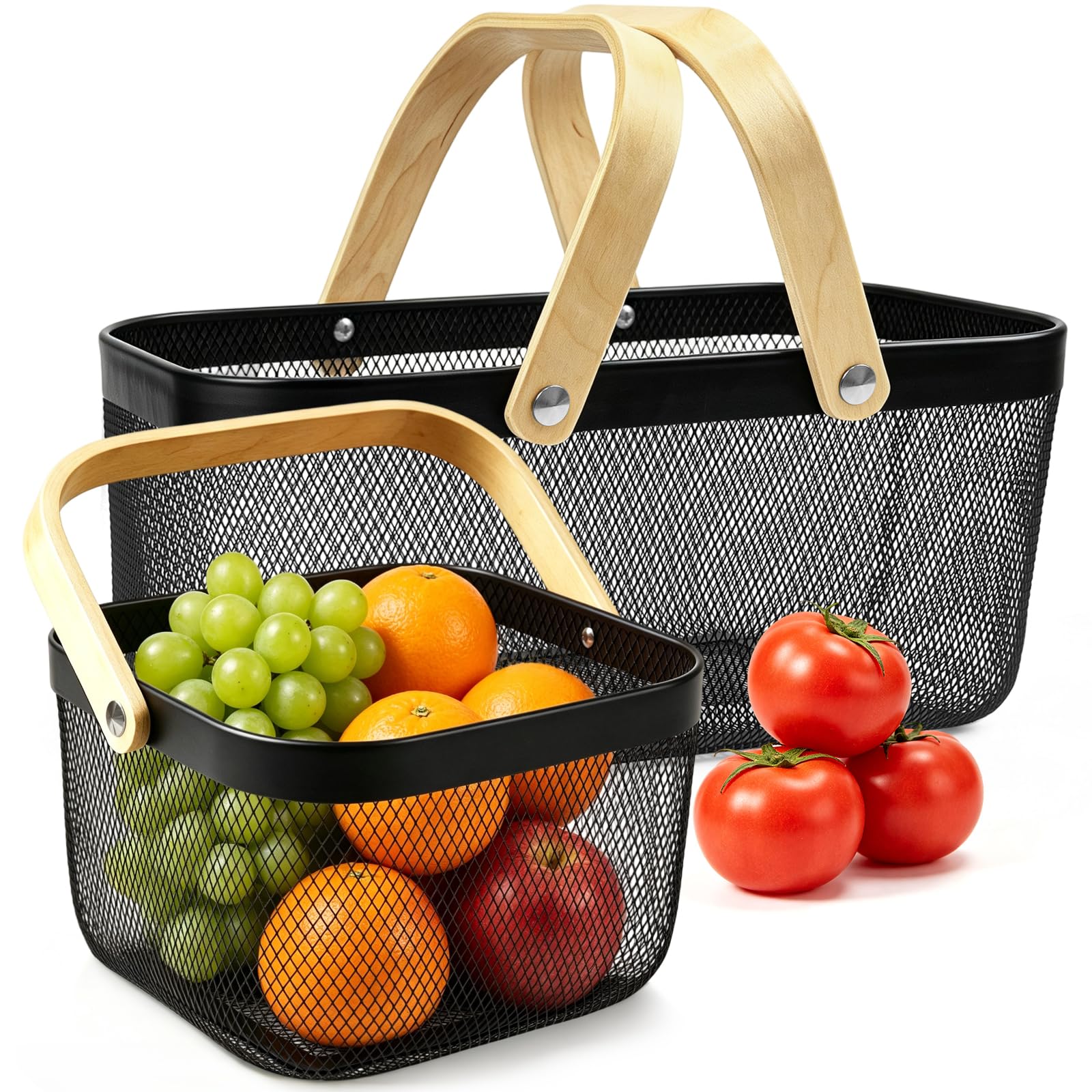
Read the full review

The Cheardia set solves the two-basket problem before you know you have one: a large 15.7-inch mesh basket for the main pick and a 9.8-inch square one for cherry tomatoes, herbs, or eggs. We think the pair is the practical choice for a household that picks often, because you can leave the small basket by the door and take the big one to the rows.

Both are painted steel mesh with folding wood handles, and the open weave does two useful things: it lets air circulate around damp produce and it rinses clean under a tap. The handles fold flat for storage or hang the basket from a hook. The pair stacks inside each other when empty, which matters in a shed that is already full of pots.

The handles arrive unattached, and the included screwdriver makes that a short job rather than a project. We treat the painted finish as a working surface, not a display piece, and the baskets are light enough to carry one in each hand when the garden gives you two different crops at once. For a garden that produces in waves, having the small basket already clean is the quiet luxury.

Bottom line: We keep the Cheardia set in the running for households that pick often: two mesh sizes let you sort the main harvest and keep a small basket ready.

8

SSWBasics Peck Basket Set

SSWBasics Peck Basket Set

Orchard picking

Our Score 9.2/10
Check Price

Worth Noting

  • No drainage for washing produce
  • Unfinished pine can stain from wet fruit
Set
3 baskets
Capacity
1 peck each
Material
Unfinished pine
Basket Size
11 in across, 7 in deep
Read the full review

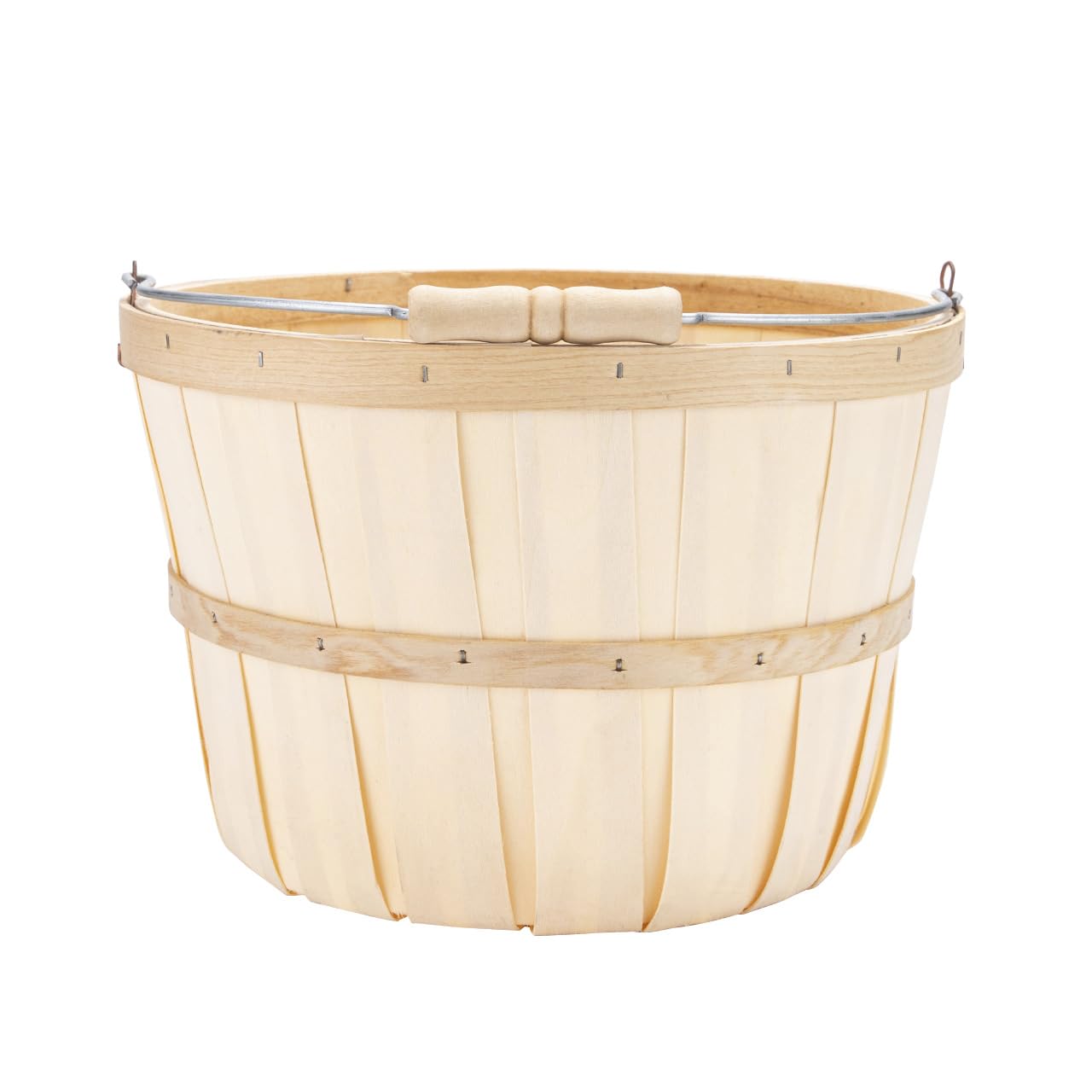
The SSWBasics baskets are one-peck wooden rounds, 11 inches across and 7 inches deep, sold in a set of three. They are the baskets that make sense for an orchard trip or a farm stand, where apples, pears, or lemons need to be carried without rolling around. The natural pine is unfinished, so you can leave it bare, stain it, or paint it to match a display.

We like this set for orchard picking because the wooden sides protect fruit from knocks and the sturdy handle carries a full peck without feeling flimsy. The three baskets let you sort by variety or ripeness as you pick, and they are handsome enough to sit on a market table. For a home garden, they are more specialized than a mesh basket, but for fruit they are the right shape.

The set also gives you a reason to slow down: three baskets let you sort fruit by variety as you pick, and the unfinished pine takes stain or paint if you want a farm-stand look. For a home orchard or a market display, that combination is hard to beat.

Bottom line: Choose the SSWBasics peck baskets when apples and pears are the crop; we like the three-basket set for sorting fruit and dressing a farm stand.

How We Tested Harvest Baskets Through a Full Growing Season

We started with about 40 baskets from garden suppliers, farmstand brands, and the wooden-trug catalogs, then cut the list by specs — material, stated capacity, handle type, whether it arrived in pieces — and by crossing off anything that looked likely to split the first time it got wet. That left 12.

Each one went into rotation for a full growing season, about seven months, from the first spring spinach to the last October squash. They came along on bean-picking mornings in my raised beds, to a friend's community plot, and on a pick-your-own orchard trip where the ground was more mud than grass. We loaded each with roughly 10 pounds of potatoes and a heap of tomatoes and carried it the length of the yard to see if the handle was a one-hand, forearm, or two-hand job.

At the sink we hosed out dirt and leaf litter, and two of them spent a night outside in the rain so we could see what swelled, rusted, or mildewed. We ran a thumb along every rim looking for splinters and checked the weave or slats for staples backing out, then re-checked handle joints a month in for wobble. Anything that arrived needing assembly had its hardware counted against the packing list first — a missing bolt turns a good basket into a parts pile.

Size got judged the practical way: whether a full basket cleared the garden gate, fit in a car footwell, and slid under the kitchen sink. Each one also sat on the counter for a week to see whether it read as decor or as a bucket, and value was settled at the end of the season, not at unboxing.

How to Choose Harvest Baskets

Start With the Crop, Not the Basket

A basket that suits tomatoes and squash needs depth and an open top; a flower basket wants a wide, shallow bed so stems lie flat. If you grow a mix, a divided basket like the Fiskars gives you a wet side and a dry side, while a 9- or 10-inch square mesh basket is enough for a small plot. Check the inside dimensions against your usual haul rather than the outside silhouette.

We put capacity ahead of feature count. A basket that is too deep makes you dig for the last tomato; one that is too shallow lets a full load roll over the rim. For most home gardens, a bed 5 to 7 inches deep and roughly 14 to 16 inches wide is the useful middle. If you pick for market, go larger; if you pick a handful for dinner, stay small.

Decide How Much Washing Happens in the Field

Mesh and colander baskets let you hose produce at the plot; solid wood and wicker are for dry harvests. If you wash in the basket, choose real drainage, a stable base, and holes small enough not to lose the crop. A colander side is handy for greens and tomatoes, while an open mesh is better for beans and peppers. Very small berries need a finer mesh, a liner, or a solid container.

We treat washing as a separate job from carrying when the basket is wood or rattan. Those materials look better and protect fruit, but water and mud shorten their life. The practical rule: if the basket will meet a hose, choose plastic or coated metal; if it will meet a market table, wood or woven fiber can earn its keep.

Handles Matter More When the Basket Is Full

Side handles let you use both hands for a heavy load, while an arch handle is easier for flowers, herbs, and a light basket carried at the crook of the arm. Folding handles save storage space, but check that they sit securely when raised and do not pinch. For a long walk from the plot, a wide two-hand grip is usually more comfortable than a single thin handle.

We pay attention to how a basket hangs when it is full, not how it feels empty. A wide bed with two side handles, like the larger Fiskars, carries a heavy harvest without twisting your wrist. A smaller mesh basket with one wood handle is fine for a quick pick, but it is not the one for a bushel of apples.

Plan for Storage and Material Care

Plastic is the easiest to rinse and stack; metal mesh needs drying to keep its coating intact; wood and wicker want a dry shelf. If space is tight, look for folding handles, nesting shapes, or a set that stacks inside itself. Measure the shelf before you fall for a wide basket, because a 24-inch tray can dominate a small shed.

We keep a simple hierarchy: choose the material that matches your washing routine first, then the shape that matches your crop, then the handle that suits the distance you carry it. Appearance matters, especially if the basket lives on a porch or counter, but it should not be the only reason a basket comes home.

Frequently Asked Questions

Final Verdict

We recommend the Fiskars Harvest Basket as the default for most home gardeners: divided sides, a colander half, and two-hand carry make picking and rinsing feel like one job. If your harvest comes in by the armful, the larger Fiskars Plus is the better fit. For a small plot, the SANHSEHOME is the budget choice; for flowers, the KOUBOO tray. Start with the Fiskars unless your crop or space clearly points elsewhere.