Soil & Fertilizer

Best Soil for Tomatoes of 2026

Every bag of potting soil looks the same through the plastic, and then August tells you the truth. I've had tomato plants stall in a mix that turned out to be mostly bark and sand, and I've watched fungus gnats hatch out of a bag that smelled like a swamp the moment I cut it open. What you're actually buying is a root environment — something that holds water without staying soggy, feeds a plant through months of fruiting, and doesn't arrive with freeloaders. Get that right and the tomatoes do the rest.

Tomatoes are heavy feeders, so a mix that's perfectly fine for petunias will leave you with pale leaves and hollow fruit by midsummer. We grew the same two varieties in 15 different soils across one full growing season — in raised beds, in containers on a sunny deck, and in fabric grow bags — and noted how far each bag actually stretched, how often each plant needed water, and what the harvest weighed. Every pick below earned its spot, whatever your budget or bed size.

1

Miracle-Gro Potting Mix

Top Pick
Miracle-Gro Potting Mix

Container tomatoes

Our Score 9.4/10
Check Price

Worth Noting

  • One bag won't fill a full-size tomato pot
Use
Outdoor containers
Feeding
Up to 6 months
Bag Size
16 qt (2-pack)
Container Coverage
One 12-inch pot per bag
Read the full review

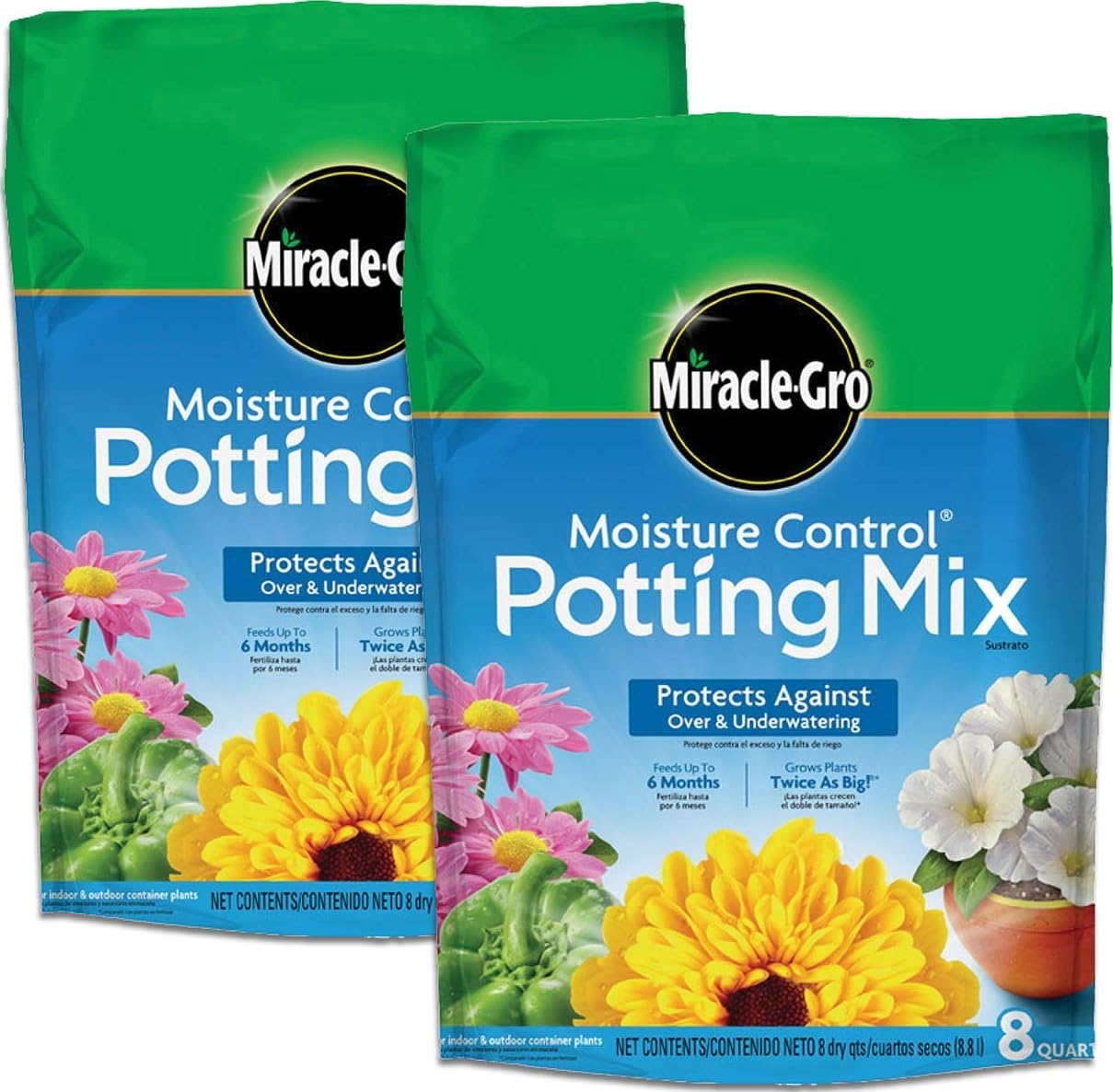
Tomatoes are heavy feeders, and the number that decided this pick was six months. That's how long the charge in this mix is meant to last, and for a container tomato it maps almost exactly onto a season: plant out after the last frost, pick through late summer, and you never open a box of plant food. Among the mixes here that arrive pre-charged, this one carries a plant the longest.

The bag math matters just as much. Each 16-quart bag fills one 12-inch pot, so the two-pack plants two containers. For tomatoes that's a real constraint: most full-size varieties want closer to five gallons per plant, and 16 quarts is four, so a big indeterminate takes two bags. Cherry tomatoes and compact determinates are comfortable at one bag per pot.

It comes out of the bag damp and ready to use, which is worth more than it sounds. Dry peat is slow to take water back up, and a bag that has sat on a pallet for a season can shed the first few waterings. If yours looks dry, tip it into a tub, add water, and let it sit an hour before it goes near a plant.

What it isn't is a tomato-specific blend, and no bag here really is. It's a general container mix that happens to be charged for a full season, which is why it suits most people. Where it gives ground is volume: filling a row of five-gallon buckets means buying multiples, and by the end of a planting day the two-pack looks small.

Bottom line: For most tomato growers, this is the mix we point to first: a six-month charge that covers a season, at the lowest cost per quart here.

2

FoxFarm Ocean Forest

FoxFarm Ocean Forest

Premium containers

Our Score 9.4/10
Check Price

Worth Noting

  • Premium price per quart
  • Some bags run chunky with bark and stones
pH
Adjusted for nutrient uptake
Texture
Bark, perlite, sandy loam
Bag Size
12 qt
Amendments
Fish meal, crab meal, castings
Read the full review

Aged forest products, sandy loam, sphagnum peat, fish meal, crab meal, earthworm castings: Ocean Forest reads less like a potting mix and more like a compost recipe somebody wrote down. For tomatoes that's the right instinct. They're greedy, fast-growing plants, and this is the bag with the most going on in it.

It's also the mix here that behaves most like a proper container soil. The bark and perlite keep it open, so it doesn't collapse into an airless brick by August the way a straight fine peat mix can, and the pH is adjusted for nutrient uptake, so the feed it carries is actually available. You can plant into it and skip nitrogen for the first stretch.

What you pay for that is money and consistency. By the quart it's the priciest of the container mixes here, and the texture varies from bag to bag — bags can run chunky, with big bark pieces and the occasional stone. We don't mind that in a tomato pot, where coarse material means drainage, but it's a poor choice for fine, uniform sowing.

Then there's the feed window. Ocean Forest is front-loaded: rich enough that new plants need nothing extra, then hungry again mid-season, which is why the directions point you to a feeding schedule. That suits someone who likes tending plants and doesn't suit a set-and-forget patio pot. For that, our top pick is the easier bag.

Bottom line: We reach for Ocean Forest when we want the richest bag here: fish meal, crab meal, castings, and an open bark-and-perlite texture that suits a long-season tomato.

3

FoxFarm Happy Frog

FoxFarm Happy Frog

Several plants

Our Score 9.4/10
Check Price

Worth Noting

  • Dense mix that benefits from added perlite
  • The biggest single outlay in this group
Use
Indoor and outdoor containers
Bag Size
2 cu ft
Amendments
Earthworm castings, bat guano
Soil Microbes
Custom blend for root efficiency
Read the full review

Two cubic feet is the largest bag in this guide, and it changes what the product is for. Open it and you have roughly three 5-gallon pots' worth of soil — three tomato plants, or two tomatoes and a pepper and a basil. If you're planting a patio rather than a single pot, this is where the arithmetic starts.

The blend underneath is a working mix rather than a filler: earthworm castings, bat guano, and aged forest products for food, plus a soil microbe blend added to improve root efficiency and nutrient uptake. It's rich enough to carry a plant well into the season, with the nutrients already in the bag rather than in a bottle beside it.

Filling a row of containers, this is the bag we take home. It's the largest here and among the better buys by volume, though it's also the biggest single outlay in this group, which is a lot to spend if you only need one pot.

Two things to know before you open it. The mix is dense, so keep a scoop of perlite on hand, especially for a pot that takes heavy summer rain. And bags can arrive bone dry, which makes the first watering a standoff — dampen the whole bag in a tub and let it soak before it goes anywhere near a plant.

Bottom line: We buy Happy Frog by the big bag when several plants need filling: two cubic feet covers about three 5-gallon pots, and the blend is rich enough to carry them.

4

Miracle-Gro Moisture Control

Miracle-Gro Moisture Control

Patio pots

Our Score 9.4/10
Check Price

Worth Noting

  • Two 8-quart bags cover about one 12-inch pot
Feeding
Up to 6 months
Bag Size
8 qt (2-pack)
Water Absorption
Up to 33% more than a basic mix
Container Coverage
Two 8-inch pots per bag
Read the full review

A cherry tomato in a small pot on a sunny patio is the hardest watering job in a container garden. Miss a day in August and you're looking at a wilted plant and fruit that has stalled. Moisture Control is the mix aimed squarely at that problem, and it's the reason this bag earns a place.

The formula is said to absorb up to 33% more water than a basic potting soil without sphagnum peat, and to protect against both over- and under-watering. The extra capacity is what matters in a small pot; the over-watering protection only holds if the pot drains, which is why the directions call for a container with a drainage hole. A moisture-holding mix with nowhere to drain is a bucket of mud.

This is the bag we reach for with a row of eight-inch patio pots, and it's the sensible choice for anyone who waters on a schedule rather than by feel. It feeds for six months like the rest of the Miracle-Gro line, so a small pot doesn't need supplementing mid-season.

The catch is size. Each 8-quart bag fills two 8-inch containers, so a two-pack is roughly one 12-inch pot's worth of soil — fine for a pair of patio cherries, short for a full-size plant. Buy the bigger bags of the standard mix when volume is what you need; buy this one when watering is the thing that keeps going wrong.

Bottom line: For patio pots that dry out fast, this is our pick: it holds up to a third more water than a basic mix and still feeds for six months.

5

Burpee Organic Potting Mix

Burpee Organic Potting Mix

Peat-free gardening

Our Score 9.0/10
Check Price

Worth Noting

  • Nine quarts is small for a tomato plant
  • Bags can arrive with fungus gnat activity
Base
Coconut coir
Feeding
Instant, then slow-release
Bag Size
9 qt
Certification
OMRI listed
Read the full review

The base here is coconut coir, not peat, and that single choice is why this bag earns a place on the page. Coir is renewable, it holds water well, and the mix is OMRI listed — the certification organic growers look for on the bag.

For tomatoes we treat it as a patio-pot and seed-starting mix rather than a bed filler. The feed comes in two stages, instant and then slow-release, which suits a plant that starts small and finishes heavy, and the texture is a decent middle ground: coarse enough to drain, fine enough to sow into. One caution: coir holds water tightly, so drainage matters more here than with a peat mix, and a saucer left full underneath is asking for trouble.

Nine quarts doesn't go far, though. That's not a tomato pot on its own, so plan on two or three bags, or use it for starts and herbs alongside a bigger sack of something else.

Where it shines is the small jobs: potting up a couple of heirloom starts, refreshing the top few inches of a raised bed, or filling a seed tray with a mix that won't overwhelm the seedlings. It's the bag to keep on the shelf for those afternoons, not the one to buy by the cartload.

Bottom line: We send peat-free gardeners here first: an OMRI-listed coir mix that feeds immediately and then slowly, in a size that suits a couple of pots.

6

Michigan Peat Garden Magic

Michigan Peat Garden Magic

Raised beds

Our Score 9.0/10
Check Price

Worth Noting

  • Not a container mix
  • Some bags carry sticks and woody chunks
Use
Raised beds and top dressing
Base
Reed sedge peat and sand
Bag Weight
40 lb
Conditioning
Loosens heavy clay
Read the full review

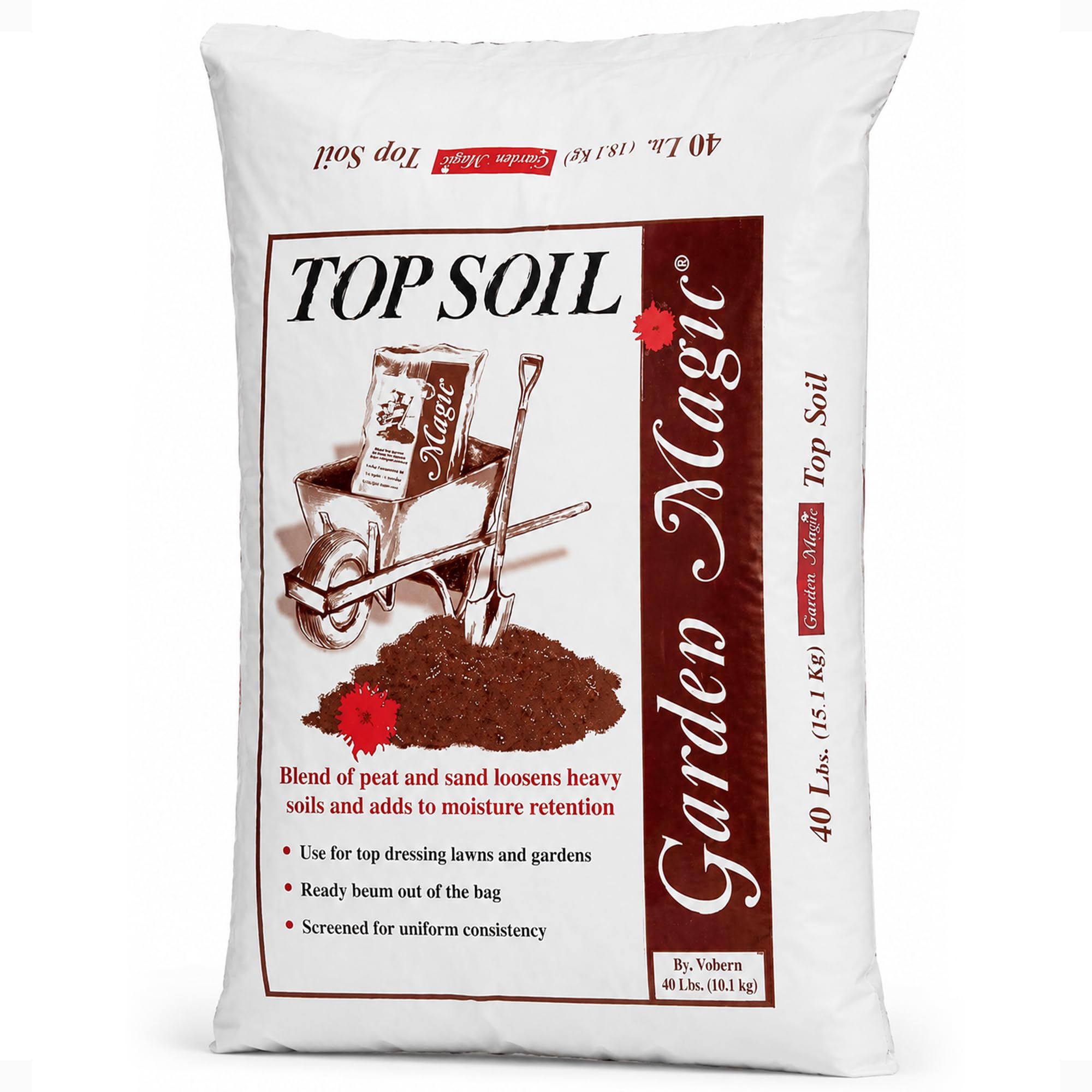
Read the bag before you buy it: Garden Magic is a topsoil blend of reed sedge peat and sand, not a potting mix, and that distinction tells you exactly where it goes. It's made for filling raised beds, topping up low spots, and cutting into heavy clay, and it's sold by weight — 40 pounds — for a reason.

In a new raised bed it does the job it's sold for. The peat holds moisture and the sand gives it weight and drainage at bed scale; tomatoes and peppers do well in beds built with it, and it's a sound choice for grass seed or for lifting a patch of heavy clay into something workable.

Texture is where it separates itself from the container mixes. It's darker and heavier than any of them, with woody debris in some bags — sticks and stems that are annoying in a lawn and harmless in a bed. It spreads easily and looks like the good stuff going down. The 40 pounds is a genuine carry, so plan on two trips or have it dropped where you need it.

In a container it's the wrong tool entirely. Sand and sedge peat pack down, and a tomato pot needs the airy structure a potting mix provides. Use this to build the bed, then fill the pots with one of the container mixes here.

Bottom line: We keep this one for the bed, not the pot: a dark reed sedge peat and sand blend that builds raised beds and loosens clay, and a poor fit for a container.

7

Espoma Organic Potting Mix

Espoma Organic Potting Mix

Small jobs

Our Score 9.0/10
Check Price

Worth Noting

  • Four quarts won't fill a tomato pot
  • Bags can arrive with fungus gnat activity
Inputs
No synthetic plant foods or chemicals
Bag Size
4 qt
Amendments
Castings, alfalfa meal, kelp meal
Mycorrhizae
Myco-Tone endo and ecto blend
Read the full review

Four quarts is the whole story, and it's why this one sits in also-consider rather than higher up. It's a small bag of a genuinely good organic mix — enough for a couple of eight-inch pots or a top-dressing pass — while a tomato's main container needs three or four times that much soil.

What's in it is worth having: sphagnum peat, humus, and perlite as the base, with earthworm castings, alfalfa meal, kelp meal, and feather meal for food, and no synthetic plant foods or chemicals. Espoma also adds Myco-Tone, a blend of endo and ecto mycorrhizae; the idea is that the fungi partner with roots and improve nutrient and water uptake, which is what a transplant wants while it establishes.

Because it's fine-textured and free of big chunks, it's pleasant to work with around roots, and it's a sensible choice for starting seed, potting up a division, or refreshing the top inch or two of an existing pot. It's also the most expensive way here to buy soil by the quart, so buy it for the small jobs it's good at rather than to fill a container.

The bag itself is part of the appeal: it stores on a shelf, it doesn't need a dry corner of the garage the way a two-cubic-foot sack does, and it's the one you can keep on hand for the odd repotting without committing to a season's worth of soil.

Bottom line: This is the small-job bag we keep around: an organic mix with castings, kelp, and mycorrhizae, in a size that tops off pots rather than filling them.

How We Tested the Tomato Soils

We started with about 40 bags — what was on the shelves at two garden centers plus the top-selling mixes online — and read the ingredient panels before buying anything. Bags that listed bark fines or sand first, or gave no fertilizer information at all, got cut. From there we narrowed by price per quart and bag size to 15 soils we could compare fairly, from small 8-quart bags for seed starting up to 40-quart bags for beds.

Everything was grown from the same seed stock over one full growing season, roughly five months from first sowing to last harvest. Half went into raised beds, the rest into containers and fabric grow bags on a sunny deck. Each morning I pushed a finger two inches into the mix and noted whether it was dry, damp, or soupy, and I counted the days between waterings. After heavy rain I checked whether containers drained or sat in puddles, and I weighed a bag of each soil dry and again soaked so I could see what it really cost per quart once hydrated.

I counted flower trusses weekly, watched leaf color, and checked the first ripe fruits for blossom end rot and cracking. Yellow sticky traps went up beside each group so I'd know if fungus gnats were hatching out of the bag, and I pulled any weeds or mushrooms that volunteered. We kept notes on the packaging too — whether a wet 40-quart sack was manageable to carry, whether it resealed, and how the mix held up after a season of watering.

How to Choose the Right Soil for Tomatoes

Potting Mix or Garden Soil?

The first decision isn't brand or price, it's what the product is built for. A potting mix is blended for containers: light enough that roots can breathe, open enough to drain, and usually charged with feed. A garden soil or topsoil blend is for beds, filling low spots, and improving ground you already have.

The trap is buying a bed product for a pot. Michigan Peat's Garden Magic is good value for building a raised bed and a poor choice for a five-gallon container, where sand and sedge peat pack down and hold water at the roots. Anything with a drainage hole gets a potting mix, every time.

How Much Soil One Tomato Plant Needs

A full-size tomato is a big plant with a big root system, and the usual rule of thumb is about five gallons of soil per plant — roughly 20 quarts, with ten-gallon containers better for indeterminate varieties. That makes bag math simple: a 16-quart bag fills one 12-inch pot, and a 2-cubic-foot bag fills about three 5-gallon pots.

The trap here is buying by bag rather than by pot. One bag rarely fills the container you had in mind for a full-size vine, so count your pots first, then multiply by four or five gallons each before you order.

What the Feed Window Tells You

Every bag here carries a feed window, and it's the most practical number on the label. Six months of charge, which is what both Miracle-Gro mixes carry, covers a container tomato from planting out to the last pick, so you never have to supplement. A shorter charge, or a front-loaded blend like Ocean Forest, means you'll be feeding from midsummer.

The trap is doubling up. Adding fertilizer to a freshly charged mix in the first weeks is how you burn a young plant. Check the window, then plan your first feed for when it closes.

Keeping Moisture Even — and Gnats Out

Tomatoes want even moisture: not a wet root zone, not a pot that goes bone dry between waterings. A moisture-control mix buys you slack in a small pot, but only in a container that drains, and in a cool shaded spot a retentive mix can stay wet longer than a tomato likes.

Peat and coir mixes can also arrive carrying fungus gnat eggs, which hatch into the little flies around your pots. The practical fix is a dry surface: water deeply, let the top inch dry out between waterings, and set yellow sticky traps for the adults.

Peat, Coir, and Organic Labels

Peat has been the backbone of potting mix for decades and it works, but it isn't the only option. Coir — coconut fiber — holds water well, drains freely, and is renewable; Burpee's organic mix is built on it. If organic certification matters to you, look for OMRI on the bag, which Burpee's mix carries.

Neither label makes a mix better at growing tomatoes on its own. They matter when the inputs are the point: an organic herb and tomato garden, or a preference for leaving peat in the bog.

Frequently Asked Questions

Final Verdict

The Miracle-Gro Potting Mix is the one we hand to most tomato growers, because it feeds for six months — a season — and costs the least per quart in this group. If you want a richer, more open blend and don't mind paying for it, FoxFarm Ocean Forest is the upgrade, as long as you plan to feed again in midsummer. Filling a whole patio of pots, the two-cubic-foot Happy Frog bag goes furthest in a single purchase.