Homesteading & Harvest

Best Maple Tapping Kits of 2026

Tapping a maple tree for the first time feels like a small gamble. Drill too deep and you risk hurting the tree; seat the spile poorly and you’ll watch sap run down the bark instead of into your bucket. A good kit takes most of that guesswork out of the equation—it gives you the right drill bit, a spile that seals cleanly, and instructions you can actually follow. We’ve spent the last sugaring season with a dozen kits, from bare-bones bucket setups to more elaborate systems, and the differences come down to a few unglamorous details. In short, the right kit turns a fiddly backyard project into a reliable spring ritual.

My first attempt years ago involved a borrowed bit and a lot of guessing, so I know how quickly a cheap kit can sour the experience—literally. What we found is that the best kits aren’t the biggest or the most expensive; they’re the ones sized to your trees and built to last more than one season. We looked at how easily each kit let a beginner tap a tree solo, whether the drill bit stayed sharp through multiple holes, and if the buckets or bags held up to freezing nights and warm days. Below are the kits that earned a spot in our sugar bush.

1

Maple Tapper 10-Tap Kit

Top Pick
Maple Tapper 10-Tap Kit

Backyard first season

Our Score 9.4/10
Check Price

Worth Noting

  • Three-foot drops limit where you can set the jug
Drop Lines
10 × 3 ft
Spile Size
5/16 in
Sap Filters
2 × 1 qt
Taps Included
10
Read the full review

Ten taps, ten three-foot drop lines and two one-quart filters, in one order, is why this is our pick for most people. Buying line and filters as a second order is where a first season goes wrong — the sap is running, and you're waiting on a delivery. Maple Tapper puts the whole setup in one bag.

The tubing is dark blue, which matters more than it sounds. Clear line left in the sun warms the sap and lets light through, and this is the detail we appreciated most once the jugs were sitting out all day. The spiles are the 5/16-inch tree-saver size, a smaller wound than the old 7/16-inch hardware, and the maker claims the same output from it.

Two things aren't in the bag: a 5/16-inch drill bit and anything to collect into. That's normal for the category and easy to solve — a bit and a few clean gallon jugs will do — but it means the kit isn't quite open-and-go. The two filters are sized for a modest boil, so if you end up boiling more than a few gallons at a time, order a second pair before the season starts.

Bottom line: We send most people here: ten taps, ten drop lines and two filters in one order, with nothing else to chase down before the thaw.
2

Sap Happy Ultimate Kit

Sap Happy Ultimate Kit

All-in-one starter

Our Score 9.2/10
Check Price

Worth Noting

  • Plastic spiles can crack if driven in hard
Drill Bit
Included
Drop Lines
10 × 3 ft
Filtration
1 filter + 5 pre-filters
Taps Included
10
Read the full review

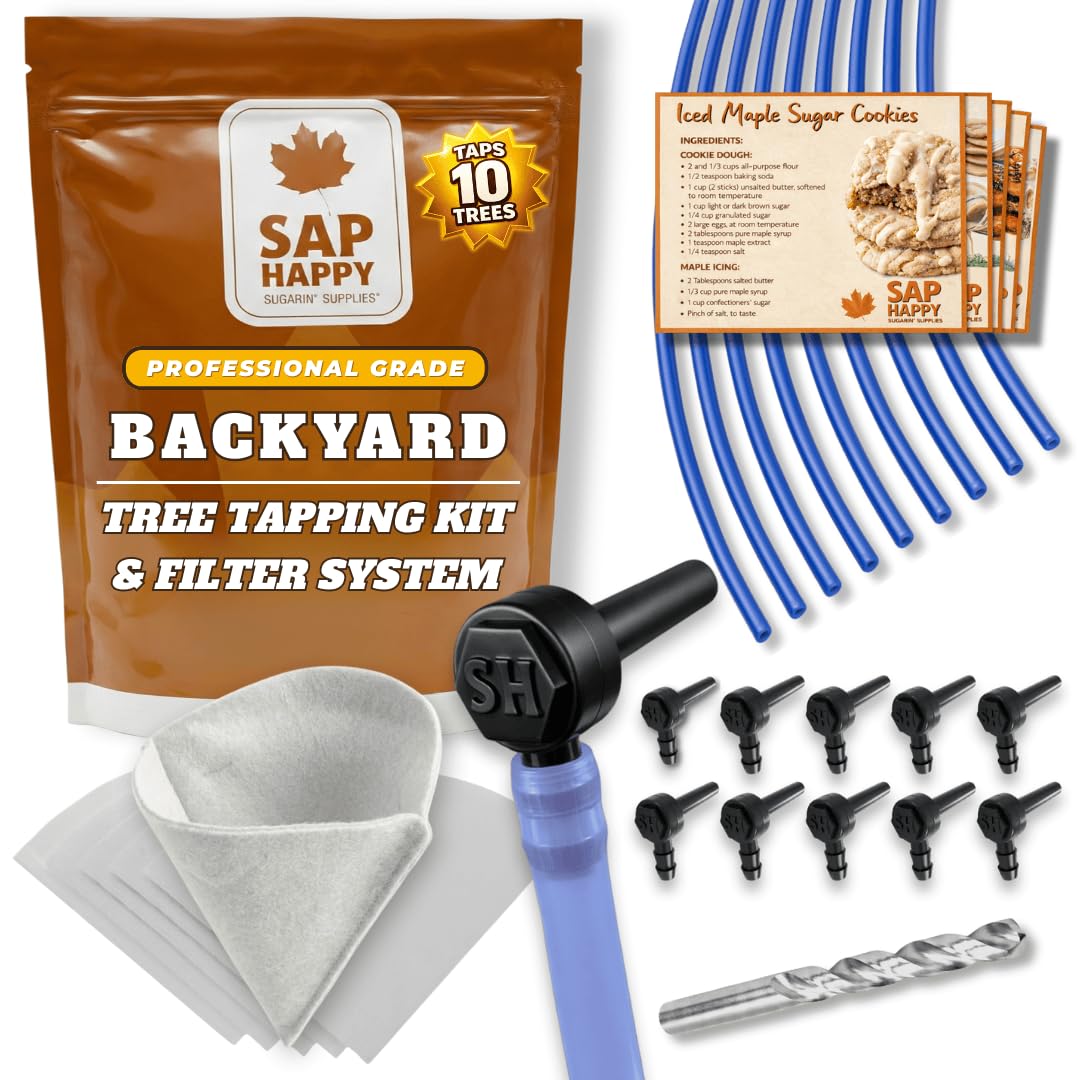
The drill bit is what decides whether a kit gets used on the first warm weekend or sits on the bench while somebody drives to the hardware store. Sap Happy includes one sized to their 5/16-inch spiles, and it's the first thing we noticed when we opened the bag — most kits this size leave you to work that out yourself.

Filtration is the other half of the argument: one heavy-duty filter plus five pre-filters, which gives you a two-stage pass instead of a single one. Pre-filters catch the coarse grit before it blinds the fine filter, so a muddy first boil doesn't cost you the good one. Ten taps and ten three-foot drops put it on the same scale as our top pick for about the same money, which means the choice comes down to extras — a bit and a pre-filter stack here, a second quart filter and a lifetime guarantee there.

The spiles are plastic and friction-fit, and that's the part to handle with care. A tap can crack if it goes in crooked or takes a hard swing, usually because the hole was undersized or the hammer was heavy. Light taps, straight in, and stop when the spile seats against the bark.

Bottom line: For a first kit that needs nothing else on day one, we choose this: the bit and the pre-filters are already in the bag.

3

River Ridge 5-Pack Kit

River Ridge 5-Pack Kit

Small backyard

Our Score 9.2/10
Check Price

Worth Noting

  • Five taps covers two or three trees at most
Drill Bit
5/16 in included
Drop Lines
5 × 36 in
Tap Material
Nylon
Taps Included
5
Read the full review

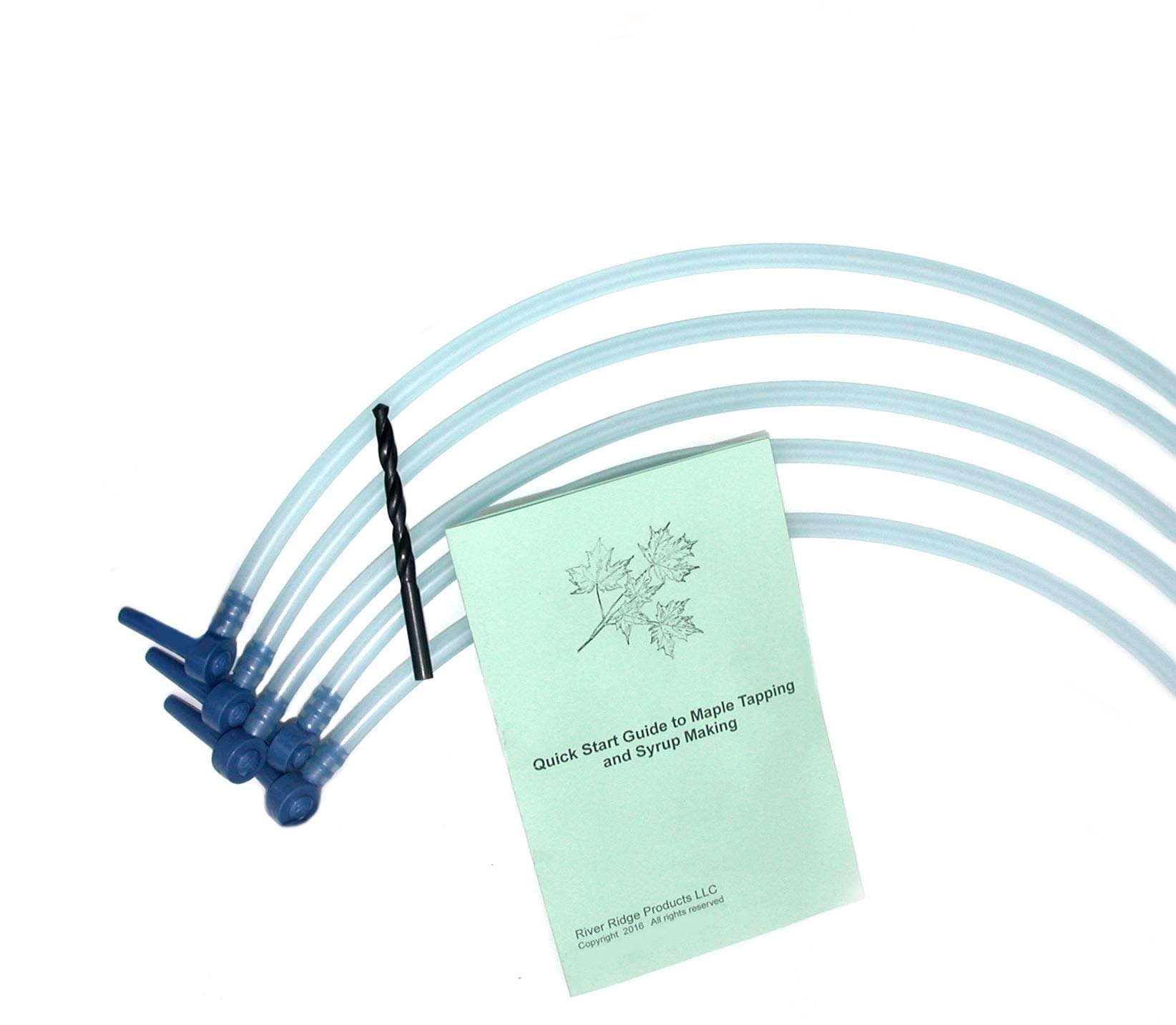
Five taps, already joined to their 36-inch drop lines, with the 5/16-inch drill bit in the bag — that's the kit we point a first-timer with two or three trees toward. Preassembly sounds like a small thing until you've spent a cold March evening pushing stiff tubing onto a barb by feel.

The taps are nylon rather than stainless, which makes them the lightest spiles here and the ones that most reward a clean hole and a straight hit. Everything else is straightforward: line into a clean gallon jug, jug under the line, and the booklet walks you through drilling depth, when to start, and how far to boil.

The booklet is short, and appropriately so — it doesn't try to be a sugaring book. Where this kit stops is volume: five taps is a hobby's worth of sap, and if a dozen trees are in your plans, the ten- and fifteen-tap kits here will serve you better next March.

Bottom line: Five taps, already joined to their lines, with the bit in the bag — the kit we point a first-timer with two or three trees toward.

4

Hazzga 15-Set Kit

Hazzga 15-Set Kit

Many trees

Our Score 9.2/10
Check Price

Worth Noting

  • Plastic taps rather than stainless
  • Fifteen lines to check after wind
Tubing
44.3 ft
Drill Bit
Included
Collection
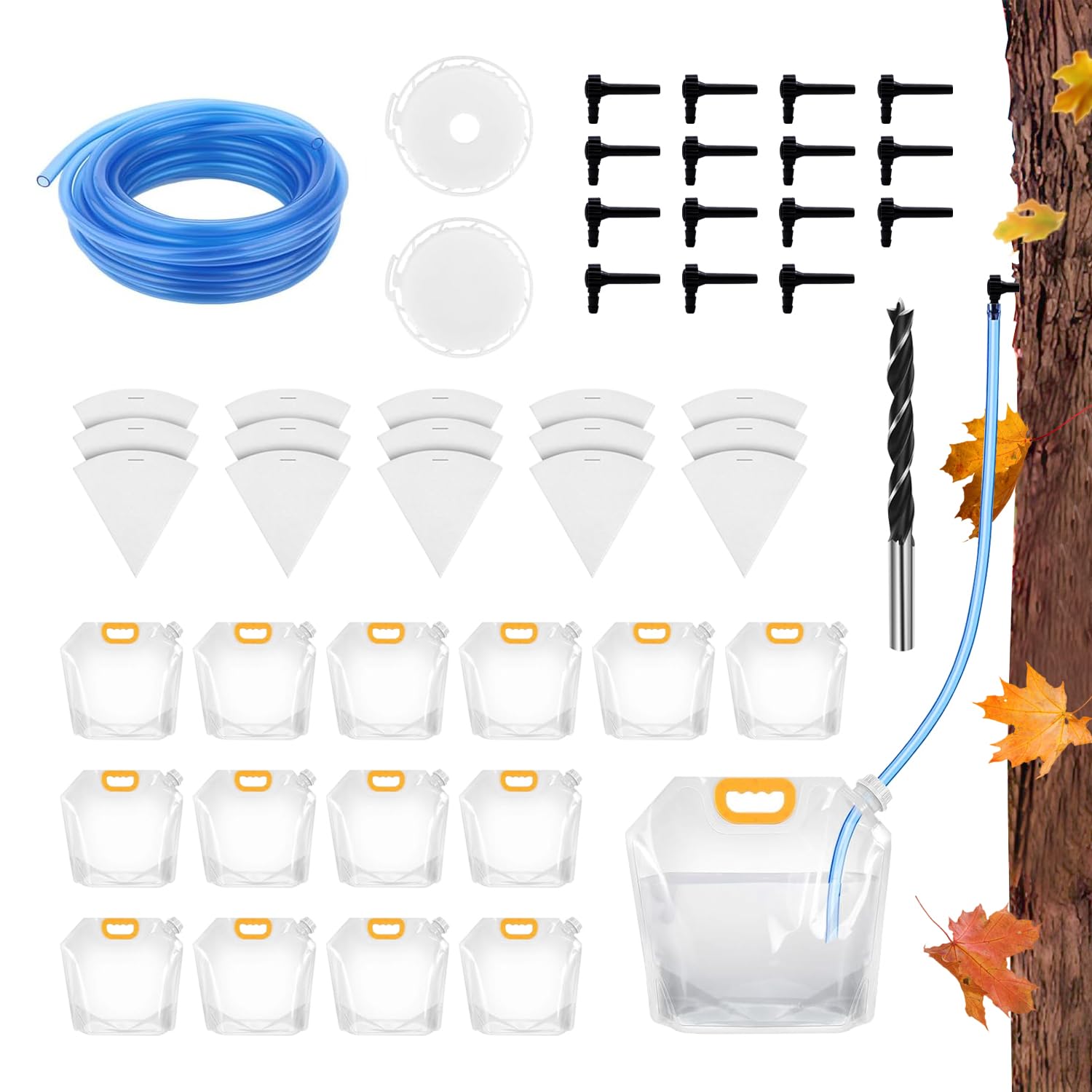
5 L bags, two lid styles
Taps Included
15
Read the full review

Fifteen taps is a small sugarbush rather than a backyard experiment. If a dozen maples line your fence, the job changes shape: 44 feet of tubing lets you run several trees into one collection point instead of emptying a jug at every trunk.

The 5-liter bags are the part we like best. One lid is perforated so the drop line goes in and rain stays out; the other is solid, so a full bag travels to the boil without sloshing down your leg. Bags also pack flat at the end of the season, which three steel buckets never do, and a drill bit comes in the box — more than the ten-tap kits manage.

The trade is plastic throughout. These are polymer taps rather than stainless spiles, and the bags are the collection system; swapping to buckets later means buying hooks and spiles. Fifteen taps also means fifteen lines to check after a windstorm. Per tap, though, nothing else here covers that many trees for the money.

Bottom line: For a dozen or more trees along a line, this is the kit we reach for: fifteen taps, 44 feet of tubing and bags that show you when to empty them.

5

TANGXIA 6-Spiles Kit

TANGXIA 6-Spiles Kit

Reusable metal setup

Our Score 9.2/10
Check Price

Worth Noting

  • No drill bit or collection containers
Tubing
6 × 3 ft
Included
2 cleaning brushes
Material
304 stainless steel
Taps Included
6
Read the full review

The stainless spile kits here mostly leave you to buy tubing; this one arrives with six three-foot lengths of line and two cleaning brushes, which turns a box of metal into a working setup.

Six 304 stainless spiles with hooks cover a serious backyard — three trees with two taps each, or six smaller ones. Steel is the reason to choose these over plastic: they take a hammer, they come out at the end of the season with a twist, and the hooks will hang a bucket if you prefer buckets to lines.

The tubing is silicone rather than the polyethylene most kits ship, which is supple and easy to push over the spile — and the line most likely to kink if you route it around a corner or let it sag. Keep the runs short and sloping toward the jug.

Two brushes and six spiles make this a set to keep rather than replace, and the stainless is the difference between gear that survives a winter in the shed and gear that doesn't. It's the pick for someone who already knows they'll tap again next year and would rather buy once.

Bottom line: Six stainless spiles with line and brushes, for the tapper who intends to be back next March with the same kit.

6

ARGCONNER 3-Pack Spiles

ARGCONNER 3-Pack Spiles

Cheap trial run

Our Score 9.0/10
Check Price

Worth Noting

  • No tubing, containers or filter included
  • Only three taps
Included
Cleaning brush
Material
Stainless steel
Hose Fitting
3/8 in
Taps Included
3
Read the full review

Three stainless spiles for the price of a couple of coffees is the least expensive way onto this list, and if you aren't sure you'll enjoy standing in cold mud in March, that is exactly the right amount to risk.

The hooks earn their place: they hold a bucket on the spile itself, and the spile also accepts a 3/8-inch hose if you prefer to run sap to a jug. That's wider than the 5/16-inch drop line the tubing kits ship, so the parts aren't interchangeable with the rest of this list. A nylon brush with a stainless handle comes along for the end-of-season scrub, which is more than some bigger kits manage.

Three taps is a small season: two trees, or one test run on a big maple. That's how we treat them, as a cheap entry or as an add-on when you want a few more taps without buying another full kit. The stainless will outlast any plastic spile here, which is the trade for the small tap count.

Bottom line: We keep a set of these as spares and as the cheapest way to find out whether sugaring is for you.

7

Tap My Trees Starter Kit

Tap My Trees Starter Kit

Bucket setup

Our Score 9.0/10
Check Price

Worth Noting

  • Three buckets need storage space all year
Guide
Maple Sugaring at Home book
Included
Drill bit and cheesecloth
Collection
3 buckets with lids
Taps Included
3
Read the full review

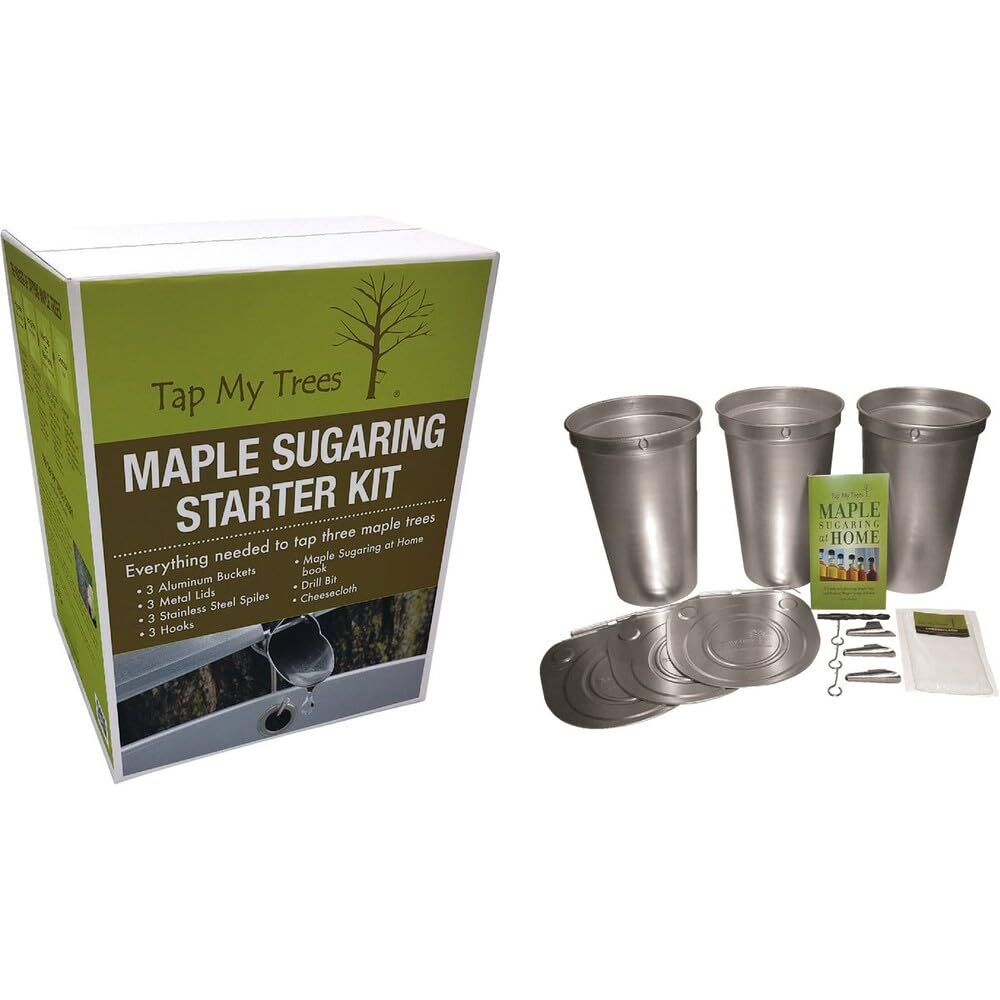
Three metal buckets with lids, three spiles, a drill bit, a square of cheesecloth and a book: this is the oldest picture of sugaring there is, and Tap My Trees sells it whole.

It's the only kit here that hands you the collection vessel. The buckets hang from the spile hooks, the lids keep rain and bark out, and the cheesecloth handles the first straining — one less thing to buy before the season. Nothing about it is light, either; the shipping weight is close to seven pounds.

The book is the real reason to consider it. A recipe card tells you what to do on the day; Maple Sugaring at Home explains why the season starts when it does and what cloudy sap means. For a household that wants one reference on the shelf, that's worth more than another three feet of tubing.

This is a premium buy, several times what the tubing kits cost, for three taps and a lot of galvanized steel. What you get for it is a setup that works on day one, in wind, without a hardware-store run, and that looks like sugaring while it does the job. Families who want the bucket picture will be happy with it.

Bottom line: If you want buckets, lids and a book rather than tubing and jugs, this is the most complete three-tree setup we cover.

8

Aulock 20-Set Kit

Aulock 20-Set Kit

Cheap volume

Our Score 8.8/10
Check Price

Worth Noting

  • No drill bit, and no stated bit size
Tap Shape
L-shaped tip
Drop Lines
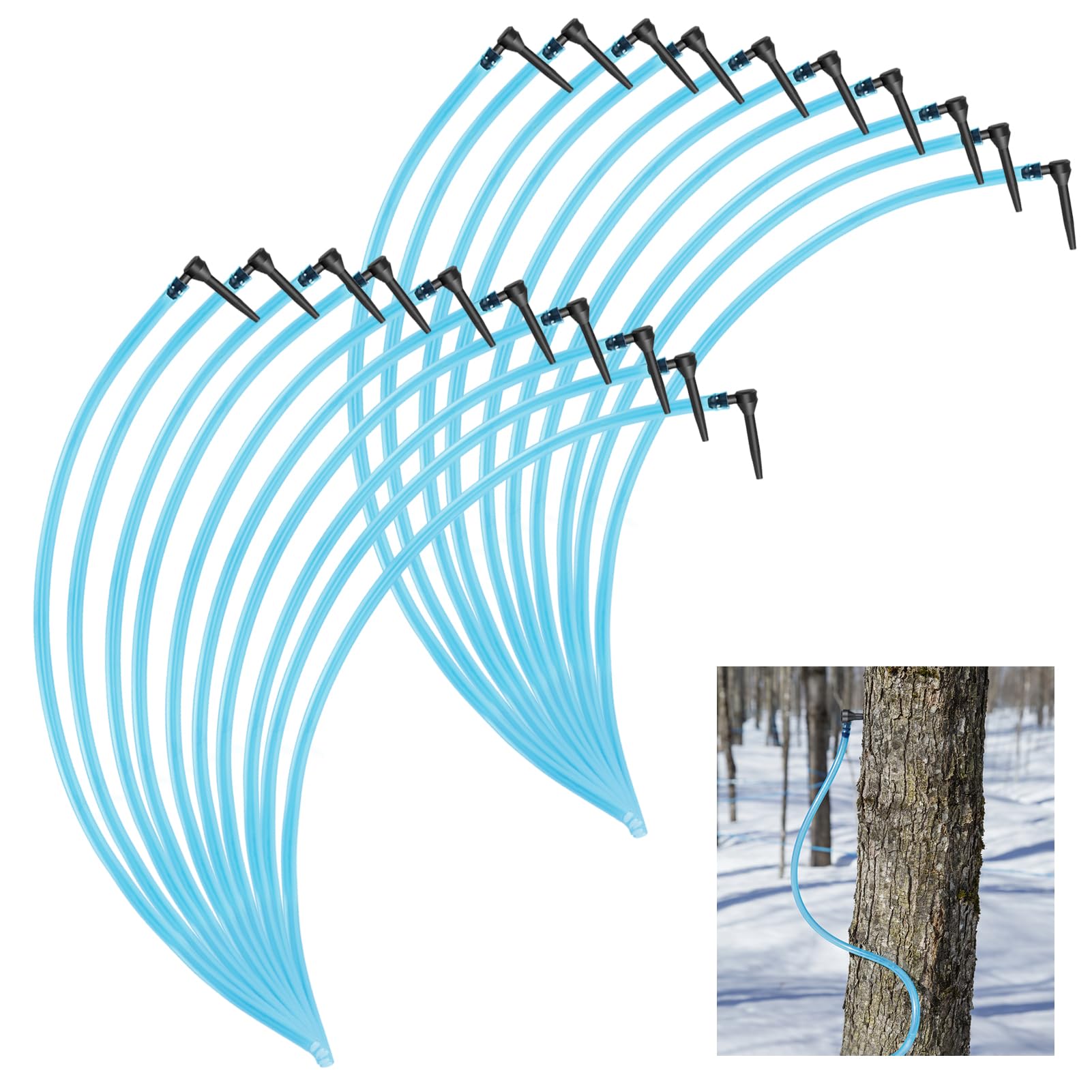
20 × 3 ft
Tap Material
Food-grade PVC
Taps Included
20
Read the full review

Twenty taps and twenty three-foot lines for less than the ten-tap kits is a straight quantity play, and if the plan is to tap every box elder and walnut on the property in your first season, it's the cheapest way to do it.

These are plastic with an L-shaped tip, and the shank is slimmer than the 5/16-inch stainless spiles most kits here use. That's the detail that decides whether they suit you: a slim plastic tap wants a clean bore and a gentle hand, and it's the part of a bargain kit that punishes rushing. The PVC drop lines are flexible and easy to push onto the tap, and the set rinses clean at the end of the run.

Treat this as a volume kit for a first year on many trees, or as spares for a big planting, rather than the set you'll still be using in a decade. The box gives you taps and line and nothing else, so plan on food-grade jugs or bags to collect into.

Bottom line: A cheap way to put twenty taps in twenty trees in your first season, provided you drill clean holes and treat plastic gently.

How We Tested Maple Tapping Kits

We started by gathering a dozen kits that represented the range of what’s available—everything from bare-bones spile-and-bucket sets to complete starter kits with instructions, drill bits, and collection bags. We filtered out anything with consistently poor reviews about leaking spiles or flimsy buckets, and we made sure to include options at different price points and sizes for both backyard trees and small groves.

Testing ran through one full sugaring season, from the first thaw in late February to the last run in early April. We tapped trees on a hobby farm in upstate New York and in a handful of backyard settings with a mix of sugar maples and red maples. Each kit was used to tap at least three trees, and we kept notes on the weather—some days were below freezing, others hit the fifties—so we could see how the materials handled repeated freeze-thaw cycles.

We timed how long it took a first-time tapper to drill a hole and set the spile using only the kit’s instructions, and we noted whether those instructions answered basic questions about depth and angle. After each tapping, we checked the drill bit for clogging and dullness. We inspected spiles for cracks, buckets for leaks, and lids for staying put in wind. At the end of the season, we compared sap yield across kits—not to crown a winner, but to see if any design consistently underperformed. We also considered value: what you actually get for the money, and whether the kit will survive more than one winter.

How to Choose Maple Tapping Kits

Match the tap count to your trees

One tap for every 10 to 12 inches of trunk diameter is the working rule: a foot-thick maple takes one, an old two-foot trunk can take two. That makes five taps a two-or-three-tree starter, ten a comfortable backyard, and fifteen or twenty a fence line or a small sugarbush.

Be honest about how many jugs you want to empty after work, because a good run fills them faster than most people expect. Buying five and adding taps next winter beats starting with fifteen and losing interest in the first week.

Spile size and material decide the hole you leave

Two diameters dominate: 5/16-inch spiles, the tree-saver size, and older 7/16-inch hardware that opens a bigger wound. The 5/16-inch spile is the sensible default for a home tapper, and it's what most drop lines and accessories are sized for.

Material is the other fork. Stainless spiles outlast plastic and cost more per tap, while nylon and PVC taps are lighter and cheaper but less forgiving of a crooked hole or a hard swing. If you plan to tap the same trees for years, steel earns its price.

Match the drop line to the spile

This is the trap in the category: a 5/16-inch spile takes 5/16-inch drop line, some stainless spiles are built to take 3/8-inch hose, and mixing the two means a second order mid-season. Settle the collection vessel at the same time you settle the spile.

A three-foot drop into a clean gallon jug is the cheapest setup and the easiest to move. Five-liter bags on a longer line suit a row of trees. Steel buckets hang from a hook and need no tubing at all, but they occupy a shelf all year.

Buy the drill bit with the kit

Tapping is a drilling job before it's anything else. A sharp 5/16-inch bit at the right depth leaves a clean round hole that seals around the spile, and a wobbling or undersized hole is how taps leak and how plastic spiles split.

Sap Happy, River Ridge and Hazzga include the bit. The kits that don't name the size you need, with one exception: the Aulock set doesn't state a bit size, so measure the tap shank before you drill twenty holes. Drill at a slight upward angle so sap runs out and water doesn't run in.

Plan for filters and end-of-season care

Every batch throws sugar sand, the grit that settles as sap concentrates, and filtration is the difference between clear syrup and cloudy. Two-stage filtering, a coarse pre-filter into a finer one, is what the Sap Happy kit is arranged for; a single reusable filter, like the pair in the Maple Tapper kit, handles a small boil.

At the end of the run, rinse spiles and tubing in hot water, work a brush through anything with a bore, and dry everything before it goes in the shed. Brushes come with the ARGCONNER and TANGXIA sets.

Frequently Asked Questions

Final Verdict

The Maple Tapper kit is what we hand a friend who asks: ten 5/16-inch taps, ten drop lines and two filters in one order, with nothing else to buy before the thaw except a drill bit and a few jugs.

If a matched bit and a pre-filter stack matter more to you than a second filter and a lifetime guarantee on the taps, the Sap Happy kit is the same tap count for about the same money. Tapping a dozen trees or more? Start with the Hazzga set and its bags.