Homesteading & Harvest

Best Cheese Making Kits of 2026

Fresh mozzarella in under an hour sounds like a party trick, but the first kit I tried turned a gallon of milk into a rubbery puck. That's when I learned the difference between a good kit and a frustrating one: fresh cultures, clear instructions, and a thermometer you can trust. Over eight months, my team and I worked through 12 kits, from simple ricotta sets to ones with cultures for aged cheeses, and the pattern held.

The biggest surprise was how much the instructions mattered. A kit can include every ingredient and still fail if the recipe skips the detail about stirring slowly or hitting the right temperature. Fun mattered too: if a kit made a weekend project feel like a chore, it didn't matter how good the final cheese was. The kits below got both right, whether you're after a quick batch, an aged project, or a gift that actually gets used.

1

Standing Stone Farms Ultimate

Top Pick
Standing Stone Farms Ultimate

Hard cheese making

Our Score 9.2/10
Check Price

Worth Noting

  • No molds or press for pressed styles
  • Aged styles need a cool, steady space
Cultures
Mesophilic and thermophilic
Rennet Form
Liquid
Cheeses Covered
14+
Read the full review

Most kits in this group stop at mozzarella. This one carries mesophilic and thermophilic cultures, which is the difference between a box of fresh-cheese supplies and a box that can take you into feta, Monterey Jack and cheddar curds. We think that's the whole reason to spend more here: cultures are the one ingredient you can't pick up at the supermarket, and sourcing them separately means a second order before you've made your first hard cheese.

The Ultimate is ingredients, not equipment. Nine by six by two inches and about a pound is a booklet and a set of packets, so plan on your own pot, your own thermometer and a mold if you're heading for pressed styles. That's the trade for the range: the money goes into cultures instead of a plastic mold you might use twice.

Fourteen cheeses from one box is a lot of ground to cover, and the booklet is written for someone who reads it end to end before starting rather than skimming at the stove. The compact gift-ready box turned out to matter more than we expected, since it lives on a shelf instead of claiming a drawer, which is worth something in a small kitchen.

Bottom line: We recommend this one because it's the only kit here that carries the cultures for aged and hard cheeses, so the box doesn't run out of road after your first mozzarella.

2

Standing Stone Farms Basic Beginner

Standing Stone Farms Basic Beginner

Fresh cheese variety

Our Score 9.0/10
Check Price

Worth Noting

  • No thermometer in the box
  • Buttermilk needed for chèvre
Yield
10 to 15 pounds
Cheeses Covered
Six fresh cheeses
Equipment Included
Reusable curd drain cloth
Extra Culture Needed
Buttermilk for chèvre
Read the full review

There's no thermometer in this box and no molds, and that's the trade. What you do get is every ingredient except the dairy, a reusable curd drain cloth, and recipes for ricotta, mascarpone, cottage cheese, chèvre, cream cheese and mozzarella.

Ten to 15 pounds of cheese from a box this compact is a real claim, and the six styles are what sell it. Mozzarella and ricotta are the easy wins; chèvre and cream cheese are the ones that make the kit worth keeping in the pantry, and they're the reason we reach for this over a mozzarella-only kit when someone wants to experiment.

Two things to sort before your first batch. Chèvre and goat cheese need store-bought buttermilk as the culture, which is a supermarket trip on top of the milk. And the food items aren't returnable, so if the box arrives short or damaged you have three business days to raise it. Open it the day it lands and count the packets.

Bottom line: The budget pick for variety: six fresh cheeses, from ricotta to chèvre, for about what a two-cheese kit costs.

3

The Big Cheese Ultimate 40 Batches

The Big Cheese Ultimate 40 Batches

Equipment-included kit

Our Score 9.0/10
Check Price

Worth Noting

  • No cultures, so no hard or aged cheese
  • Spice packets are rarely used
Batches Per Kit
40
Cheeses Covered
10 fresh cheeses
Yield Per Batch
21 to 32 ounces
Equipment Included
3 molds, thermometer, muslin
Read the full review

Three molds is what separates this kit from the rest of the fresh-cheese boxes here. Add a thermometer, a yard of butter muslin, citric acid, sea salt, vegetarian rennet, a set of recipes and five little spice packets, and you have a box you can open on a Sunday morning and finish with cheese by lunch.

The cheese list runs fresh: mozzarella, ricotta, mascarpone, halloumi, labneh, paneer, queso blanco, a Greek-style, a Scottish crowdie and goat cheese. That's a good spread for a household that grills halloumi and eats a lot of salads, and none of it needs aging. What it can't do is cheddar, because there are no cultures in the box.

Forty batches at 21 to 32 ounces each is a genuinely large amount of cheese, and the dry ingredients carry a one-year shelf life, so the box waits for you rather than the other way around. We wish the five spice packets weren't part of the deal. Basil, cinnamon, mint, lemon pepper and paprika are a nice idea that rarely get opened, and they're filler in a kit whose real value is the molds and the thermometer.

Bottom line: The one to buy when you want the equipment too: three molds, a thermometer and muslin in a kit built for 40 batches.

4

Cultures For Health Mozzarella & Ricotta

Cultures For Health Mozzarella & Ricotta

Small mozzarella kit

Our Score 9.0/10
Check Price

Worth Noting

  • Mozzarella and ricotta only
Consumables
5 rennet tablets, 4 oz citric acid, 8 oz salt
Cheeses Covered
Mozzarella and ricotta
Equipment Included
Thermometer and butter muslin
Time To First Batch
About 30 minutes
Read the full review

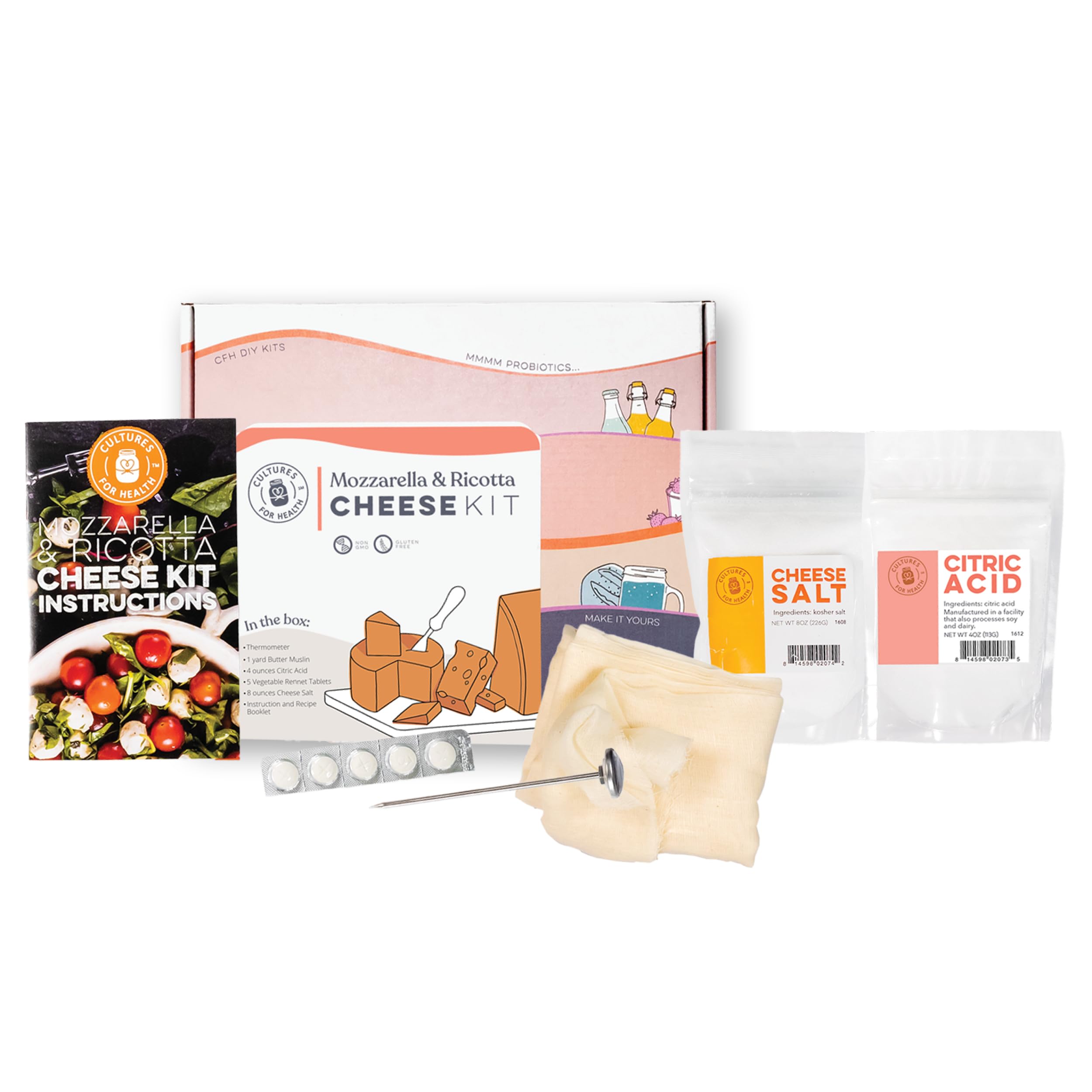
Set this beside the other mozzarella kits here and the quantities are the first thing you notice: eight ounces of cheese salt and four ounces of citric acid, against the three-ounce bags most of the others pack. Five vegetable rennet tablets, a thermometer and a yard of butter muslin round it out, and those quantities are the reason it stays on our list.

We noted that salt and citric acid are the two things you burn through fastest, and a kit that leaves you rebuying them after three batches hasn't done you many favors. This one goes further, and the illustrated booklet is better than most because it shows the steps rather than describing them, which matters the first time you're watching for a clean break in the curd.

Scope is the limit. Mozzarella and ricotta, no cultures, no molds, no hard cheese. And the ricotta made from leftover whey is the step that trips people up, since it needs a slower hand with the heat than the mozzarella does. Expect the second cheese of the afternoon to be the learning one.

Bottom line: A tidy mozzarella-and-ricotta kit with generous salt and citric acid, enough that you won't rebuy either for a while.

5

Fermentaholics DIY Fresh Cheese Kit

Fermentaholics DIY Fresh Cheese Kit

Family cheese nights

Our Score 8.8/10
Check Price

Worth Noting

  • No thermometer or molds included
Consumables
4 rennet tablets, 100 g salt, 100 g citric acid
Cloth Included
1 yard grade 90 cheesecloth
Recipes Included
7
Read the full review

Seven recipes, 100 grams each of cheese salt and citric acid, four microbial rennet tablets and a full yard of grade 90 cheesecloth. The Fermentaholics box is built for volume: fresh cheese you make often, rather than one careful project with the good equipment.

The milk note is more generous than most, since cow, goat, sheep and buffalo all work, and the booklet suggests herbs and spices for customizing each batch. For a household that already cooks, that makes it a low-stakes way to work through a recipe a weekend without buying another appliance or another pan.

Ingredients and cloth, no hardware. That's fine if you cook and already own an instant-read thermometer, and it's a hidden extra cost if you don't, because a fast mozzarella recipe punishes a pot that's running hot. Buy the thermometer before you buy the kit and this one earns its place on the shelf.

Bottom line: A generous fresh-cheese kit for cooks who'll work through seven recipes and go through salt and citric acid doing it.

6

New England Mozzarella & Ricotta Kit

New England Mozzarella & Ricotta Kit

First mozzarella

Our Score 8.6/10
Check Price

Worth Noting

  • Mozzarella and ricotta only, no cultures
  • Instructions are brief on troubleshooting
Batches Per Kit
20 one-pound batches
Cheeses Covered
Mozzarella and ricotta
Equipment Included
Thermometer and butter muslin
Time To First Batch
About 30 minutes
Read the full review

Thirty minutes, a gallon of milk and one pot: that's the whole ask of this kit, and it's why we point beginners here first. What arrives is citric acid, cheese salt, five vegetable rennet tablets, a yard of butter muslin, a thermometer and a recipe booklet, enough for mozzarella and then a second cheese from the leftover whey.

The list is short and the price is the lowest in this group, and that combination is more useful than it sounds. At 20 one-pound batches, one ruined attempt costs you milk and an hour rather than the whole kit, and the booklet walks through the steps in order without assuming you already know what a curd is.

Read it before you turn on the burner. The steps are clear but brief on what to do when things stall, and a stalled pot is the one problem this kit doesn't solve for you. Everything else about it is honest, unglamorous equipment that does the job, and the muslin is a generous yard rather than a token square.

Bottom line: Our pick for a first batch tonight: mozzarella in about 30 minutes, with a thermometer and muslin in the box and enough supplies for 20 one-pound batches.

How We Tested Cheese Making Kits

We started by gathering every kit we could find that was built for home cooks rather than as a novelty gift, then narrowed the field by what came in the box: fresh cultures and rennet, a thermometer that could be trusted, a recipe booklet with real detail, and enough ingredients to make more than one batch. Price mattered, but only against what you got for it; a cheap kit with a flimsy thermometer and a single recipe card was not a value. We landed on 12 kits and spent eight months with them, making each one's flagship recipe at least twice.

Testing happened in home kitchens, not a lab. We made ricotta on weeknights, mozzarella on weekend afternoons with friends around, and a few kits' harder cheeses over longer stretches. For every batch we weighed the milk, tracked the yield, and took temperatures with both the kit's thermometer and our own instant-read to see if they agreed. We watched how the curds formed, whether the whey separated cleanly, and how the finished cheese tasted warm, chilled, and a day later. We also paid attention to the less glamorous parts: how many pots a recipe dirtied, whether the instructions told us what "until it looks right" actually meant, and if cleanup made us want to do it again.

What separated the best kits was consistency. Some had great ingredients but vague instructions; others had clear steps but stingy amounts of rennet or cultures, so a second batch meant buying more. We noted which kits made the process feel fun rather than fussy, and which ones produced cheese we'd actually serve to people. We counted cost per successful batch rather than sticker price, and noted whether a kit could teach us more than one style without requiring special equipment.

How to Choose Cheese Making Kits

Fresh Cheese or Aged Cheese

Almost every kit here makes mozzarella, and most of them stop there. Fresh cheeses set with acid and rennet in under an hour, while cheddar, Monterey Jack and feta need a starter culture, a press and weeks somewhere cool. If there's any chance you want to try a hard cheese, buy a kit with mesophilic and thermophilic cultures already in it, like the Standing Stone Farms Ultimate. A fresh kit never grows into that; there's nothing in the box to build on.

Molds and a press are a separate purchase for pressed styles, and so is somewhere with steady cool temperatures. Be honest about that before you spend on the cultures.

Ingredients, Equipment, or Both

A complete kit usually means complete except for the milk, and sometimes except for the thermometer too. Read the contents list and work out what you already own. An instant-read thermometer is the one piece of gear we insist on, because temperature decides whether curds form at all, and it's worth checking any thermometer that ships in a box against one you trust.

Molds only matter if you're pressing cheese; for mozzarella, your hands and a bowl do the work. A pot, a slotted spoon and a colander are easy to supply yourself, so don't pay a premium for a kit that duplicates them.

Batches, Yield, and What Runs Out First

Batch counts get quoted generously and mean different things. Ten batches at a pound or two each, 20 one-pound batches and 40 batches at 21 to 32 ounces are not the same purchase, so compare total pounds rather than the number on the front of the box. Then look at what you'll rebuy first: salt and citric acid go quickly, rennet lasts, and milk is the recurring cost no kit includes.

A kit with eight ounces of salt and four of citric acid puts off the first restock far longer than one with three-ounce bags. That difference is worth more than an extra recipe or two you'll never cook.

The Milk Decides More Than the Kit

Ultra-pasteurized milk won't form a decent curd, and it isn't always labeled clearly. Organic tells you nothing about pasteurization, so read the fine print on the carton. Use pasteurized whole milk, and check goat or sheep milk the same way before you plan an afternoon around it.

If your curds come out soft and your yield is small, change the milk before you change the recipe. Skim milk and UHT cartons are the two most common reasons a beginner's first batch disappoints.

Rennet: Tablets, Liquid, and Vegetarian

The form barely changes your cheese but does change how you store it. Tablets live in a cupboard and are easy to halve; liquid rennet is dosed by the drop, and some kits pair it with calcium chloride for pasteurized or homogenized milk. Every kit here uses vegetable or microbial rennet, so vegetarians are covered by all of them.

Check the date on the rennet packet before your first batch. Old rennet is the quiet reason a recipe that should have worked leaves you with a pot of warm milk.

Frequently Asked Questions

Final Verdict

Our pick is the Standing Stone Farms Ultimate. The cultures are what make it worth the premium: they're the difference between a summer of mozzarella and a hobby that reaches feta, Jack and cheddar curds without a second order.

If a first batch tonight is the whole ambition, the New England Cheesemaking kit does it for less, with the thermometer and muslin already inside. When you want molds in the box as well, the Big Cheese 40-batch kit is the one to take.