Greenhouses & Hydroponics

Best Hydroponic Nutrients of 2026

Seedlings take off in a hydro setup like nothing else — until about week three, when the lower leaves pale, growth stalls, and you're staring into a jug of cloudy water wondering what changed. In soil, a plant quietly mines what it needs; in water, everything it eats is what you pour into the reservoir. The nutrient line you choose ends up doing more work than any pump or light you buy, and a good one keeps pH in range, dissolves clean, and stays stable long enough that you're not chasing adjustments every morning.

I've run nutrients through a countertop basil bucket and a grow tent full of peppers, and my team has now mixed, dosed, and measured 12 different lines over eight months. The pattern I keep hitting: price and plant growth don't track as closely as the labels suggest, but ease of use absolutely does — a two-part formula that never fully dissolves will make you resent the whole hobby. One thing I wish someone had told me early is to match bottle size to your reservoir before you commit, since a bargain gallon you decant into a quart jar ages differently than one you use up. The picks below are the ones that kept earning their shelf space.

1

Jack's Classic 20-20-20

Top Pick
Jack's Classic 20-20-20

Simple all-purpose

Our Score 9.6/10
Check Price

Worth Noting

  • General-purpose ratio is not bloom-tuned
Form
Powder
N-P-K
20-20-20
Container Size
1.5 lb
Micronutrients
Added micronutrients
Read the full review

Jack's Classic 20-20-20 is the fertilizer your grandparents might have used, and that is not a knock. It is a water-soluble all-purpose powder that greens up indoor and outdoor plants fast, and it can be run through a continuous feed system if you mix it carefully.

The appeal is the scoop and the measuring spoon in the tub: no bottles, no separate bloom component, no complicated schedule. We like it for a mixed garden where you want one product for houseplants, seedlings, and outdoor containers. It dissolves quickly in warm water and the included spoon takes the guesswork out of the dose.

For hydroponics, though, it is a general-purpose feed rather than a tuned hydro formula. The 20-20-20 ratio pushes leafy growth, which is great for greens and young transplants, but it is not the mix we reach for when tomatoes or peppers start flowering. You can use it in a continuous feed system, but you still need to watch pH and strength.

We rank it as an also-consider because it is simple, widely useful, and easy to store. It earns a place for the gardener who wants one tub for everything, not for the hydro grower chasing a precise bloom recipe. That is a real limitation, but it is also why the product is so easy to live with.

Bottom line: We recommend Jack's Classic for mixed gardens that need one simple water-soluble feed, not for hydro growers who want a bloom-tuned formula.

2

General Hydroponics FloraSeries

General Hydroponics FloraSeries

Full-cycle hydro

Our Score 9.4/10
Check Price

Worth Noting

  • Three bottles take up shelf space
System
3-part liquid
Bottle Size
1 gallon each
Mixing Ratio
1:2:3
Growth Stages
Veg through bloom
Read the full review

The FloraSeries arrives as three gallon bottles—FloraMicro, FloraGro, and FloraBloom—and that trio is the whole point. Instead of one jug that has to serve every stage, you get a separate lever for vegetative growth and flowering. We like that for a hydro garden where you are already watching the reservoir and want to steer the mix.

We made it our top pick because it covers the full cycle without asking you to buy a second brand for bloom. The labels spell out a 1:2:3 ratio and give stage guidance; we found the separate bottles easy to measure with a syringe or cup. The gallon size is the other reason it earns the space: this is a system you can run for a long stretch, not a sampler bottle that disappears mid-grow.

It is not a dump-and-go feed. You are measuring three liquids, checking the reservoir, and adjusting as plants move from leaf to flower. We also treat full-strength doses with respect; sensitive plants can burn if the mix is too strong, so start lower and work up. The trade-off is real, but it buys control that one-part nutrients cannot match.

The instructions are clear enough for a first hydro run, but the system rewards someone who keeps a log. If you want to learn what each stage needs, this is the set we point to first.

Bottom line: We recommend the FloraSeries for growers who want one complete base to steer from vegetative growth through bloom; it rewards careful mixing with full-cycle control.

3

MasterBlend 4-18-38 Kit

MasterBlend 4-18-38 Kit

Bulk DIY setups

Our Score 9.4/10
Check Price

Worth Noting

  • Requires a scale and separate mixing steps
  • Bulk bag is awkward to store
Includes
Calcium nitrate and Epsom salt
Kit Size
12.5 lb
Base N-P-K
4-18-38
Mixing Ratio
1:1:0.5
Read the full review

The box is heavy for a fertilizer—12.5 pounds of powder—and that weight is the pitch. MasterBlend's kit bundles the 4-18-38 base with calcium nitrate and Epsom salt in the right proportions, so you are mixing a complete recipe rather than guessing at cal-mag.

For a DIY reservoir, the math is appealing: powders cost less per gallon than liquids, and a kit this size goes a long way. We like that the three components are packed by weight in a 1/1/0.5 ratio, which takes some of the guesswork out of the MasterBlend recipe. The kit comes as three powders; follow the label's order, and keep the calcium nitrate separate until it dissolves so the reservoir stays clear.

We rank it as the bulk pick because it suits someone filling buckets or a small recirculating system, not someone who wants to pour a capful into an AeroGarden. The powder dissolves readily if you mix it thoroughly, and the separate calcium nitrate is a real advantage for fruiting crops. Follow the label's order and mix thoroughly; that is the difference between a clean reservoir and a cloudy one.

The kit is not fuss-free, but the effort is front-loaded: once you have weighed your first batch, the routine becomes repeatable. If you already own a pH meter and a scale, this is one of the most economical ways here to feed a serious hydro garden.

Bottom line: We recommend MasterBlend for DIY growers who want a complete dry kit and the lowest cost per gallon, provided they will weigh and mix in the right order.

4

FoxFarm Hydro Trio

FoxFarm Hydro Trio

Stage-by-stage feeding

Our Score 9.4/10
Check Price

Worth Noting

  • Pint bottles are small for large reservoirs
Form
Liquid
Bottle Size
1 pint each
Kit Contents
Big Bloom, Grow Big Hydro, Tiger Bloom
Mixing Ratio
1:100 (Grow Big Hydro), 2:100 (Tiger Bloom and Big Bloom)
Read the full review

FoxFarm's trio reads like a season on a shelf: Big Bloom for the whole run, Grow Big Hydro for leaf and stem, Tiger Bloom for flowers and fruit. We like that the bottles are labeled by job rather than by a number you have to decode.

The pints go further than they look because the doses are teaspoons per gallon, but this is still a starter set. We found the trio most useful in a small tent or a few patio buckets where you want to change the feed as plants move from vegetative to bloom.

What earns it a runner-up spot is the stage-by-stage control without a chemistry degree. The labels give different mixing ratios for Grow Big and the bloom bottles, and the separate bottles let you lean on bloom when fruit set starts. We did not get the same set-and-forget ease as a pH-buffered system; you still need to watch the reservoir. For a gardener who likes switching formulas, that is a feature.

The trio is also a sensible way to try FoxFarm without buying gallon jugs. If you already know you want a full-cycle liquid program and you have limited shelf space, this is the version to start with.

Bottom line: We recommend the FoxFarm Hydro Trio for small gardens where you want separate grow and bloom bottles and do not mind mixing a stage-by-stage routine.

5

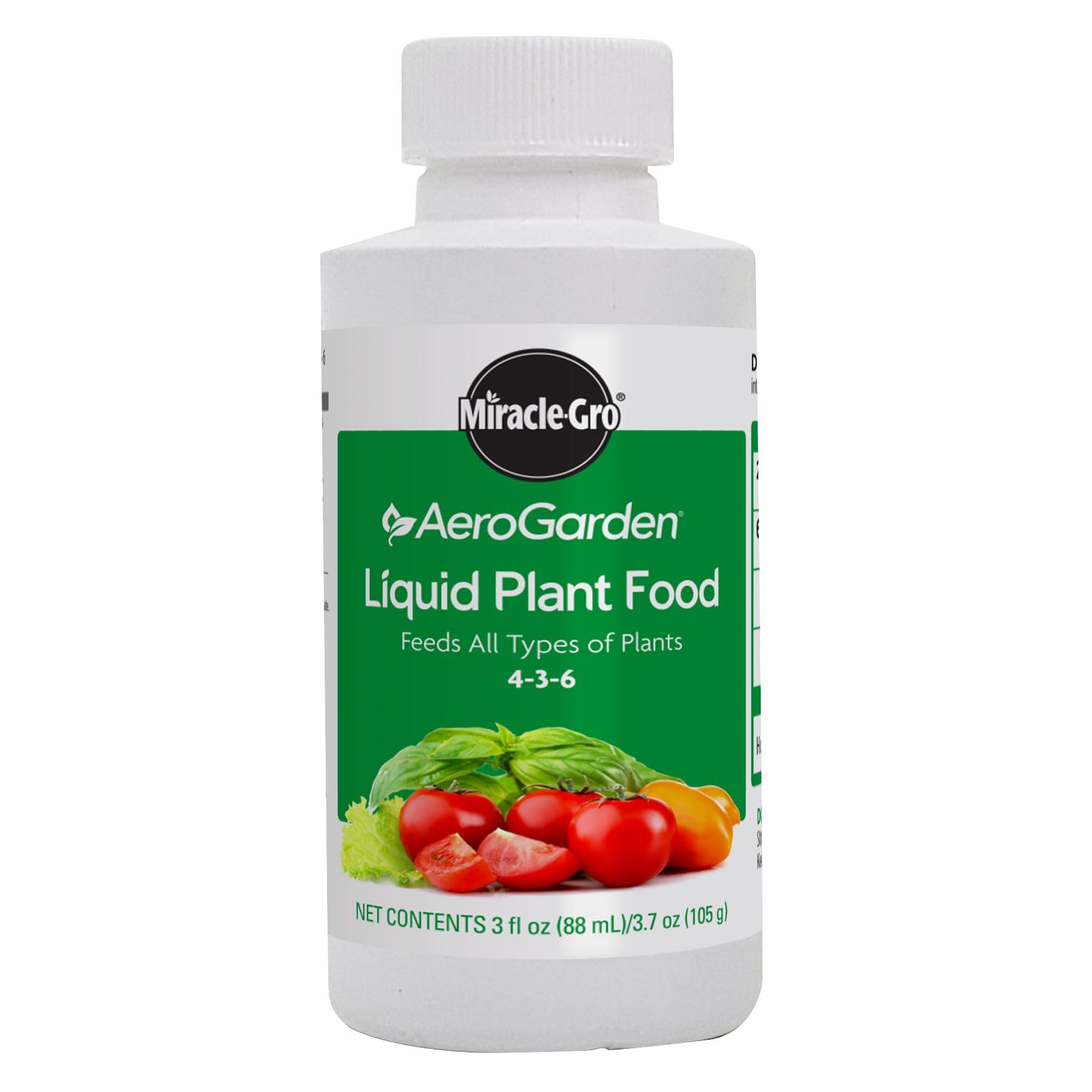
AeroGarden Liquid Plant Food

AeroGarden Liquid Plant Food

AeroGarden starters

Our Score 9.4/10
Check Price

Worth Noting

  • Tiny bottle runs out quickly
Form
Liquid
N-P-K
4-3-6
Bottle Size
3 fl oz
Compatibility
AeroGarden indoor gardens
Read the full review

The AeroGarden bottle is tiny—3 fluid ounces—and the dispenser cup is the tell that this is built for a specific routine. You fill the cup to the marked line, add it to the reservoir, and go back to ignoring the garden until the next prompt.

We like it for AeroGarden users who want the exact OEM feed and no mixing math. The 4-3-6 formula is balanced for herbs and greens, and the pH-buffering claim matters in a small reservoir where a swing can happen fast. The bottle is small, but the doses are small too; this is a refill for a countertop unit, not a bulk jug.

The catch is cost per feed. You are paying for the brand and the convenience, and a larger compatible liquid or a powder will stretch further in a bigger system. But if you have one AeroGarden and you want to follow the manufacturer's schedule without thinking, this is the simplest way to do it.

We keep it as an also-consider because it is not the best value in the roundup, but it is the least fussy for the exact unit. If you have a shelf of AeroGardens, buy the bigger compatible bottle; if you have one and you like the original routine, this is the one. The cup is the feature: no syringe, no scale, no guesswork.

Bottom line: We recommend the AeroGarden liquid for one countertop AeroGarden where you want the exact OEM feed and the included dispenser cup.

6

Advanced Nutrients pH Perfect

Advanced Nutrients pH Perfect

pH-stable grows

Our Score 9.2/10
Check Price

Worth Noting

  • Premium price for one-liter bottles
System
3-part liquid
pH Feature
pH Perfect
Bottle Size
1 liter each
Mixing Ratio
1:1:1
Read the full review

The pH Perfect line makes a big promise: mix it and stop chasing pH. We were skeptical, but the claim is the reason to pick this over a cheaper three-part system if your tap water swings. Equal parts Grow, Micro, and Bloom are easy to remember, and the bottles are a liter each, so this is a small-garden kit rather than a bulk buy.

As a base, it covers the same grow-to-bloom job as the FloraSeries, but the mixing is simpler: one part each, no 1:2:3 chart to follow. We like that for a reservoir you top off often, because there is less to recalculate. The trade-off is that pH Perfect is still a nutrient program, not a license to ignore your meter.

The plants respond to it, but it is strong. We start at half strength and only move up after seeing how a crop reacts, because a pH-buffered feed can still be too hot for seedlings. The convenience buys pH stability, not a magic yield boost. If you already have a pH routine you trust, a cheaper system will do the same job.

Bottom line: We recommend the Advanced Nutrients trio for growers with unpredictable water who want a pH-buffered, equal-part feed and will start at half strength.

7

TPS Nutrients Liquid Plant Food

TPS Nutrients Liquid Plant Food

AeroGarden refills

Our Score 9.2/10
Check Price

Worth Noting

  • Not a customizable multi-part system
Form
Liquid
Bottle Size
32 fl oz
Mixing Ratio
1:8
Compatibility
AeroGarden and similar systems
Read the full review

The first thing we noticed is the size: 32 ounces of liquid next to the little 3-ounce AeroGarden bottle feels like a refill that will actually last. It is made for AeroGarden and similar units, and the instructions are simple enough to follow without a spreadsheet.

We like it as a straight replacement for AeroGarden users who want one bottle and no juggling. It is a balanced liquid feed for herbs, greens, and compact indoor plants, and the larger bottle means fewer reorders. The trade-off is that it is not a customizable three-part program; you are trusting the manufacturer's blend rather than steering nitrogen and bloom separately.

In a small AeroGarden, that simplicity is the point. We found the measuring easy and the reservoir did not need a lot of fiddling. If you grow fruiting crops or run a larger recirculating system, a powder or three-part system gives you more control for less money. For the countertop herb garden, this is the low-drama choice.

Bottom line: We recommend TPS Nutrients for AeroGarden users who want a larger, simple liquid refill and do not need a custom three-part program.

8

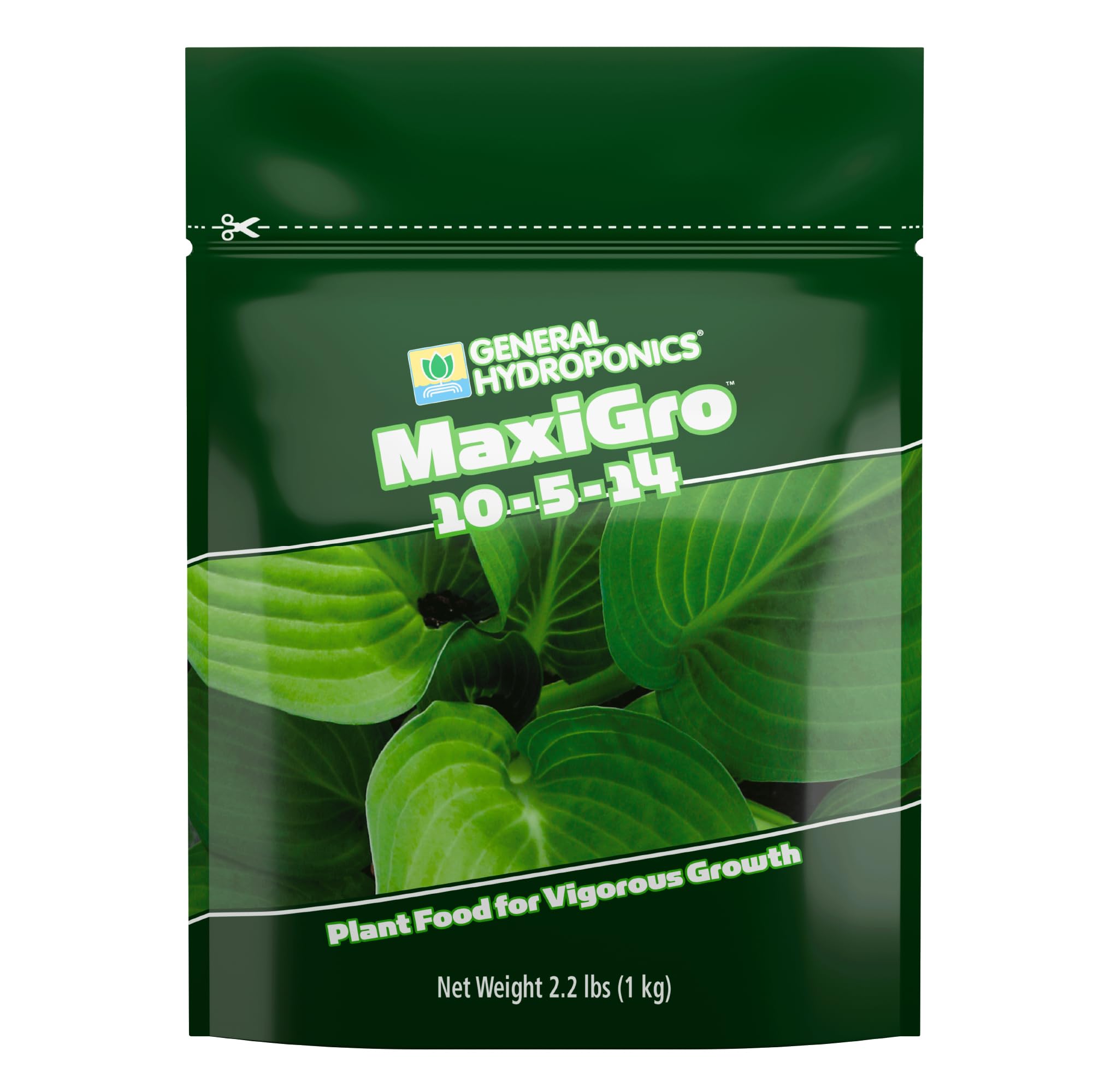
General Hydroponics MaxiGro

General Hydroponics MaxiGro

Leafy greens

Our Score 9.2/10
Check Price

Worth Noting

  • Veg-only formula needs a bloom feed later
Use
Hydroponics
Form
Powder
Mixing Ratio
1-2 teaspoons per gallon
Container Size
2.2 lb
Read the full review

MaxiGro is the powder equivalent of a one-knob feed: scoop, stir, and move on. It is a single part for vegetative growth, which makes it a good fit for lettuce, herbs, and leafy greens in a simple recirculating or Kratky setup. We reach for it when the goal is leaves, not flowers.

We rank it as the budget one-part powder because it is easy to measure and the 2.2-pound bag lasts. The label calls for one to two teaspoons per gallon, so you can start light and adjust. It is not a bloom formula; if you are growing tomatoes or peppers to fruit, you will need to switch or add a bloom feed.

The catch is solubility and pH. Some powders go into solution cleanly; others leave grit or pull the pH down more than expected, so mix thoroughly and check the reservoir before you feed a whole crop. We treat it as a starting point rather than a fixed recipe. For leafy greens, that is a small price for the simplicity.

Bottom line: We recommend MaxiGro for leafy-green and vegetative grows where a single budget powder and a simple scoop-and-stir routine are enough.

How We Mixed, Dosed, and Measured 12 Nutrient Lines

I started with a shelf of roughly 30 bottles and jugs, everything from one-part powders to three-bottle liquid sets, and cut the list by reading labels. Anything without a guaranteed analysis listing chelated micronutrients, or that only made sense if you owned a 55-gallon drum, came off. I kept 12 lines spanning a range of prices, formats, and bottle sizes, and ran each for eight months in the same three setups: a countertop basil bucket, a tray of Kratky lettuce, and a grow tent of peppers and tomatoes.

Every line got the same mixing test first. I mixed each at label strength in a quart of water, stirred for 30 seconds, and checked back an hour later for grit at the bottom of the jar or film on the glass — and watched what happened when part A met part B, since that's where most of them cloud up or drop sediment. Then I measured pH right after mixing and again at 24 and 72 hours to see how far it drifted, and noted how darkly each one colored the water, because a nutrient that turns the reservoir opaque makes it hard to spot root problems early.

The growing half is where the differences showed. I weighed every basil and lettuce harvest, counted leaves, and watched the peppers for tip burn, curling, and yellowing between the veins. I tracked the small stuff too: whether dosing needed a syringe, whether the cap dripped, whether the feed chart made sense at half strength. Each opened bottle sat on the shelf for the full eight months so I could check for sediment, crystals, and separation, then mix a fresh batch and compare it to day one. Last, I worked out the cost per gallon of mixed solution at full and half strength.

How to Choose Hydroponic Nutrients

Start With a Complete Base

Hydroponic plants need the full set of macro and micronutrients, not just nitrogen, phosphorus, and potassium. A one-part feed can work for a simple lettuce garden, while a three-part system lets you shift the ratio between vegetative growth and flowering. We look for calcium, magnesium, and chelated micronutrients on the label, because those are the pieces that separate a base nutrient from a booster. A bottle marketed only for bloom is part of a program, not the whole diet.

Liquid or Powder?

Liquids are easier to measure and dissolve, which matters in a small AeroGarden reservoir. Powders cost less per gallon and take less shelf space, but they need a scale, thorough mixing, and sometimes a separate calcium nitrate step. We prefer liquids for countertop units and powders for buckets or larger recirculating systems. If you go powder, mix a small batch first and check for grit before you commit a whole reservoir.

Match the Feed to Your System and Stage

An AeroGarden has a tiny reservoir and a manufacturer's schedule, so a compatible liquid or the OEM bottle is the low-risk choice. A DIY bucket or Dutch bucket gives you more room to run a three-part system or a dry kit. Plant stage matters too: leafy greens can stay on a vegetative feed, while fruiting crops need more phosphorus and potassium at bloom. Do not buy a bloom booster for a lettuce garden, and do not expect a veg formula to finish tomatoes.

Plan for pH, Mixing, and Storage

Most hydroponic nutrients change reservoir pH, and the effect depends on your water. A pH-buffered system can save time, but it is not a substitute for checking. Start at half the labeled strength with a new crop, keep a log of what you mixed, and store liquids out of heat and powders dry. Mixed reservoir solution is perishable; feed it within a week or two rather than letting it sit.

Frequently Asked Questions

Final Verdict

For most growers, the General Hydroponics FloraSeries is the best default: it covers the full cycle, gives you separate control over grow and bloom, and the gallon bottles make it a long-term base rather than a sampler. If you fill buckets and want the lowest cost per gallon, MasterBlend is the better buy. For a single AeroGarden, TPS Nutrients is the simpler refill.