Greenhouses & Hydroponics

Best Hydroponic Net Pots of 2026

A net pot looks like the least important part of a hydroponic setup—until a cup full of wet clay pebbles drops through the lid and takes your seedling with it. The right one holds its shape, lets roots through without letting growing media escape, and sits flush in whatever hole you've got, whether that's a mason jar on the windowsill or a five-gallon bucket in the garage. I've killed enough basil to know that the cheap, brittle cups are false economy; a cracked rim or a lip that's a millimeter too small can undo weeks of growth.

Over the past four months, my team and I tested 14 net pot styles in kitchen Kratky jars, a five-gallon DWC bucket, a countertop aeroponic tower, and a seedling tray under grow lights. The differences come down to things you can't see in a product photo: how thick the rim is, how the slits are cut, and whether the pot stays upright when you lift it by the lip. A slightly wider lip often matters more than an extra inch of depth. The picks below are the ones that held up through repeated planting, cleaning, and reuse.

1

Cz Garden 3-Inch Net Pots, 25 Pack

Top Pick
Cz Garden 3-Inch Net Pots, 25 Pack

Most home systems

Our Score 9.4/10
Check Price

Worth Noting

  • Fits 3-inch openings, not 2-inch tower sites
Rim
Wide, reinforced
Height
2-1/2 in
Pack Count
25
Top Diameter
3-1/4 in
Read the full review

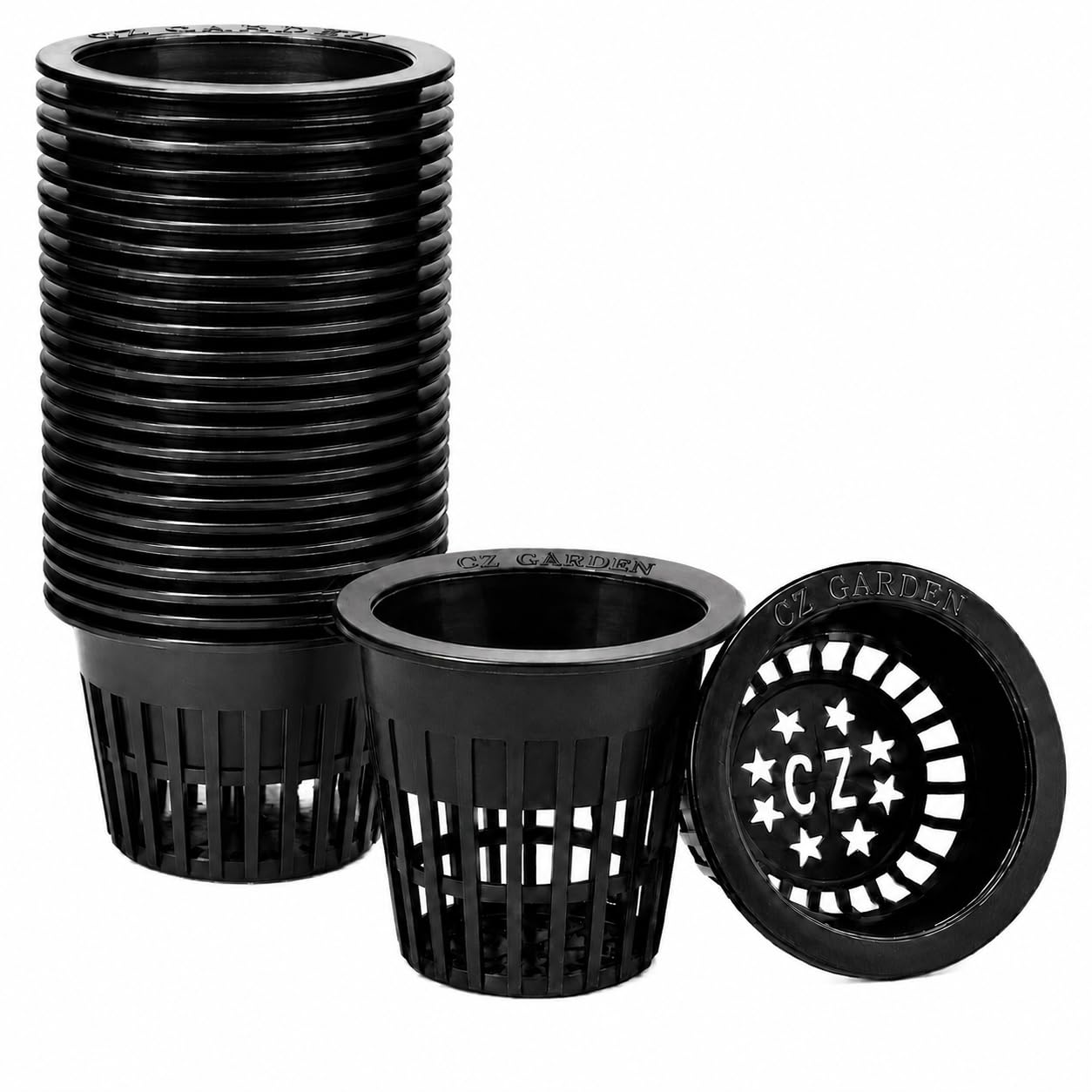
A net pot that stands on its own sounds like a small thing until a seedling rolls off the bench. These Cz Garden cups have a raised ring molded into the bottom, so they sit upright on a tray while you fill them with clay pebbles. At 3-1/4 inches across the top and 2-1/2 inches tall, they are sized for a wide-mouth mason jar, a 3-inch hole in a bucket lid, or a length of 3-inch pipe.

The rim is where they earn their keep. It is wide and reinforced, and just below it sits a band of solid plastic before the slots begin. That band does two jobs: it bridges a hole that did not come out perfectly round, and it shuts out the light that turns the top of a jar green. Anyone who has cut a lid knows the opening always ends up a little bigger than the saw.

Of the pots here, this is the pack we reach for first, because one box covers more systems than any other. The plastic is thick enough that the rim does not flex when you lift a full cup, and it is the most convincing of these on outdoor durability, the one that comes through a summer in the sun without going brittle. Twenty-five is also a sensible number: enough for a real Kratky run, few enough that you are not storing a lifetime supply.

Two things to know before ordering. Three inches is a bigger opening than most tower gardens and countertop units take, so measure the lid you plan to drill. And the slots are cut for chunky media like clay pebbles, lava rock and rockwool, so if you grow in fine perlite, expect some of it to wash down into the reservoir.

Bottom line: For most home hydroponic setups, this is the pack we tell people to buy: a wide rim that holds in a hand-cut hole, a base that stands up, and plastic that lasts more than one season.
2

ORIMERC 2-Inch Net Pots, 100-Pack Kit

ORIMERC 2-Inch Net Pots, 100-Pack Kit

Towers and jars

Our Score 9.4/10
Check Price

Worth Noting

  • 2-inch size suits herbs and starts, not big plants
Lip
2 in extra-wide
Size
2 in
Includes
100 ft wick, 100 labels
Pack Count
100
Read the full review

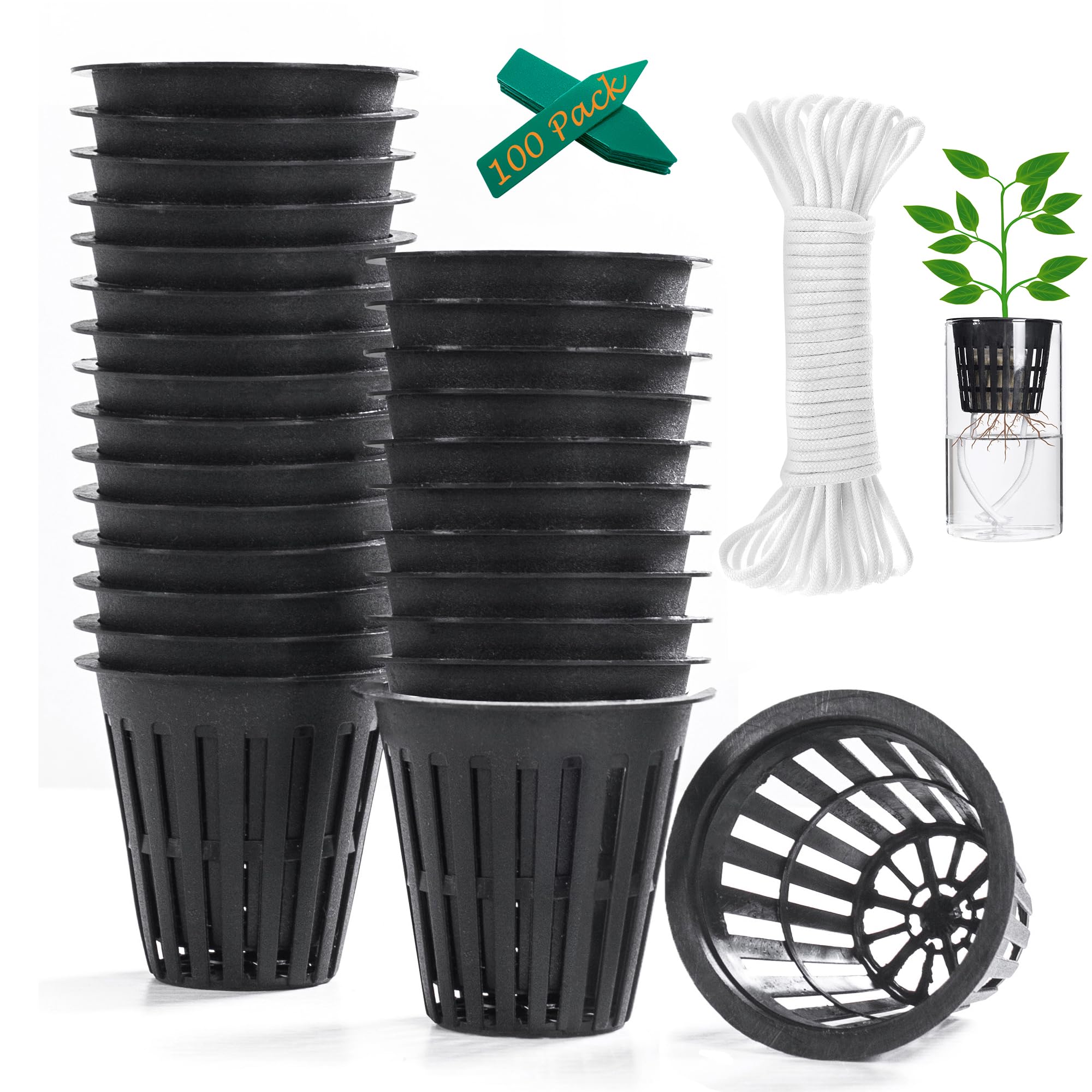
A hundred net pots is a commitment. A hundred net pots with a hundred feet of wicking cord and a hundred labels is a starter kit. That cord is the part that changes what you can build: thread it up through the bottom of a cup, pack the medium around it, and leave the other end in a jar or bucket, and water climbs to the roots without a pump or a timer.

The cups are the standard 2-inch pattern, slotted on the sides and open at the bottom, with a lip that flares wide enough to sit on the rim of the hole instead of sliding through it. That flare is forgiving, which counts when the lid you drilled is not perfectly round.

They are polypropylene, so a season outdoors does not leave them chalky, and the mesh openings are big enough for roots to escape but small enough to hold clay pebbles. A hundred identical black cups is exactly where the included labels earn their place; by midsummer you will not remember which jar holds the basil.

For filling a tower or a whole shelf of Kratky jars, this is the best value in bulk here, because the extras are things you would otherwise buy separately. Cut the wick generously, about a foot per cup, and trim it after the medium is in, since you cannot add length once it has been threaded through the bottom.

Bottom line: The bulk box we recommend for towers and wick-fed jars: a hundred sound cups with the cord and labels that turn a jar into a passive system.

3

Tmtamye 2-Inch Net Pots, 100-Pack

Tmtamye 2-Inch Net Pots, 100-Pack

Plain bulk runs

Our Score 9.4/10
Check Price

Worth Noting

  • No wicking cord in the box
Size
2 in
Bottom
Raised
Includes
20 plant labels
Pack Count
100
Read the full review

Same hundred 2-inch cups as the ORIMERC kit, minus the cord. What Tmtamye adds instead is a raised bottom on every cup, so they stand upright while you fill them, and 20 plant labels for keeping a hundred identical pots straight. If you already have a spool of wick in the shed, this is the better of the two bulk boxes.

The wide rim is the other point in its favor. It flares enough to bridge a hole that came out slightly oversized, and the plastic is on the thick side for a 2-inch cup, built to be pulled out, rinsed and put back rather than used once. UV resistance is stated, which matters on a patio where the sun reaches the reservoir.

Fit is the one thing to check. Some tower sites are molded tightly, and a wide-rimmed 2-inch cup can be a fraction too large to seat all the way down, so measure a site on your tower before ordering a hundred.

Bottom line: The bulk box to pick if you already own wicking cord: same hundred cups, plus raised bottoms and labels, without the kit markup.

4

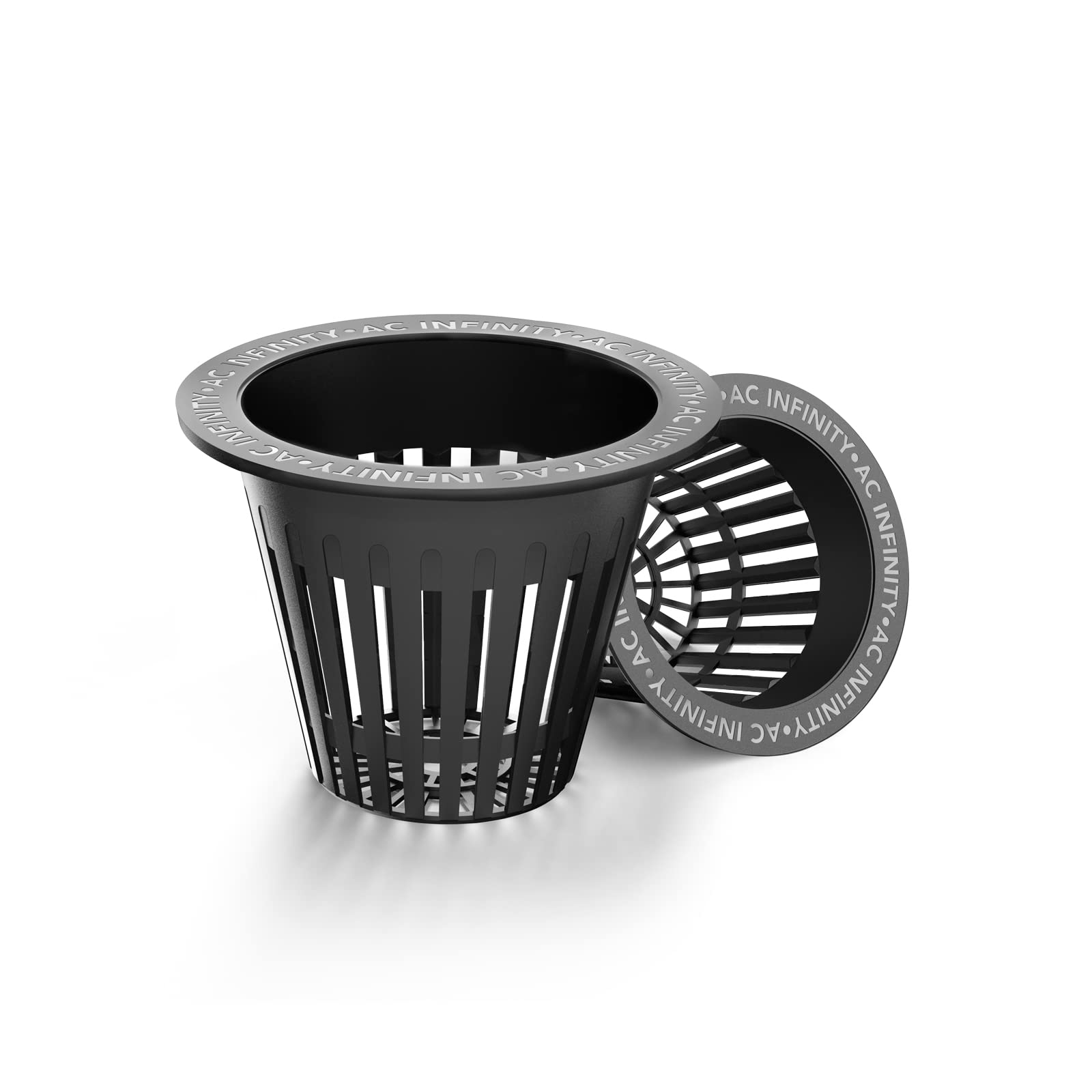
AC Infinity Net Cups 2-Inch, 50-Pack

AC Infinity Net Cups 2-Inch, 50-Pack

Long-term reuse

Our Score 9.2/10
Check Price

Worth Noting

  • Costs the most of these picks
Size
2 in
Interior
Ribbed
Pack Count
50
Rim Diameter
2.59 in
Read the full review

These are the most expensive cups in this guide, and the money goes into the wall. Where an economy cup gives when you squeeze it, this one stays rigid, with a lip heavy enough that it does not split when it is levered out of a snug hole. If you have ever had a cheap pot crack at the rim halfway through a crop, that is the failure this design is built against.

The interior is the detail we did not expect to care about. Vertical ribs run down the inside wall and steer roots toward the slots instead of letting them circle smooth plastic, which shows up at the end of a crop when you pull a root ball out in one piece rather than in fragments. The lip measures about 2.6 inches across, so it seats over a 2-inch hole saw cut with room to spare, and the polypropylene is UV-resistant and BPA-free. Fifty to a box, meant to be rinsed and reused.

What you do not get is depth. The body is roughly 2 inches tall, so it holds less medium than a 3-inch cup and suits lettuce, herbs and starts better than a full-size tomato. That short body is also why it drops cleanly into mason jar lids and Dutch bucket sites without wobbling.

Bottom line: Buy these if you plan to keep the same cups for years: the thickest, stiffest walls here, with a ribbed interior that sends roots where you want them.

5

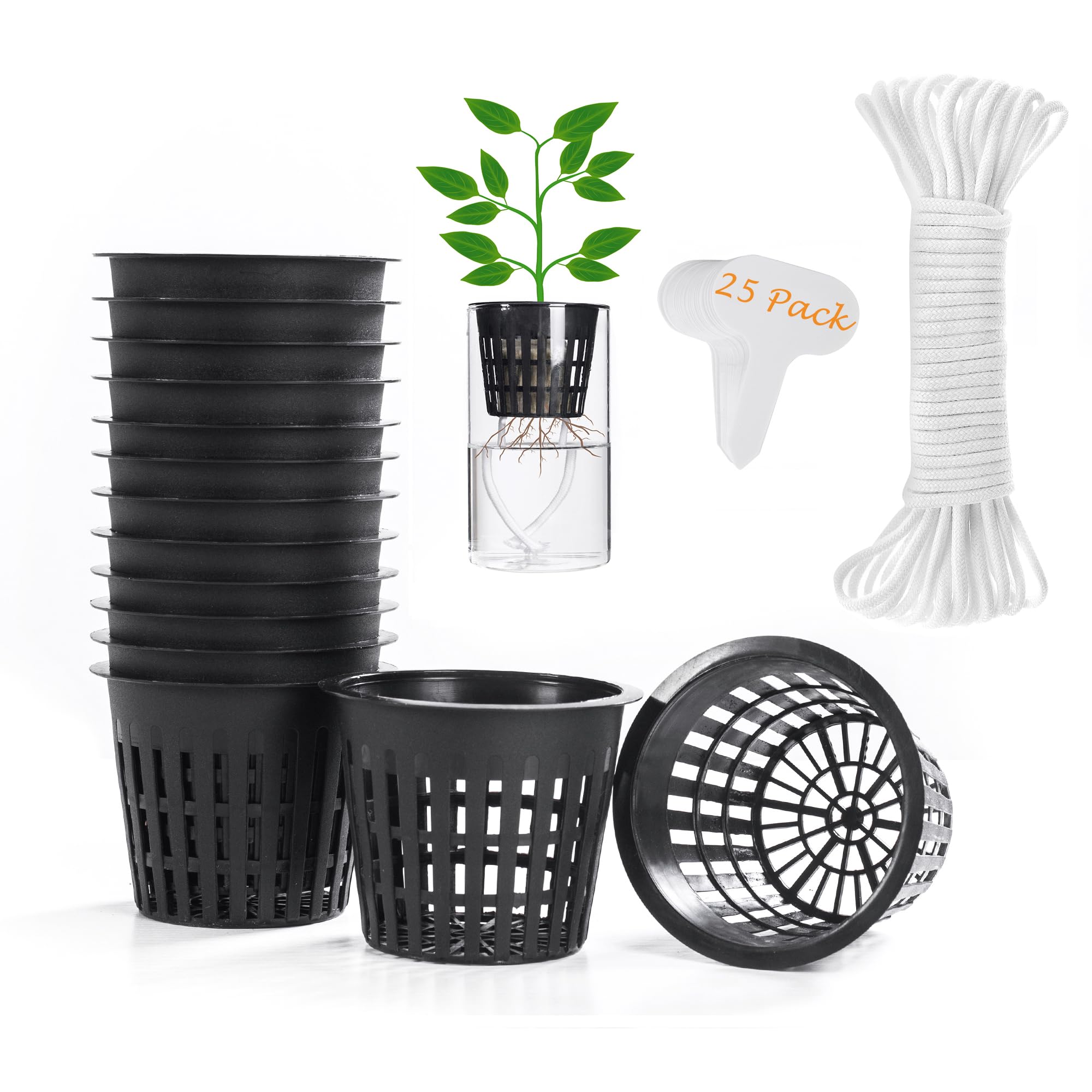
Awpeye 2- and 3-Inch Net Pots, 40-Pack

Awpeye 2- and 3-Inch Net Pots, 40-Pack

First-time setups

Our Score 9.2/10
Check Price

Worth Noting

  • Small lip leaves little margin on hand-cut holes
Material
Plastic
Pack Count
40 (20 of each)
Sizes Included
2 in and 3 in
Read the full review

Nobody knows their hole size for certain the first time. This box answers the question by refusing to choose: 20 two-inch cups and 20 three-inch cups, enough of each to plumb a small system and find out what your lids and jars actually want.

As a first purchase for someone building a DIY setup from scratch, that is hard to beat, because you are buying information as much as plastic. The cups feel sturdy, the mesh is properly slotted, and the 3-inch ones seat in a wide-mouth jar. Run the small cups for lettuce and a couple of the big ones for a tomato, and by the end of the season you will know which size to order in bulk.

The split is fixed at 20 and 20, so if you already know you are a 3-inch grower, half the box becomes spares and two single-size packs make more sense. The 2-inch cups are also for drilled lids and small sites rather than narrow-mouth jars, so do not count on them for every container in the cupboard.

Bottom line: Worth buying when you have not drilled anything yet: 20 cups in each common size lets you find out what fits before committing to a hundred.

6

ORIMERC 3-Inch Net Pots, 25-Pack Kit

ORIMERC 3-Inch Net Pots, 25-Pack Kit

Mason jar Kratky

Our Score 9.2/10
Check Price

Worth Noting

  • Won't fit 2-inch tower or rail sites
Lip
3.2 in extra-wide
Size
3 in
Includes
25 ft wick, 25 labels
Pack Count
25
Read the full review

A wide-mouth quart jar, one 3-inch cup and a wick is the whole of a Kratky setup, and this box has the makings of 25 of them. Inside are 25 cups, 25 feet of capillary cord and 25 labels, which is enough to line a windowsill without buying a hundred of anything.

The lip is generous at about 3.2 inches across, more than a jar mouth needs. That overhang is the useful part: it sits flat, covers the rim so light does not pour into the water, and saves you when the lid you cut is not quite round.

Three inches of basket holds a decent charge of clay pebbles, which is the difference between a cup that carries lettuce and one that can take a pepper plant through the season. The polypropylene is stiff enough that the rim does not fold when you lift a loaded cup out of a jar.

Nothing here puts a wick-fed jar together for less, and 25 pots is about a season of windowsill growing rather than a lifetime supply. Plan on one jar per plant and a bucket for anything past a pepper, because a quart runs out of room once a tomato starts setting fruit.

Bottom line: The cheapest way into wick-fed mason jars: 25 cups, cord and labels, with a lip wide enough to sit flat over a quart jar mouth.

7

xGarden Economy Net Pots 2-Inch, 50-Pack

xGarden Economy Net Pots 2-Inch, 50-Pack

Tight budgets

Our Score 9.2/10
Check Price

Worth Noting

  • Thin rim offers little margin on hand-cut holes
Rim
Thin lip
Size
2 in
Material
BPA-free plastic
Pack Count
50
Read the full review

A thin lip is the design brief here. These are the lightest 2-inch cups in this guide, with a slim rim and a mesh body that flexes in the hand, sold 50 to a box.

Lightness is the point. Fifty of them add almost nothing to a rack, they stack into a small box between seasons, and a full tower of them does not load up a flimsy frame. The plastic is BPA-free and UV-resistant, and the mesh is slotted the same way as the heavier cups, so roots and drainage behave the way you expect.

For a tower with dozens of holes, or a first season where you are not sure the hobby will stick, this is the sensible buy: enough cups to fill every site without wincing. Seat them with a flat palm rather than levering on the rim, and if your lids are hand-cut with a wandering hole saw, a wide-lipped cup will hold where these will not.

Bottom line: The box to buy when you need to fill dozens of tower sites cheaply: light, BPA-free cups that ask for a cleanly cut hole.

8

JpGdn 1.75-Inch Mesh Net Cups, 50-Pack

JpGdn 1.75-Inch Mesh Net Cups, 50-Pack

Countertop pod systems

Our Score 9.0/10
Check Price

Worth Noting

  • Stiff walls make root-bound plants fiddlier to lift
  • Drops through a 2-inch site
Size
1.75 in
Pack Count
50
Bottom Hole
0.39 in
Inner Diameter
1.2 in
Read the full review

If your hydroponic system is a countertop unit with seven pods and a small pump, none of the 2- and 3-inch cups here are the right shape. These 1.75-inch baskets are the replacement size for that class of machine, and 50 of them refill a seven-pod unit many times over. This is the box we point people to when the pods turn out to be the expensive part of running a countertop garden.

The measurements matter more than anything else here. The cup is about 1.75 inches across and the same tall, the inner basket tapers to roughly 1.2 inches, and the bottom hole is about 0.39 inches, wide enough to pass a wick or a root bundle and too narrow to dump a sponge. That inner diameter is the number to hold against your unit, because it holds a small root plug and a little medium, not a full-size plant.

The walls are stiff rather than flexible. That is why they keep their shape in a pump-fed machine, and also why a root-bound plant takes more coaxing to lift out. Measure the pod opening before ordering: a genuine 2-inch site has nothing for a 1.75-inch rim to catch on, and the cup will drop straight through.

Bottom line: For countertop pod machines rather than buckets: the 1.75-inch basket that refills a seven-pod unit over and over at very little cost.

How We Tested Hydroponic Net Pots

We started by narrowing a long list of net pots by size, lip dimensions, slit pattern, and plastic feel, then ordered 14 styles that represent the range you'll actually find—thin nursery cups, heavy-duty reusable pots, and wider-lip designs made for bucket lids. Testing ran for four months in the same spots where most people grow: a kitchen windowsill with Kratky jars, a five-gallon DWC bucket in the garage, a countertop aeroponic tower, and a seedling tray under a grow light. We used them for basil, lettuce, and tomato starts, with clay pebbles, rockwool, and a couple of perlite mixes.

Fit and lip size got measured, not guessed. We checked each pot against common 2-, 3-, and 4-inch holes, noted whether it sat flush or wobbled, and whether the lip was deep enough to grab when lifting a full pot. Stability came next: we loaded each one with saturated clay pebbles, set it in a jar lid, bucket lid, and tower cup, then nudged the container to see if the pot tipped or spun. To test sturdiness and durability, we lifted every pot by its rim while full, squeezed the sides, and watched for stress whitening or cracks at the rim and slit edges. We also rinsed and reused each one after harvest to see which ones survived cleaning without chips.

Functionality came down to roots and media. We checked whether the slits drained freely, whether clay pebbles stayed in, and whether roots could push through without tearing. Quality showed up in mold seams, sharp edges, and brittle plastic that snapped instead of flexing. Value was judged by cost per pot against how many cycles it lasted—not just the sticker on the bag. The pots that made the list were the ones still sitting straight after four months of wet, messy, real-world use.

How to Choose Hydroponic Net Pots

Start With the Hole, Not the Plant

The number on the label describes the rim, not the basket. A 2-inch cup measures about 2.6 inches across its lip and tapers to well under 2 inches at the base, and that flare is the whole reason it does not drop through the lid. Measure the opening you already have before you order anything.

The trap is the hole saw. A 2-inch saw cuts a hole slightly wider than 2 inches, so a thin-lipped cup on a hand-cut lid has less to catch on than the same cup in a molded site. If you are drilling your own lids, buy the widest lip you can find.

The Rim Does the Holding

A wide, reinforced rim is the most useful feature on a net pot. It bridges a hole that came out slightly off-round, it gives you something to grab when you lift a plant to check roots, and on cups like the Cz Garden it leaves a band of solid plastic between the water and the light, which slows algae at the top of a jar. Economy cups with a thin rim are lighter and cheaper and work fine in a clean, molded site; the lip only becomes a problem when the hole is ragged.

Wall Thickness Decides How Long a Cup Lasts

Net pots sit in water and sun, and thin plastic goes brittle at the rim first. Thick polypropylene holds its shape through a season of lifting and rinsing; thin cups flex, crack, and get replaced. If you are filling a tower for one summer, thin cups are the economical choice. If you want the same cups back next spring, the heavier boxes are worth the difference, so check for UV resistance and BPA-free plastic on anything heading outdoors or holding edible crops.

Count, Extras, and Cost per Site

Count your sites before you count the cups. A hundred-pack is only a bargain if you have somewhere to put a hundred cups; otherwise a 25-pack with wicks suits a shelf of jars. Extras are what separate two boxes at the same count. Capillary wick turns a mason jar into a passive Kratky setup, plant labels keep a hundred identical black cups straight, and a raised bottom lets a cup stand on the bench while you fill it. Read the contents list, because a wick and a set of labels can matter more than ten extra pots.

Basket Depth and What You Fill It With

Deeper baskets hold more clay pebbles and more root mass. That is why 3-inch cups are the usual choice for tomatoes and peppers and 2-inch cups for lettuce, herbs and starts, and why a 1.75-inch basket belongs in a countertop pod machine rather than a bucket lid. Slot width matters as much as depth: fine perlite sifts out of most mesh, while clay pebbles, lava rock and rockwool stay put. If perlite is your medium, line the cup with a rockwool cube or switch to pebbles for that run.

Frequently Asked Questions

Final Verdict

The Cz Garden 3-inch pack is the one we point most growers to. A wide rim that holds in a hand-cut hole, a raised bottom that stands on the bench, and thick plastic that comes back for another season cover buckets, jars and 3-inch pipe without a compromise that matters. If your system is built around 2-inch sites, the AC Infinity cups are where the extra money goes; for a tower with a hundred holes, the ORIMERC kit with wicks is the more practical box.