Greenhouses & Hydroponics

Best Hydroponic EC Meter of 2026

The frustrating thing about an EC meter is that a wrong reading looks exactly like a right one. Your reservoir reads 1.8, you top off the nutrients, and a week later the leaf tips are burned — or the plants have quietly stalled because that number was never real to begin with. An EC meter only earns its keep if the reading matches what's actually in the water, and that comes down to two unglamorous things: how well it holds calibration, and how it survives being dunked twice a day.

I've overfed more plants than I've underfed, and a drifting pen had plenty to do with it. So over the past four months my team and I kept 14 meters in rotation — basic two-button pens up through kits that ship with calibration solution — rinsing and recalibrating them through a full run of reservoir changes. The gap between them showed up within a few weeks. What follows are the ones that held their numbers, took a dunking without complaint, and didn't turn calibration into a chore.

1

Bluelab Truncheon

Top Pick
Bluelab Truncheon

Daily reservoir mixing

Our Score 9.4/10
Check Price

Worth Noting

  • No pH, so you still need a second pen
Scales
EC, ppm 500, ppm 700, CF, TDS
Warranty
5-year limited
Calibration
Factory calibrated, none required
Measurement Range
2 - 36 CF, 0.2 - 3.6 EC, 140 - 2520 ppm (EC x 700), 100 - 1800 ppm (EC x 500)
Read the full review

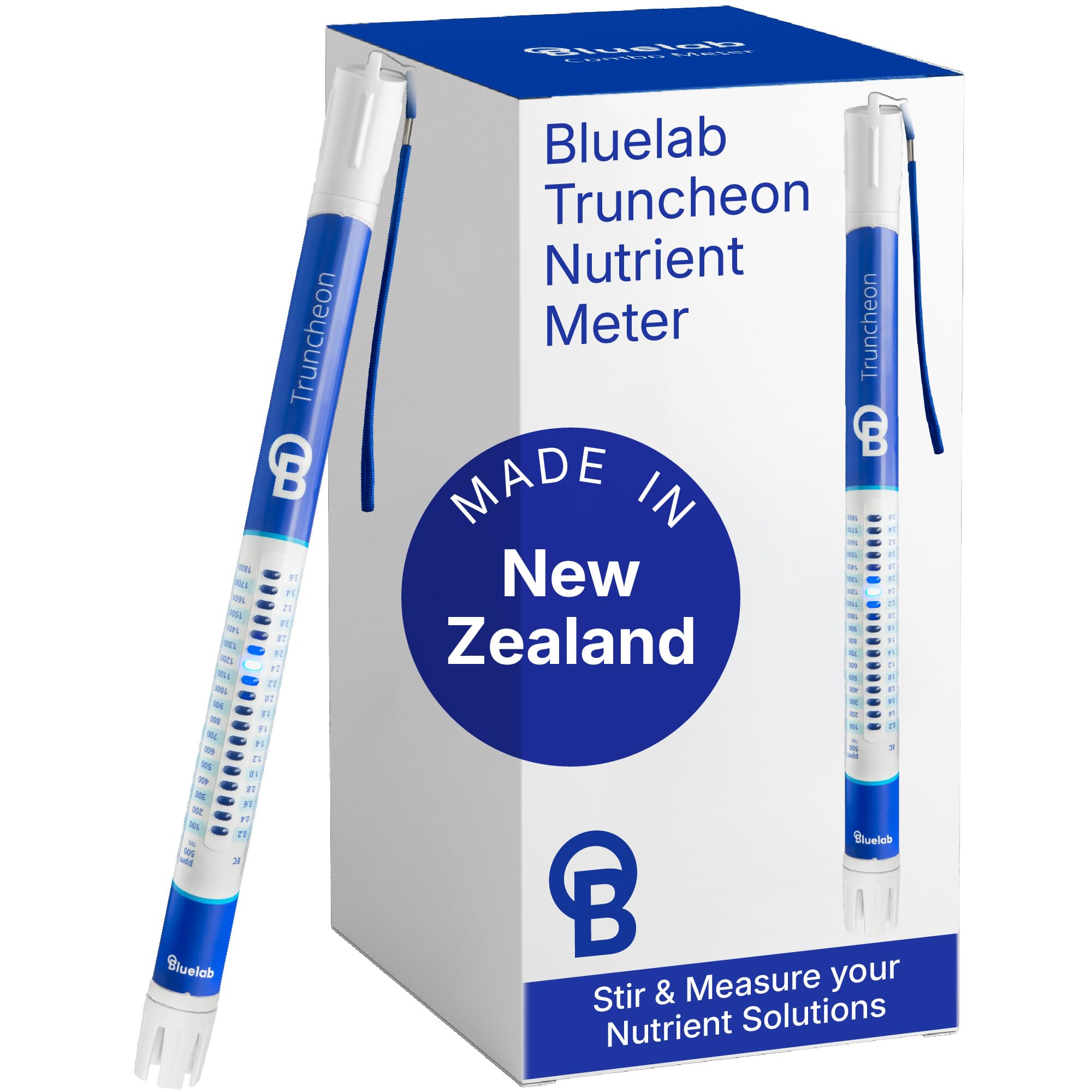
There is no calibration routine on the Truncheon. It ships factory calibrated, has no buttons or switches, and asks only that you rinse it, dip it, and read where the light stops on the scale. That absence is why we put it first. A pen that calibrates fine and then drifts is the standard failure in this category, and this wand deletes the entire ritual from your week.

What you trade is a number. Readings come off a lit scale rather than an LCD, in whichever of EC, ppm 500, ppm 700, CF or TDS you need, so the same dip answers a feed chart written on either conversion — which matters more than it sounds once you've compared two charts that don't agree. The stated range runs 0.2 to 3.6 EC, which puts full-strength nutrient comfortably inside it and puts plain tap water and reverse-osmosis water below the floor. Auditing your base water is a job for a different meter; mixing feed is this one's whole purpose.

The rest is shaped for a grow room. Sixteen inches of sealed wand reaches the bottom of a reservoir without a jug, it stirs as well as it measures, it runs on AA batteries, and it carries a five-year limited warranty — much the longest cover in this set. Maintenance is a rinse rather than a calibration, which is the kind of ownership you stop thinking about.

Bottom line: The one we tell people to buy: it never needs calibrating, reads EC and both ppm scales, and carries a five-year warranty. Buy it if you mix nutrients and already own a pH pen.

2

Bluelab PENCON

Bluelab PENCON

Pocket spot checks

Our Score 9.2/10
Check Price

Worth Noting

  • One-year limited warranty, the shortest cover here
Measures
EC, CF, ppm 500, ppm 700, temperature
Warranty
1-year limited
Calibration
Optional; ships factory calibrated
Temperature Compensation
Automatic (ATC)
Read the full review

If the Truncheon's light scale leaves you wanting an actual number, this is the same maker's answer. The PENCON shows EC, CF or either ppm conversion on an LCD with solution temperature beside it, in a pen that slips into a shirt pocket and floats if you drop it in the tank.

Temperature is the extra we end up using most. Strength tells you what's in the water; the temperature next to it tells you how hard the plants are working, and automatic compensation means the EC figure is corrected for it either way. Two readings from one dip is a better fit than a sixteen-inch wand when you're moving between buckets rather than standing at one reservoir, and that's the setting this pen was built for.

Bluelab ships it factory calibrated and treats calibration as optional, with regular cleaning the thing that actually keeps readings honest — a rinse after each dip does more for this pen than a bottle of buffer. It's the measurement habit, not the hardware, that decides whether you get good numbers out of it.

Bottom line: We recommend it for spot checks between buckets: a factory-calibrated pocket pen with EC, both ppm scales and solution temperature, and it floats when you fumble it.

3

HM Digital COM-80

HM Digital COM-80

Cheap EC checks

Our Score 9.0/10
Check Price

Worth Noting

  • EC and TDS only, with no pH
Measures
EC and TDS
TDS Range
0 to 5000 ppm
Resolution
1 µS/ppm; 0.1 mS
Response Time
0.5 seconds
Read the full review

This is the cheapest route to a dedicated EC meter here, and nothing about it feels like a corner was cut: 0.5-second response, automatic temperature compensation, a water-resistant body, and four scales covering EC in µS and mS and TDS in ppm and ppt. We like it exactly because it does so little — EC and TDS, on a pen that weighs two ounces and disappears into a pocket.

The bargain is a different one from the Truncheon's: a number on a screen and a pen you can carry, in exchange for calibration you do yourself. Check it against 1413 µS/cm reference solution when it arrives rather than trusting the factory setting, and again every few weeks — that's the practice that separates a cheap EC meter that works from one that quietly tells you what you want to hear.

Bottom line: We point budget-minded growers here: a fast, water-resistant EC and TDS pen with four scales and ATC, provided you check it against reference solution.

4

YINMIK Truncheon Meter

YINMIK Truncheon Meter

Budget no-calibration

Our Score 9.0/10
Check Price

Worth Noting

  • LED scale gives no numeric readout
  • Ten-inch reach falls short of the Bluelab's sixteen
Length
10 inches
Measures
EC, ppm 500, ppm 700, CF, TDS
Batteries
3 LR44 (included)
Calibration
None required (factory calibrated)
Read the full review

The idea is borrowed wholesale: a long, buttonless wand you dip and stir, reading off a flashing LED scale, with no calibration required. It's the Bluelab Truncheon's routine at a much lower price, and the wand here runs ten inches rather than sixteen.

The scale covers EC, ppm 500, ppm 700, CF and TDS, so it answers whichever unit your feed chart uses, and automatic temperature compensation keeps the figure consistent as the reservoir warms. Ten inches and fourteen ounces is a size that reaches into a bucket without taking over a shelf, and three LR44 batteries come in the box.

We haven't put years on one, so longevity is the open question, but the design is the design we recommend at the top of this page: no calibration, no buttons, nothing to baby. What the Bluelab adds is a longer reach and a five-year warranty, and that warranty is the honest reason to spend more. Buy this one if the routine appeals and the budget doesn't stretch to the original.

Bottom line: We recommend it to growers who like the no-calibration wand idea without the Bluelab price: same routine, EC and both ppm scales, ten inches long.

5

Apera PC60

Apera PC60

pH and EC together

Our Score 8.8/10
Check Price

Worth Noting

  • Most expensive meter in this set
  • Six-month electrode cover against two years on the body
Probe
Replaceable multi-parameter
Measures
pH, EC, TDS, salinity, temperature
Warranty
2-year instrument, 6-month electrode
Kit Contents
Calibration solutions, bottles, storage solution, batteries, lanyard, case
Read the full review

The PC60 arrives as a kit rather than a pen with a cap: a zipped case holding ready-to-use calibration solutions, calibration bottles, storage solution, batteries and a lanyard, with a stand built in so the meter sits upright while you calibrate. We've unboxed plenty of meters that turned out to be a pen and a folded leaflet; this is the one that reads like somebody thought about the bench it would sit on.

It measures pH, EC, TDS and salinity with temperature on a dual display, and the backlight changes color by mode so you can tell at a glance which reading you're looking at. The detail that earns its keep is the stability icon: it holds a smiley face when the reading has settled, which is the difference between writing down a number and writing down a number that was still moving.

For a grower who wants one instrument instead of three, this is the pick, and the replaceable multi-parameter probe is what makes the spend defensible — a probe you can swap keeps the body and the case in service instead of retiring the whole kit when the sensor ages out.

Bottom line: We recommend it when you want pH, EC and temperature from one instrument: a complete kit with a replaceable probe, at the top of this set's price range.

6

YINMIK YK-T4 Pro

YINMIK YK-T4 Pro

First-time growers

Our Score 8.8/10
Check Price

Worth Noting

  • pH side can refuse to calibrate
Measures
pH, EC, TDS, temperature
Immersion
Rated for long immersion in reservoir or tube
Calibration Included
pH 4.00 and 7.00 solution plus 1413 µS/cm EC buffer
Read the full review

Starting a reservoir from nothing means buying two meters unless one pen can do both jobs. The YK-T4 Pro is that pen: pH, EC, TDS and temperature on one screen, shipped with pH 4.00 and 7.00 calibration solution and a 1413 µS/cm EC buffer, so the EC side is ready on arrival and the pH side needs a two-point check before you lean on it.

The EC half is why it earns a place. Of the budget all-in-ones here, this is the one we trust against a reservoir: it settles quickly and holds steady, and pH and temperature arrive on the same screen rather than demanding a second dip. For a hobby grower checking a couple of buckets every few days, that's the whole job done in about the time it takes to fill a jug.

It's also rated for long immersion, which is unusual at this price and genuinely handy if you keep a mother plant or a single DWC bucket — stand it in the tube, pull it out when you want a number, and skip the dip-and-dry routine. Small systems where one pen lives beside the reservoir are exactly the case it's built for.

Bottom line: The budget all-in-one we recommend first: pH, EC, TDS and temperature from one pen, with an EC side steady enough to run a small reservoir on.

7

UIUZMAR UMR-PH08

UIUZMAR UMR-PH08

Backup all-in-one

Our Score 8.6/10
Check Price

Worth Noting

  • Accuracy trails the other all-in-ones here
  • pH can drift even with regular calibration
Measures
pH, TDS, EC, temperature
Batteries
4 LR44 (included)
pH Calibration
3-point (4.0, 7.0, 10.01)
Temperature Compensation
32 to 122 °F (ATC)
Read the full review

On paper it's the most complete cheap pen in this group: pH, TDS, EC and temperature, automatic compensation across 32 to 122 °F, a backlit screen, a body that floats, and enough calibration powder for two rounds of three-point pH calibration.

The catch is accuracy. Set against the YINMIK it's the weaker bet — this is the pen whose readings we check twice, and a meter you double-check is one you stop trusting at six in the morning before work. That doesn't make it useless. It makes it a second pen, or a first pen for someone testing one bucket and comparing against solution until they know its habits.

Two details we do like. It floats, which matters the first time a pen goes into a reservoir, and the pH calibration is a plain three-point process with the powders supplied instead of a bottle you have to remember to order. Four LR44 batteries are included, so it works on day one.

Where it earns its place is as a backup or a second pen for a grower who wants pH and EC from the same tool without paying YINMIK or Apera money. As the only meter in the cupboard, one of the picks above is the safer spend. This is the one you keep in the shed.

Bottom line: We recommend it as a backup or second pen: pH, TDS, EC and temperature, a body that floats and three-point pH calibration, with readings worth cross-checking.

How We Tested 14 EC Meters Through a Full Grow Cycle

We started by rounding up every meter a home grower can reasonably buy, then filtered the list by the things that matter once you're standing over a reservoir: whether it reads EC and ppm with a selectable conversion, whether it compensates for water temperature, whether the probe can be replaced, and whether a calibration kit comes in the box or costs extra. That left 14 meters, and they lived beside the reservoir for four months instead of in a drawer.

Most of the testing happened during a normal Sunday water change — mixing three-part nutrients into 20 gallons, then dipping every meter into the same cup of solution and logging the readings side by side. Once a week we recalibrated each one against a fresh reference standard and noted how far it had drifted since the last check, and we timed the whole process from dry probe to stable number so we knew which ones turned calibration into a chore and which ones got it done in a few minutes.

Durability and water resistance got their own rounds: each meter took a waist-high drop onto concrete, spent a night sitting wet in a tray instead of being dried and capped, and got dunked past the fill line to see what the seal could take. We also read each display in direct afternoon sun and noted which buttons needed two hands to press.

How to Choose the Right Hydroponic EC Meter

Decide Whether You Want pH in the Same Pen

EC and pH answer different questions. EC is how much nutrient is in the water; pH is whether the roots can take it up. If you already own a pH pen you trust, put your budget into a dedicated EC meter, because you get better conductivity hardware for the same money. If you're starting from nothing, an all-in-one saves a dip and a pocket — but check which half the maker calibrated at the factory. On most budget pens it's the EC side, and the pH side is the one that drifts.

Calibration Is the Routine You're Signing Up For

Three levels exist here. A factory-sealed wand like the Bluelab Truncheon has no calibration mode at all, so the routine disappears. The Bluelab PENCON is calibrated at the factory with calibration listed as optional. Most budget pens ask for a two- or three-point pH routine plus an occasional EC check.

The trap is treating factory calibrated as permanent. Conductivity sensors drift, slowly but really, and a bottle of 1413 µS/cm reference solution is the cheapest insurance in the hobby. Buy the solution with the meter and check it every few weeks.

Record EC, Not ppm

ppm is a conversion, not a measurement. The same solution reads roughly 40 percent higher on the 700 scale than on the 500 scale, so a feed chart quoting ppm means nothing until you know which conversion the author used. EC is the number everyone agrees on. Keep your records in EC, and when a chart hands you ppm, note the conversion beside it once and stop worrying. Meters that carry both conversions on the same scale make that switch without a calculator.

Check the Bottom of the Range, Not the Top

Every meter here handles full-strength nutrient solution, so the top of the range rarely decides anything. The bottom does. If you want to know what your tap or reverse-osmosis water contributes before you add nutrients, the meter has to read near zero, and a stated floor of 0.2 EC puts base water out of reach. Decide whether you're auditing source water or mixing feed — then pick for that one job.

Size, Sealing and What Keeps It Alive

A pocket pen and a sixteen-inch wand are different tools. The pen travels to the bucket; the wand lives at the reservoir and stirs. Past shape, look at how the body is sealed and what the maker covers. Five years on the Truncheon against one on the PENCON is a fair signal of what each is built for, and a replaceable probe, as on the Apera PC60, changes the long-term math by keeping the body out of the bin when the sensor ages.

Frequently Asked Questions

Final Verdict

We recommend the Bluelab Truncheon. It's the one meter here that takes calibration out of your routine entirely, reads EC and both ppm conversions off the same wand, and backs it with a five-year warranty — for anyone mixing feed weekly, that's the whole job done.

If you want pH and EC from one instrument, the Apera PC60 kit is the better spend. If you want a dedicated EC pen you can pocket, the HM Digital COM-80 costs far less and reads fast, provided you check it against reference solution when it arrives.