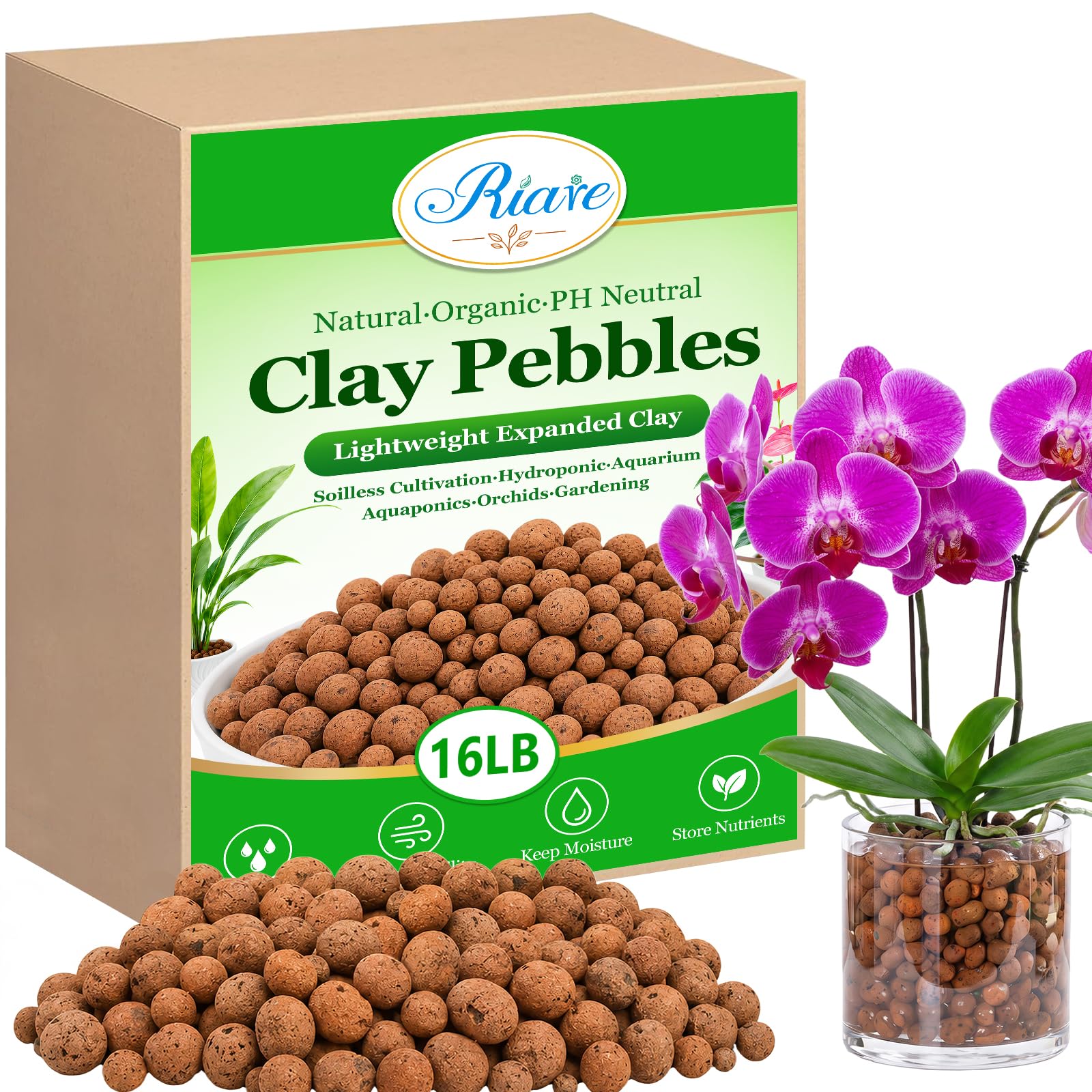
Hydroton Original Clay Pebbles
Top Pick
What We Like
- Settles in the basket instead of drifting
- Uniform, round pebbles around 12 mm
- Rinses clean and returns for the next crop
Worth Noting
- Pricier per liter than the budget bags
- Ten liters goes fast in a large system
- Media
- Expanded clay (LECA)
- Reusable
- Yes, after cleaning
- Bag Volume
- 10 liters
- Pebble Diameter
- 12 mm
Read the full review
Wet expanded clay has a habit of drifting, and it's the first thing that goes wrong in a new system: a net pot filled the night before sits half empty by morning, with the pebbles bobbing in the reservoir. Hydroton's pebbles are semi-porous and settle once they've taken up water, so the basket you fill tends to stay filled. In a recirculating tray or a deep-water bucket, that one behavior saves a lot of topping up.
The grade is the other reason it's easy to live with. The pebbles arrive round and close to a uniform 12 mm, so they nestle around a stem instead of leaving a channel for light to reach the water, and there are fewer crumbs to sift through the slots of a net cup. A mixed grade has its uses — the small pieces fill gaps — but it's fussier to place, and you can't choose what you get.
It's still clay straight out of a kiln, so expect a rinse. Tip what you need into a colander, run water through it and stir until the water runs clear; bags that have been knocked around in transit take an extra pass. Once it's clean, the same pebbles come back crop after crop, which is the part that makes clay worth buying in the first place.
For most people building a real hydroponic system — a DWC bucket, an ebb-and-flow tray, a column of net pots — this is the bag we point to first. What you're paying for is consistency: the same round, water-ready pebbles every time you open the sack, in a size that works from a three-inch net cup upward.
Bottom line: We tell anyone running a real hydroponic system to start here: uniform pebbles that settle in the basket and rinse back into service crop after crop.