Poultry & Livestock

Best Heated Chicken Waterers of 2026

Nothing ruins a winter morning like lifting the chicken waterer and finding a block of ice where the water used to be. Hens drink more than most people expect, and a bird that can't drink stops eating, stops laying, and starts looking rough around the comb. A heated waterer fixes that one thing: it keeps drinkable water in front of your flock overnight, so you're not out at dawn with a kettle.

What surprised me is how differently they handle the job: some run hot enough to poach an egg, some barely keep a skin of ice off the surface, and a fair number leak, clog, or quit in February. We've had 10 running through one full winter, October through March, and the keepers share a trait that has nothing to do with wattage — you can take one apart and scrub it in under five minutes. A heated waterer that's a pain to clean grows a biofilm you can smell from the run, and that detail separates the ones that last from the ones that end up in the shed.

1

ZenxyHoC 5-Gallon Heated Bucket

Top Pick
ZenxyHoC 5-Gallon Heated Bucket

Large flocks

Our Score 9.2/10
Check Price

Worth Noting

  • Only four nipples for a five-gallon bucket
  • Plastic legs and handle under a full load
Heating
Thermostatic, on below 35°F
Capacity
5 gallons
Power Cord
10 ft
Drinking Points
4 horizontal nipples
Read the full review

Two more gallons for less money than our top pick, and that is the honest pitch: if refills are the chore you actually notice, this bucket answers it. Five gallons is the largest capacity here, and it buys days rather than hours between top-ups in a cold snap. We point a bigger flock at this one for exactly that reason.

Four horizontal nipples sit along the side, a thermostat brings the heater on below 35°F, and the cord runs 10 feet — enough for most coops, shorter than the Premier's. The details won us over, though. A clear strip on the bucket shows the water level so you are not opening a lid in the dark, the anti-roost cone keeps birds off the top and leaves out of the water, and six legs adjust so the valves sit at the right height for grown hens rather than chicks.

What we cannot tell you yet is how it reads after three or four winters. There is little to go wrong beyond the thermostat and the plastic fittings, and the fittings are exactly what lets cheaper buckets down. For a big flock and a level coop floor, this is a serious amount of waterer for the money, and the daily experience of it is the second-best in this group after our top pick.

Bottom line: The high-capacity pick: five gallons, a level window, and a thermostat that starts heating at 35°F, for a flock that empties a three-gallon bucket too fast.

2

GHWMYD Heated Water Bowl

GHWMYD Heated Water Bowl

Ducks, small flocks

Our Score 9.2/10
Check Price

Worth Noting

  • Open water needs rinsing most days
  • Too small for a large flock
Heating
Thermostatic, sealed element
Capacity
3.7 L (125 fl oz)
Power Cord
6.56 ft, anti-chew
Water Access
Open bowl
Read the full review

Nipples are the right answer for chickens and the wrong one for ducks. A duck needs to get its bill into open water to rinse it, so a valve drinker leaves it dunking in the mud instead. A wide, shallow, heated bowl handles that, and this one is the least expensive way into the category.

At 125 fluid ounces — a little under four liters — it holds enough for a handful of birds, not a flock of thirty. The element is sealed inside the plastic casing, the bowl is built to sit out in rain and snow, and the 6.56-foot cord has an anti-chew jacket, which matters when birds can walk right up to the plug end. Cleaning takes seconds: tip it out, wipe, refill. We also appreciate that the thermostat keeps it from drawing power on a mild afternoon, and that a bird standing in it is not going to crack anything.

The trade-off is open water. Chickens scratch litter and droppings into a bowl, so this wants rinsing most days — more often than any covered waterer here — and it is the smallest capacity in the group, which a big flock will drain by mid-morning. For ducks, a couple of geese, or a small coop where you are out every day anyway, none of that is a dealbreaker.

Bottom line: The pick for ducks and small flocks: a heated open bowl that lets waterfowl rinse their bills, wipes clean in seconds, and costs less than any waterer here.

3

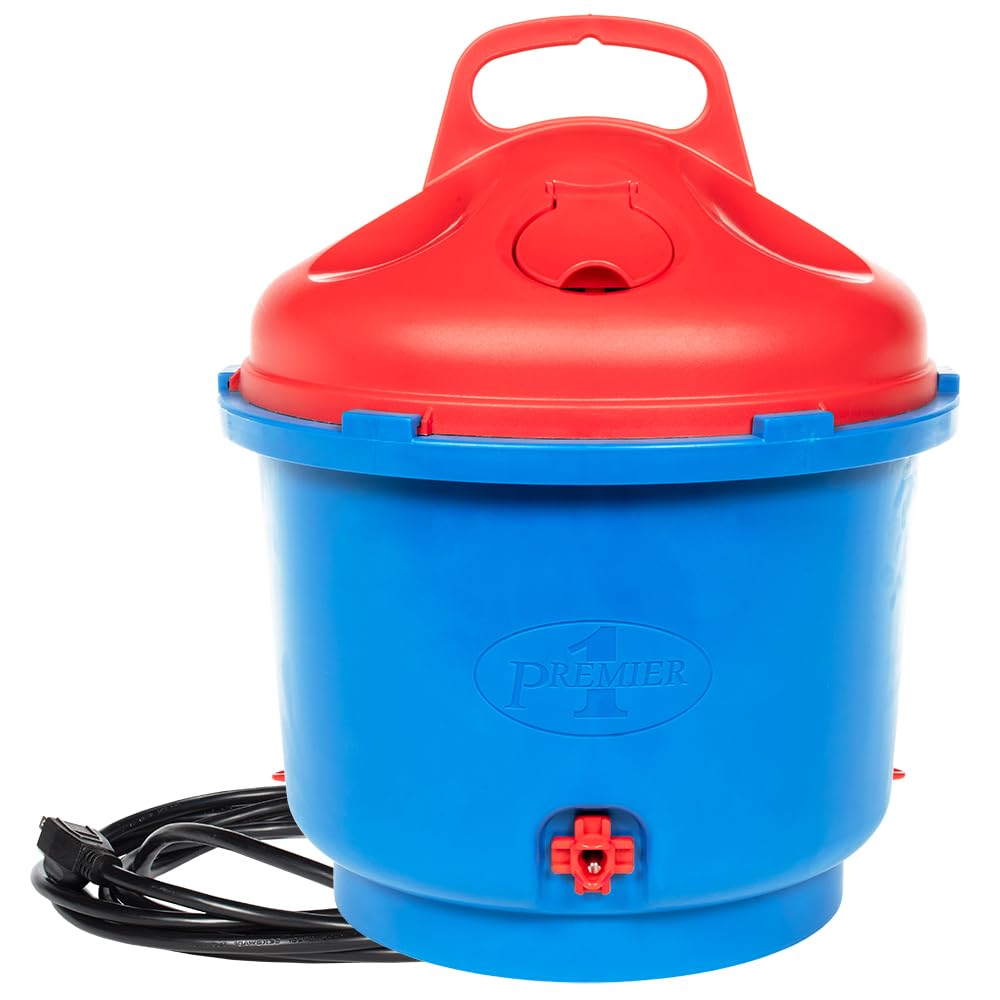
Premier 1 Heated Poultry Waterer

Premier 1 Heated Poultry Waterer

Most backyard coops

Our Score 8.6/10
Check Price

Worth Noting

  • Longevity is uneven past the first winter
  • Ducks may not take to the nipples
Heating
100W, on below 40°F, off at 60°F
Capacity
3 gallons (up to 35 adult chickens)
Power Cord
16 ft, detachable
Drinking Points
3 recessed nipples
Read the full review

Refilling is the part of winter watering nobody warns you about. You unhook a full bucket, carry it through the snow, flip it upside down, and hope the lid seats before you have water down your sleeve. The Premier 1 shortens that whole routine with a hinged cap on the lid: we topped it up with a pitcher, standing exactly where it hangs, without unplugging anything or lifting the unit off its hook. In February, that is the difference between a two-minute chore and a twenty-minute one.

The rest of the design backs that up. Three gallons, rated for up to 35 adult chickens, with three recessed nipples that keep the water covered and out of the litter — the biggest single reason we prefer nipples to an open trough. The 100-watt element runs on a thermostat that clicks on below 40°F and off at 60°F, so it is not heating all winter long, and the detachable 16-foot cord is the longest here, which buys real freedom about where the outlet sits.

Where we hesitate is the drinking point in serious cold. The waterer is rated to minus 20°F, but the valves themselves can ice over around five to ten below while the bucket stays liquid, so the coldest mornings call for a thumb across each nipple before the flock comes out. Ducks are the other limit: the maker itself suggests keeping a second water source for them, because a duck wants to dunk its bill, not press a valve.

It is also the most expensive single unit we recommend, and we think the refill cap and the clean-water design earn it. If that is more than you want to spend on a bucket, the ZenxyHoC gives you two more gallons for less and asks you to lift it instead.

Bottom line: For most backyard flocks this is the one: three gallons, clean nipple water, a thermostat that only heats when it is needed, and a hinged cap you can refill wearing gloves.

4

Eggluuz 5-Gallon Heated Waterer

Eggluuz 5-Gallon Heated Waterer

Crowded coops

Our Score 8.6/10
Check Price

Worth Noting

  • Three-month warranty is the shortest here
  • Nearly 20 inches tall, awkward to carry full
Setup
Foldable adjustable legs
Heating
Thermostatic, on below 35°F
Capacity
5 gallons
Drinking Points
8 horizontal nipples
Read the full review

Eight horizontal nipples is more than any other waterer on this page, and it changes how a bucket behaves in a busy coop: with eight valves spread around the sides, a dozen hens are not queuing three deep at four stations. If you have watched a pecking order sort itself out at a waterer, you know why that matters — the low bird in the flock is usually the one that drinks least.

The rest of the design is familiar: five gallons, a thermostat that brings the heater on below 35°F, an anti-roost cone over the lid, and foldable legs that adjust for height. It is essentially the same bucket as the ZenxyHoC with four more valves, which we count in its favor — the threshold is early enough to stay ahead of a frosty night, and the cone keeps the lid clear of litter. Filling it is uneventful, and the legs fold flat for storage in summer.

Where it gives ground is the paperwork. Three months of warranty is the shortest on this page, and a full five gallons hanging on a plastic lid assembly is a lot to ask of any bucket. Side by side with the ZenxyHoC, we give that one the edge for its level window and slightly longer cord; we give this one the edge on stations, which is the whole reason to buy it.

Bottom line: The pick for a crowded coop: eight nipples around a five-gallon bucket so no bird waits its turn, with a thermostat and an anti-roost lid to match.

5

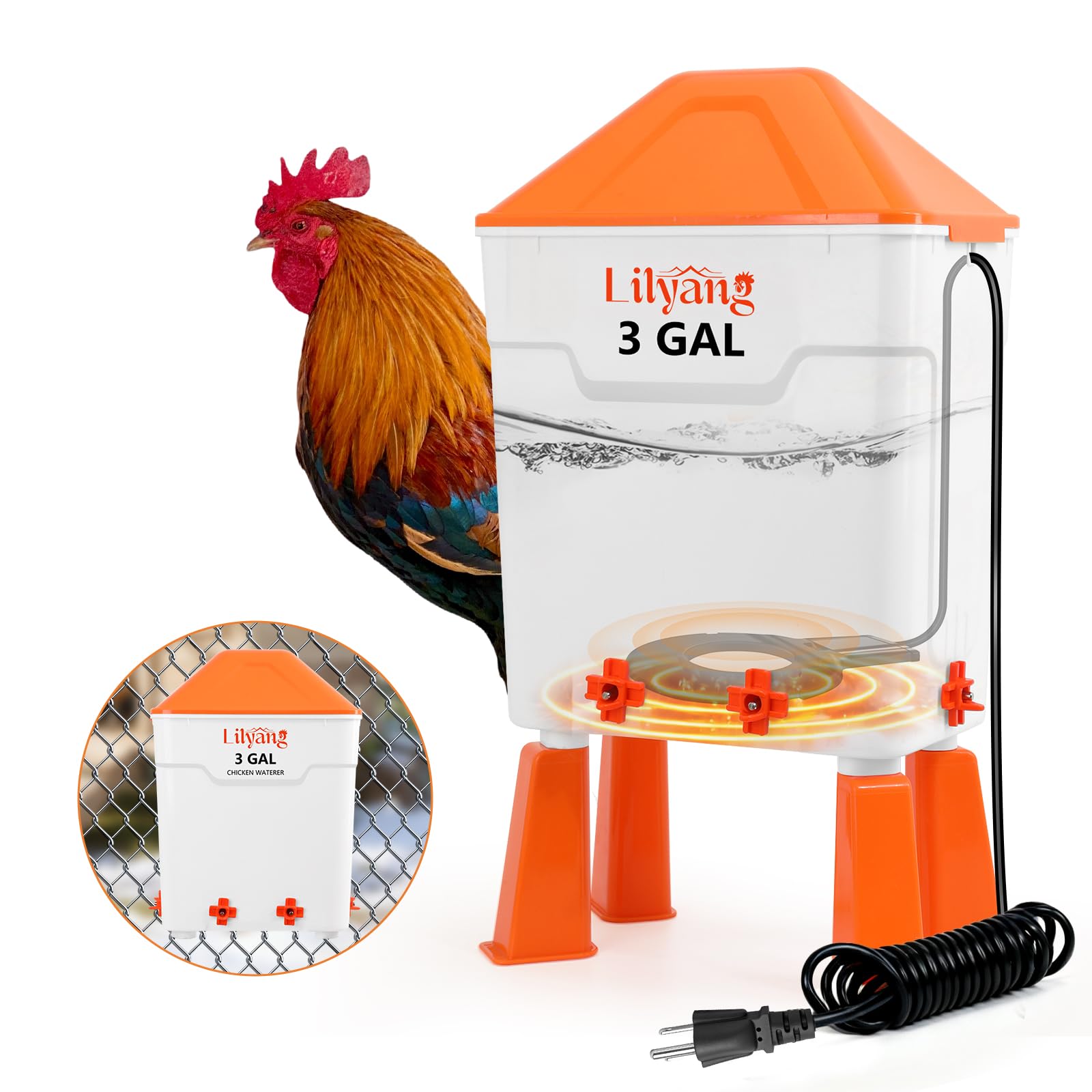
Lilyang 250W Heated Waterer

Lilyang 250W Heated Waterer

Budget cold coops

Our Score 8.4/10
Check Price

Worth Noting

  • 250 watts draws the most power when heating
  • Open cups collect debris and ice first
Setup
Legs or hanging brackets
Heating
250W thermostatic, rated to -20°F
Capacity
3 gallons (about 10 chickens)
Drinking Points
Open watering cups
Read the full review

The 250-watt element is the number to notice. That is two and a half times the heater in our top pick, in a bucket that costs noticeably less, and on paper it is the most cold-weather muscle in this group — useful headroom if your coop sits at the windy end of the yard. More heat is not automatically better, since a bigger element draws more power whenever it cycles on, but for a small flock in a hard climate it is the cheapest way to buy margin.

The rest is sensible. Three gallons, which the maker rates for about ten grown chickens or thirty chicks for a couple of days; a thermostat that cycles the heater rather than leaving it on; legs for standing it on a flat floor or brackets for hanging it on a wall; and assembly without tools. Empty, it is light enough to move one-handed. The cups are the part we ended up liking most: easier for new birds and chicks than a nipple, and tidier than a full open trough.

The compromise sits in the same place. Cups hold a small pool of open water at each station, so debris collects in them and that exposed pool is the first thing to ice on a hard night. Six months of warranty is on the short side, too. For a small flock in a cold spot, though, this is a lot of heater for the money.

Bottom line: The budget pick for cold coops: a 250-watt heater, three gallons, and cups that suit chicks and new birds, at the lowest price of any full-size waterer here.

How We Tested Heated Chicken Waterers Through One Full Winter

We started by rounding up every heated waterer we could find from the brands chicken keepers actually talk about, then cut the list by the things that matter before you plug anything in: capacity relative to flock size, thermostat versus always-on heating, cord length, and whether the reservoir comes apart for cleaning. Ten made the final cut, from budget plastic units to spendier thermostat-controlled models, and they ran through one full winter, October through March, in coops ranging from a three-hen backyard setup to a small barn flock.

Every morning before work I dropped a thermometer into each waterer and logged the reading, then did it again at dusk. That's how we found units swinging 15 degrees between the top and bottom of the reservoir, and that "heated" sometimes means the element keeps a hole open in the ice rather than keeping the whole thing drinkable. We filled each to the line, set it on newspaper overnight, and checked the paper for damp rings and the coop floor for puddles; we also tipped each one over on purpose to see how much the lid actually held back.

Once a week each unit got a full teardown and a timed scrub — how many pieces, whether a bottle brush reached the corners, whether the cord had to be unplugged first. I dropped each one from waist height onto frozen ground to check for cracking, watched for chew marks and frayed cords, and ran a watt meter for a month to see what each cost to keep running. By March the pattern was clear: the units that survived were the ones that didn't need babysitting.

How to Choose Heated Chicken Waterers

The Heater Only Has to Beat Your Coldest Night

Wattage is the headline, but the thermostat setting is what you live with. Most of these units switch on when the air drops below 35°F or 40°F rather than when the water nears freezing, so a heater can run through a mild week and still lag on the night the wind picks up. Read the published on and off temperatures, then site the waterer out of the prevailing wind — a sheltered run and an exposed fence line are two different climates for the same unit.

Nipples, Cups, or an Open Bowl

This choice decides whether your birds can drink at all. Nipples keep water covered and clean and suit chickens well; most flocks work them out within days, and chicks often learn faster than adults. Cups hold a small open pool that new birds take to immediately, at the cost of debris and a surface that ices first. A wide open bowl is the only one of the three that works for ducks and geese, which need to rinse their bills in open water. Match the drinking point to the species before you compare anything else.

Size the Bucket to Your Refill Patience

Gallons mean nothing until you divide them by your flock. A three-gallon waterer rated for thirty-odd birds is generous for eight hens and about a day's supply for twenty in a hot spell. In winter, consumption drops, so capacity mostly buys you days off from hauling. Bigger is not automatically better: five gallons is heavy to lift onto a hook, and a bucket you dread refilling is one you top up less often than you should. If you can see the level without opening the lid, you will check it more.

Refilling Is Where These Earn Their Keep

Two designs divide the field: the flip-and-hang waterer you fill upside down, and the bucket with a cap on top. Flipping a full three-gallon drinker means holding the base on with both hands while you turn it, and a lid that does not seat cleanly leaves you carrying a fountain across the yard. A hinged fill cap lets you top up with a pitcher without moving the unit at all, which is worth paying for if you refill daily in winter. Whichever you choose, make sure you can open the lid with gloves on.

Cord, Outlet, and a Safe Setup

Cord length quietly rules out more coops than capacity does. The picks here run from about six and a half feet to sixteen, and a short cord means an extension cord across the run or a waterer sitting somewhere you did not want it. Look for a detachable cord so the unit can move out of the way in summer, plug into a GFCI-protected outdoor outlet, and keep the connection up off the ground and clear of puddles. If your birds can reach the cord, check it for chew damage every time you refill.

Frequently Asked Questions

Final Verdict

Start with the Premier 1 if your flock is chickens and your winter is real. The hinged cap, the clean nipples and the 40°F thermostat make the daily routine easier than anything else in this group, and three gallons suits most backyard coops.

Go to the ZenxyHoC when the flock is big enough that refills are the bottleneck, and to the GHWMYD bowl if you keep ducks, which cannot drink from a valve at all.