Poultry & Livestock

Best Treadle Chicken Feeders of 2026

A treadle feeder sounds simple until you watch a hen stand on the plate, hesitate, and walk away hungry while squirrels party on the lid. The goal is to keep feed dry and out of the wrong mouths without making your flock work so hard for dinner that they give up. I keep chickens at home, and the difference between a feeder that saves feed and one that just looks clever comes down to treadle weight, lid seal, and whether the whole thing wobbles when a determined bird lands on it.

We spent nine months with 12 treadle feeders in working coops, through morning rushes, rainy weeks, and a mix of heavy hens and lighter bantams. The good ones trained the flock in days and kept pellets dry; the frustrating ones needed constant fiddling or let squirrels use the treadle like a gym. If you're tired of refilling feeders and sweeping spills, the right model pays you back in less waste and cleaner feed. The picks below are the ones that held up.

1

RentACoop Treadle Feeder

Top Pick
RentACoop Treadle Feeder

Mixed backyard flocks

Our Score 8.6/10
Check Price

Worth Noting

  • Hardware needs checking after assembly
Body
Galvanized steel with stainless hardware
Capacity
40 lb
Dimensions
21 x 14.5 x 14.5 inches
Treadle Adjustment
Detachable step weight for bantams
Read the full review

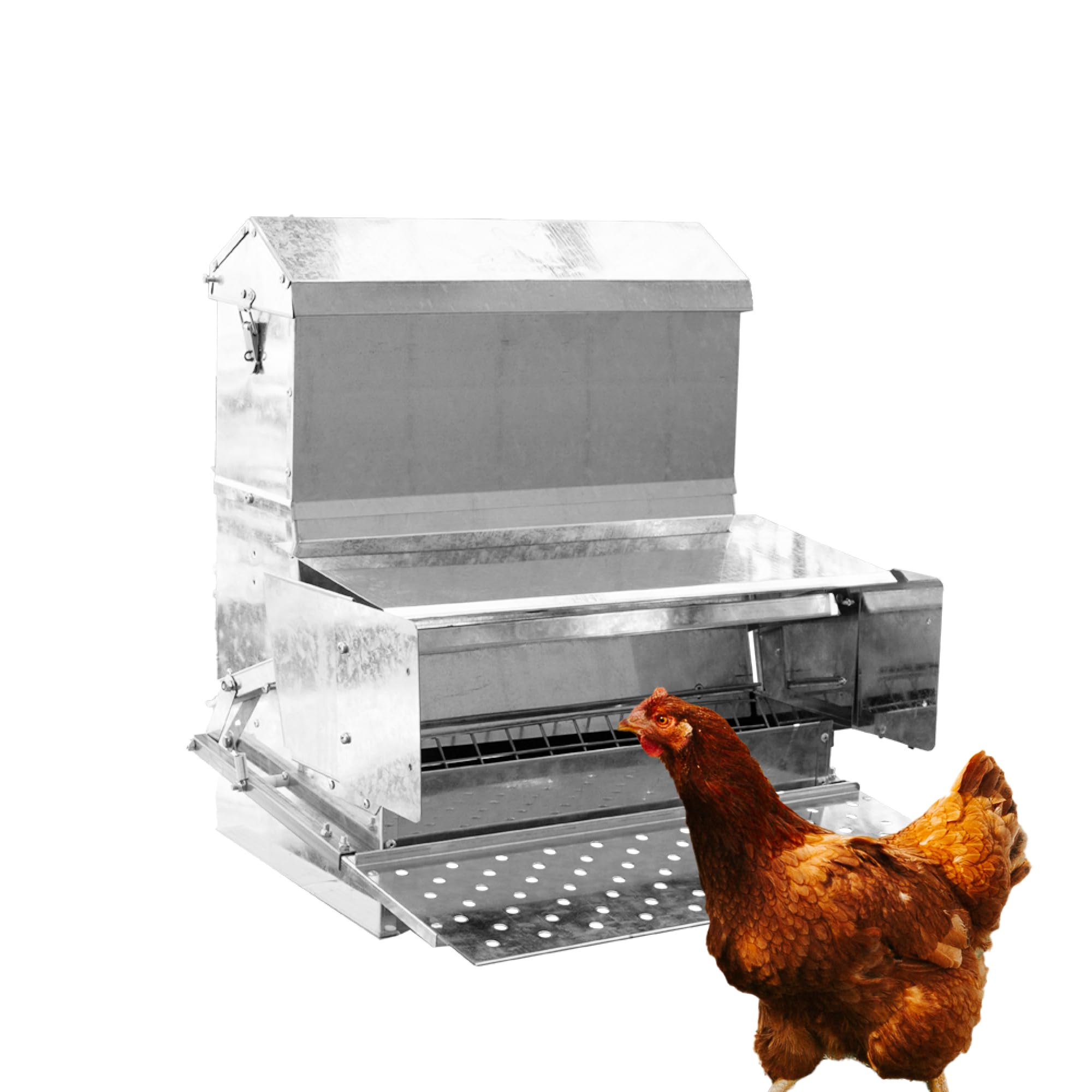
The detail that sold us on the RentACoop is the detachable step weight. It lets you lighten the treadle for bantams and silkies without buying a second feeder, which is the difference between a pest-proof feeder and one your smallest hens stand beside looking puzzled. The rest of the design supports that job: a 40-pound galvanized hopper, a lockable step, a grate that keeps birds from raking feed onto the ground, and a removable rain hood. We appreciate the safety blinders, too, because they guide birds to feed from the front instead of crowding the trough at bad angles.

In a mixed flock, that adjustability matters more than another pound of capacity. The body is heavy enough to stay put on a concrete pad or packed earth, and the 21 x 14.5 x 14.5-inch footprint is compact for a 40-pound hopper. The rain hood lifts off for filling, and the step locks shut when you want to keep the flock out. We also like the adjustable internal feed setting, which lets you tune the feeder to the feed you use rather than buying a second hopper for a different texture.

For us, the RentACoop is the one that fits the widest range of coops. It handles a mixed-size flock without asking you to buy two feeders, and the lockable step makes refilling less of a juggling act. The 27.6-pound body is a permanent-fixture feeder, not a portable one, and that is the right trade for a coop where the feeder stays put. It is the feeder we recommend first for a mixed backyard flock.

Bottom line: For most backyard flocks, we recommend the RentACoop because its adjustable treadle handles bantams and full-size hens without giving up the 40-pound hopper or rain protection.
2

Grandpa's Feeders Treadle

Grandpa's Feeders Treadle

Large flocks

Our Score 8.6/10
Check Price

Worth Noting

  • Hardware can come loose over time
Body
Galvanized alloy steel
Capacity
40 lb
Dimensions
22 x 18 x 16 inches
Flock Coverage
6 to 12 chickens for up to 10 days
Read the full review

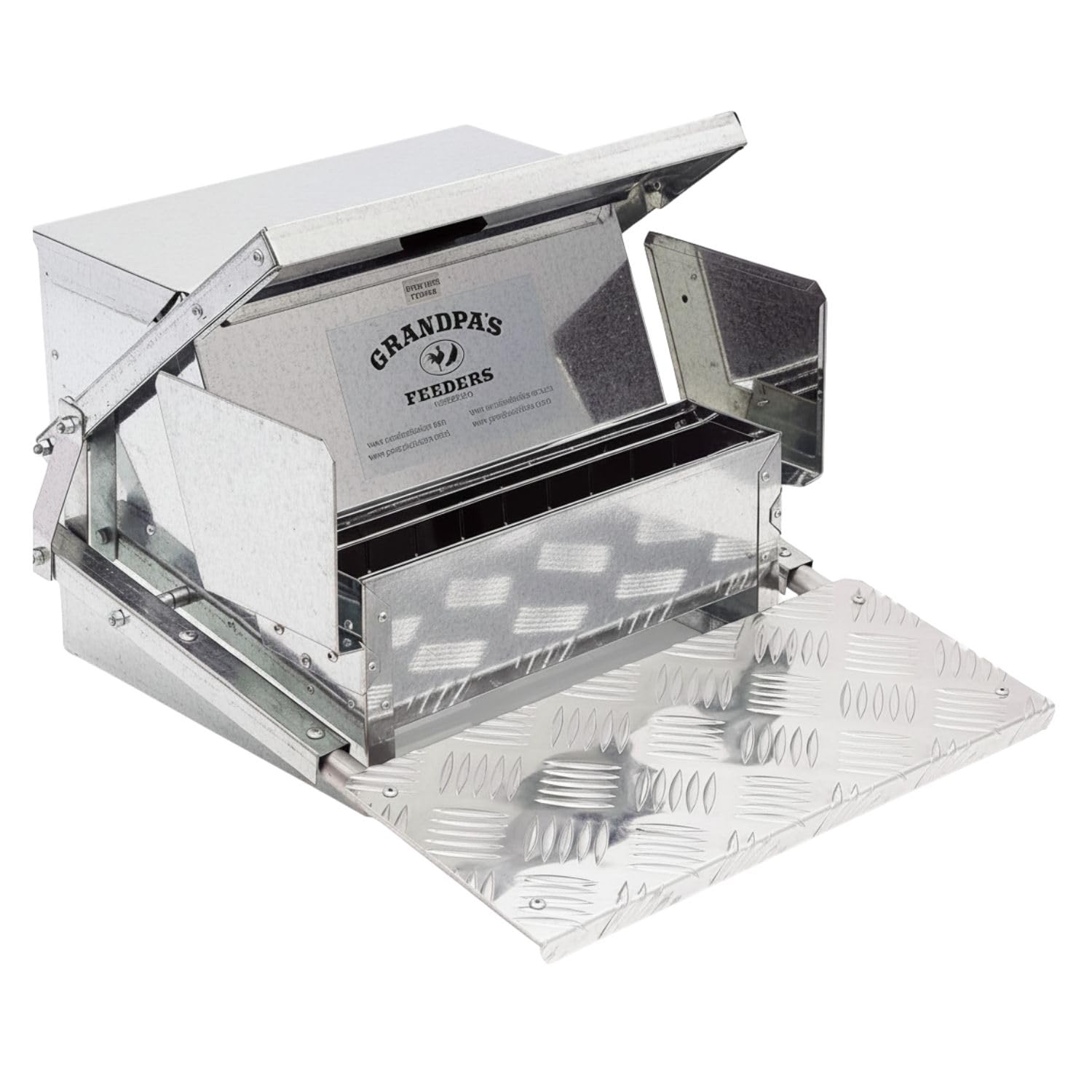
Grandpa's has been making this feeder for decades, and the design shows its age in the good way: a 40-pound galvanized hopper, a full-coverage lid, an anti-flick grill, and side guards that keep hens from feeding at bad angles. The claim that matters for a busy keeper is the refill rhythm: six to 12 chickens for up to 10 days. That is the kind of interval that turns a daily chore into a weekly one, and it is why this feeder stays in the conversation even against newer designs.

What we appreciate most is how completely it closes the feed off. The lid covers the hopper rather than sitting on top like an afterthought, and the side guards address the pecking and injury risk that comes with birds crowding a trough. In a flock of six or more, the extra width and the 22 x 18 x 16-inch footprint earn their keep. It is also the lighter of the two 40-pound metal feeders here at 23 pounds, which matters when you lift it into place or tip it to empty.

The price is the hurdle. This is a premium feeder, and the value only lands if you have enough birds to make the feed savings and the ten-day refill interval add up. For a small coop, the same money buys a lot of feed. For a larger flock, the math is easier, and the long production history is a real comfort.

Bottom line: We recommend Grandpa's for larger flocks that need a ten-day refill interval, with a full lid and side guards that make a busy coop easier to manage.

3

COZOFU Automatic Feeder

COZOFU Automatic Feeder

Small coops

Our Score 8.4/10
Check Price

Worth Noting

  • Smaller hopper than the 40-pound picks
Body
Galvanized steel
Weight
15 lb
Capacity
25 lb
Dimensions
17.5 x 14 x 12 inches
Read the full review

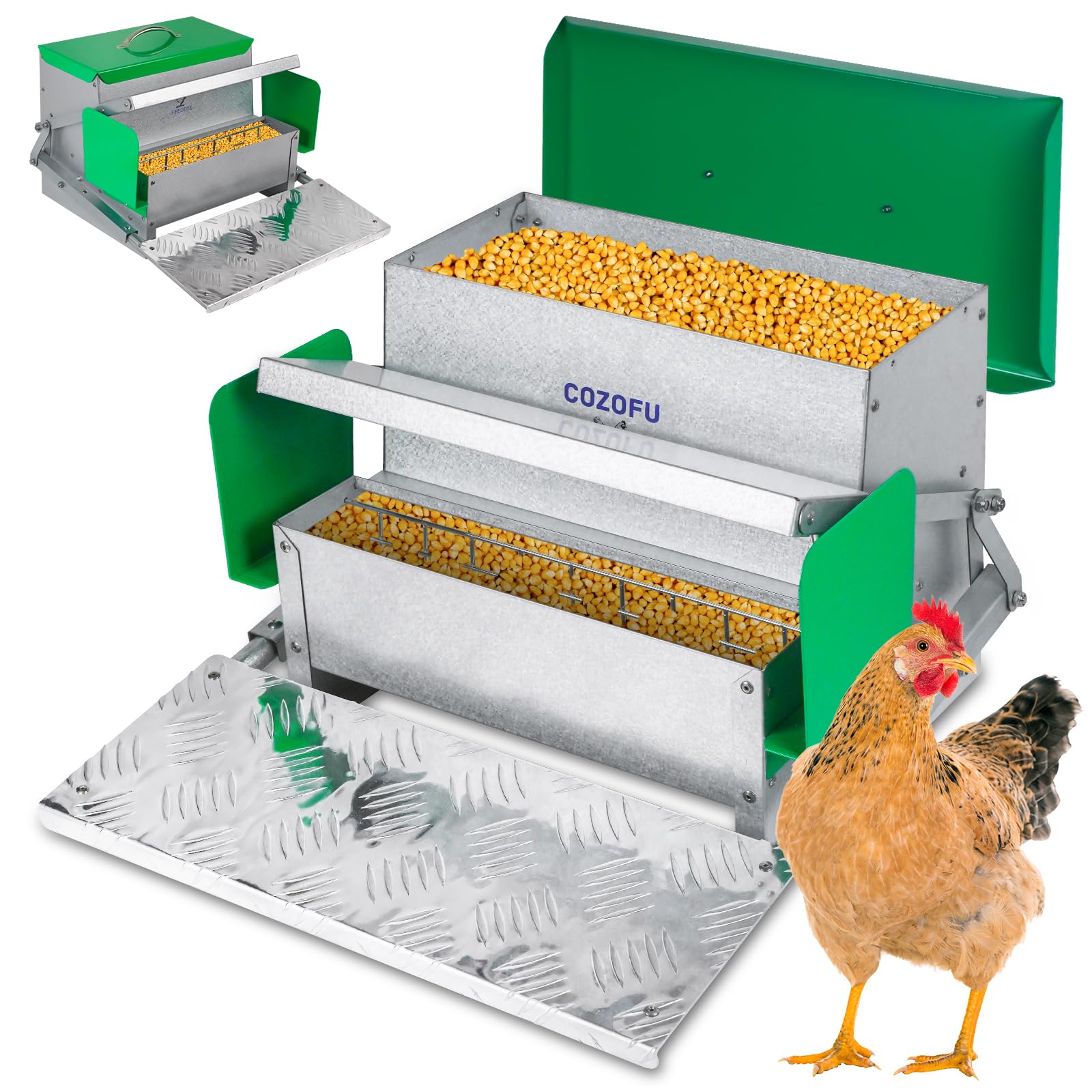
The COZOFU is the feeder that makes the treadle format affordable, and that changes the calculation for a small coop. You get a galvanized steel body, a covered hopper, and a step-operated lid in a package that weighs about 15 pounds and measures 17.5 x 14 x 12 inches. The 25-pound hopper is sized for a small flock, and the compact footprint fits a tighter coop than the 40-pound metal feeders.

For a handful of hens, that capacity is a good fit. The listed hopper still covers a useful stretch between refills, and the lighter body is easier to move around the run or store when you clean the coop. Assembly is straightforward, and the treadle is the same basic idea as the expensive models: the bird steps up, the lid opens, and the feed stays covered when the flock is done. We think it is a sensible first treadle feeder for someone who wants the pest protection without the premium spend.

The build is light, so set it on firm, level ground and check that the step returns freely before you fill it. A feeder that rocks under a hen's weight is not one to trust in a rat-prone coop. Keep the hopper under a roof or in a sheltered corner, because the lower weight and simpler body are not built for the same exposed fence line as the premium metal feeders.

Bottom line: We recommend the COZOFU for a small flock on a budget, as long as you check the lid closes and the lighter body sits level.

4

VOSS.farming Feedomatic

VOSS.farming Feedomatic

Small mixed flocks

Our Score 8.4/10
Check Price

Worth Noting

  • 12 kg hopper limits flock size
Body
Metal and UV-resistant plastic
Weight
10.1 lb
Capacity
26.5 lb
Dimensions
23.62 x 14.57 x 9.45 inches
Read the full review

The VOSS.farming Feedomatic is the lightest feeder here at 10.12 pounds, and that changes where it makes sense. It is a 12 kg treadle feeder with a metal and UV-resistant plastic body, a quiet step, and a footprint of about 23.6 x 14.6 x 9.5 inches. If you move your feeder between a coop and a run, or you keep a small mixed flock of chickens and ducks, the lower weight is a real convenience.

The 12 kg hopper is the number to match to your flock, and quiet operation is the design's best argument: a treadle that clacks and bangs can spook birds, and a calmer feeder is easier to introduce. The metal-and-plastic construction is a reasonable match for a sheltered run, and the step is simple enough that most birds pick it up without drama.

We recommend the Feedomatic for a small, sheltered flock where portability and quiet matter more than raw capacity. The 10.12-pound body is easy to move, and the 12 kg hopper is a good match for a few hens or a mixed flock. It is the feeder we reach for when the coop is close and the run is secure.

Bottom line: We recommend the Feedomatic for a small, sheltered flock where a light, quiet feeder matters more than a large hopper or squirrel-proof armor.

How We Tested Treadle Chicken Feeders

We built a shortlist from treadle feeders sold for backyard flocks, filtering by stated capacity, treadle plate size, hardware, replacement-part availability, and what you get for the money. That left 12 feeders, which we ran for nine months in working coops rather than on a bench. Each one went through the morning feed rush, weekend deep cleans, and whatever weather the season delivered. We also watched how quickly a new flock learned to use it, whether smaller hens could trigger the treadle, and whether the lid sealed tightly enough to keep rain and rodents out.

Build quality and pet safety got hands-on attention: I flexed treadle plates, checked hinge play, and looked at welds, plastic thickness, and exposed edges. I watched hens step on and off, especially lightweight bantams and heavy breeds, to see if toes could catch, if the lid dropped fast enough to startle, and if spring tension was adjustable without tools. For ease of use, I filled each feeder, opened and closed the lid repeatedly, checked whether it stayed open while filling, and cleaned out damp feed from corners; the ones that needed two hands, a screwdriver, or a wrestling match lost points.

Performance came down to feed delivery and waste. We noted how much feed disappeared versus how much ended up on the coop floor, and checked whether pellets stayed dry after rain blew sideways. To test squirrel resistance, we watched squirrels try to lift lids, chew edges, and tip feeders; we noted gnaw marks and any lid that popped open. Durability meant leaving feeders outside through heat, rain, and cold snaps, then checking for rust, warping, and stiff hinges. Finally, we weighed value for money by comparing what each feeder included, such as spare parts, warranty coverage, and metal versus plastic construction, against how much work it saved.

How to Choose Treadle Chicken Feeders

Start With the Treadle, Not the Hopper

The treadle is the whole purchase. A bird steps on a plate, the lid opens, and the feed stays covered the rest of the time. What separates a feeder that works from one that frustrates you is trigger weight. A heavy plate that suits a big hen can leave bantams and silkies unable to eat, so look for an adjustable or detachable step weight, as the RentACoop has. Plan to watch the flock for a few days and make small adjustments rather than assuming every bird will learn at once. If you keep only light breeds, start on the lightest setting and check that the lid still closes when they step off.

Match Capacity to the Flock and the Refill Rhythm

Capacity is feed volume, not a chicken count, and the two numbers to compare are the hopper size and the refill interval the maker claims. A 40-pound feeder can make sense for six to twelve chickens, while a 12 kg model suits a few birds. The practical question is how often you want to haul feed. Grandpa's states six to 12 chickens for up to 10 days, which is the kind of interval that turns daily chores into a weekly routine. If you keep three hens, a smaller hopper is easier to store and empty before the feed goes stale.

Check the Lid, Trough, and Waste Controls

A treadle feeder only excludes pests while the lid is closed. Look for a lid that settles shut without a hand, a trough the birds can reach without raking feed onto the ground, and a grill or grate that limits billing. Grandpa's full-coverage lid and anti-flick grill address both, while the RentACoop uses a grate and front-only blinders to keep feeding calm. A lid that stays open is worse than a plain feeder because it invites the pests you paid to exclude. Test the closure after every fill, especially if the feeder sits in wind.

Plan for Placement, Weight, and Weather

Measure the spot before you buy. A 40-pound feeder with a 22-inch width needs a clear approach, and the lid has to open without hitting a wall or roost. Weight matters for a different reason: a 10-pound feeder is easy to move but can shift on uneven ground, while a 27-pound metal feeder stays put and is a nuisance to relocate. Set any treadle feeder on firm, level ground, keep the step clear of bedding, and give it a roof or sheltered corner if the lid is not fully weatherproof. Galvanized steel is the safer bet for an exposed run; plastic suits a covered coop.

Frequently Asked Questions

Final Verdict

The RentACoop gets our vote for most backyard flocks because it pairs a 40-pound hopper with a step weight that lets lighter birds in, plus a rain hood and lockable step that make it easier to live with. If your flock is large enough that a ten-day refill interval matters, Grandpa's is the stronger choice; for a small coop on a budget, the COZOFU is the practical entry point.