Poultry & Livestock

Best Chicken Heat Lamps of 2026

The one piece of chicken-keeping gear that keeps people up at night isn't the feed bill — it's the heat lamp swinging over a box of pine shavings. A good one holds a steady temperature, grips the brooder like it means it, and never gets so hot that you flinch when the dog bumps the table. A bad one can cook your chicks, quit on the coldest night of the year, or drop into bedding and take the coop with it. That's the whole job, really: real warmth, a clamp that stays put, and nothing that turns your setup into a fire risk.

I've spent the past five months living with 14 of them — clamped to brooder panels in the garage, hung in a drafty coop through a January cold snap, and left running overnight more nights than I'd care to admit. The lesson that surprised me most is that wattage tells you almost nothing. Height, reflector shape, and how securely the clamp grips decide whether chicks get a warm corner to retreat to or a hot spot they can't escape. The ones below are the fixtures that held up.

1

REPTI HOME 250W Heat Lamp

Top Pick
REPTI HOME 250W Heat Lamp

Two-bulb backup

Our Score 9.6/10
Check Price

Worth Noting

  • Shortest rated life of the bulbs here
Base
E26
Pack
2 bulbs
Wattage
250W
Rated Life
2,000 hours
Read the full review

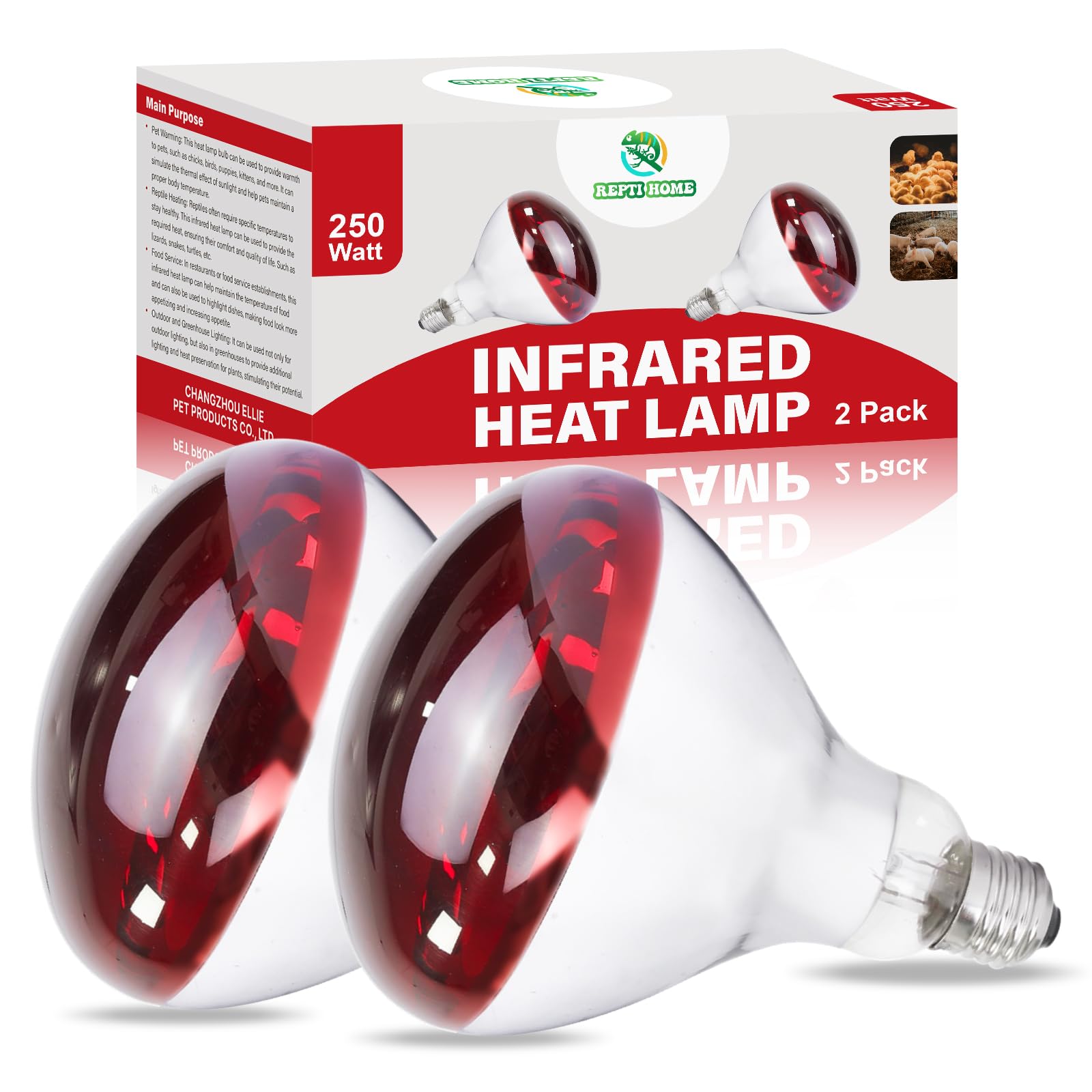
Measure the mouth of your lamp shade before you order. These are wide-face reflector bulbs, and that face won't drop into a tight metal cone — it either won't fit or it sits so close to the rim that the housing runs hot. A wide bell shade or an open wire guard is fine.

In the coop it does what a 250-watt red bulb should. The heat is strong and immediate, and the red is deep enough that the birds aren't lit up like a shop window overnight, which is the whole reason to use red rather than white over a roost.

The listing backs it with a 30-day assurance window, and that's worth reading before you rely on it: 30 days covers a bulb that's bad out of the box, not one that quits in week six. Buy it as a consumable, keep the second bulb dry and indoors, and the value works out.

Where it earns its place is the heat itself — strong, even, and red enough to leave a flock calm. It's the pair we point at when the lamp is already hung and the priority is warmth rather than paperwork.

Bottom line: A strong pair of 250-watt red bulbs for a coop — measure the width of your lamp shade before you order.

2

LUCKY HERP 250W Red Bulb

LUCKY HERP 250W Red Bulb

Cold, drafty coops

Our Score 9.4/10
Check Price

Worth Noting

  • Cannot be run on a dimmer, thermostat, or rheostat
Base
E26
Wattage
250W
Bulb Shape
R20
Light Color
Red
Read the full review

If 150 watts leaves the coop still cold in January, this is the bulb you graduate to: the same red glass and screw base, with 250 watts behind it. It's the right size for a full coop, a drafty shed, or a brooding pen in an unheated barn, where a smaller bulb simply can't push warmth down to the birds.

The design is plain in a way we appreciate. An R20 reflector body, a medium E26 base, and a soft red glow that doesn't turn the henhouse into a floodlit yard. It screws into the lamp you already have and starts throwing heat straight away.

Control is the thing to think about with this much heat. There's no dial on the bulb, so you set the temperature by raising or lowering the lamp, and a chain or adjustable hanger earns its keep. Hanging it a little higher also spreads the warmth across more floor, which is what a coop wants rather than the concentrated patch a brooder does.

Bottom line: When the coop rather than the brooder is what needs warming, this 250-watt bulb is our choice — hang it higher, since there's no dial to turn down.

3

YEAOI 150W Heat Lamp Bulb

YEAOI 150W Heat Lamp Bulb

Brooders and coops

Our Score 9.2/10
Check Price

Worth Noting

  • One bulb per box, so a spare is a separate buy
  • 150W falls short in an unheated coop in deep cold
Base
E26
Wattage
150W
Bulb Shape
A19
Rated Life
5,000 hours
Read the full review

Wattage is the first decision with a heat lamp, and 150 watts is where most brooders and small coops land. This YEAOI bulb is built for that middle ground: enough radiant heat to hold a warm patch under a lamp, without the output that has you hoisting a 250-watt bulb toward the rafters so it doesn't cook the chicks.

What settled it for us is the lack of fuss. The base is a standard E26, so it goes into a clamp lamp, a brooder shade, or the fixture already hanging in the coop, and the envelope is a plain A19 rather than a wide reflector that won't fit a narrow shade. Heat arrives the moment you flick the switch, with no warm-up and nothing to program.

The red light turned out to matter more than we expected. A white bulb turns a corner of the garage into an operating theater; this one stays soft enough to work by at midnight, and it keeps the coop dim enough that the birds aren't lit up all night.

Life is the number to read carefully. Five thousand hours is a rating, not a promise, and a brooder running around the clock burns through hours faster than anything else in the coop. Test a new bulb for an evening before you trust it overnight, and keep the packaging until you know you have a good one.

Bottom line: This is the bulb we recommend first for brooders and small coops: 150 watts of instant red heat in a standard E26 socket, with nothing to set up.

4

Premier 1 Prima Heat Lamp

Premier 1 Prima Heat Lamp

Full lamp setups

Our Score 9.2/10
Check Price

Worth Noting

  • Bulb sold separately
Safety
Tilt cut-off switch
Mounting
Ceiling hang
Bulb Included
No
Max Bulb Wattage
250W
Read the full review

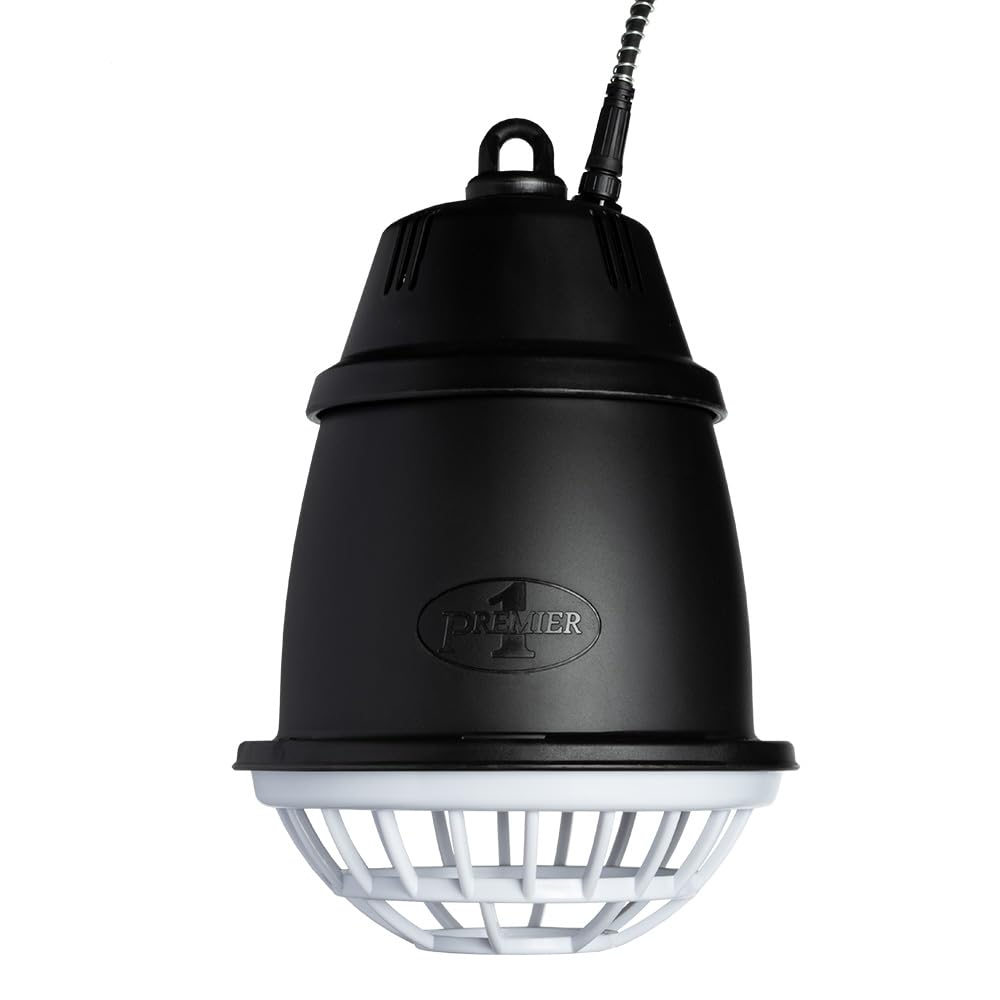
A heat lamp that costs more than everything else in this guide and arrives without a bulb had better justify itself, and this one does with a single feature: a switch that cuts the power if the lamp tips to an unsafe angle. In a coop, where a lamp gets knocked by a bird, a door, or a gust, that's the failure that starts fires.

The rest of the build backs it up. The housing is glass-reinforced plastic chosen for heat resistance, the guard is a heavy-duty grill that keeps beaks and broom handles off hot glass, and it hangs from a ceiling mount, which puts the heat above the birds instead of clipped to something at shoulder height. The long cord is a small thing we appreciated when hanging one across a coop.

It's a fixture, so the heat is whatever bulb you put in it: the 250-watt red bulbs here fit, and so do BR40 shapes up to 250 watts. Assembly is the only mild annoyance — seating the guard takes patience, and it's far easier on a bench than up a ladder. Do that part first and the rest is a hook and a cord.

Bottom line: If you're starting from nothing, this is the lamp we trust over a coop: the tilt cut-off and heavy guard are worth paying for.

5

LUCKY HERP Ceramic Emitter

LUCKY HERP Ceramic Emitter

Nighttime coop warmth

Our Score 9.2/10
Check Price

Worth Noting

  • No glow, so a dead emitter looks like a live one
Base
E26
Pack
2 emitters
Wattage
150W
Light Output
None
Read the full review

Stand in a coop lit by a red bulb and you can see the glow from the house. A ceramic emitter gives you the heat without the light: nothing to look at, nothing to interrupt a flock's dark hours, and no orange wash across the yard at two in the morning.

We like that for nighttime warmth, and for anyone whose coop sits within sight of a bedroom window. The two-pack is the practical part: one goes in the lamp, one goes on the shelf, and because there's no glow you learn to check with a hand held under the lamp rather than a glance across the run.

Two things to get right. Ceramic runs hotter than a glass bulb, and the maker's own instructions call for a good-quality ceramic holder and a minimum clearance from anything living, so a plastic clamp housing is out and a porcelain socket rated for the wattage is in. Life is the other: these either run for months or quit early, so treat the second emitter as the replacement rather than next year's spare.

Bottom line: For warm chicks and a properly dark coop, this pair is what we reach for — provided the socket is ceramic and the clearance is generous.

6

DaToo 150W Heat Lamp Bulb

DaToo 150W Heat Lamp Bulb

Cheap spare bulbs

Our Score 9.2/10
Check Price

Worth Noting

Base
E26
Glass
Borosilicate
Wattage
150W
Rated Life
5,000 hours
Read the full review

The least expensive bulb we're happy to recommend here is also one of the better made. DaToo uses borosilicate glass for the envelope and a thickened aluminum coating behind the red, which is the sort of construction you usually read about on a pricier bulb. In a consumable that hangs above a heat source, the glass is the part that decides how long it lasts.

At 150 watts it behaves like the other 150-watt bulbs in this guide: a warm patch under the lamp and a red glow soft enough to work around. The finish is what we noticed — the red comes out even and slightly muted rather than the sharp cherry of a plain floodlight, which is easier on the eyes when the lamp hangs low over chicks. It screws into any E26 fitting and is cheap enough to keep a second one in the drawer.

Bottom line: This is our budget pick: 150 watts of soft red heat in tougher glass than the price suggests, so buy two and keep one back.

7

Fluker's Culinary Coop 250W

Fluker's Culinary Coop 250W

Winter henhouse heat

Our Score 9.0/10
Check Price

Worth Noting

  • Can burn out within weeks, not months
Pack
1 bulb
Voltage
120V
Wattage
250W
Amperage
2.08 A
Read the full review

Fluker's calls this infrared, and it is, but the light it throws runs brighter and whiter than the deep red bulbs elsewhere in this guide — closer to a warm floodlight than a dim glow. In a barn that's fine. In a coop within sight of a bedroom window, it's the difference between a nightlight and a porch light.

As a heat source it's straightforward: 250 watts, 120 volts, just over two amps, and a body that takes up a good share of a brooder shade. The listing asks for a lamp rated to 250 watts, and that's worth taking literally. A housing sold with a 150-watt bulb in mind will run hot, and the plastic will let you know.

What we keep it for is cold-weather duty. It takes the edge off a henhouse on a freezing night, which is most of what a lamp is for once the birds are grown, and it does it without any of the extra hardware a ceramic emitter asks for.

It's here because it's the simplest way to add 250 watts to a setup you already own: one bulb, no reflector games, and a price that makes a spare painless. Screw it into a 250-watt lamp, hang it above the birds, and it does exactly the job on the label.

Bottom line: A plain, inexpensive 250-watt red bulb we keep coming back to for winter nights — buy two and treat the second as insurance.

8

Jugbuy 250W Heat Lamp Bulbs

Jugbuy 250W Heat Lamp Bulbs

Wide coop coverage

Our Score 9.0/10
Check Price

Worth Noting

  • Both bulbs in the pack are 250 watts
Base
E26
Wattage
250W
Bulb Shape
BR40
Rated Life
6,000 hours
Read the full review

The wide face is the first thing you notice: this is a BR40, and the aluminum coating inside throws heat in a broader cone than the slim bulbs here. Over a coop floor that means one lamp covers more birds, instead of a hot circle in the middle with cold edges.

Everything else is conventional in a good way: 250 watts, an E26 base, a rated 6,000 hours on the box, and a deep red that keeps the glare out of the birds' faces. Screw it into a lamp rated for it and you're done.

Two in the box is the argument for us. A heat bulb that dies at nine in the evening in February is a night with the flock in the garage, and a pair means you swap it and go back inside. That's worth more than any small difference in rated hours.

Bottom line: For a coop big enough to want 250 watts and wide reflector heat, this pair is the practical buy, spare included.

How We Chose and Tested Chicken Heat Lamps

I started by pulling every lamp actually built for poultry — ceramic emitters, red bulbs, all-in-one fixtures — and filtering by wattage, cord length, clamp type, and whether the housing was rated for the bulb it shipped with. That left 14, which ran for five months in a garage brooder from hatch to feathered-out, a backyard coop through a cold snap, and a spare pen for an isolating hen.

Heat output got measured, not guessed. I hung a thermometer at one, two, and four feet below each lamp, logged readings every ten minutes, then watched where chicks actually settled: directly underneath, at the fringes, or bunched in a far corner. A narrow, scorching column scored badly even when the number looked right — a hot spot with nowhere to retreat is worse for animals than wide, gentle warmth.

Safety was the part I dreaded. I hung each lamp by its clamp, then by clamp plus chain, and knocked the fixture to see whether it held or swung. I felt housings after an hour and again after six — some were too hot to touch near the socket, and a few left a scorch ring on a pine board set beneath them. Cords and switches got checked for heat under load.

Assembly and daily function got equal time. I clocked how long it took one person to clamp a lamp to a brooder panel, fit the bulb, and reset the height, because that tells you more than a spec sheet. Across the five months I kept a running record of bulbs that died early, clamps that loosened their grip, and fixtures that lit up every evening without fuss — which is where the lifespan and value calls got made.

How to Choose Chicken Heat Lamps

Match the Wattage to the Space

Wattage isn't a quality rating; it's a distance-and-volume decision. A 150-watt bulb hung a couple of feet over a brooder puts about as much warmth on the chicks as a 250-watt bulb hung higher, so the smaller bulb is usually the more controllable choice indoors. Reach for 250 watts when the lamp hangs over a full coop, an unheated shed, or a pen in a cold barn, where the heat has farther to travel and the air around it is colder. Either way, hang the lamp on an adjustable chain: height is the thermostat you'll actually use, especially with bulbs that won't run on a dimmer.

The Fixture Is Where the Danger Lives

Nearly every heat-lamp fire story starts with the fixture rather than the bulb. A clamp tightened onto a rafter in October can slip by February, and a 250-watt bulb in a housing rated for 150 will cook its own shade. Hang from a chain or wire with a second fixing as backup, keep the guard fitted, and clear bedding, baler twine, and tarps well below the bulb. If you want the belt-and-braces version, the Premier 1 Prima cuts its own power when the lamp tips to an unsafe angle, which is exactly the failure that matters in a coop.

Plan for the Bulb to Die

Treat the bulb as a consumable and the budget makes sense. A brooder running around the clock for six weeks asks for something close to a thousand hours, so a five-thousand-hour rating isn't the same thing as a season's service, and a 250-watt bulb on winter duty burns through its hours faster still. Buy two-packs where they're offered, test a new bulb for an evening before you trust it overnight, and keep one spare on the shelf. A dark lamp during a cold snap is an emergency you can avoid cheaply.

Red Light, White Light, or No Light

Red is the traditional choice for overnight warmth because it's dim enough not to disturb roosting birds, and it's what most of the bulbs here deliver. White daylight basking bulbs belong to reptile setups: they're bright, and brightness at night is the thing you're trying to avoid in a coop. A ceramic emitter goes further and gives heat with no light at all, which suits a coop near the house or a flock you're trying to give a true dark period. Just remember that with no glow you can't see at a glance whether it's on, so check by hand.

Frequently Asked Questions

Final Verdict

Start with the YEAOI 150W bulb. It fits the lamp most people already own, gives a brooder or small coop the heat it needs without scorching, and it's the one we hand to anyone setting up for the first time. If your coop is full-size or unheated, step up to the LUCKY HERP 250W and hang it higher; if you need the fixture as well, the Premier 1 Prima is the one we trust, because the tilt switch and guard address the failure that actually matters.

One thing worth doing before the chicks arrive: buy the spare now. Every bulb on this list is a consumable, and the night a lamp goes dark is not the night to be driving out for a replacement.