Tree & Forestry Care

Best Hatchet for Kindling of 2026

A hatchet is a compromise, and that is the whole point. You want enough weight behind the bit to drive through a seasoned oak round, but not so much that your wrist is finished after ten swings — which is why the ones that genuinely work for kindling sit in a narrow band of head weight and handle length. Get it wrong and you are either swinging a mini sledge or bouncing a light little thing off the bark. The right one turns a pile of rounds into a basket of splits in about the time it takes the fire to catch.

The other thing nobody tells a first-time buyer is that a dull hatchet is more dangerous than a sharp one — it glances off the wood instead of biting. Over the past eight months my team and I have split our way through ten hatchets on the chopping block out back, and the gap between a good edge and a bad one shows up in the first five minutes. Price doesn't predict it, either; some of the cheapest arrived shaving-sharp. What follows is what all those splits sorted out.

1

Fiskars X7 Hatchet

Top Pick
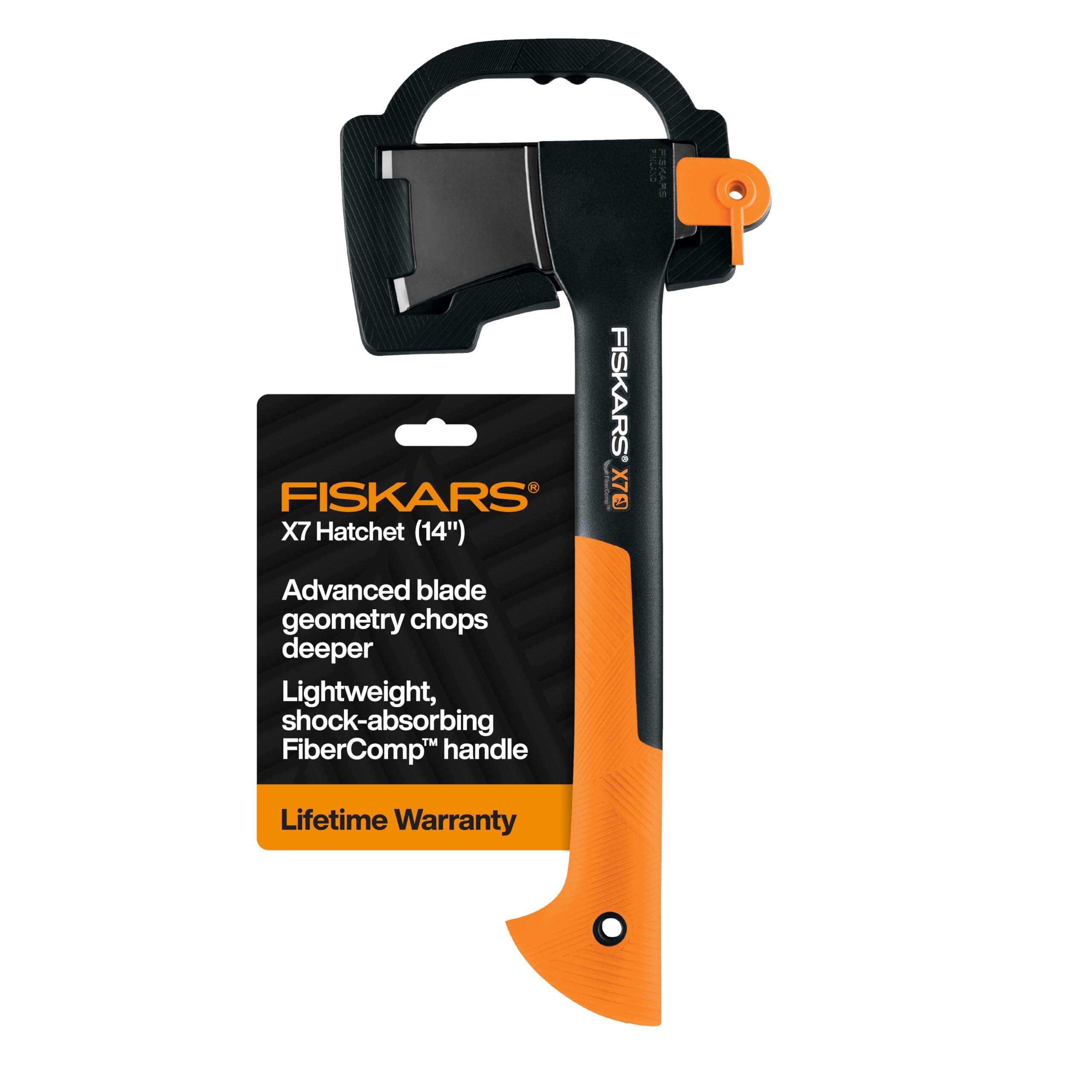
Fiskars X7 Hatchet

All-round kindling

Our Score 9.6/10
Check Price

Worth Noting

  • Not a splitting axe for larger rounds
Item Weight
1.4 lb
Blade Material
Forged steel
Overall Length
14 in
Sheath Included
Yes
Read the full review

A 14-inch hatchet that weighs 1.4 pounds is the sweet spot for kindling, and the X7 is the one we reach for first. The head has enough mass to bite, but the overall weight stays low enough that you can keep a one-handed rhythm going without your forearm complaining. We also appreciate the low-friction blade coating, which helps the bit release from a tight split instead of leaving you to wiggle it free.

The handle is shaped to absorb shock and stays comfortable through a session at the woodpile, while the 14-inch length gives you room to swing without turning the job into a two-handed project. The edge geometry is more chopper than splitter, which is exactly what you want for turning split pieces and small branches into kindling.

The sheath is simple, the lifetime warranty is reassuring, and the whole tool disappears into a camp tote or the corner of a wood rack. We did not find it fussy to maintain, though any working axe needs a touch-up eventually. What keeps it at the top of this set is the way the light handle and coated head work together: you can make a lot of kindling before the tool starts to feel like a chore. The X11 is the step up when you are splitting small rounds, but the X7 is the one we pack and the one we leave by the stove.

Bottom line: For most kindling work, the X7 is the hatchet we hand over first: light, balanced, and easy to control one-handed.
2

Fiskars X11 Splitting Axe

Fiskars X11 Splitting Axe

Stubborn small rounds

Our Score 9.6/10
Check Price

Worth Noting

  • Longer and heavier than a pack hatchet
Head Type
Splitting wedge
Item Weight
2.2 lb
Blade Material
Forged steel
Overall Length
17 in
Read the full review

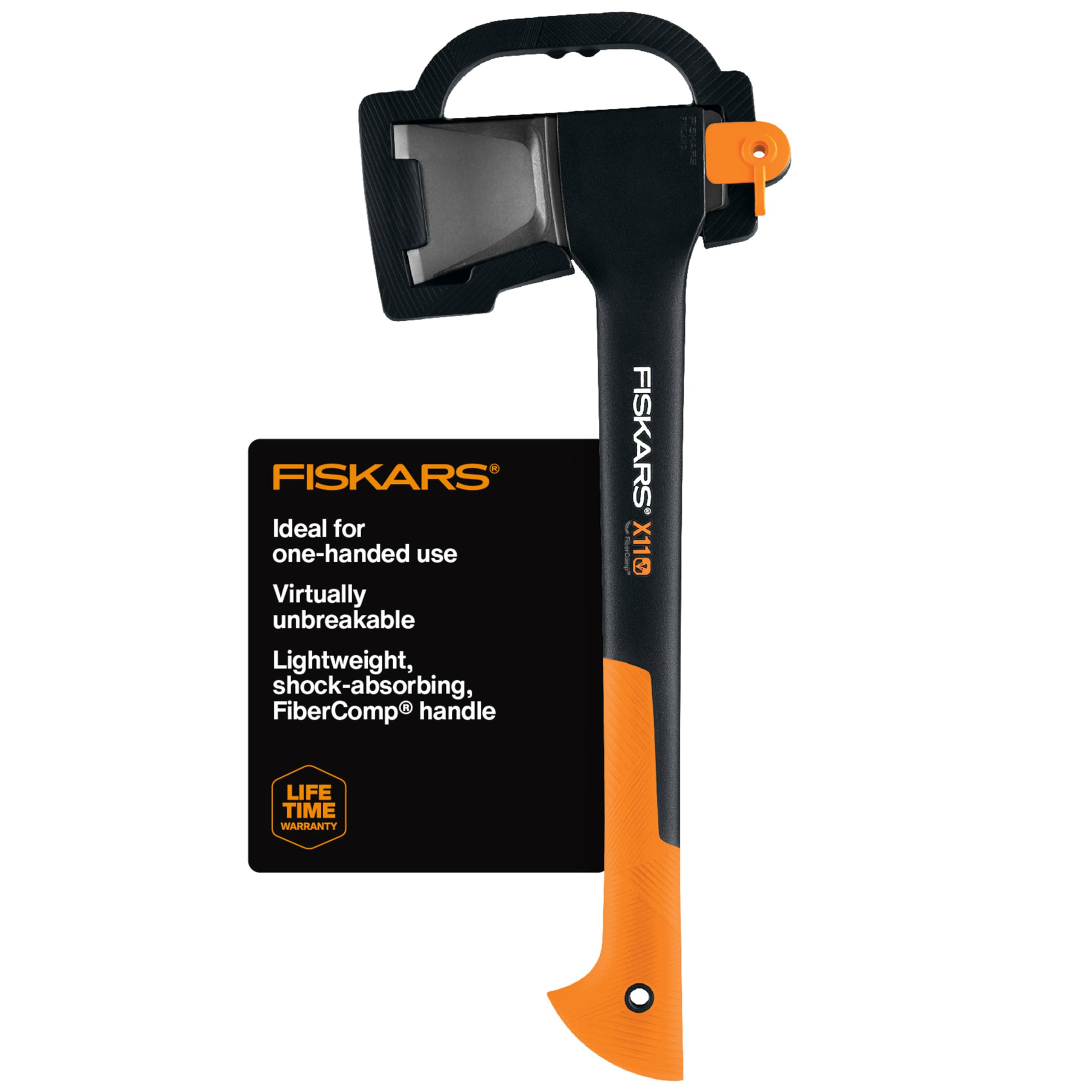
When a piece of kindling wood is more round than split, the X7 can start to feel like a chopper asked to do a splitter's job. That is where the X11 earns its place: its head is a splitting wedge rather than a chopping bit, and the 17-inch handle gives you more leverage on short, stubborn rounds.

At 2.2 pounds it is still light enough to use one-handed, and the longer handle lets you add speed without adding much bulk. We found the wedge-shaped head is the part that matters: it widens the split instead of just cutting a narrow kerf, so the wood pops apart more readily. The trade-off is obvious when you pick it up. This is a woodpile tool, not the hatchet we tuck into a backpack.

If your kindling starts as small logs rather than offcuts, the X11 saves a lot of chopping. If you mostly split already-split pieces, the X7 is lighter and handier. We keep the X11 by the stove for the pieces that need a real push, and reach for the smaller hatchet for everything else. It is the one in this set we choose when the wood is fighting back.

Bottom line: When kindling starts as small rounds rather than offcuts, our pick is the X11, which trades portability for a splitting head with real leverage.

3

Estwing Sportsman's Axe

Estwing Sportsman's Axe

Traditional camp use

Our Score 9.4/10
Check Price

Worth Noting

  • Leather grip needs more care than fiberglass
Item Weight
1.8 lb
Construction
One-piece steel
Overall Length
14 in
Handle Material
Leather
Read the full review

The Sportsman's Axe is the one that feels like a tool your grandfather might have kept in the shed, and we mean that as a compliment. A single piece of American steel runs from the blade through the handle, so there is no head-to-handle joint to work loose, and the leather grip gives it a warmth the fiberglass hatchets here do not have.

At 14 inches and 1.8 pounds, it has enough mass to drive through kindling but not so much that it feels clumsy. The hand-sharpened edge is a useful working profile, and the leather handle is comfortable during repeated swings. The all-steel build does ask more of your hand than a shock-absorbing fiberglass handle, so we reach for it when we want a solid, traditional feel rather than the softest swing.

What we appreciate most is the sheath and belt loop, which make it easy to carry to a campsite or keep hanging by the woodpile. The edge holds up well with basic care, and the one-piece construction inspires confidence every time you pick it up. If you want a hatchet to hand down rather than replace, this is the one in this set that feels built for that.

Bottom line: Our shortlist has the Sportsman's for anyone who values one-piece steel and a leather grip over the lightest possible pack weight.

4

KSEIBI 274150 Hatchet

KSEIBI 274150 Hatchet

Budget camp kit

Our Score 9.2/10
Check Price

Worth Noting

  • Edge may need sharpening out of the box
Item Weight
1.3 lb
Blade Material
Forged steel
Overall Length
15 in
Handle Material
Fiberglass
Read the full review

The KSEIBI is the budget hatchet we hand to someone who wants a dedicated kindling tool without spending much. At 15 inches and 1.3 pounds, it is light enough to keep in a camp box, and the fiberglass handle has an anti-slip grip that feels secure in a gloved hand.

The size is the sensible part. Fifteen inches gives you more reach than a 10-inch mini without the bulk of a splitting axe, and the light head is pleasant for shaving kindling from split pieces and chopping small branches. It is not a heavy splitter, so dense rounds take more work and a sharp edge matters. We like it as a second hatchet for the truck or shed, where a sharpening stone is close at hand.

For a single do-everything hatchet, the Fiskars X7 is the safer bet, but the KSEIBI leaves money for a file and earns its place as a light, low-cost tool. We would not call it refined, but it is easy to live with if you treat the edge as part of the purchase. That is a fair trade for a hatchet that mostly makes kindling and opens the occasional camp chore.

Bottom line: We think the KSEIBI is a sensible budget pick if you're willing to check and hone the edge, and it keeps a light, packable 15-inch profile.

5

DESHIL 15-Inch Hatchet

DESHIL 15-Inch Hatchet

Camp and woodpile

Our Score 9.2/10
Check Price

Worth Noting

  • Edge may need sharpening out of the box
Item Weight
1.32 lb
Extra Feature
Hammer back
Blade Material
Carbon steel
Overall Length
15 in
Read the full review

A flat hammer back is the sort of extra that sounds like marketing until you are crouched over a tent stake in the rain. The DESHIL 15-inch hatchet has one, along with a locking blade cover, and at 600 grams it is light enough to carry without treating it like a dedicated splitting tool.

For kindling, the 15-inch length and fiberglass handle give it a balanced, controlled swing, and the carbon-steel head has enough bite for small branches and split pieces. We like the locking cover more than a simple slip sheath because it stays put in a pack. The hammer back is the detail that sets it apart from the lighter choppers here.

That combination makes it a good camp-and-woodpile hatchet rather than a specialist. It can hammer a stake, split a few pieces, and then go back in the truck box without much fuss. If you already carry a hammer, the Fiskars X7 is simpler and lighter; if you want one tool to cover both jobs around a tent, the DESHIL earns its space.

Bottom line: For campers who want one hatchet to split kindling and drive the occasional stake, we point to the DESHIL 15-inch.

6

INTERTOOL 15-Inch Hatchet

INTERTOOL 15-Inch Hatchet

Heavier splitting

Our Score 9.2/10
Check Price

Worth Noting

  • Two-pound build is heavy for backpacking
  • Edge may need a touch-up
Head Weight
1.3 lb
Item Weight
2 lb
Overall Length
15 in
Handle Material
Fiberglass/rubber
Read the full review

A 1.3-pound head on a 15-inch hatchet is a lot of the right kind of weight for kindling, and the INTERTOOL puts it on a 2-pound tool with a high-visibility handle. The extra mass does more of the splitting work for you, so you can use a shorter, more controlled swing instead of trying to muscle through a piece of wood.

The fiberglass-and-rubber handle is the practical counterweight. It absorbs impact and stays grippy in wet or cold conditions, which matters when you are splitting kindling in gloves. We also appreciate the coated head, because a little rust resistance goes a long way on a tool that lives in a shed or truck box. The 15-inch length gives you a little more room than a 14-inch hatchet without making the tool feel long.

For the reader who wants more strike force without moving up to a full splitting axe, this is the value pick in this set. It is happiest beside a woodpile or in a truck box, where the extra weight is an asset rather than a burden. We reach for it when the kindling pile has thicker pieces and the lighter hatchets are working too hard.

Bottom line: The INTERTOOL earns our vote for a woodpile hatchet with enough head weight to split small rounds, as long as you don't need the lightest packable option.

7

Purple Dragon Forged Hatchet

Purple Dragon Forged Hatchet

Forged tool lovers

Our Score 9.0/10
Check Price

Worth Noting

  • Heavy 1.1 kg build limits long carries
Item Weight
2.43 lb
Blade Material
High carbon steel
Overall Length
14.7 in
Handle Material
Hickory
Read the full review

The Purple Dragon is the hatchet in this group that looks like it came from a blacksmith's bench: a hand-forged carbon-steel head, a hickory handle with an S-curve, and a leather sheath. That matters if you want a tool that feels traditional in the hand rather than molded from fiberglass.

It is also a substantial piece of steel at 1.1 kilograms, so it carries more momentum than the 1.3-pound hatchets here. We found the curved handle comfortable and the wider splitting face useful on short rounds, but this is not the hatchet we reach for on a long hike. The edge is the bigger question: it can arrive needing real work, and the high-carbon steel asks for more attention than a coated budget blade.

If you enjoy maintaining tools and want something with character by the fireplace, the Purple Dragon is rewarding. If you want the lowest-fuss kindling hatchet, the Fiskars X7 is the more practical choice. We see this one as a pick for the person who wants the tool itself to be part of the ritual. The leather sheath is a nice touch for storage, and the whole package feels more like a keepsake than a disposable camp tool.

Bottom line: We see the Purple Dragon as the pick for a kindling maker who wants a hand-forged tool with character and does not mind carrying more steel.

8

DESHIL 10-Inch Hatchet

DESHIL 10-Inch Hatchet

Tiny fire pits

Our Score 9.0/10
Check Price

Worth Noting

  • Edge may need sharpening out of the box
Item Weight
1.1 lb
Blade Material
Carbon steel
Overall Length
10 in
Handle Material
Fiberglass
Read the full review

The 10-inch DESHIL is less a woodpile axe than a fireplace accessory, and that is exactly the job it does well. At 1.1 pounds it fits in a small camping tote or beside a fire pit, and the short handle gives you close control when you are shaving kindling from split pieces.

We noticed the size cuts both ways. The compact length is handy in a tight backyard or a fireplace nook, but it gives up the leverage of a 14- or 15-inch hatchet, so it is not the tool for reducing a pile of small rounds. The short head needs more strokes to do the same work. For a small fire pit and a few split pieces, that is a fair trade; for a woodstove and a full kindling pile, step up to the X7.

The fiberglass handle has a useful anti-slip grip, and the protective blade cover is welcome on a tool this small because it tends to get stuffed into a bag. It is not the hatchet we choose for a full woodstove session, but for a compact kit or a tiny fire pit, it earns its place. We treat it as a supplement to a larger hatchet rather than a replacement, and we are happy to keep it in that niche.

Bottom line: The tiny DESHIL is our choice for fire-pit kindling and small camp kits, provided you accept the limited leverage of a 10-inch handle.

How We Tested the Best Hatchets for Kindling

We started by pulling together more than 30 hatchets — hardware-store staples, heritage outfits, and the Swedish and German makers that dominate the category — then filtered for the specs that actually matter when you are making kindling: a head between roughly 1.25 and 2 pounds, a handle in the 12- to 16-inch range, a sheath in the box, and a price that didn't demand an heirloom budget. Ten made the cut, and each spent the past eight months doing the identical job.

Testing happened where kindling actually gets made: beside the woodpile, on a chopping block, in drizzle, and in the dark with a headlamp on. Every hatchet split 6-inch rounds of seasoned oak and ash into splits thin enough to catch, and we counted the strikes it took to break down a single round with each one. We also shaped feather sticks, chased stubborn knots, and struck near the end of the log the way you do when there is a real fire waiting.

Each hatchet got weighed on a kitchen scale, then swung for a 20-minute session without switching so we could feel where the fatigue landed — wrist, forearm, or shoulder. For sharpness, we tried to shave a curl off a scrap of pine straight out of the box and noted which ones needed a file before their first swing. After 300 strikes we checked for head wobble by hand, a gap opening at the shoulder, chips along the bit, and a mushroomed poll; we also dropped each one onto gravel from waist height to see what the handle did. Value came down to whether it arrived sharp, held that edge, and came with a sheath that didn't fall apart in a month.

How to Choose the Right Hatchet for Kindling

Start With Length and Weight

Most of the hatchets here run 14 to 15 inches and 1.3 to 2 pounds, which is the range where one-handed control and useful head weight overlap. Shorter 10-inch models are handy for a fire pit or a pack, but they give up leverage; longer 17-inch splitters add force and are still usable one-handed, but they are woodpile tools rather than pack tools.

Our advice is to buy for the wood you start with. If you are shaving kindling from already-split pieces, a 14-inch, 1.4-pound hatchet like the X7 is easier to keep going. If your kindling starts as short, stubborn rounds, the extra length and wedge head of the X11 do more of the work.

Match the Head to the Job

A chopping hatchet has a thinner bit that bites across the grain and works well for shaving kindling and trimming branches. A splitting hatchet has a wedge-shaped head that widens the cut and pushes the wood apart, which is what you want on small rounds. They overlap, but they are not the same tool: a chopping head can stick in a round, while a splitting wedge is clumsy for fine work.

If most of your kindling is offcuts, choose the chopper; if it is small logs, choose the wedge. The wrong head shape is the most common reason a hatchet feels like it is working against you.

Check the Edge Before You Judge the Tool

Out-of-box sharpness varies across this set, especially on the budget hatchets. A dull edge is not just annoying; it glances off wood and makes you swing harder, which is the opposite of safe. Check the bevel for a consistent grind and hone it with a stone or file before you blame the design.

A sharp hatchet should bite with a controlled swing, not require a frantic one. If you are not comfortable sharpening, pay for the pick that arrives with a better edge and keep a small stone handy for touch-ups.

Handles and Shock

Fiberglass handles are light, weather-resistant, and absorb impact, which is why they dominate the budget picks here. Wood and leather feel warmer and can be repaired or conditioned, but they need more care. One-piece steel is the most robust against loose heads, though it can transmit more shock unless the grip is designed to soften it.

For a tool that lives outside or in a truck, fiberglass is the low-fuss choice; for a traditional feel, leather or hickory is worth the upkeep. The handle should feel secure in a gloved hand, not just smooth on the shelf.

Sheaths, Belt Loops, and Camp Extras

A sheath is not optional if the hatchet rides in a pack or truck; it protects the edge and your fingers. A locking cover or a belt loop is worth paying for if you carry the tool often. Hammer backs and stake pullers are useful around a tent, but they add bulk and weight, so skip them if the hatchet is only for the woodpile.

Choose the extras for the second job you actually do, not for the one you might do once a season. A simple sheath and a comfortable handle will matter more often than a feature you use twice a year.

Frequently Asked Questions

Final Verdict

For most people making kindling at a fire pit or woodstove, the Fiskars X7 is the hatchet we recommend first. It is light enough to control one-handed, compact enough to live in a camp box, and its coated head releases from splits without a fight.

If your kindling starts as small, stubborn rounds, the Fiskars X11 is the better tool; its splitting wedge and extra length do more of the work. If you want to spend less and do not mind tuning the edge, the KSEIBI is the budget alternative.