Tree & Forestry Care

Best Kindling Splitters of 2026

A crackling fire on a cold night is a beautiful thing—until you're hunched over a chopping block, wrestling a dull hatchet and dodging flying splinters. A dedicated kindling splitter changes that math: it holds the wood steady, directs the blade, and turns a pile of logs into a basket of quick-starting sticks with far less effort and far more control. That's the promise, anyway. The reality depends on how well the tool is built, how sharp it stays, and whether it actually keeps your fingers out of the strike zone.

Over the past eight months, my team and I have put 12 kindling splitters through their paces—everything from simple handheld wedges to wall-mounted lever models and freestanding stand-and-strike designs. We split oak, pine, and cedar in my backyard, on a concrete patio, and on a stump that sees a lot of fire-pit duty. What we learned is that price rarely tells the whole story; a cheaper wedge can outperform a pricier contraption if the blade geometry and handle are right. The picks below are the ones that earned a spot next to the woodpile, and they're organized by the job you need them to do.

1

Kindling Cracker King XL

Top Pick
Kindling Cracker King XL

Fireplaces and stoves

Our Score 9.6/10
Check Price

Worth Noting

  • The most expensive splitter in this group
Height
17 inches
Material
Single-piece cast iron
Opening Diameter
9 inches
Read the full review

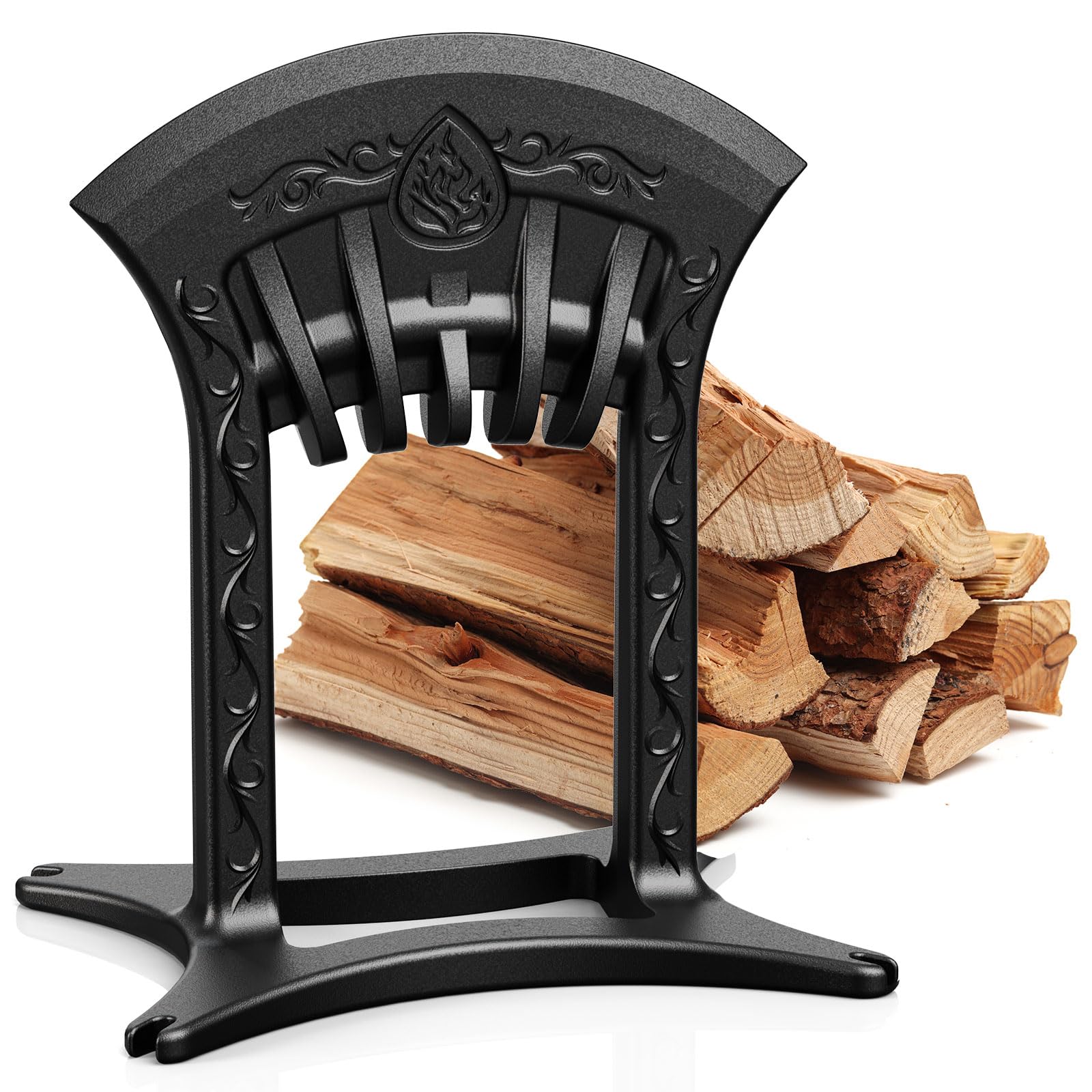
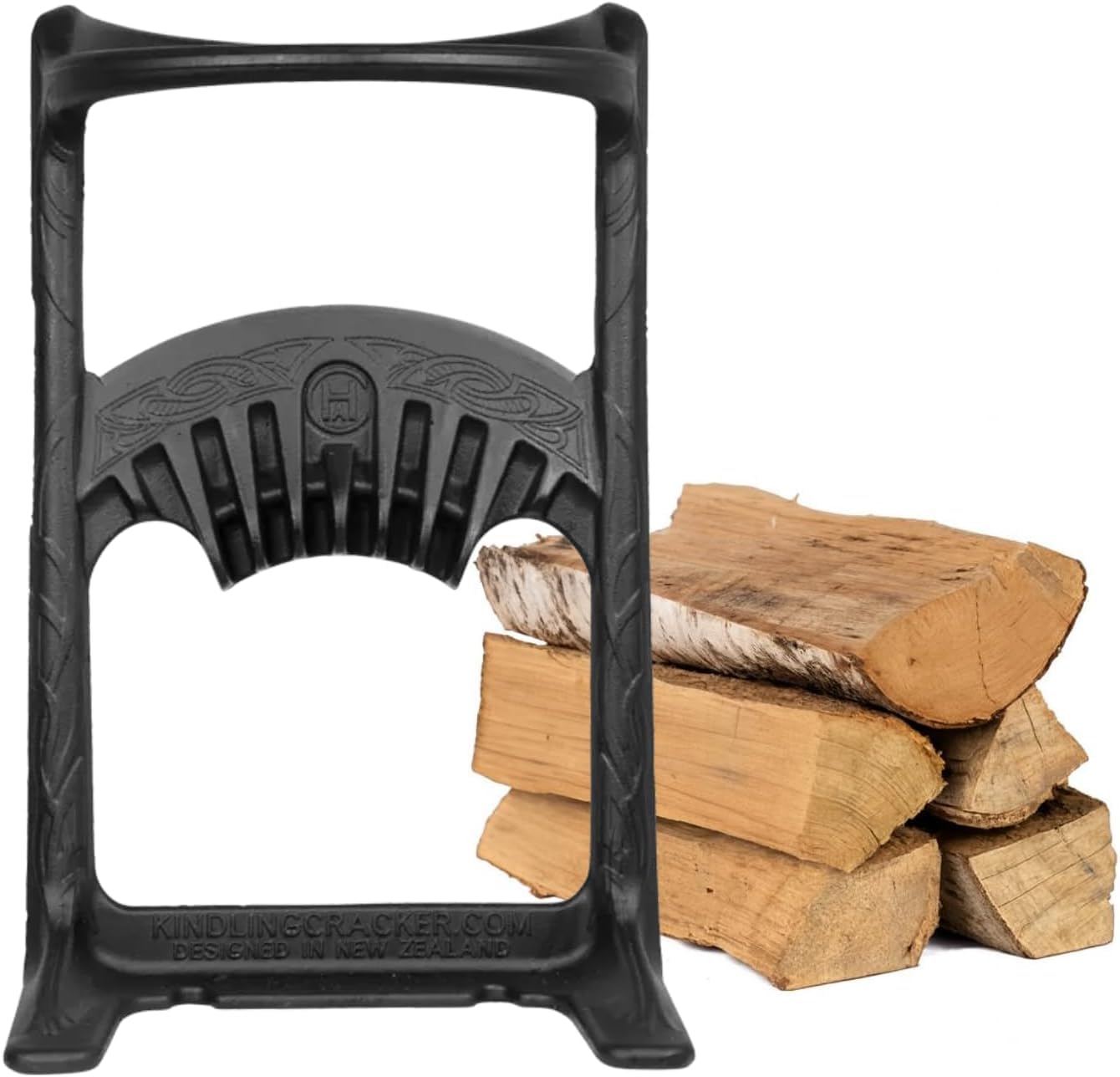
Nine inches across the inside of the ring is the whole argument. Set a fat split of oak or a chunky softwood round inside that ring and it stands there on its own while you bring a mallet down on the end of the log. The wedge is fixed, the wood holds itself, and the hand that would otherwise be steadying a log on a chopping block is somewhere else entirely.

We've used the six-inch splitters in this group, and the difference isn't marginal. The King XL takes the awkward rounds the others turn away, and 17 inches of height keeps you standing instead of kneeling in the dirt. What settled it as our top pick is the construction: one piece of cast iron, no welds to work loose. It's also the one we hand to someone who has never split wood.

What you give up is scope. It splits what fits in the ring, and a round wider than that has to be halved with a maul first — this is a kindling tool, not a log splitter. What you get back is tidiness: the splits stay corralled in the ring instead of scattering across the yard, which sounds trivial until you've spent a January picking kindling out of the snow.

Bottom line: If you make kindling more than a few times a season, buy this one: a 9-inch ring takes real logs and the fixed wedge keeps your hands clear.
2

MEEPOCAN Log Splitter

MEEPOCAN Log Splitter

Knotty hardwood

Our Score 9.0/10
Check Price

Worth Noting

  • 8.5-inch blade caps the log size
Guard
Bolt-on U-shaped steel
Weight
10.4 lb
Material
Welded steel plate
Blade Width
8.5 inches
Read the full review

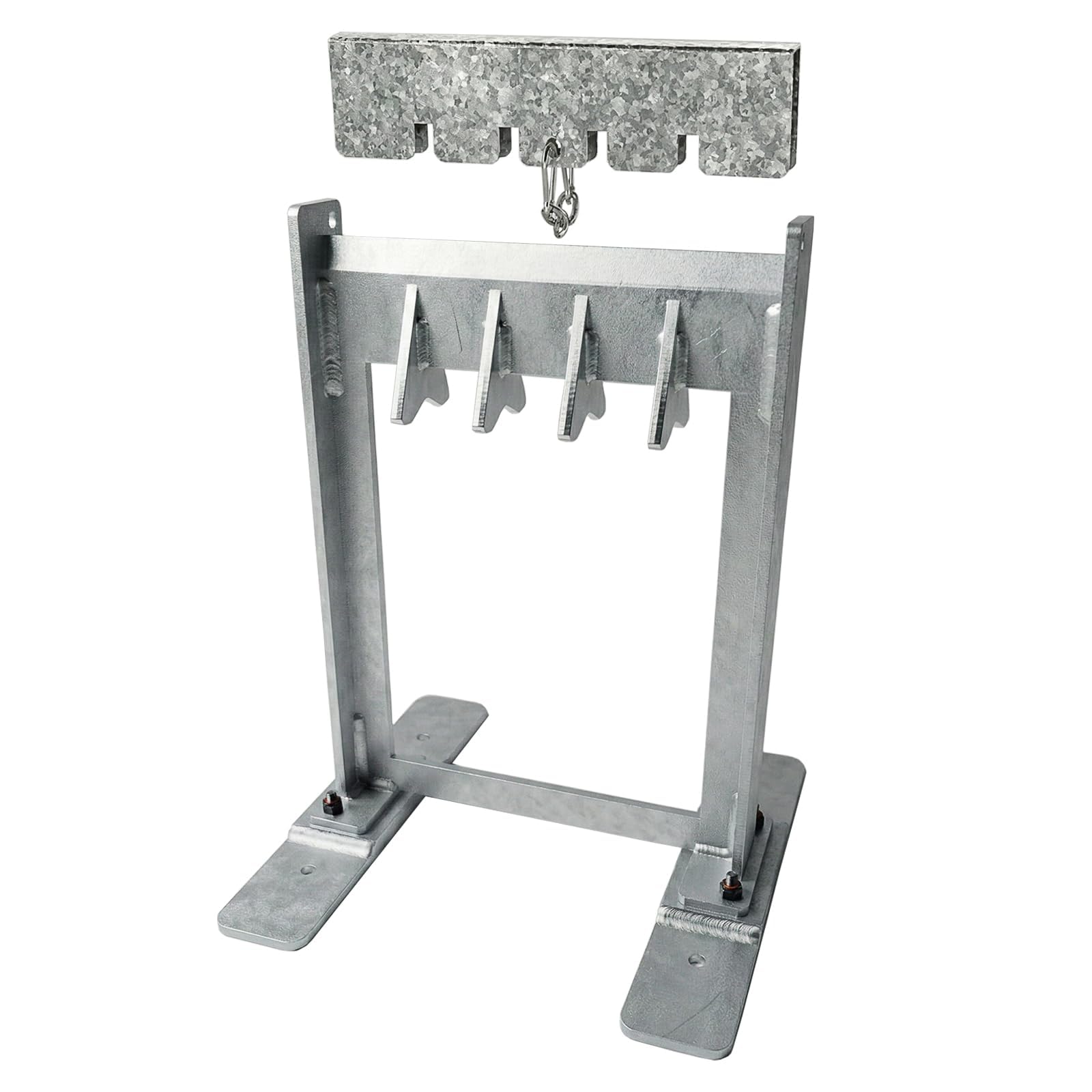
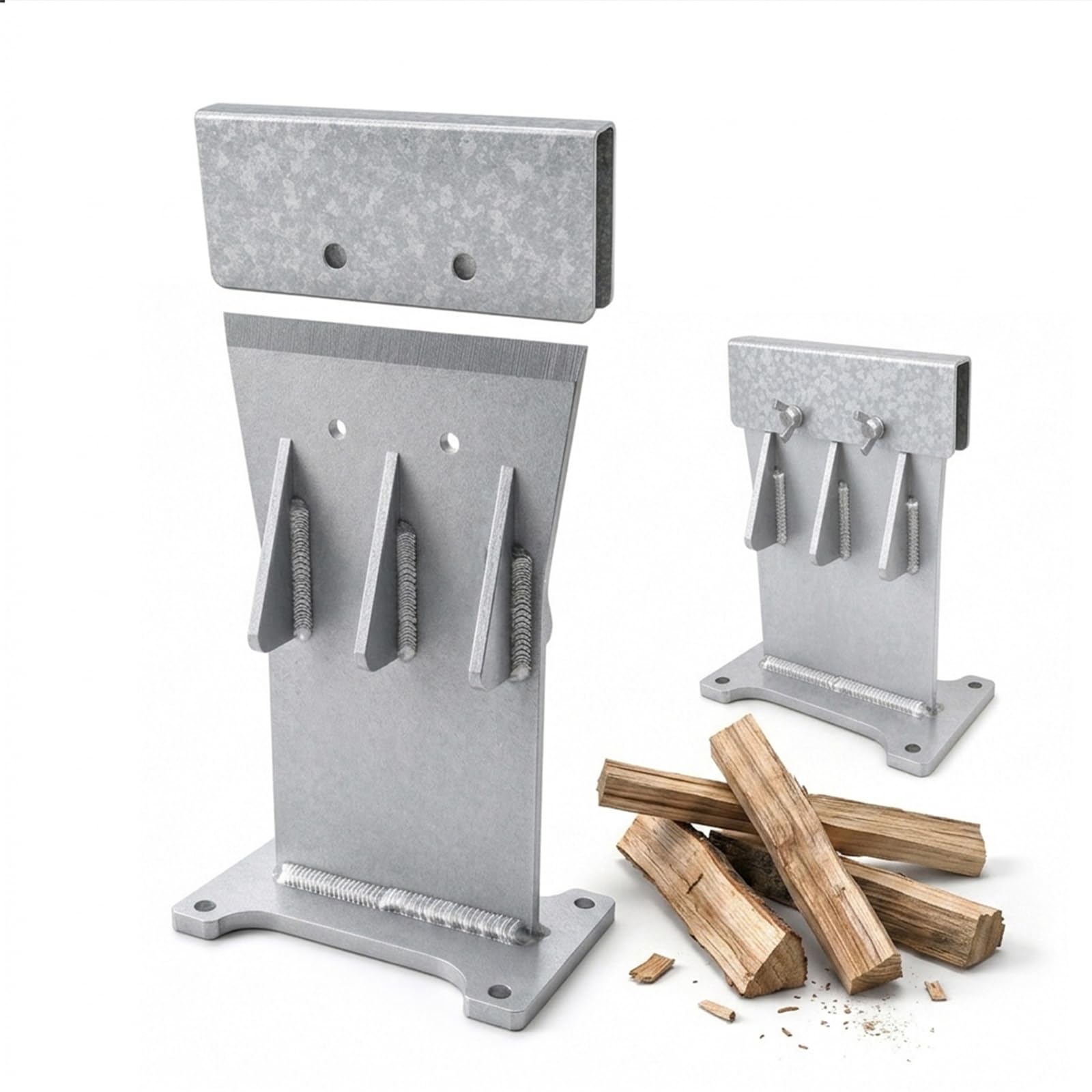
A mallet that lands on the rim of a cast-iron splitter instead of the log can crack it, and that's the failure this tool is built around. The body is welded steel plate rather than a casting, the blade runs 8.5 inches wide — the widest open edge in this group — and between those two things it's the splitter we hand to anyone whose aim wanders after the fifth log.

The guard is the detail that earns its keep. It's a galvanized steel U that bolts to the frame with a butterfly screw, so it stays on the tool in the back of a truck instead of disappearing into a bag, and there's no plastic cap to crack. Four pre-drilled holes in the base take it to a stump or a bench when you want it fixed.

Ten and a half pounds of plate doesn't wander the way a light splitter does, so you can carry it to wherever the wood is and start swinging. The finish is electroplated rather than painted, which matters if it lives outdoors — there's no coating on the blade to wear away and leave you with a rounded edge.

Bottom line: Our pick for knotty hardwood and anyone who misses the log now and then: the welded steel body and 8.5-inch blade forgive both.

3

FlareTOP Kindling Splitter

FlareTOP Kindling Splitter

Campsite kindling

Our Score 8.8/10
Check Price

Worth Noting

  • Narrow 5.7-inch blade suits small wood
Guard
Bolt-on steel shield
Weight
4.84 lb
Material
Laser-cut steel plate
Blade Width
5.7 inches
Read the full review

At the budget end of this group, the guard is usually the first thing to go missing. This one bolts a galvanized steel shield to the frame with a butterfly screw, so it stays with the tool between fires instead of turning up under the seat of the truck.

Under five pounds is the trade you're making. It's light enough to carry out to a fire pit in one hand and light enough that a hard miss walks it across the block, so use the four mounting holes and screw it to a stump. Fixed down, it behaves nothing like its weight.

For a first splitter, a second one that lives by the fire pit, or a cabin kit, we think this is the best value in the group — it does the job of the mid-range tools once it's screwed down. The screws in the box are the weak point, soft enough to cam out on hardwood, so raid your own jar before you mount it.

Bottom line: The value pick of this group: bolt it to a stump and it works like a much heavier tool.

4

KABIN Kindle Quick

KABIN Kindle Quick

Long, thick splits

Our Score 8.6/10
Check Price

Worth Noting

  • Edge can arrive needing a file
  • Too heavy to take to a campsite
Weight
12 lb
Material
Cast steel
Mounting
Bolt holes in base
Dimensions
10.25 x 9 x 15.5 inches
Read the full review

Twelve pounds of cast steel with a base wide enough to sit still on a chopping block. That mass is the difference between placing a log and chasing one: the tool absorbs the blow, so a solid hit goes into the wood instead of sliding the splitter sideways across the block. Bolt holes are there if your block is uneven or your aim is enthusiastic.

The mouth is why it stayed in the roundup. It's wider and taller than the six-inch tools, so long splits and fat rounds stand up in it rather than balancing on an edge, and the open base doubles as a crate for carrying kindling to the hearth. Nothing about it is delicate — it's the tool here that most looks like it was built in a shed by someone who splits a lot of wood.

Think of it as the cottage splitter: mid-range money, no babying, and it swallows the long awkward pieces the small tools refuse. What it gives up is the ring that contains the split — you seat the log in the mouth yourself. The tall base is the part we underrated: you're leaning over the block rather than crouching beside it.

Bottom line: We recommend it for woodpiles full of long, thick splits — the wide mouth takes what six-inch tools turn away, and the cast steel doesn't flinch.

5

Poffattr Kindling Splitter L

Poffattr Kindling Splitter L

Small stoves

Our Score 8.6/10
Check Price

Worth Noting

  • 6.1-inch blade limits it to small rounds
Height
9.8 inches
Weight
6.67 lb
Mounting
Four screws included
Blade Width
6.1 inches
Read the full review

The edge arrives blunt, and that's the first thing to deal with. Budget for sharpening before the first fire — a grinder makes short work of it, a hand file takes patience — and then this compact cast iron splitter does what it says: dry softwood goes to kindling in a couple of taps. We came back to it for pizza ovens and small stoves, where you want a handful of thin sticks rather than a barrow of kindling.

The base is cast iron too, with four screws, and that's the part that makes a small splitter usable — fixed to a block, it doesn't skate when a blow lands off-centre. At 9.8 inches you're crouching, so put it up on something. What you're buying is compactness: the whole tool disappears onto a shelf between fires, which is not true of the twelve-pound KABIN or the ten-pound MEEPOCAN.

Bottom line: Worth it for a small stove if you'll sharpen the blade first — the cast base bolts down and the compact size suits tight spaces.

6

SPEED FORCE Kindling Splitter

SPEED FORCE Kindling Splitter

Small fire pits

Our Score 8.4/10
Check Price

Worth Noting

  • Cast body can chip or crack at the base
  • Six-inch blade takes only small rounds
Weight
6.65 lb
Dimensions
6 x 3.5 x 9 inches
Blade Cover
Included
Blade Width
6 inches
Read the full review

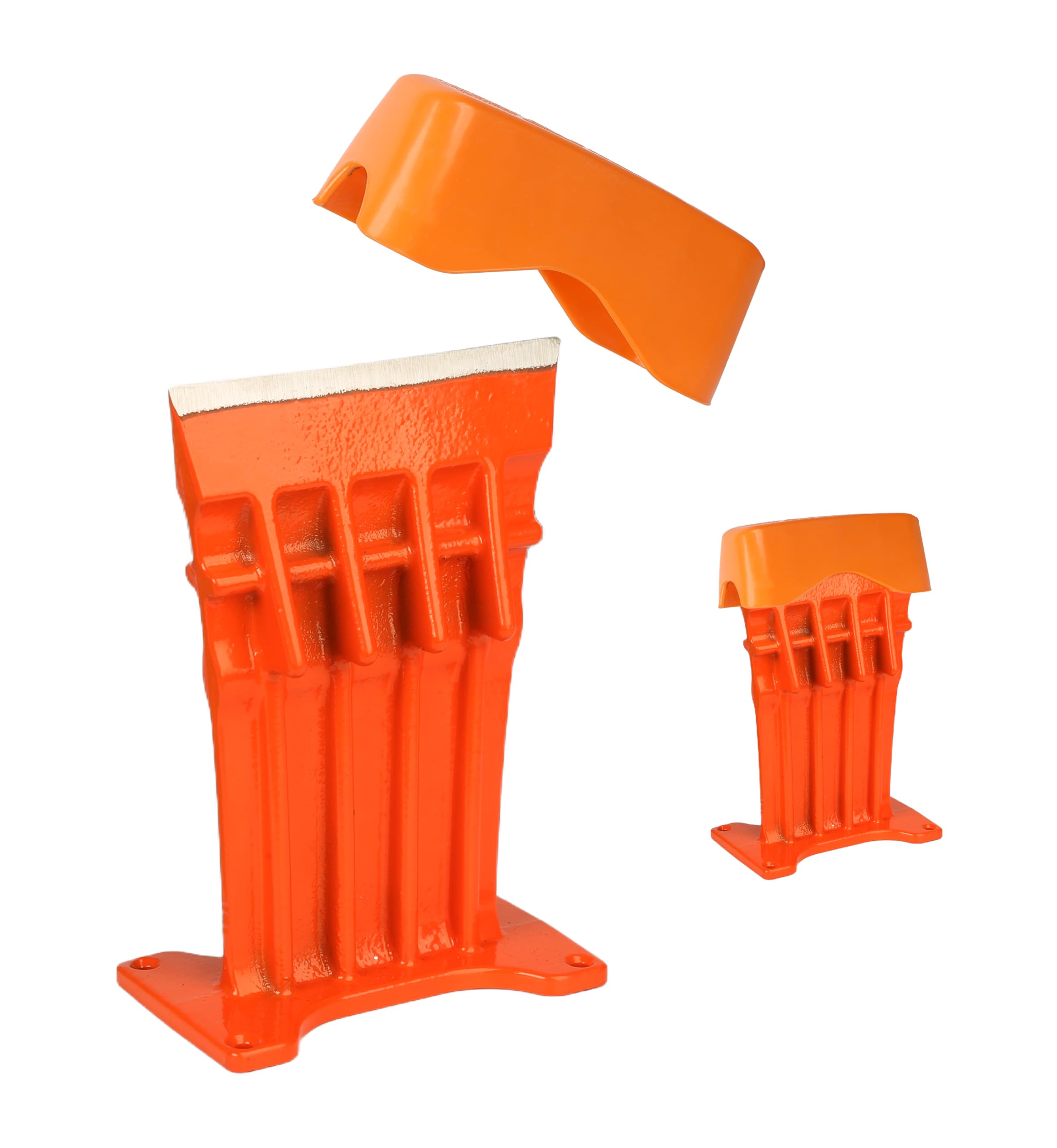
Photographs make these look bigger than they are. The SPEED FORCE stands nine inches tall with a six-inch blade, so unless you screw it to a stump you're working down near the ground. The base plate and the four screws it ships with matter more than they sound — a light splitter that isn't fixed down is a splitter you fight.

Where it earns its keep is a fire pit, a small stove or a smoker, working through dry softwood cut to length. Two taps with a heavy mallet and you have sticks, and for that job it's as cheap as anything in this group and no fussier than it needs to be. If you burn softwood a bucket at a time, this is enough tool; if your woodpile is oak, start with the welded steel instead.

Bottom line: A good cheap start for a fire pit and dry softwood; just know the cast body is the part that gives out.

How We Tested Kindling Splitters (and What Actually Mattered)

We started by scanning the market for kindling splitters that were actually available and had a track record—filtering out the gimmicks and the models with a pattern of one-star reviews about cracked welds or blades that dulled after a few sessions. That left us with 12 models spanning manual wedges, wall-mounted lever designs, and freestanding stand-and-strike styles. We bought them all at retail and tested them over eight months.

Testing happened in my backyard, on a concrete patio, and on a well-worn stump near the fire pit. We split a mix of oak, pine, and cedar—oak for the hard stuff, pine and cedar for the easy wins—and noted how often each splitter needed a second strike, whether the blade bit cleanly or bounced, and how much force it took to drive the wood through. Safety was part of every session: we checked whether the blade guard stayed put between splits, whether the handle kept our hands clear of the strike zone, and whether any pieces flew sideways when the wood popped.

After every session, we inspected each splitter for loose welds, wobbly handles, and blades that had rolled or chipped. We noted the steel thickness, the handle material, and whether any plastic parts felt like they'd crack by season two. We also timed how long it took to set up and break down, and measured the footprint for anyone storing one in a shed or garage. By the end of eight months, we'd put each model through hundreds of splits, and the differences came down to three things: how well the blade held its edge, how solid the construction felt after repeated use, and whether the price felt fair for what you got.

How to Choose Kindling Splitters

The opening sets your ceiling

A kindling splitter doesn't halve rounds. It reduces splits, branchwood and quartered pieces into sticks, so the working width is the spec that decides whether you'll use the tool or fight it. The small tools here run 5.7 to 6.1 inches across the blade, the MEEPOCAN sits at 8.5, and the Kindling Cracker's ring takes a 9-inch log.

Measure the pieces you actually feed the stove, not the rounds in the pile, and buy a size above your regular split. The trap is buying on looks: a splitter photographed beside a big round implies it handles that round, and it doesn't. Anything wider than the opening gets halved with a maul first — no tool here does that job.

Plan to fix it to something

The strike lands on the log, and the tool has to absorb it. On a chopping block a heavy splitter stays put and a light one walks, so we treat the mounting holes as the most important feature here after the opening size. Every tool in this group has them.

Screw a light splitter to a stump and it behaves like a much heavier tool — the four-and-a-half-pound FlareTOP is the clearest example. If you rent, split in different spots, or want to carry the tool to a fire pit, the alternative is mass: cast bodies of ten to twelve pounds hold their ground without a bolt.

Cast iron or welded steel

Cast iron is dense, quiet, and reluctant to move. It also chips, and it can crack if a mallet catches the rim instead of the log. Welded and laser-cut steel plate bends where a casting shatters, which is why the MEEPOCAN and FlareTOP are built that way. Neither material is a quality ranking — they're different failure modes.

We prefer cast iron for a tool that lives in one spot and steel for one that gets thrown in a truck. The Kindling Cracker's answer to brittleness is the wide ring: the mallet lands inside it, on the log, which is also why it survives being handed to beginners.

Working height and where it lives

Short splitters sit at nine to ten inches and have you crouching beside a block; the tall ones run 15 to 17 inches and let you work standing. That's the difference between processing a winter's kindling in an afternoon and doing it in twenty-minute bursts, so match height to volume.

Weight follows the same logic. Under five pounds travels to a campsite; ten pounds and up stays by the woodpile and resents being moved. Decide where the tool will live before you decide how big it should be.

Frequently Asked Questions

Final Verdict

The Kindling Cracker King XL is what we tell most people to buy. The 9-inch ring takes pieces a six-inch tool turns away, the fixed wedge keeps hands out of the strike zone, and a single piece of cast iron has nothing to work loose. For a household that lights a fire most nights, the premium is the last thing you'll think about.

If your woodpile is long and thick rather than wide, the KABIN's tall mouth handles it with less fuss, and the FlareTOP is the one to screw to a stump by the fire pit if you want a second splitter for very little.