Planters & Plant Supports

Best Grow Bags for Container Gardens of 2026

The first time I moved a leggy tomato out of a plastic pot and into a fabric grow bag, the difference showed up within a month: thicker stems, no roots spiraling around the bottom, and a plant that didn't sulk for days after every watering. The fabric lets air reach the root zone, so roots branch outward instead of circling, and excess water drains straight through instead of pooling. Healthier roots, bigger harvests, and a pot you can fold flat and stash in October — that's what a good grow bag actually fixes.

Size is where most shoppers get stuck, since stated gallons and real dimensions rarely line up, and a bag that runs small dries out by lunch in July. I spent one full growing season with 16 grow bags, hauling them by their handles, soaking them on hot afternoons, and dragging a few across the patio, and by August the gaps in durability, sturdiness, and plain value were impossible to miss. The ones below kept their shape, carried a soaking-wet load without splitting a seam, and earned what they cost per gallon of soil.

1

AC Infinity 5-Gallon Grow Bags

Top Pick
AC Infinity 5-Gallon Grow Bags

Quality-first gardeners

Our Score 9.6/10
Check Price

Worth Noting

  • Premium price for a five-bag pack
Capacity
5.39 gallons
Dimensions
11.81 x 11.81 x 11.42 in
Pack Count
5
Fabric Weight
1.1 lb
Read the full review

Five hundred grams per square meter is the number to notice here. That fabric weight is the thickest in this set, and it changes how the bag behaves: the walls stand up when you fill them, the seams feel less likely to sag, and the whole pot holds a cleaner shape on a patio. The listed capacity is 5.39 gallons, not a vague five-gallon label, and the bag gives roots that full volume. We think this is the best default for a small, quality-first container garden.

The handles are nylon rather than strips cut from the bag body, and the stitching is reinforced at the stress points. That matters when a bag is full of wet soil, because the lift is where cheap grow bags usually show their age. We also like the built-in metal rings: they give you a clean place to anchor twist ties for training tomatoes or peppers without punching holes in the fabric. Drainage is the other half of the story, and the fabric lets excess water move through the walls instead of pooling at the base.

This is the one we reach for when a compact, high-quality setup matters more than covering a lot of ground. If you need to fill a long fence line, a bulk pack makes more sense. Set it in place before you fill it; a full bag is not a one-hand carry.

Bottom line: We recommend the AC Infinity set first for gardeners who want the thickest fabric, honest capacity, and handles that feel trustworthy when the bag is full.

2

Gardzen 10-Gallon Grow Bags

Gardzen 10-Gallon Grow Bags

Large garden setups

Our Score 9.4/10
Check Price

Worth Noting

  • Actual capacity can fall short of 10 gallons
Capacity
10 gallons
Dimensions
16 x 16 x 12 in
Pack Count
10
Fabric Weight
10.6 oz
Read the full review

Ten bags is enough to turn a blank patio into something that looks like a raised-bed garden. Each Gardzen bag is listed at 10 gallons and measures 16 inches across by 12 inches tall, so a row of them takes up real floor space but gives tomatoes and peppers room to settle. The 300G fabric is the same weight class as most of the mid-priced packs here, and it arrives folded flat. The black fabric is unglamorous but practical.

We recommend this pack when the goal is coverage. The handles are reinforced with X-shaped stitching, and the double gusset at the base helps the bag keep its shape when it is full and wet. That makes it easier to shuffle a bag toward the sun or pull one back under an eave. Drainage through the fabric is steady, and the bags are washable and foldable at the end of the season.

Fill them where they will live. A 10-gallon bag of wet soil is not something to carry across a yard, even with good handles. Set the empty bags in their final positions, add a little soil to steady them, and then fill the rest.

Bottom line: For a large layout, the Gardzen ten-pack is the bulk-value choice here, with reinforced handles and enough bags to fill a real garden.

3

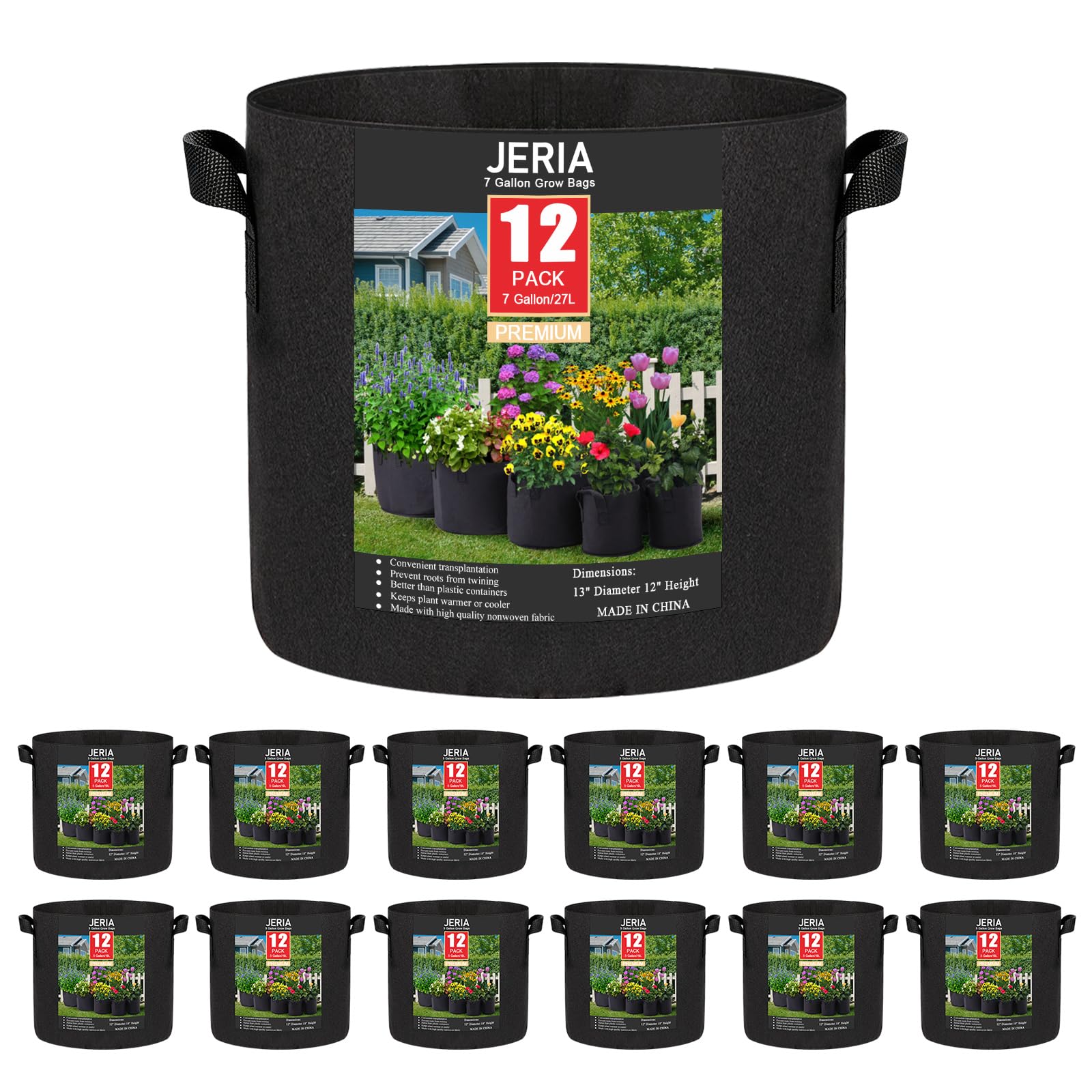
JERIA 7-Gallon Grow Bags

JERIA 7-Gallon Grow Bags

Mid-size vegetable gardens

Our Score 9.4/10
Check Price

Worth Noting

  • Too small for full-size indeterminate tomatoes
Fabric
Non-woven fabric
Handles
Built-in
Capacity
7 gallons
Pack Count
12
Read the full review

The little plant labels are a small thing, but they solve the usual grow-bag muddle. When every pot looks the same, a label is the difference between a row of pepper seedlings and a row of weeds you are afraid to pull. JERIA includes them with this twelve-bag pack, and that tells you who the set is for: someone planting a real variety, not just one tomato.

Seven gallons is the flexible middle of the grow-bag range. It is enough for peppers, eggplant, determinate tomatoes, and a lot of herbs, but it is not so large that a full bag becomes impossible to move. The built-in handles are strong enough for a dry lift, and the nonwoven fabric drains well and folds down for storage. The bags are listed for indoor or outdoor use, though they make the most sense on a patio or in a greenhouse.

We think this is the pack to choose when you want a full vegetable patch without the footprint of 20-gallon pots. Twelve bags let you plant a mix and move the shy ones around for sun. The included labels are a useful head start, especially if you are sowing several varieties at once.

Bottom line: The JERIA pack earns its place as the flexible middle option: enough bags for a real garden, with a size that suits most vegetables and handles that make rearranging easy.

4

Lyincat 10-Gallon Grow Bags

Lyincat 10-Gallon Grow Bags

Bulk ten-gallon

Our Score 9.4/10
Check Price

Worth Noting

Capacity
10 gallons
Dimensions
16 x 16 x 12 in
Pack Count
12
Fabric Weight
10.6 oz
Read the full review

Nylon strap handles are the detail that separates the Lyincat pack from the usual fabric-strip bags. They are sewn onto the sides rather than cut from the same material as the pot, so they feel like a handle you can actually wrap your hand around when the bag is full. That matters more as the bag gets bigger, and this is a 10-gallon set.

Twelve bags in one pack is a lot of growing space. The 16-inch diameter and 12-inch height are the same general footprint as the Gardzen 10-gallon bags, so a row of them reads as a proper container garden rather than a scattering of pots. The 300G fabric drains well and folds down for storage.

These bags are not overbuilt. The fabric is in the same weight class as most of the mid-priced packs here, and the handles are the main upgrade. If you are filling a large layout and want a consistent look, the twelve-bag count is the appeal.

We keep the Lyincat pack in the conversation for large gardens because it pairs a generous bag count with handles that are easier to grip than fabric strips. It does not beat the AC Infinity set on fabric weight or the Gardzen pack on price per bag, but it is a strong middle choice when you need a dozen 10-gallon pots and want the lift to feel less awkward. Check the seams at the handle attachments when the bags arrive; that is the spot that decides whether a bulk pack feels like a bargain or a chore.

Bottom line: We keep the Lyincat pack in the conversation for large gardens because it pairs a generous bag count with nylon handles that make a full 10-gallon lift feel less awkward.

5

VIVOSUN 3-Gallon Grow Bags

VIVOSUN 3-Gallon Grow Bags

Herbs and patios

Our Score 9.2/10
Check Price

Worth Noting

  • Handles are the first wear point on soaked bags
  • Stated 3-gallon capacity can run small
Capacity
3 gallons
Dimensions
9.7 x 9.7 x 9.8 in
Pack Count
5
Fabric Weight
10.6 oz
Read the full review

Herbs, lettuce, and compact peppers do not need a raised bed's worth of soil. A three-gallon bag gives them enough root room while keeping the pot light enough to shift when the sun moves. This VIVOSUN set puts five of those bags in one go, which makes it easy to line a sunny wall or a few steps without turning the patio into a farm. Five bags also let you stagger lettuce or basil instead of committing the whole space to one crop.

We like this set for that small-space role. The 300G nonwoven fabric drains freely, and the serged handles are reinforced where they meet the bag, so moving a dry pot from one side of the porch to the other is not a wrestling match. The 12-liter capacity is genuinely useful for herbs and greens, and the bags fold down at the end of the season. The black fabric is plain enough to disappear against soil and mulch.

The limitation is root room, not build. A full-size indeterminate tomato wants more soil than this, so use it for herbs, compact peppers, or a lettuce succession. For that job, the smaller pot is easier to shift and wastes less potting mix than a half-empty 10-gallon bag.

Bottom line: We reach for the VIVOSUN set when space is tight and the crop is small; it is an inexpensive way to start a patio garden without committing to big pots.

6

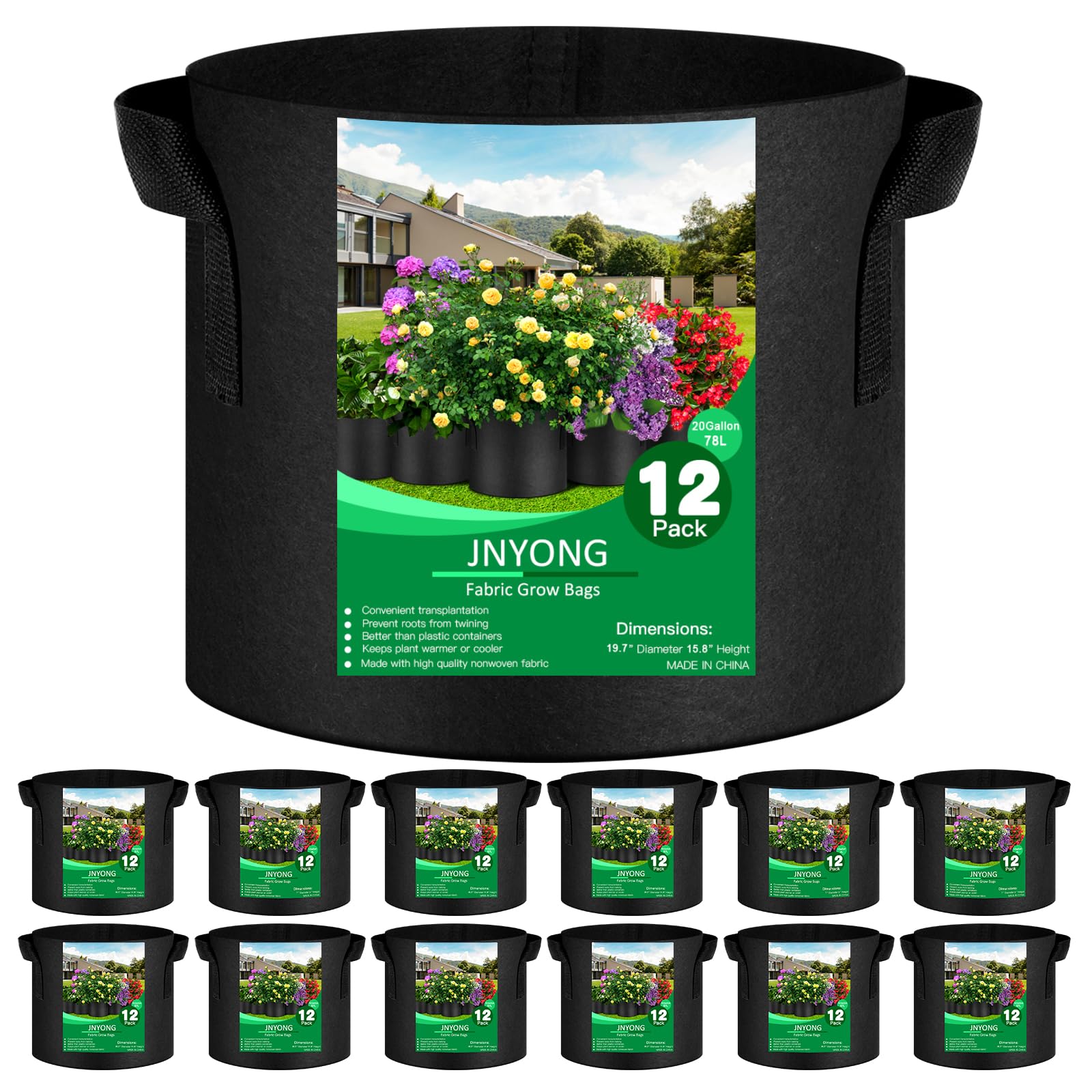
JNYONG 20-Gallon Grow Bags

JNYONG 20-Gallon Grow Bags

Big thirsty plants

Our Score 9.2/10
Check Price

Worth Noting

  • Large footprint limits small balconies
Capacity
20 gallons
Dimensions
19.7 x 19.7 x 15.8 in
Pack Count
12
Handle Type
Polypropylene ribbon
Read the full review

Twenty gallons is not a bigger version of a five-gallon bag; it is a different tool. The JNYONG bag measures about 19.7 inches across and 15.8 inches tall, which gives indeterminate tomatoes, squash, and other thirsty plants a root zone that behaves more like a small raised bed than a patio pot. We point gardeners with those crops to this set first, because the extra soil volume is the whole reason to buy it.

The wide polypropylene ribbon handles are a better choice than thin fabric strips, and the reinforcement lining helps them take the load when the bag is full. Twelve bags in one pack is a serious layout, enough to line a long fence or fill a community plot. The nonwoven fabric drains freely and folds down when the season ends.

The 20-gallon size is the point, and it is also the catch. A bag this full is heavy enough that you should decide where it lives before you fill it, and it drinks a lot of potting mix. In exchange, you get a root zone that can carry a big tomato or squash plant through the season without the daily wilt of a smaller pot. Fill it with a wheelbarrow, not a hand trowel, and the job goes faster.

Bottom line: We point gardeners with big, thirsty plants to the JNYONG 20-gallon set; it gives roots room that smaller bags cannot, and the wide handles make the size manageable.

7

FEED GARDEN 5-Gallon Grow Bags

FEED GARDEN 5-Gallon Grow Bags

Tight-space starters

Our Score 9.2/10
Check Price

Worth Noting

  • Actual volume runs below 5 gallons
Capacity
5 gallons
Dimensions
12.2 x 12.2 x 10.2 in
Pack Count
4
Fabric Weight
10.6 oz
Read the full review

The fold-flat trick is what makes this set easy to live with. Empty the soil, and the four bags stack down to roughly two inches, which means they can live in a shed gap or a cupboard instead of taking up garage space all winter. For a first patio garden or a seasonal herb collection, that storage detail matters as much as the growing does. The bags are plain black and unobtrusive on a deck.

The bags are 5-gallon size and made from 300G nonwoven fabric, with handles attached by double-stitched box-X reinforcement rather than a single line of stitching. The 12.2-inch diameter and 10.2-inch depth give herbs, greens, strawberries, and compact peppers a sensible root zone. Drainage through the walls is good, and the fabric is stiff enough to hold its shape when filled. The 300G fabric is a step above the thinnest entry-level bags, though it is not the 500G class.

We like this set for someone who wants four tidy pots, not a whole farm. It is also a good way to test whether fabric growing suits your routine before buying a dozen bags. Use them for a season, then decide whether a larger pack earns the space.

Bottom line: We like the FEED GARDEN set for a first patio garden or a seasonal herb collection; it stores flat and does not ask you to commit a whole shed to four pots.

8

Jorvila 5-Gallon Grow Bags

Jorvila 5-Gallon Grow Bags

Budget five-gallon

Our Score 9.2/10
Check Price

Worth Noting

  • Runs smaller than a true 5-gallon pot
Capacity
5 gallons
Dimensions
11.8 x 11.8 x 10.6 in
Pack Count
5
Fabric Weight
10.6 oz
Read the full review

The Jorvila set is a plain five-pack of 5-gallon bags with 300G fabric, and that is the right way to read it. There is no training ring, no plant label, and no premium handle material. What you get is a set of mid-size fabric pots with widened handles and double-stitched sides at a budget price.

The fabric is thick enough to hold its shape when filled, and the X-stitching at the handles gives them more reinforcement than the flat fabric strips on the cheapest bags. Drainage is the usual nonwoven story: water moves through the walls, so the mix dries faster than it would in a plastic pot. That suits peppers, beans, lettuce, and herbs, especially on a hot patio.

The bags are listed at 11.8 inches across and 10.6 inches tall, which is a useful size for a small collection of pots. They fit a row of peppers or a cut-and-come-again lettuce patch without crowding a balcony. A full-size tomato belongs in a 10-gallon or 20-gallon pick instead, where the root zone is more generous.

We recommend the Jorvila set when the budget is tight and the garden is small. It gives you the fabric-pot basics without the extras, and the wide handles make it easier to move a planted bag than the price suggests. If you need a larger root zone or a more refined handle, spend elsewhere; for a simple patio setup, this is enough.

Bottom line: The Jorvila set is a sensible budget pick for a small patio garden, with thick fabric and wide handles that make five-gallon growing feel easy.

How We Tested Grow Bags Through a Full Growing Season

We gathered every grow bag we could find in the sizes home gardeners actually buy, then narrowed the field by fabric weight, seam construction, how the handles were stitched on, and how closely the stated gallon size matched the listed dimensions. Sixteen made the cut, and we grew in all of them from spring planting through the end of the season.

Each bag was filled with the same potting mix and weighed dry and again after a full watering, so we knew exactly how heavy a wet load was before anyone lifted it. We moved every one by its handles, dragged a few across a concrete patio, and left them out through wind and heavy rain to see whether seams held and whether the fabric softened, faded, or frayed at the corners.

Through the season we watered on hot afternoons and noted which bags dried out first, watched how quickly water ran off the bottoms of the ones sitting directly on pavement, and tracked how much the sides slumped once the soil settled. At the end we emptied each bag, checked the root ball for circling, and inspected the fabric and stitching at every handle stress point.

For value, we calculated cost per gallon of measured soil volume rather than trusting the label, and several bags came up short of what they advertised. Sizes were judged against what they were meant to hold, from a compact bag of herbs to a full-size tomato in the largest.

How to Choose Grow Bags for Container Gardens

Size the bag to the crop, not the label

Grow-bag gallons are a rough guide, not a laboratory measurement. A bag listed as 5 gallons may hold closer to 3 or 4, and the listed diameter and height tell you more about the root zone you are actually buying. Match the bag to the crop: 3-gallon bags suit herbs, lettuce, and compact peppers; 7- to 10-gallon bags handle determinate tomatoes, eggplant, and most patio vegetables; 20-gallon bags are for indeterminate tomatoes, squash, and other plants that want a raised-bed-sized root run. Measure the footprint before you order a dozen.

Fabric weight is the durability clue

The fabric weight, usually given in grams per square meter, is the best quick read on how a bag will hold up. The 300G bags here are a sensible middle ground: light enough to move, thick enough to stand up when filled. The AC Infinity set goes to 500G, which feels stiffer and more substantial, and it is the one we reach for when we want the bag itself to last. Thicker fabric costs more and takes longer to soften, so it is not automatically the right call for a temporary herb patch.

Plan for water, weight, and where it sits

Fabric bags drain fast, which is good for roots and demanding for the gardener. Water leaves through the walls as well as the base, so a bag in full sun can dry out faster than a plastic pot of the same size. Mulch the surface, group pots together, or set up drip irrigation if you are planting a full row. Also decide placement before filling: a 20-gallon bag of wet soil is not something to move after the fact, and even a 10-gallon bag is awkward on a balcony.

Pack count follows the garden you are planting

Buy the number of bags you will actually fill this season. A four- or five-pack is right for a patio, a few herbs, or a first experiment; a ten- or twelve-pack is for a fence line, a community plot, or a gardener who wants to succession-sow. Bulk packs lower the cost per bag, but they also commit you to storing the extras. If you are unsure, start with four or five bags, learn how fast they dry in your space, and add more next season.

Frequently Asked Questions

Final Verdict

We recommend the AC Infinity 5-gallon set first. It has the thickest fabric here, honest capacity, and handles that feel secure when the bag is full, which is what we want from a pot that will stay planted for seasons.

If you need to fill a large garden, the Gardzen ten-pack is the bulk-value choice; for a small patio, the VIVOSUN five-pack is the easier commitment. The deciding advantage is AC Infinity's fabric weight and true capacity together.