Tree & Forestry Care

Best Gas Chainsaws of 2026

The limb comes down across the driveway in an ice storm, and the saw that ran fine in July won't catch in February. That's the real test of a gas chainsaw — not the spec sheet, but the fourth pull on a cold morning. A gas saw earns its keep when the job outgrows a battery model: hardwood rounds, a trunk that needs bucking, no outlet in sight. What a good one fixes is downtime.

I've cut firewood long enough to know a sharp chain beats a bigger engine almost every time, and that the saws people regret buying are the ones that are hard to tension and harder to restart hot. Over eight months, my team and I ran seven gas saws through storm cleanup, firewood season, and a lot of cold starts, weighing power and price against how much fiddling each one demanded. The picks below kept cutting while the others were getting adjusted.

1

Husqvarna 450 Rancher 20-Inch

Top Pick
Husqvarna 450 Rancher 20-Inch

All-round yard work

Our Score 9.0/10
Check Price

Worth Noting

  • Premium price for 50 cc
Engine
50.2 cc
Weight
11.3 lb
Bar Length
20 in
Vibration Control
LowVib dampeners
Read the full review

Slightly over 11 pounds with a 50-cc engine is the combination that makes the 450 Rancher the saw most people should start with. The other 50- to 62-cc saws here carry 13 to 14.5 pounds, and that difference shows up halfway through a morning of limbing, when you are holding the saw out at arm's length instead of resting it on a log. The 20-inch bar takes firewood rounds and storm-dropped limbs, and it is short enough that the saw still balances in your hands.

It is our top pick because it asks the least of you. Smart Start turns a cold start into a short pull rather than a yank, Air Injection throws the worst of the dust out before it reaches the filter, and the LowVib dampeners keep the tingle out of your fingers after a tank. The two-year warranty is the other part of what the premium buys, and it is the sort of thing you only value the first time a saw needs service.

The trade-off is money and displacement. The 62-cc imports here give you more cubic centimeters for a fraction of the price, and on a clean 20-inch log you will not feel shortchanged by one. Where the Rancher earns its cost is in the third hour, the fifth tank and the cold morning: nothing on it feels sourced from the bottom of a parts bin, and you stop thinking about the saw. For hardwood, the 460 below is the same logic with more bar.

Bottom line: The saw we point most homeowners to: light for its 50 cc, easy to start cold, and the most consistent performer in this set.

2

Husqvarna 460 Rancher 24-Inch

Husqvarna 460 Rancher 24-Inch

Large trees

Our Score 9.0/10
Check Price

Worth Noting

  • Heavy at 13.2 lb for overhead work
  • Premium price
Engine
60.3 cc
Weight
13.2 lb
Bar Length
24 in
Horsepower
3.6 hp
Read the full review

Twenty-four inches of bar is more saw than most yards need, and that is meant as a compliment: the 460 Rancher is built for trunks the 20-inch saws can only nibble from two sides. If your firewood comes off 20-inch-plus hardwood, or you are dropping trees instead of cleaning up after them, this is the saw that stops the job being a workaround. If you are limbing and cutting small stuff, it is 13 pounds you do not need to carry.

Sixty-point-three cubic centimeters and 3.6 hp make it the strongest saw here short of the 68-cc NEO-TEC, and the power arrives smoothly rather than all at once, which matters when you are holding a long bar in a bucking cut. It starts on the first or second pull hot or cold, and the LowVib handles keep vibration from becoming arm fatigue by the end of a tank. The 2.6-ounce bottle of 50:1 mix in the box is a detail we appreciated: the saw can be fueled and run the day it arrives.

A 24-inch bar drinks fuel and bar oil faster than a 20, and 13.2 pounds is enough to remind you at the end of a long limbing session. This size only disappoints when it is bought for small work; if most of your cutting is under 16 inches, the 450 is the better and cheaper buy. For the trunks it was built for, it does not flinch.

Bottom line: For trunks and felling, the 460 Rancher's 24-inch bar and 60 cc are worth the weight and the price; for limbing, they are simply more saw than you need.

3

VEVOR 25.4cc 12-Inch

VEVOR 25.4cc 12-Inch

Pruning and brush

Our Score 8.6/10
Check Price

Worth Noting

  • Plastic handle can crack if the saw is dropped
  • Chain can come off when tension slips
Engine
25.4 cc
Handles
Top handle
Bar Length
12 in
Horsepower
1.2 hp
Read the full review

A 12-inch top-handle saw is a different tool from everything else here, and after a session with one the bigger saws feel like overkill for pruning. The handle sits over the engine, so the saw hangs from your hand at a natural angle when you are reaching into a shrub or working above shoulder height, and 25.4 cc is enough to take a four-inch limb without pulling you off balance. This is the saw we keep for the orchard and the fence line, and the one we leave in the shed when there is a trunk to buck.

The engine is a 1.2-hp two-stroke with a 12-inch bar and a cutting capacity that tops out around 10 inches, which is honest for its size. It starts in about three pulls from cold and runs clean once warm, and the wrap-around handle gives you a second grip for steadying it against a branch. The fuel tank is small at 0.24 quarts, so a long session means a refuel; keep the can close.

Durability is the question mark. The plastic handle is the part that gives, and a dropped saw is a cracked saw; the chain can also come off when it is run loose. Check the tension before every session, keep the bar oil topped up, and this little saw earns its keep. It is also the cheapest way into gas power here, which for a homeowner with hedgerows and small trees may be all the saw they need.

Bottom line: For pruning, brush and reach work, this top-handle 12-inch saw does what the big saws cannot get to, at the lowest price here.

4

NEO-TEC 68cc 24-Inch

NEO-TEC 68cc 24-Inch

Heavy timber

Our Score 8.4/10
Check Price

Worth Noting

  • Heavy at 24 lb for extended use
Engine
68 cc
Weight
24 lb
Horsepower
4.5 hp
Bar Lengths
22 in and 24 in
Read the full review

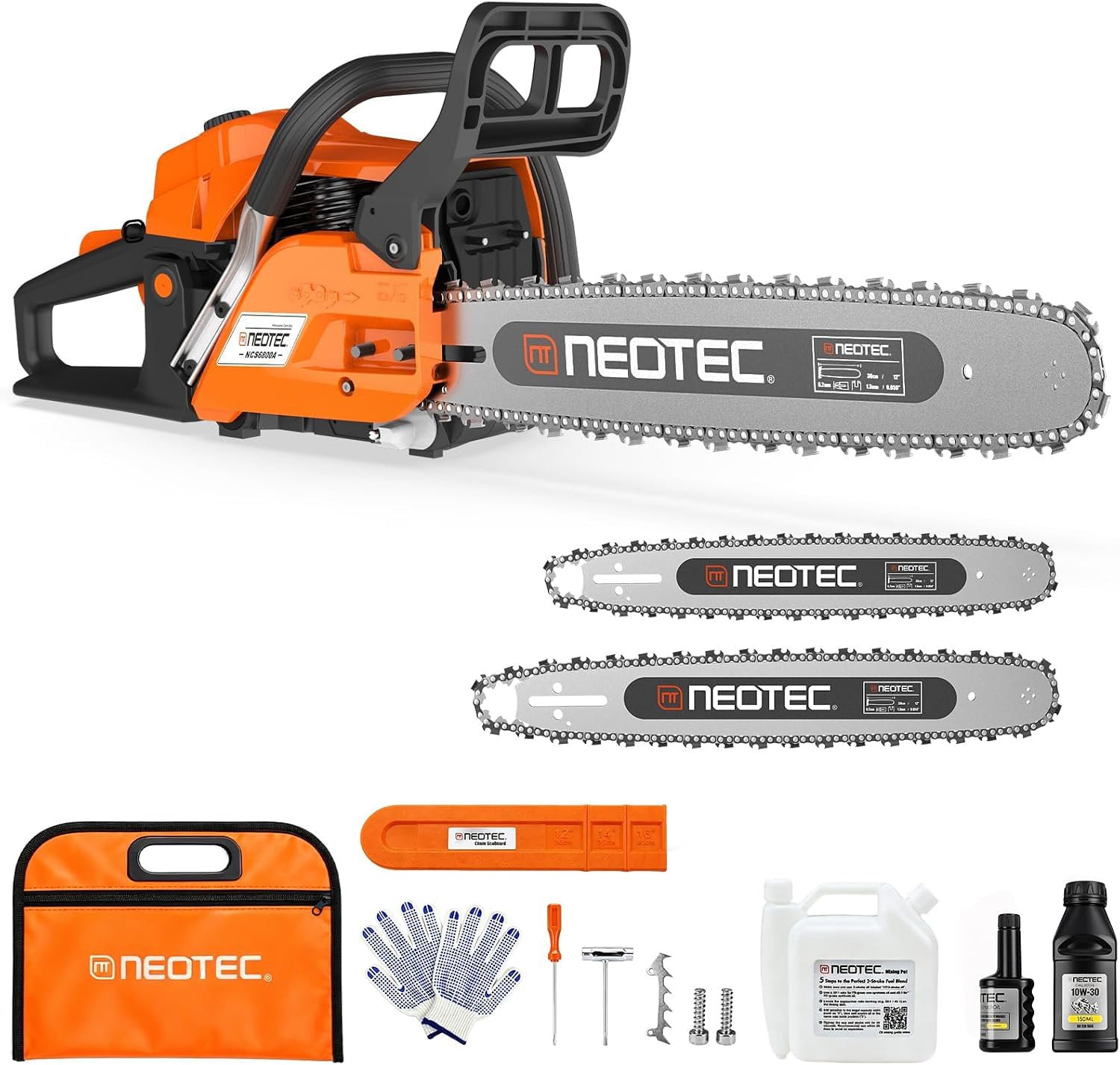
The first thing to know about the NEO-TEC is the fuel mix: 25:1, spelled out on the saw as 1 L to 40 ml or 1 US gallon to 151.4 ml. That is twice the oil of the 50:1 saws most people run, so it needs its own can and its own habit; topping it up from the Husqvarna's mix runs it lean. Mixed properly, the 68-cc engine rewards the trouble.

Behind the fuel cap is the biggest engine in this set: 68 cc, 4.5 hp and a 13,000-rpm ceiling, driving a 22- or a 24-inch bar. It is built for hardwood and long runs, and the anti-vibration mounts and quick-stop brake are there for the same reason. The kit is unusually complete — both bars and chains, bar oil, engine oil, a mixing container, a scabbard and tools — so the saw is ready the day it lands.

Twenty-four pounds is the number that decides whether this saw is for you. That is roughly double the weight of the 450 Rancher, and it turns a two-hour job into one we take in stages. It also makes the saw steadier in a big bucking cut, which is the trade: you carry more and fight it less.

If your cutting is big hardwood and you want the most displacement for the money, this is the pick. It is also the newest name here, with the least long-term history behind it, so buy it expecting to do your own tuning and your own research on parts. If your wood is mixed and your sessions are short, the weight will wear you out before the engine does.

Bottom line: The most displacement for the money here, best suited to big hardwood and to buyers who do not mind a 24-pound saw.

5

SUPMIXTOOLS 62cc 20-Inch

SUPMIXTOOLS 62cc 20-Inch

Budget firewood saw

Our Score 8.2/10
Check Price

Worth Noting

  • Plastic body and bar adjuster need care
Engine
62 cc
Weight
14 lb
Bar Length
20 in
Horsepower
4.2 hp
Read the full review

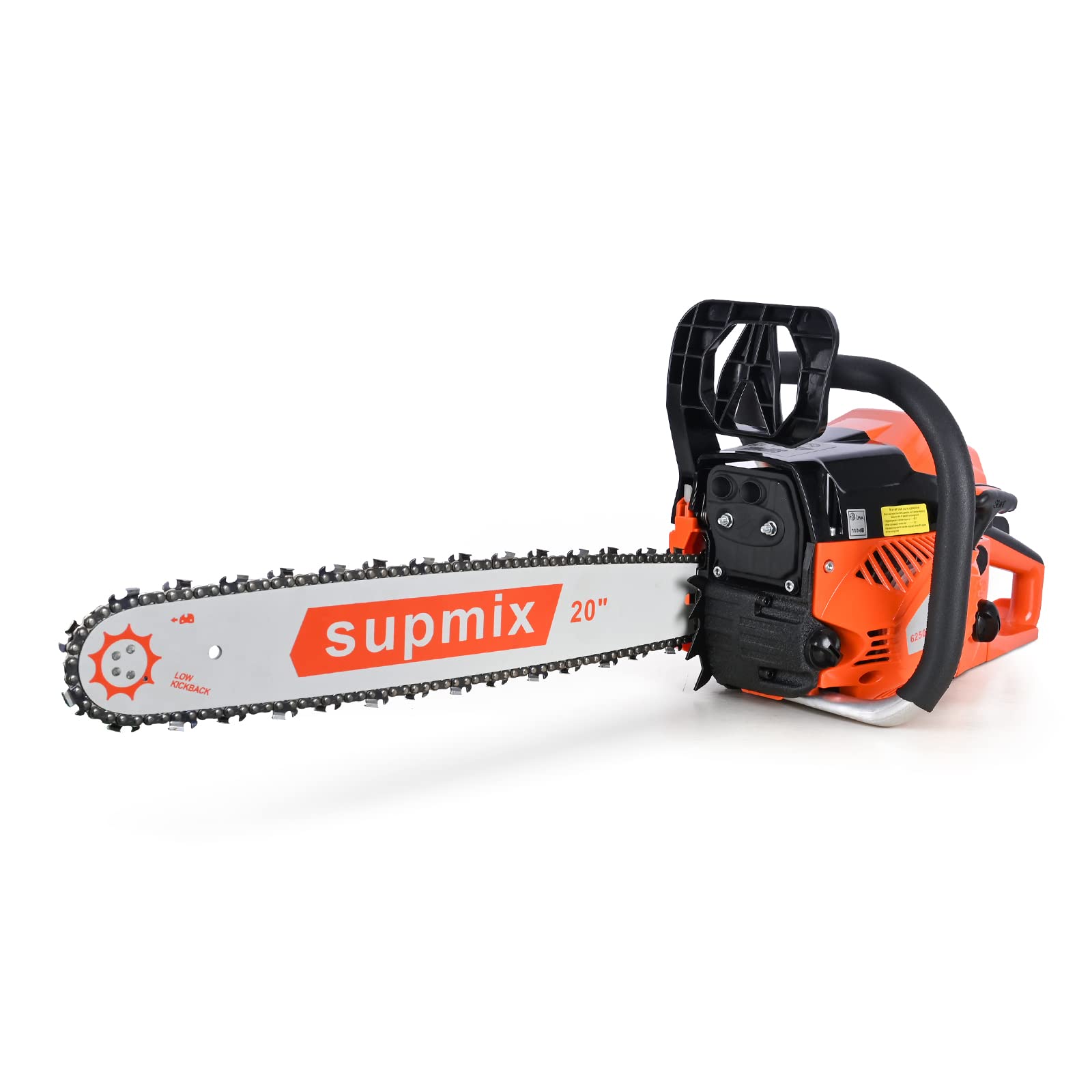
Sixty-two cubic centimeters and a 20-inch bar for a fraction of what the Ranchers cost is the whole pitch, and it holds up: this is the most cutting you can buy in this set for the money. The 4.2-hp engine has a full-crank bottom end and a dual-port exhaust, and it pulls the 20-inch bar through hardwood without the bogging whine you brace for from a budget saw. If the budget decides the purchase and the work is real — firewood, storm cleanup, a few trees a year — this is where we point people.

Starting is the pleasant surprise. It fires in three or four pulls from cold and usually one when it is warm, which is not something we take for granted at this end of the price range. The low-kickback chain left clean cuts from the first tank, and the safety switch and quick-stop brake are the same layout the brand saws use.

What you accept is plastic. The body panels and the bar adjuster are the parts to be gentle with, and the manual is close to useless, so plan on a two-stroke starting video instead. Seat the bar adjuster in its groove before you tighten the nuts, or the chain will run loose and throw. Treat it like a tool rather than a toy and it will do a season's work.

Bottom line: The value pick: 62 cc, a 20-inch bar and easy starts for the least money in this set, provided you treat the plastic parts kindly.

6

PROYAMA 62cc Two-Bar

PROYAMA 62cc Two-Bar

Two-bar versatility

Our Score 8.0/10
Check Price

Worth Noting

  • Plastic chain tensioner and recoil rope wear first
Engine
62 cc
Weight
14 lb
Bar Lengths
18 in and 22 in
Vibration Control
3-point springs
Read the full review

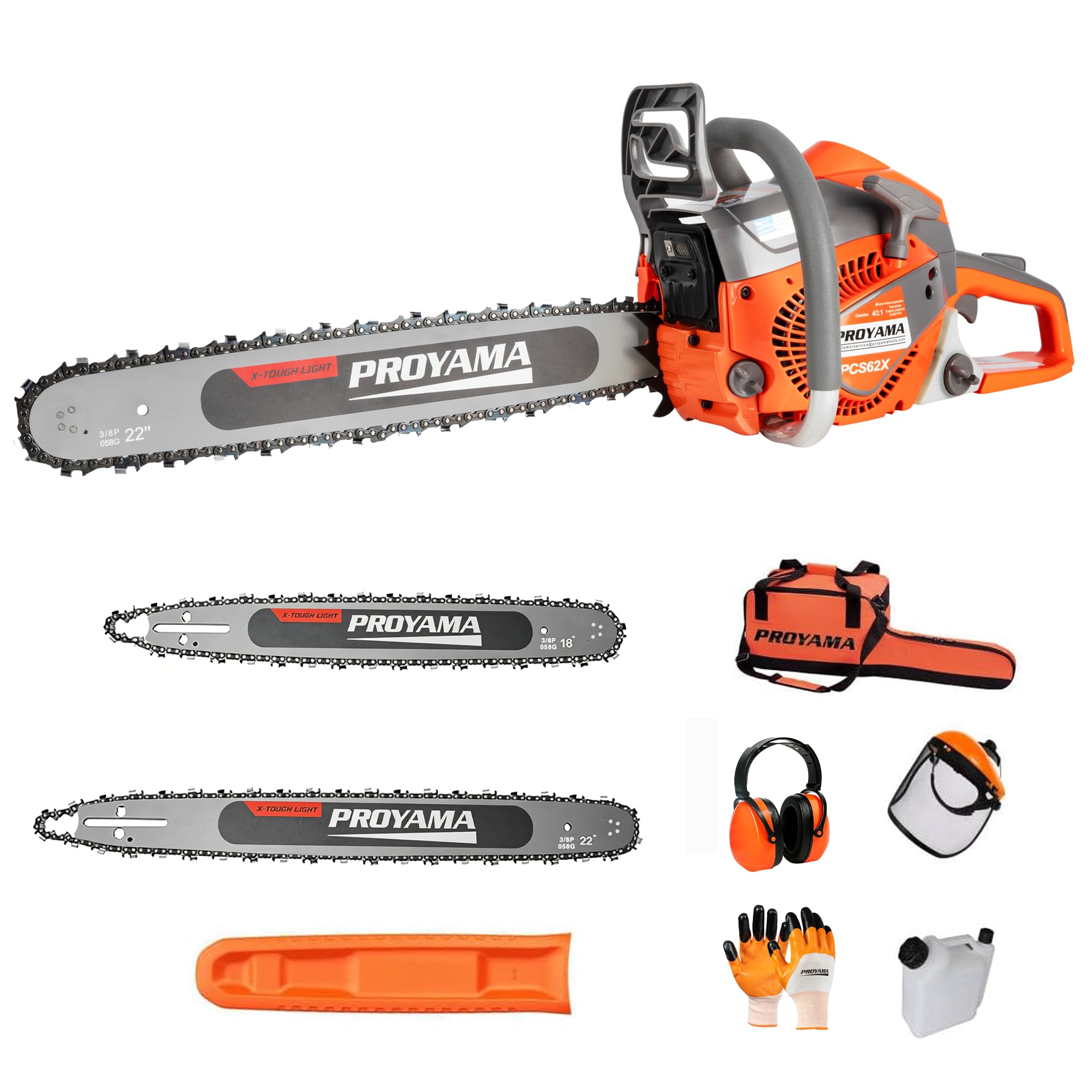
Two bars ship in the box, 18 inches and 22, and the swap takes a scrench and about a minute. That sounds like a sales gimmick until you have spent a morning alternating between a fence line of limbs and a trunk you actually need to buck: the short bar is lighter and easier to control in the small stuff, and the long one saves you from re-cutting from both sides. One powerhead covering both is why this saw earns a place.

The 62-cc engine is rated at 3.5 hp, a little under the SUPMIXTOOLS on paper, and the difference in the cut is smaller than the numbers suggest. What we noticed more was the vibration control: three spring mounts between engine and handles soak up a real amount of shake, and the transparent fuel tank lets you check the level without shaking the saw. Fourteen pounds is average for the class, and it balances well with the 18-inch bar mounted.

Where this one makes sense is as the only saw in the shed: limb with the 18, buck with the 22, and skip the second purchase. Keep the 22-inch bar for clean trunks, because a 62-cc saw buried that deep in dry oak wants a light hand and a sharp chain. The chain tensioner is plastic and is the part to watch; check tension after the first few cuts with a new chain, then at every fill-up.

Bottom line: Buy this one if a single saw has to cover limbing and firewood: the second bar is genuinely useful, and the price sits between the budget saws and the Ranchers.

7

Stihl MS 162 16-Inch

Stihl MS 162 16-Inch

Small cleanup

Our Score 8.0/10
Check Price

Worth Noting

  • No primer bulb, so cold starts are fussy
Power
1.2 kW
Weight
13.3 lb
Bar Length
16 in
Read the full review

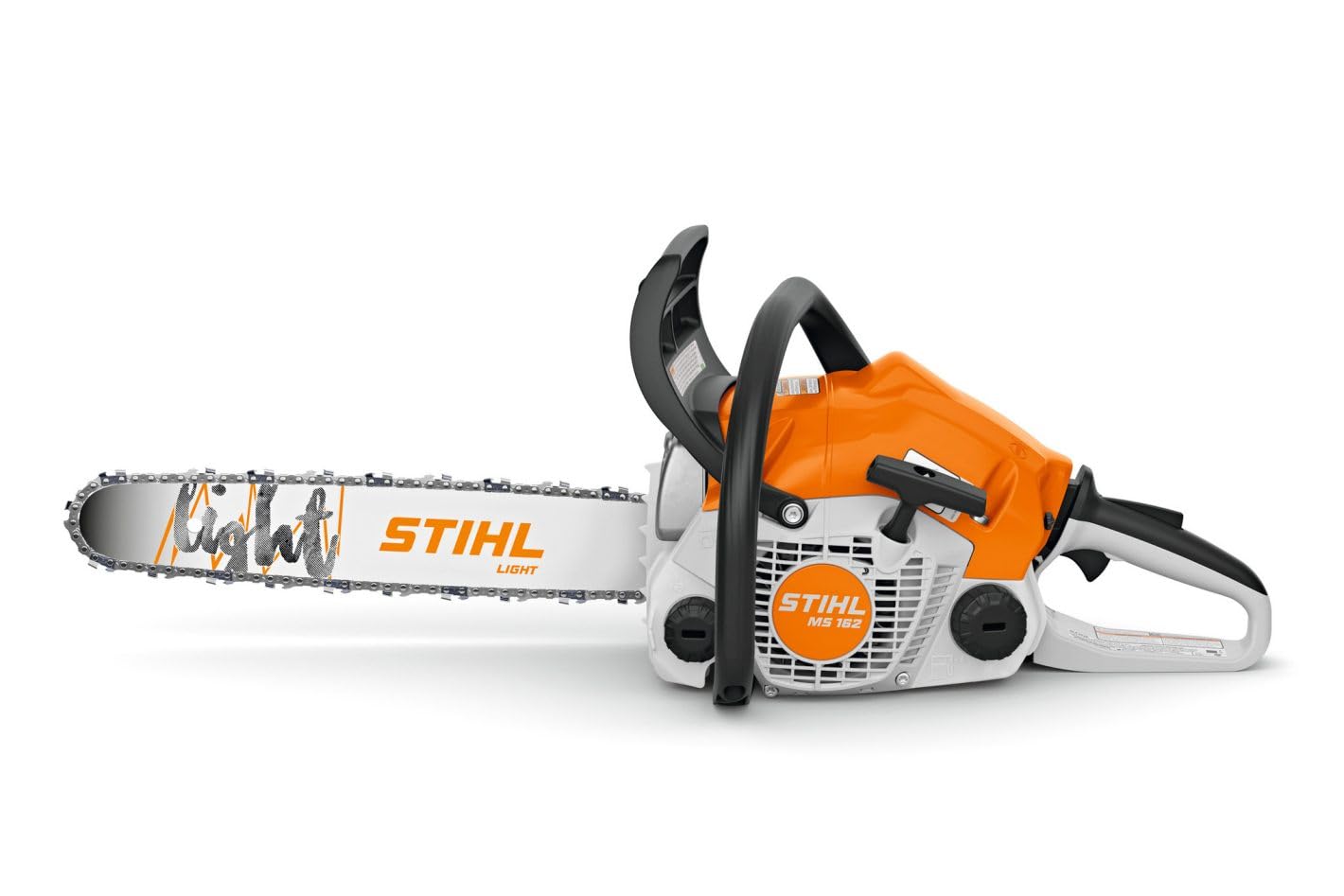
A Stihl badge sets an expectation, and the MS 162 is where a lot of people test it: a simple, compact saw with a 16-inch bar and 1.2 kW on the label. What that buys is a compact saw for small trees, storm limbs and cutting firewood to length. What it does not buy is a professional saw, and with the Husqvarna 450 a step up in power and bar length for the money, the badge does more of the work here than the specification does.

On its own terms it is capable. The 16-inch bar takes 12-inch oak without complaint, and the layout is conventional in the way that makes a saw easy to hand to someone else. Cold starting is where it asks for patience: there is no primer bulb, so it is choke out, a few pulls, choke in, and a saw that either catches or sulks. Ours wanted the full ritual every time it sat overnight.

Where it makes sense is as a light second saw, or a first saw for a small lot with a short list of jobs. Against the 450 it is the cheaper way into a brand name, but it gives up displacement, bar length and a good deal of smoothness. If you cut more than a few times a year, the extra money for the Rancher is easier to justify than the savings here.

Bottom line: A simple 16-inch saw for small trees and storm cleanup, though at this price it is competing with bigger, smoother saws a tier up.

8

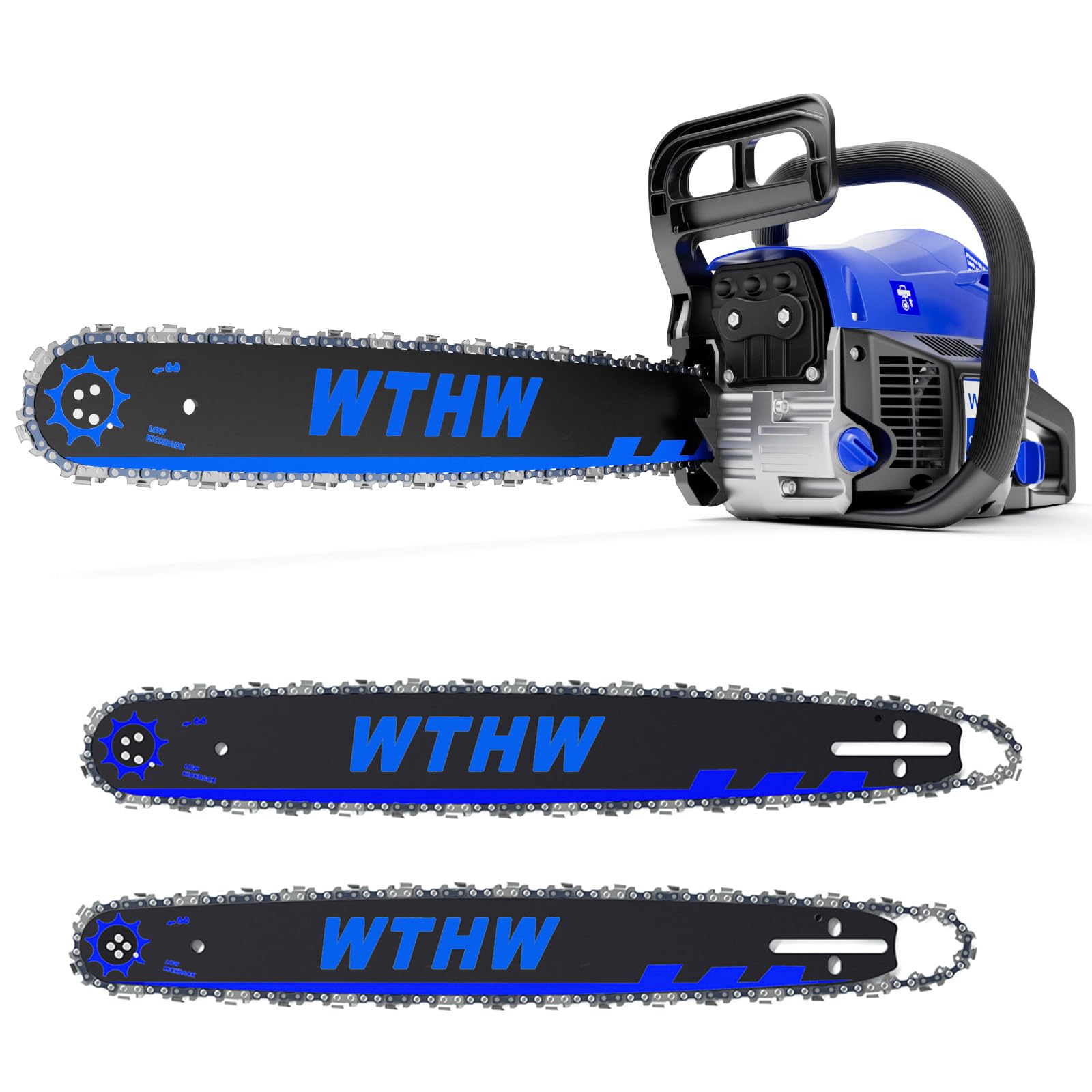
WTHW 58cc Two-Bar

WTHW 58cc Two-Bar

Budget dual-bar

Our Score 8.0/10
Check Price

Worth Noting

  • Bar can work loose and needs rechecking
  • Can stall and refuse to restart
Engine
58 cc
Weight
14.5 lb
Bar Lengths
20 in and 18 in
Chain Speed
91 ft/s
Read the full review

The gamble with any saw in this bracket is that it runs beautifully in the driveway and quits an hour into the job. That is the question to hold in your head with the WTHW: on paper it is the best-equipped budget saw here, with 58 cc, two bars and a fuel tank listed as 30 percent larger than the usual class size, and when it runs it runs well. The risk is a saw that stops and will not restart.

The quick-switch system swaps the 20-inch felling bar for the 18-inch limbing bar in seconds with the included scrench, and the chain speed is given as 91 feet per second, which is brisk for the class. Dual-spring anti-vibration and a centrifugal air filter are the same ideas the name brands use. Fourteen and a half pounds is on the heavy side of average, though we found it balanced fine with the 18 mounted.

The detail that changes your routine is fuel. This saw wants a richer mix than the rest — 1:20 through break-in, then 1:25 — against the 50:1 most saws here run, so it needs a dedicated can and a measuring cup. It also uses gas quickly, which the bigger tank partly offsets.

For a buyer who wants two bar lengths and a big engine on a tight budget and does not mind mixing fuel to its own recipe, it is a lot of saw for the money. For everyone else, the extra spent on a Rancher buys a saw you do not have to think about. Leave the 18-inch bar mounted for most yard work; the 20 is for trunks.

Bottom line: A lot of saw for the money if you can live with its own fuel recipe and the risk of a dud — the two-bar setup is genuinely useful.

How We Tested Gas Chainsaws

We started with roughly 30 saws sold through dealers and big-box stores, then filtered by displacement, bar length, published weight, and what actually came in the box — some arrive with a bar and chain worth keeping, others need replacing almost immediately. That left seven. We ran them for eight months, starting with a February ice storm and carrying through a summer of storm cleanup and a fall of firewood.

Every saw did the same work: bucking 12-inch oak and maple rounds into firewood, limbing branches, dropping two small trees, and clearing a storm-topped maple in my neighbor's yard. We timed cuts and counted how many rounds each saw got through on a single tank to see whether the power held up under load or bogged in the big stuff. Then came the less glamorous half — cold starts after two weeks of sitting on a 30-degree morning, counting pulls to first catch and timing how quickly each settled into a steady idle, plus hot restarts after a shutdown mid-tank.

Chain durability got tracked separately. We logged how often each chain needed tensioning, whether it stretched in the first hour, how many sharpenings it took before cut times fell off, and how long a bar-and-chain swap took with cold hands. Build quality came down to setting each saw down hard on gravel and checking for cracked covers, rattled bolts, and loose antivibration mounts, then running two tanks back to back to see how hands and forearms felt. Functionality and value came out in the small stuff: whether the air filter and oil cap came off without a tool, and how much saw you got for the money once bar, chain, and dealer support were counted.

How to Choose Gas Chainsaws

Match the Bar to the Wood, Then the Engine to the Bar

Bar length sets what the saw does in a single pass. Twelve to 16 inches covers limbs, saplings and small trees; 18 to 20 inches is the all-round size for firewood and storm cleanup; 22 to 24 inches is for trunks you cannot get your arms around. The engine has to be sized to the bar: 25 cc is balanced with a 12-inch bar, 50 cc pulls a 20-inch bar comfortably, and 60 cc and up is where a 24-inch bar stops being a compromise.

The trap is buying bar length as if it were power. A long bar on a small engine cuts slowly, overheats the chain and wears you out, and it does not let the saw fell bigger trees — it makes it worse at everything. Unsure? Buy the shorter bar. The saw cuts faster and you swap bars less often than you expect.

Weight and Vibration Decide How Long You Can Work

A chainsaw is held, not pushed, and the weight you notice at the start of a job is tripled by the end. The homeowner saws here run from roughly 11 to 14.5 pounds for 50 to 62 cc, and that spread matters more than a horsepower or two. Anti-vibration mounts — springs or rubber dampeners between engine and handles — are the other half of fatigue.

Starting, Fuel and the Two-Stroke Routine

Almost every saw here starts the same way: choke out, a few pulls until it coughs, choke in, one more pull. The details separate them. A purge bulb saves pulls and reduces flooding, and the Stihl MS 162 does without one, which makes its drill less forgiving. Learn the cold-start sequence before you fill the tank, because a flooded two-stroke is a long ten minutes.

Fuel is the other routine. Mix fresh, burn it within a few weeks, avoid high-ethanol blends, and do not leave mix in the tank over the off-season. Ratios are not universal: most saws here want 50:1, the NEO-TEC specifies 25:1, and the WTHW asks for 1:20 through break-in. Check before the first fill, and label the cans if two saws in your shed disagree.

The Parts That Fail First

Chainsaws die at the small parts, not the engine. The chain tensioner is the usual weak point, and plastic ones are common on budget saws, followed by the recoil starter rope, the oil pump and the handle. Before you buy, look at what the tensioner is made of and whether the bar nuts are captured.

Bar oil is the other thing to know. Saws often seep oil in storage, so stand them on a rag or drain the tank. Check that the oiler is working every time you refuel, because a chain run dry ruins both the chain and the bar.

Safety Gear and Warranty

A chain brake and a low-kickback chain are the baseline hardware and every saw here has both. What you add is chaps, eye and hearing protection, and a helmet with a face screen if you are felling. Warranty is worth reading before you buy — the two Ranchers list two years — and service access matters more with a gas saw than a battery one, because carburetor tuning is a skill most of us do not have. Budget saws can be very good, but you are often the service department.

Frequently Asked Questions

Final Verdict

The Husqvarna 450 Rancher is the saw we recommend without a caveat: 11.3 pounds, a 20-inch bar, and a starting routine that does not fight you. It costs more than most of this set, and it is worth it for anyone who cuts more than a few times a year.

If the budget is fixed, the SUPMIXTOOLS 62cc delivers more displacement for a fraction of the money — accept the plastic and check the bar adjuster. For trunk-sized hardwood, go to the 460 Rancher, or to the NEO-TEC if the biggest engine matters more than the weight.