Garden Tools

Best Garden Hoes of 2026

A hoe does one job: it slides under a weed and separates it from its roots. Everything that separates a good one from a frustrating one happens in that half second — how sharp the blade arrives, how much the head weighs at the end of a swing, and whether the handle takes the impact or sends it into your wrists. Get it right and a 20-foot row takes ten minutes instead of an hour.

I keep one leaning by the back door from the first thaw through October, and I've snapped enough handles to have opinions. This past growing season, my team and I worked 12 hoes through raised beds, heavy clay, and the weed-choked strip along a fence line. The ones that held up were almost boring: solid steel, a handle that never worked loose, an edge you could touch up with a file. Handle length mattered more than I expected — a few inches too short and you're hunched over the row by the second pass. The picks below are the ones I'd hand to a neighbor.

1

Gardena combisystem Draw Hoe

Top Pick
Gardena combisystem Draw Hoe

Gardena handle owners

Our Score 9.6/10
Check Price

Worth Noting

  • Narrow 12 cm blade covers less ground
Handle
Sold separately, 150 cm recommended
Weight
13.3 oz
Working Width
12 cm
Blade Material
Stainless steel
Read the full review

This is the one hoe here designed as part of a system rather than a single tool. Stainless blade, double-bow frame, and a coupling made to lock onto a handle without the wobble that sectional poles develop. For anyone already on Gardena's combisystem, it is the best-built hoe head in this group.

The frame is coated and the blade is stainless, so rust is not a fight you will be having, which matters for a tool that gets put away damp more often than anyone admits. At 13 ounces for the head it is light enough to work all morning without the tool setting the pace.

The catch is stated in the product's own details: there is no handle in the box, and Gardena recommends a 150-centimeter one matched to your height. Budget for that before you order and price the combination, not the head. Do it and you get one handle serving several heads, and hooks in the shed instead of a tangle of long tools.

Bottom line: For anyone already on the combisystem, this is the best-built hoe head here — a stainless draw hoe that locks on without wobble. Buy the handle with it.

2

Rogue Hoe 7-Inch

Rogue Hoe 7-Inch

Overgrown ground

Our Score 9.2/10
Check Price

Worth Noting

  • Heaviest hoe here, at 2.99 pounds
  • Costliest pick in this group
Weight
2.99 lb
Blade Depth
6.5 in
Construction
Welded socket
Cutting Edge
7 in
Read the full review

The steel in this head started out as an agricultural disc blade, and it behaves like one: thick, stiff, and ground to a 7-inch edge that bites into sod instead of bouncing off it. Blade and socket are welded into a single piece, so there is no joint at the business end to work loose, which is the failure the sectional hoes here keep showing.

We think it is the best hoe here for ground that has got away from you. Sod, thistle, brush, saplings up to an inch across: the Rogue cuts them and keeps cutting after the first pass, because the blade is 6.5 inches deep rather than a thin lip that skates over the top. For a tidy raised bed of lettuces, all that steel is more than the job needs.

It is a two-handed tool for a homestead rather than a balcony, long-handled and unfussy, built to be left in a shed and used hard. What it gives you in return is a head that will still be cutting when the poles on cheaper hoes have been replaced, and that is the case for spending once.

Bottom line: If your ground has gone wild, the extra mass and the disc-steel edge earn their keep — this is the hoe that clears sod, thistle, and saplings and stays sharp doing it.

3

Edward Tools Hand Tiller

Edward Tools Hand Tiller

Raised beds

Our Score 9.2/10
Check Price

Worth Noting

  • Kneeling work only
  • Moves very little soil at a time
Head
Carbon steel hoe and fork
Handle
Solid oak, rubber grip
Weight
13.6 oz
Read the full review

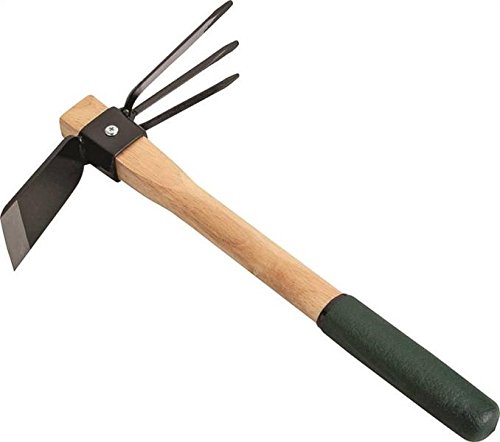
Turn it over and it is a different tool. One side is a carbon steel hoe blade for scraping and chopping, the other a three-pronged fork that gets under a long taproot and levers it out. Both are one solid piece of metal, so there is no head to work loose from the handle, and the solid oak shaft carries a rubber grip that stays put in a wet glove.

We like it most in the places a five-foot handle cannot go: between rows of established plants, in a crowded raised bed, around the base of a shrub. At 13.6 ounces it is light enough to swing one-handed, and the fork side is the reason to choose it over a plain hand hoe, since it is the difference between cutting a weed off at the crown and getting the root out.

It is the opposite of the loop hoe in every way. Where the DonSail skims the surface at arm's length, this one goes down and digs at close range, and gardeners with a few beds tend to end up wanting both.

Bottom line: The hand tool we keep by the raised beds: a hoe on one side, a root-pulling fork on the other, both forged from one piece of steel. Kneeling work, and worth it.

4

MANXRKUI Draw Hoe

MANXRKUI Draw Hoe

All-round weeding

Our Score 8.8/10
Check Price

Worth Noting

  • Joints can loosen and need re-tightening
Weight
3.51 lb
Blade Size
5.5 x 6.5 in
Handle Length
Up to 5.5 ft
Head Material
Forged alloy steel
Read the full review

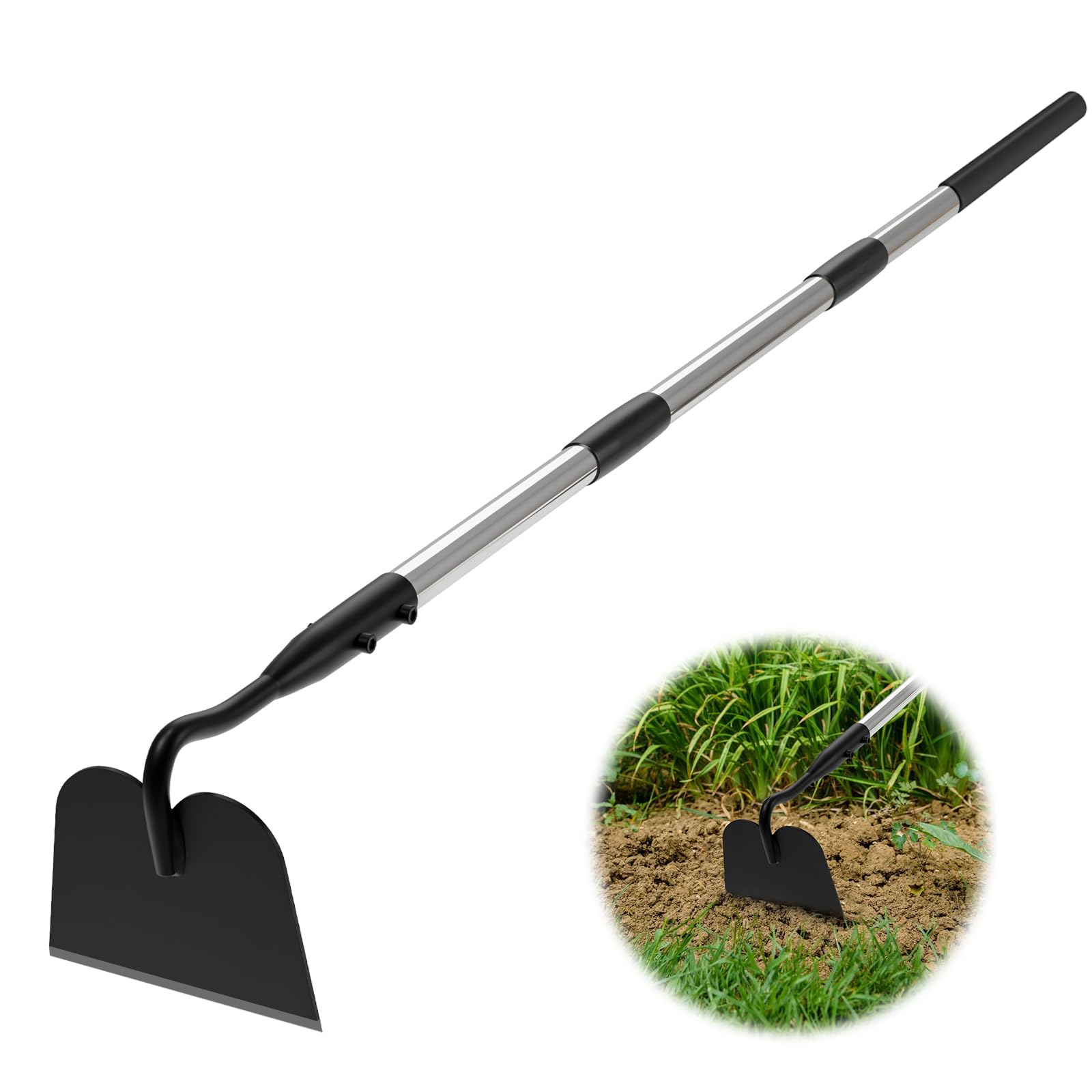
Six and a half inches of forged blade is the whole argument for this hoe. Dragged toward you just under the surface of the soil, it slices weed stems and leaves a loose tilth behind; tipped onto its corner, it cuts a furrow for seed. We made it our top pick because it covers the two jobs most gardeners actually need, weeding and soil prep, with one head, and it keeps working on ground that has been walked on.

The handle is stainless steel in screw-together sections that reach 5.5 feet. Every section you add is another joint, and a long lever with joints in the middle always has more give, so set it to your own height, leave the spare section in the shed, and it feels considerably more direct. Assembly is two minutes of screwing and hand-tightening, no tools required.

At 3.5 pounds it sits in the middle of this group, with most of that weight in the head, which is where a hoe wants it: the blade stays in the dirt on a long pull instead of chattering across the top. The adjustable shaft also means it fits a household rather than one person, since the same tool suits a six-footer and a shorter gardener working a raised bed.

Two comparisons settle the choice. If you already own Gardena's handle system, that head is the better-built tool and you should buy it instead. And if your weeds are always small and shallow, a loop hoe gets under them with less effort, because this one is for ground you are actually working.

Bottom line: Our pick for most gardeners: a wide forged blade that scrapes, slices, and cuts furrows, on a handle that adjusts to your height. Start here.

5

CKLT 2-in-1 Hoe

CKLT 2-in-1 Hoe

Long reach

Our Score 8.8/10
Check Price

Worth Noting

  • Weeds catch in the rake tines
Head
Trapezoid hoe and 3.75 in rake
Weight
3.08 lb
Material
Tempered spring steel
Handle Length
Adjustable to 61 in
Read the full review

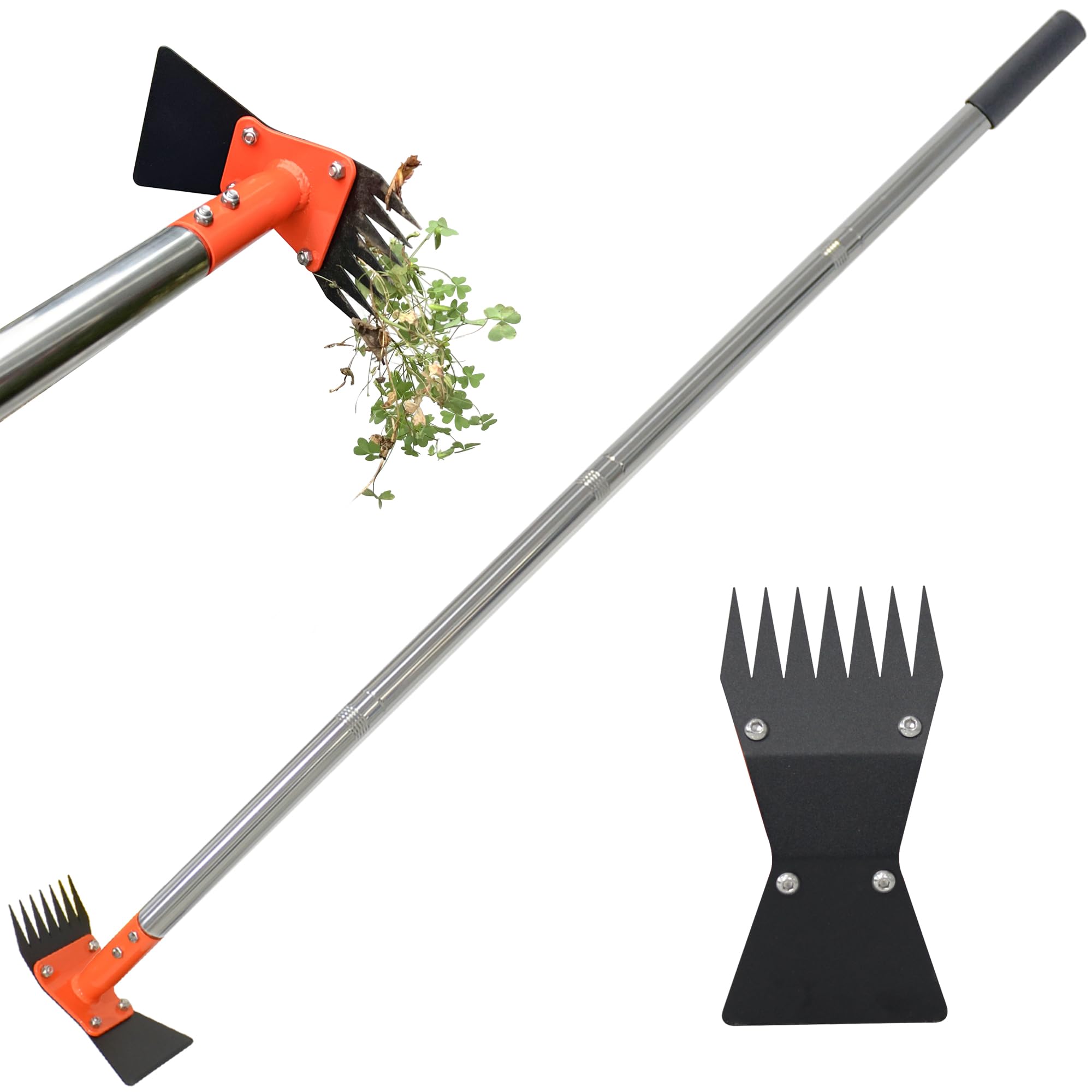
A gravel strip between two beds, weeds coming up through the joints, and no good way at them without kneeling on the stones: that is the job this hoe was built for. A 61-inch handle in four screw-together sections puts the head into the middle of a border or a paver gap while you stand on the path, so you are not compacting the soil you just loosened.

The head is two tools in one: a sharp trapezoid hoe on one side, a 3.75-inch rake on the other. The hoe cuts and the rake follows to drag the pieces out, which is quicker than swapping tools mid-row, and the tempered spring steel with its sand-textured finish does not need much looking after. At 3.08 pounds it is not light, but the length is doing the work rather than your back.

For reaching, nothing else here comes close. This is the hoe for a rock garden, a gravel path, or a bed planted right up to its edges. Four sections is a lot of connections, though, and the handle works loose as you go, so check and tighten before a session rather than stopping mid-row to do it.

Bottom line: We recommend it when the weeds are somewhere you can't stand: gravel paths, packed borders, the middle of a bed. The 61-inch reach does what short hoes can't.

6

Oliynedy Stirrup Hoe

Oliynedy Stirrup Hoe

Budget full length

Our Score 8.6/10
Check Price

Worth Noting

  • Pole joints work loose in use
Head
Hoe blade and 4-tine cultivator
Weight
16 oz
Handle Material
Stainless steel
Handle Settings
32 to 62 in
Read the full review

Screwed down to its shortest setting this hoe is 32 inches, short enough to use sitting on a bucket, and at full stretch it reaches 62, which is enough for a tall gardener to stand upright. That range, the widest here, is the reason it made the list.

The head is a two-in-one: a carbon steel hoe blade with a sharpened end for scraping and slicing, and a four-tine cultivator behind it for scratching up soil and dragging roots out. At 16 ounces on a stainless shaft it is as light as anything full-length in this group, and the least tiring to carry back and forth from the shed.

The blade is the compromise. It is sharp enough to skim seedlings out of loose soil and not sharp enough to bite into hard, crusted ground, so this is a tool for beds you keep up with rather than a first pass through an overgrown patch. That is a fair trade if you garden a little every week rather than in bursts.

Where it earns its place is cost: it is the least expensive way into a full-length hoe here. Nothing else in the budget tier gives you a stainless shaft and a cultivator on the back of the blade, and for a small plot on a modest budget that is the whole argument.

Bottom line: The least expensive route here to a full-length hoe, and the 32-inch setting makes it a genuinely useful short one. Best for a small plot you keep up with.

7

DonSail Stirrup Hoe

DonSail Stirrup Hoe

Planted beds

Our Score 8.4/10
Check Price

Worth Noting

  • Pole sections can work loose in use
Weight
1 lb
Head Type
Loop stirrup
Pole Diameter
1.3 in
Handle Settings
30 / 43 / 60 in
Read the full review

A bed that is already planted is where a hoe earns its keep or wrecks your afternoon, and this is the shape for that job. The hollow loop head slides along just under the surface rather than biting in, so you can work close to a stem without heaving the plant out of the ground.

Push and pull both cut, which means you never lift the head between strokes: you walk a row and let it skim. The pole is 1.3 inches across, thicker than most here, and at a pound it swings all afternoon. Three sections give you 30, 43, or 60 inches of handle, so a tall gardener can stand up straight and a short one is not wrestling a pole that starts above head height.

We think it is the best pure weeder here. The loop beats a flat blade on small, dense weeds that come up in a carpet, and it is what we reach for once the beds are full. What it cannot do is chop: the edge is thin and the stroke is a skim, so sod, brambles, and woody stems simply bounce off it.

Bottom line: We reach for this one in planted beds: the loop slides under the surface and cuts on both strokes, so you can weed between plants without lifting soil or kneeling.

How We Tested 12 Garden Hoes Through a Full Growing Season

We started by gathering every hoe a home gardener would realistically buy, from stirrup and oscillating hoes to traditional headed ones, then filtered by head weight, handle material, price, and — the filter that eliminated the most models — whether the manufacturer sells a replacement handle. Twelve made the cut. We ran them from March through October, roughly seven months, in raised beds, a stretch of heavy clay, and a weed-choked fence line.

Out of the box, we timed assembly with a single screwdriver and noted whether the head sat flush against the handle or needed shimming. To judge blade sharpness before touching a bed, we dragged each edge across a sheet of newspaper; anything that tore rather than sliced got ten minutes with a file before we passed judgment. Each hoe was weighed on a kitchen scale, then used for a straight 20 minutes of chopping so we could tell a head that's pleasantly light from one that makes you swing harder to compensate.

The real work was weeding. We worked the same 10-foot stretch of chickweed and crabgrass with each tool and counted how many passes it took to clear, then let a patch of bindweed go an extra week and tried to cut it below the crown. After rain, we broke the crust on the clay bed. We also matched handle lengths to testers ranging from 5-foot-2 to 6-foot-3 and noted where the upper hand landed on each swing. Every few weeks we checked the head-to-handle joint for wobble, and two hoes were left out in the rain on purpose to see what became of the wood. Value came last: a tool that needed a new handle by July cost more than the one that didn't.

How to Choose Garden Hoes

Start with the head, not the handle

A draw hoe, with the blade set at an angle to the shaft, is pulled toward you and does three jobs: scraping weeds off just under the surface, loosening soil, and cutting a furrow for seed. A loop or stirrup hoe is pushed and pulled flat, shaving small weeds off beneath the surface without turning the soil. It is the better tool in a bed that is already planted and close to useless against sod. A hand hoe buys control in tight spaces at the cost of your knees. Decide which of those you are doing most weeks, then shop.

Treat every joint as a wear point

A one-piece handle or a welded socket is the most rigid thing you can buy, and it is why the Rogue feels different from everything else on this page. Screw-together poles are cheaper to ship, easy to store, and let one tool fit a household, but each section is a place where the thread can work loose under load, and stacking all of them to reach maximum length makes a long, whippy lever.

If you buy sectional, run it at your own height rather than at full extension, and check the joints before you start rather than after they slip.

Match the length to how you stand

A hoe should let you stand with a slight bend at the waist and your hands around hip height; if you are stooping, the handle is short. Long hoes here run from about 55 to 66 inches, and adjustable models let two people of different heights share one tool. Short settings are not a compromise for everyone, either: 32 inches is the right length for working from a stool, and a 45-inch hoe fits between narrow raised beds where a 60-inch one tangles.

One trap: a listing that says adjustable to 61 inches usually means it breaks down into four pieces for shipping, not that it grows out of a shorter tool.

Weight and blade width pull against each other

A wide blade covers ground quickly and is what you want for clearing and furrowing; a narrow one fits between plants and is slower across a bed. Weight in the head keeps the blade in the soil and does some of the cutting for you, but you feel it by the end of a long row. For a first hoe, favor a mid-weight head and a wide blade, then add a light loop hoe for weeding around plants you care about.

Steel, coating, and rust

Forged heads hold an edge longer than stamped ones, and the difference shows the first time you hit a stone. Carbon steel takes the keenest edge and rusts fastest if it goes into the shed wet, while stainless and coated heads give up a little edge-holding in exchange for not needing attention. It is a storage question as much as a performance one: wipe the blade, hang it rather than standing it in soil, and either steel will last. The Rogue's recycled disc steel and the Gardena's stainless blade sit at the two ends of that trade.

Frequently Asked Questions

Final Verdict

A wide blade, a long handle, and joints you can keep tight: the MANXRKUI draw hoe does the three things most gardeners ask of a hoe, and it is the one we point people to first. Add a loop hoe once your beds are planted and the weeds are small; buy the Rogue instead if what you are clearing is sod, thistle, and saplings rather than a vegetable bed.

And if a Gardena combisystem handle is already hanging in your shed, skip the rest and buy the head, which is the best-built piece of steel on this page.