Garden Tools

Best Draw Hoes of 2026

A draw hoe looks almost too simple: a steel blade on a long handle, pulled toward you to slice weeds and break soil. That simplicity is exactly why the differences matter. A dull edge skates across clay, a light head bounces off roots, and a handle that loosens after a few sessions turns weeding into a wrestling match; the right hoe bites cleanly, stays tight, and feels balanced enough to finish a bed. Over six months, I worked 12 draw hoes through beds, borders, and compost piles, and the gap between good and frustrating was wider than the price tags suggest.

Weight and handle length were the quiet deciders. The heaviest hoe wasn't the sturdiest, and a short handle that felt handy in a raised bed wore on my back by mid-morning. I watched how each blade held its edge after repeated use, since sharpness out of the box means little if it vanishes by the second weeding. The picks below earned their place on quality, function, and value.

1

Nohovu 58-Inch Fiberglass Hoe

Top Pick
Nohovu 58-Inch Fiberglass Hoe

Everyday hoeing

Our Score 9.6/10
Check Price

Worth Noting

  • Edge arrives blunt and needs a file
Weight
2.7 lb
Blade Width
6.3 inches
Overall Length
58 inches
Handle Material
Fiberglass
Read the full review

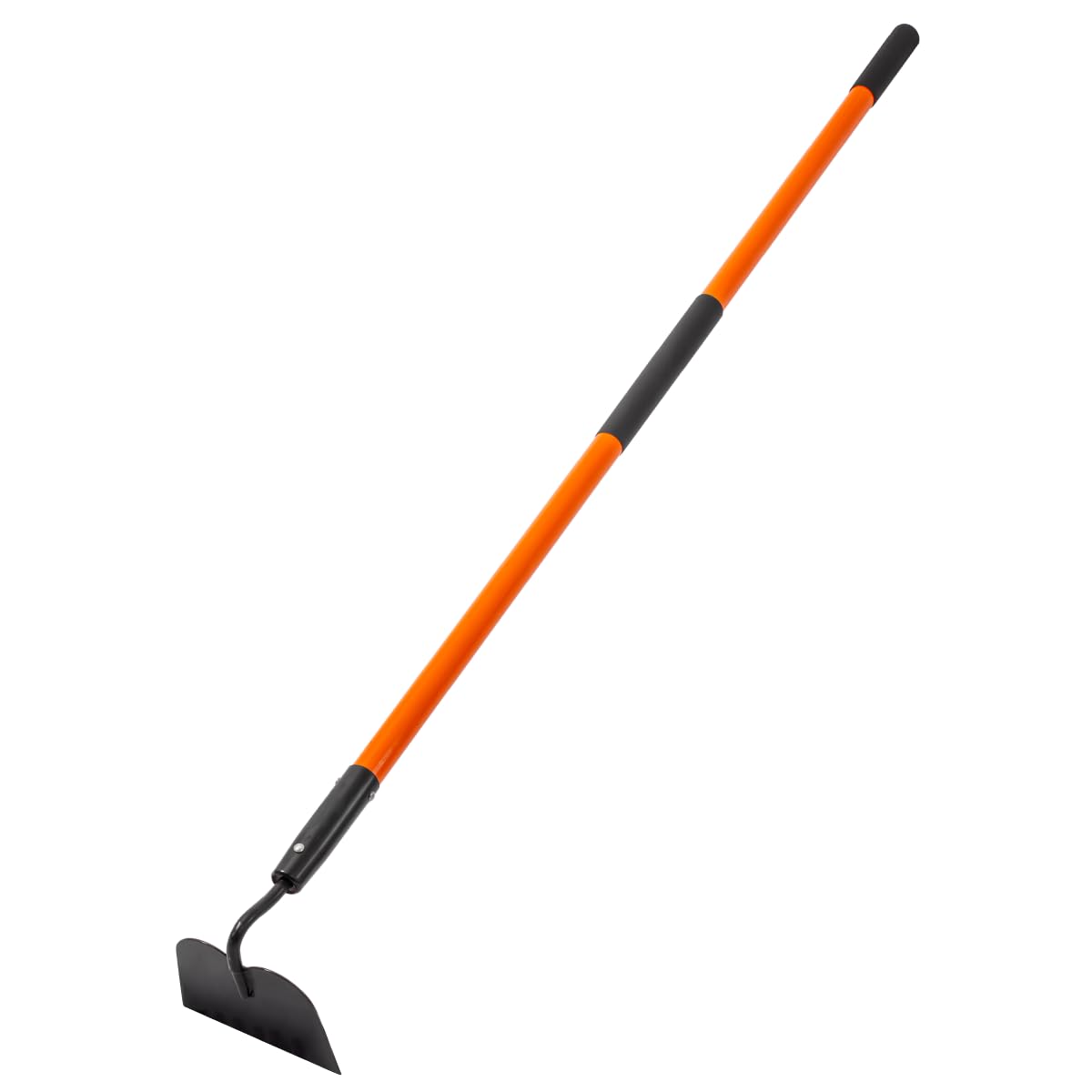
Fifty-eight inches of handle is the headline here, and it is the reason to look at this hoe at all: you work standing up, and the reach takes the bend out of a long bed. The shaft is thickened fiberglass with two non-slip grips, the head is a heat-treated high-carbon steel blade 6.3 inches wide, and the whole tool weighs 2.7 pounds.

That combination is what makes it the hoe we hand to most gardeners. Against the Rogue it gives up mass and not much else that matters in ordinary garden work; in soil you have already broken, a lighter head moves faster and you finish sooner. It chops small weeds, breaks a crust and drags a seed furrow, and it does all of that with a straight back. Anywhere short of rough, root-bound ground, this is the sensible buy.

The head is pinned with two rivets through the handle rather than held by a screwed collar, and the fiberglass does not care about rain, mud or a night left out in the bed. The edge is the one thing to plan around: it arrives ground but blunt, and a few passes with a flat file on the bevel turn it into the tool described above. Sharpen it once before the first real session and it holds.

Bottom line: For most gardeners we point to this one: 58 inches of reach, a riveted 6.3-inch blade and a fiberglass shaft, without the top pick's weight or outlay.

2

AgroPro 58-Inch Garden Hoe

AgroPro 58-Inch Garden Hoe

Hard-packed soil

Our Score 9.4/10
Check Price

Worth Noting

  • Heavier than most gardens need
Weight
3.09 lb
Blade Width
6.4 inches
Overall Length
58 inches
Head Attachment
Two rivets
Read the full review

At 3.09 pounds this is the heaviest of the fiberglass-handled hoes here, and it sits a fraction under the Rogue's working weight. The blade is 6.4 inches wide, forged from high-carbon steel with a rust-resistant coating, and fixed with two rivets through a thickened fiberglass handle. Overall length is 58 inches.

The extra mass does what mass does. In compacted or stony soil the head drives in and stays in, and you can let the tool fall rather than swing it. The blade covers a little more ground per stroke than the budget hoes, and the double-riveted head is how a blade should be fixed to a shaft.

In soft, worked soil none of that matters much, and the weight becomes a tax you pay by mid-morning. This is a hoe for ground that needs persuading, not for a tidy raised bed you could work with a hand fork.

We rank it behind the Nohovu because the two cost about the same and the lighter hoe suits more gardens. If your plot is heavy clay, or you are knocking down weeds on rough ground, the half-pound of extra steel is the better trade. Choose by your soil rather than by the specification line.

Bottom line: For heavy, compacted ground we reach for this one: the extra half-pound of forged steel drives in where lighter hoes bounce off.

3

Rogue Hoe 7-Inch Field Hoe

Rogue Hoe 7-Inch Field Hoe

Rough, overgrown ground

Our Score 9.2/10
Check Price

Worth Noting

  • The most expensive hoe in this guide
Weight
2.99 lb
Blade Depth
6.5 inches
Blade Width
7 inches
Head Attachment
Welded socket
Read the full review

Seven inches of cutting edge, ground from a recycled agricultural disc blade and welded into a socket rather than pinned through an eye: that is the short version of why this is the hoe we recommend first. The blade is 7 inches wide along the edge and 6.5 inches deep, hung at the angle that makes a downward pull take the top inch of soil with it. In baked clay, along an overgrown edge, through thistle and saplings up to an inch across, it keeps cutting where a lighter head skids off.

At 2.99 pounds it is the heaviest tool in this guide, and the weight is doing work rather than costing you. The head carries momentum into the stroke, so you swing less and let the hoe fall more. You feel the difference at the end of a long row, and this is not the tool for a casual half hour in a small bed, but on ground that fights back, heft is the feature you want.

The welded socket is the part we care most about. Hoes fail at the junction of head and handle: the eye splits, the rivets wallow out, the collar works loose. Welding the blade and socket into a single piece takes that failure out of the design. The timber handle has stayed tight and free of splinters through hard use, which is more than we can say for the screwed-together shafts further down this page.

Expect to look after the edge. Disc steel is hard and holds a working edge for a long time, but it will pick up small dings if you swing into rock or old roots. A flat file drawn along the bevel a few times a season is the entire maintenance routine, and ten minutes of it at the end of the year puts the hoe back to shaving slivers off a weed stem.

Bottom line: We recommend it without reservation to anyone who hoes a real plot: disc steel on a welded socket that goes through clay, sod and saplings without flinching.

4

VNIMTI 58-Inch Garden Hoe

VNIMTI 58-Inch Garden Hoe

Large plots

Our Score 9.2/10
Check Price

Worth Noting

  • Arrives dull and needs sharpening first
  • Rubber grip can slide on the shaft
Head Width
6-7 inches
Head Material
Carbon steel
Overall Length
58 inches
Handle Material
Fiberglass
Read the full review

The edge is the first surprise, and not a good one: this hoe arrives with a head that will not cut a weed stem cleanly. The rest of it is sound — 58 inches of fiberglass with two grips, a carbon steel head between 6 and 7 inches wide, and a bright orange finish you can spot from the far end of the plot.

Ten minutes with a flat file changes the verdict. Sharpened, the wide flat blade lifts shallow-rooted weeds out of hard or wet soil, and the light shaft makes it a one-hand tool for spot work between rows. Of the mid-priced hoes in this guide, this is the one we take out for a quick pass around the borders rather than a full session of chopping.

Two details to know. The rubber grip can slide on the fiberglass under heavy pressure, and a drop of adhesive or a wrap of tape underneath stops it. The head is also a flat plate rather than a deep forged blade, so it slices weeds off rather than shouldering through sod: fine in beds, not the tool for breaking ground.

The length is right for most adults at 58 inches, and the orange handle is a small thing we ended up valuing more than we expected. It is the tool you can see from the other end of the garden when it has been left in a bed for a week. Firm the grip, sharpen the edge, and it earns its place.

Bottom line: Give it a file and it becomes one of the better mid-priced hoes here: light, wide, and easy to find when you leave it lying in the beds.

5

Truper 33119 Forged Eye Hoe

Truper 33119 Forged Eye Hoe

Heavy garden work

Our Score 8.8/10
Check Price

Worth Noting

  • Handle may not be the white ash listed
Weight
2.77 lb
Head Style
Forged eye
Blade Width
7 inches
Handle Length
54 inches
Read the full review

The eye hoe is the oldest shape on this page: a forged head with an eye through the middle, slid onto a tapered handle and wedged tight, so the harder you swing the firmer it sits. Nothing about it is adjustable. The head is 7 inches, the handle is listed as 54 inches of white ash, and the whole hoe weighs 2.77 pounds.

In heavy going it holds its own against anything here bar the Rogue. The forged head does not bend or twist when it meets a root, and a full swing takes a stand of thick weeds out at the base instead of bruising it. Packed soil and clumping grass give way to it, and the balance keeps the head from running away from you mid-stroke.

Our read is that this is the hoe for rough, established ground and for anyone who likes a traditional tool that can be repaired rather than replaced. It is a farm hoe more than a border hoe: 7 inches of forged steel is a lot to steer around young plants, and you will feel that in tight rows of seedlings.

Check what handle you get. The listing specifies white ash, and a fiberglass shaft can turn up instead, which is a different tool in the hand and not what the description sells. If yours is not ash, raise it before the season starts. The head is the part worth paying for, and an eye hoe can be rehandled when a shaft finally goes.

Bottom line: Our pick for rough, established ground: a forged 7-inch eye hoe that will not bend, with a handle worth checking the moment it arrives.

6

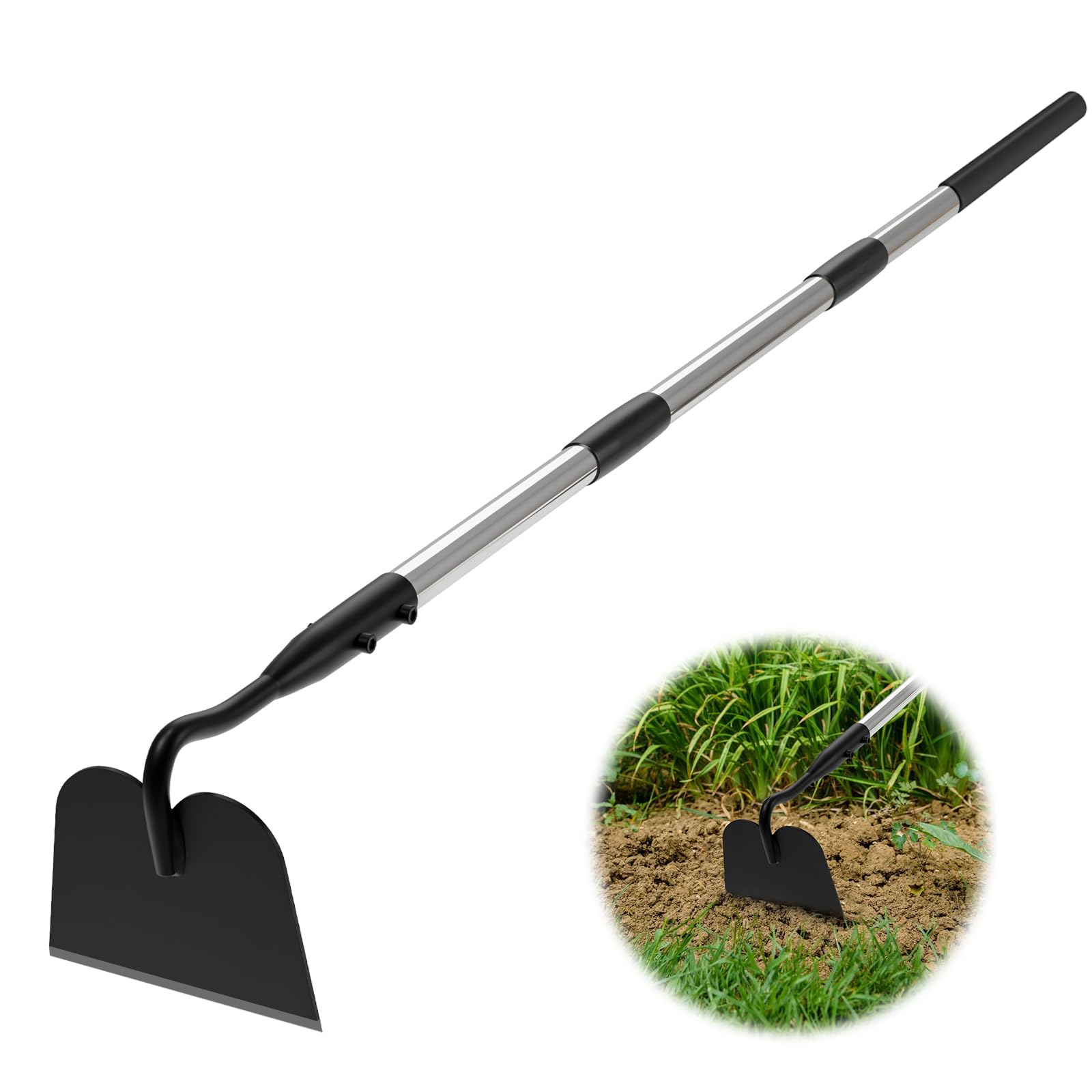
MANXRKUI Draw Hoe

MANXRKUI Draw Hoe

Budget chopping

Our Score 8.8/10
Check Price

Worth Noting

  • Shallower blade than the full-size picks
  • Shaft sections loosen while you work
Blade Size
5.5 x 6.5 inches
Overall Height
66 inches
Handle Material
Stainless steel
Head Attachment
Riveted
Read the full review

Of everything here, this is the hoe that gives you the most draw hoe for the least money: a forged head 6.5 inches wide and 5.5 inches deep with a ground edge, riveted to a stainless shaft that screws together into a 66-inch reach. If you want the shape without committing much, this is where we point you.

It works. The blade is broad and flat, it takes large weeds off close to the ground, and it handles a neglected bed without drama. The adjustable shaft is the reason the tool exists: you can set the length to your own height, which matters if you are tall, short, or sharing the hoe with someone who is.

The shaft is also the compromise. Three screwed sections flex slightly at full extension, and the couplings work loose as you swing, so you stop and tighten. A wrap of plumber's tape on the threads before you assemble it settles that for a season or more. The head, blade and rivets are sound; it is the handle that keeps the price where it is.

Bottom line: Our budget pick: a genuine 6.5-inch draw-hoe blade and a shaft you can set to your height, at the bottom of this group's price range.

7

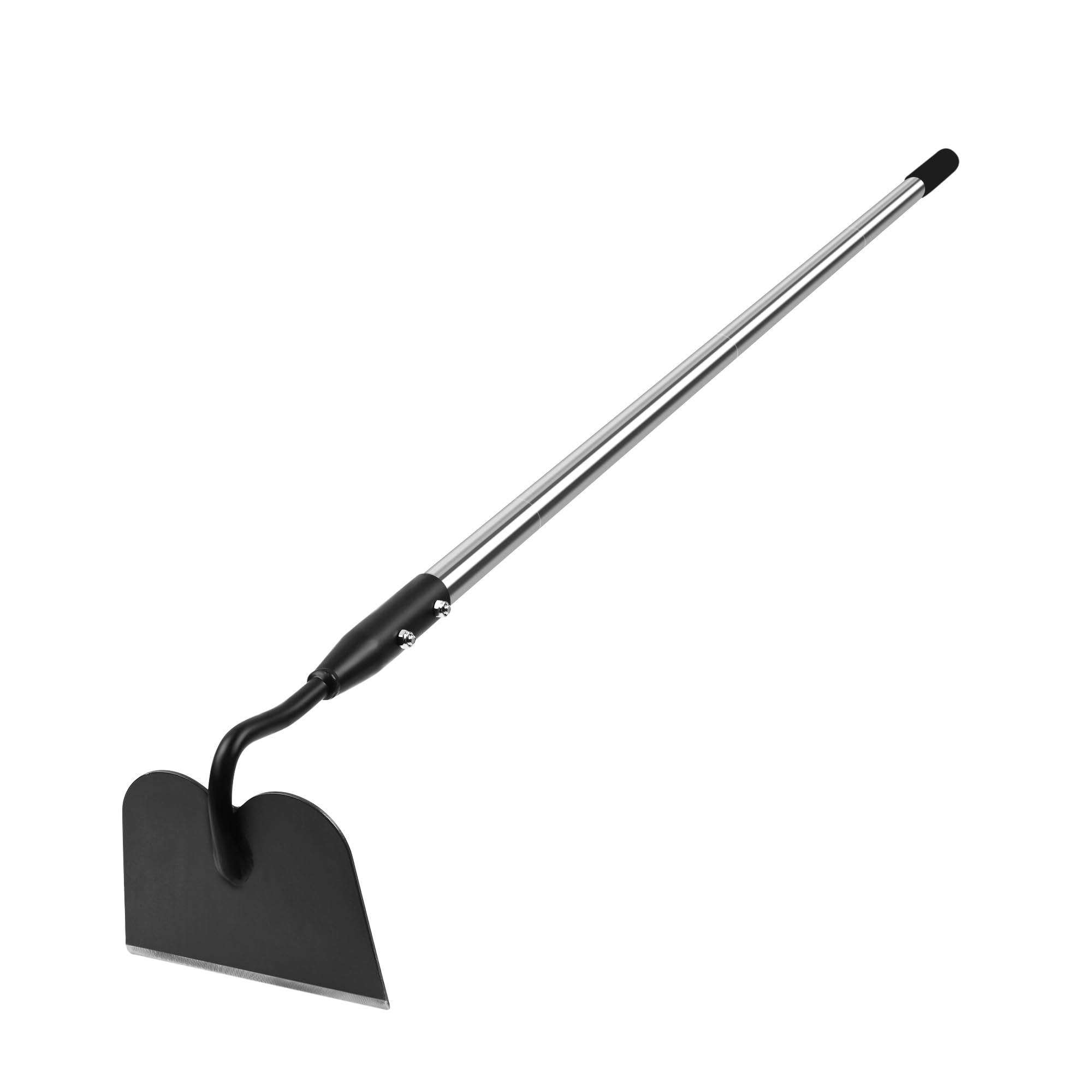
YEELOR Long-Handle Hoe

YEELOR Long-Handle Hoe

Light weeding

Our Score 8.8/10
Check Price

Worth Noting

  • Bolted head and three shaft joints work loose
Weight
2.4 lb
Head Material
Forged steel
Overall Length
57 inches
Handle Material
Stainless steel
Read the full review

Sandy soil, loose beds, weeds coming up between flowers: this is the hoe for the tidy end of gardening rather than the reclaiming end. The head is forged steel with a rust-proof coating, the shaft is stainless tube in three sections, and at 2.4 pounds it is light enough to work one-handed between rows.

It cuts. The blade takes weeds off near the root in sandy and loose soil, and the narrow head is easier to place around established plants than the wide chopping blades above. It is also cheap enough to leave in a shed or a second plot without worrying about it, which is not true of the premium picks.

Where it gives ground is the hardware. A bolted head and three screwed couplings are more joints than a welded or riveted hoe carries, and they work loose with use; ours needed checking more often than we would like. If your beds are under control and you want a long handle for very little, it does the job. If you are taking on brambles and hard pan, spend more and get a head that is welded on.

Bottom line: A light, inexpensive long-handled hoe for beds you already keep on top of: good blade, more joints to watch than the picks above.

8

COCONUT 45-Inch 2-in-1 Hoe

COCONUT 45-Inch 2-in-1 Hoe

Raised beds

Our Score 8.8/10
Check Price

Worth Noting

  • 45-inch shaft is short for taller users
  • Light head will not break ground
Shaft
Three screw-together sections
Head Style
Hoe and tiller combo
Overall Length
45 inches
Handle Material
Alloy steel
Read the full review

Forty-five inches, three screw-together poles, and a head that is a hoe on one face and a three-tine fork on the other: this is a long-handled weeding tool rather than the chopping hoes that fill the rest of this page, and it is worth being clear about that before you buy.

In a raised bed or a border it earns its keep. The hoe face takes small weeds off at the surface, the fork loosens the top inch around plants without digging them up, and at 45 inches you can do both standing. The narrow head slips between shrubs where the wide blades above cannot go.

What it will not do is break ground, chop through established weeds, or survive being treated like a mattock. The head is light and the shaft is thin. It also comes apart into three pieces that fit in a cupboard or a car boot, which is the point of the design and the reason it is not a heavy-duty tool.

Our judgement is that it does one job well — light, standing weeding in confined beds — and no other job at all. As a second hoe, or a first hoe for someone with raised beds and a back that complains, it is genuinely useful. For rough ground, or for anyone tall enough that 45 inches means stooping, the 58-inch fiberglass picks are the better spend.

Bottom line: A light, inexpensive three-piece weeder for raised beds and borders, where the short shaft and combo head are assets rather than compromises.

How We Tested the Best Draw Hoes

We started by pulling together every draw hoe we could find from garden-tool makers and general hardware brands, then narrowed the field by blade shape, handle material, listed handle length, and price. The final 12 came from a mix of wooden, fiberglass, and composite handles, with short and long options, so we could compare like-for-like rather than guess from specs alone.

For six months, those hoes lived by the back door and went out with me for real jobs: slicing weeds between rows in raised beds, breaking up clay in a new border, trenching seed drills, hilling potatoes, and scraping compost off a concrete pad. I noted whether each blade bit on the first pull or skipped, how much force it took to draw through rooted weeds, and whether soil clung to the blade or slid off.

Handle checks happened every few sessions. I twisted and pulled each head to see if it shifted, watched for cracks or splinters where wood met steel, and compared how my hands felt after a long morning with a short handle versus a long one. I also weighed each hoe before and after use, because a tool that feels light in the shop can turn heavy by the twentieth row. Value came down to whether the edge held after repeated contact with rocky soil and whether the handle still felt tight when the season ended.

How to Choose Draw Hoes

The joint decides how long it lasts

The head-to-handle joint is where a hoe dies. A welded socket, as on the Rogue, is permanent and takes the whole failure point out of the picture. Two rivets driven through the socket cost far less and are nearly as good. A forged eye wedged onto a tapered handle is the traditional answer, and it can be rehandled when a shaft finally goes.

Bolted collars and screwed shaft sections add joints that move. If you buy one, set it up once and tape the threads, then check the hardware before each session. If you want to forget about the joint entirely, pay for a welded or riveted head on a one-piece handle and be done with it.

Blade width and head weight

Six to seven inches is the working range for a garden hoe. A wider blade covers more ground per stroke but takes more force to pull through clay, and it is harder to steer around young plants. Weight follows the same logic: a three-pound head does the chopping for you in hard ground, while something nearer 2.5 to 2.7 pounds is easier to swing through a long session in loose soil.

Match the tool to your soil rather than to a specification table. Heavy clay and sod reward mass; a bed you keep loose with compost does not.

Length, height, and the adjustability trap

Fifty-four to 58 inches suits most standing adults. A 45-inch shaft is pleasant in a raised bed and miserable in a long row if you are tall, so measure to the ground you actually work rather than to the tallest number on the page.

Adjustable shafts sell the ability to shorten the tool for storage or travel, and they work — but every screwed coupling is a joint that loosens when you swing hard. If you need the adjustment, set the length once and tape the threads instead of changing it every session.

What to expect from the edge

Almost every hoe here arrives with a working grind rather than a keen one, and that is normal rather than a fault. A flat file, worked along the bevel at the angle the factory set and leaving the back flat, is the whole sharpening kit: ten minutes, once or twice a season.

Resist the urge to put a razor edge on it. A thin edge cuts beautifully and then chips the first time it meets gravel, and stony ground is where a hoe spends most of its life.

Frequently Asked Questions

Final Verdict

Buy the Rogue if the hoe will be used hard and you want to stop thinking about it: the disc-steel blade and welded socket are the best combination in this group, and the price is a one-time cost spread over seasons. For most gardens the Nohovu is the better purchase — the same working shape, half the weight, a fraction of the outlay, and enough blade for any bed that has already been broken once.

Start with the soil you actually have. Rough, overgrown and stony ground points to the forged heads, with the Truper the one to reach for if you like a tool that can be rehandled. Worked beds and borders point to the lighter fiberglass hoes. If the budget is the deciding factor, the MANXRKUI gives you a real draw-hoe blade and an adjustable shaft for less than the rest.