Watering & Irrigation

Best Freeze-Proof Outdoor Faucets of 2026

The first hard freeze of the year makes you stare at the side of your house. A standard outdoor faucet is a pipe waiting to burst, and the repair bill usually costs more than the faucet itself. A freeze-proof model solves that by keeping the valve mechanism inside the warm wall, so water drains out before it can freeze. The best ones also hold up: they connect to a hose without leaking, their handles turn easily with cold hands, and the finish doesn't look cheap against siding or brick.

My team and I installed 12 freeze-proof faucets on exterior walls and ran them through seven months of cold-weather use. We hooked up hoses, filled buckets, and drained them before freezes, paying attention to leaks, handle feel, and how easily each one went in with basic tools. Price alone didn't tell the story; a mid-priced faucet with solid brass guts and clear instructions often beat a fancier-looking one that dripped at the threads. The picks below are the ones that earned a permanent spot on the wall.

1

Aquor House Hydrant V2+

Top Pick
Aquor House Hydrant V2+

New builds

Our Score 9.2/10
Check Price

Worth Noting

  • Every hose needs its own quick-connect adapter
  • Premium price for the whole-house upgrade
Body
316L stainless steel
Backflow
ASSE 1019-A vacuum breaker
Hose Fitting
Quick-connect
Install Depth
9-1/2 inches
Read the full review

There's no brass spout hanging off the wall. The Aquor is a flat faceplate with a hinged lid, and the stem lives inside the wall cavity, so what shows from the yard is a low-profile plate in slate gray. On brick, or beside a front door, that's the difference between a fixture you notice and one you don't.

We recommend it as the best of this group because of what happens when the connector comes off: the hydrant drains itself, every time, with no trip to the basement to hunt for a shutoff. The body is 316L stainless rather than brass, the backflow assembly sits in the faceplate and meets ASSE 1019-A, and the hydrant carries a limited lifetime warranty. Those claims are backed by the strongest quality signal in this set, with durability close behind it. There's a small piece of everyday magic here too — the connector seals at the hose, so water stays in a hose you unplug, ready to move to the next sprinkler instead of draining across the patio.

What it asks in return is 9-1/2 inches of install depth behind the faceplate, so measure the wall cavity before you order. Its freeze advantage is also quoted for insulated walls; an unheated cavity behind the plate is not the same installation. Beyond that, this is a fixture you buy for a wall you don't intend to open again.

Bottom line: This is the one we recommend when the wall is open or the budget allows: it drains itself, the body is stainless, and it's the best freeze protection in this group.

2

Merrill CNL7501 Yard Hydrant

Merrill CNL7501 Yard Hydrant

Pastures and livestock

Our Score 9.2/10
Check Price

Worth Noting

  • 1-foot bury depth suits milder frost lines
  • Head leaks can need the plunger readjusted
Bury Depth
1 foot
Valve Body
Dual bypass, auto-drains
Total Length
44.5 inches
Pipe Connection
3/4 inch NPT
Read the full review

A yard hydrant earns its keep where a hose won't reach: a stock tank, a far paddock, a row of trees planted the year the well went in. The Merrill CNL7501 is the one to bury for that job — 44.5 inches overall, a 1-foot bury depth, a 3/4-inch pipe connection, and a dual-bypass valve body built to keep flow up in sub-zero weather.

The drain is the part people miss. In the shutoff position the hydrant empties the whole riser down to a port below the frost line, so there's nothing standing in the pipe to split; the lever drops and the water goes. Give that port gravel when you backfill, not clay. Pack it in with heavy soil and the drain has nowhere to go, which is how a frost-free hydrant ends up sitting wet at the bottom all winter and splitting anyway.

We rank it first of the two hydrants here on the strength of its build: a heavy cast head, a lever that lifts without a fight, and the high-flow body the design promises. Where age shows is the finish — the paint on the handle wears through and the steel underneath rusts, which stiffens the lever over a few seasons. That's a maintenance item on a ten-year fixture, not a reason to skip it.

Bottom line: We put this hydrant in the ground where it gets used daily — dual bypass, a 1-foot bury, and a drain that empties the riser every time you drop the lever.

3

Eastman 80222 Frost-Free Sillcock

Eastman 80222 Frost-Free Sillcock

Budget wall swaps

Our Score 9.0/10
Check Price

Worth Noting

  • Threaded or sweat inlet only, no push-fit version
Inlet
1/2 inch MIP x 1/2 inch Sweat
Handle
Large wheel
Backflow
Integrated vacuum breaker
Stem Length
10 inches
Read the full review

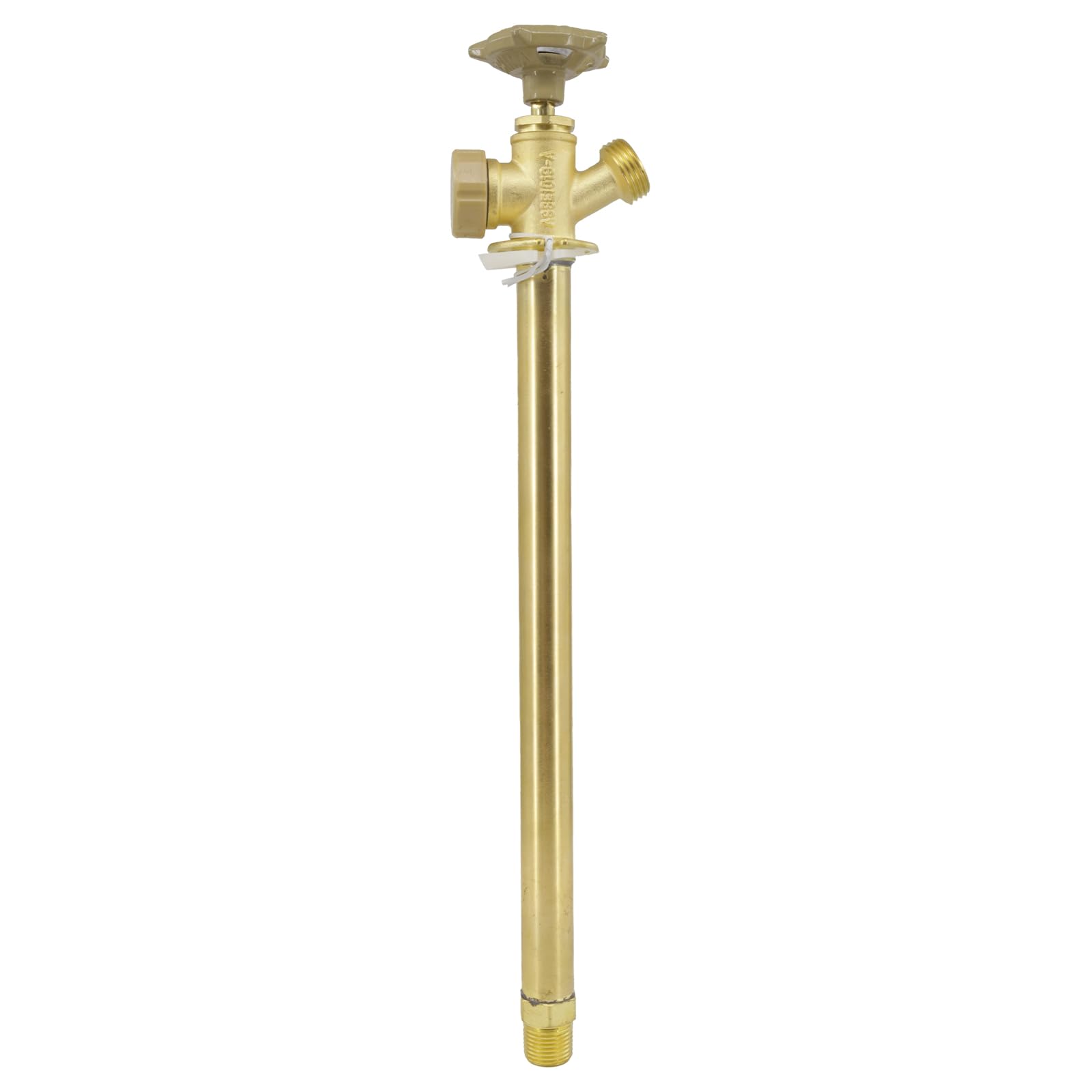
When a sillcock splits and you want the same thing back in the wall without a project, this is the one we point to. The Eastman is a plain brass frost-free valve — 10 inches of stem, a large wheel handle, a vacuum breaker already inside, and no feature you didn't ask for. Everything about it is the right shape for a straight swap, and it does the job for less than any other wall faucet we recommend.

The notched flange is the detail that earns its keep: it screws straight to the siding without a separate mounting bracket, which is one less thing to line up while you're holding a torch. The wheel is worth a mention too, because it opens gradually — you can crack it for a watering can instead of going from nothing to full pressure in a quarter turn. What it won't do is reach through a thick wall, so measure from the outside face of the siding to the supply pipe before ordering. Ten inches has to cover that distance and still leave the seat on the warm side.

Bottom line: For a plain like-for-like swap after a split, we point you here: brass, vacuum-breaker equipped, and the least expensive route back to working water.

4

VEVOR 3.25 ft Yard Hydrant

VEVOR 3.25 ft Yard Hydrant

Garden and barnyard

Our Score 9.0/10
Check Price

Worth Noting

  • Rust appears on moving parts early
Bury Depth
12 inches
Hose Coupling
3/4 inch NH
Overall Height
39 inches
Pipe Connection
3/4 inch NPT
Read the full review

The VEVOR does the same basic job as the Merrill for a lot less: 3.25 feet tall with a 12-inch bury depth, a dual-bypass body that drains when you drop the lever, a 3/4-inch NPT pipe connection and a 3/4-inch NH hose coupling. If the hydrant is serving a garden, a barnyard or a job site rather than a daily livestock routine, the savings don't cost you the thing you came for.

We recommend it as the budget hydrant because the core job holds: the lever turns with less effort than a stiff brass wheel, the flow adjusts from a trickle up to a full spray, and 12 inches of bury covers a frost line that doesn't run deep. One installation note worth following — flush the riser before you backfill, which the four-step instructions call for. Grit left in the pipe is the usual reason a brand-new hydrant weeps at the drain.

Bottom line: Our budget hydrant pick: a 12-inch bury, a dual-bypass body, and a lever that takes less effort than a stiff brass wheel.

5

SUNGATOR 12 in. Push-Fit Sillcock

SUNGATOR 12 in. Push-Fit Sillcock

Finished-wall retrofits

Our Score 9.0/10
Check Price

Worth Noting

  • Handle stiffens after a season or two
Inlet
1/2 inch push-fit
Length
12 inches
Outlet
3/4 inch GHT
Max Pressure
200 psi
Read the full review

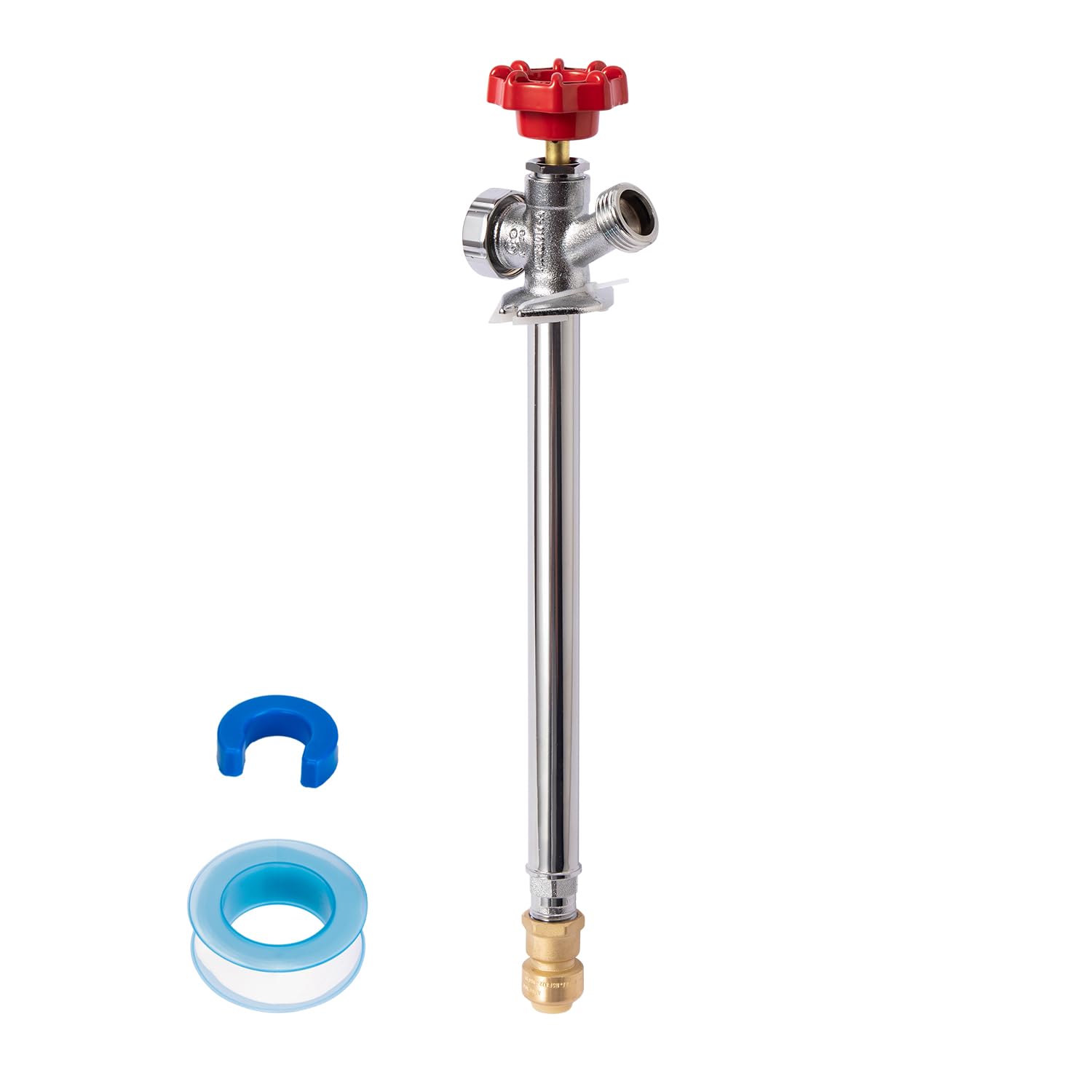
If the pipe is already inside a finished wall and you don't want a torch near the siding, the SUNGATOR's push-fit inlet is the entire point: cut the pipe square, deburr it, mark the depth, and push. It ships with a disconnect clip and a roll of sealing tape, so most of what you need is in the box.

Twelve inches of stem, a 1/2-inch push-fit inlet, a 3/4-inch GHT outlet, and a brass body rated to 200 psi and 200 °F, with an anti-siphon vacuum breaker on the outlet. The disconnect clip matters more than it sounds: it releases the collet so you can pull the valve off the pipe later without cutting anything out.

We keep it on the list for the situation it solves rather than for the fixture itself. The joint is made in a minute, it holds without solder, and a repair you can do in the rain in November is worth something. Where it loses to the Eastman is the inlet: if the pipe is exposed and you're comfortable with a torch, the sweat connection is cheaper and permanent, and the push-fit premium buys convenience rather than durability.

Bottom line: We keep this one for finished walls and cold-weather repairs, where the push-fit joint saves the day and the stiffening handle is a small price.

6

Himaweek 12 in. Frost-Free Sillcock

Himaweek 12 in. Frost-Free Sillcock

NPT pipe retrofits

Our Score 8.8/10
Check Price

Worth Noting

  • 80 psi maximum working pressure
  • Threaded inlet only, no push-fit version
Inlet
1/2 inch NPT
Length
12 inches
Outlet
3/4 inch hose thread
Max Pressure
80 psi
Read the full review

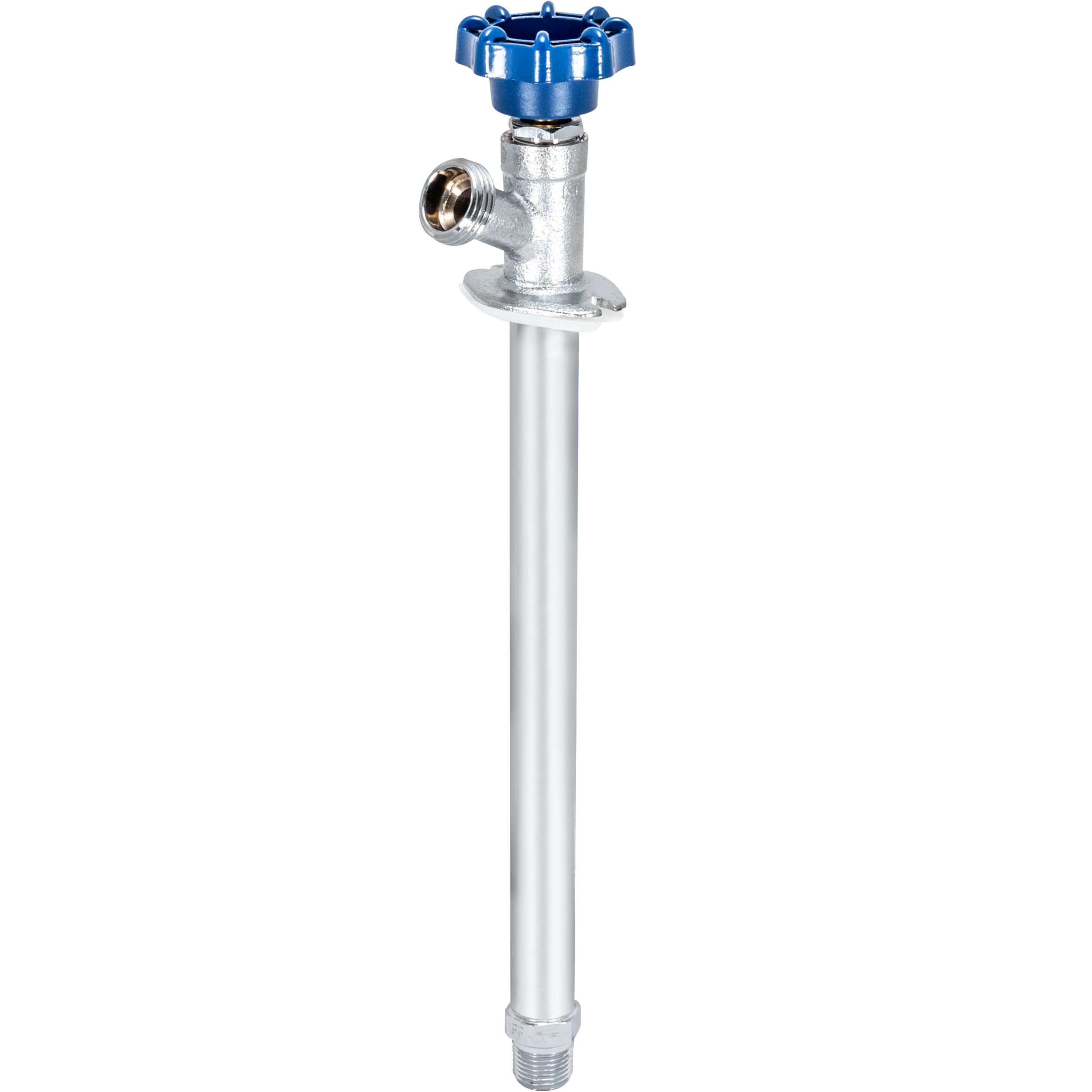
Give the handwheel several full turns before you get water, and several more to shut it off. The Himaweek is a multi-turn valve, not a quarter-turn, and that's the thing to know about it. For a watering can or a sprinkler you're setting once, the slow opening is a feature — you can dial the flow down to a trickle and leave it. If you want one flick of the wrist at the end of a long day, it isn't the one.

Twelve inches of stem, a 1/2-inch NPT inlet, a 3/4-inch hose outlet, and a brass body under a chrome finish. The anti-siphon design is built in and the fitting is certified to ANSI/NSF B1.20.1, which matters if your inspector is going to look at it.

The large handwheel is genuinely easy to grab with gloves on, and the threaded inlet goes straight onto a black-pipe stub or an existing nipple without an adapter — most of what you need for a shed, a post or a garage wall. Just check your house pressure first if you're on the high side.

Bottom line: We like this one for threaded pipe and fine flow control, though the 80 psi ceiling and the slow wheel mean it isn't for everyone.

7

Midline 8432P Frost-Free Sillcock

Midline 8432P Frost-Free Sillcock

PEX plumbing

Our Score 8.8/10
Check Price

Worth Noting

  • PEX inlet only, no threaded or sweat version
Inlet
1/2 inch PEX
Length
10 inches
Outlet
3/4 inch hose thread
Max Pressure
150 psi
Read the full review

Ten inches of stem, a 1/2-inch PEX inlet, a 3/4-inch hose thread outlet, and a chrome-plated brass body. The Midline is the wall faucet for a house plumbed in PEX, where the connection is a fitting rather than a torch.

That inlet is the whole appeal. If your supply line is PEX, there's no adapter and no transition fitting to hunt for — the valve joins the system the same way the rest of it does, and the job stays inside the plumbing you already understand.

The numbers that matter for an inspector are the 150 psi rating and the UPC and NSF listings, which cover lead-free construction and potable water. The spot to watch is the swaged end where the PEX inlet meets the brass: that's where a split can start if water stays in the valve through a hard freeze, and it's the first place to look if the faucet weeps after a cold snap.

We rank it below the Eastman because the record behind it is shorter, not because of anything wrong with the valve. But if your plumbing is PEX, it saves a fitting and looks sharper on the wall — a fair trade for a garage wash-down tap or a garden faucet fed off a manifold.

Bottom line: We rank it as the PEX-house pick: it joins the line without a transition fitting and looks sharper than plain brass, as long as your inlet is PEX.

How We Tested Freeze-Proof Outdoor Faucets

We started by pulling together the freeze-proof faucets that kept showing up in customer reviews and on hardware-store shelves, then narrowed by connection size, installation type, anti-siphon features, and finish options. We inspected body material and thread quality before installation, and made sure the shortlist included a mix of mounting depths and price points. The final group was 12 units, installed on exterior walls at our homes and tracked through seven months of fall and winter weather.

Installation was timed with a basic wrench and no extra help. We noted whether the pipe length matched the stated measurement, how much thread tape was needed, and whether the faucet sat flush against the siding. Once the water was on, we watched each connection for 24 hours, then attached a hose and checked the threads and vacuum breaker for drips. We also filled a one-gallon bucket and timed it to compare flow, because a faucet that dribbles is a functionality problem, not a quirk.

Through the testing period, we used them for ordinary yard work—filling watering cans, washing mud off boots, hooking up hoses—and paid attention to how the handle felt with gloves on and whether the hose connected without cross-threading. After each cold snap, we inspected the body for cracks, checked the handle for play, and looked at how the finish held up to sun and weather. We also compared what came in the box, since value here is partly about not making a second trip for adapters or mounting hardware. The faucets that held up stayed smooth to turn and dry at the threads.

How to Choose Freeze-Proof Outdoor Faucets

Length and bury depth come first

On a wall faucet, the stem has to be long enough that the valve seat sits inside the heated part of the house. A 10-inch sillcock on a 12-inch wall leaves the seat out in the cold, which is the whole failure the fixture is supposed to prevent. Measure from the outside face of the siding to where the supply pipe runs, then add a couple of inches for the fitting.

On a yard hydrant, the number is bury depth. Twelve inches is the minimum the hydrants here call for, and frost lines in the northern states run well below that. Ask your building department for the local frost depth before you order — it's one number, and it decides the model.

The hose has to come off

A frost-free sillcock only drains with the outlet open to air. Cap it with a hose, a splitter or an irrigation timer and the water has nowhere to go, so it sits in the stem and splits it on the first hard freeze. The fixture that survived ten winters fails the one year you leave the soaker attached.

Take everything off the outlet in late fall. If you run drip irrigation from a wall faucet, feed it from a shutoff and drain inside the house rather than hanging a timer on the spigot all winter.

Match the inlet to the pipe you have

Three inlet types cover nearly every wall faucet: push-fit, male iron pipe thread, and sweat, plus a plain PEX connection on fixtures built for PEX systems. Push-fit is the one to choose when the pipe is buried in a finished wall and you can't get a torch near it — the SUNGATOR here is that option, and it installs in about a minute. Sweat is cheaper and permanent when the pipe is exposed and you're comfortable with solder.

Yard hydrants take a threaded connection, 3/4-inch NPT on both models we recommend, so your supply line ends in a threaded fitting. Decide this before you dig, not after.

Handle style changes how you use the faucet

A multi-turn wheel opens gradually, which gives you fine control — good for filling a watering can or throttling a soaker hose — at the cost of several rotations every time. A lever, like the ones on the yard hydrants here, gives you flow control and holds its position without a wrist workout. Quarter-turn ball valves are fastest of all but go from nothing to full pressure in a flick.

Whichever you choose, work the handle a few times before winter. A valve that's already stiff in October will be worse in January, and a handle you can't turn with gloves on is a faucet you stop using.

Body, backflow and the part inspectors check

Brass is the default and it works, but brass is also the thing that splits when water stays inside it. A stainless or polymer body removes that failure mode, which is most of what the Aquor's price buys. On any fixture, look for an integrated vacuum breaker or anti-siphon valve; the Aquor's faceplate assembly is listed to ASSE 1019-A, which is the standard new construction gets checked against.

Lead-free brass matters on anything feeding a drinking-water line. Appearance is the last thing to weigh, and it's a real one: a flush plate on brick reads very differently from a chrome spout, and that is a legitimate reason to pay more.

Frequently Asked Questions

Final Verdict

The Aquor House Hydrant V2+ is the one we recommend without a caveat beyond the price. It drains itself, it's stainless instead of brass, and of everything here it's the least likely to be the reason you cut into a wall again in five years.

If a like-for-like swap is the job, the Eastman 10-inch does it for the least money. And if the water is going out to a paddock rather than a wall, start with the Merrill — the dual bypass and the 1-foot bury are the right answer for a farm, with the VEVOR as the budget version of the same idea.