Watering & Irrigation

Best Outdoor Watering Cans of 2026

A watering can should be the simplest tool in the shed, yet I've spent more mornings than I'd like mopping up after one that dribbled from the seam or dumped half its load on my shoes. The right can holds enough to finish a bed of tomatoes without a refill, balances in your hand when it's full, and puts water where you aim it—not down your wrist. Over the past six months, my team and I have filled, carried, and poured 14 different cans, from galvanized steel to heavy-duty plastic, and the differences are not subtle.

Capacity sounds simple until you're hauling a full can across the yard; the right size depends on whether you're watering seedlings on a porch or a row of raised beds. I've also learned that a wide mouth is only useful if it fits under your spigot, and a rose with poorly spaced holes turns a gentle shower into a pressure washer. The picks below are the ones that survived daily use without rusting, leaking at the seams, or making me dread the job.

1

Fasmov 1-Gallon Watering Can

Top Pick
Fasmov 1-Gallon Watering Can

Baskets and shelves

Our Score 9.4/10
Check Price

Worth Noting

  • Open spout only, no shower spray
  • A gallon runs out on long borders
Spout
Long narrow stem spout
Weight
8.48 oz
Capacity
1 gallon (4 L)
Material
Plastic
Read the full review

If your watering is a lap of hanging baskets and window boxes rather than a vegetable bed, the Fasmov is the one that stays in your hand. It's a gallon in a body that weighs 8.48 ounces empty, so even full it's an easy one-hand carry, and the spout is a long narrow stem that slides past leaves and puts water where the roots are instead of over the foliage. That precision is the whole point of this can, and it delivers it.

What you give up is the shower. The spout is an open stem, so there's no soft broadcast for a seed tray or a tray of seedlings — this is a direct-stream tool, and it's the wrong can for watering a whole bed in one pass. A gallon also runs out on a long border. For that job the Chapin's extra gallon earns its weight; this one is for the pots.

The speckled grey finish looks better than the plain plastic cans here, and it's the one by our back door because it's the easiest to grab one-handed on the way past. Nothing about it feels precious, which for a tool you leave outside is the right instinct.

Bottom line: For hanging baskets and crowded shelves, the Fasmov's long narrow spout and near-weightless body make it the can you reach for first.
2

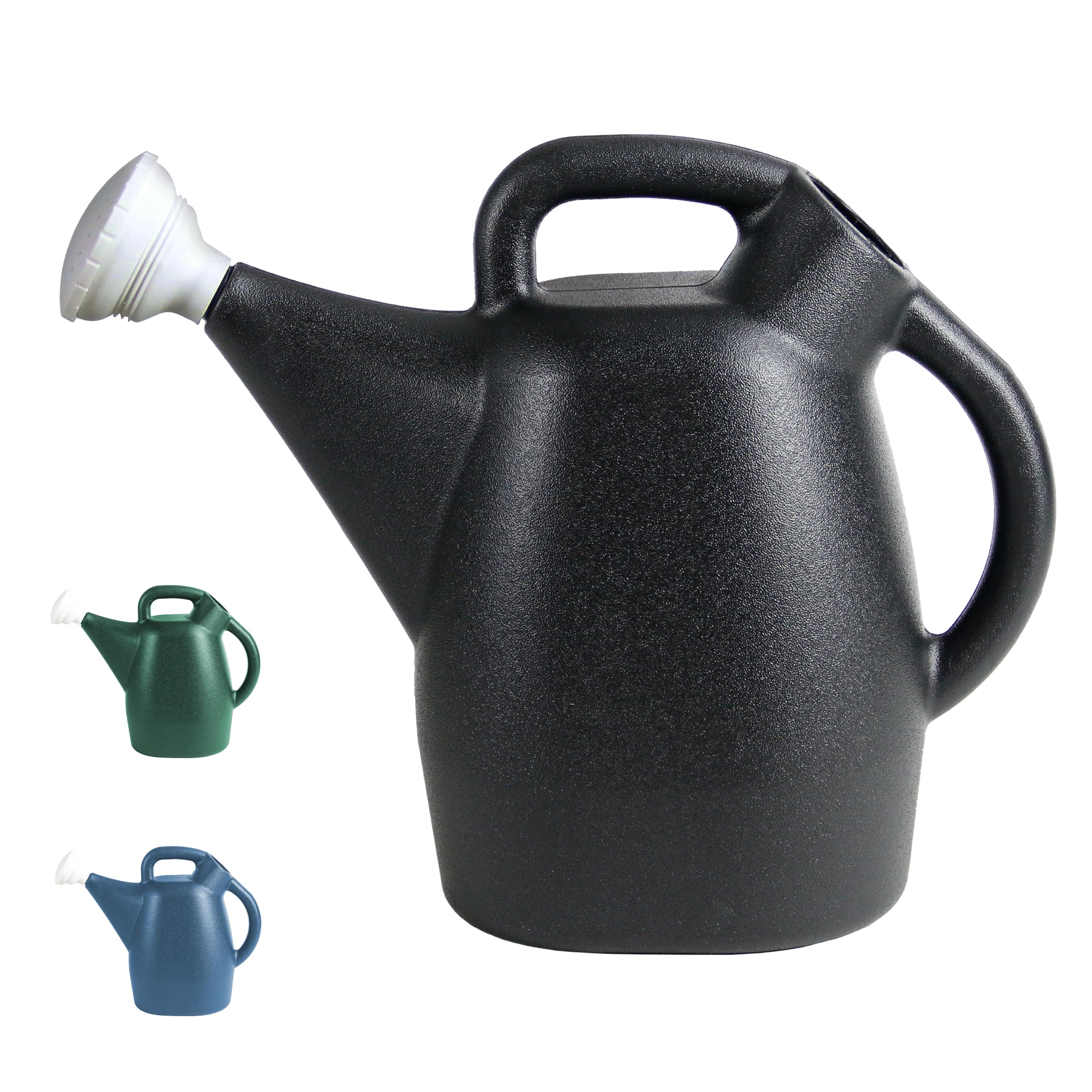
Chapin 47998 2-Gallon Watering Can

Chapin 47998 2-Gallon Watering Can

Beds and containers

Our Score 9.2/10
Check Price

Worth Noting

  • Heavy when filled to the top
Head
Detachable drip-free sprinkler head
Weight
1.2 lb empty
Capacity
2 gallons
Material
100% recycled HDPE
Read the full review

Two gallons is the number that decides this can, and it cuts both ways. Filled to the brim it's a real armful, which is why the second handle on the side matters — you carry it one-handed while it's light and bring the second hand in as it empties, and the wide flat base keeps it standing on gravel while you fill a pot. Empty, it weighs 1.2 pounds.

We think it's the best all-round can here because the pour is genuinely good, not just big. The shower head is a proper fine rose rather than a molded disc, so the water lands like rain instead of drilling a hole in soil you planted last weekend, and a rubber gasket sits behind the head to keep the joint dry. Unscrew the head and you have a fast open stream for filling a large planter or topping up a barrel. The HDPE is recycled, and it won't rust if you mix fertilizer in it.

One behavior to know about: the head keeps dripping for a few seconds after you stop pouring. That's the trade for a head you can take off, and outdoors it barely registers — set the can down on gravel or a path rather than a deck. When you screw the head back on, seat the gasket properly; that's what keeps the joint from seeping on the next lap.

Bottom line: Buy the Chapin if your watering is a circuit of beds and containers: two gallons cuts the walk back to the tap, and the fine rose is gentle enough for fresh plantings.

3

XXXFLOWER 1.5-Gallon Watering Can

XXXFLOWER 1.5-Gallon Watering Can

Long garden circuits

Our Score 9.2/10
Check Price

Worth Noting

  • Fewer plants per fill than the two-gallon cans
Spout
Removable 16.1-inch spout
Weight
1.5 lb
Capacity
6 liters
Material
Thickened PP resin
Read the full review

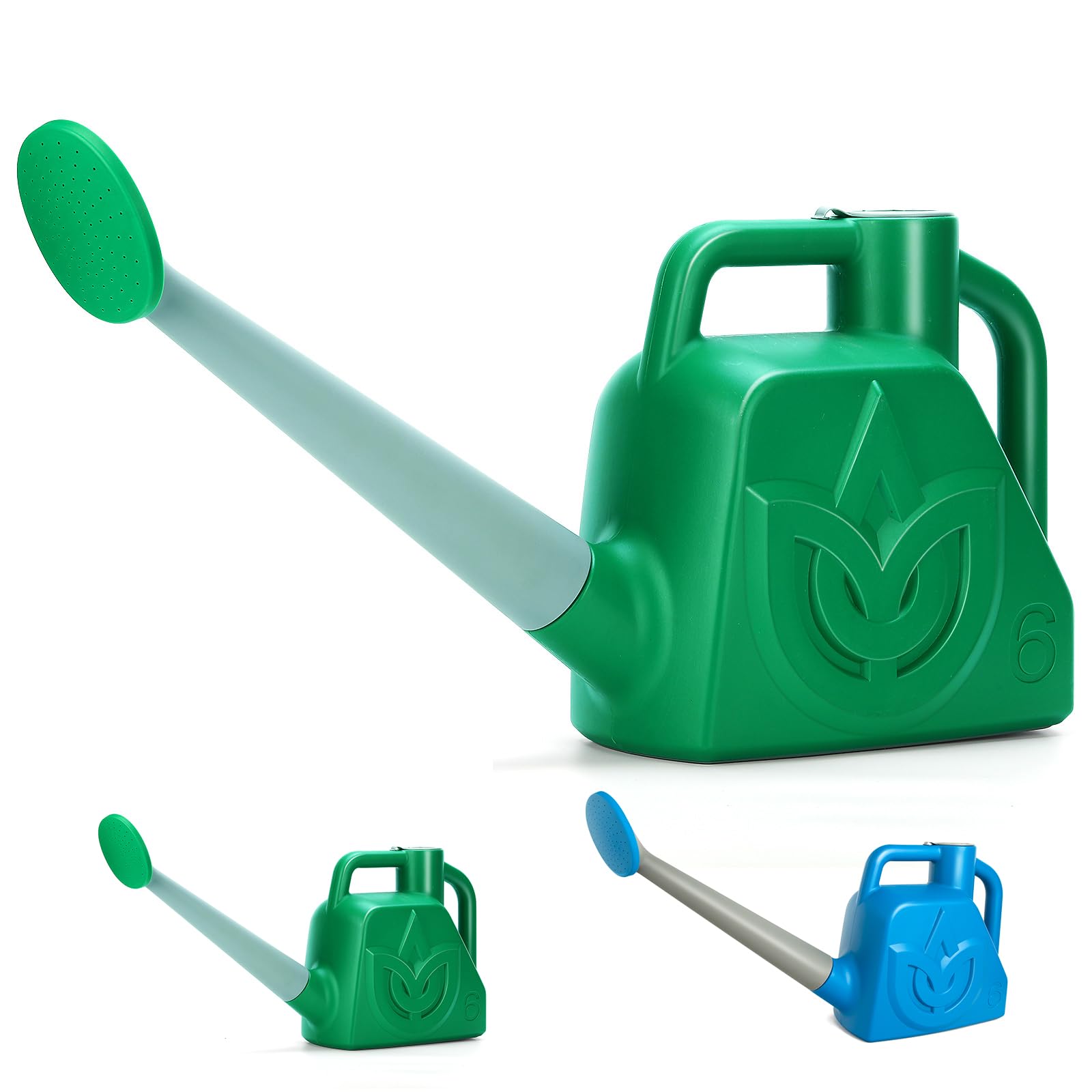
A cover over the fill opening is the detail that sold us on this one. On a can this size it does two jobs: you can dip it in a rain barrel and carry it back across the yard without a wave of water sloshing over your boots, and dust and grit stay out between uses. It's the sort of thing you only notice on a can that doesn't have it.

At six liters — a gallon and a half — it sits between the one-gallon cans and the two-gallon ones, which is the weight we'd pick for a walk around a big garden if we were buying for that alone. Enough for several containers, not so much that you're setting it down every ten feet. Two handles, a thick resin body, and a 16.1-inch spout that unscrews for storage and reaches into the back of a border.

The joint between spout and body is the one thing to watch. It seals on a threaded connector, and if it isn't turned fully home you'll get a slow seep while you pour; ours came with a spare O-ring, which tells you the maker expects that part to wear. Seat it firmly and the joint stays dry — and that seal, plus the size, is why it edges out the two-gallon cans for a garden you water standing up.

Bottom line: A covered fill opening and a balanced gallon and a half make this the can for a long walk around a garden you water standing up.

4

Bloem 2-Gallon Watering Can

Bloem 2-Gallon Watering Can

Filling at the tap

Our Score 9.0/10
Check Price

Worth Noting

  • Takes up shelf space in a shed
  • Dribbles from the head after pouring
Head
Removable sprinkler head
Capacity
2 gallons
Material
UV-stabilized plastic
Fill Opening
Extra large
Read the full review

Filling is the chore the Bloem solves better than anything else here. The top opening is huge — wide enough to sit under a garden spigot or a laundry tap without wrestling, and wide enough that you can stir plant food into the water with a stick instead of shaking the whole can. Anyone who has tried to fill a narrow-necked can from a low outdoor tap will see why it stood out.

This is a patio can, not a seed-bench can. The UV-stabilized body is built to sit outside and the two gallons water a run of pots in one go, but the rose is coarse — the holes are big enough that water arrives fast, which suits a mature container and is too much for seedlings or a freshly sown bed. Pull the head off and you get a full stream for filling a tray.

The long handle lets your grip slide along it as you tip, which matters more than it sounds with this much water moving. The catch is size: it takes up shelf space in a shed that a narrower can leaves free, and that's the trade for an opening you can drop a hose end into.

Bottom line: If filling the can is the part you resent, the Bloem's huge top opening and two-gallon tank are worth the premium.

5

Megawodar 1-Gallon Metal Watering Can

Megawodar 1-Gallon Metal Watering Can

Patio and gifts

Our Score 8.8/10
Check Price

Worth Noting

  • Can rust where water sits in it
Spout
Removable spout
Weight
1.96 lb
Capacity
1 gallon
Material
Galvanized steel
Read the full review

Rust is the first thing to say about the Megawodar, because it's what decides whether this can suits you. Galvanized steel with an embossed design and a copper-green finish looks a great deal better on a step than any plastic can in this group — it's the one you leave out on purpose, and it doubles as a planter when it's empty.

As a working can it's a small one. The listing says a gallon, but it reads smaller in the hand than that suggests: a few pots, a windowsill, a herb trough, not a border on a hot evening. The spout unscrews so you can water succulents and seedlings with a straight stream, and it's light enough to carry by the top handle without thinking about it.

The finish is what pays for the looks. Rust can take hold where water stands, particularly around the handle fitting, and a metal can left full on a patio is exactly the situation that produces it. Empty it after each use, dry the inside, and it stays a handsome small can for years of light duty; leave it out full and the paint is on borrowed time.

Bottom line: The only metal can here, and the prettiest — buy it for a patio you want to look at, not for a border that needs a workhorse.

How We Tested the Best Outdoor Watering Cans

We started by researching the cans with the most consistent reviews and filtering out anything with a fragile spout, a vague capacity claim, or a price that felt out of line with the material. That left us with 14 cans in plastic, galvanized steel, and powder-coated metal, ranging from small two-quart models to three-gallon options.

For six months, these cans lived on patios, in raised-bed gardens, and beside a row of hanging baskets. We filled each one from an outdoor spigot, noted whether the opening cleared the faucet, and carried it full to the beds—watching for balance, handle comfort, and any drip from the seam or spout joint.

We filled each can to its stated capacity, set it on a dry patio, and checked underneath after 30 minutes for moisture; then we tipped it past 45 degrees to see if water escaped from the seam before the spout. We watered seedlings with the rose attached and mature plants with it removed, noting whether the flow came out as a soft shower or a concentrated stream that gouged the soil. After each session, the cans stayed outside in sun and rain for weeks at a time, and we inspected seams, handles, and bases for rust, cracks, or loose fittings.

How to Choose Outdoor Watering Cans

Capacity Is a Weight Decision

A gallon of water weighs about eight pounds before you add the can, so a full two-gallon can runs near seventeen pounds and a one-gallon can about nine. That gap decides how far you walk before setting it down. Handles change the arithmetic more than capacity does: two handles let you carry with one hand while the can is light and bring the second hand in as it empties. For a long border, take the bigger can and fewer trips; for hanging baskets and a balcony, the smaller one gets used more often because you'll actually pick it up.

The Spout and Rose Decide What You Can Water

An open spout gives a directed stream for a single plant or for filling trays; a rose turns the same can into a broadcast for a whole bed. Fineness matters as much as presence — a coarse rose delivers water fast enough to crater loose soil and flatten seedlings, while a fine one lands like rain. Removable heads give you both, which is why most of the cans here unscrew. A long narrow spout earns its keep among crowded pots; a short wide one fills a bucket faster. Match the spout to the plants you own, not the ones you plan to buy.

The Joints Are Where a Can Lets You Down

The tank rarely fails; the thread where the spout or sprinkler head screws on does. When you assemble a can, seat the connector all the way home and check that any gasket or O-ring is in place — a spare in the box tells you the maker expects that part to wear. The fill opening matters for the same reason: a wide one sits under a spigot or a tap, a narrow one splashes. And nearly every can dribbles for a few seconds after you stop pouring, so park it on gravel rather than a wooden deck.

Plastic or Metal, and Where It Lives

UV-stabilized plastic and thick polypropylene shrug off sun and fertilizer and don't mind being left out, which is why we prefer them for a can that lives by the tap. Metal looks better: galvanized steel with an embossed finish is the one you leave on the step on purpose. But metal needs looking after, because standing water is what rusts it, so empty and dry it after every use. Either way, store cans empty — water left in a plastic can through a hard freeze can split it.

Frequently Asked Questions

Final Verdict

If you're buying one can for a garden with beds, containers and a few hanging baskets, the Chapin is the one we recommend. Two gallons cuts the walk back to the tap, the rose is fine enough for fresh plantings, and the recycled HDPE won't rust when you mix fertilizer in it.

The Fasmov is the better second can — light enough to carry all morning, with a spout that reaches into crowded shelves. If filling is the chore you resent, the Bloem's wide opening is worth the premium, and the Megawodar is the only can here you'd leave out on the patio for looks.