Planters & Plant Supports

Best Tomato Stakes of 2026

Tomato plants make you feel like a genius in June and a fool by August. The vines are loaded, a thunderstorm rolls through, and that thin stake you tapped in at planting is suddenly bowing toward the soil with half your crop. A good tomato stake keeps the vine and its fruit upright through wind, rain, and the weight of a full truss, so stems don't crack and tomatoes don't end up in the mud. The wrong one snaps, sinks, or saws at your ties all season.

I planted 16 stakes in raised beds and containers this spring and my team tracked them through a full six-month growing season. The ones that held up weren't always the thickest or priciest; they had enough buried length to stay put and just enough give to lean in wind without kinking. A first-time buyer should know that height matters as much as strength—a short stake forces you to top the vine early or improvise a trellis in July. The picks below stayed straight, kept their finish, and made picking easier.

1

Sunnyglade 48-Inch Tomato Stakes, 25-Pack

Top Pick
Sunnyglade 48-Inch Tomato Stakes, 25-Pack

Most tomato plants

Our Score 9.4/10
Check Price

Worth Noting

  • Comes up short for the tallest indeterminate vines
Height
47.24 inches
Material
Plastic-coated metal
Pack Size
25 stakes
Shaft Diameter
0.43 inches
Read the full review

The number that decides a tomato stake is how much of it stands above the soil once it is in, and this one leaves you plenty. Sunnyglade lists these at 47.24 inches, so driving one a hand's depth into a bed still leaves better than three and a half feet of green-coated shaft to tie trusses to. That covers determinate varieties end to end and most of what a staked indeterminate needs. We reach for this pack first because it asks nothing of the gardener: no mallet in ordinary soil, no pilot hole, no fiddling.

The point is a real feature rather than a line on a listing. A slim 0.43-inch shaft with a sharpened end goes into worked ground with body weight and a quarter turn, which is the difference between staking a row on a Saturday morning and finding reasons to postpone it. The coating does the unglamorous work well: it keeps rust off the metal underneath and fades into foliage, so a staked bed does not announce itself from the street.

Sideways force is where we temper expectations. The shafts have some spring in them, and forcing one into hard clay or through an old root can bow it instead of seating it. Watering the bed the night before, or opening a hole with a dibber, usually settles the argument.

Twenty-five to a pack is the quiet reason these end up in the shed every year. That is a tomato row with a dozen left over for the peppers, dahlias and flopping perennials that always need help by July, and the bundle weighs about five pounds, easy to carry in one hand and hang on a hook between seasons.

Bottom line: This is the pack we point most gardeners to: 47 inches of coated steel, a point that goes in by hand, and 25 stakes to a bundle for a whole row.

2

BOTINDO 48-Inch Garden Stakes, 25-Pack

BOTINDO 48-Inch Garden Stakes, 25-Pack

Tie-friendly bulk set

Our Score 9.4/10
Check Price

Worth Noting

  • Shaft can feel more like plastic than steel
Height
48 inches
Material
Plastic-coated steel
Pack Size
25 stakes
Shaft Diameter
0.4 inches
Read the full review

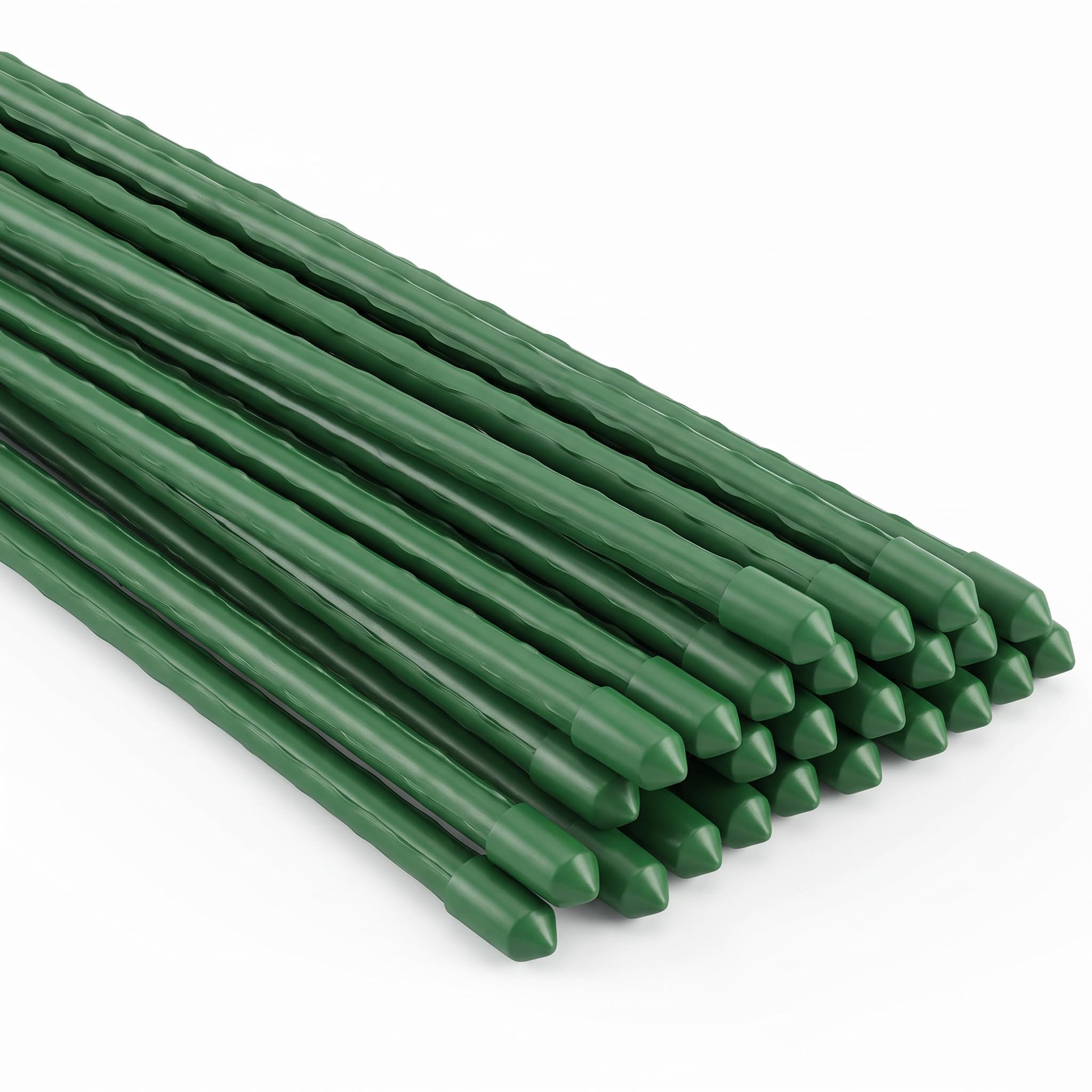
Ridges run the length of these stakes, and that texture is what separates them from the smooth shafts elsewhere in this guide. Twine catches on it instead of sliding, and the corrugation stiffens a 0.4-inch tube: the listing claims these stand more load without deforming, and they do feel rigid in the hand.

At 48 inches they sit where most tomato growers want to be, long enough to leave three feet of support after driving and short enough that a bundle stores under a bench. The sharpened end goes into worked soil without a fight, and the coating keeps rust off the core. In firm or stony ground the point stalls and the shaft kinks sooner than a solid rod would, so open the hole first rather than leaning on it.

Against our top pick these feel lighter and stiffer along their length, and stiffness is the better trait in wind and the worse one in bad soil, where a rigid tube kinks instead of bending back. For a first garden with a whole row to stake, they are a sensible place to start: the ridges mean fewer re-tied knots, and 25 in a pack leaves room for mistakes.

Bottom line: Go here if you tie rather than clip: the ridged shaft holds knots and the stakes drive cleanly, in a pack big enough for a first garden.

3

GAGINANG 4-Foot Bamboo Stakes, 25-Pack

GAGINANG 4-Foot Bamboo Stakes, 25-Pack

Cut-to-length rows

Our Score 9.2/10
Check Price

Worth Noting

  • Splintered edges on some canes
Height
4 feet
Material
Bamboo
Pack Size
25 stakes
Read the full review

Four-foot bamboo is the least glamorous thing in this guide and, for a lot of gardeners, the right answer. This bundle arrives straight, dry and true to length, in the natural tan that disappears against soil and stems, with no coating to peel and nothing to look at except the plant.

They are light, with the 25-pack listed at 1.6 pounds, so carrying the whole bundle to the far end of the plot takes one hand. Use them for determinate tomatoes, peppers, beans and the floppy perennials that need a discreet crutch, and cut them down with bypass pruners for seedlings, since a four-foot cane makes two short ones.

Where these come up short against our thicker bamboo pick is mass. These run slimmer, so sort the bundle when it arrives and give the heaviest plants the fattest canes, saving the thin ones for peppers and flowers. There is an upside to a slim cane too: it slips between stems without disturbing the rootball.

What they offer that the fancier stakes do not is flexibility. Nothing here is precious, so cutting one to 18 inches for a seedling does not feel like waste, and a snapped cane goes on the compost at the end of the season rather than into a bin.

Bottom line: A plain, light, cuttable four-foot cane at a fair price for the bundle: sort out the slim ones and it handles a row of determinates.

4

Xiny Tool 58-Inch Steel Stakes, 25-Pack

Xiny Tool 58-Inch Steel Stakes, 25-Pack

Tall indeterminate vines

Our Score 9.0/10
Check Price

Worth Noting

  • Slim shaft is light work for thick-stemmed plants
Height
58 inches
Material
Plastic-coated steel
Pack Size
25 stakes
Shaft Diameter
0.43 inches
Read the full review

Ten more inches of stake does not sound like much until you are standing in front of a tomato plant that has shrugged off everything else you own. At 58 inches these are the tallest stakes in this guide, and for indeterminate varieties in open ground they are the ones that keep you ahead of the vine instead of chasing it.

That height is the whole purchase, and it is worth being honest about who needs it. Determinate tomatoes, patio varieties and peppers will never use the top foot, and the extra length just makes the bundle harder to store. Grow a Brandywine or a Sungold and top the plant because you ran out of stake once, and these stop being a luxury.

The core is hollow steel rather than a solid rod, and that is where the trade-off lives. Pushed into stony ground, or hammered instead of leaned on, one of these can kink or snap at the soil line, and a rubber mallet will scuff the coating. Open the hole first with a dibber or a spare length of rebar and the problem largely disappears; in soft, worked soil they seat cleanly by hand.

The surface is a small surprise. It is slightly rough, with faint ridges running the length of the shaft, so twine bites instead of sliding the way it does on smooth plastic. Against a plant that will be five feet tall and loaded after a storm, every knot that stays where you tied it is one less repair job.

Bottom line: Buy these when your tomatoes outgrow four feet every year: the tallest stakes here, with the caveat that a hollow shaft needs a pilot hole in stony ground.

5

Jollybower 4-Foot Bamboo Stakes, 25-Pack

Jollybower 4-Foot Bamboo Stakes, 25-Pack

Heavy fruiting plants

Our Score 9.0/10
Check Price

Worth Noting

  • Diameters vary from cane to cane
Height
4 feet
Material
Heat-treated bamboo
Pack Size
25 stakes
Shaft Diameter
0.47–0.55 inches
Read the full review

Plenty of garden bamboo is a thin dowel that snaps the first time you lean on it, which is why diameter matters more here than any brand claim. Jollybower lists these canes at 0.47 to 0.55 inches across, closer to a broom handle than a skewer, and heat-treats them so they arrive straight and hard rather than green and whippy.

That thickness is what you are buying. A cane this size carries a loaded truss without the bowing that turns a neat teepee into a leaning mess by August, and the natural finish means a staked bed still looks like a garden rather than a construction site. If green plastic in a vegetable bed bothers you, this is the pick.

Bamboo is a plant, not an extrusion, so expect variation. The listed range is honest: sort the bundle when it arrives and give the fattest canes to the heaviest plants, because a thinner one is fine for a pepper. The uncoated surface also helps at tying time, since twine grips it far better than a glossy shaft and knots stay where you put them after a rain.

Push these in rather than hammering. A mallet splits a cane at the tip and the split runs, and in soft ground hand pressure is all a four-foot cane needs.

Bottom line: The bamboo we trust with heavy plants: thicker canes than most, heat-treated straight, and a natural finish that disappears into a bed.

6

BOVITRO Extendable Plant Stakes, 3-Pack

BOVITRO Extendable Plant Stakes, 3-Pack

Patio pots

Our Score 9.0/10
Check Price

Worth Noting

  • Only three stakes per set
Material
Fiberglass
Pack Size
3 stakes
Extended Height
42.3 inches
Collapsed Height
17.9 inches
Read the full review

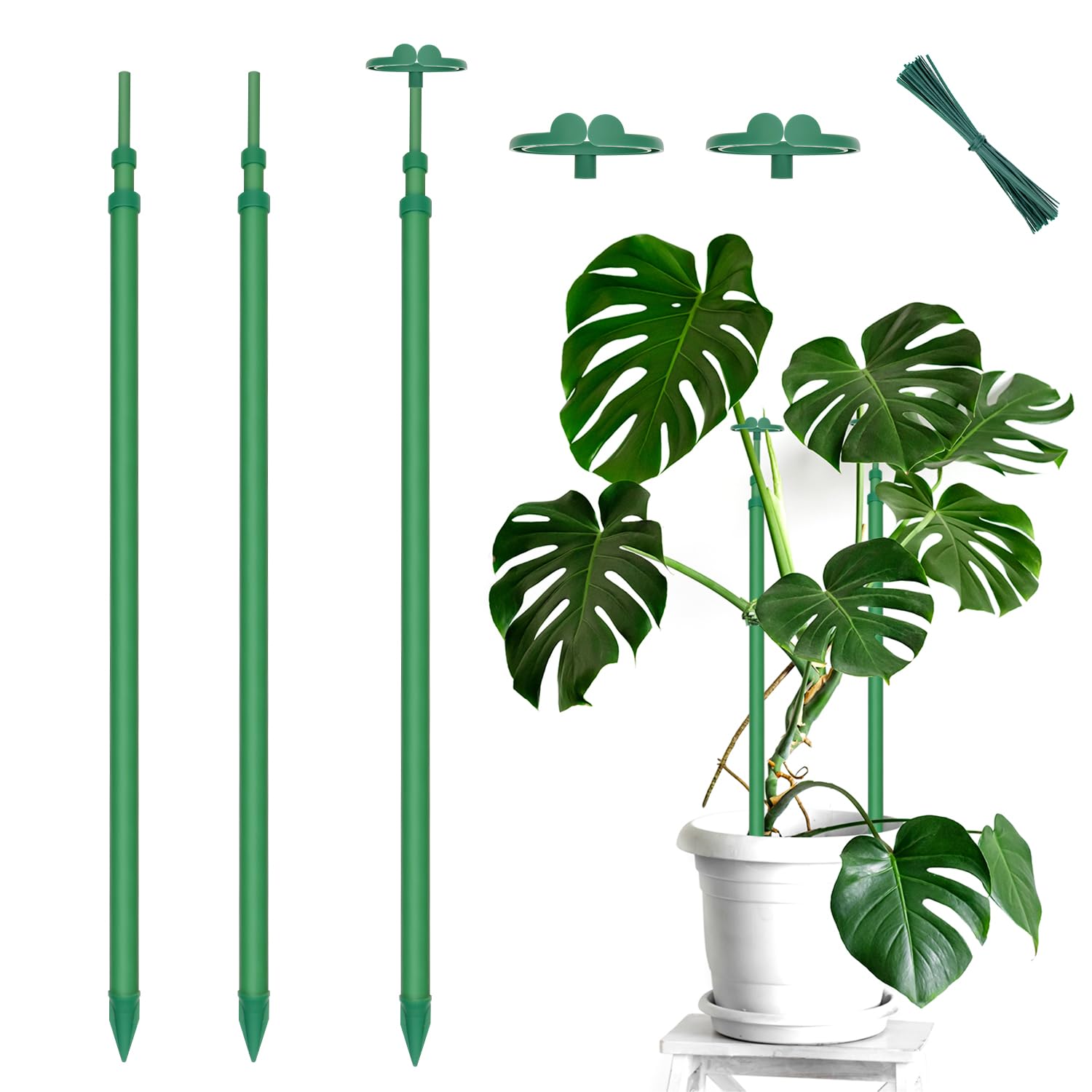
Forty-two inches fully extended is short of a full-size tomato stake, and that is fine, because this set is not trying to be one. The fiberglass shafts telescope from 17.9 inches out to 42.3, which is exactly the range a container tomato needs: low enough for a seedling in June, tall enough for a bush that has doubled by August.

The adjustability is the reason to buy, and it works in both directions. Set them short early, extend as the plant climbs, and none of it involves cutting, re-tying or buying a second size midseason. Fiberglass is also the right material for a pot that gets watered daily: it will not rot like bamboo or rust like a plain steel rod, and it does not mind being left out in the rain.

Extend them all the way and the trade-off appears. The more shaft you pull out, the more the top can lean under a heavy stem, and the joint between sections is the weak point, so a plant carrying big fruit up high needs re-tying more often than it would on a one-piece stake. For a compact or determinate plant in a patio pot, that is a non-issue.

The clips and green ties in the box are the sort of thing you end up buying separately otherwise, and the whole set collapses small enough to live in a shed drawer over winter rather than leaning in a corner of the garage.

Bottom line: Our pick for container tomatoes, where one fiberglass stake follows a plant from seedling to three and a half feet without a midseason swap.

How We Tested the Best Tomato Stakes

We built the shortlist from nursery catalogs, garden-center shelves, and stakes that kept showing up at community garden. We filtered by listed height, diameter, material, and cost per stake, then ordered 16 of the most promising—wood, steel, fiberglass, and coated designs. From spring through fall, six months, we grew cherry tomatoes, beefsteaks, and sprawling heirlooms in raised beds and containers, tying each plant at least twice as it grew. We watered, let the beds dry between soakings, and left every stake through two windstorms and a week of 90-degree heat.

We measured each stake's actual above-ground height and diameter instead of trusting the label, then pushed them into the same clay-heavy soil by hand and, when needed, with a mallet. Whether a stake went in straight, stayed put after a deep watering, and flexed when we leaned on it—or kinked and stayed bent—sorted the field quickly. We tugged each one sideways to see how much it wobbled, and checked the buried end every few weeks for splintering, rust, or cracked coating. Thin stakes that looked fine in the package often bowed once a heavy truss formed; thick ones sometimes refused to go deep without a fight.

To judge plant support and suitability, we noted how each stake handled a full vine—whether we could tie at two or three points, whether the top stayed above the growing tip, and whether the surface gripped twine or let it slide. We checked multi-packs for consistency, since one short or skinny stake can throw off a row, and compared cost per stake against how likely each was to be reused. By the end, value wasn't the lowest price; it was which stakes were still straight, still smooth enough not to chafe stems, and still easy to pull up and store.

How to Choose Tomato Stakes

Height Is Measured Above the Soil, Not on the Label

A four-foot stake does not give you four feet of support. You need eight to ten inches in the ground to resist a loaded plant leaning, which leaves a bit over three feet above the soil. That is plenty for determinate varieties that stop at two to three feet, and for peppers and beans. Indeterminate tomatoes keep climbing until frost, and that is the case for a five-foot stake. Match the stake to the variety before you buy and you will not be splicing a second one on in July.

Coated Steel or Bamboo

Steel stakes with a plastic coating last several seasons, resist rot, and drive with less fuss. The coating is what keeps rust off the core, so watch for deep scratches near the soil line where a boot or a dibber has worn through. Bamboo is lighter, looks at home in a bed, and can be cut to length, but quality tracks diameter: a thin cane is a pea stick, not a tomato stake.

Look for roughly half an inch across, and expect some variation within a bundle, because bamboo is a plant rather than an extrusion. Sort the canes when they arrive so the fat ones go to the heaviest plants.

Getting a Stake Into the Ground Without Wrecking It

Most bent stakes are bent by the person driving them. A pointed tip will go into soil that has been watered and worked; in hard clay, stony ground or an old root, forcing it kinks a hollow steel shaft or splits a cane, and a mallet makes both worse. Open the hole first with a dibber, a long screwdriver or a spare length of rebar, then push. If you do need a hammer, use a rubber mallet and a scrap of wood across the top of the stake, and accept that the coating will scuff.

Ties, Grip, and What a Windy Week Does

A smooth plastic coating is slippery, and a knot that slides down a stake takes the plant with it. Ridged or uncoated surfaces hold twine; on glossier stakes, wrap twice before tying or use clips. Tie in a loose figure-eight between stem and stake so the plant can still move, because a tight tie girdles a stem that is going to thicken. Two ties, one at about a third of the plant's height and one higher up, hold a loaded vine far better than a single knot at the top.

Frequently Asked Questions

Final Verdict

We keep coming back to the Sunnyglade 25-pack as the stake to buy first: 47 inches of coated steel, a point that goes in without a mallet in ordinary soil, and enough in the bundle to stake a tomato row and still have spares. If your plants regularly overrun four feet, the 58-inch Xiny Tool stakes are the upgrade worth paying for. For pots on a patio, the BOVITRO extendable set adapts as the plant grows.

Height, material, and whether the stake needs to change size: answer those three and the choice makes itself.