Garden Tools

Best Digging Shovels of 2026

Planting day starts with good intentions: a flat of perennials, a bag of compost, a hole that needs to be deeper than you planned. Then the blade hits a root or a pocket of clay, and you're stomping on a shovel that's flexing like a spoon. A real digging shovel won't make the work fun, but it stops the ground from winning — clean edges, full loads that don't slide back onto your boots, and a blade that shrugs off a rock strike.

I've bent more than one bargain shovel in my own beds, so I was picky going in. Over the past six months, we worked through 12 digging shovels in backyard beds, garden plots, and a few tree plantings, and the gaps between them showed up within an afternoon. What first-time buyers miss is length: a handle that's too short folds you into every scoop, and that's the fatigue people end up blaming on the soil. Weight is the other tradeoff — a heavier head bites deeper but wears you down by the third hole. The picks below are the ones that kept earning their spot.

1

Root Slayer RS220

Top Pick
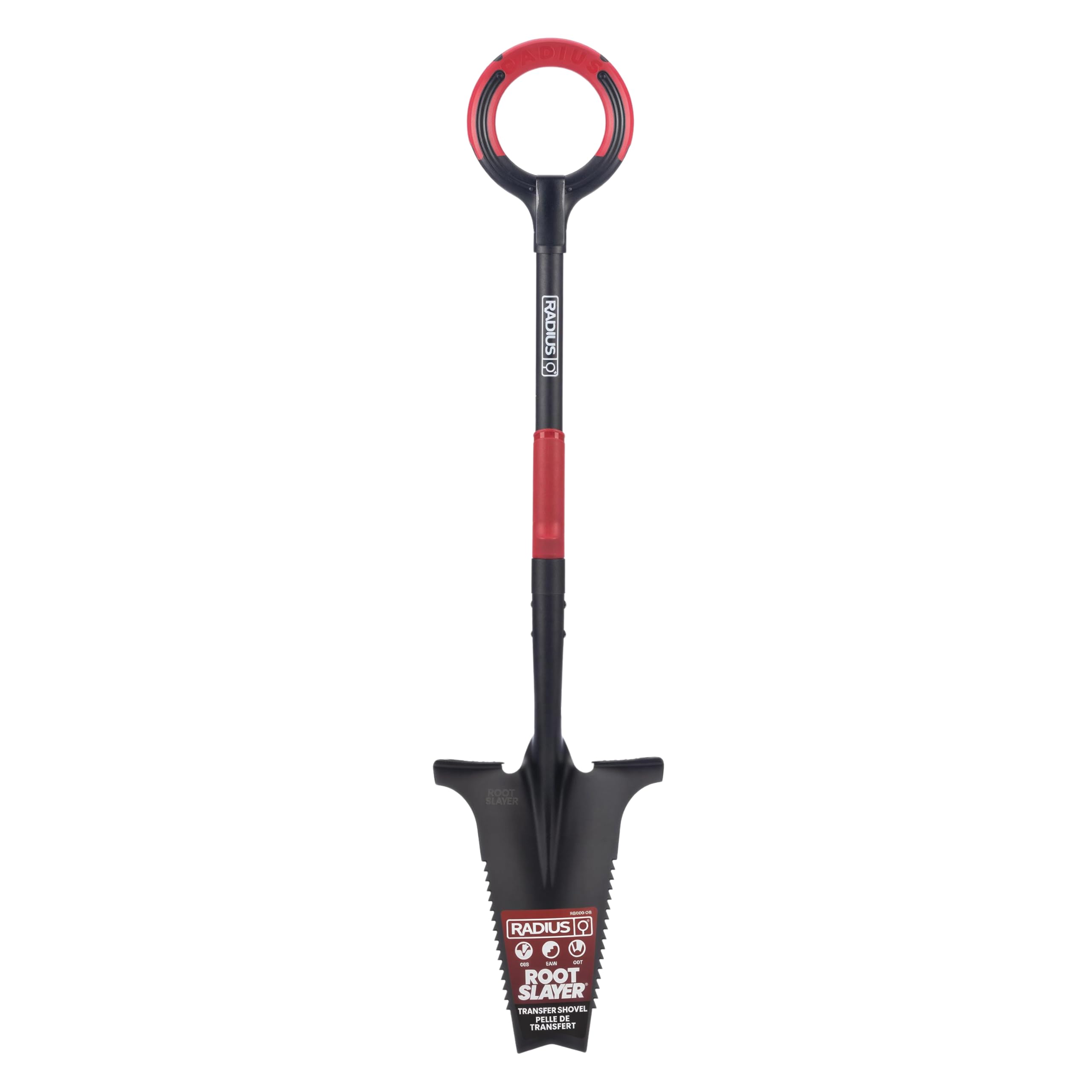
Root Slayer RS220

Root-filled beds

Our Score 9.6/10
Check Price

Worth Noting

  • Heavy head tires you over a long session
Grip
Ergonomic padded
Blade Shape
Serrated V-tip
Head Material
Powder-coated alloy steel
Overall Length
45 in
Read the full review

A serrated shovel edge sounds like a gimmick until you watch one work. The Root Slayer's head finishes in an inverted V with teeth down both sides, and in a bed that has been taken over by roots that shape changes the job: instead of stomping a flat edge and hoping, you work the tip into the gap beside a root and shear it. We spent a morning clearing shrubs we had been putting off for a year, and the tool never needed a second run at the same spot.

At 45 inches it is a genuine long-handled digger, and the steel shaft gives you something honest to lever against when a root ball fights back. The balance is head-forward, so the blade drops where you aim it and stays there while you reposition your feet. The padded grip earns its keep with wet gloves on, which matters more than it sounds when you are working in a damp spring border.

Two things to know before you buy. The V-tip is aggressive, so a trench wall cut with it looks chewed next to what a straight spade leaves, and it is poor at scooping loose soil. This is a digging tool, not a materials mover. Keep a file handy, too: the serrations sharpen like any bevel, and a few passes restore the bite.

Bottom line: For ground that's already full of roots, this is the shovel we reach for first: the serrated V-tip finds a seam and cuts where a flat blade stalls.

2

Spear Head Spade SHFD3

Spear Head Spade SHFD3

Rocky, clay soil

Our Score 9.6/10
Check Price

Worth Noting

  • 40-inch shaft is short for tall diggers
Edge
Self-sharpening epoxy coat
Blade Size
9 x 11 in
Overall Length
40 in
Handle Material
Steel-reinforced fiberglass
Read the full review

The Spear Head is a 40-inch spade built around the person swinging it rather than around raw length. The D-grip lets you choke up for control, the footrests are bent forward so your boot lands square on them instead of sliding off the back, and the fiberglass shaft keeps the whole tool light enough that lifting a loaded blade does not break your rhythm.

The blade is the reason to pay attention. It is spear-shaped, narrow at the point and widening into a 9-by-11-inch body, so it works its way between rocks instead of clanging off the first one, and in clay it shaves out a plug rather than fighting for every inch. The powder coat is finished with an epoxy that wears back as you dig, exposing fresh steel, so the edge keeps its bite without you doing anything about it. That combination is why we rate it the best of this group in stony ground.

The fiberglass shaft will not rot, swell or splinter, which counts if your tools live outdoors between jobs. It is also the priciest shovel here, and that is the honest trade: you are paying for a blade that behaves in ground where cheaper ones bounce. If your soil is decent loam, the KOLEIYA does the same work for a lot less.

Bottom line: If your soil is clay and stone rather than loam, this light, sharp spade earns its higher price before lunchtime.

3

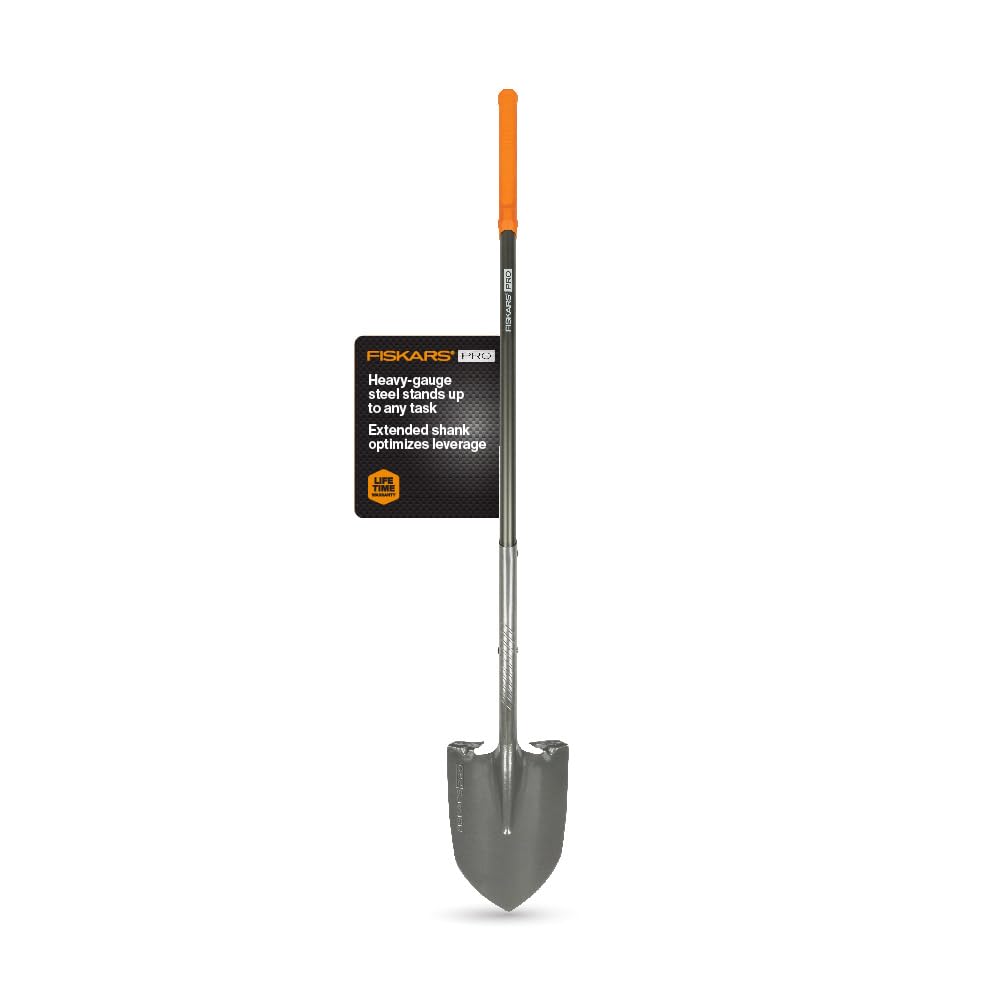
Fiskars 60" Pro Shovel

Fiskars 60" Pro Shovel

Tall gardeners

Our Score 9.4/10
Check Price

Worth Noting

  • Long handle is unwieldy in raised beds
Weight
2 lb
Warranty
Full lifetime
Overall Length
60.5 in
Handle Material
Aluminum
Read the full review

Two pounds at 60 inches is an unusual pairing. Most long-handled shovels this size run steel from grip to edge and weigh far more, so the aluminum shaft on the Fiskars Pro is the first thing you notice and the thing you keep noticing every time you lift a full blade out of a hole.

What the length buys you is posture. At 60 inches the grip comes up to where a tall digger can work more or less upright, and the foot platform is wide enough to take a full boot without the edge of it digging into your arch through a thin sole. The blade arrives sharpened, holds a line when you cut a bed edge, and takes a lever without folding, which is the combination we want from a shovel that will see real work.

The aluminum shaft shrugs off weather in a way wood never does, and Fiskars backs the shovel with a full lifetime warranty. It is a tool for big beds, deep holes and open ground, and the taller you are, the more sense it makes.

Bottom line: If you're tall enough that most shovels leave you hunched, this 60-inch, two-pound Fiskars is the one that lets you dig standing up.

4

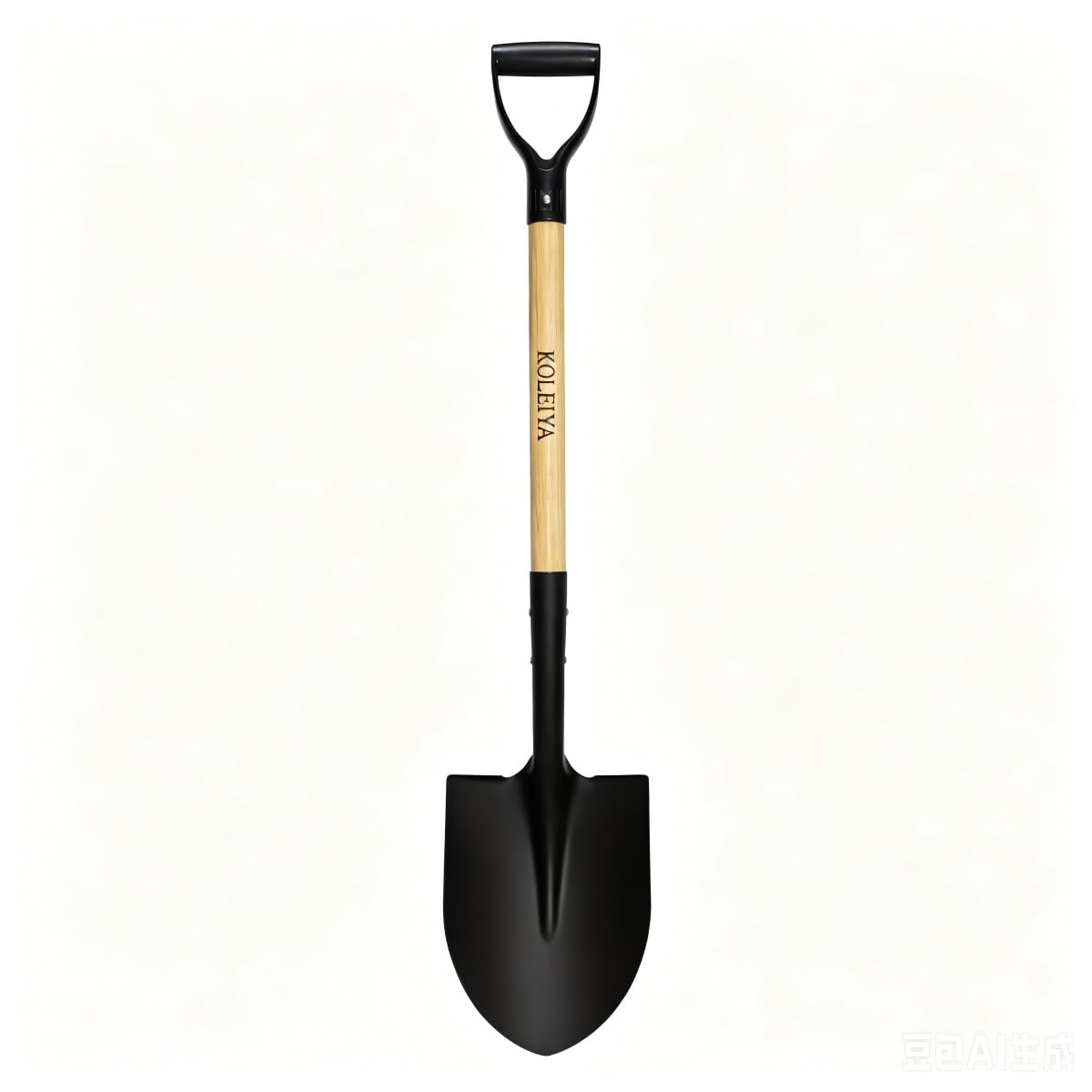
KOLEIYA 41" Round Point Shovel

KOLEIYA 41" Round Point Shovel

Smaller diggers

Our Score 9.4/10
Check Price

Worth Noting

  • Wooden handle needs dry storage
Blade
Alloy steel round point
Handle
Wood D-grip
Weight
3.3 lb
Overall Length
41 in
Read the full review

If you want a full-size shovel without paying full-size money, this is where we point people. The KOLEIYA is 41 inches of round-point steel on a wood D-grip, and it is the least expensive shovel on this page while still feeling like a tool rather than a toy.

The size is the real story. Forty-one inches and 3.3 pounds is short and light enough that a smaller or older digger can stand over the blade instead of reaching for it, and the wide, smooth D-grip does not bite into your palm the way a thin one does. The round point is steel, not stamped tin, and it sharpens up with a file.

What surprised us is how little it gives up. It plants, divides perennials, turns a bed and opens holes for shrubs without complaint, and the wood handle soaks up shock that a hollow shaft passes straight to your hands. It is not a stump puller; lever against it like a pry bar and you are asking for trouble. But that is not the job most of us have.

Bottom line: The best value here for ordinary garden digging, and the one we hand to anyone who finds a full-size steel shovel too much to swing.

5

Fiskars 44" Pro Shovel

Fiskars 44" Pro Shovel

Tight beds

Our Score 9.4/10
Check Price

Worth Noting

  • Priced above the budget picks
Blade
Heavy-gauge sharpened steel
Handle
Aluminum D-grip
Warranty
Full lifetime
Overall Length
44.75 in
Read the full review

A D-grip changes how you dig. On the 44-inch Fiskars Pro your hands stay close together at the top of the shaft, which turns the shovel into something you steer with your wrists as much as your shoulders: the difference between a tool that fits between two shrubs and one that hooks a branch on the way in.

The blade is heavy-gauge steel like the bigger Pro model, sharpened from the factory and stiff enough that a rock usually loses the argument. The teardrop grip gives your back hand something to pull against when you are lifting a full spade out of a hole.

Forty-four inches is short for deep digging and long enough to save your back in a bed, and the whole thing travels well. It fits across a truck bed or behind a seat, which the 60-inch version does not manage.

We kept reaching for it for close work: dividing perennials, setting transplants, opening a hole beside an established shrub, all the places where a long shaft is a nuisance. The full lifetime warranty is the other reason it earns a spot.

Bottom line: A compact, sharpened spade for raised beds and crowded borders, where a 60-inch handle is more obstacle than help.

6

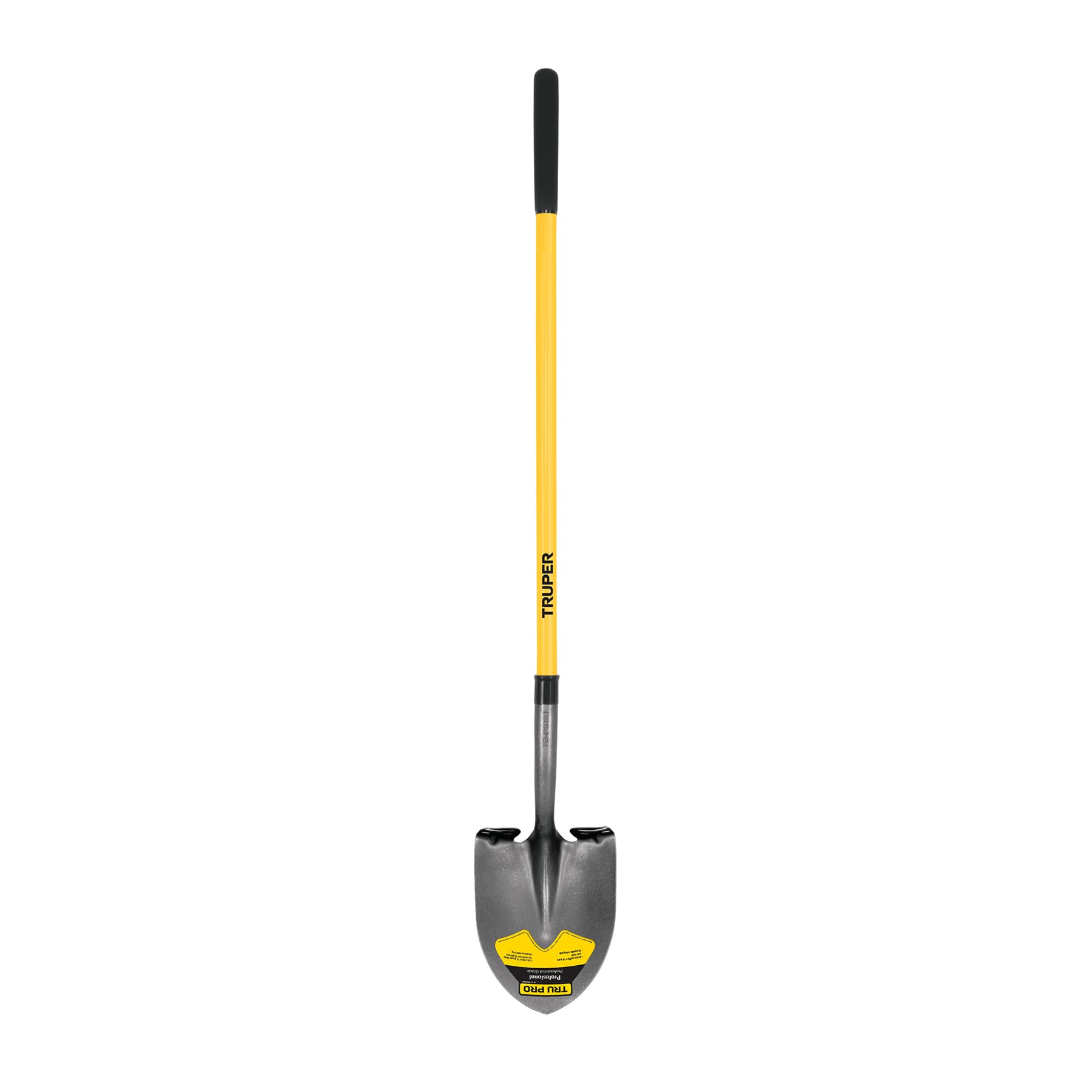
Truper Tru Pro 48" Shovel

Truper Tru Pro 48" Shovel

All-weather digging

Our Score 9.2/10
Check Price

Worth Noting

  • Round point is less precise for transplanting
Blade
14-gauge carbon steel
Handle
48 in fiberglass
Weight
4.5 lb
Warranty
Lifetime replacement
Read the full review

Fiberglass is the handle material to pick if your shovel lives outside. The Tru Pro's 48-inch shaft will not swell, rot or splinter the way wood does after a wet winter, and the grip is a long 9-inch cushioned section rather than a stubby D, with room to slide a hand up for control or down for a full swing even in gloves. On a wet, heavy soil day that mattered to us more than any blade feature.

The business end is a 14-gauge high-carbon steel round point that takes your full weight on the footrests without complaint. At 4.5 pounds it is a tool with some authority behind it; you feel the mass by the end of a long session, and the mass is also why it drives through wet clay instead of skidding across it. Truper backs it with a lifetime replacement warranty.

Bottom line: Our pick for a shovel that lives outdoors: the fiberglass shaft won't rot, and the long cushioned grip keeps wet, gloved hands in control.

7

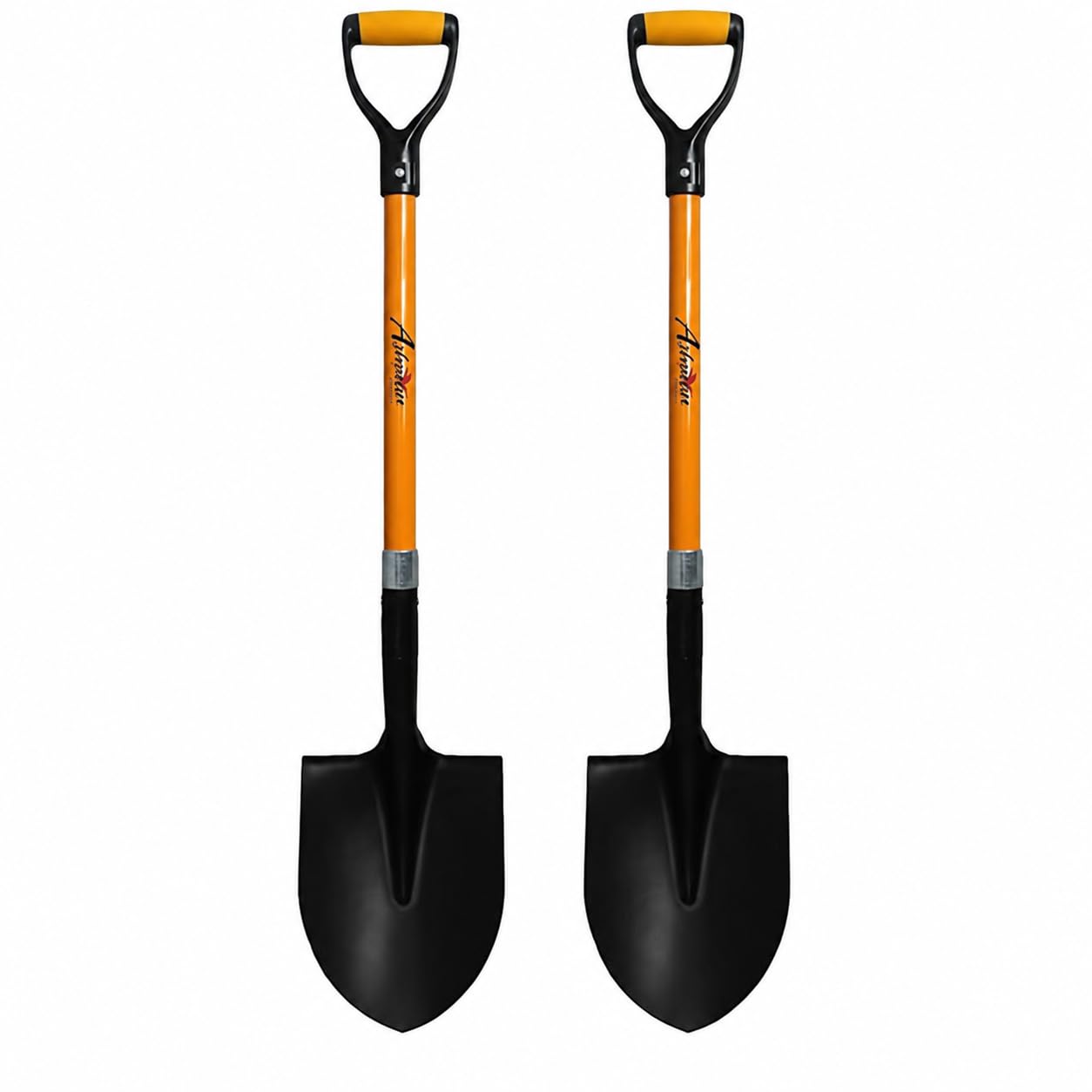
Ashman Digging Shovel 2-Pack

Ashman Digging Shovel 2-Pack

Two locations

Our Score 9.0/10
Check Price

Worth Noting

  • Handles won't take years of hard stomping
Blade
Hardened round point
Handle
Fiberglass with rubber grip
Pack Size
2 shovels
Overall Length
41 in
Read the full review

Two 41-inch round-point shovels with fiberglass shafts and rubber D-grips, for less than our top pick costs on its own. That is the whole pitch, and it is a good one for a household where one shovel lives by the compost and another rides in the truck.

Individually they are ordinary in a useful way. The hardened blade takes an edge, the D-grip is comfortable with gloves on, and 41 inches is a workable height for a shorter digger or for working on your knees in a bed. At 2.2 pounds they are easy to carry around the yard, and the orange finish means you can find them in the grass.

What we appreciated most is what a pair solves. Nothing has to be the good shovel: one stays out in the weather, one goes in the car, and neither gets carried across the yard when you are already tired. Six months from now, the one you left out in the rain will still be the cheap one.

Bottom line: Buy this pair when you need a working shovel in two places and don't want to worry about either of them.

8

VNIMTI 56" Fiberglass Shovel

VNIMTI 56" Fiberglass Shovel

Budget long reach

Our Score 8.8/10
Check Price

Worth Noting

  • Socket joint is the weak point under prying
  • Blade flexes in rooty ground
Handle
Fiberglass, dual grip zones
Weight
4.2 lb
Blade Length
11 in
Overall Length
56 in
Read the full review

Fifty-six inches of handle at the budget end of the market is this shovel's whole argument, and it is a fair one. The blade is a big 11-inch round point with a wide tread across the top, so both feet can share the push on a stubborn cut.

The fiberglass shaft carries two rubberized grip zones that turn tacky when they are wet, which sounds like a small thing until you are digging in a wet spring with muddy gloves. It is a detail that makes a damp morning noticeably easier.

In use it is a long, reasonably light digger at 4.2 pounds: the reach keeps you more upright, and the wide tread means your weight goes into the cut rather than into your arms. We kept reaching for it for new beds and big open holes, which is exactly the work a 56-inch handle is made for.

Given the price, it is a lot of reach for the money, and the grip treatment is better than the budget end usually gets. Treat it as a digger and it earns its place as a second shovel for a big yard, or a first one for someone who wants length without spending much.

Bottom line: The cheapest way to get a genuinely long handle, as long as you dig with it rather than pry with it.

How We Put These Digging Shovels to Work

We started with a shortlist of roughly 40 digging shovels — nursery shelves, hardware aisle stock, and the long-handled tools we already owned — then filtered by blade gauge, handle material, shaft length, and price until 12 were left. Round-points and square-points both made the cut, since the two genuinely do different jobs. Every one got six months of real use: spring bed prep, planting three-gallon shrubs and bare-root trees, edging, and hauling mulch and gravel.

Digging performance got measured in holes, not adjectives. Each shovel dug a foot-wide, 12-inch-deep hole in the same compacted clay, and we counted scoops, noted whether wet soil slid off the blade or stuck to it, and whether the load made it to the wheelbarrow or landed on our boots. For root cutting, we sawed maple roots down to an inch and a half and logged which blades sliced through in one push, which needed a rocking motion, and which bounced. Two testers, one 5-foot-2 and one 5-foot-10, used every handle for a full afternoon so we could feel where extra length stopped helping and started hurting; each shovel was weighed on a hanging scale before its first hole.

Durability earned its own abuse: rock strikes in gravelly soil, twisting the blade to pry out shrub crowns, and a week left out in the rain to see what rusted at the socket. We also kept score of versatility — whether one tool could edge a bed, scoop loose mulch, and lever out a root without us reaching for a second shovel — and set that against what each one cost, because the priciest handles in the group were not the ones that dug best.

How to Choose Digging Shovels

Match the handle to the digger

Length is a fit question, not a size contest. A 41- to 45-inch shovel suits a shorter digger, a raised bed, or anyone who wants something that stores in a car trunk. A 56- to 60-inch shaft is for tall gardeners and open ground, where the reach keeps your back straight and your swing long. The trap is buying the longest handle you can find: a shovel you cannot control in a crowded border is one you leave in the shed.

Stand beside the tool before you commit. The grip should land somewhere between hip and chest height, and your back should not round before the blade reaches the soil. If it does, the shovel is too short for you, whatever the label says.

Pick the blade for your soil

A round point is the all-rounder: it opens holes, turns beds and shifts loose soil reasonably well. A flat spade cuts crisp edges and slices roots in a narrow line. A serrated V-tip like the Root Slayer's is the root specialist, and it is very good at that one job.

The trap is buying the most aggressive blade available and then using it to scoop. A V-tip leaves a chewed trench wall and moves loose material badly, so if half your work is shifting soil or mulch, keep a round point as your main tool and let the specialist be the second shovel.

Shaft material decides weight and where it breaks

Steel shafts are the ones to lever with. They are heavy, and the weight is the point. Fiberglass is lighter and will not rot or swell, which suits a tool that lives outdoors, though the joint where the shaft meets the socket is where fiberglass shovels fail when they do. Wood is cheap, absorbs shock and can be rehandled, but it needs dry storage.

Decide which job you actually do. If prying rocks and stumps is routine, buy steel. If you are digging holes and setting plants, the lighter materials save you more over a season than they cost.

Details you notice by the second hour

A wide foot platform spreads your weight so a boot edge stops cutting into your arch, and forward-bent footrests keep your foot from sliding off the back. A long cushioned grip, like the 9-inch section on the Truper, gives gloved hands somewhere to slide; a rubberized zone that stays tacky when wet is worth more than a decorative D.

Check the warranty too. Fiskars and Truper both back their shovels for life, which changes the arithmetic on a tool you plan to abuse.

Frequently Asked Questions

Final Verdict

The Root Slayer is the shovel we point most gardeners toward, because it does the ordinary jobs and then handles the one that ruins an afternoon: a root in the way. It digs, it plants, and when something underground refuses to move, the serrated tip cuts instead of arguing.

Two situations change that answer. If you are tall or digging deep holes all day, the 60-inch Fiskars keeps you upright and swings lighter. If your ground is rock and clay rather than roots, pay more for the Spear Head; it is the sharpest, lightest digger in this group.