Garden Tools

Best Trenching Shovels of 2026

A trenching shovel is a spade that went on a diet: a long, narrow blade, a flat face, and edges sharp enough to shave a clean wall. That shape is the whole point — it cuts a narrow, even trench for a drain line, irrigation tubing, or conduit without turning half the yard into a pile of spoil, and it moves noticeably faster than a round-point once you're below the sod. The differences between models matter far more than the price tags suggest.

I've cut my share of bad trenches, the kind that slump in after the first hard rain, and what separates a good one comes down to steel, handle geometry, and how the thing feels after an hour of digging. Over the past eight months, my team and I worked through a dozen trenching shovels in clay, roots, gravel, and one miserable stretch of compacted driveway base. One thing worth knowing before you scroll: a 4- to 5-inch blade suits most yard jobs, since wider digs more dirt per scoop but leaves sloppier walls. The picks below are the ones we kept reaching for.

1

Metal Concepts Sharpshooter

Top Pick
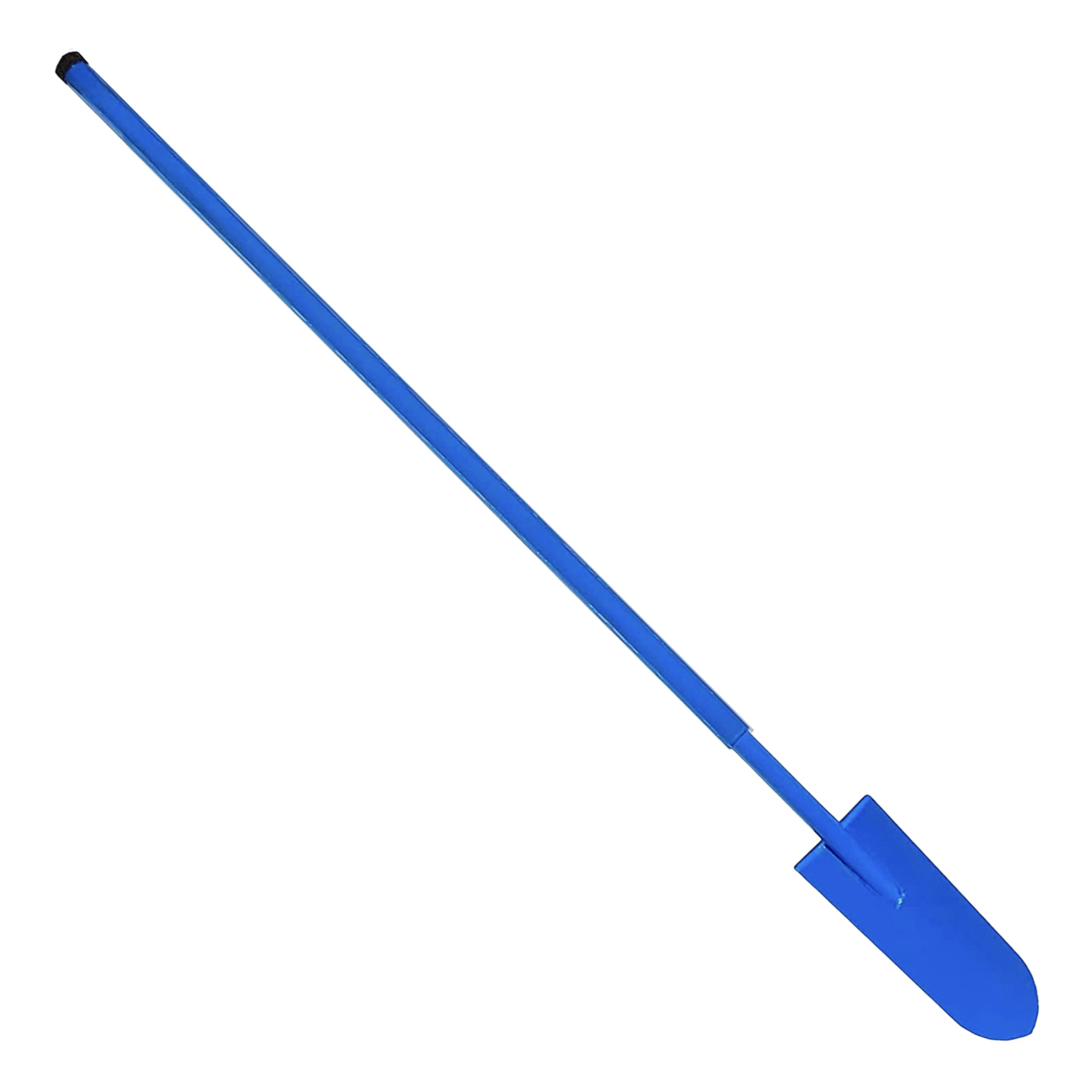
Metal Concepts Sharpshooter

Hard, rocky ground

Our Score 9.8/10
Check Price

Worth Noting

  • Very heavy for long trench runs
Weight
13 lb
Blade Length
15 inches
Blade Material
Chromoly steel
Overall Length
78 inches
Read the full review

Thirteen pounds is a lot of shovel. The Metal Concepts is the tool you choose when the ground has already beaten a lighter spade: the 78-inch all-steel handle gives you a long lever, and the 15-inch chromoly head is made to be driven into hard soil, roots, and rocky fill. It is not a general garden shovel, and it is not trying to be.

The length is the part that changes how you work. At 78 inches, it keeps you standing tall and lets you put your weight behind the cut instead of chopping down at the ground. The head is narrow enough for a deep, tight trench, and the all-steel build feels rigid when you lever out a stubborn clod. We noticed the welds and the shaft more than the paint; this is a tool built around force.

Where it earns its keep is hard, root-choked ground. The mass does the work of a pick in places where a 3.5-pound trenching shovel just bounces, and the long handle gives you enough leverage to break a stubborn layer without kneeling. It is a specialist for short, stubborn runs, not an all-day trenching tool. The 78-inch length also makes it a better match for taller users; shorter diggers may feel they are reaching up to the handle rather than driving down through it.

Buy it for the trench you have been avoiding, not as the only shovel in the shed. If your ground is hardpan, tree roots, or compacted fill, it is the one that keeps going; for ordinary drainage lines in soft soil, the lighter VNIMTI is easier to live with.

Bottom line: We keep the Metal Concepts for hard, rocky ground and root-choked runs where a lighter shovel just bounces; it is too heavy for easy soil and all-day trenching.

2

HANTOP 44-Inch Drain Spade

HANTOP 44-Inch Drain Spade

Tight spaces

Our Score 9.4/10
Check Price

Worth Noting

  • Wider head than a 4-inch trenching blade
Weight
4.4 lb
Blade Material
Manganese steel
Overall Length
44 inches
Handle Material
Fiberglass
Read the full review

A 44-inch drain spade is the tool you grab when a full-length shovel is too much for the space. The HANTOP has a drain-spade head, a fiberglass handle, and a 4.4-pound build that feels compact rather than toy-like. It is shorter than the 56-inch trenching shovels here, but that is the point: it fits between shrubs, along a fence line, and in the back of a small truck.

We recommend it for tight beds, ditch cleaning, and mixed garden jobs. The blade is sharpened on the tip and sides, so it cuts through turf and small roots instead of tearing at them, and the manganese-steel head has held up well in tough ground. The drain-spade head moves more spoil than a 4-inch trenching blade, which makes it better for cleaning out an existing ditch than for cutting a new irrigation slot.

The shorter handle is the compromise: it is easier to place in a crowded bed, but taller users will bend more on deep work. It is a compact drain spade, not a full-length trenching shovel. If your beds are crowded and your trenches are short, that trade is easy to accept.

Bottom line: The HANTOP is our pick for tight beds, ditch cleaning, and mixed garden jobs where a full 56-inch shovel is awkward; it is the compact drain spade in this group.

3

VNIMTI 56-Inch Trench Shovel

VNIMTI 56-Inch Trench Shovel

All-around trenching

Our Score 9.2/10
Check Price

Worth Noting

  • Narrow blade leaves little boot room
Weight
3.5 lb
Blade Width
4 inches
Blade Profile
V-shaped
Overall Length
56 inches
Read the full review

The 4-inch V-shaped head and 56-inch handle are what set this VNIMTI apart from a general garden spade. It's the shovel we recommend as the default for most trenching jobs: the narrow blade cuts a clean slot for an irrigation line or drainage pipe, and the long fiberglass handle lets you work standing up instead of folding over every few inches. At 3.5 pounds, it is light enough to carry around the yard and swing repeatedly, which matters more than raw mass when you are cutting a long, shallow run.

The V shape does practical work. It helps the blade start in hard soil and gives the spoil somewhere to go as you lift, so the trench stays narrow instead of widening into a trench-shaped hole. We also like the non-slip patch on the handle; it becomes tacky when wet, which is the kind of detail you notice after a morning in damp clay. The fiberglass shaft keeps the tool from feeling dead in your hands, and the bright orange finish is easy to spot when you set it down mid-job.

The limitation is the narrow head. There is not much shelf for your boot, so you cannot lean on it like a full spade; in stiff ground you will take more, smaller bites. That is fine for a pipe trench and frustrating for a wide planting hole. If you need to move volume, open the hole with a spade and use this to finish the slot.

The handle length is the other reason it stays in our rotation. At 56 inches, it splits the difference between a full-size spade and a short D-handle tool, so you can work a drain line without stooping, but you can still choke up for control in a tight bed. If you are taller than average, the Metal Concepts has more reach; if you are mostly planting, the shorter WIKER is easier to aim.

Bottom line: For most yards, this VNIMTI is the trenching shovel we recommend: its 4-inch V-blade and 56-inch fiberglass handle carve clean irrigation and drainage lines without the weight of an all-steel tool.

4

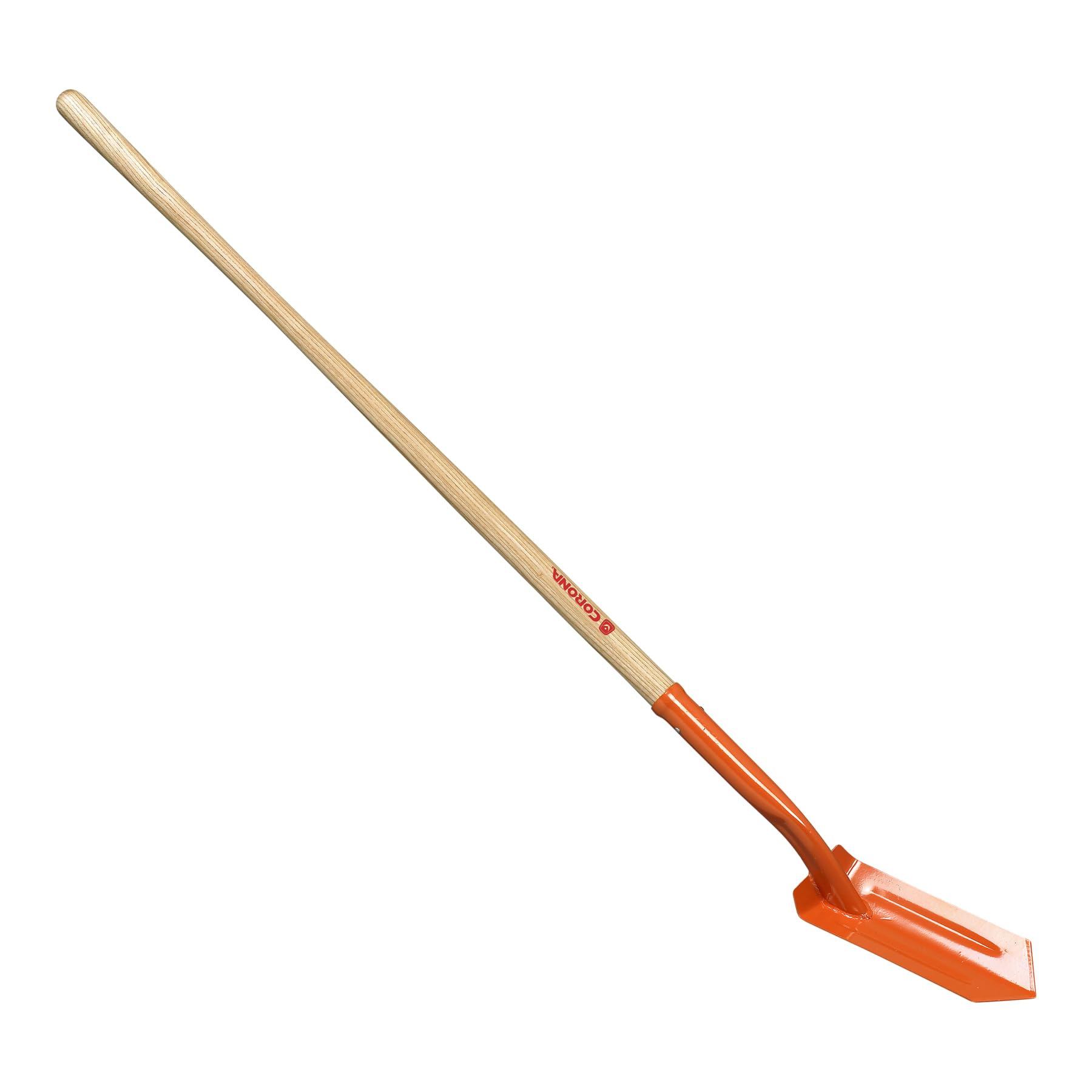
Corona SS 64104 Trench Shovel

Corona SS 64104 Trench Shovel

Clean clay trenches

Our Score 9.2/10
Check Price

Worth Noting

  • Handle can snap under a hard pry
  • Heavier than the fiberglass-handled picks
Weight
4.3 lb
Blade Width
4 inches
Overall Length
57 inches
Handle Material
Wood
Read the full review

A wood handle and a 4-inch steel blade make the Corona look like a tool your grandfather left in the shed, and that is part of its appeal. The 57-inch shaft gives you a long reach, and the head is set at an angle that helps lift soil straight out of a hole instead of dragging it sideways. It feels like a traditional trench shovel, not a converted spade.

We think the angled blade is the reason to choose this one over the V-head picks. In clay, the corner bites first, then the blade levers out a clod without widening the trench. The 4.3-pound weight gives it some momentum, and the wood handle absorbs shock in a way fiberglass does not. For a clean line around a foundation or a straight run to a drain, that combination is satisfying.

The wood handle is comfortable and absorbs shock, but it is the part that needs watching; keep the edge sharp and let the blade do the cutting rather than forcing a dull head. The steel head has enough mass to stay in a cut once you start it, and the long handle gives you room to work without stooping.

For a traditional tool that feels at home in a clay bed, the Corona is a strong choice. In sandy soil and long runs, the lighter VNIMTI is easier to carry; in hard, rocky ground, the Metal Concepts has more mass.

Bottom line: Choose the Corona if you want a traditional wood handle and an angled blade that lifts clay cleanly; we treat the handle as the wear part.

5

Nohovu 56-Inch Trench Shovel

Nohovu 56-Inch Trench Shovel

Root-heavy ground

Our Score 9.2/10
Check Price

Worth Noting

  • Narrow head is slow in wide holes
Weight
3.9 lb
Blade Width
4 inches
Overall Length
56 inches
Handle Material
Fiberglass
Read the full review

The Nohovu is the root-cutting specialist in this group, and it earns that role with a sharp 4-inch V-head and a 56-inch fiberglass handle. If your trench line runs through old shrub roots or matted grass, the narrow blade slices a clean slot instead of bouncing off the obstruction. It is not the lightest shovel here, but the 3.9-pound weight feels balanced when you are working the head into a tight line.

The V shape matters more than the headline width suggests. The point starts the cut, and the flared sides help lift the spoil without tearing a wide hole. The fiberglass handle has a long reach and a secure grip, and the head feels rigid when you lever out a clod. We found it happiest in a narrow utility trench or a planting line where the roots are the main obstacle.

The limit is the same narrow head that makes it useful: there is not much shelf for your boot, so you cannot drive it with the same force as a wider drain spade. In soft soil that is fine; in hard, rocky ground the Metal Concepts is the better tool. The 11.4-inch blade also gives you more sharpened edge to work with than a short spade, so you can saw through a root instead of chopping at it.

Bottom line: When roots are the obstacle, the Nohovu is the one we reach for: its sharp 4-inch V-head cuts a narrow slot and the 56-inch fiberglass handle keeps you upright.

6

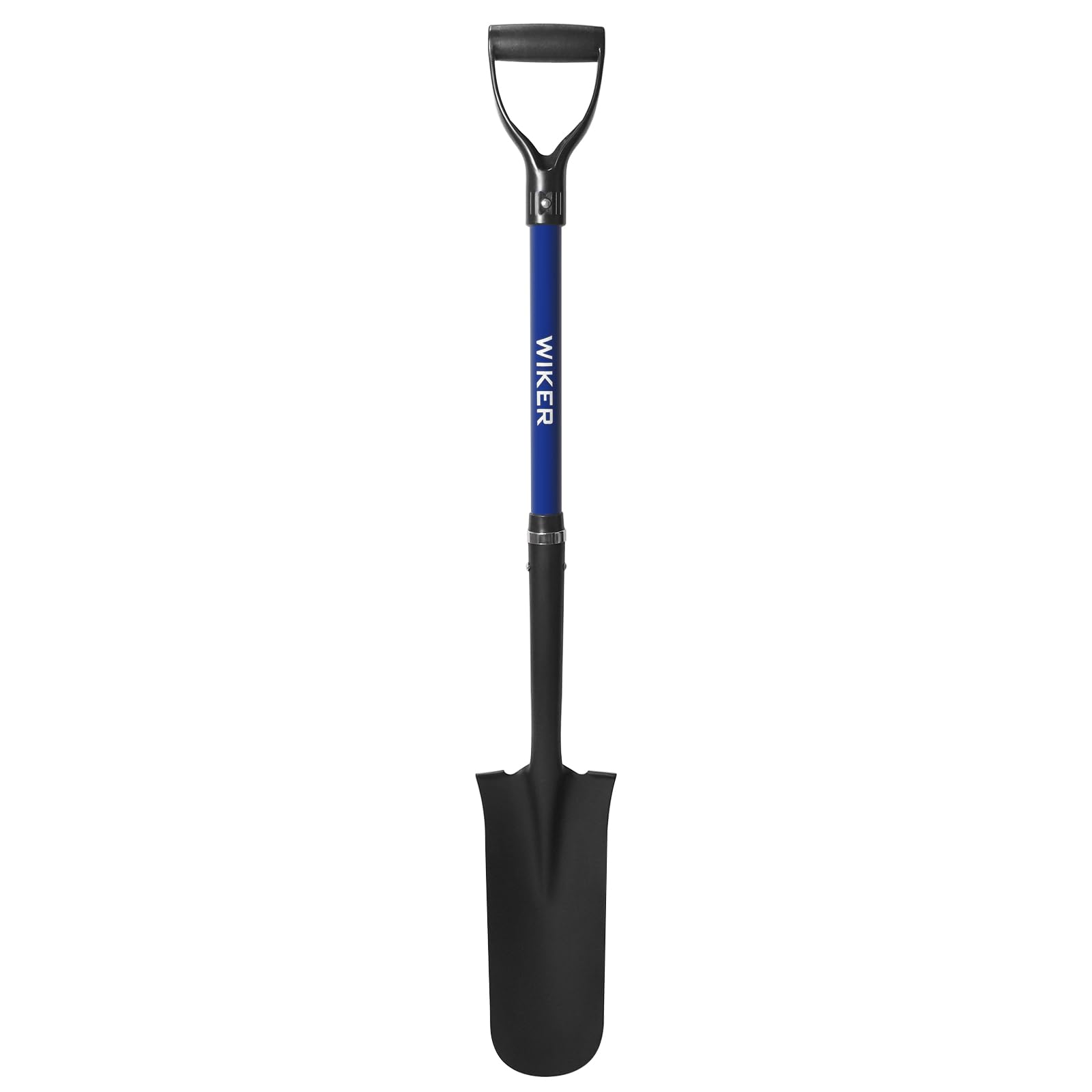
WIKER 45-Inch Spade Shovel

WIKER 45-Inch Spade Shovel

Planting and transplanting

Our Score 9.2/10
Check Price

Worth Noting

  • Too short for deep trench runs
Blade Length
14.4 inches
Blade Material
Manganese steel
Overall Length
45 inches
Handle Material
Fiberglass
Read the full review

The WIKER is the lightest-feeling way into a narrow planting hole. The 45-inch fiberglass handle and sharp manganese-steel head make it easy to aim in a crowded bed, and the 14.4-inch blade has enough length to pry out a perennial without digging a crater. It is a spade shovel rather than a full trenching tool, and that is exactly why it is useful for planting and transplanting.

The narrow head is the part we appreciate most. It slips between established plants, cuts a small plug of soil, and lets you lift a root ball without disturbing the bed around it. The fiberglass handle keeps the tool light in hand, and the blade takes a keen edge. For bulbs, seedlings, and short garden trenches, it is easier to control than a 56-inch shovel with a 4-inch head.

We recommend it for planting, transplanting, and short garden trenches, not for a long drainage run. The 45-inch length is comfortable in a crowded bed, but it means more bending when you are cutting deep, and the narrow head moves less soil than a drain spade. What makes it a planting tool is the balance: enough blade to lever out a root ball, short enough to aim between established plants, and light enough to carry through a border without setting it down.

Bottom line: We reach for the WIKER for planting, transplanting, and short garden trenches where a 45-inch handle is easier to control than a full-length trenching shovel.

How We Tested Trenching Shovels (and Which Ones We Put Down Early)

We started with about two dozen models and cut the list to 12 by comparing blade width (from about 3 to 6 inches), handle style (D-grip, Y-grip, and straight), shaft material, overall length, listed weight, and price. A few were eliminated before they ever hit soil because we could wiggle the blade-to-socket joint by hand in the shop, and a joint that moves on a bench will not survive a season of levering rocks.

Testing ran eight months, roughly late winter into fall, across the jobs a trenching shovel actually gets bought for: rerouting a downspout drain, running irrigation out to raised beds, cutting a French drain along a driveway, burying conduit to a shed, and edging beds on the way through. Each shovel dug the same six-foot test trench in the same ground, first in clay a day after rain and later in dry, compacted gravel. We weighed every one on a kitchen scale, measured blade width and total length, timed the trench, and noted how much spoil each scoop threw versus how straight and clean the walls came out. We also stepped hard on the shoulder with both boots, pried out rocks to watch for blade flex, and carried each around the yard for an afternoon to see whether the weight and handle shape wore on us.

After each session the shovels got hosed off and left in the yard, then checked for rust, rivets backing out, cracked ferrules, and handles that had started to spin or split. We paid attention to grip too, since gloved hands and different heights change which handle feels right, and to how each one handled a second job like scooping gravel or slicing a bed edge. A couple of the pricier shovels did not dig any better than mid-priced ones, which is the sort of thing that decides value for us.

How to Choose Trenching Shovels

Start with blade width, not blade length

For a new irrigation or drainage line, we prioritize a 4-inch blade: it removes less soil, leaves a cleaner edge, and concentrates force into a narrow strip. A wider drain spade is the better tool for cleaning an existing ditch, cutting turf, or working a wider planting hole. The trap is buying a narrow head for general digging; it will feel slow and fussy in anything wider than a pipe slot. If you need to move volume, open the hole with a spade and finish with the trenching blade. The VNIMTI and HANTOP show the two ends of that choice.

Handle length is about reach and leverage

Most full-size trenching shovels run 56 to 57 inches, which is long enough to keep an adult standing fairly upright and to give you leverage at the blade. A 44- or 45-inch spade is easier to place in a crowded bed, but you will bend more on deep cuts. A 78-inch all-steel handle adds even more leverage, though it can feel unwieldy for shorter users. Match the handle to your height and the space, not to the longest number on the page. If you are between sizes, we pick a 56-inch handle as the safer all-around choice.

Weight buys force, but you pay on every lift

We treat the 3.5- to 4.4-pound range as the practical one for most garden trenching: light enough to swing repeatedly, heavy enough to stay in a cut. A 13-pound all-steel tool is a different animal, built for hardpan, rocky fill, and roots; its mass helps it break ground that a light shovel just bounces off. The trade is fatigue. For a long drainage run in soft soil, the lighter fiberglass or wood tool is easier to live with; for a short, stubborn dig, the heavy steel earns its keep. Don't assume heavier means stronger; a sharp edge and a rigid head matter more than raw weight.

Handle material and the weak point

Fiberglass is the low-maintenance choice: it is light, weather-resistant, and less likely to crack than wood. Wood feels warmer and absorbs shock, but it is the part that can snap under a hard sideways pry, so treat it as a wear part and avoid using the shaft as a lever. All-steel handles are the most rigid and the heaviest. Whatever the material, check the connection at the blade: rivets, a socket, or a welded joint should look tight before you put weight on it. A slightly heavier handle with a solid connection beats a light one that flexes.

Foot pressure and soil conditions

Trenching shovels are narrow by design, and a 4-inch head leaves little room for a boot. That is not a defect; it is the trade for a clean slot. We look for a turned step or a corrugated foot plate if we plan to cut through clay, and we expect to take smaller bites than we would with a spade. In rocky soil, a heavy steel head or a serrated root saw helps, but do not pry sideways with the handle. If the ground is full of roots, cut them with the blade and lift the spoil clear; forcing the shovel turns a clean cut into a broken handle.

Frequently Asked Questions

Final Verdict

Start with the VNIMTI 56-inch trench shovel. Its 4-inch V-head cuts a clean line for irrigation and drainage, the fiberglass handle keeps the weight down, and it is the most comfortable all-around choice for a typical yard. Choose the Corona if you want a traditional wood handle and an angled blade for clay; choose the Metal Concepts if you are breaking hardpan or roots and can handle a 13-pound tool. For tight beds and ditch cleaning, the shorter HANTOP is easier to place.