Planters & Plant Supports

Best Deer Netting of 2026

The first June in our house, the deer took the bean row down to bare stems in a single night and came back for the hostas before breakfast. A fence was never going to happen — not at that price, not on our budget — so netting became the plan. What you want from it is simple: something deer hit and turn away from, that birds don't get tangled in, that goes up in an afternoon and comes down without a fight.

Over the past six months, we've run 12 different nets through a full growing season — draped over blueberry bushes, wrapped around young fruit trees, and strung across tomato rows — and the differences show up fast. Width matters more than length, because you need enough slack to drape and gather rather than stretch tight. Mesh tends to fail at the corners first, right where you pull it. The picks below run from bird-level covers to full deer barriers, and each one earned its spot.

1

Tenax Deer Netting

Top Pick
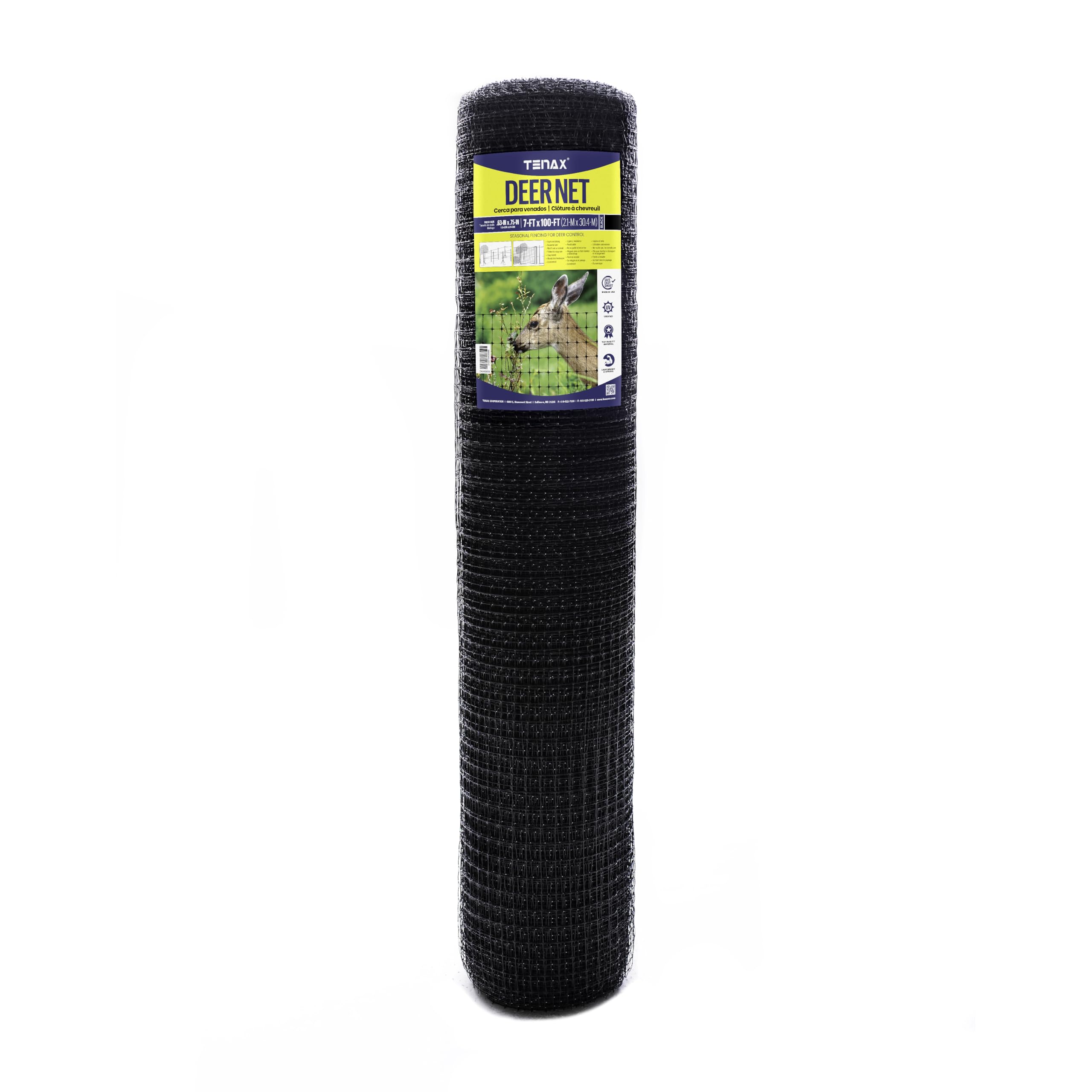
Tenax Deer Netting

Permanent garden fences

Our Score 8.8/10
Check Price

Worth Noting

  • Premium price for a 100-ft roll
Material
Polypropylene
Mesh Size
0.63 x 0.75 in
Roll Size
7 x 100 ft
Roll Weight
8 lb
Read the full review

The first thing we noticed about the Tenax roll is its 8-pound weight. That is several times heavier than the lightest net here, and it changes how the net behaves on a post line: it hangs down instead of ballooning in a breeze, so you spend less time chasing it while you tie it off. The 7-by-100-foot size is the practical minimum for a deer fence, and the 0.63-by-0.75-inch mesh is fine enough to be a barrier without looking like a solid wall.

Rolling it out was one of the easier jobs in this group. The heavier strands keep the net from collapsing into a tangled bundle, and we could pull a long section reasonably straight before fastening it. Once up, it almost disappears from a short distance, which matters if the fence crosses a view or a flower border. It is still a plastic net, so it needs tension; a loose span will flap and eventually rub through.

For a permanent boundary, this is the roll we choose. The extra weight buys a calmer, more durable fence than the light nets here, and the fine mesh keeps the barrier visually light. The cut edges can arrive slightly ragged, so trim them flush before you tension the net; that is a finishing job, not a reason to reject the roll. The black strands read as a shadow rather than a wall, even at 7 feet, which is why it settles into a mixed border.

Bottom line: If you want one deer netting that stays taut, hangs cleanly, and still lets you see the garden, we recommend the Tenax roll for permanent boundaries.

2

Mklsit Deer Netting Fence

Mklsit Deer Netting Fence

Extra-tall deer fences

Our Score 8.8/10
Check Price

Worth Noting

  • Less tear-resistant than the heaviest roll here
Material
Polypropylene
Mesh Size
3/4 in
Roll Size
8 x 100 ft
Roll Weight
3.37 lb
Read the full review

Eight feet of netting buys a little more margin than seven, and that is the reason we keep the Mklsit roll in the mix. The extra height matters when your posts sit on uneven ground or when deer are already reaching over a 7-foot line. The roll is 8 by 100 feet with a 3/4-inch square mesh, and it comes with 10 U-shaped staples and 50 cable ties.

It arrives folded before it is rolled, so the first unrolling is fussier than a spooled net. We found the creases relax once the net is under tension, but they make the first pass awkward; unroll it on a warm day and pull it straight before tying. At 1.53 kg it is not a heavy roll, but it has more body than the budget nets.

The square mesh is our preference for a deer fence because it spreads predictably and lets pollinators through. This is still a lightweight plastic net, not a rigid fence, and a deer that leans into it can push it inward; set your posts close enough to keep the span tight. The included staples are the right shape for pinning the bottom, and the ties mean you can fasten the top without hunting for a parts bin.

Bottom line: Mklsit is the one we choose when an extra foot of height matters, especially on uneven ground; it is a practical 8-foot roll, provided you take time to work out the shipping creases.

3

AlpineReach Garden Netting

AlpineReach Garden Netting

Draping fruit trees

Our Score 8.8/10
Check Price

Worth Noting

  • Usable width can fall short of 7.5 ft
Material
Woven composite
Mesh Size
5/8 in
Roll Size
7.5 x 100 ft
Roll Weight
4 lb
Read the full review

The tighter 5/8-inch weave is what makes AlpineReach feel different in the hand. The 4-pound roll has more substance than the budget nets, and it stays flat instead of collapsing into a knot when you pull a length off the roll. That tangle-resistant behavior is the reason it earns a place: we spend less time untangling and more time tying.

This is the roll we reach for when the job is draping a fruit tree or covering a low tunnel, not building a full-height wall. The mesh is fine enough to keep birds and squirrels off the fruit, and the heavier weave stands up to being pulled over branches. It is not chew-proof; check the net where it touches a trunk or a branch, because a determined squirrel can work at the strands.

The 7.5-by-100-foot size gives you plenty of material for a couple of trees, and the included zip ties are handy for securing the skirt around a trunk. The black mesh is barely noticeable once it is spread, which keeps a small orchard from looking like a cage. It is a practical net for a small orchard, as long as you are not asking it to be the whole fence.

Bottom line: AlpineReach is our choice for draping fruit trees and low tunnels, where its tight 5/8-inch weave and tangle-resistant roll matter more than a true 7.5-foot width.

4

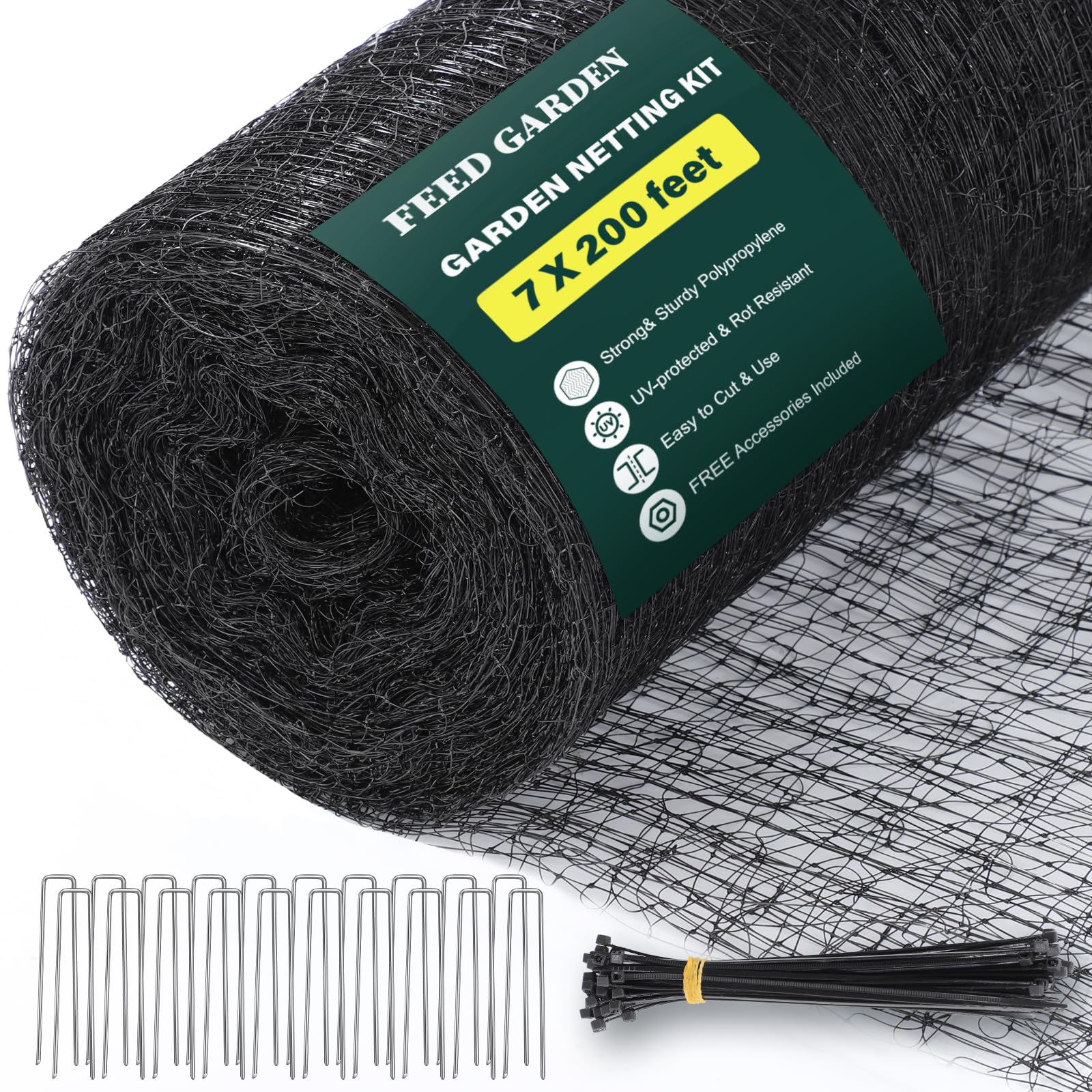
FEED GARDEN Deer Netting

FEED GARDEN Deer Netting

Long garden runs

Our Score 8.8/10
Check Price

Worth Noting

  • Long spans can sag without close posts
Material
Polypropylene
Mesh Size
3/4 in
Roll Size
7 x 200 ft
Included Stakes
20 metal landscape staples
Read the full review

The 200-foot roll is the reason to choose FEED GARDEN. A single roll can wrap a long vegetable plot, split between two beds, or leave enough left over for repairs, and that changes the economics of a bigger planting. It is 7 feet tall with a 3/4-inch mesh, and the package includes 20 metal landscape staples.

It is a midweight roll at 1.4 kg, not as thin as the cheapest nets but not in the same class as Tenax. We found it easy to carry and unroll in sections; the length is the real handling challenge, because a 200-foot run wants a helper and a plan for keeping the net from twisting. Unroll only what you need, stake the bottom as you go, and keep the rest on the roll.

UV protection is a real plus for a fence that stays up through summer. The 3/4-inch mesh lets bees and rain through while keeping deer from pushing their heads into a bed. The 20 staples are useful for pinning corners and short stretches, and you will still need posts for the height.

Bottom line: FEED GARDEN is the roll we buy when coverage is the problem: 200 feet of 7-foot netting and 20 staples make a long garden run practical, as long as you support it well.

5

Dalen Deer-X Netting

Dalen Deer-X Netting

Berry bushes

Our Score 8.8/10
Check Price

Worth Noting

  • Not the toughest net under a hard push
Material
Polypropylene with UV inhibitors
Mesh Size
3/4 in
Roll Size
7 x 100 ft
Roll Weight
1.6 lb
Read the full review

The UV-treated polypropylene is the quiet advantage of the Dalen Deer-X. It is a 7-by-100-foot roll with a 3/4-inch mesh and a 1.6-pound weight, so it handles like the light nets rather than the heavy ones. The black color and fine mesh make it nearly disappear against shrubs, which is why it suits berry bushes and mixed borders.

This is the middle-price roll we recommend for a landscape planting. It has enough UV protection for a full season in the sun, and the 7-foot height is right for draping over a bed or tying to a simple post line. Keep the net taut and inspect the bottom edge, because a loose span invites animals to push under.

Unfolding it takes patience. The mesh catches on twigs and wants to ball up, so two people make the job much easier; one person can do it, but not quickly. Once it is up, the fine mesh lets you see the fruit and lets pollinators through, and the black strands do not announce themselves from the house.

Bottom line: Dalen is a sensible middle-price roll for berry bushes and mixed borders, where its UV-treated mesh and near-invisibility matter more than brute strength.

6

ORIVOGAS Deer Fence Netting

ORIVOGAS Deer Fence Netting

Small enclosures

Our Score 8.8/10
Check Price

Worth Noting

  • Higher cost per foot than long rolls
Material
55 gsm HDPE
Mesh Size
5/8 in
Roll Size
6.5 x 50 ft
Roll Weight
3.6 lb
Read the full review

The reinforced rope edges are the detail we noticed first on the ORIVOGAS roll. The top and bottom are woven tight around a strong string, so the net holds its shape when you pull it around a corner or staple it to a frame. At 6.5 by 50 feet, it is a short roll, but it is a substantial one at 3.6 pounds and 55 gsm HDPE.

That weight makes it feel more like a light fence than a wispy bird net. The 5/8-inch square mesh is fine enough for small critters, and the reinforced edges take a zip tie without tearing out. We found it is easiest to set up on a simple frame or along a short run of posts; the 50-foot length is not enough to wrap a large garden.

The accessories are basic but useful: 50 zip ties and 8 ground stakes. The stakes are best for pinning the bottom, not for holding the full height; you still need posts or a frame for a 6.5-foot wall. The black color keeps it visually quiet, and the tight weave lets rain and light through.

For a small garden room, a raised-bed enclosure, or a temporary pen, this is the best-built short roll here. It is not the answer for an open deer fence: 6.5 feet is a compromise, and a hungry deer can reach over the top. Use it where you can control the approach and keep the run short.

Bottom line: For a small garden enclosure or a temporary pen, ORIVOGAS is the best-built short roll here; it is not the roll for an open, tall deer fence.

7

Feitore Deer Fence Netting

Feitore Deer Fence Netting

Seasonal bed cover

Our Score 8.6/10
Check Price

Worth Noting

  • Thin mesh can tear at hard folds
Material
Polypropylene
Mesh Size
3/4 in
Roll Size
7 x 100 ft
Roll Weight
1.7 lb
Read the full review

The Feitore roll is the lightest way into deer protection here, and that is exactly what it feels like in the hand. At 1.7 pounds for 7 by 100 feet, it is easy to carry to the far bed and easy to drape over a row of blueberries. The 3/4-inch mesh is fine enough for birds and small critters, and the package includes 10 nails and 50 ties.

That lightness asks for a little patience. We unroll it slowly, keep the tension even, and cut only after the net is flat; that turns a fussy job into a manageable one. The reinforced edge helps when you are stapling or tying it down, and the included ties are enough for a small bed.

For a seasonal barrier around a vegetable bed or a few shrubs, Feitore is the budget roll we choose. It is easy to cut, easy to tie, and light enough to move from bed to bed. The 3/4-inch mesh is fine enough for birds and small critters, but it is not a barrier against a determined deer; keep it for low-pressure beds.

Bottom line: Feitore is the budget roll we choose for a seasonal bed cover or a first try at netting; it is light, fine-meshed, and easy to handle, but not a permanent deer fence.

8

JUNKOGO Garden Netting

JUNKOGO Garden Netting

Fine mesh protection

Our Score 8.6/10
Check Price

Worth Noting

  • Not a predator-proof poultry barrier
Material
HDPE
Mesh Size
1/2 in diamond
Roll Size
7.5 x 100 ft
Roll Weight
3.81 lb
Read the full review

The half-inch mesh is the reason to look at JUNKOGO. It is tighter than the 3/4-inch nets that dominate this group, and that makes it a better barrier for birds, squirrels, and other small critters. The roll is 7.5 by 100 feet, weighs 1.73 kg, and is made from woven HDPE rather than a light spun plastic.

The diamond orientation is the trade-off. It stretches in both directions, so it can be pulled out of square if you tension one corner harder than another. We lay it out flat, pull it evenly, and cut after it is secured; that keeps the mesh from distorting. The tighter weave is slower to spread than a square net, but it is also less likely to let a small bird through.

For deer, the 7.5-foot height is useful, but the half-inch mesh is more about exclusion than strength. The woven material has some stretch and body, yet it is still a net; a deer can lean into it, and a squirrel can chew at a contact point. Check the bottom edge and any place where the net rubs against a branch.

We choose JUNKOGO when birds and small animals are the main problem and deer are secondary. It is the fine-mesh specialist here, and the heavier woven roll is worth the slower install if you are covering a berry patch or a chicken run. It is not the net we pick for a crisp, straight deer fence.

Bottom line: JUNKOGO is our pick when birds and small critters are the main problem and deer are secondary; the fine half-inch mesh is worth the slower install, but it is not a predator-proof fence.

How We Tested Deer Netting in a Working Garden

We started with specs, because netting specs are where the disappointments hide. For each candidate we recorded the mesh opening, the actual listed width and length, any UV-stabilization claim, and the weight per square yard, then priced everything per square foot so a bargain roll and a pricey one could be compared honestly. Anything that only came in narrow hobby widths got cut early — a 7-foot span is what actually drapes a bed with enough slack to gather at the edges.

Twelve nets went up in a working garden for six months, from first spring planting through the fall cleanup. I installed each one solo over the same 20-foot row and timed it, noting where the roll snagged, whether the mesh tangled as it unfurled, and how much fighting the stakes took. Every morning I walked the browse line to see whether leaves inside the net were untouched after a night of deer pressure, and pushed a palm against each panel to see if it sagged or sprang back. Sections over the blueberries got checked daily for birds caught in the mesh, which is where a small opening earns its keep.

Durability was a slow read: panels stayed up through summer sun and two wind storms, and I checked grommets and corner seams for the fraying that shows up first. At the end we weighed each roll against its starting weight, since thin material that has thinned further tells you something. Value got settled last — a net that survived the season and re-rolled neatly was worth more than its per-foot price suggested.

How to Choose the Right Deer Netting

Start with height and usable width

Deer netting is sold by the roll's width, which becomes the fence height, but the number on the label is measured before tension. A 7-foot roll can finish closer to 6 feet once it is pulled between posts, and a 7.5-foot roll may not give you 7.5 feet of vertical coverage. We treat 7 feet as the working minimum for a serious garden fence and 8 feet as the safer choice on uneven ground or where deer already reach over. Measure the actual drop after you tension a sample section, not just the package.

Height only works if the net is supported. Plan posts at least as tall as the net, set them close enough to keep the span from sagging, and leave a little slack at the bottom to pin or bury. A 6.5-foot roll like ORIVOGAS can be excellent around a small enclosure, but it is a compromise in an open deer run.

Choose mesh for the animal, not the label

A 3/4-inch square mesh is the default for deer: fine enough to be a visual barrier, open enough to let pollinators and rain through. Go to 1/2 inch when birds and squirrels are the main problem; JUNKOGO's tighter diamond weave is a better small-critter net, but it is slower to spread. Diamond mesh stretches in both directions and is less forgiving on a straight fence line; square mesh is easier to keep square.

Material weight matters more than the adjectives. A 1.7-pound roll and an 8-pound roll can both say heavy duty, but they behave differently in wind. Heavier polypropylene or HDPE hangs taut, resists abrasion, and lasts longer in sun; lighter nets are easier to carry and fine for seasonal beds. UV resistance is worth paying for if the net stays up year after year.

Match roll length to the fence you are building

A 100-foot roll is the standard, but it does not go as far as it sounds once you wrap corners or double a bed. Sketch the perimeter first: a 30-by-50-foot garden needs 160 feet of fence, so one 100-foot roll will not enclose it. FEED GARDEN's 200-foot roll is the practical pick for long runs; shorter 50-foot rolls like ORIVOGAS suit a small pen or a single bed.

Buy for the layout, not the biggest number. Two 100-foot rolls can be easier to handle than one 200-foot roll, and splicing a short piece into a long run is simpler than stretching a single length around a corner. Leave 10 to 15 percent extra for corners, gates, and mistakes.

Plan the install before you unroll

Netting is not self-supporting. You need posts, stakes, or a frame, plus zip ties or nails to fasten it. The accessories in the box are a start, not a full system: 10 staples will not hold a 100-foot bottom edge, and 50 ties go quickly on a windy site. We like rolls that include a useful number of ties, but we still buy extra.

Work in sections, keep the net flat, and tension it as you go. A loose span flaps, rubs, and tears; a tight one is less visible and more effective. Two people make a long roll much easier, especially on a breezy day. If you are installing alone, unroll only 10 to 15 feet at a time and stake the bottom before moving on.

Think about visibility and wildlife

Black netting nearly disappears against shrubs, which is why most of these rolls are black. That is a benefit for the garden view, but it also means birds and small animals may not see it. Keep the mesh taut, avoid loose pockets near the ground, and check the fence after storms. Fine mesh can trap birds if it is slack; a taut net with a clear bottom edge is safer.

Deer netting is a deterrent, not a fortress. Deer can lean over the top, push under a loose bottom, or chew through a thin strand. Set the height and tension first, then accept that the fence needs inspection. If you need a hard barrier, pair the net with sturdy posts and a rigid lower edge rather than relying on the net alone.

Frequently Asked Questions

Final Verdict

Our default is the Tenax Deer Netting. Its 8-pound roll hangs taut, stays visible, and takes a season of wind without turning into a flapping mess; that is what a permanent garden boundary needs. It is the premium roll here, and the price is the one thing that keeps it from being an automatic buy for every bed.

If your ground is uneven or your deer pressure is heavy, the Mklsit roll's extra foot of height is worth the step up. For a long perimeter, FEED GARDEN's 200-foot roll saves splicing; for a seasonal bed, Feitore is the lighter, cheaper way to try netting.