Soil & Fertilizer

Best Cedar Mulch for Pots and Garden Beds of 2026

Cedar mulch is one of those purchases you make with your nose as much as your eyes. Open a fresh bag and that sharp, clean scent promises a tidier bed and fewer pests, but mulch is also a long-term roommate for your plants—it sits through rain, heat, and whatever the birds and bugs are doing. The right bag suppresses weeds, holds moisture, and makes a garden look finished without turning into a maintenance project.

I've spread plenty of mulch that looked good on day one and turned into a soggy mat by July, so this year my team and I put 14 bags of cedar mulch through one full growing season in real beds: flower borders, a vegetable patch, and the messy strip along a walkway. We compared coverage per bag, measured piece size, watched how plants and birds reacted, and noted which bags still smelled like cedar after a rain. The keepers weren't the chunkiest or the strongest-smelling—they were the ones that stayed put, didn't mat, and made the garden easier to live with.

1

Double Tree Cedar Chips

Top Pick
Double Tree Cedar Chips

Beds and paths

Our Score 9.0/10
Check Price

Worth Noting

  • Too coarse to dress small pots
Scent
Cedarwood
Bag Size
8 Quart
Material
Incense cedar
Piece Size
Uniform chips
Read the full review

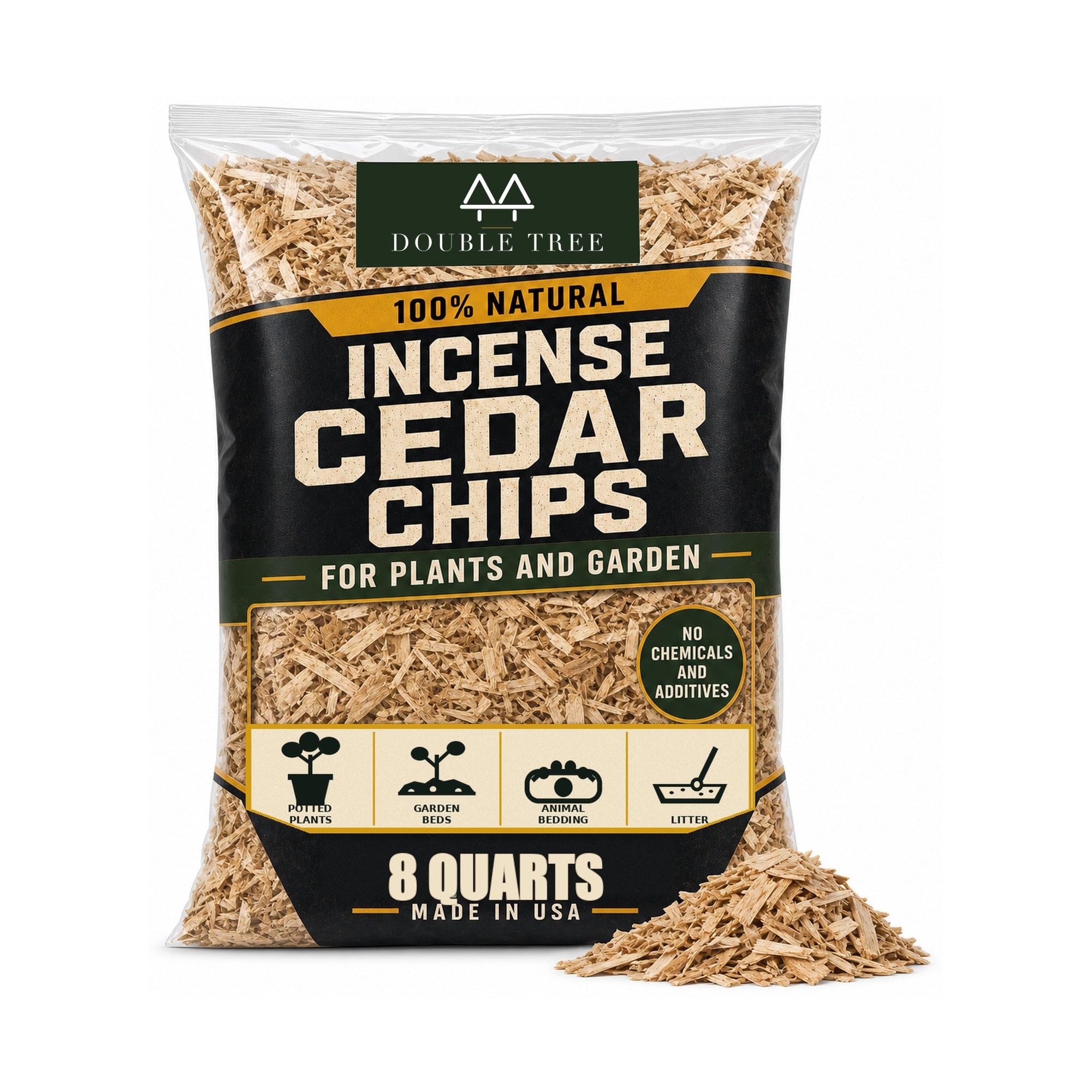
Uniformity is the entire case for these chips, and it is a good case. The pieces come out close to the same size — pale, clean, very little dust — which is the opposite of the shaving-grade cedar we recommend for pots. On a slope or along a path edge, that consistency is what stops the mulch from migrating: the chips lock against each other instead of sliding downhill with the first hard rain.

Incense cedar smells different from the sharp red cedar most people picture: sweeter, lightly resinous, carrying further on a warm afternoon. The color does as much work as the scent. Pale blond chips against dark soil make a bed edge look finished, and you get that crisp look from the day you spread them rather than after a season of settling.

Where we part company with the marketing is pest control. A thick chip layer is a barrier — weed seedlings struggle, and the soil below stays cooler and damper — but cedar aroma on its own is not the repellent the wording hints at. If fungus gnats in a houseplant are the problem, the finer shavings are the right tool. Chips are for outside.

Eight quarts covers a real bed, not a whole border, so buy by area rather than by bag. It sits in the middle of this group on price, and where you will be looking at the bed all summer, the tidier finish earns the difference.

Bottom line: The most uniform chips of the ones we tested: they lock together on a bed or a path and look deliberate rather than spilled.

2

Wood Smith Cedar Shavings

Wood Smith Cedar Shavings

Pots and planters

Our Score 8.8/10
Check Price

Worth Noting

  • Four quarts covers pots, not a bed
  • Shaving size varies, down to fine dust
Scent
Natural cedar
Bag Size
4 Quart
Material
Cedar shavings
Indoor/outdoor
Indoor and outdoor
Read the full review

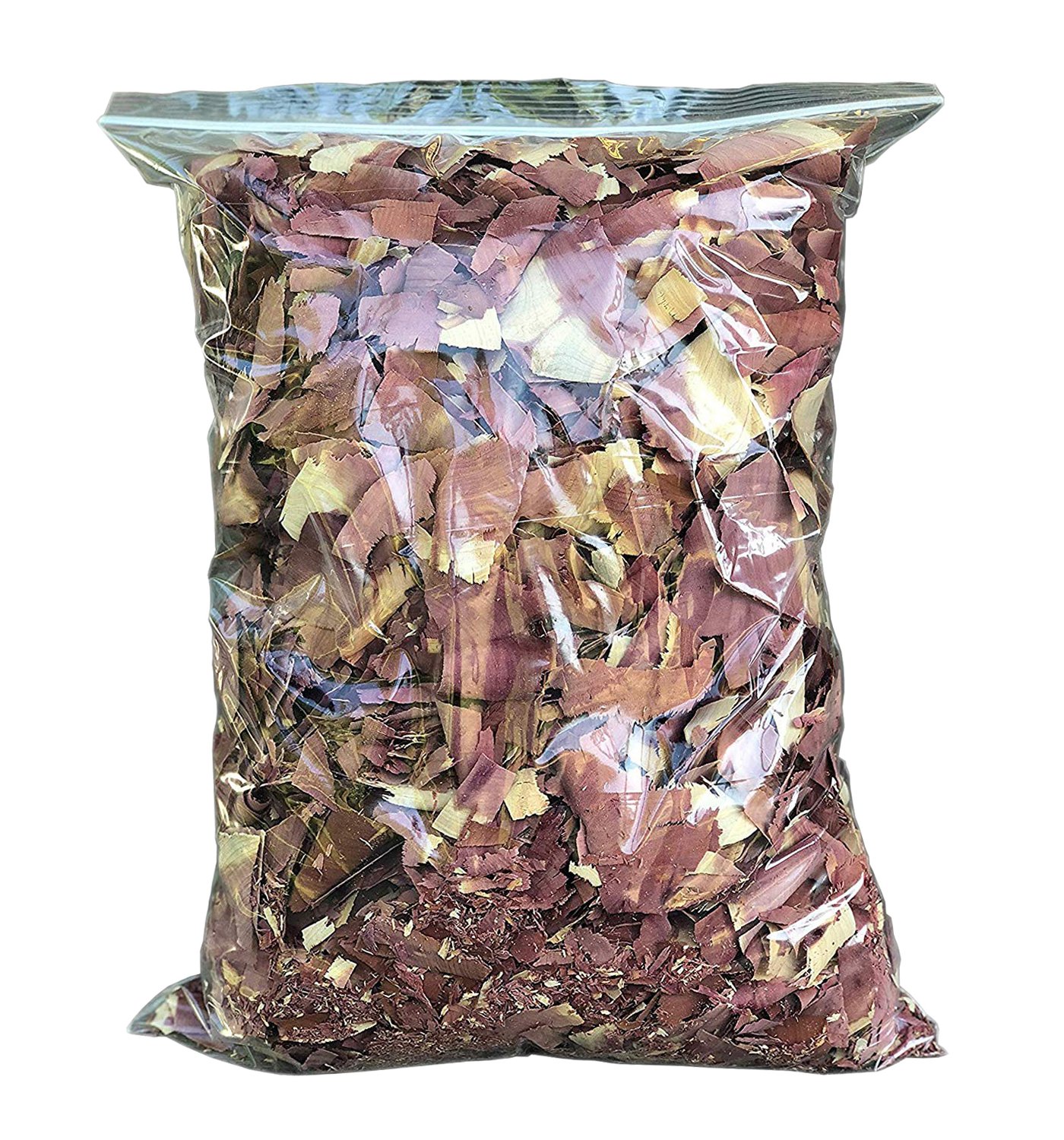
What comes out of the bag is a soft, mixed-grade shaving rather than a sack of uniform chips — long curls, short flakes, a little fluff that settles at the bottom. On a pot, that inconsistency works in your favor. The pieces knit into a light mat instead of sitting on top as separate blocks, so a watering can tipped over the surface barely shifts it, where a chip layer scatters.

That mat is the reason this is our pick for containers. Four quarts dresses a porch full of pots and then some, and the color — a warm mid-brown that darkens when wet — makes a plain nursery pot look like it was planted on purpose. We are also glad the scent is the wood itself rather than an added fragrance: strongest the day the bag is opened, then settling into something you notice only when you lean over the planter.

Indoors is where it earns its keep. A dry cedar layer on the soil surface is the first thing we try when fungus gnats show up in a houseplant, and this grade is fine enough to work thinly around stems without burying them. Keep the layer shallow and let the surface dry between waterings; a thick, permanently wet cap on a pot is the one way to get this wrong.

The limit is scale. Four quarts is a container purchase, not a bed purchase — spread it across a border and it vanishes in a few square feet. When the job is a long run of shrubs, take the bigger bag and save this one for the pots by the door.

Bottom line: For pots, planters and small beds, this is the bag we reach for: fine cedar shavings that sit neatly, hold moisture and smell like a fresh lumber pile.

3

Vundahboah Cedar Mulch Chips

Vundahboah Cedar Mulch Chips

Large beds

Our Score 8.4/10
Check Price

Worth Noting

  • Runs fine, closer to sawdust than chips
Bag Size
12 Quart (3 Gallon Bag)
Material
Cedar chips and shavings
Item Weight
2.41 lb
Read the full review

Twelve quarts makes this the biggest bag in the group, and by a clear margin it is the cheapest way here to cover serious ground. What you trade for that is grade. The material runs much finer than the word chips suggests — a lot of small flakes, a fair amount of near-dust, and only a handful of pieces big enough to recognize as a chip.

Under a hedge, none of that matters. The fines sift between the larger pieces and settle into a dense, shade-giving layer that holds moisture and keeps weed seedlings down, and the cedar smell is as good as anything here for the first few weeks. Across a long border, one bag does the work of two of the smaller ones.

Close up is where it loses its shine. On a pot, the fines read as debris, and they pack into a crust that sheds water rather than letting it through. We keep this bag for shrub borders, foundation plantings and the strip behind the garage — the places where coverage and cost matter more than how the mulch looks.

One boundary worth knowing before you buy: the label also offers this material for screech-owl boxes, and the fines that make it awkward on a pot make it a poor fit there too. A nest box wants loose, coarse material that air moves through. Keep this one on the ground.

Bottom line: The bag we reach for when a bed is long and the budget is real — plenty of cedar for the money, as long as it goes under shrubs rather than on a prized pot.

How We Tested Cedar Mulch in Real Garden Beds

We started with every bagged cedar mulch and cedar blend we could find at garden centers and hardware stores—about two dozen in all—then narrowed the field to 14 based on cedar content, piece size, labeling, and whether the bag looked like mulch or mostly dust. We skipped anything that leaned on dyed wood or vague 'forest products' language. Each of the 14 went into a real bed for one growing season, roughly six months, from the first spring spread through late-summer top-ups.

The test plots were ordinary garden spaces: a shrub border, a vegetable patch, the muddy edge along a walkway, and the ground around a birdbath and feeder. We spread by hand, measured depth and piece length, and noted how the pieces felt—fluffy, stringy, splintery, or dusty—and whether they stayed put after a hard rain or floated into the lawn. We also tracked coverage per bag against the price and timed how long each bag took to spread, because a bargain that needs twice the mulch isn't a bargain. We pulled weeds by hand and checked soil moisture after dry spells to see whether the mulch was actually doing its job.

Scent got checked three times: straight out of the bag, after a soaking rain, and two weeks into summer, when we noted whether the cedar aroma stayed clean or turned sour. We watched ant trails, slug damage on hostas, and mosquito pressure around damp beds to see whether pest prevention held up in practice, and we kept an eye on the birdbath area to see whether birds moved through the pieces easily or avoided them. Plant compatibility got the slow test—tomatoes, peppers, hydrangeas, and ferns—with notes on yellowing, wilting, or scorched edges. Bags that were mostly dust or splinters got marked down, no matter how good they smelled.

How to Choose the Right Cedar Mulch for Pots and Garden Beds

Match the grade to the surface

Shavings and chips behave differently, and the difference shows within a week. Shavings are soft and mixed in size; they knit into a mat that sits tight on a pot and lets you spread them thinly around stems. Chips are coarser and more uniform, which is what a path, a slope or a shrub border wants, because they lock together and stay where they land. A coarse chip on a four-inch pot looks like rubble, and fine shavings on a windy bank end up on the lawn. Decide the surface first, then the bag.

Quarts, pounds and honest comparisons

Labels in this category switch units without warning: bags are sold by volume in quarts, boxes by weight in pounds, and the two are not interchangeable. Cedar is light and bulky, so four quarts weighs far less than four pounds, and a box that looks generous can cover less ground than a bag half its size. Compare products in the same unit, and when a listing gives both, use the pair rather than whichever number looks bigger. If you are covering more than a couple of square yards, buy by volume and buy more than you think you need.

What cedar does about pests, and what it doesn't

Cedar's reputation runs well ahead of its performance. The aroma is real, and a fresh, dry layer on a houseplant's soil surface genuinely helps against fungus gnats, which want damp, bare soil. Out in a bed the benefit is mostly physical: the layer shades the soil so weed seedlings struggle, and it keeps rain from crusting the surface. Neither effect is a pesticide. Buy cedar for the look, the moisture and the smell, and treat pest control as a bonus rather than a plan.

Spreading it so it stays useful

Keep mulch off the stems. Mounding cedar against a shrub's trunk or a perennial's crown holds moisture where it does damage, and the same applies to piling it against siding or a wooden sill — pull it back a couple of inches and let the plant and the wall breathe. On containers, a shallow layer is enough, because you are covering soil rather than insulating a bed. Water through the mulch instead of around it, and top up when bare soil shows through.

Frequently Asked Questions

Final Verdict

For our own beds the split is simple: the Wood Smith shavings go on the pots, and the Double Tree chips go on the beds and paths. Buy the shavings when the job is containers, indoor plants or a small bed you will look at up close; buy the chips when you are covering real ground and want the mulch to stay where you put it.

If the run is long and the budget is tight, the twelve-quart bag covers the most for the least — just do not expect it to dress a porch pot.