Garden Tools

Best Bypass Loppers of 2026

A good pair of bypass loppers turns a tangled hedge from a weekend chore into a ten-minute tidy-up. The two curved blades slice past each other instead of crushing the stem, so live branches heal faster and you make fewer repeat cuts. But that simple action hides a tradeoff: longer handles give you more leverage, while extra weight and a stiff blade opening can wear out your grip before the brush pile is gone. The right pair fixes that balance for your hands and your hedge.

I have spent the past eight months cutting with 12 pairs, from sharp new stock to models that had already seen a season outside, and the differences in sharpness and build quality showed up fast. A clean cut on green wood is one thing; holding that edge through dry, knotted branches is another. Ease of use comes down to how the handles sit in your hand and how wide the blades open around a dense shrub. I'll walk you through the pairs that made pruning feel controlled rather than like a wrestling match.

1

Fiskars 28" Bypass Lopper

Top Pick
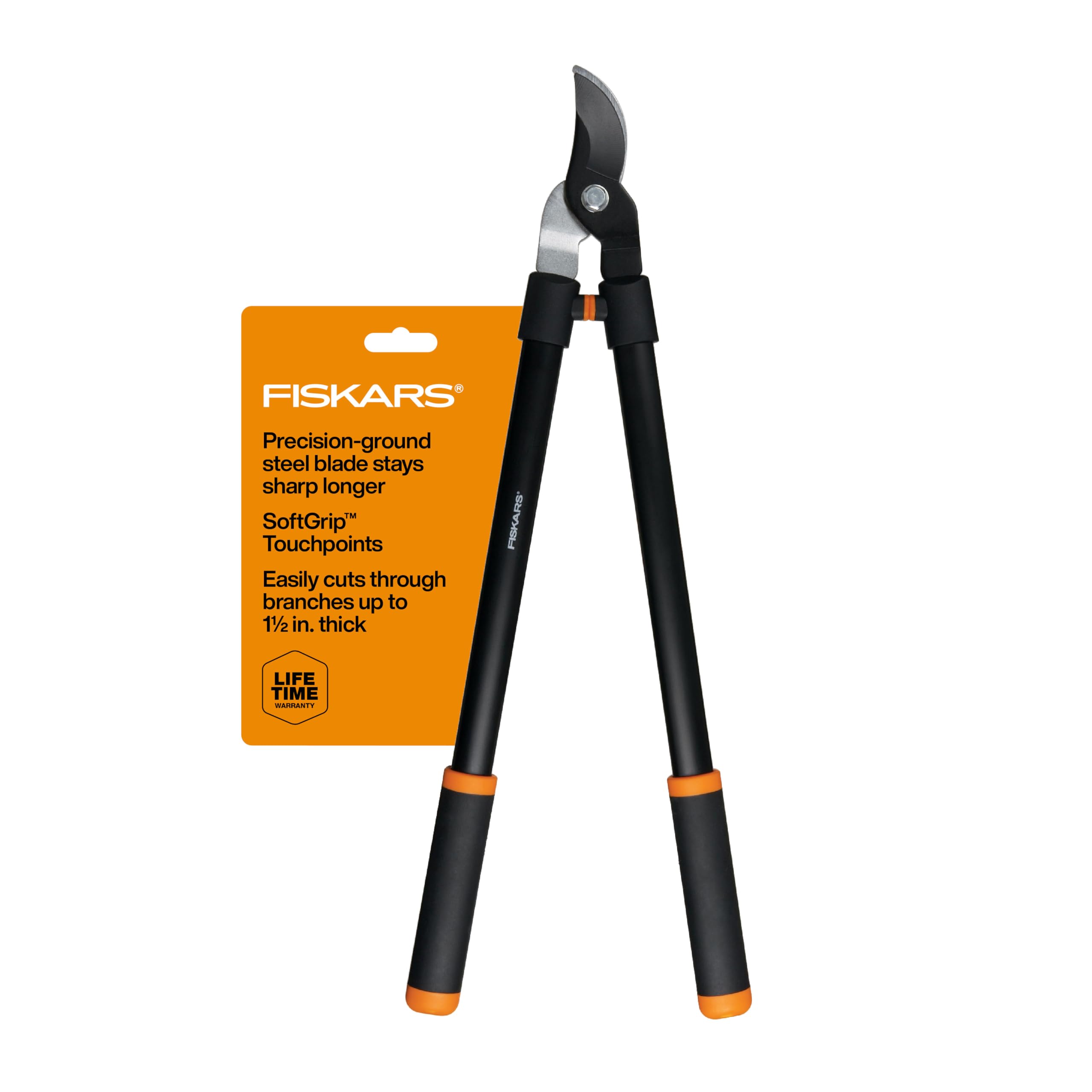
Fiskars 28" Bypass Lopper

All-round pruning

Our Score 9.6/10
Check Price

Worth Noting

  • 1.5-inch capacity is the lower end here
Weight
2.9 lb
Warranty
Full lifetime
Cut Capacity
1.5 in
Overall Length
28 in
Read the full review

The least expensive lopper here is also the one we hand people first, and that is less about money than about how much of a yard it covers. At 28 inches and 2.9 pounds it swings inside a crowded bed without hooking the fence behind you, and the 1.5-inch jaw takes shrub stems, sucker growth and the small limbs that make up most of a season's pruning. Nothing about it gets in your way, which is the highest compliment a hand tool can earn.

The blade carries a low-friction coating that sheds sap, and that matters more than it sounds. On conifers and anything pushing sticky spring growth, a bare blade starts dragging within an afternoon, and every cut after that comes out of your shoulder. The coating, the steel underneath it and a bumper that absorbs the end of each stroke are the reasons this one still feels quick at the end of a long session rather than merely adequate.

Fiskars covers it with a full lifetime warranty, and the metal handles with non-slip grips have stops that keep your knuckles from meeting at the end of a hard cut. The pivot is where age shows first: if a lopper of this design starts cutting badly, check the joint for play before you touch the edge.

Bottom line: We tell most people to buy this one: it handles 1.5-inch limbs, carries easily at 2.9 pounds, and costs less than every other lopper here.
2

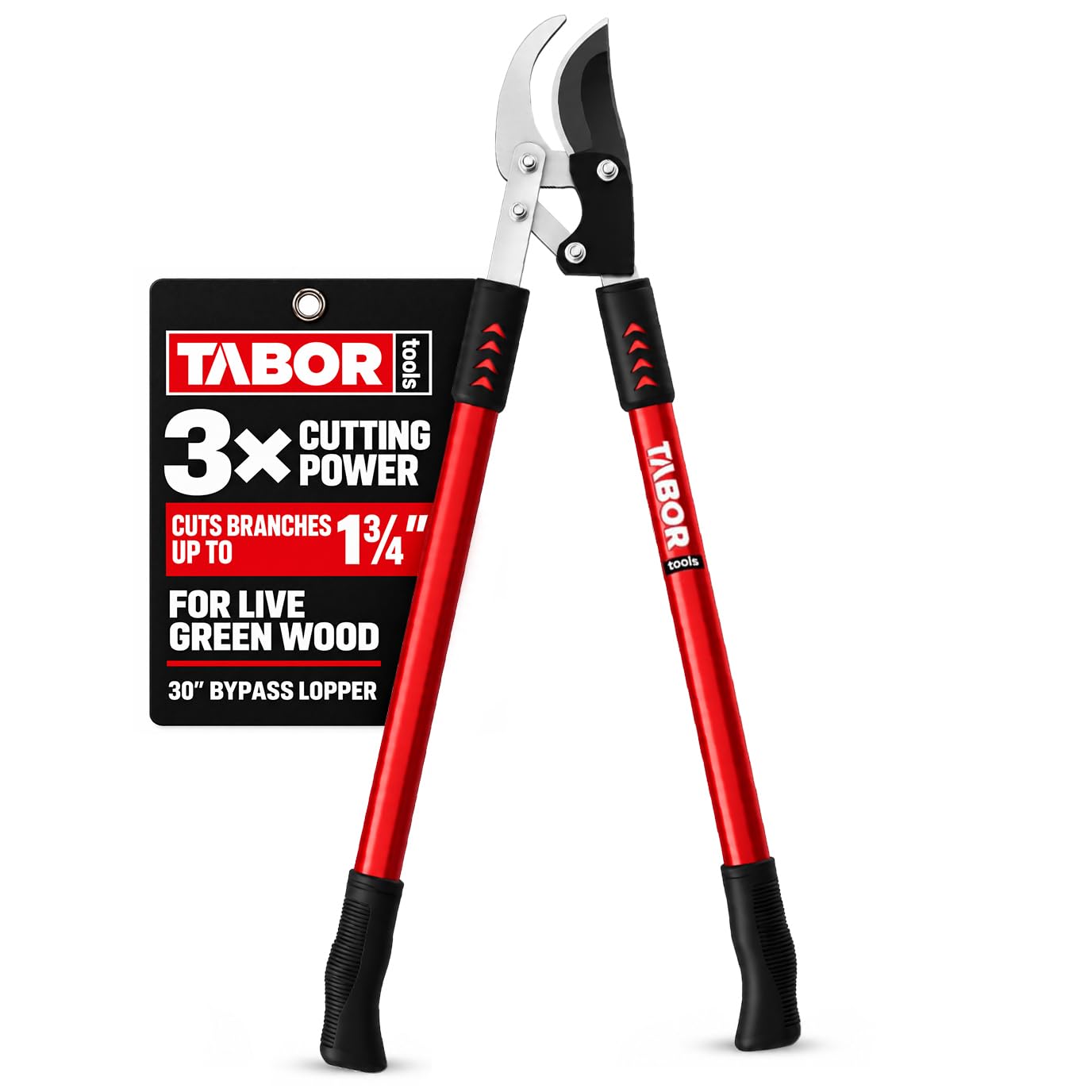
TABOR TOOLS GG11A 30" Bypass Lopper

TABOR TOOLS GG11A 30" Bypass Lopper

Big cleanup jobs

Our Score 9.6/10
Check Price

Worth Noting

  • More pivot points to clean and oil
  • Heavier in the hand than a 28-inch lopper
Blade
Hardened carbon steel
Action
Compound lever
Cut Capacity
1.75 in
Overall Length
30 in
Read the full review

If the top pick starts to feel like work halfway down a hedge line, this is the step up. Tabor's 30-inch compound-action lopper takes 1.75-inch limbs, and the extra two inches of handle give you a longer lever on every push, so the geometry does work your forearms would otherwise do.

Hardened carbon steel sits under a non-stick coating, the handles are steel, and the whole thing feels more planted than the plastic-heavy loppers at the budget end. Compound linkage means multiple pivot points, though, and pivots are where sap and grit collect: a wipe and a drop of oil at the end of the season keeps the action smooth, and the blade takes an edge again with a file.

This is the lopper for a project rather than a tidy-up: a hedge that got away, a run of overgrown shrubs, a pile of limbs to clear in one afternoon. It carries more weight in the hands than a 28-inch aluminum tool, and that is the trade you make for the leverage. Twenty minutes on a Saturday and the top pick is easier to live with; a weekend of cutting every spring and this one is built for it.

Bottom line: We reach for this on big cleanup days: 30 inches of compound-action leverage through 1.75-inch wood, in a build that feels planted rather than delicate.

3

Fiskars PowerGear2 32" Bypass Lopper

Fiskars PowerGear2 32" Bypass Lopper

Thick limbs

Our Score 9.4/10
Check Price

Worth Noting

  • 3.9 lb tires arms on overhead cuts
Weight
3.9 lb
Leverage
PowerGear2 gear and cam
Cut Capacity
2 in
Overall Length
32 in
Read the full review

You need room to use this one. The PowerGear2's handles have to swing wide before the jaws open fully, and that is an awkward ask when you are wedged inside a dense shrub with stems on every side. On a fence line, an open lawn or a fruit tree you can walk around, the same geometry is a gift.

That is where the geared cam earns its place. Two inches of capacity and 32 inches of handle mean a limb that stops a plain bypass lopper goes through on a squeeze instead of a wrestle, and the extra length keeps your knuckles out of the bark. We found the leverage obvious on the first cut and the handle spread obvious on the second.

At 3.9 pounds it is the heaviest tool we recommend, so cut below shoulder height where you can and let the long handles do the reaching rather than your arms. The geared head also loads the blade hard, and the blade is the part that gives when a cut is forced, so stay inside the rated two inches instead of testing the limit. It carries the same full lifetime warranty as our top pick.

Bottom line: This is the one we pick when the wood runs over 1½ inches: geared jaws take 2-inch limbs that stop everything else here, provided you have space to open them.

4

GARDENA TeleCut Bypass Lopper

GARDENA TeleCut Bypass Lopper

High branches

Our Score 9.4/10
Check Price

Worth Noting

  • Long handles are clumsy in tight borders
Warranty
25 years
Cut Capacity
1.65 in
Handle Length
35.5 in
Telescopic Extension
9.84 in
Read the full review

There is usually one branch hanging over the path that is not worth dragging the ladder out for. That branch is what the TeleCut is built around.

The handles telescope almost ten inches, taking the working length to 35.5 inches, so pruning that used to need a step stool happens with both feet on the ground. The bypass jaws take branches up to 1.65 inches, the aluminum handles keep the tool controllable at full stretch, and a stop buffer in the grip absorbs the jolt at the end of every cut instead of passing it into your wrists.

Two ground blades slide past each other for a clean slice rather than a crush, both carry a non-stick coating, and the handles have soft shaped inserts where your palms sit. GARDENA builds it in Germany and backs it for 25 years, the longest coverage of anything in this guide.

Our view: this is the lopper for a garden with tall shrubs, fruit trees or a hedge you keep at head height, and for a gardener who prefers to keep both feet on the ground. The extension is a joint worth keeping clean, and the long handles are clumsy in a narrow border, but for the high awkward cuts that otherwise wait another year, nothing else here solves the problem as simply.

Bottom line: If your pruning happens above head height, we hand you this one: it telescopes nearly ten inches and carries a 25-year warranty.

5

TABOR TOOLS GL16A 28" Bypass Lopper

TABOR TOOLS GL16A 28" Bypass Lopper

Lighter pruning

Our Score 9.4/10
Check Price

Worth Noting

  • 1.25-inch capacity suits lighter wood only
Grips
Rubberized with shock guard
Weight
2.65 lb
Cut Capacity
1.25 in
Overall Length
28 in
Read the full review

At 1.2 kg, about 2.6 pounds, this is the lightest full-size lopper we recommend, and that one figure explains the tool. If three pounds has you resting between shrubs, or your hands are smaller than most lopper handles assume, the GL16A keeps you working instead of rationing cuts. The rubberized grips with a shock guard mean you feel the cut rather than the recoil.

The saving comes out of the blade, not the handles. Capacity is 1.25 inches, enough for rose canes, shrub stems and green growth up to an inch, and not enough for the woody limbs a 1.5- or 2-inch lopper takes in stride. The carbon blade files back to an edge when it dulls, the 28-inch handles give it more leverage than its size suggests, and there is a hang hole in the grip for the shed wall.

Bottom line: We keep this one for smaller hands and shorter sessions: at 1.2 kg it is the lightest full-size lopper here, and it gives up capacity rather than comfort.

6

Corona DualLINK Extendable Bypass Lopper

Corona DualLINK Extendable Bypass Lopper

Variable reach

Our Score 9.4/10
Check Price

Worth Noting

  • Plastic grip can slide down the shaft
  • 4 lb at full extension
Grips
ComfortGel
Action
DualLINK compound linkage
Weight
4 lb
Extended Length
37.5 in
Read the full review

Two hinges instead of one is the whole idea. Corona's DualLINK linkage spreads the cutting load across a pair of pivots, which the maker says takes roughly a third off the effort, and the steel handles telescope out to 37.5 inches. In a yard full of high, awkward, half-dead wood, that combination does real work, and the pivot locks hold their position better than the twist locks on older extendable designs.

Where it lands for us is as a reach tool before a precision one. The compound linkage means a long, deliberate stroke rather than a quick snip, and at 4 pounds with the handles out it is a two-handed commitment. The plastic hand grip is the detail that lets it down, since it can slide down the shaft under a hard pull, so seat it before you start and check it as you go. Want extension without the extra linkage? The GARDENA is the simpler tool. Want maximum leverage at full stretch? This one has more.

Bottom line: We reach for this when the wood is high and awkward: 37.5 inches of extension and compound leverage, though the sliding grip needs checking first.

7

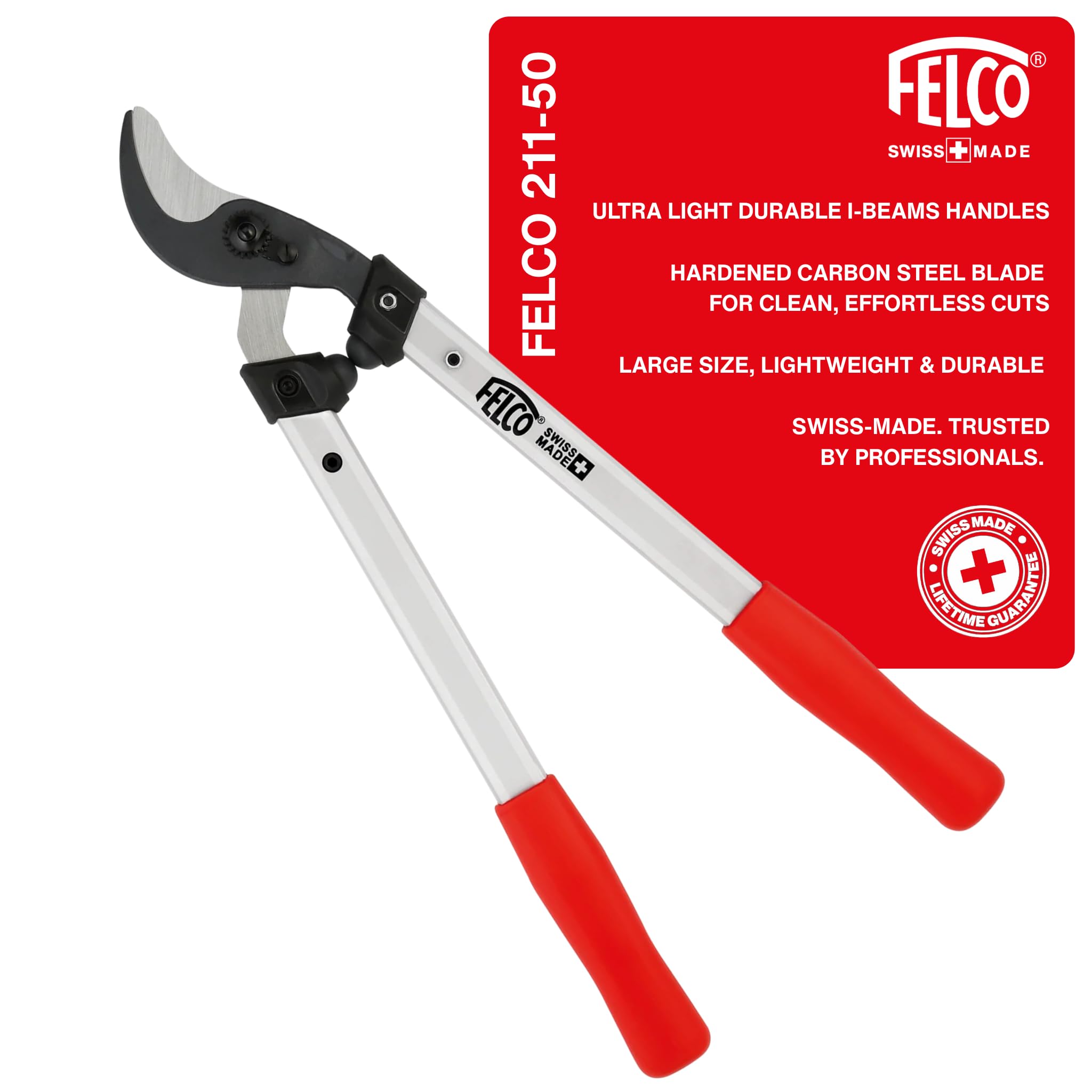
FELCO F211-50 Bypass Lopper

FELCO F211-50 Bypass Lopper

Precision cutting

Our Score 9.2/10
Check Price

Worth Noting

  • 1.2-inch capacity is the smallest here
  • One-year warranty is the shortest here
Parts
All replaceable
Weight
1.1 lb
Cut Capacity
1.2 in
Overall Length
19.7 in
Read the full review

The FELCO is the most expensive lopper here and the one with the smallest jaws, which sounds like a bad combination until you use it. The 20-inch frame and half-kilo aluminum handles put the blade exactly where you are looking, and the curved bypass blade leaves a flat, clean cut on green wood instead of a crushed one.

Every part is replaceable, and the micrometric adjustment takes up play in the blade without shims or guesswork, which is how a lopper ends up being serviced rather than replaced. The warranty runs one year, the shortest in this guide, so the case for the money rests on spare parts and a blade that keeps its edge rather than on a guarantee.

We recommend it for an orchard, a rose bed, or any garden where you make precise cuts at chest height and want the tool to feel like part of your hand. Where it does not fit: a hedge line of two-inch limbs, or a yard where one tool has to do everything. Our top pick covers more ground for far less money; the FELCO is the one you keep for the cuts you care about.

Bottom line: We recommend it to gardeners who cut every day and want a tool they can rebuild: precise on green wood, light in the hand, narrow-jawed and pricey.

How We Tested 12 Bypass Loppers

We built the shortlist by combing through current models in the common size and price bands, then filtering for clear cutting capacities, replaceable blades, and handles that did not flex before we even picked them up. That research left 12 pairs, which we used for eight months alongside our own established loppers.

They lived by the back door and came out for late-winter apple-tree pruning, spring shrub cleanup, and summer storm-damaged branch duty. I cut green maple suckers, dry oak limbs, and tangled privet, alternating between two-handed cuts at chest height and low cuts near the ground. At each session, I noted whether the blade bit immediately or skidded, whether the cut left a clean wound or a crushed edge, and how much force it took to open the blades around a thick stem.

Weight mattered most after 20 minutes of steady cutting, so I weighed each pair on a kitchen scale and paid attention to where that weight sat once the handles were extended. I wore light gloves for some sessions and went bare-handed for others to see how the grips held up against sweat and friction. After each session, I checked pivot bolts, blade alignment, and handle flex, and by month eight the pairs that still cut cleanly were the ones whose edges needed only a light honing and whose joints had stayed tight.

How to Choose Bypass Loppers

Match the jaw to the wood, not to the packaging

Rated capacity in this group runs from 1.2 inches to 2 inches, and most home pruning sits under an inch and a half. That matters because capacity is paid for elsewhere: bigger jaws mean a heavier head, a wider swing and a slower cut. The trap is buying the 2-inch rating for the two thick limbs you meet each spring and carrying the extra weight for every cut after that.

Be honest about the middle. A 1.5-inch bypass lopper takes shrub stems, suckers, rose canes and small tree limbs, which is most of what a yard produces. If you cut 1.75-inch wood every weekend, buy for it; if it happens twice a year, a pruning saw is cheaper than the capacity you would be hauling around.

Plain bypass, compound or geared

Three mechanisms do the same job differently. A plain bypass lopper is the fastest to cycle: one squeeze, one cut, done. Compound and geared designs add pivots or a cam that multiply force, which is what makes a 2-inch jaw work at all, at the price of a longer stroke and more moving parts to keep clean.

The giveaway is handle spread. The more multiplied the force, the wider the handles travel to open the jaws, which is why a geared lopper feels wonderful on an open branch and hopeless in a dense shrub. Think about where you will stand before you fall for the capacity number.

Handle length, reach and weight

Handle length does two jobs: it puts the blade nearer a high branch, and it gives you a longer lever. It also pushes mass further from your hands, which is what you notice twenty minutes into overhead work. The 3.9-pound PowerGear2 and the 1.2 kg Tabor are both rated for real work, and they feel like entirely different tools above shoulder height.

We buy the shortest handle that reaches the work. Once the handles pass about 30 inches it is worth asking whether you need a lopper or a pole pruner, because a long tool held overhead all afternoon is how wrists and shoulders get hurt.

Clearance, grips and upkeep

Handle spread is the specification almost no listing publishes, and it decides more purchases than capacity does. A shrub with stems packed tight will stop a wide-opening lopper a couple of inches into a cut, no matter how sharp it is. Walk your pruning route in your head and picture the arc your arms need.

Grips and bumpers are the other thing you feel at the end of a session; rubberized handles and a bumper at the base of the blade take the sting out of a hundred cuts. Finally, buy a blade you can file back to an edge, and check that replacement parts exist if you intend to keep the tool for a decade or more.

Frequently Asked Questions

Final Verdict

The Fiskars 28-inch is the lopper we recommend to almost everyone: it takes 1.5-inch limbs, weighs 2.9 pounds, and costs less than anything else on this list. Buy it first and most of your pruning happens without a second thought about the tool.

If your wood regularly runs thicker than an inch and a half, the PowerGear2's geared two-inch jaws are worth the extra weight and the wider swing. And if the branches you dread are the ones above your head, the GARDENA's telescoping handles keep you off the ladder entirely.