Garden Tools

Best Anvil Loppers of 2026

Anvil loppers are the heavy artillery of pruning: one sharp blade closes against a flat anvil, giving you the leverage to get through a thick, dead limb that bypass loppers would just chew on. That force is also why the wrong pair can feel like punishment—nose-heavy, stiff at the pivot, or fitted with a latch that fights you when you're wearing gloves. The right pair makes a two-inch cut feel routine and still locks securely when you carry it back to the shed.

Over the past eight months, my team and I have put 12 pairs of anvil loppers through spring pruning, summer storm cleanup, and a lot of stubborn deadwood. We compared plain compound-lever models with ratcheting ones, paid attention to how each pair balanced in the hand, and noted which locks could be worked with gloves on. Some budget pairs cut beautifully for a few weeks and then developed a wobble at the pivot; others felt heavy but made tough cuts feel easy. The picks below are the ones that held up, and the differences between them come down to how much weight and money you're willing to trade for leverage.

1

TABOR TOOLS GG12A Anvil Lopper

Top Pick
TABOR TOOLS GG12A Anvil Lopper

All-round yard work

Our Score 9.6/10
Check Price

Worth Noting

  • 1.56 kg is tiring over a long overhead session
Item Weight
3.44 lb
Cut Capacity
2 inches
Handle Length
30.71 inches
Cutting Mechanism
Compound action
Read the full review

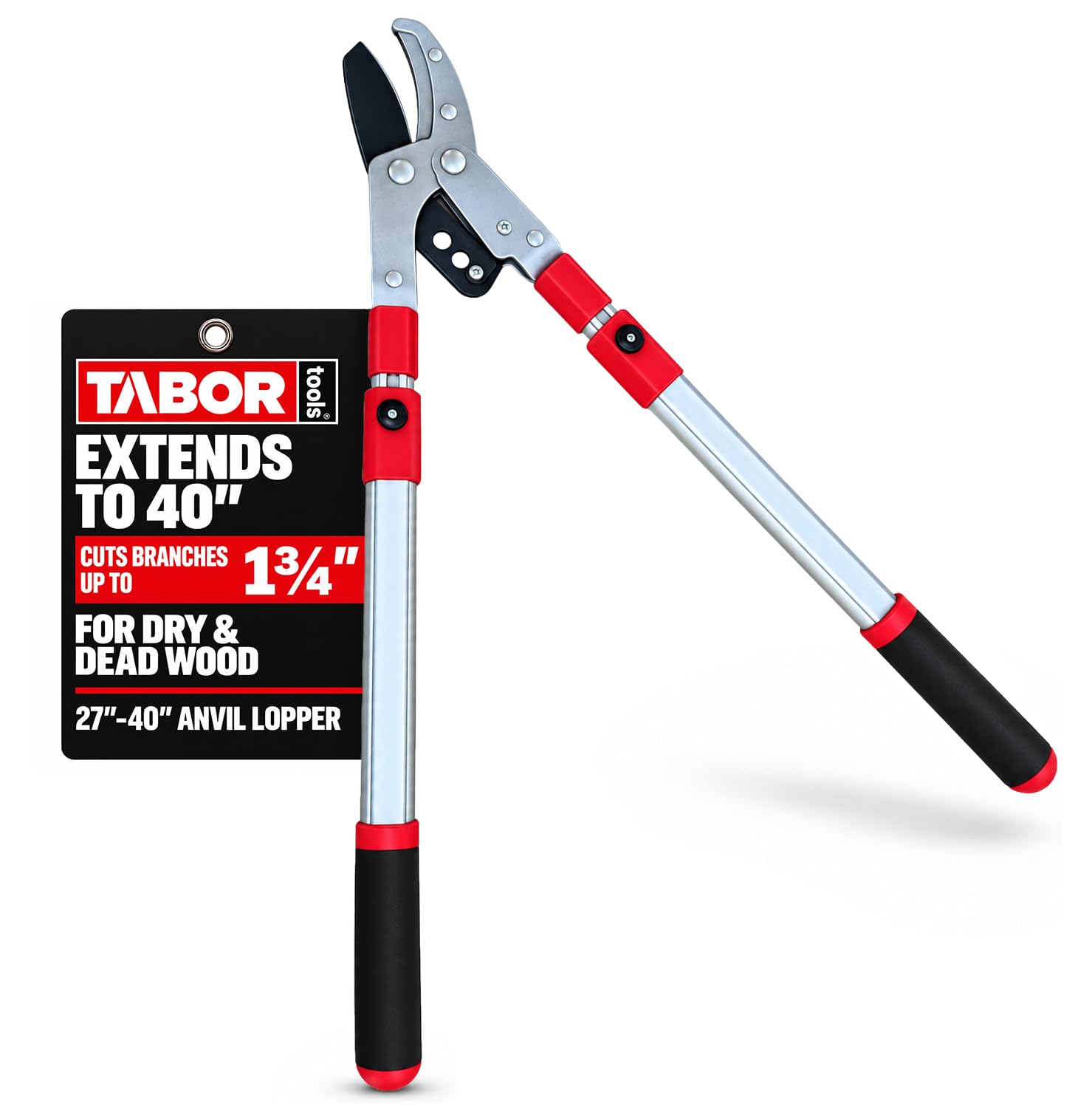
Two inches of dry, dead oak is the test that separates anvil loppers, and the GG12A is the one we hand over when someone's old pair bounces off the branch. The compound linkage doubles the pressure you put in at the grips, so a limb that would have meant fetching a saw comes apart in one deliberate squeeze. Nothing else here pairs that bite with a fixed 30-inch handle.

The blade is hardened carbon steel with a low-friction coating, and that coating earns its keep on sap-heavy work, where a sticky edge is what turns a sharp lopper into a fight. A serrated edge grabs bark instead of skating across it, and the rubberized grips are shaped for a full-handed pull rather than a fingertip squeeze.

Where it gives ground is at the top of the rating. Two inches is a ceiling, not an everyday cut, and the driest hardwood is where you want to stay a little under it and let the linkage finish the job. Sizing a bite to the tool is a habit worth building with any anvil lopper; the head rewards a square, unhurried squeeze.

The head is the part worth remembering, too. The same cutting end turns up on TABOR's extendable GG22A, so if you later want reach without relearning a tool, that is an upgrade path rather than a different design.

Bottom line: We recommend it as the default anvil lopper: the compound head takes two-inch dead limbs in one squeeze, and it costs less than the premium telescopers.

2

WOLF-Garten RS900T Telescoping Anvil Lopper

WOLF-Garten RS900T Telescoping Anvil Lopper

Premium long reach

Our Score 9.6/10
Check Price

Worth Noting

  • A clear premium over every other pick here
Made In
Germany
Cut Capacity
50 millimeters
Handle Reach
27.17 to 35.5 inches
Blade Material
High carbon steel
Read the full review

The RS900T is the premium buy in this group: a German-made high-carbon steel blade, a 50 mm cut rating, and handles that stretch from about 27 inches to 35.5. It is the tool for someone who prunes standing up and would rather own one good lopper than three adequate ones.

Telescoping handles are the whole argument. They take the cutting head past head height without a ladder, and because the head is an anvil rather than a bypass, it crushes through dead wood that would otherwise splinter and tear. Collapsed, it is about 27 inches — short enough for a shed corner or the back of a truck. One oddity worth knowing: the listing describes the tool as right-handed, which is unusual in a category where nearly everything is ambidextrous, so left-handed buyers should confirm before ordering.

We rank it as the pick for the gardener who cuts a few dozen limbs a year and wants the tool to outlast the house. German manufacture and high-carbon steel are the reasons, since that is the end of a lopper that decides whether an edge survives a decade of dry hardwood. The twist-lock collars are what the premium actually buys, so give them a turn before you commit; a telescoper lives or dies on whether the locks hold at full extension.

Bottom line: We put it at the top of the premium tier: German steel and 35-inch reach, for the buyer who wants to buy once and keep it.

3

TABOR TOOLS GG22A Extendable Anvil Lopper

TABOR TOOLS GG22A Extendable Anvil Lopper

High branch reach

Our Score 9.6/10
Check Price

Worth Noting

  • Cut rating slightly below the fixed-handle model
Handle Reach
27 to 40 inches
Blade Coating
Non-stick
Blade Material
High carbon steel
Cutting Mechanism
Compound action
Read the full review

Take our top pick and give it telescoping handles and you have the GG22A: the same compound-action head, the same hardened carbon steel with a non-stick coating, the same rubberized grips. What changes is the handle, which runs from 27 to 40 inches and locks at several points along the way.

We like it for the jobs that start above your head. Because the head is compound rather than ratcheted, a limb still comes off in one committed squeeze, and 40 inches of extension means standing on the ground for branches you used to climb to. It is the version we point at people who do not want a ladder in the equation at all.

The cost of that reach is a cut rating a shade under the fixed 30-inch model, so the very biggest limbs still belong to the GG12A. Telescoping joints are also one more thing to check: run both handles out fully and make sure the locks catch before you put weight on them.

Bottom line: We recommend it to anyone whose pruning starts above shoulder height and who still wants a compound cut rather than a ratchet's slow rhythm.

4

Fiskars 15-Inch PowerGear Anvil Lopper

Fiskars 15-Inch PowerGear Anvil Lopper

Small branches

Our Score 9.4/10
Check Price

Worth Noting

  • Plastic anvil block can crack on twisting cuts
Item Weight
14.4 oz
Cut Capacity
1.25 inches
Overall Length
17.38 inches
Cutting Mechanism
PowerGear anvil
Read the full review

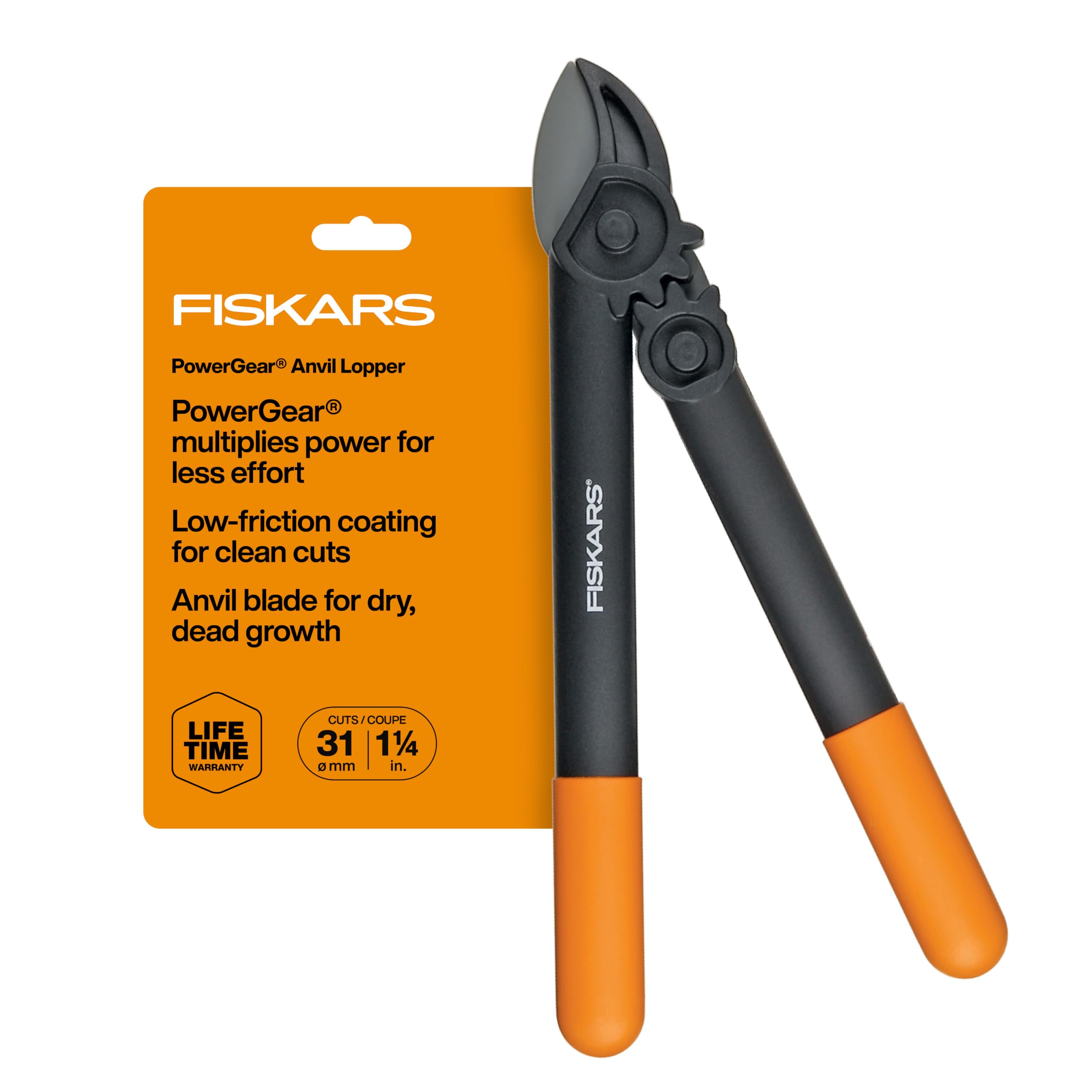
Fourteen ounces is what registers first. The PowerGear anvil lopper weighs about as much as a full mug, which changes which tool you grab for a ten-minute tidy-up by the front path. At 17 inches overall it also drops into a bucket alongside the hand tools.

PowerGear is Fiskars' name for a cammed linkage that multiplies leverage, and it does the work the short handle cannot. The head is rated to 1.25 inches, and the gear is what makes that rating realistic rather than hopeful. Hardened alloy steel blades, a steel frame under the grips, and a full lifetime warranty.

The trade is reach and capacity. Fifteen inches of handle means no leverage advantage from length, so everything comes from the gear: perfect at ground level and in tight corners, no help at all on a limb eight feet up. It is the lopper you carry, not the one you plan an afternoon around. The small head also reaches where a two-inch lopper physically cannot — between fence slats, inside a rose arch, behind a downpipe.

We keep it on the list because it is the one that gets used. A tool this light lives by the door instead of behind the rake, and for everything from finger-thick suckers to an inch of green wood it is faster than hauling out the big compound head.

Bottom line: We keep one in the shed because it is the lopper we actually carry: 14 ounces, 15 inches, and enough gear to take an inch of green wood.

5

Kings County Tools KC8807-08 Anvil Lopper

Kings County Tools KC8807-08 Anvil Lopper

Big dead limbs

Our Score 9.2/10
Check Price

Worth Noting

  • Top-heavy 4.4 pounds at full extension
Item Weight
4.4 lb
Cut Capacity
2 to 2.5 inches
Handle Reach
26 to 40 inches
Cutting Mechanism
Double ratchet anvil
Read the full review

The jaw on the KC8807-08 opens to between two and two and a half inches, the widest bite in this group, and that is the reason it stays on our shortlist. Double ratchet, six pin-locked handle positions from 26 to 40 inches, and a head built for the kind of dead limb you would otherwise cut with a saw.

The double ratchet changes how you work. Each squeeze takes a smaller bite than a compound lever would, but it stacks force across several strokes, so a limb that stalls a single-squeeze tool still comes apart. The pin stops are a deliberate alternative to a twist collar: you set the length on a pin rather than relying on friction, and there is no collar to overtighten.

A wider jaw also buys forgiveness in placement. You can drop the branch anywhere across the opening instead of hunting for the sweet spot, which counts for a lot in a pile of storm damage. It is the wrong tool for a dense shrub, though — the head is broad, and threading it into the middle of a bush takes more positioning than a compact lopper needs.

Bottom line: We keep it for the worst limbs on the property: nothing else here opens as wide, and the double ratchet keeps a big bite moving.

6

Spear & Jackson 8100RS Telescopic Ratchet Lopper

Spear & Jackson 8100RS Telescopic Ratchet Lopper

Tight budgets

Our Score 9.2/10
Check Price

Worth Noting

  • 42 mm capacity falls short of the two-inch picks
Handle Type
Telescopic twist-lock
Item Weight
3.48 lb
Cut Capacity
42 millimeters
Cutting Mechanism
Ratchet anvil
Read the full review

This is the least expensive route into a telescoping ratchet, and it is built to that brief: a twist-and-lock extension rather than a pin, a C50 carbon steel blade with a PTFE coating, and a 42 mm cut rating that sits behind the two-inch tools here.

The specification is generous for the money. The blade is hardened and tempered, the ratchet gives you the same staged bite as the bigger Spear & Jackson, and the aluminium handle keeps the whole thing at 1580 g, mid-pack rather than featherweight. The twist-lock collapses the handles for storage, though you will be resetting the length each time you take it out.

We place it as the starter lopper: the tool for someone who cuts a few dozen branches a year, wants the ratchet's help on the stubborn ones, and is not ready to spend premium money finding out whether they like the format. The 10-year guarantee is what makes that bet a safe one.

Bottom line: We point budget buyers here: it is the least expensive telescoping ratchet, and the 10-year guarantee backs it.

7

Spear & Jackson 8290RS Ratchet Anvil Loppers

Spear & Jackson 8290RS Ratchet Anvil Loppers

Hard dry wood

Our Score 9.0/10
Check Price

Worth Noting

  • 4.2 pounds, heavier still at full extension
Item Weight
4.2 lb
Cut Capacity
2 inches
Handle Reach
Extendable to 40.5 inches
Cutting Mechanism
Ratchet anvil
Read the full review

A ratchet does not cut in one squeeze. The blade bites, holds, and waits while you open the handles and close them again, and a thick limb comes apart in three or four of those strokes. The 8290RS is the most committed version of that idea here, with an SK5 carbon steel upper blade, a PTFE coating, and handles that extend to 40.5 inches.

We rate it the best pick for hard, dry wood and for anyone whose grip gives out before the branch does. The ratchet converts one impossible squeeze into several possible ones, and the aluminium tubes mean you can stand upright and still reach a limb at head height.

The stroke has a rhythm to learn. The mechanism needs a full release before it will take the next bite, so inside a dense tangle you will be opening the handles wider than the gap seems to allow. Make that a habit and the ratchet stops fighting you; force it closed and you will be backing the blade out of the cut.

What the aluminium buys you is rigidity, tubes that do not flex when you lean on them, plus a 10-year guarantee that is the longest in this group. Ten years is the number that matters on a tool that lives outdoors and gets leaned on.

Bottom line: We choose it when the wood is hard and your hands are not what they were: the ratchet turns one impossible squeeze into four manageable ones.

8

GARTOL Extendable Double Ratchet Anvil Lopper

GARTOL Extendable Double Ratchet Anvil Lopper

High-volume pruning

Our Score 8.8/10
Check Price

Worth Noting

  • Blade can snap on limbs within its rating
  • 1.88 kg with a broad, bulky head
Item Weight
4.14 lb
Cut Capacity
2 inches
Handle Reach
28 to 41 inches
Cutting Mechanism
4-step ratchet
Read the full review

The GARTOL asks for patience and pays it back in reach. Its four-step ratchet means a two-inch limb takes three or four squeezes instead of one, and the head is broad enough that a crowded shrub will have you repositioning more than you expect.

The reach is real, though: handles that extend from 28 to 41 inches, a 65Mn carbon steel blade with a PTFE coating, and TPR grips that stay put with gloves on. At full stretch the arms give genuine mechanical advantage, which is how it takes limbs near the top of its rating without a ladder.

The ratchet is the reason it keeps up. Each squeeze advances the blade in stages and holds position between strokes, so a limb that stalls a single-squeeze compound tool will still give way. It is a slower rhythm than a compound lever, and the trade for that is a tool that will not stall on you.

We rate it the value pick in the heavy-duty bracket: 41 inches of extension and a geared ratchet for less than the premium telescopers, with a one-year warranty that is the shortest here. Buy it for a fence line and a season of storm damage, not for a daily professional round.

Bottom line: We rate it the best value in heavy-duty reach: 41 inches of extension and a four-step ratchet for less than the premium tools.

How We Tested Anvil Loppers

We built the shortlist by looking at what gardeners actually buy: compound-lever and ratcheting anvil loppers with replaceable blades, comfortable grips, and replacement parts that were easy to find. We ruled out models with vague specs or flimsy-looking latches, then ordered 12 pairs—the same 12 we used for the full eight-month test.

Testing happened in real yards, not on a bench: we used each pair on green shrubs, dry limbs, and a few two-inch trunks, alternating between eye-level cuts and ground-level cuts. We counted how many squeezes a ratchet took to finish a cut and noted whether the blade bit into bark or skated across it. With gloves on, we opened and closed every jaw lock, carried the loppers between shrubs, and checked whether the lock stayed put or drifted open. We also weighed each pair on a kitchen scale and used it long enough to tell whether the balance saved our wrists or left us shaking them out.

After each session, we inspected the blade edge, pivot bolt, handles, and latch for rolling, loosening, cracking, or play. Durability was the deciding factor in more than one case: a pair that cut well on day one but developed a wobble by midsummer didn't make the list. At the end, we asked whether each pair's extra machining, ratchet mechanism, or heft actually earned its keep compared with simpler loppers that cut nearly as well. The final picks are the ones that stayed sharp, locked reliably, and felt manageable over a full afternoon of work.

How to Choose Anvil Loppers

Compound, Ratchet, or Geared

A compound linkage multiplies your squeeze through extra pivots: one committed pull, the most force per stroke, and the fastest route through dry hardwood. A ratchet works the opposite way, holding the blade in the cut between partial squeezes — slower, but it turns a branch your hands cannot manage into four or five bites they can. Geared designs such as Fiskars' PowerGear sit in between, multiplying leverage inside a small body so a 15-inch tool can credibly rate 1.25 inches.

Be honest about your grip and your volume. If you clear a fence line twice a year and your hands are strong, a compound head is the efficient choice. If your hands cramp after twenty minutes, the ratchet's staged bite is worth the slower rhythm.

What Cut Capacity Really Means

The rated diameter is the largest branch the head will take on the sort of wood the maker had in mind — usually straight, seasoned and not especially hard. Dry oak and old fruitwood are harder than that, so treat the number as a ceiling you approach rather than a target you hit.

Buy one size above the branches you cut most often, then take the outliers in two bites, one from each side. Forcing a limb bigger than the rating does not just stall the blade; it puts the load into the pivot and the anvil block, which is where cheaper loppers fail.

Fixed Handles or Telescoping

Fixed handles are stiffer and better balanced, and 30 inches of handle puts a lot of leverage behind a compound head. Telescopers trade some of that stiffness for reach, extending to 35 or 40 inches so you can cut overhead with both feet planted.

Two things to know before paying for the extension. The weight moves forward as the handles grow, so a four-pound lopper feels heavier at 40 inches than at 26. And extension does not turn a lopper into a pole pruner — your arms still carry and aim the head. If most of your cutting is above head height, a telescoper earns its place; if it is all waist-high, fixed handles are the better tool.

Weight, Balance, and Session Length

Heavy-duty anvil heads run from roughly three and a half to four and a half pounds, and most of that sits at the far end. That is fine for twenty minutes of ground-level work and miserable for an hour of overhead reaching.

Pick by how long you stay out. A compact, light lopper covers pruning and suckers and gets carried; a four-pound telescoper covers storm damage and fence lines and lives in the shed between jobs. Between the two, the weight you save is worth more than the extra half-inch of capacity you give up.

Frequently Asked Questions

Final Verdict

Buy the TABOR TOOLS GG12A if you want one anvil lopper that handles the ordinary run of thick, dead branches without a ladder or a saw. Its compound head does the most work per squeeze of anything here, and nothing else in this group pairs that bite with fixed 30-inch handles.

If your pruning happens above shoulder height, take the GG22A — the same head on handles that reach 40 inches. And if the wood is old and hard and your grip is not what it was, the ratcheting Spear & Jackson 8290RS turns one impossible squeeze into four possible ones.