Garden Tools

Best Loppers of 2026

Loppers live or die by a simple trade-off: reach and leverage versus weight in your hands. A long-handled pair sails through a two-inch branch, then leaves your forearms trembling by the third shrub. A light pair feels great until you hit green wood and end up gnawing at the cut. The right pair splits that difference — clean cuts on the easy stuff, enough grunt for dead limbs, and blades that stay sharp long enough to matter.

Over eight months, my team and I put 14 pairs through their paces — bypass and anvil, ratcheting and plain, lightweight and seriously heavy. I hacked back an overgrown hedge, cut green branches and dry deadwood, and handed pairs to neighbors with different grip strength and hand size. What separated the keepers wasn't a spec sheet. It was how they felt on the hundredth cut, whether the lock stayed put in a pocket, and whether the blade still bit cleanly after a month of real work. The picks below are the ones that earned a permanent spot by the shed door.

1

Fiskars 28" Bypass Loppers

Top Pick
Fiskars 28" Bypass Loppers

All-purpose trimming

Our Score 9.6/10
Check Price

Worth Noting

  • Cuts stop at 1-1/2 inches
Weight
2.9 lb
Cut Capacity
1.5 in
Cutting Head
Bypass
Handle Length
28 in
Read the full review

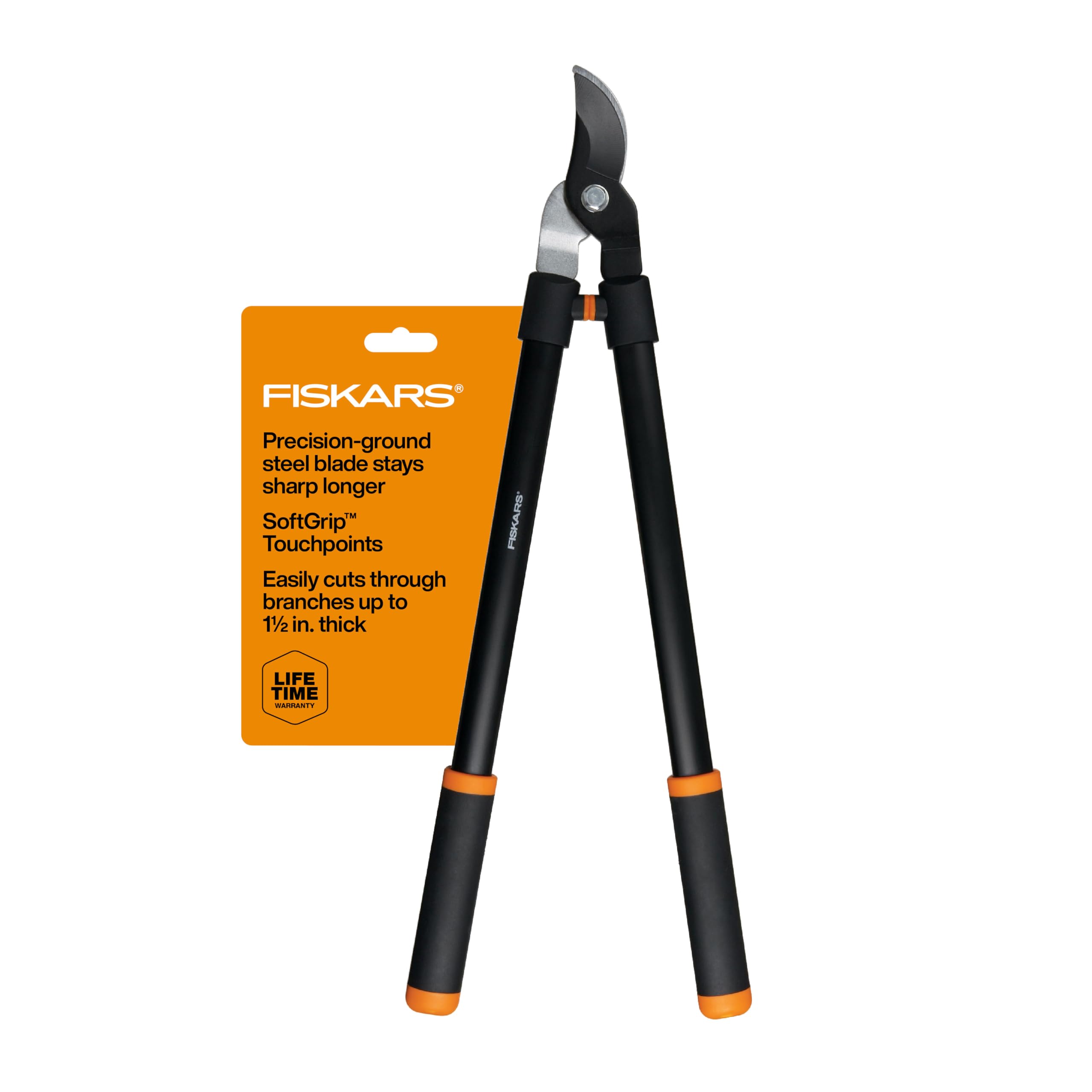
Twenty-eight inches of handle, 2.9 pounds, and a coated bypass blade: the Fiskars is the lopper we hand someone who says only that they have shrubs to deal with. It swings easily at arm's length, hangs on a hook by the door, and comes with a full lifetime warranty. In a category where inexpensive tools often feel like it, this one doesn't.

The bypass head is what earns its keep. Two blades slide past each other, so living wood gets a clean cut rather than a crushed one, and the low-friction coating keeps sap from dragging on the steel. The 1-1/2-inch rating holds up on green growth — shrub stems, sucker growth, small tree limbs — and the bumper between the handles stops them cracking your knuckles on a full close.

Where it runs out is size and hardness: this is a shrub-and-small-limb tool. In front of a storm-downed limb or a dead branch that a bypass blade will skate across, you want the geared Fiskars or the Tabor anvil instead. That division of labor is why the 28-inch is the first lopper we buy and rarely the only one.

Bottom line: For the usual mix of shrubs, suckers, and small limbs, this is the lopper we hand people: light, sharp, and covered for life.

2

TABOR TOOLS GG12A Anvil Loppers

TABOR TOOLS GG12A Anvil Loppers

Dead wood

Our Score 9.6/10
Check Price

Worth Noting

  • 3.4 pounds, with the mass at the anvil end
Weight
1.56 kg (3.4 lb)
Cut Capacity
2 in
Cutting Head
Compound anvil
Handle Length
30 in
Read the full review

Dead wood is a different job. A bypass blade rides up on a dry, shrunken branch instead of biting, and you end up wrestling a limb that should take one pull. The Tabor GG12A is built for exactly that: an anvil head that comes down onto a flat bed and crushes through, with a compound linkage multiplying whatever force you put on the handles.

Thirty inches of handle helps, and we like how much of the work the linkage does — you set the jaw and squeeze rather than throwing your weight at the branch. The rubberized grips hold when your hands are damp. Treat the two-inch rating as a ceiling rather than a promise: on hard, dry limbs near the top of that range, plan on a second bite.

At 3.4 pounds it's near the top of this group on weight, and the mass sits out at the anvil end. Working down through a pile of storm damage, that's fine — the weight falls with the cut. Reaching above your head, it isn't. Buy it as the second lopper, the one you keep for the wood the bypass can't touch.

Bottom line: For dead limbs and storm cleanup, this anvil lopper's compound action does the leaning for you — the second tool, not the only one.

3

Fiskars 32" PowerGear2 Loppers

Fiskars 32" PowerGear2 Loppers

Thick green limbs

Our Score 9.4/10
Check Price

Worth Noting

  • Needs room to spread the handles wide
  • Heavy at 3.9 pounds for overhead work
Weight
3.9 lb
Cut Capacity
2 in
Cutting Head
Geared bypass
Handle Length
32 in
Read the full review

The PowerGear2's party trick is a geared cam at the pivot. Instead of a straight lever, the mechanism multiplies your squeeze as the cut closes, so a two-inch green limb goes with one steady pull instead of a wrestle. On overgrown lilacs and fruit-tree water sprouts, that's the difference between a satisfying afternoon and a sore one.

The gearing has a cost in tight quarters. To open the jaws fully you have to spread the handles wide, and inside a congested shrub there often isn't room — you end up working from the outside in, or reaching for a shorter tool. It's a real constraint in a mixed border, where half your cuts happen blind between two plants.

Out in the open, it's the biggest-capacity geared bypass lopper here and the one we reach for when a branch is thicker than a thumb and clear of everything else. Fiskars covers it for life, which is the right answer to the extra wear a geared pivot takes on. If most of your pruning happens under a dense canopy, the plain 28-inch gets into places this one can't follow.

Bottom line: When the thick cuts happen out in the open, the geared head on this Fiskars saves real effort; in a crowded border its wide swing works against you.

4

GARDENA TeleCut 650-900 B Loppers

GARDENA TeleCut 650-900 B Loppers

Telescoping green cuts

Our Score 9.4/10
Check Price

Worth Noting

  • 1.65-inch capacity trails the other long-handled picks
Weight
2.87 lb
Cut Capacity
1.65 in
Cutting Head
Bypass
Handle Length
650 to 900 mm
Read the full review

At 2.87 pounds, the Gardena TeleCut is the lightest telescoping lopper here, roughly a third lighter than the Spear & Jackson — and weight is the number that matters when the cutting happens above shoulder height. It's a bypass tool, so it's for living growth: the two coated blades slide past each other and leave a clean wound rather than a crushed stem.

The handles run from 650 to 900 mm, about 25-1/2 to 35-1/2 inches, and collapse to something that stores on a shelf. A plastic stop buffer between the handles absorbs the jolt at the end of every cut, a small thing you notice most in the wrist after fifty of them. The money goes on the telescoping and the 25-year warranty rather than on raw capacity.

The part of any extending tool that wears first is the collars, and that is exactly what the long guarantee covers — worth more here than on a fixed-handle lopper. If your pruning regularly runs to two-inch wood, this isn't the tool; the Tabor anvil and the geared Fiskars are built for that.

Bottom line: For green wood above your head, this light telescoping bypass is the tool we reach for, provided the branches stay under its 1.65-inch rating.

5

YRTSH 18" Compound Anvil Loppers

YRTSH 18" Compound Anvil Loppers

Tight spaces

Our Score 9.4/10
Check Price

Worth Noting

  • Blade is the weak point past its rating
Weight
2.4 lb
Cut Capacity
1.6 in
Cutting Head
Compound anvil
Handle Length
18 in
Read the full review

Eighteen inches is short for a lopper, and that's the point. This is the tool for the gap between two shrubs, the stems at the base of a raised bed, and the branches you want off without stepping into the border. Swing it one-handed and it feels closer to a big pruner than to the 28-inch tools above.

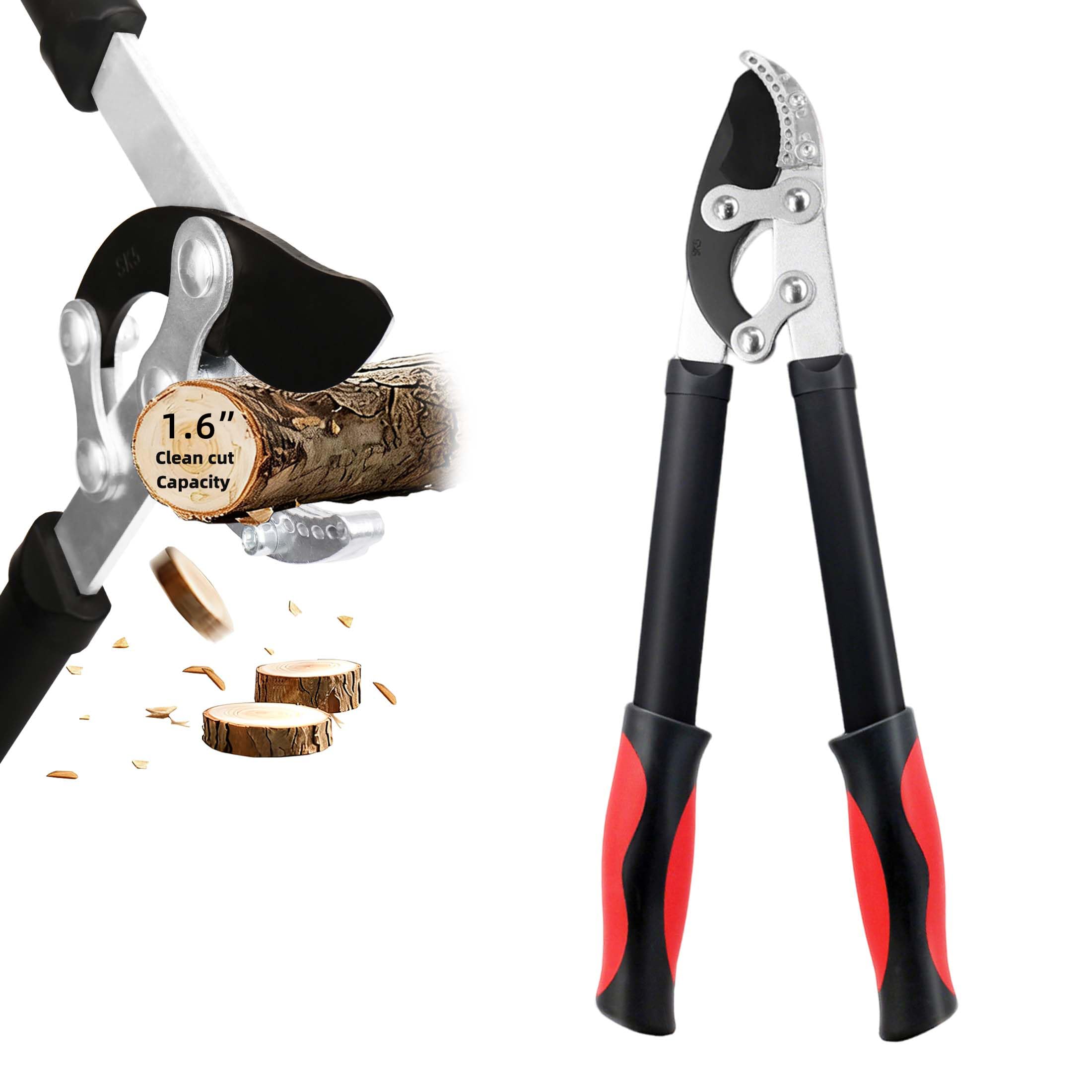
The compound linkage is what makes a short handle work: it gives this little tool far more bite than its length suggests, and the 1.6-inch rating is generous for something 2.4 pounds with an 18-inch reach. The anvil head leans toward dead stems and tough woody growth rather than soft green tips, which is what cleanup work asks for.

We treat this as a specialist, not a starter lopper. If it's your only one, keep it to the size of branch it's rated for: the blade is the part that gives out first when it's asked for more, and forcing a cut past the rating is how tools like this die. As a second pair for tight spots, it earns its small footprint.

Bottom line: Eighteen inches of compound-action bite for gaps a full-length lopper can't enter — treat it as the second tool in the shed.

6

Spear & Jackson 8290RS Loppers

Spear & Jackson 8290RS Loppers

Overhead reach

Our Score 9.0/10
Check Price

Worth Noting

  • Heaviest of these at 4.2 pounds
Weight
4.2 lb
Cut Capacity
2 in
Cutting Head
Ratchet anvil
Handle Length
Telescopic to 40.5 in
Read the full review

A ratchet feels wrong the first time. You squeeze, the blade bites and stops, you open your hands and squeeze again, and a limb a plain lopper would take in one go comes off in three or four clicks. Then you get to a branch above your head, and the reason for the mechanism becomes obvious: you never have to hang your whole body weight off the handles.

The telescoping handles extend to 40-1/2 inches, which is a serious amount of reach from something that collapses to a shelf-friendly length. We pick this one for hedges above shoulder height, fence-line volunteers, and for anyone whose grip gives out before the branch does. The anvil head makes it happiest on dead and woody growth rather than fresh green stems.

At 4.2 pounds it's the heaviest lopper in this group, and at full extension that mass sits a long way from your shoulders — plan a session rather than an afternoon. The jaw release is fussy, too: the blade can take a couple of squeezes to pop free the first time, and closing it fully before trying again works better than forcing it.

Bottom line: Ratchet loppers aren't fast, but for overhead limbs and tired hands this one's telescoping reach earns its place.

How We Tested the Best Loppers

We started by pulling together more than 30 models, then narrowed the field by handle length, blade type, replacement-part availability, and price. The final 14 covered bypass and anvil designs, ratcheting and non-ratcheting, and a range of weights and jaw openings. Every pair had to be something a home gardener could actually buy and sharpen or replace parts for.

Testing ran for eight months, mostly in a half-acre backyard with a neglected hedge line, a few overgrown fruit trees, and a brush pile that kept growing. I used each pair for at least three sessions, counting how many cuts it took to get through a two-inch green branch and a one-inch dead limb, and noting whether the blade sliced cleanly or crushed the bark. On dry, hard wood, I counted how many squeezes the ratchet needed and whether it advanced smoothly or skipped. I measured the widest blade opening and whether it would swallow a branch without fumbling.

Weight mattered more than I expected: I weighed each pair on a kitchen scale, then used it for a 45-minute session to see where fatigue set in. I opened and closed the jaw lock one-handed, then carried each pair through a hedge row to see if it stayed shut. After every 50 cuts, I checked the pivot for play, the blades for nicks, and the handles for flex or cracking. Quality came down to the out-of-box edge, the wobble in the pivot, and whether the grips felt solid or hollow.

How to Choose Loppers

Bypass or Anvil: Match the Head to the Wood

Bypass loppers have two blades that slide past each other, leaving a clean cut on living growth that heals over. Anvil loppers bring one blade down onto a flat bed, crushing the stem — fine for dead wood, hard on anything you want to keep. In a normal yard the bypass tool does most of the work, and the anvil is the second lopper you buy for storm damage, fence-line brush, and anything shriveled and hard.

The mistake we see most often is buying an anvil as the only lopper: it gets through the dead branch and mauls the living one beside it.

Capacity and Handle Length

Capacity is a ceiling, and an optimistic one. A two-inch rating means two inches of fresh wood at the widest part of the jaw; a hard, dry limb of the same diameter takes a second bite or a saw. For most homeowners a 28- to 32-inch handle is the sweet spot, giving real leverage and reach without a tool that's clumsy in a border, while 15- to 18-inch loppers suit tight planting, raised beds, and ground-level work.

Telescoping handles buy height, but every extension adds length you have to hold up.

Leverage: Plain, Compound, Geared, Ratcheting

A plain lopper is two levers and a pivot, and it's fine up to about an inch of green wood. Compound and geared designs multiply the force so a two-inch limb goes in one pull. Ratchets trade force for rhythm, taking three or four short squeezes per branch, which is easier on the hands and slower overall.

The hidden cost of extra leverage is clearance. A geared head has to open wide before it closes on a branch, so a design that's powerful in the open can be useless in a crowded shrub.

Weight and Balance

The loppers here run from about 2.4 to 4.2 pounds, and that spread matters most when the tool is above your shoulders. Heavy isn't the same as badly made — the 4.2-pound telescoping lopper earns its mass with reach and a ratchet — but if your pruning is mostly overhead, weight is the first line on the specification worth checking.

Blades, Grips, and What Wears Out

Carbon and alloy steel both take a good edge; what matters as much is the coating, since a low-friction blade sheds sap and resists rust between sessions. Look at the grips and the bumper between the handles, because the bumper is what stops the handles cracking your knuckles on every full close.

Warranties separate the field: Fiskars covers both of its loppers for life, Spear & Jackson for 10 years, and Gardena for 25 — worth more on a telescoping tool than a fixed one, because the collars wear first.

Frequently Asked Questions

Final Verdict

For most yards the answer is the Fiskars 28-inch bypass: light, sharp, covered for life, and pleasant enough that you reach for it before the saw. Move up to the PowerGear2 32-inch when your green cuts run past an inch and a half and happen in open ground, or to the Tabor GG12A when the wood is dead and hard.

What we don't recommend is a single anvil lopper standing in for a whole shed's worth of pruning.