Homesteading & Harvest

Best Apple Cider Presses of 2026

A bushel of apples and a free Saturday sounds idyllic right up until you're 40 minutes into cranking and the jug is barely half full. That's usually when people start shopping for a cider press — and when they find out how much the design matters: how hard you have to crank, how much juice you actually get per bushel, and whether cleanup outlasts the pressing itself. A good press turns a pile of fruit into clear, sweet cider in an afternoon and rinses out in ten minutes; a bad one buckles under pressure, spits pulp across the patio, and ends up at the back of the garage.

Over the past eight months my team and I have put nine presses through real cider days, and the differences were obvious by the second batch. Here's what nobody tells a first-time presser: the machine is only half the equation. Grind the apples fine and let the pulp rest for 20 minutes before you press, and a modest press will out-yield a fancy one fed chunky fruit. The nine below all held up.

1

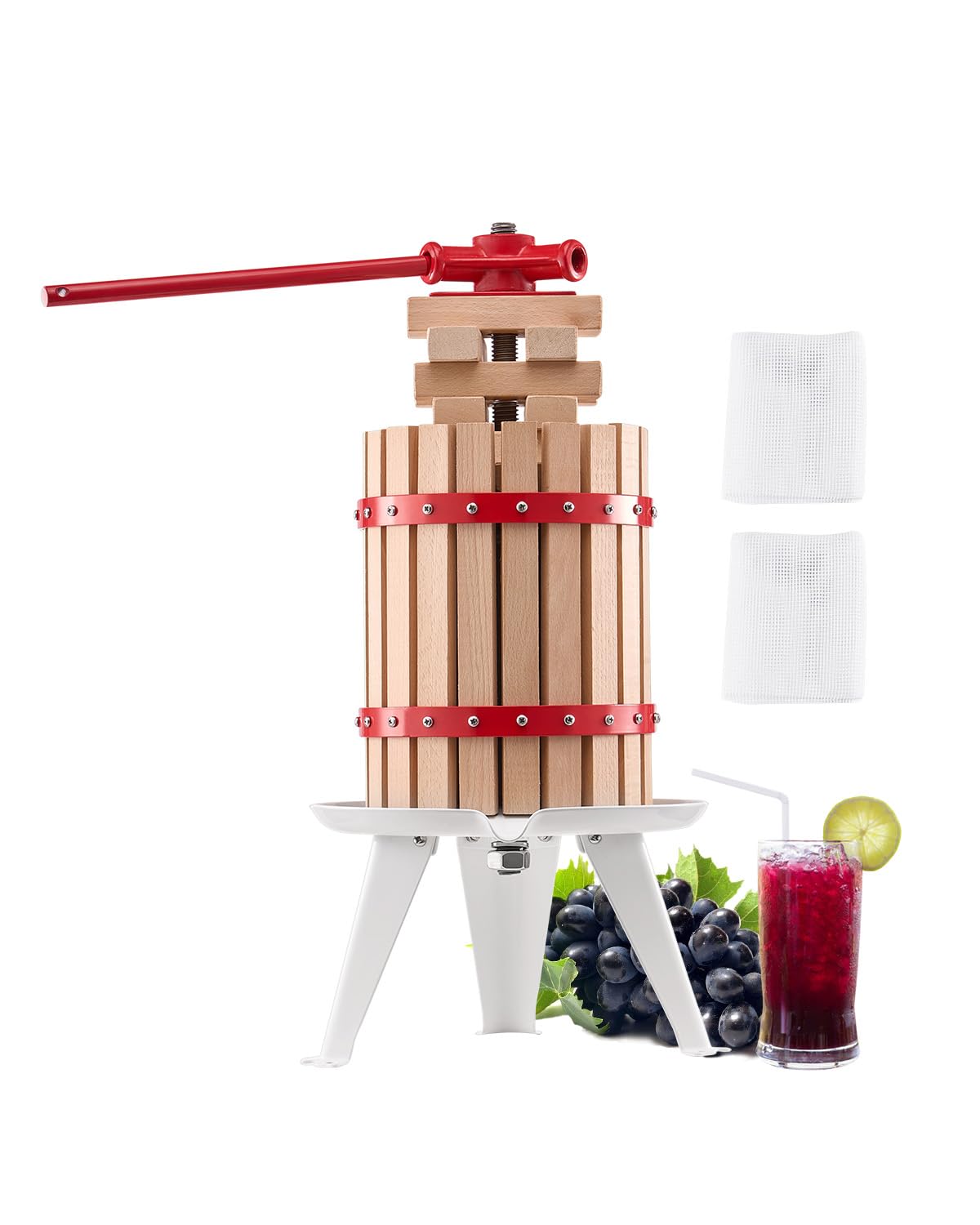
EJWOX 3.7-Gallon Stainless Press

Top Pick
EJWOX 3.7-Gallon Stainless Press

Home orchard cider

Our Score 9.0/10
Check Price

Worth Noting

  • Side supports can shear under heavy pressure
Basket
Stainless steel
Capacity
14 liters
Footprint
22 x 18.5 x 25.9 in
Press Mechanism
T-handle Acme screw
Read the full review

The basket is the first thing we look at on a cider press, and the EJWOX gets it right. It lifts out as one stainless-steel cylinder, so pulp comes away without us scraping around a wooden barrel. That matters on a long pressing day, when the difference between another batch and calling it quits is often cleanup.

The T-handle turns a large-diameter Acme screw, and the leverage feels deliberate: you keep pressure on the plate rather than fighting a short crank. The 14-liter basket holds a useful home-orchard load, and the powder-coated frame gives the whole thing a planted feel. We also like that the press is simple to set up, with no hydraulic hoses or pump to manage.

Stainless is the practical choice for apples because it shrugs off acidic juice and rinses clean, and the basket detaches for that job. It is not the cheapest manual press here, but it earns the step up for anyone who presses more than once a season and wants less fuss between batches. The 14-liter basket is enough for a serious afternoon without turning the job into a production line.

Bottom line: We recommend the EJWOX stainless press for most home cider makers: its removable basket makes cleanup easier, and the T-handle builds steady pressure without a hydraulic setup.
2

SQUEEZE master 23.8-Gallon Hydraulic Press

SQUEEZE master 23.8-Gallon Hydraulic Press

Very large batches

Our Score 9.0/10
Check Price

Worth Noting

  • Heavy at 79.2 pounds
Drive
Garden-hose water pressure
Basket
Stainless steel
Capacity
23.8 gallons (90 liters)
Item Weight
79.2 lb
Read the full review

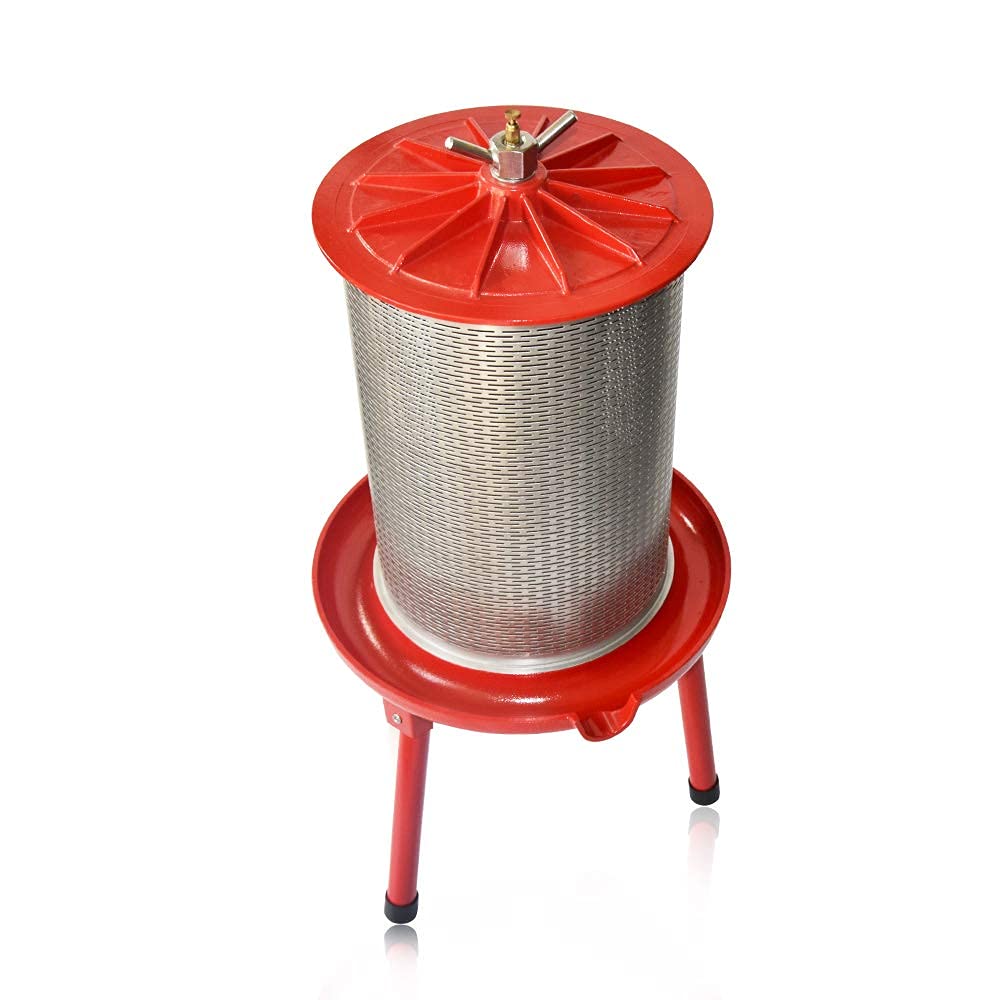
Garden-hose pressure is the clever part here. The SQUEEZE master uses water pressure, capped at 3 bar, to expand a bladder inside a stainless basket, so you are not cranking a screw through a bushel of apples. Connect a hose, turn on the tap, and the press does the heavy work.

The 23.8-gallon basket is orchard equipment, not a countertop tool, and it needs a hose and a drain nearby. We like the splash guard and the included filter bag because a press this size can make a lot of juice quickly, and the stainless basket is the right material for that volume.

For a home orchard or a small cider operation, that trade is easy to justify: the time saved over a manual press is the whole point. If you press a few bushels a year, a manual press is simpler and easier to store. If you have the harvest and the space, this is the machine that turns pressing day into a shorter job.

Bottom line: For orchard-scale pressing, we think this SQUEEZE master hydraulic unit is the one to beat: hose pressure does the hard work, and the basket takes a very large load.

3

Useful 4.75-Gallon Cast Iron Press

Useful 4.75-Gallon Cast Iron Press

Traditional large batches

Our Score 8.6/10
Check Price

Worth Noting

  • Wood slats can split under pressure
Basket
Solid U.S. oak
Capacity
4.75 gallons
Press Head
Coated cast iron
Item Weight
27.7 lb
Read the full review

The cast-iron press head is the reason to choose this old-fashioned Useful press. It gives the screw a substantial, planted feel, and the 4.75-gallon solid oak basket holds a genuinely large load for a manual machine. This is the press for someone who wants the cider-making ritual to look and feel traditional.

The enameled steel base and coated cast-iron head are built to take pressure, and the basket comes apart for cleaning. We like the bottom spout because it lets you set a bucket underneath and keep filling without lifting the press. The wide basket also means fewer reloads when the apples are coming in faster than you can press them.

The supplied pressing blocks do not reach all the way through a full basket, so budget for extra blocks or press in smaller charges. That is a small chore compared with the capacity you get, and the cider that comes out is the reason people keep this style around. We recommend it to traditionalists who want a large wooden basket and do not mind a little extra setup.

Bottom line: We recommend the Useful for traditionalists who want a large wooden basket and a cast-iron press head, and who do not mind adding blocks for a full load.

4

EJWOX 3.2-Gallon Wood Press

EJWOX 3.2-Gallon Wood Press

Budget wood pressing

Our Score 8.4/10
Check Price

Worth Noting

  • Basket wood can crack under heavy pressure
  • Press plate can leave fruit at the edges
Basket
Solid red beech
Capacity
3.2 gallons
Dimensions
14.4 x 20.5 x 22.4 in
Press Mechanism
Manual rotating plate
Read the full review

At the budget end of this group, the EJWOX wooden press makes a strong first argument: it gives you a real basket press without the stainless-steel premium. The red beech basket has a breakaway design, so the pulp comes out in sections rather than one stubborn puck, and the built-in spout sends juice straight into a jug or bucket.

The 3.2-gallon basket is a sensible size for a family with a few trees. We like the screw holes in the feet because they turn a light press into something you can secure to a bench, and the metal handle gives enough leverage for apples once they are crushed. It handles grapes and berries too, though soft fruit needs a gentler hand.

What you trade for the lower cost is refinement. The wooden basket needs more careful cleaning than stainless, and the press rewards a steady, moderate load rather than a heroic one. For a first press or a seasonal hobby, that is a fair exchange; for a large harvest, the stainless picks in this guide are easier to live with.

Bottom line: If you want a wooden basket press without spending much, we think this EJWOX is the sensible starting point, provided you anchor it and keep batches modest.

5

VEVOR 1.6-Gallon Wood Press

VEVOR 1.6-Gallon Wood Press

Small-space cider

Our Score 8.4/10
Check Price

Worth Noting

  • Small batches only
Basket
Natural beechwood
Capacity
1.6 gallons (6 liters)
Dimensions
11.42 x 16.93 x 22.64 in
Press Mechanism
Spiral progressive handle
Read the full review

Small-space pressing is the whole idea behind this VEVOR. The 1.6-gallon basket and 11.42 by 16.93 by 22.64 inch frame fit into a garage corner or a shed shelf, and the natural beechwood basket gives it a traditional look without the bulk of a full orchard press.

The press uses one thick beechwood block and eight supporting blocks, with an extended rotating handle and a spiral progressive screw. That arrangement lets you take up the slack as the pulp compresses, and the small basket is easy to load and empty. It is a straightforward machine with no hose, pump, or power connection.

We recommend it for a first press or a small garden where the harvest is measured in buckets rather than bushels. It rewards a little prep: cut hard fruit down before loading, and keep the basket level. For that buyer, the small scale is the feature, not a compromise.

Bottom line: We like this VEVOR for small gardens and first-timers: the compact basket suits a few apples at a time, and the simple manual design is easy to live with.

6

VEVOR 3.96-Gallon Stainless Press

VEVOR 3.96-Gallon Stainless Press

Value stainless batches

Our Score 8.2/10
Check Price

Worth Noting

Basket
Stainless steel
Capacity
3.96 gallons (15 liters)
Item Weight
26.5 lb
Press Mechanism
T-shaped grip handle
Read the full review

A 15-liter stainless basket at a value price is the reason this VEVOR earns a place. It gives you the easy-clean material and generous capacity of our top pick without the same outlay, and for a family that presses a few bushels a season, that is a persuasive combination.

The T-shaped grip handle turns a thick 4.5 mm pressing plate, and the bucket lifts out for rinsing. We noted the two filter bags in the box, which is a practical touch because one bag is never enough on a busy day. The frame feels sturdy for the money, and the stainless surface wipes down far more readily than a wooden basket.

The basket is free-floating, and under a hard press with a filter screen it can lift and shift. Center the load and keep an eye on it, especially when you are chasing the last of the juice. That quirk aside, this is the stainless press we point value-focused buyers toward when the top pick is more than they need.

Bottom line: We point value-focused buyers to this VEVOR when they want stainless cleanup and a bigger basket without stepping up to our top pick.

How We Tested Cider Presses Through a Full Apple Season

I started with a list of two dozen presses sold through orchard suppliers and home-improvement stores, then cut anything with a non-replaceable basket, a frame that owners reported flexing, or no source for spare pressing cloths and bladders. That left nine, ranging from small ratchet models to full barrel-and-screw presses. Price came last: a bargain that wastes a third of every bushel isn't a bargain.

Assembly came first. I timed how long it took one person to get from box to first chopped apple, and noted whether the instructions assumed two sets of hands or a workshop of tools. Then the real work — three bushels of mixed sweet and tart apples per press, ground to the same coarse chop and rested 20 minutes before loading. I weighed the juice from each batch to compare output per bushel, timed the cranking, and watched for how much force the handle needed, whether the frame bowed, and whether the ratchet slipped once the pulp packed down. Each batch sat in a glass for 15 minutes so I could see how much sediment and foam came through and how clear the finished cider was.

Cleanup got the same treatment. I rinsed every basket, cloth, and tray, then hunted for pulp packed into seams and wood joints, checked for rust and loose hardware after repeated washings, and noted which parts could go in the dishwasher. I also measured each press's footprint and whether it broke down for storage between seasons. The presses that scored best were the ones still tight and rust-free at the end.

How to Choose Apple Cider Presses

Match basket capacity to your harvest

Basket capacity is fruit volume, not cider output. A 3- to 4-gallon press is the practical middle for a family with a few trees: it holds enough apples to make a batch worthwhile without becoming a permanent fixture. A 1.6-gallon model suits small pickings or a first season, while a 23.8-gallon hydraulic press is orchard equipment. If you are unsure, choose the smaller basket and press twice; an overfilled basket presses poorly and takes longer to clean than two sensible loads.

Pick the basket material you will maintain

Stainless steel is the easier material to live with: it resists apple acid, rinses clean, and usually lifts out so you can reach the pulp. Wooden baskets are traditional and serviceable, but they need thorough drying and more careful storage. We choose stainless for a press used every fall and wood for occasional pressing or for someone who enjoys the look. Whichever you pick, use a filter bag; it keeps pulp out of the spout and makes cleanup faster.

Decide between manual and water pressure

Manual presses rely on a screw and handle. A T-handle or long pole gives more leverage, but you still need to anchor the press and work through the load. Water-pressure hydraulic models such as the SQUEEZE master use a garden hose and a 3-bar limit to expand a bladder, so the physical effort drops sharply. They need an outdoor tap, a drain, and space for a much larger machine. For a few bushels, manual is simpler; for orchard volume, hydraulic earns its footprint.

Plan the mounting and clearance

Most manual presses have holes in the feet for a reason: under pressure, the frame wants to walk or tip. Bolt it to a sturdy bench or a dedicated board, and check that the handle can swing and a bucket fits under the spout before you load fruit. A press that fits a shelf may still need another foot of working room. If the pre-drilled holes are rough or undersized, drill fresh pilot holes rather than forcing the screws.

Budget for bags and pressing blocks

A single filter bag often comes with the press, but one bag is not enough for a long day. Buy spares so you can fill the next while the first drains. Wooden presses also use pressing blocks to take up the space as the pulp compresses; a full basket may need more blocks than the box supplies. Stainless presses usually avoid that extra step, which is part of what you pay for.

Frequently Asked Questions

Final Verdict

For most home cider makers, we recommend the EJWOX 3.7-gallon stainless press. The removable basket and T-handle make a messy job more manageable, and the 14-liter capacity fits a family orchard without demanding a dedicated room. If you want to spend less and like working with wood, the EJWOX 3.2-gallon press is the budget alternative; it asks for more careful cleaning and a more modest load. For orchard-scale pressing, the SQUEEZE master hydraulic is the better tool, provided you have a hose, drainage, and space.