Outdoor Power Equipment

Best Wood Chipper Shredders of 2026

The first time I watched a cheap chipper shoot a half-chewed branch back at me, I understood why so many of these machines end up rusting in a corner of the garage. A good wood chipper shredder should turn a pile of prunings into usable mulch without constant clogging or wrestling matches. Over the past eight months, I've run 10 different models through everything from spring shrub trims to fall storm cleanup.

The difference between a machine you'll keep and one you'll sell isn't just power—it's how it handles wet leaves, dry branches, and the inevitable jam. I learned that the hard way after a neighbor's gas chipper clogged three times on a single wheelbarrow of green ivy. Beyond raw chipping power, I looked at how quickly each assembled, how easily it rolled across uneven ground, how much machine you get for the money, and whether the blades held up after grinding through a season of oak and maple. The models that earned a spot below are the ones I'd wheel out again without dread.

1

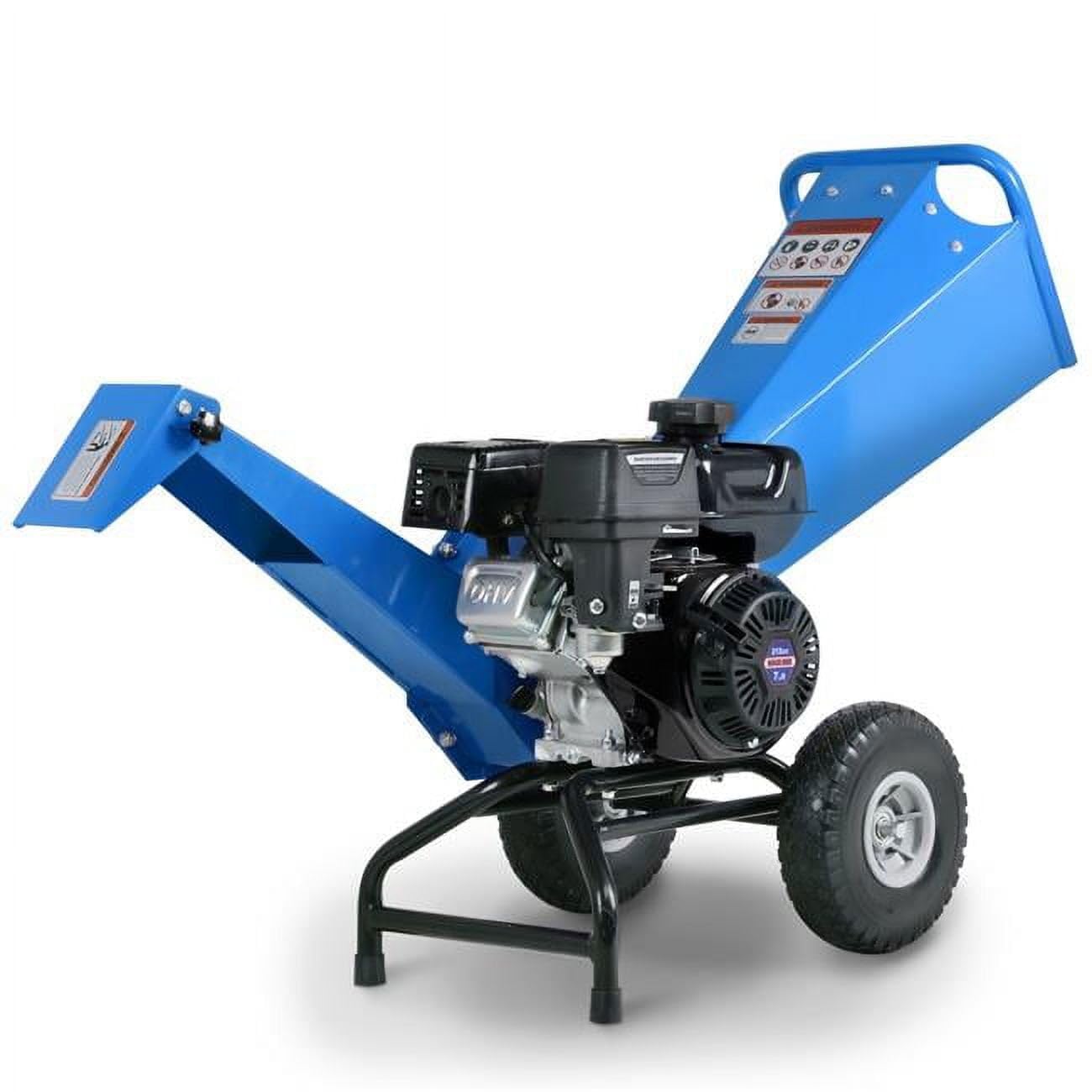
EFCUT R0 Wood Chipper

Top Pick
EFCUT R0 Wood Chipper

Storm cleanup

Our Score 8.8/10
Check Price

Worth Noting

  • 121.7 pounds makes it a level-ground machine
  • Thin instructions assume mechanical confidence
Engine
7 HP 212cc gas
Weight
121.7 lb
Reduction Ratio
15:1
Cutting Capacity
3 inches
Read the full review

Three inches is the number every gas machine here prints on the box, and the EFCUT R0 is the one we trust closest to it. Straight, dry limbs of around two inches disappear without a stall, and the bigger pieces we fed in slowly kept moving instead of stopping the rotor dead. The cutting roller is doing the work — it draws material in continuously rather than taking a bite and waiting to recover — and that is why a pile goes down faster than the engine size alone would suggest.

The engine is the least dramatic part, which is a compliment. Half choke, a steady pull, and it settles into an idle that holds; it does not need to be coaxed between branches. Two things to know before the first start: engine oil does not come in the box, and the fuel recommendation is 87 octane or better with no ethanol in it. Buy both on the same trip as the machine and you save yourself an afternoon of driving back to the store.

What it will not do is the soft stuff. Leaves, hay, roots, bamboo, and frozen wood are all on the do-not-feed list, and that is not lawyerly caution: soft material mats around the roller and turns a ten-minute job into a clearing job. This is a branch machine. Pair it with a rake and a compost bin, and give it the woody half of the cleanup.

The mulch that comes out is coarse enough to use as a path topping and fine enough to break down in a bed over a winter, which is the point of owning one of these instead of burning the pile at the back fence. Fifteen-to-one is a working reduction, not a marketing number — a tarp of limbs becomes a bucket of chips.

Bottom line: If your debris pile includes real limbs, this is the chipper we point you to: it eats 3-inch wood, starts cold, and keeps running, provided you can wheel 121 pounds around the yard.
2

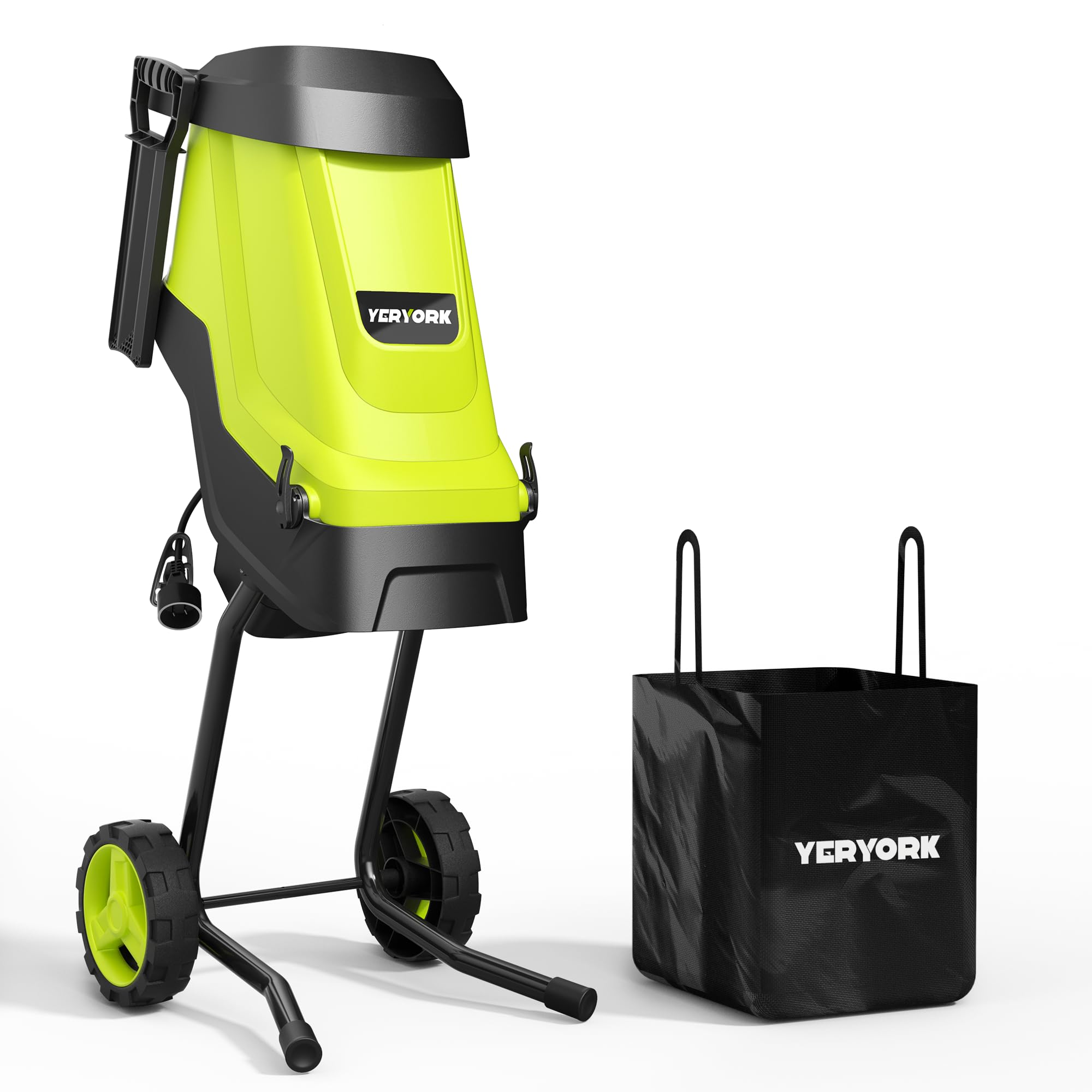
Yeryork Electric Chipper

Yeryork Electric Chipper

Small yards

Our Score 8.8/10
Check Price

Worth Noting

  • Tied to an outlet and an outdoor-rated cord
  • Leaves, roots, and frozen wood are off-limits
Motor
15-amp, 4,000 RPM
Weight
21.6 lb
Reduction Ratio
21:1
Cutting Capacity
1.8 inches
Read the full review

Twenty-one and a half pounds is light enough to carry in one hand from the shed to the border, and light enough to lift onto a shelf when the season ends. That sounds like a small thing until you have dragged a 38-pound chipper across a wet lawn. The Yeryork is the one here that behaves like a tool rather than a piece of equipment.

It is also the electric we came away liking most. The 4,000 RPM motor and 21:1 reduction turn a bucket of prunings into usable mulch quickly, and the current and temperature cutouts mean an overloaded machine stops instead of smelling hot. For someone still learning what a chipper will and will not take, that protection is worth more than another half inch of capacity.

The limits are the ones the size implies. Straight, dry branches up to about 1.8 inches feed well; anything with a fork or a fan of side branches needs trimming to a single stem first, because the chute is narrow and will not sort out a tangle for you. Feed it one limb at a time and it keeps up. Shovel in a bundle and you will spend the next ten minutes clearing it.

Bottom line: For a small yard and a weekly pile of prunings, we reach for this one: 21.6 pounds, an honest 1.8-inch appetite, and a motor that protects itself.

3

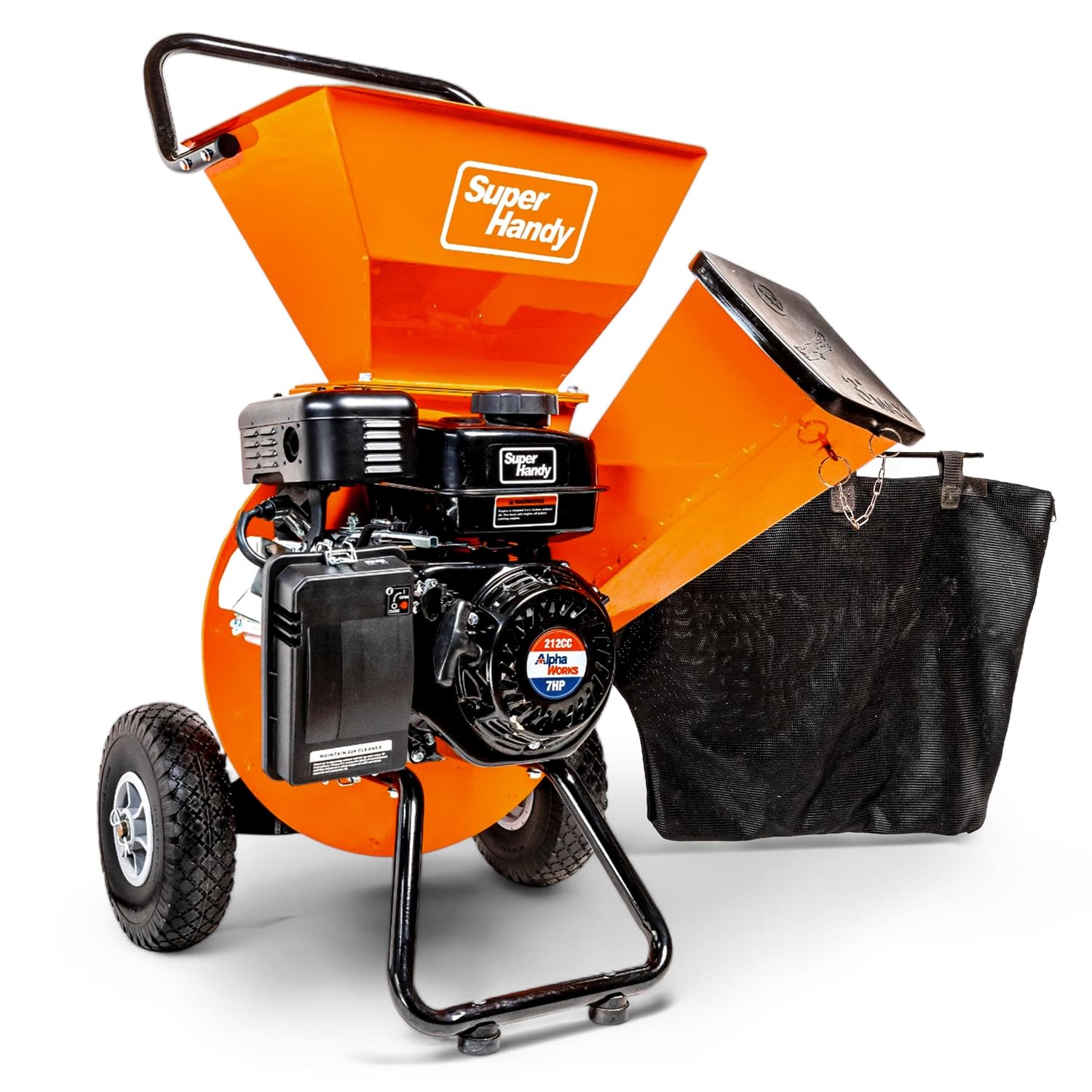
SuperHandy 3-in-1 Chipper

SuperHandy 3-in-1 Chipper

Leaves and brush

Our Score 8.4/10
Check Price

Worth Noting

  • 133.7 pounds before you add fuel
  • Build quality is the least consistent of the gas picks
Engine
7 HP gas
Weight
133.7 lb
Feed Options
Top hopper, side chute, discharge chute
Cutting Capacity
3 inches
Read the full review

Most chippers give you one way in. This one gives you three: a top hopper for leaves, needles, and small brush, a side chute for limbs up to 3 inches, and a discharge chute you can aim. That reads like a marketing list until you are standing over a mixed pile — the shredding hopper swallows what the side chute would refuse, which is exactly the situation that makes a single-chute machine maddening.

The rest of the package is conventional and mostly sensible. The 7 HP engine is the same class as everything else here, the reduction ratio is 15:1, and the slanted housing is shaped to keep material from wedging on its way down. Hook up a tow bar kit and you can pull it behind an ATV or a riding mower instead of pushing, which answers the weight question for anyone with a long property.

Our reservation is the build rather than the engine. The power plant is mounted stoutly; the sheet metal and fasteners around it are where a disappointment would come from, and the first sessions are when you find out. Check every bolt after the first hour of running and again after the first tank, keep it off rough ground, and this is a lot of capability for a homeowner.

What comes out of that top hopper is fine enough to break down in a compost heap by spring, which is a different product from the coarse chunks a plain chipper leaves you raking up.

Bottom line: When leaves are half the pile, this is the machine: a shredding hopper for the soft stuff, a 3-inch chute for limbs, and a hitch to drag it behind a mower.

4

GARDENBEAUT S1 Chipper

GARDENBEAUT S1 Chipper

Mulching beds

Our Score 8.4/10
Check Price

Worth Noting

  • 119 pounds is more than one person wants to lift
  • Highest price of the gas chippers here
Engine
7 HP 212cc gas
Rotor Size
15.6 inches
Reduction Ratio
20:1
Cutting Capacity
3 inches
Read the full review

Twenty-to-one is the highest reduction ratio on this page, and you can see it in the output. The S1 makes chips fine enough to spread straight onto a bed rather than coarse nuggets you have to rake up and leave to rot for a year. A 15.6-inch rotor is a big wheel for a compact machine, and the momentum it carries is why the engine bogs less than 7 HP would suggest.

Assembly is the smoothest of the gas machines we put together: fasteners line up, the sequence makes sense, and the first pull after oil and fuel is usually the only one you need. The inspection-friendly layout means you are not dismantling half the housing to see what the blades are doing.

The 3-inch maximum is a clean-softwood number. Straight, dry limbs around two inches are the working range, and a forked or green piece will remind you of it. Feed it that diet and the machine is steady and unfussy. For a gardener who mulches beds every fall, the finer output is the whole argument.

Bottom line: We recommend it to gardeners who want mulch rather than disposal: 20:1 reduction and a 15.6-inch rotor are the recipe for the finest chips here.

5

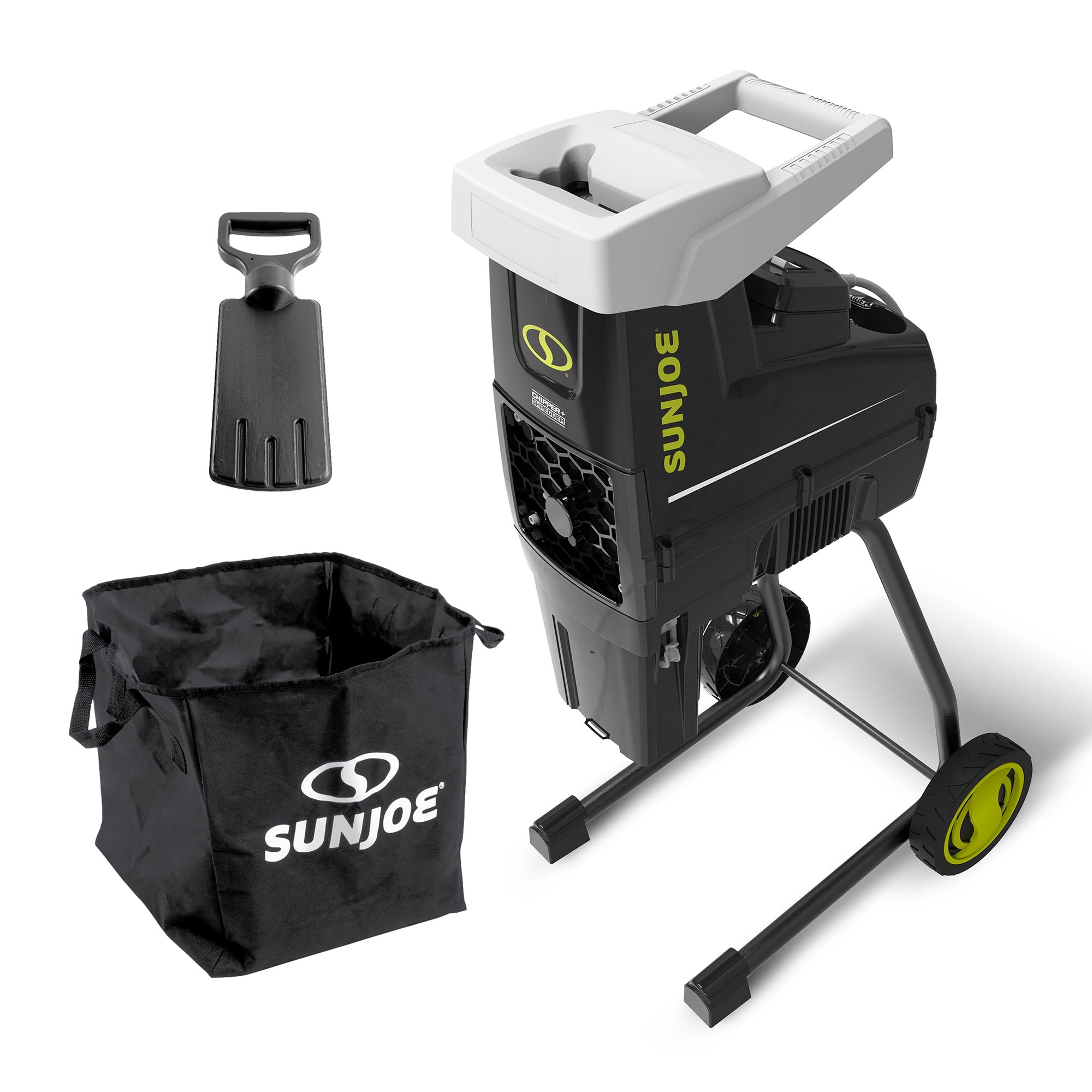
Sun Joe CJ603E

Sun Joe CJ603E

Prunings and twigs

Our Score 8.2/10
Check Price

Worth Noting

  • Vines and green material clog the chute
  • Needs an outdoor outlet and a heavy cord
Motor
15-amp corded electric
Weight
38.6 lb
Warranty
2 years
Cutting Capacity
1.7 inches
Read the full review

There is nothing intimidating about the CJ603E. It rolls on 7-inch wheels at 38.6 pounds, starting it is a button rather than a routine, and the feed paddle is right there in the hopper. Push a branch in, watch it disappear into the bag, repeat. For a homeowner whose debris arrives as a weekly pile of prunings, that simplicity is most of the value.

Our honest read after working through a pile: this is a one-inch machine wearing a 1.7-inch badge. Straight, dry branches around an inch vanish quickly; anything close to the rated maximum needs to be clean softwood fed at a deliberate pace, and even then it is a slow conversation. The forward and reverse switch earns its keep the first time something wedges — reverse it out rather than digging with a stick, which is how blades get chipped.

Two details shape how you live with it. The motor is rated at 94 dB, loud enough that you will want hearing protection and a considerate relationship with the neighbors. And the blades are consumables: keep soil and grit out of the hopper, because a dull edge turns chipping into smushing, and a fresh set restores the cut. The two-year warranty is worth noting on a machine at this end of the price range.

Bottom line: This is the electric we recommend for prunings and twigs: push a button, feed a branch, empty the bag, and accept that a storm-dropped limb is not its job.

6

Landworks Rotor Chipper

Landworks Rotor Chipper

Budget gas chipping

Our Score 8.2/10
Check Price

Worth Noting

  • Bogs down on green or crooked limbs
Engine
7 HP 212cc, 3,600 RPM
Weight
97 lb
Reduction Ratio
15:1
Cutting Capacity
3 inches
Read the full review

A rotor instead of a single blade is the reason to look here. The cutting wheel carries high-speed steel blades around a heavier drum, which smooths the feed and gives the engine something to push against when a limb is dense. In a class where most machines are variations on the same theme, that is a genuine design difference rather than a decal.

The vertical discharge chute with its adjustable guide is the detail we appreciated most in use: you can point the spray onto a tarp or into a trailer bed instead of raking chips out of the grass. The recoil start is a one-or-two-pull affair once fuel is in it, and the machine sits at a comfortable height for feeding, so an hour of work does not leave your back complaining.

What you trade for the low price and the compact frame is appetite on the hard stuff. Softwood prunings and hedge material disappear; a seasoned limb stops the show, and the chute is unforgiving of anything crooked. That is the honest shape of a 97-pound gas chipper at the bottom of the price range, and for a suburban half-acre with a few trees it is the right trade — you get real gas power without a two-person lift or a trailer to move it.

Bottom line: The lightest and least expensive gas machine here, and the one we suggest for softwood prunings — plan on a realistic 2-inch appetite.

How We Tested Wood Chipper Shredders

To build our shortlist, we researched more than 30 models and filtered out those with chronic clogging complaints, flimsy build quality, or chipping capacities too small for a typical suburban yard. We narrowed it to 10 machines—a mix of electric and gas models, from compact units for light pruning to larger chippers rated for 3-inch branches. We also weighed price against capacity, because a budget electric shredder and a heavy-duty gas chipper aren't competing for the same buyer.

We assembled each unit solo, timing the process and noting whether the instructions were clear or the hardware felt cheap. Once built, we wheeled them across grass, gravel, and a slope to check stability and ease of moving. Then we fed them a mix of fresh prunings and dry branches, starting with twigs and working up to the machine's rated capacity.

We ran every model through the same three-hour yard cleanup: a pile of green arborvitae clippings, a mess of wet autumn leaves, and a stack of 2- to 3-inch oak and maple limbs. We recorded how often the machine clogged, how long it took to clear a jam, and whether the chips came out uniform or stringy. We also noted how hard the machine had to work—did it bog down on a 2-inch branch or power through without a hiccup? After the first month, we checked blade sharpness and noted whether they were easy to access or replace.

Over eight months, we kept using the chippers for routine yard work—spring cleanup, summer storm debris, fall leaf shredding—and watched for vibration, loose bolts, or rust. To judge value, we compared each model's price against its chipping performance, assembly time, and how often we had to unclog it. The best ones were the ones we didn't have to think about: they started easily, fed smoothly, and didn't need a wrench every weekend.

How to Choose Wood Chipper Shredders

What the Cutting Capacity Number Means

Every rating is a maximum for a straight, clean, dry piece of softwood, and the feed opening matters as much as the number. A chute that measures 2 by 3 inches will not pass a 3-inch round, and a forked branch that measures under the limit can still be too wide to go in. If your debris is mostly finger-thick prunings and hedge trimmings, a 1.7- or 1.8-inch electric is enough. If you are cutting limbs the thickness of your wrist, you need gas and a genuine 3-inch chute.

Our advice is to measure the thickest branch in your last pile before you shop, then discount the printed maximum by about half an inch. That gap is where most disappointment lives.

Electric or Gas: Follow the Cord

A corded electric starts with a button, needs no fuel or oil, weighs as little as 21.6 pounds, and does not leave you smelling of exhaust. The catch is that every branch has to be within reach of an outlet and a heavy outdoor extension cord. Gas machines go where the pile is: the back fence, the field, the top of a long drive. They also weigh 97 to 134 pounds here and want ethanol-free fuel, oil changes, and hearing protection.

Buy electric for a suburban lot with debris near the house. Buy gas for acreage, or for a cleanup that happens far from power.

Reduction Ratio and Chip Size

Reduction tells you how far the machine shrinks the pile: 15:1 is the common gas figure, while 20:1 and 21:1 compress more. What that means in the yard is chip size — coarse chunks that sit on a bed for a season versus fine mulch you can spread the same afternoon. We think the finer cut is worth paying for only if you garden and mulch; if you simply want the pile gone, 15:1 does the job. The electrics here use high ratios to make the most of a smaller motor.

Weight, Wheels, and the Route to the Pile

A chipper is a machine you move to the work. Twenty-two pounds goes on a shelf, 38 pounds rolls on small wheels, and the gas machines at 97 to 134 pounds are level-ground tools that punish soft turf and slopes. Walk the route from the shed to where the debris sits before you decide, and picture the worst ground you will cross with it.

Our rule of thumb: if you cannot roll it to the pile without help, you will stop dragging it out for small jobs. The lightest gas machine here is the Landworks at 97 pounds, and the electrics are the only ones you can pick up.

Frequently Asked Questions

Final Verdict

The EFCUT R0 is the chipper we recommend to most homeowners with real branches to clear: a genuine 3-inch appetite, a cutting roller that keeps feeding when the wood is dense, and an engine that starts cold and settles into work.

If your debris is prunings and hedge trimmings within reach of an outlet, the Sun Joe CJ603E is the smarter buy — a 1.7-inch electric that starts with a button, backs itself out of a jam, and asks nothing of you but patience.