Seeds & Plants

Best Wildflower Seed Mixes of 2026

A wildflower packet promises a meadow in a bag: scatter, water, wait. What usually comes up is a patchy mat of whatever sprouted fastest, a few flowers in colors nobody chose, and bare dirt where the pricier seed failed. I've killed enough of these packets to start reading the back label like a contract: the inert matter, the annual-to-perennial split, the germination percentage in small print. A mix worth buying fixes the gamble: it sprouts near the rate on the label, holds color for more than a month, and covers the square footage it claims.

I've spent the past eight months sowing 14 mixes in beds, patio pots, and a sun-baked driveway strip. The pattern was quick: mixes padded with filler and fast annuals look triumphant in week six and are finished by August, while ones with a perennial backbone cost more per ounce and still hold color in October. Seed is only a bargain if it comes up, so cost per square foot of actual coverage beats the number on the bag. The picks below earned their space.

1

Mountain Valley Perennial Mix

Top Pick
Mountain Valley Perennial Mix

Perennial pollinator beds

Our Score 8.8/10
Check Price

Worth Noting

  • Narrower color range than the biggest mixes
Seed Type
Heirloom, non-GMO
Seed Count
100,000+
Species In Mix
13
Hardiness Zones
1 to 10
Read the full review

Thirteen species reads like the short end of this list next to the 26- and 35-variety bags, and it is — deliberately. Mountain Valley's mix is built around perennials with monarchs in mind, which makes it the one here for a patch you want to come back rather than a single season of color.

The arithmetic supports that. A hundred thousand seeds across 13 species is a dense, seed-heavy bag for the number of plants involved, and there's no filler padding it out. It's listed for zones 1 through 10, handles heat and drought once it's established, and the species chosen are the ones that feed butterflies rather than just photograph well. For a strip along a fence or a corner you're tired of mowing, that's a hard combination to beat.

Patience is the price. A perennial-led mix spends its first season underground, and a dry spring can leave you looking at bare ground into July while an annual blend would already be flowering. Plant it somewhere you can water through that first summer, then leave it alone.

Bottom line: Plant this if you want a pollinator patch that returns year after year; it's our pick for perennial beds and monarch plantings over one-season color.
2

Sweet Yards Butterfly Mix

Sweet Yards Butterfly Mix

Pollinator meadows

Our Score 8.6/10
Check Price

Worth Noting

  • Four-foot stems need a spot out of the wind
Coverage
400 square feet
Net Weight
4 oz
Seed Count
30,000+
Species In Mix
23
Read the full review

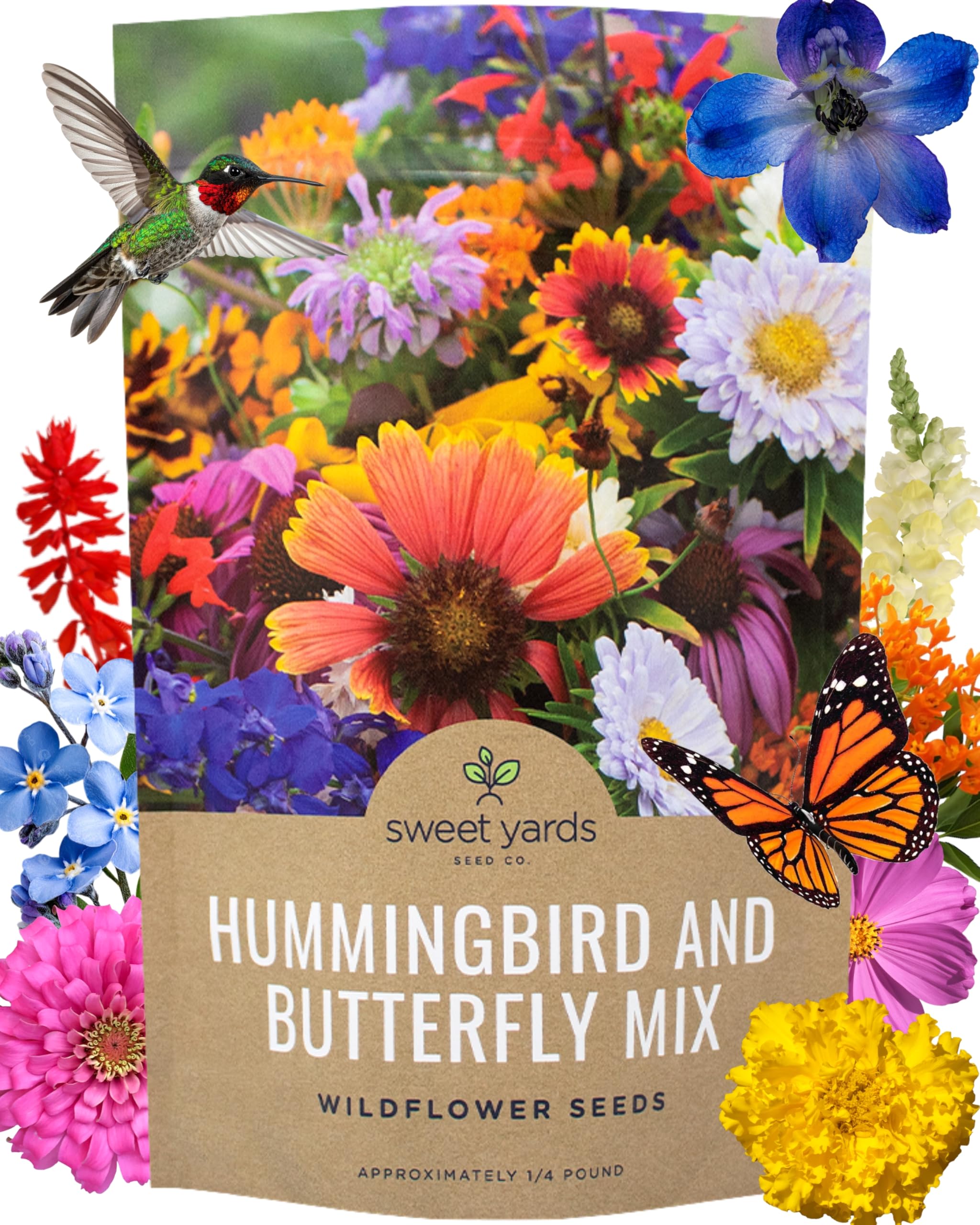
Four ounces covering 400 square feet is the number that decided this one for us. Plenty of bags lead with a big seed count and never say how far it stretches; Sweet Yards prints a seeding rate, so you can buy for the bed you actually have and sow it thick enough to fill in properly. That single figure is why it's the pick for most people.

What's in the bag matches the pitch. Twenty-three species split between annuals and perennials, no filler, and a blend aimed squarely at hummingbirds and butterflies. The pouch reseals with a zipper, which matters more than it sounds: leftover wildflower seed kept dry and cool is still good next spring, and a torn paper packet in a shed is not.

The backstop we didn't expect is a 30-day refund if the seed doesn't germinate. Germination is the honest risk with any mix this fine — a dry week at the wrong moment can leave a thin stand — so a written guarantee is worth more here than another five species on the label. Ours went into a sunny strip after we scratched the surface loose, and that preparation is the part you control.

Bottom line: If you want one bag to turn a bare sunny strip into a pollinator patch, this is the one we recommend: a stated seeding rate and a germination guarantee make it the safest buy here.

3

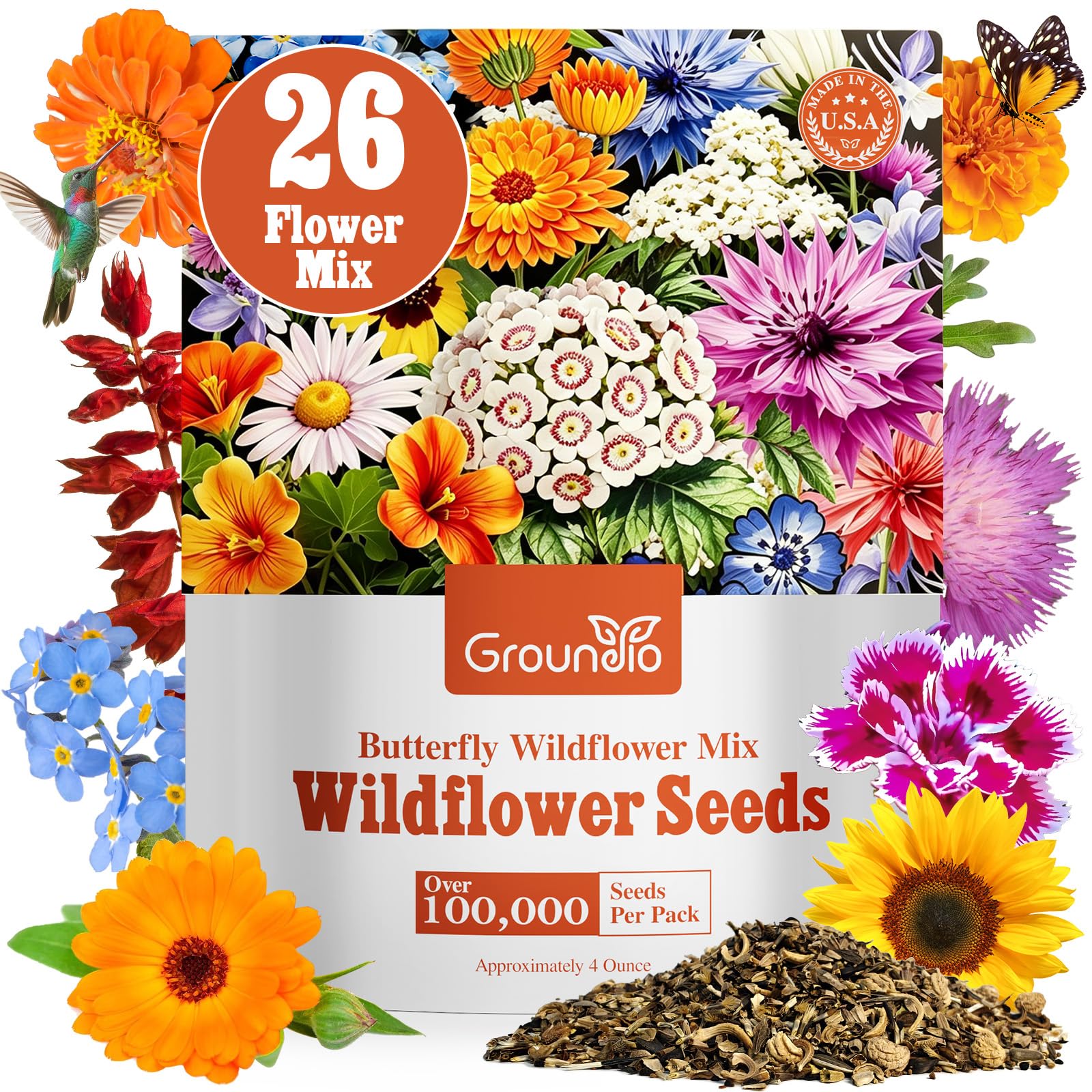
Groundio 26-Variety Mix

Groundio 26-Variety Mix

Big sunny beds

Our Score 8.6/10
Check Price

Worth Noting

  • Grows to 59 inches and needs a sheltered site
Net Weight
4 oz
Seed Count
200,000+
Plant Height
59 inches
Species In Mix
26
Read the full review

Two hundred thousand seeds in a four-ounce bag is the highest count per ounce here, and it's worth understanding why that isn't four times better than a 50,000-seed bag. Wildflower seed is mostly tiny; a mix built on fine seed gets its number from volume. What matters is the claim on the front: 99% pure live seed, no filler, so nearly all of that weight is plantable.

The 26 varieties span annuals and perennials and include both milkweed and butterfly weed, the two you actually want if monarchs are the reason you're planting at all. There's real height in the mix too, which suits a bed with something behind it and a gardener who doesn't mind a bit of flopping.

The packaging is better than most: resealable aluminum foil, moisture-proof, the kind of bag leftover seed survives a winter in. And you will have leftovers, because four ounces at this density covers serious ground. For the money it's the most seed in this group, and that's the honest case for it — nothing here is fancier, there's just a great deal more of it.

Bottom line: The pick for a big sunny area on a budget; you get more seed for your money here than from anything else on this list.

4

Eden Brothers Midwest Mix

Eden Brothers Midwest Mix

Midwest gardens

Our Score 8.6/10
Check Price

Worth Noting

  • Midwest-focused, less suited to coastal or desert sites
Coverage
250-500 square feet
Net Weight
4 oz
Species In Mix
25
Hardiness Zones
3 to 10
Read the full review

Twenty-five species, no filler, and a stated coverage of 250 to 500 square feet from a quarter pound. That range is the tell: sow densely and you get 250 square feet of well-populated meadow; stretch it to 500 and you get a thinner, more hopeful result.

The roster is a proper Midwest one — cornflower, candytuft, sweet William, Indian blanket, prairie coneflower, Mexican hat — annuals and perennials that handle cold winters and, in a good year, come back. Zones 3 through 10 covers most of the country. If you're planting in the middle of the country and want species that belong there rather than a generic global blend, this is the bag.

Cold hardiness is where it earns its keep, and it's also why the sowing instructions matter. Plant at the dense end of the range, keep the surface damp until seedlings are up, and the mix has enough perennial backbone to still be there after a hard winter. That's the difference between a wildflower patch and a wildflower planting.

Bottom line: For a Midwest bed that should look like it belongs there, this is our pick: cold-hardy species, pure seed, and an honest coverage range.

5

Seed Needs Butterfly Mix

Seed Needs Butterfly Mix

First-season color

Our Score 8.4/10
Check Price

Worth Noting

  • Annual-dominant, so it returns less reliably
Filler
None added
Net Weight
2.1 oz
Seed Count
30,000
Plant Height
36 inches
Read the full review

Two ounces of pure live seed with nothing added is a different proposition from two ounces cut with vermiculite, and it's the first thing to understand about this pouch. Seed Needs packs 30,000 seeds with no filler, which is why the bag feels small for the number printed on it.

The mix leans annual — snapdragon, China aster, cosmos, larkspur, forget-me-not and a few more — with perennials like butterfly milkweed and columbine mixed in. That's the right balance when you want a first season that looks like something. Annuals come up fast, flower within weeks, and carry the bed while the perennials argue with the soil.

Sowing directions are printed on the pouch, which sounds minor until you're standing in the yard holding a bag with no idea what rate to scatter at. Full sun, average soil, steady water while it establishes, and 36 inches at the top end — tall enough to read as a meadow, short enough that it won't need staking in a border.

Bottom line: Buy it for a fast, inexpensive first season of butterfly flowers; it's what we recommend when you want bloom this year rather than next.

6

Burpee Wildflower Mix

Burpee Wildflower Mix

Budget large patches

Our Score 8.4/10
Check Price

Worth Noting

Coverage
Up to 1,000 square feet
Seed Count
25,000
Plant Height
65 centimeters
Species In Mix
18
Read the full review

The coverage claim on the Burpee bag is the most revealing number here. Twenty-five thousand seeds for up to 1,000 square feet works out to roughly 25 seeds per square foot; Sweet Yards promises 400 square feet from 30,000 seeds, which is about 75. Neither figure is wrong — they describe two different densities, and Burpee's is the sparse one.

That's not a knock on a cheap, easy-to-find mix that will green up a large, low-stakes patch. Eighteen varieties including butterfly milkweed, calendula, cornflower and plains coreopsis, full sun, and a listed height of 65 centimeters, shorter and tidier than the tall meadow blends here. For a first attempt on a bare half of a backyard, it does the job at a price worth risking.

Sow it at the dense end rather than spreading it over the full thousand square feet, and the stand will look intentional instead of scattered. The other thing to plan for is weather: fine seed on bare soil can dry out in an afternoon, so the watering can matters more than the name on the bag. Burpee has been selling seed since 1876, and the packet directions are correspondingly clear.

Bottom line: Buy it when you want a lot of ground covered for very little; sow it thick and it earns its place as the budget pick here.

7

BBB Seed Drought Tolerant

BBB Seed Drought Tolerant

Dry, hot sites

Our Score 8.4/10
Check Price

Worth Noting

  • Narrower plant palette than lush-soil mixes
Filler
None added
Coverage
About 150 square feet
Seed Type
Open-pollinated, non-GMO
Net Weight
1 oz
Read the full review

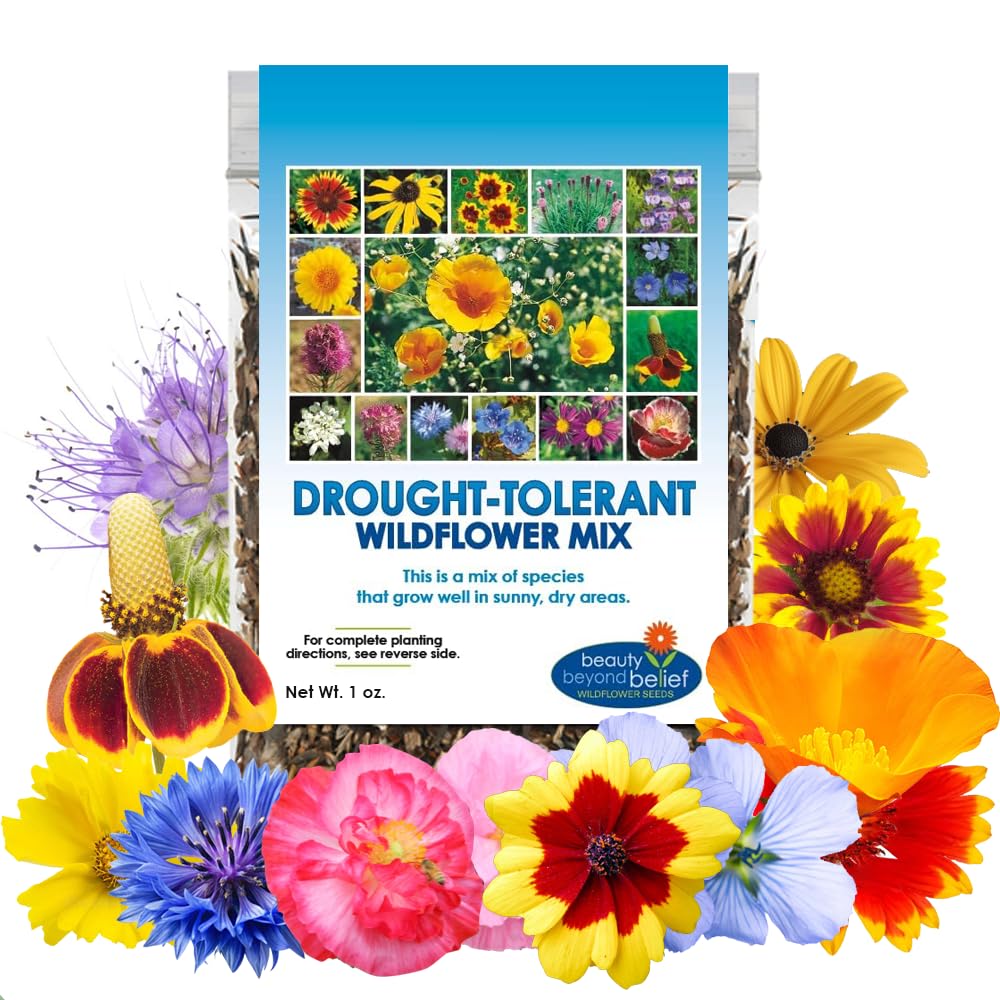
Planting wildflowers on ground that bakes is where most of these bags fall apart. BBB's drought-tolerant blend is the one in this group built for that site: heat-tolerant annuals and perennials, open-pollinated and non-GMO, with no filler in the packet.

One ounce is a small bag, and that's the point. It covers about 150 square feet, which suits a hell strip, a dry border, or a slope you've stopped mowing — not a half acre. Because it's pure seed with no carrier, the volume you see is plantable, so it goes further than the packet size suggests. For a small, punishing site that's a better match than a bulk bag split three ways.

Timing matters more here than with the lush-soil mixes. Spring or late-fall sowing gives seed the moisture it needs before summer dries the top inch out, and a July scattering on a hot slope wastes good seed. Once it's up, leave it alone — these are plants that do better on neglect than on kindness.

Bottom line: The right bag for a hot, dry, out-of-the-way slope; we recommend it where a watering hose isn't going to reach.

8

NatureZ Edge Wildflower

NatureZ Edge Wildflower

Meadow-scale sowing

Our Score 8.4/10
Check Price

Worth Noting

  • The priciest bag in this group
Coverage
Up to 1,500 square feet
Net Weight
8 oz
Seed Count
340,000
Species In Mix
35
Read the full review

Half a pound, 340,000 seeds, 35 species, up to 1,500 square feet: this is the biggest bag here, and the coverage figure needs reading carefully. That 1,500 square feet assumes you cut the seed with a carrier — sand, vermiculite, cornmeal — before broadcasting. That's standard practice for fine seed, and it's the only way to spread it evenly over that much ground.

Do it and this is the least fuss per square foot in the group: one bag, one afternoon, a meadow. Skip it and you'll get thick patches and bare patches in the same bed. Thirty-five species is a broad list, and broad cuts both ways — more chances something suits your soil, less certainty about what shows up the first year.

It's hand-packed by a family-run company, which is a real difference from a big-box bag but not a promise about germination. The honest way to read this one is as a volume purchase: buy it to cover ground, not to finesse a border.

Bottom line: Buy it when the area is large and the budget is fixed; it covers the most ground per bag here, provided you cut it with a carrier.

9

Old Farmer's Almanac Mix

Old Farmer's Almanac Mix

Borders and pots

Our Score 8.4/10
Check Price

Worth Noting

  • Small packet, realistically a border's worth of seed
Sunlight
Full sun
Bloom Period
Summer to fall
Package Weight
0.63 oz
Species In Mix
23
Read the full review

The species list is what makes this little packet interesting: 23 varieties including columbine, cosmos, foxglove, larkspur, poppy, snapdragon and zinnia — flowers you'd more often buy one packet at a time for a cutting garden than find in a pollinator blend. For trialing a lot of different flowers in a small space, that's a better use of a few bucks than another bulk bag.

Treat it as a border or a couple of large pots rather than a meadow. Full sun, summer-to-fall bloom, and the tall annuals in the list will want room and something to lean on once they're up. It's also the rare bag here that works as a gift or a child's first seed project, since nobody needs 200,000 seeds to find out whether they enjoy growing flowers.

What you give up is quantity and predictability in equal measure. A list this varied blooms on its own schedule rather than all at once, so expect a few straggly weeks and then a good long stretch of color.

Bottom line: A low-stakes way to try 23 flowers in a border or a pot; we recommend it for small spaces and first-time growers.

How We Tested 14 Wildflower Mixes Through a Full Season

We started by pulling every wildflower mix we could find that listed its species by percentage rather than hiding behind a vague blend, then cut anything that was mostly inert matter, annual rye, or filler. That left 14 mixes, which we sowed over eight months in matched two-by-four-foot plots in the same sunny bed, plus a handful of patio pots and one hard-packed strip along a driveway. Same soil prep, same watering schedule, so what came up was the seed's doing, not the site's.

To check seed quantity, we sowed each mix at its own labeled rate and watched whether the stated coverage materialized — a few bags claiming 200 square feet barely dusted half that. For germination and sprout rate, we staked a one-foot square in every plot and counted seedlings at two, four, and six weeks, noting which mixes came up thick and which came up in dribs. Ease of use covered the small stuff: whether the seed poured freely or clumped in the bag, whether the instructions mentioned a cold period or a sand carrier for even distribution, and how forgiving the whole thing was for someone sowing by hand.

Every plot got a weekly photo and a running list of which species actually appeared against the roster on the label, which is how we judged variety, color, and overall appearance — some mixes read as a meadow, others as a muddle of one dominant flower. We logged first bloom, peak bloom, and how long each plot held color; several flamed out by midsummer and left bare gaps. At the end we divided each mix's price by the square footage that genuinely flowered, which sank a couple of cheap bags and lifted a couple of pricier ones.

How to Choose Wildflower Seed Mixes

Start With the Seeding Rate

Seed counts are the least useful number on these bags, because fine cosmos seed and a chunky marigold can't be compared by counting. Coverage and weight can. Four ounces billed for 400 square feet is a rate you can trust; 25,000 seeds billed for 1,000 square feet works out to roughly a third of that density. If a bag states both, use the coverage. If it only gives a seed count, treat it as a rough guide and sow on the thick side.

Buying for the ground you actually have, at the density the seller recommends, prevents the most common failure: scattering too thin, getting a patchy stand, and blaming the seed.

Know Whether You're Buying Seed or Filler

Wildflower seed is small, so some bags bulk it out with vermiculite or another carrier to make broadcasting easier. That's not dishonest when it's disclosed, but it means a pound of mix is not a pound of seed. Look for pure live seed or no filler on the label, and expect a filler-free bag to look disappointingly small for its weight.

Our favorite bags here carry no filler, which is also why their coverage figures are worth reading closely.

Balance Annuals Against Perennials

Annuals germinate fast, flower the first summer and die. Perennials spend year one underground and pay you back from year two. An all-annual mix looks wonderful once and then leaves you replanting; an all-perennial mix can look like bare dirt through August of its first year.

The blends that make a lasting meadow run roughly half and half, so there's color while the perennials establish. If a listing says perennial, check whether annuals are in the blend too.

Match the Species to Your Ground

Sun and soil decide more than species count does. Full sun is close to non-negotiable for these mixes: a shady bed will germinate and then sulk. A dry, baking slope wants a drought-tolerant blend rather than a cottage-garden one, and cold-winter gardeners are better served by a regional mix than a generic national blend.

Check the zone range too. A mix rated from zone 3 to zone 10 will grow in a lot of places, but the plants that actually thrive will be the ones that suit yours.

Give the Seed Contact and Water

The usual way a wildflower planting fails isn't bad seed; it's seed sitting on top of unprepared ground. Clear the existing growth, scratch the surface so there's something for the seed to fall into, broadcast, then press or rake it in lightly. A quarter inch of cover is plenty, and burying it deeper means it never comes up.

Water through the first few weeks so the top inch never dries out completely, then back off and let the plants find their own roots.

Frequently Asked Questions

Final Verdict

Sweet Yards is the bag we recommend to most people: 23 species, no filler, a seeding rate that lets you buy the right amount of seed, and a refund if it doesn't germinate. It's the least risky way to start a pollinator patch.

If your planting is meant to last rather than impress in year one, Mountain Valley's 13-species perennial mix is the better long-term buy, and BBB Seed's drought-tolerant blend is the one for a slope that never gets watered. Buy for your ground and your patience, not for the biggest number on the bag.