Pest & Weed Control

Best Weed Killer for Gravel of 2026

A gravel drive looks sharp for about three weeks. Then the weeds find the seams, and you're out there with a claw cultivator, gouging the stone and flinging half of it into the lawn. That's the trouble with gravel: the roots sit under an inch of loose rock, so anything that only burns the leaves off leaves the crown down there, ready to push back up a fortnight later. A weed killer worth buying has to work its way down into the stone, keep working long enough to matter, and be something you don't mind using in a yard where the dog sprawls in the sun.

I've fought that fight on more driveways than I'd like to admit, and the gaps between products are wider than the labels suggest — the smell, how easily the sprayer attaches, whether one jug treats the whole drive or just the front half of it. My team and I spent four months working through 14 formulas on gravel of every description, and we watched the pet question closely the whole time. The ones that made the list killed the roots, not just the tops.

1

Control Solutions Pramitol 5PS

Top Pick
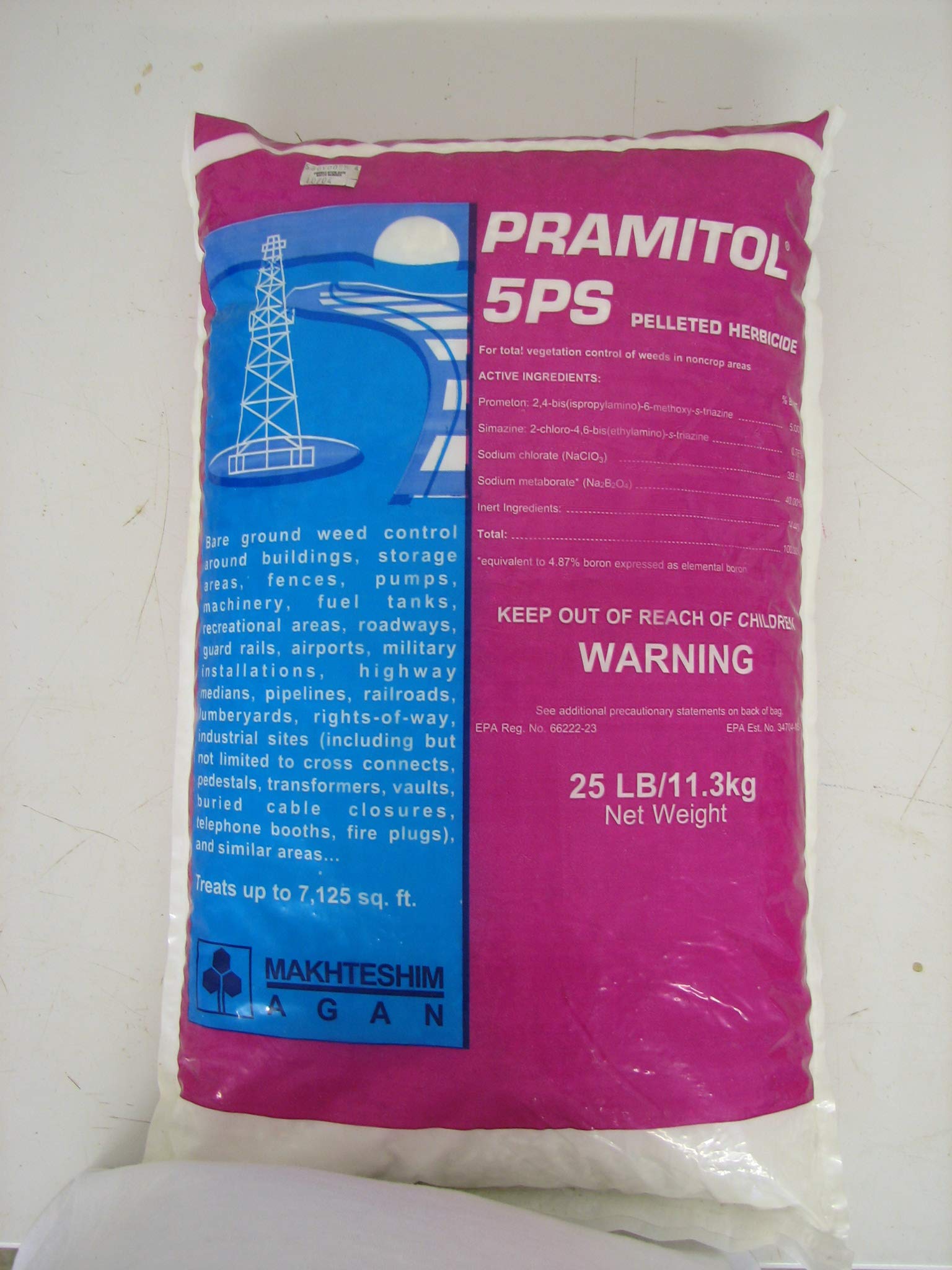
Control Solutions Pramitol 5PS

Bare-ground sterilization

Our Score 9.2/10
Check Price

Worth Noting

  • Not for areas you plan to replant
Form
Powder
Weight
25 lb
Primary Use
Bare ground and gravel
Residual Control
Season-long
Read the full review

Pramitol is a soil sterilizer, not a spray-and-forget weed killer. The 25-pound powder is meant for places where you want nothing growing for a season: gravel drives, fence lines, storage areas, road edges, and around buildings. It works through the soil rather than just burning the leaves, which is why it belongs in a different category from the ready-to-use bottles.

The label describes season-long residual control. That is the appeal for a gravel driveway that has become an annual battle. The application is a commitment: the powder has to be spread evenly and watered in, and the material stays active in the soil.

We reserve it for a property manager or a homeowner with a long, hopeless gravel run. For a small path, it is overkill, and the 25-pound container is a storage question as well as an application one. If you want to kill what is up and hold the line for a season, Pramitol is the most serious bare-ground option here. If you want to keep any plants nearby, choose a targeted spray instead.

Bottom line: We reserve this for gravel drives and fence lines where nothing should grow for a season; it is overkill for small paths and not for beds you plan to replant.

2

Roundup Dual Action 4 Mo

Roundup Dual Action 4 Mo

Edges and beds

Our Score 9.2/10
Check Price

Worth Noting

  • Only 400 sq ft per container
Form
Ready-to-use
Sprayer
Sure Shot wand
Coverage
400 sq ft
Residual Control
Up to 4 months
Read the full review

The Sure Shot wand is why this version of Roundup earns a spot. The protective shield lets you spray a gravel edge, a driveway crack, or a patio joint without hitting the flowers behind it. If your gravel runs along a bed, a fence, or a foundation, that control is worth more than a bigger bottle.

It kills existing weeds and prevents new ones for up to four months. That is shorter than the 12-month Roundup 365, but it is still a real residual, and the bottle suits a path or a parking pad rather than a long drive. The formula is ready to use, rainproof in 30 minutes, and shows visible results in as little as six hours.

We like it best for the places where precision matters more than maximum residual. Four months will not carry every climate through a full season. For a patio edge or a path beside planting beds, the shield earns its keep. It is the pick we reach for when the spray wand has to be smarter than the weeds.

Bottom line: We like this best for gravel edges and cracks beside garden beds, where the shielded wand keeps spray off plants and four months of prevention is enough.

3

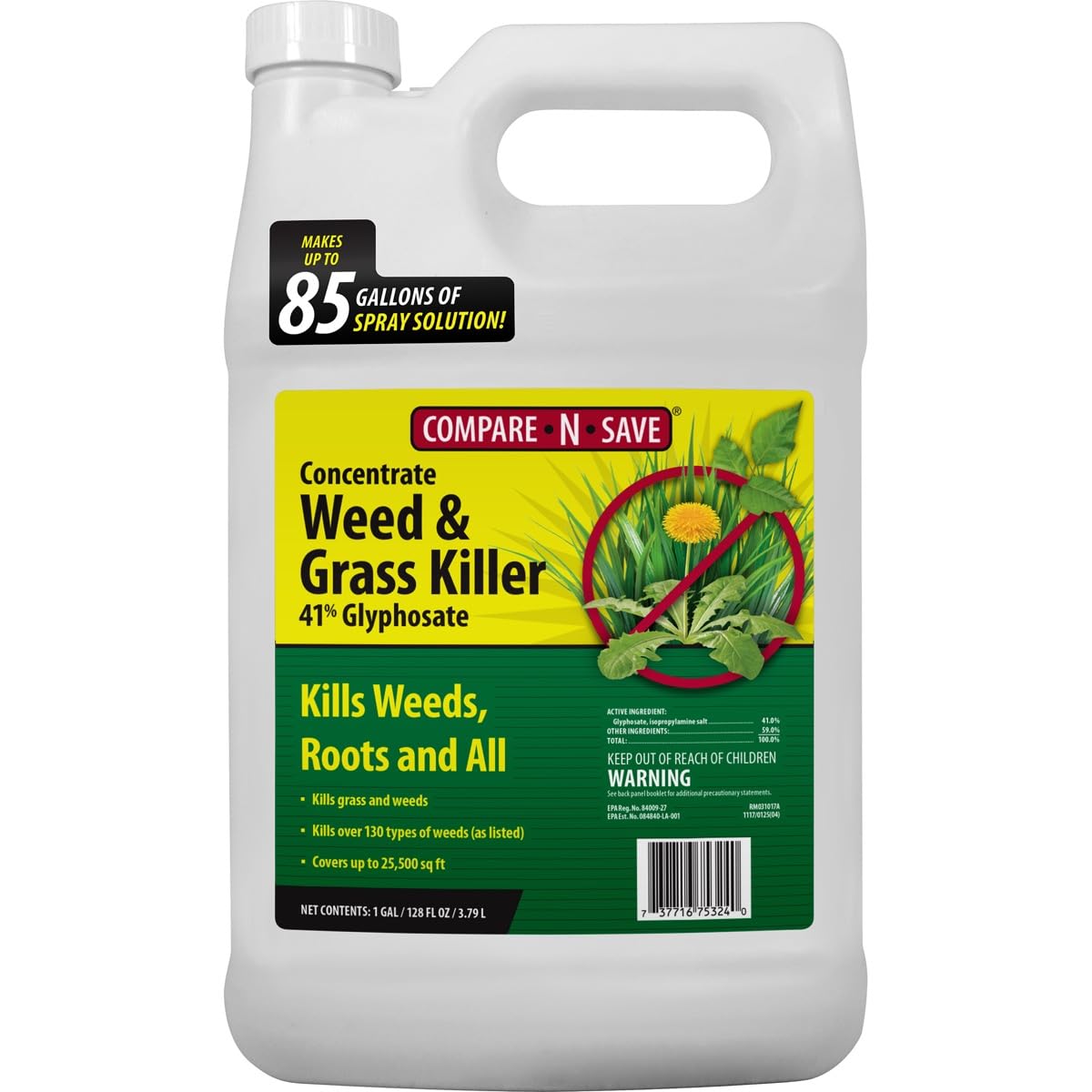
Compare-N-Save Herbicide

Compare-N-Save Herbicide

Large-area clearing

Our Score 9.0/10
Check Price

Worth Noting

  • No residual weed prevention
Form
Concentrate
Coverage
25,000 sq ft
Rainfast
2 hours
Active Ingredient
41% glyphosate
Read the full review

Compare-N-Save makes the value argument better than anything else in this group. One gallon of 41-percent glyphosate concentrate mixes into up to 85 gallons of spray and covers over 25,000 square feet. For a long gravel drive, a barnyard, or a fence line, that is the difference between buying a bottle and buying a season's worth of material. We keep it as the budget workhorse.

It kills the weeds and grasses that are there. For a spring cleanup or for someone who already walks the drive with a sprayer a few times a year, that is a fair trade. The label lists rainproof in two hours and visible results in two to four days, so it is not instant.

The concentrate needs a tank sprayer and careful measuring. The value only holds if you already have that equipment and you mix accurately; otherwise the savings disappear into wasted product. It is also a bare-ground tool, not something to drift onto the lawn or the flower bed. A gallon goes a long way, but only if you are set up to use it properly.

Bottom line: We recommend this as the budget workhorse for big gravel areas; it kills what is there, then you spray again when new weeds sprout.

4

Hi-Yield Killzall

Hi-Yield Killzall

Very large areas

Our Score 8.8/10
Check Price

Worth Noting

  • No residual control
  • Not for use on lawns
Form
Concentrate
Coverage
25,600 sq ft
Application
Tank sprayer required
Active Ingredient
41% glyphosate
Read the full review

One gallon of Hi-Yield Killzall covers up to 25,600 square feet, which is more ground than most homeowners will spray in a season. It is a 41-percent glyphosate concentrate aimed at grasses, broadleaf weeds, and woody brush. That is a farm-scale figure, and it puts the product in a different class from the ready-to-use bottles.

The formula uses a double-surfactant blend that is designed to dry on the plant quickly and start working. That makes it a cleanup tool: spray the weeds that are up, then come back when new seeds germinate.

You need a tank sprayer, and you need to measure. The concentrate is strong, and drift onto a garden or a tree can cause damage you did not intend. The large coverage is the reason to consider it, but only if you are comfortable mixing and applying a serious herbicide.

We recommend it for a long gravel drive, an equipment pad, or a fence line where the job is too big for ready-to-use bottles and you already own a sprayer. It is not the set-and-forget choice. For raw square footage at a concentrate price, it is one of the strongest options here. A gallon is a lot of weed control, but it is also a lot of mixing.

Bottom line: We recommend this for large bare-ground clearing when you already own a tank sprayer; it is a strong concentrate, but it will not stop new weeds.

5

Roundup Dual Action 365

Roundup Dual Action 365

Small gravel areas

Our Score 8.6/10
Check Price

Worth Noting

  • Only 400 sq ft per container
Form
Ready-to-use
Sprayer
Pump 'N Go 2
Coverage
400 sq ft
Residual Control
Up to 12 months
Read the full review

A gravel driveway is a seedbed with good drainage. Pull the weeds and the next rain brings another crop. Roundup Dual Action 365 is the one product here that handles both halves of that problem: it kills the weeds that are up and leaves a preventer behind for up to 12 months. The pump sprayer holds a continuous spray for up to 10 minutes, and the extendable wand saves bending over a long path.

We think that combination makes it the best default for a gravel parking pad, a path, or the edge of a driveway. You are not mixing concentrate or buying a separate preventer, and the label gives rainproof in 30 minutes with visible results in hours. The catch is scale: this is a small-area product. If your gravel runs long, the Ortho below is the better shape of product.

The 12-month claim is a label promise, not a guarantee that every driveway stays bare through a wet year. Coverage has to be thorough, and the spray has to land on the gravel rather than the plants you want to keep. For a small area where regrowth is the whole battle, this is the one we reach for first. It is also the easiest of the residual picks to apply without a separate tank sprayer.

Bottom line: For small gravel areas, this is our first choice: it kills and prevents for up to a year with a sprayer that saves bending.

6

Spruce Weed & Grass Killer3 Kit

Spruce Weed & Grass Killer3 Kit

Pet-safe spot spraying

Our Score 8.6/10
Check Price

Worth Noting

  • Expensive for large areas
Form
Ready-to-use
Power
2 AA batteries
Safety
People, pets, bees
Coverage
Up to 400 weeds
Read the full review

The battery-powered wand is the first clue that Spruce is a spot-treatment kit, not a driveway-wide spray. The 64-ounce bottle and powered wand are designed to be carried around the yard, and one bottle treats up to 400 weeds. That is a different job from a tank sprayer: it is for the weeds that come up through a gravel path, along a patio edge, or around a mailbox.

We like it most where pets and kids use the same ground. The formula is labeled safe around people, pets, and bees when used as directed, and there is no mixing or pouring. Visible results come within an hour, with dead weeds in a day. The wand takes two AA batteries, which are included, and the trigger gives you enough control to hit a single plant instead of wetting the whole path.

For a pet-safe spot job, the smaller scale is a reasonable trade. For a long drive, choose a concentrate and keep this for the edges. The included batteries are a small thing, but they mean the wand works as soon as you open the box.

Bottom line: We reach for this on pet-safe spot jobs around paths and patios; it is easy and precise, but too costly for a whole driveway.

7

Natural Elements Weed Killer

Natural Elements Weed Killer

Natural spot control

Our Score 8.6/10
Check Price

Worth Noting

  • No sprayer included
Form
Ready-to-use
Labeled Use
Rock beds and mulch
Active Ingredients
Vinegar, salt, soap
Read the full review

Natural Elements is the vinegar-and-salt option. It is ready to use, labeled for rock beds and mulched areas, and sold as a pet-safe alternative. The formula is a contact spray, so you are trading residual control for a gentler product.

It works on most broadleaf weeds and grasses, and the directions call for spraying until wet and watching them wilt. For a small gravel path or a rock bed, that is a useful, low-mix option. The vinegar smell is strong and lingers, so it is not the product to spray right before guests arrive.

The coverage is spot-treatment scale, not driveway scale. A gallon goes quickly if you are trying to clear a long run of gravel. For a pet-safe patch or a touch-up around the yard, that is a reasonable trade.

We keep it for small jobs where a natural product matters more than a year of prevention. It is effective on the weeds it hits, but it is not the product for a big gravel drive or a stubborn infestation. It is a good bottle to keep under the sink for spot duty, not a driveway solution.

Bottom line: We keep this for small pet-safe gravel and rock-bed touch-ups; it works on contact, but it is not a whole-driveway solution.

8

Ortho GroundClear Year Long

Ortho GroundClear Year Long

Large gravel areas

Our Score 8.2/10
Check Price

Worth Noting

  • Effectiveness can be inconsistent
Form
Concentrate
Coverage
3,200 sq ft
Rainfast
1 hour
Residual Control
Up to 1 year
Read the full review

The number that earns Ortho GroundClear Year Long a place is 3,200 square feet. One 2-gallon container of concentrate makes that much spray, and the label promises it kills existing vegetation and prevents regrowth for up to a year. For a long gravel drive, that coverage changes the job from a spot treatment to a real clearance. We choose it when area matters more than the convenience of a ready-to-use bottle.

It is a concentrate, so you mix 24 fluid ounces per gallon of water and apply it with a tank sprayer. That is more work than the Roundup 365, and the label rate needs to be followed closely. The payoff is that the product goes further and is rainproof in one hour. It is labeled for gravel areas, driveways, sidewalks, and paver patios, which is exactly the kind of hardscape where weeds push through the stone.

The Ortho is the one we favor when the job is measured in gallons rather than squirts. It rewards an even spray and a careful mix, and it is not the quickest option for a single stubborn weed. For a long gravel run, the coverage and the year-long residual are worth the extra setup.

Bottom line: We choose this for long gravel drives where coverage matters more than convenience; mix carefully, because results can be uneven.

How We Tested Gravel Weed Killers

We started with the labels, which for gravel is more useful than it sounds. Anything that has to be watered in or raked into the top inch got cut early, since those directions assume bare soil rather than a bed of loose stone, and so did products that only claim to burn down existing growth. From there we narrowed to 14 formulas — hose-end bottles, ready-to-use triggers, and granules — and ran them from the first spring flush into the dry stretch of midsummer.

Each product got marked patches of its own: two in a packed gravel driveway, one on a walkway between raised beds, and one on a parking pad where weeds come up through the stone in a thick mat. We counted and photographed what was growing, sprayed on a still morning, and watched the sprayer itself — whether the nozzle put out an even pattern, whether it clogged or dripped, how much drifted when the wind picked up. We counted again at one week, two weeks, and a month, then dug up a few of the dead weeds to see whether the crown had rotted or the leaves had simply curled. At six weeks we checked what had come back.

Since plenty of people spray with a dog or cat in the yard, we tracked how each label handles animals — how long before pets can return, whether the product is a contact killer or something that lingers — and noted which ones we'd be comfortable using with our own dog waiting at the back door. We also logged the smell right after spraying and again the next day, timed how long a bottle took to cover the whole drive, and worked out cost per square foot so a cheap jug that treats half the stone doesn't read as a bargain.

How to Choose the Right Weed Killer for Gravel

Residual Control vs. Knockdown

Gravel collects weed seed, so a product that only kills what is up will leave you spraying again after the next rain. Residual products such as Roundup Dual Action 365 and Ortho GroundClear Year Long leave a preventer in the surface and are the better fit for a driveway, path, or parking pad you want to keep bare. Knockdown concentrates like Compare-N-Save are cheaper per area, but they are a cleanup tool. Choose residual if regrowth is the problem; choose knockdown if you are clearing a one-time mess and can reapply.

Match Coverage to the Size of the Gravel

Ready-to-use bottles are convenient, but they are usually sized for spot work. Roundup 365 covers 400 square feet; the Ortho concentrate covers 3,200. We treat a small ready-to-use bottle as a false economy on a long drive. Concentrates need a tank sprayer and careful measuring, so they make sense when you already own the equipment. If you are treating a path or a patio edge, a ready-to-use bottle is easier to handle. Measure the area first, then buy for the job rather than the shelf price.

Sprayer Control and Drift

A sprayer is part of the weed-control decision, not an accessory. A pump or power wand saves bending and gives a steadier spray; a shielded wand like the one on Roundup Dual Action 4 Mo lets you work a gravel edge beside flowers without soaking them. If a product ships without a sprayer, budget for a pump sprayer or a battery wand. And keep the nozzle low: non-selective spray does not know a weed from a prized shrub, and drift is the fastest way to make a small job expensive.

Pets, Kids, and What Comes Back

Natural vinegar-and-salt products such as Natural Elements and the Spruce kit are appealing around pets and kids, and they are useful for spot treatment. They are contact products, so they do not give you a season of prevention, and the vinegar smell can be strong. Conventional residuals are more persistent, which is the point, but they also demand more care around desirable plants. Soil sterilizers like Pramitol are a separate, longer-lasting choice with a narrower set of places they belong. Pick the least persistent product that solves the job, and follow the label.

Frequently Asked Questions

Final Verdict

For most gravel paths, parking pads, and driveway edges, we recommend Roundup Dual Action 365. It kills the weeds that are up and leaves a year-long preventer behind, and the pump sprayer makes the job easier than mixing a tank. If your gravel runs long, choose Ortho GroundClear Year Long for the much larger coverage; if you are clearing a big area on a budget and can spray again later, Compare-N-Save is the workhorse. The deciding question is simple: are you buying prevention, or raw square footage?